
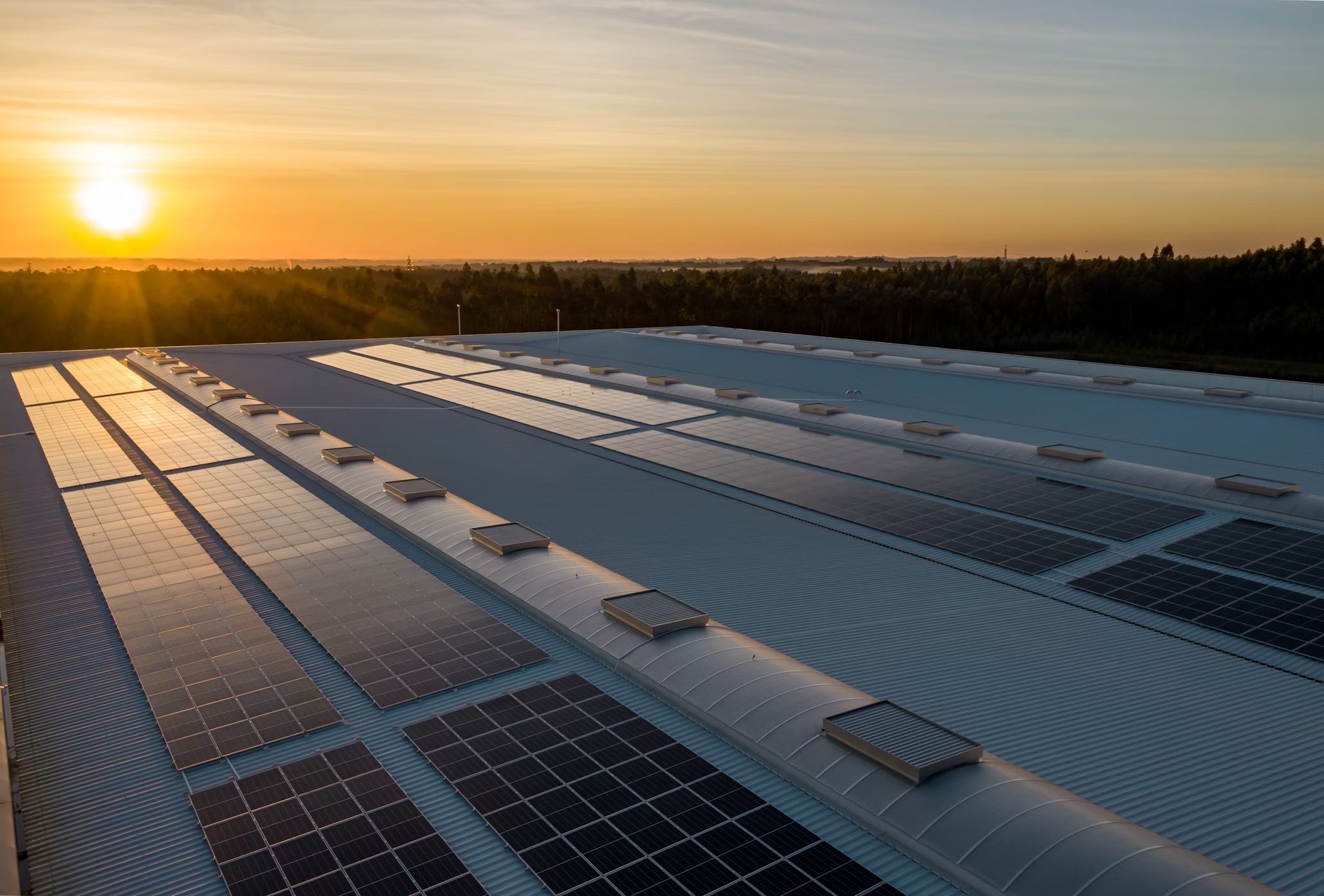
In a time when electricity prices continue to rise, more and more households in Australia are considering switching to solar panels as an alternative energy source. Solar energy is not only an environmentally friendly option but also a significant financial investment that pays off multiple times over the long term.
How Much Can You Really Save?
According to our research and customer experiences, the average household in Australia can reduce their electricity bills by between 50% and 70% after installing an adequate solar system. These savings depend on several factors:
- The size of your solar system
- Average daily electricity consumption
- Geographic location and sun exposure
- Efficiency of the installed panels
- Seasonal variations in solar energy production
For an average home in Australia, a solar system of 6-8kW can produce enough electricity to cover most household needs, especially during sunny months.
Return on Investment
Although the initial investment can range between $5,000 and $12,000, depending on the size of the system, the return on investment is usually achieved within 3-5 years. Taking into account that modern solar panels have a warranty period of 25+ years, this means that after the payback period, you’ll have free electricity for the next 20+ years.
Real-Life Example
The Thompson family from Brisbane installed a 7kW solar system in the spring of 2022. Their average monthly electricity bill before installation was around $220. After installing solar panels, their bill decreased to an average of $65 per month, representing savings of over 70%.
“The decision to install solar panels was one of the best decisions we’ve made for our home. Not only have we significantly reduced our bills, but we also feel like we’re contributing to a cleaner environment,” says Mr. Thompson.
Additional Benefits of Solar Panels
Beyond direct financial savings, switching to solar energy brings other advantages:
- Increased property value - Homes with installed solar systems have a higher market value.
- Energy independence - Less dependence on the electricity grid and protection from power shortages.
- Environmental benefits - Reduction of CO2 emissions and other harmful gases.
- System longevity - Minimal maintenance and long component lifespan.
- Feed-in tariffs - Earn credits for excess electricity fed back into the grid.
Australian Solar Rebates and Incentives
The Australian government offers several incentives to make solar more affordable:
Small-scale Technology Certificates (STCs)
- Available for systems up to 100kW
- Provides an upfront discount on your solar system
- Typically reduces initial costs by 25-30%
- The amount varies based on your location, system size, and installation date
Feed-in Tariffs
- Payments for excess electricity your system exports to the grid
- Rates vary by state and electricity retailer (typically 5-15c per kWh)
- Can substantially reduce your net electricity costs
Interest-Free Loans and Rebates
- Many state governments offer additional incentives
- For example, NSW’s Empowering Homes program offers interest-free loans
- Victoria’s Solar Homes Program provides rebates for eligible households
- Queensland’s Interest-Free Loans for Solar and Batteries
Comparing Costs Across Australian States
Solar savings can vary significantly across Australia’s different states:
| State | Average System Cost (6kW) | Typical Yearly Savings | Average Payback Period |
|---|---|---|---|
| QLD | $5,500 - $7,500 | $1,200 - $1,800 | 3-5 years |
| NSW | $5,800 - $7,800 | $1,100 - $1,600 | 4-5 years |
| VIC | $6,000 - $8,000 | $900 - $1,400 | 4-6 years |
| SA | $5,200 - $7,200 | $1,300 - $1,900 | 3-4 years |
| WA | $5,500 - $7,500 | $1,100 - $1,700 | 3-5 years |
| TAS | $6,500 - $8,500 | $800 - $1,300 | 5-7 years |
| NT | $7,000 - $9,000 | $1,500 - $2,200 | 3-5 years |
How Solar Offsets Your Usage Charges
To understand how solar energy reduces bills, it helps to know that an electricity bill has two main parts. The first is the supply charge, a fixed daily fee for being connected to the grid. The second is the usage charge, which is what you pay for every kilowatt hour (kWh) you draw from the grid. Solar mainly attacks that second part.
Every unit of electricity your panels generate and you use on the spot is a unit you do not buy from your retailer. With grid power costing many households somewhere around 25 to 45 cents per kWh in 2026 (rates vary by state and plan), each self-consumed solar kWh delivers a direct saving at that retail rate. The supply charge usually stays, which is why solar reduces a bill substantially but rarely eliminates it entirely.
Self-Consumption vs Feed-In Tariff
The biggest lever in your solar savings is self-consumption, meaning how much of your own solar power you use rather than export. This is because the value of a self-consumed kWh is far higher than the value of an exported one.
- Self-consumption saves you the full retail rate you would otherwise pay, often 25 to 45 cents per kWh.
- Feed-in tariff pays you for surplus power sent to the grid, typically in the range of 3 to 10 cents per kWh in 2026, though rates vary by retailer and state and have generally trended lower over recent years.
The gap between those two numbers is the whole game. Running the dishwasher, washing machine and pool pump during the day, when the sun is shining, can lift your self-consumption from perhaps 30% to well over 50% and noticeably improve your savings. Shifting usage into daylight hours costs nothing and is one of the simplest ways to get more from a system you already own.
Time-of-Use Tariffs and Solar
Many Australian households are now on a time-of-use tariff, where the price of grid electricity changes through the day. Peak periods, often in the late afternoon and evening, can be considerably more expensive than off-peak overnight rates.
Solar pairs well with time-of-use plans because your panels produce most during the day, reducing the grid power you buy. The challenge is the evening peak, when the sun has set but household demand is high. Without storage, you are buying expensive peak power exactly when your panels are quiet. This is the point at which many households start to consider a battery.
Adding a Battery for Bigger Savings
A home battery stores surplus daytime solar so you can use it at night instead of buying peak-priced grid power. In effect, a battery raises your self-consumption toward 80% or more and shields you from the most expensive part of a time-of-use tariff.
Batteries add upfront cost, with indicative installed prices for a typical home battery sitting around $8,000 to $15,000 before the rebate, and figures vary by brand and capacity. Since 1 July 2025, the federal Cheaper Home Batteries Program has offered eligible households a discount of roughly 30% off an installed battery, which has shortened payback periods. Whether a battery makes sense depends on your evening usage, your tariff and your feed-in rate, so it is worth modelling the numbers for your own home.
Example Bill-Reduction Breakdown
The table below shows an illustrative breakdown for a medium household before and after solar, then with a battery added. These figures are indicative and vary by usage, tariff and location.
| Scenario | Daily grid usage | Solar self-consumed | Net monthly bill |
|---|---|---|---|
| No solar | ~18 kWh | 0 | ~$190 - $230 |
| 6.6kW solar (no battery) | ~9 kWh | ~9 kWh | ~$80 - $120 |
| 6.6kW solar + battery | ~3 kWh | ~15 kWh | ~$40 - $70 |
In this example, solar alone cuts the bill by roughly half to two thirds, and adding a battery pushes savings further by reducing expensive evening grid use. The remaining cost is largely the fixed supply charge plus any peak power the system cannot cover.
Frequently Asked Questions
How much can solar realistically cut my electricity bill?
Most Australian households see bill reductions of around 50% to 70% with a well sized system, depending on how much power they use during daylight hours. Adding a battery and shifting usage to the day can push savings higher.
Why doesn’t solar reduce my bill to zero?
Your bill includes a fixed daily supply charge for grid connection that solar does not remove, plus any grid power you buy in the evening. Solar offsets usage charges, not the supply charge, so a small bill usually remains.
Is self-consumption or the feed-in tariff more valuable?
Self-consumption is far more valuable. Using your own solar saves you the full retail rate, often 25 to 45 cents per kWh, while exported power earns only a feed-in tariff of roughly 3 to 10 cents per kWh in 2026.
Will a battery save me money on a time-of-use tariff?
It can. A battery stores cheap daytime solar for use during the expensive evening peak, which is when time-of-use rates are highest. The payback depends on your tariff, evening usage and the federal battery rebate.
Do feed-in tariffs still make solar worthwhile?
Yes. Even though feed-in rates have fallen, the main savings come from self-consumption rather than exports. Sizing your system to match your daytime usage matters more than chasing a high feed-in rate.
Compare Accredited Installers
If you want to know exactly how much solar could cut your own bills, the next step is a tailored quote. You can compare solar companies, browse residential solar installers or filter solar companies by state to find accredited businesses near you, including in regions like South Australia.
Conclusion
In the current economic environment, with rising energy costs, solar energy represents not only an environmentally responsible choice but also a smart financial decision for long-term savings. With potential bill reductions of up to 70% and a payback period of just 3-5 years, it’s clear why more and more households in Australia are considering switching to solar energy.
Contact us today for a free assessment and find out exactly how much you can save with solar panels customized to your needs. Our team of accredited installers covers all major cities and regional areas throughout Australia.