Bird proofing a home solar system in Australia usually costs between $350 and $700 fitted, and the only method that reliably works is a mesh or guard clipped around the full perimeter of the array. Spikes, gels, ultrasonic boxes and plastic owls do not seal the gap, so birds keep getting underneath.
This guide covers what the damage actually looks like, honest pricing by system size, the difference between DIY and a professional fit, whether it affects your warranty, and how to deal with a nest that is already up there.
What bird proofing costs in Australia
Most installers price the job by the perimeter of your array, not by the number of panels. Published Australian rates sit at roughly $18 to $30 per linear metre fitted. Shine Panel Care publishes a flat rate of “$23 per linear metre, mesh, clips, labour, nest removal and warranty all included”. Why Solar quotes $18 to $30 per metre and $350 to $700 for a standard 10 to 20 panel home.
| System size | Rough panel count | Approx. array perimeter | Typical fitted cost |
|---|---|---|---|
| 3 kW to 4 kW | 7 to 10 panels | 10 to 15 m | $250 to $450 |
| 5 kW to 6.6 kW | 12 to 16 panels | 14 to 22 m | $350 to $600 |
| 8 kW to 10 kW | 18 to 24 panels | 24 to 32 m | $550 to $950 |
| 13 kW+, multiple arrays | 30+ panels | 35 m and up | $700 to $1,500 |
Perimeter figures are estimates based on standard panel sizes and normal two-row layouts, with the published $18 to $30 per metre rates applied. Layout matters: two separate arrays cost more to seal than one tidy block of the same wattage.
Three things push the price up:
- Height and pitch. SolarQuotes suggests budgeting around “$1,700 or so” to properly bird proof a two storey steel roof.
- Existing mess. If pigeons have already nested, expect a cleanup charge on top, or a job that is quoted as pest control plus proofing.
- Roof type. Brittle terracotta tiles slow the job down and raise the risk of breakages.
Gutter Guard Direct quotes a wider band of $500 to $2,000, rising past $2,000 for complex 10 kW and larger setups. Either way it is a small line item next to the system itself. See our guide to comparing solar quotes for how to get it priced properly.
Why pigeons and possums go under panels
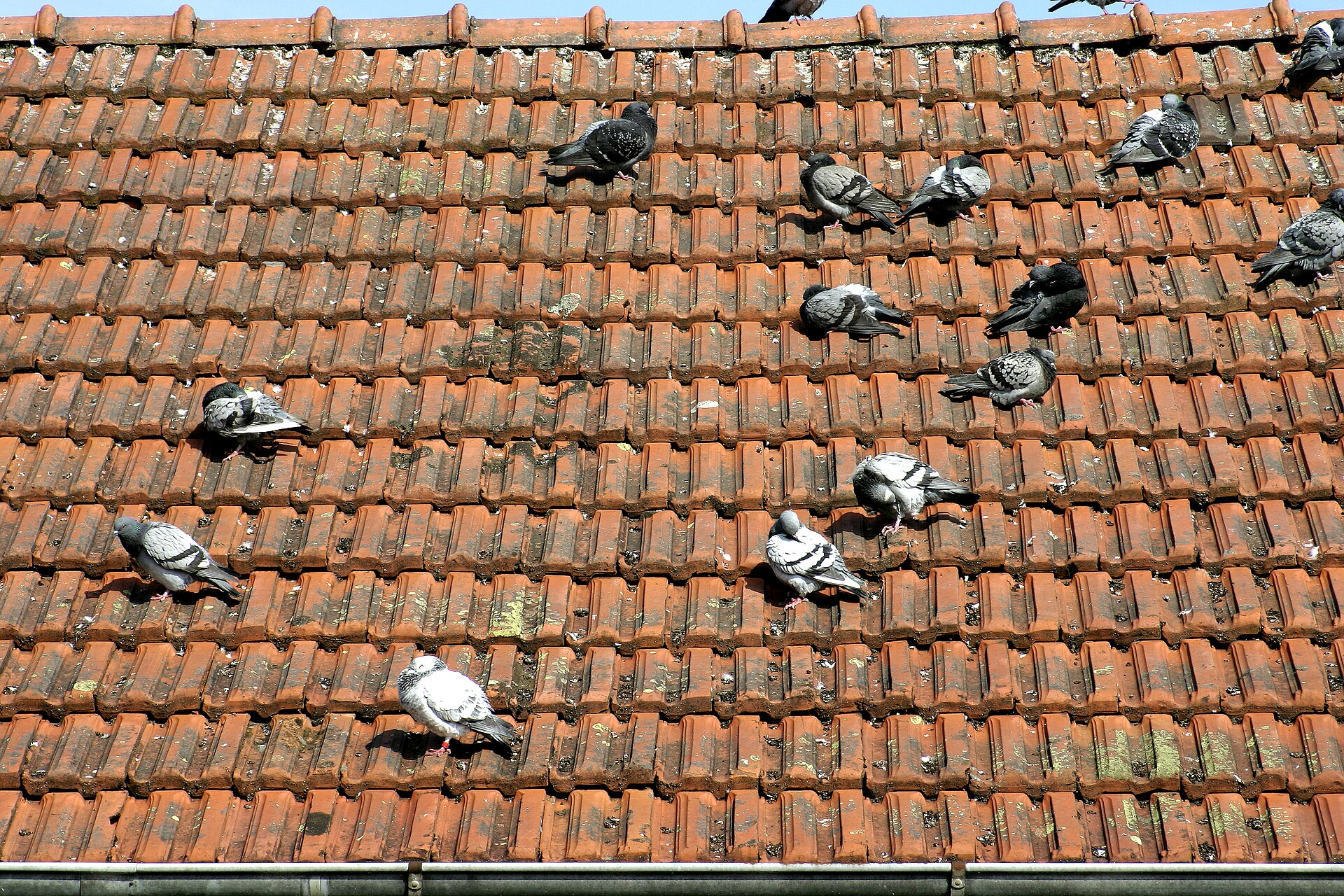
The gap between a panel and the roof sheet is about 100 mm to 150 mm deep, dry, shaded and warm. It is walled on top and open on the sides. For a feral pigeon that is a better nest site than anything else in a suburb, and pigeons breed year round in Australian cities and reuse the same spot for generations. Once a pair settles, others follow.
Brushtail possums use the space for the warmth in cooler months. Sparrows, starlings, mynas and welcome swallows also move in, and in some suburbs corellas and cockatoos chew panel edges and cabling out of boredom rather than to nest.
The damage this actually causes
This is not a cosmetic problem. The real costs come from four places.
Corrosion. Bird droppings are acidic. Over time they eat into the anodised finish on aluminium panel frames and the coating on Colorbond or Zincalume roof sheets. Why Solar puts roof repairs from droppings-related corrosion at $2,000 and up.
Chewed DC cabling. This is the serious one. Rooftop solar runs at high voltage DC, and possums and some parrots will chew through cable insulation. Damaged DC cable can arc, and a nest under a panel is dry grass, straw and scavenged plastic sitting right next to it in summer heat. Why Solar prices a full re-wire of chewed DC cabling at $500 to $1,000. The fire risk is the reason not to leave it.
Lost output. Droppings on the glass shade cells and can drive hot spots, which cause permanent damage. Why Solar cites $300 to $500 per panel to replace a hot-spot damaged panel. Claims that nesting cuts output by 20 to 30 per cent come from cleaning companies rather than independent testing, so treat that range as a sales figure, not a measurement.
Blocked gutters, mites and noise. Nesting material, feathers and droppings wash into the gutter, which is a water damage problem and an ember risk in bushfire-prone areas. Nests also carry mites and lice that move into roof cavities and then into the house. And pigeons on a metal roof at 5 am are loud enough to be the main reason people call.
The methods, ranked honestly
| Method | Typical cost | Does it work? | Honest downside |
|---|---|---|---|
| Steel mesh skirt, clipped to panel frames | $18 to $30 per metre fitted | Yes. Seals the gap completely | Highest upfront cost, and a bad fit leaves gaps at corners and cable entries |
| Moulded plastic or PVC clip-on guard | Similar to mesh, sometimes less | Yes, when the panel frame suits the clip | Plastic can go brittle in full sun over years, and clips only fit panels with the right flange |
| Bird spikes on panel edges | Around $40 a box at hardware stores | Barely. Stops perching, not entry | Birds walk past them to get under the array. Solves the wrong problem |
| Netting draped over the whole array | Varies | Partly | Shades cells, sags, traps leaves, and birds can get tangled in it. Avoid over panels |
| Gels, ultrasonic units, decoy owls, reflective tape | $50 to $500 | No | Birds habituate in weeks. SolarQuotes lists noise machines, rotating mirrors and plastic owls as things that do not appear to be effective |
The short version: buy a barrier, not a deterrent. The only question worth debating is mesh versus moulded guard, and that mostly comes down to which clips cleanly to your panel frame.
If you go with mesh, ask what it is made of. Marine grade or 304 stainless costs more but lasts near the coast. UV-stabilised PVC-coated galvanised mesh is the common mid-range option. Bare galvanised mesh within a few kilometres of the ocean will rust.
DIY or pay a professional
DIY kits are cheap. Shine Panel Care sells “a $180 DIY kit (30 metres of the same 304 stainless mesh)”, Why Solar puts kits at $150 to $250, and SolarQuotes describes a solar skirt supplied in a 30 metre roll with fittings for a couple of hundred dollars, enough for around 12 panels.
DIY makes sense if you have a single storey home, a low pitch roof, safe ladder access and no existing nest. It stops making sense the moment any of those change.
The case for paying someone:
- Falls. Roof work is the main killer in this trade. SafeWork NSW publishes a guide to safe solar installation covering fall and electrical risk on rooftops.
- Live DC. Panels generate whenever there is light. There is no off switch on the modules, only isolators downstream.
- Health. Dried droppings are a real biological hazard, covered below.
- Nest removal. A professional job includes clearing what is up there before sealing.
One practical tip from SolarQuotes: if you know you want bird proofing, ask for it at the quote stage. It is far cheaper to fit while the panels are going on than to retrofit. Worth raising with any installer you shortlist from our directory or our guide on how to choose a solar installer.
Does bird proofing void your warranty?
It can, and the deciding factor is whether anyone drills. Panel warranties are written around the module as manufactured, so drilling or screwing into the frame is a modification. Some manufacturers accept it and some do not. SolarQuotes says to check with the panel manufacturer that its warranty is fine with holes in the frame before anyone drills.
Non-penetrating clips avoid the problem entirely. They hook onto the existing frame flange and hold the mesh with no holes, no screws and no adhesive. That is now the standard approach in Australia and it is what you should insist on.
Three other points worth knowing:
- Roof warranty. Screwing into roof sheeting or tiles to hold mesh can affect a roofing warranty and creates leak points. Fixings should go to the panel frame or the mounting rail, not the roof.
- Bird damage is not covered anyway. Panel and inverter warranties do not cover corrosion, nesting damage or chewed cable. Neither does the workmanship warranty. That is your problem to prevent.
- Who does the work. If the job touches wiring or the array in a way that counts as electrical work, it needs a licensed electrician. An unlicensed operator is the fastest way to lose cover on the whole system.
Ask the proofing company to confirm in the quote, in writing, that the fixing method is non-penetrating and does not affect your panel warranty.
Clearing out an existing infestation safely
If something is already living up there, sealing the mesh without clearing the nest first is the worst possible outcome. You trap the animal, the nesting material and the fire and corrosion risk under a barrier you just paid for.
Dried droppings are a genuine health hazard. WorkSafe Queensland publishes guidance on working with bird and bat droppings because of diseases including psittacosis, which is carried in dried droppings and inhaled as dust. This is not theoretical in solar. SolarQuotes reported a solar repair specialist who contracted psittacosis and other bacterial infections from pigeon guano exposure and needed months of treatment.
If you are doing any of this yourself:
- Wear a properly fitted P2 disposable respirator or better. A surgical mask does nothing here.
- Wear gloves, eye protection and clothing you can bag afterwards.
- Wet the droppings down before you touch them. Never dry sweep or dry brush, because that is what puts spores into the air.
- Bag the waste on the roof and seal it, do not carry loose material through the house.
- Wash panels with water and a soft brush only. Do not use a pressure washer, it forces water into seals and junction boxes.
Our solar panel maintenance guide covers the cleaning side in more detail.
Once the space is clear, get the DC cabling inspected before the mesh goes on. That is the only chance you will have to look at it easily.
Possums, native birds and the law
This is where Australian rules differ from overseas advice. Possums are protected native wildlife. In New South Wales they are covered by the Biodiversity Conservation Act 2016, and NSW Environment and Heritage states that a captured possum “must be released back onto the area near your property, as it will not survive if relocated to a different area”, and that you need a licence first. Victoria protects possums under the Wildlife Act 1975, and trapped brushtails must be released on the same property within 50 metres of capture. Other states have equivalent rules.
The practical result is the same everywhere. You cannot catch a possum and drive it to a park. The legal method is exclusion: wait until it leaves at night to feed, then seal the space so it cannot get back in, and put up a nest box nearby if you want to be decent about it.
Native birds are protected too. Magpies, cockatoos, corellas and swallows cannot be harmed and their active nests cannot be destroyed. Feral pigeons, common mynas and starlings are introduced and not protected, but even for those, exclusion is the standard approach and poisoning is not permitted.
If there are eggs or chicks under your panels right now, you wait until the young have fledged before sealing. Get a licensed wildlife controller or a bird-experienced pest manager to make that call rather than guessing.
FAQ
How long does bird proofing last?
A properly fitted stainless or PVC-coated mesh should last the life of the panels. Australian installers commonly offer a 10 year product warranty on mesh and clips. Plastic guards in full inland sun are the ones most likely to need replacing early.
Will mesh reduce my panel output or cause overheating?
No, if it is fitted correctly. Mesh sits at the perimeter and does not cover the panel face, and it is open enough for air to keep moving under the array. Solid skirting or netting over the glass would be a different story, which is why neither is recommended.
Is it worth it if I have not seen any birds?
If you are in an urban or coastal suburb with pigeons around, yes, because the fitted cost is a fraction of one chewed DC cable repair or one corroded roof section. If you are rural with no pigeons and no possums in the trees, you can reasonably wait and inspect annually instead.
Do I need a licensed electrician to do it?
For the mesh itself, not necessarily. But if the job touches wiring, cable trays or the array mounting in a way that counts as electrical work, it must be done by a licensed electrician. Ask any bird proofing company who is doing what, and confirm they carry public liability insurance and work at heights training.
Will my home insurance cover bird damage to solar?
Usually not for gradual damage such as corrosion or nesting, which most policies exclude as wear and tear. A resulting fire may be a different question. Read your product disclosure statement and ask your insurer rather than assuming.
Related reading
About this research
This is independent desk research by Solar Cobber. We did not visit sites, request quotes or accept payment for inclusion. Figures are dated and sourced, and pricing and policy details change, so confirm current terms directly before you sign anything.