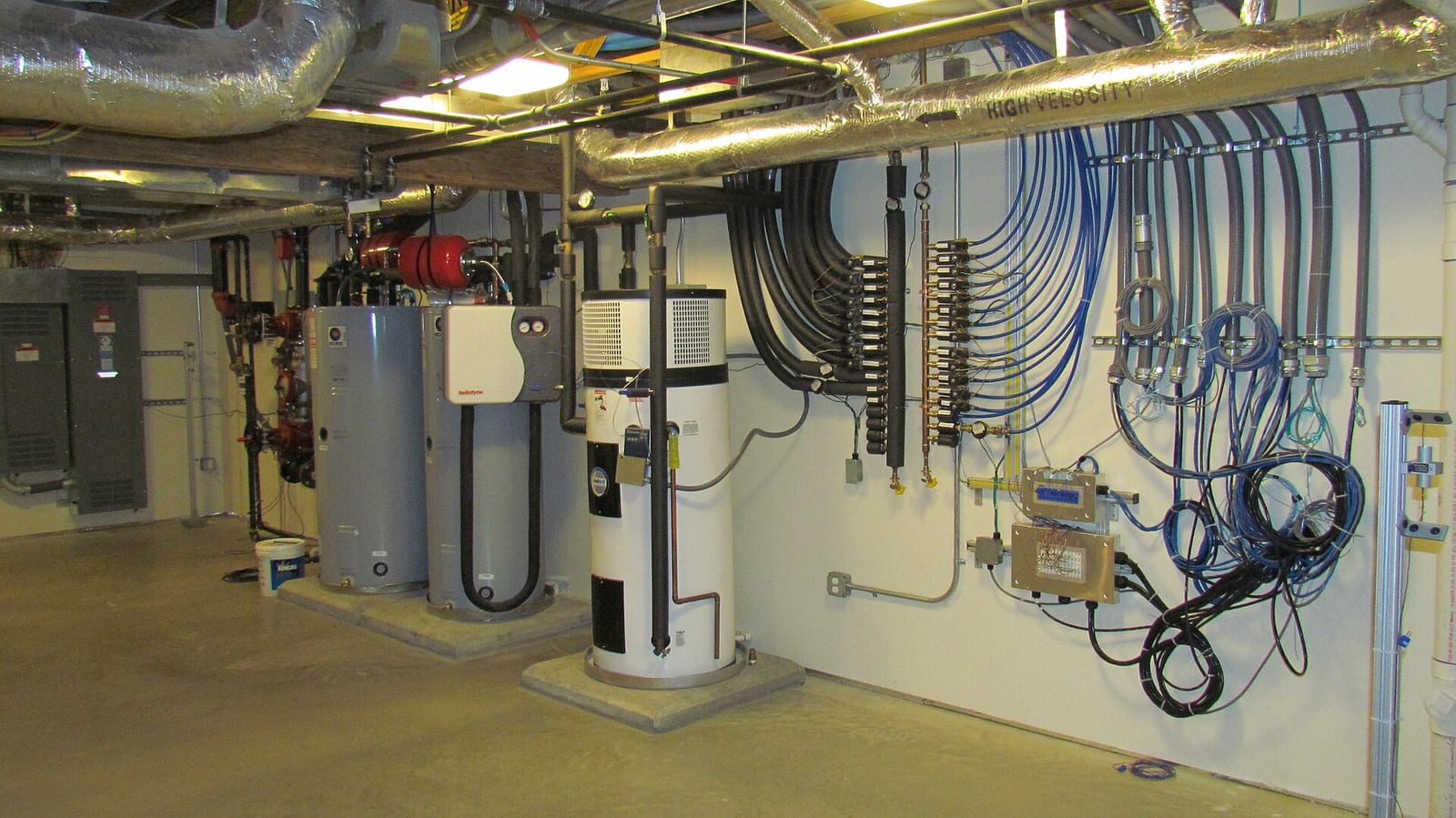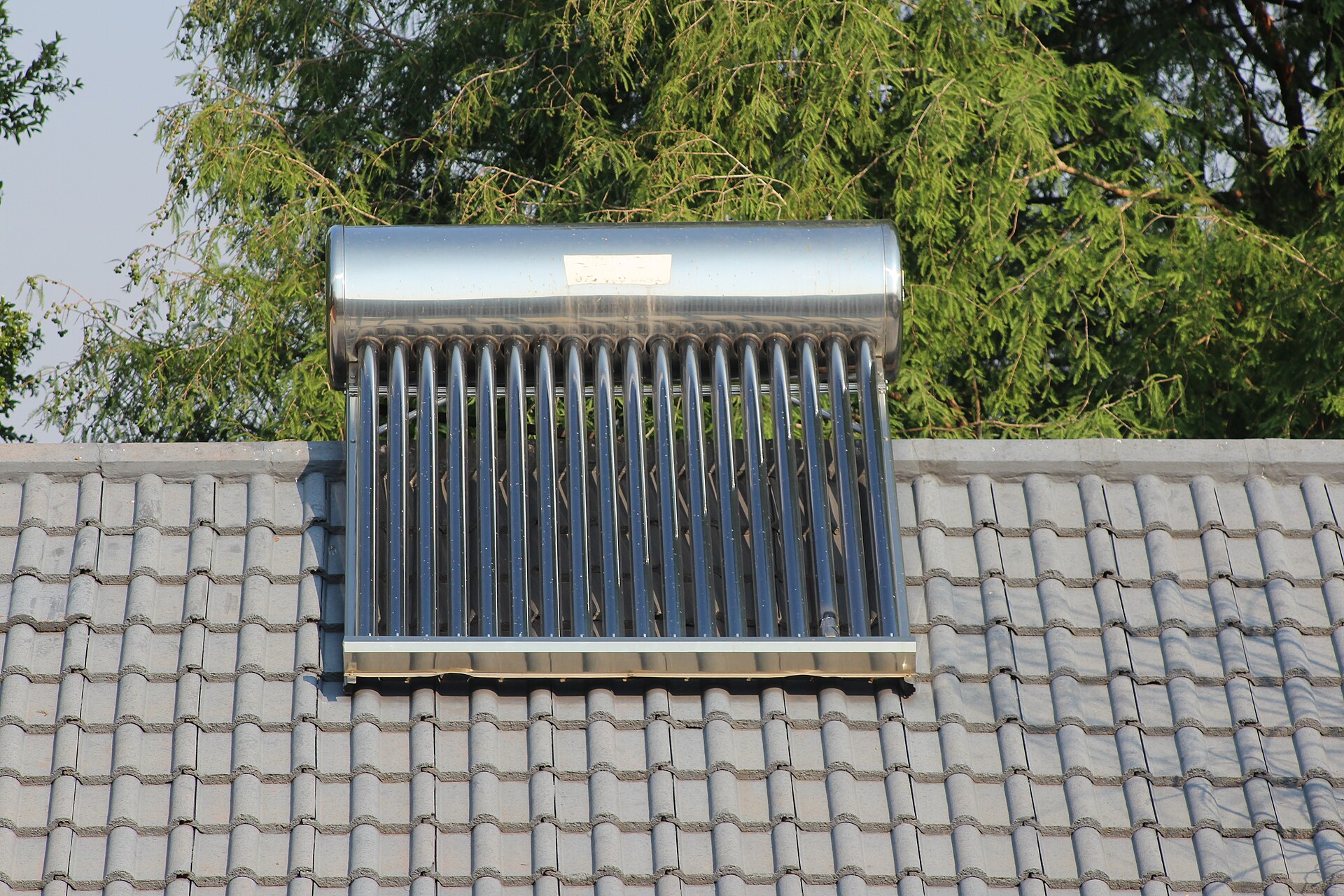

A solar hot water system (a roof-mounted thermal system, not solar panels) costs about A$4,000 to A$8,000 fully installed in Australia as at November 2026, according to CHOICE, with SolarQuotes giving A$4,000 to A$8,500. Federal Small-scale Technology Certificates (STCs) come off that price, but they shrink every 1 January. A heat pump costs less to buy and, in Melbourne’s figures, less to run.
This guide shows the price by system type, how the STC discount is worked out, the state rebates, and a simple payback for each option. It is independent desk research, and the prices are ranges from published sources, not quotes.
Key facts
- As at November 2026, CHOICE (updated 12 May 2026) puts a fully installed solar thermal hot water system at A$4,000 to A$8,000, and SolarQuotes puts it at A$4,000 to A$8,500.
- A heat pump hot water system costs A$3,000 to A$7,000 installed according to CHOICE and A$3,000 to A$7,500 according to SolarQuotes, so solar thermal sits about A$1,000 higher at both ends of the range.
- The Clean Energy Regulator sets the deeming period for solar water heaters at 5 years for 2026 and 4 years for 2027, so a system installed in 2027 earns 80% of the certificates of the same system installed in 2026.
- Solar Victoria’s hot water rebate is up to A$1,000 (up to A$1,400 for listed locally made products) and covers electric boosted solar hot water, as shown on its page updated 9 November 2026.
- CHOICE says a four person household needs a 300 to 360 litre tank and about 4 square metres of roof collectors for a thermal system.
- In Melbourne in winter, mean daily solar exposure falls to about 43% of the annual mean (BoM figures), which is why the booster element or gas burner does so much work in the south.
Source: CHOICE solar hot water guide (updated 12 May 2026); Clean Energy Regulator STC page.
How much does a solar hot water system cost?
A solar thermal system costs A$4,000 to A$8,000 installed, and roof-tank (thermosiphon) systems with an electric booster sit at the cheaper end. Split systems with a ground tank and gas-boosted systems cost more, according to CHOICE. The table shows each hot water option side by side, as checked in November 2026.
| System | CHOICE (updated 12 May 2026) | SolarQuotes (checked November 2026) |
|---|---|---|
| Solar thermal (flat plate or evacuated tube) | A$4,000 to A$8,000 | A$4,000 to A$8,500 |
| Heat pump | A$3,000 to A$7,000 | A$3,000 to A$7,500 |
| Conventional electric storage tank | A$2,000 to A$3,000 | A$2,000 to A$3,000 |
| Solar diverter (extra, for an electric tank) | A$1,000 to A$2,000 | A$1,100 to A$2,000 |
| Timer for an electric tank | not given | about A$350 (about A$200 if fitted with solar) |
Neither source states whether its range is before or after the STC discount, so ask every installer to show the price both ways. Neither publishes prices by brand or tank size, and we found no national installed price list from Solahart, Rheem, Rinnai, Apricus or Dux. Solahart says its dealers quote separately and publishes only “low, medium or high” price bands, and the A$10,740 average on ProductReview.com.au in our Solahart review mixes hot water, solar panel and battery jobs, so it is not a hot water price.
- Low
- High
Source: CHOICE, Solar hot water: How to buy the best system for your home, updated 12 May 2026.
View the data as a table
| Low | High | |
|---|---|---|
| Solar thermal | A$4,000 | A$8,000 |
| Heat pump | A$3,000 | A$7,000 |
| Electric tank | A$2,000 | A$3,000 |
Solar thermal has the widest price range of the three, from A$4,000 to A$8,000, and is the dearest at both ends.
What changes the price of solar hot water?
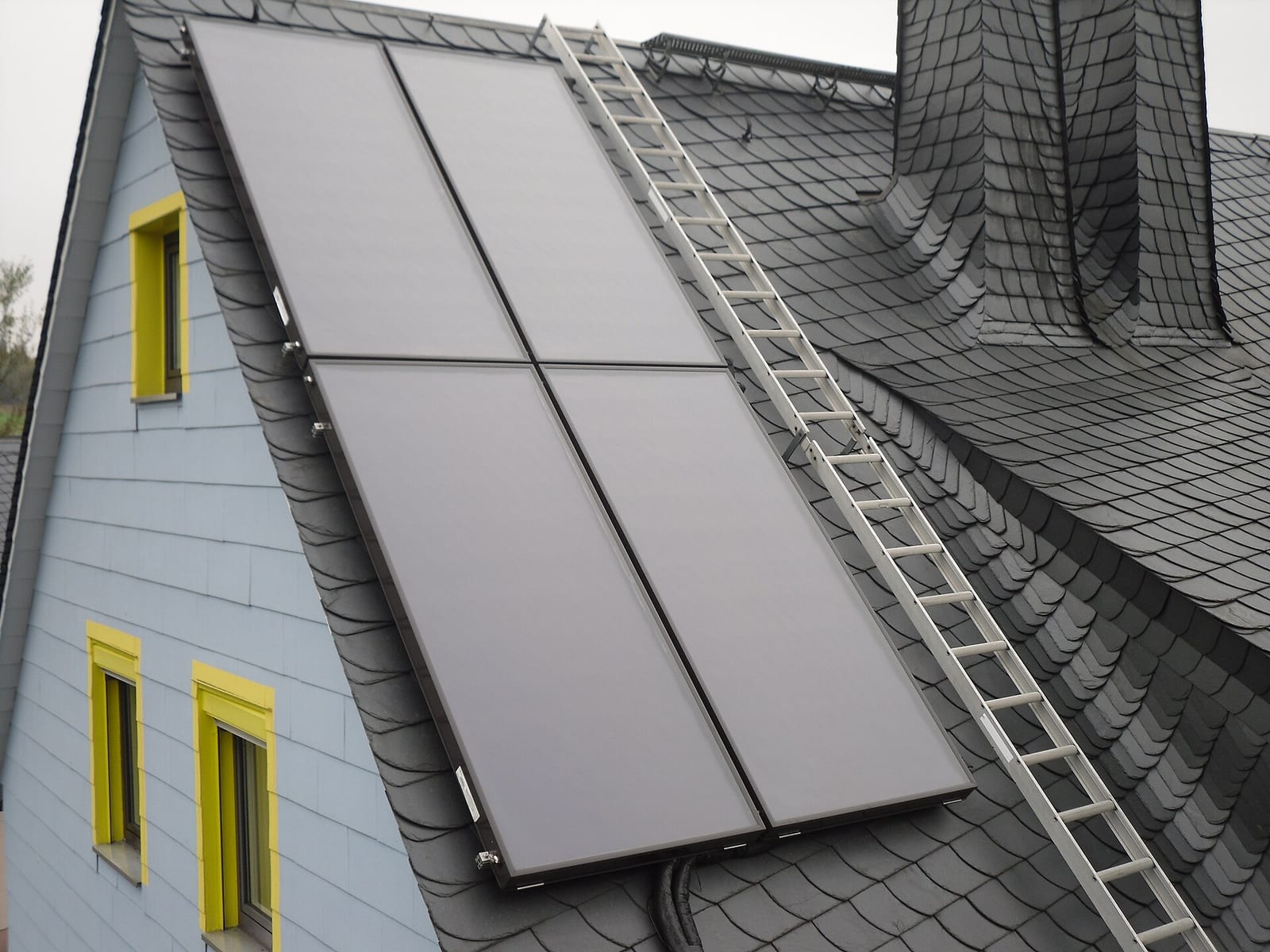
Roof work, tank position and the booster fuel move the price most. CHOICE says roof-mounted tanks are usually cheaper than split systems and electric boosters are cheaper than gas boosters.
- Tank position. A thermosiphon roof tank may need roof reinforcing; a split system has a ground tank and a pump.
- Collector type. Evacuated tubes suit cold areas but cost more and are more fragile.
- Roof access and booster. Hard roof access can add cost, and gas boosting needs a gas connection.
How the STC discount works for solar hot water
The STC discount is a one-off block of certificates, usually assigned to your installer, that shrinks by 10 percentage points of the full 10-year count every 1 January. The Clean Energy Regulator says the register of solar water heaters lists how many STCs each model earns over a 10 year life. The deeming period is then multiplied by a factor and rounded down to a whole number.
The deeming period is 5 years in 2026 (factor 0.5) and 4 years in 2027 (factor 0.4), and it ends at 1 year (factor 0.1) in 2030. Only models on the register qualify, the tank must be under 700 litres, and installation must meet your state licensing rules. Check the register and the Clean Energy Regulator’s solar water heater STC calculator for your model and postcode zone.
View the data as a table
| Share of register STCs | |
|---|---|
| 2025 | 60% |
| 2026 | 50% |
| 2027 | 40% |
| 2028 | 30% |
| 2029 | 20% |
| 2030 | 10% |
The same system earns 50% of its register count in 2026 and 40% in 2027, so waiting a year cuts the discount by one fifth.
Solar Cobber calculation (worked example, assumed numbers). The Clean Energy Regulator does not publish a typical dollar value for solar water heaters, so the count below is an assumption, not a listed model. If a model earned 15 STCs in 2026 and STCs sold at about A$39.85 (the October 2026 price in a Demand Manager certificate report; the clearing house price is A$40), the discount is about A$598. In 2027 the same system earns 12 STCs (15 x 0.4 / 0.5), or about A$478. CHOICE says the STC price is around A$35 to A$40 and quotes a federal saving of A$600 to A$1,000, but it makes that estimate for heat pumps and solar systems together, so treat it as a guide.
What state rebates apply to solar hot water?
Victoria is the only state we found with a published rebate that explicitly covers electric boosted solar hot water, and the rest give nothing extra or no published dollar figure. The table shows what each state offers as checked in November 2026. Read our heat pump hot water rebate guide for the full state-by-state view.
| State | Program | What it covers | Amount |
|---|---|---|---|
| Victoria | Solar Victoria hot water rebate | Heat pump and electric boosted solar, 50% of price after other discounts | Up to A$1,000, or A$1,400 for listed locally made products |
| NSW | Hot Water Upgrade Incentive (Energy Savings Scheme) | Page names heat pump and solar water heaters | Indicative amounts published only for heat pumps: up to A$640 from electric, A$330 from gas |
| Queensland, WA | No state hot water rebate found | Federal STCs only | Nil |
Solar Victoria requires an owner-occupier, household taxable income under A$150,000, a property under A$3 million and a system being replaced that is at least 3 years old. It also says that from 1 March 2027 existing Victorian homes must replace gas hot water systems with an efficient electric alternative as they reach end of life, so check that rule before choosing a gas-boosted system there. Our state pages cover Victoria, NSW, Queensland and Western Australia.
Does solar hot water work in every city?
It works best in the north and the sun-rich west, and winter is the problem everywhere else. The Bureau of Meteorology mean daily solar exposure in June is 93% of the annual mean in Darwin but only 43% in Melbourne and 35% in Hobart.
| City | Annual mean (kWh/m2 per day) | June mean (kWh/m2 per day) | June as % of annual |
|---|---|---|---|
| Darwin | 5.94 | 5.50 | 93% |
| Brisbane | 5.14 | 3.31 | 64% |
| Sydney | 4.58 | 2.42 | 53% |
| Perth | 5.36 | 2.64 | 49% |
| Canberra | 4.67 | 2.28 | 49% |
| Adelaide | 4.92 | 2.22 | 45% |
| Melbourne | 4.17 | 1.78 | 43% |
| Hobart | 3.83 | 1.33 | 35% |
The table shows Bureau of Meteorology climate averages for one airport or metro station per city (1990 to 2026 for most, 2007 to 2026 for Canberra), converted from MJ/m2 at 3.6 MJ per kWh, checked 14 November 2026. The percentage is a Solar Cobber calculation (June divided by annual mean). It measures sunlight on a flat surface, not tank temperature, so use it for comparison between cities only.
Source: Bureau of Meteorology climate averages, calculation by Solar Cobber, 14 November 2026. Solar Cobber calculation: June kWh/m2 per day divided by the annual mean kWh/m2 per day.
View the data as a table
| June as % of annual | |
|---|---|
| Darwin | 93% |
| Brisbane | 64% |
| Sydney | 53% |
| Perth | 49% |
| Canberra | 49% |
| Adelaide | 45% |
| Melbourne | 43% |
| Hobart | 35% |
Darwin keeps 93% of its average sunshine in June while Hobart keeps 35%, so a southern roof collector leans on its booster for months.
How much does solar hot water cost to run?
In Victoria’s published figures, a solar system with an electric booster costs A$375 a year to run, more than a heat pump at A$275. Sustainability Victoria’s running-cost figures (July 2025 update, for a four person Melbourne home using 150 litres a day at 29.2c per kWh peak) are reproduced in our solar hot water vs heat pump guide. The Sustainability Victoria page blocked our automated check on 14 November 2026, so we rely on that earlier reading.
Source: Sustainability Victoria, running costs for water heating, July 2025 update.
View the data as a table
| Running cost | |
|---|---|
| Electric storage, peak | A$1,015 |
| Electric storage, off peak | A$770 |
| Gas storage, 5 star | A$740 |
| Solar, electric booster | A$375 |
| Heat pump, no PV | A$275 |
| Solar, gas booster | A$230 |
| Heat pump with PV | A$165 |
Gas-boosted solar is cheapest to run in the Melbourne table at A$230, but only while you pay for a gas connection, and a daily gas supply charge is not part of that figure. CHOICE adds that households switching from gas or electric typically cut hot water costs by 70 to 80%.
Is solar hot water worth it? A payback calculation
On Melbourne running costs, a heat pump pays back faster than solar thermal against the same old system. The table is a Solar Cobber calculation: simple payback equals the CHOICE installed price range divided by the yearly saving from the running-cost chart above. It ignores STCs, state rebates, price rises and the cost of the old tank, all of which shorten the payback.
| Replacing | With | Yearly saving | Payback, A$4,000 or A$3,000 system | Payback, A$8,000 or A$7,000 system |
|---|---|---|---|---|
| Electric storage, peak (A$1,015) | Solar, electric booster (A$375) | A$640 | 6.3 years | 12.5 years |
| Electric storage, peak (A$1,015) | Heat pump, no PV (A$275) | A$740 | 4.1 years | 9.5 years |
| Gas storage, 5 star (A$740) | Solar, gas booster (A$230) | A$510 | 7.8 years | 15.7 years |
| Gas storage, 5 star (A$740) | Heat pump, no PV (A$275) | A$465 | 6.5 years | 15.1 years |
- Cheapest system
- Dearest system
Source: CHOICE installed prices (updated 12 May 2026); Sustainability Victoria running costs (July 2025); calculation by Solar Cobber.
View the data as a table
| Cheapest system | Dearest system | |
|---|---|---|
| Electric to solar thermal | 6.3 years | 12.5 years |
| Electric to heat pump | 4.1 years | 9.5 years |
| Gas to solar thermal (gas boost) | 7.8 years | 15.7 years |
| Gas to heat pump | 6.5 years | 15.1 years |
Replacing an electric tank pays back fastest, and in every row the heat pump beats solar thermal in cool Melbourne. CHOICE’s own payback guide is wider: about 5 years or less for a high-use four person home replacing electric, 5 to 10 years replacing gas, as little as 3 years for a big household and 10 years or more for a two person household that showers briefly. These numbers do not include warmer cities, where the booster fires less and solar thermal does better, and we found no published payback by city.
CHOICE and SolarQuotes both note that with solar panels now cheap, roof space is often better used for panels that run a heat pump. If you already have panels, a timer or diverter on the existing tank is the cheapest route, as set out in our solar hot water vs heat pump guide. Compare the sister price list in our heat pump hot water system price guide.
Solar hot water vs heat pump: which should you buy?
For most homes a heat pump is cheaper to buy and run, and solar thermal wins only with a sunny north-facing roof, a warm climate and spare roof area. If your quote is for a branded system, our Solahart reviews page rates the brand and its dealers, and our STC explainer covers the certificate scheme.
What to check on your solar hot water quote
- Is the model on the Clean Energy Regulator register of solar water heaters, and how many STCs does it earn in your zone?
- Is the quoted price before or after STCs, and at what price per STC?
- Is roof reinforcement, scaffolding, plumbing and removal of the old tank included?
- What are the tank size, collector area and booster type?
- Does it qualify for your state rebate, and who applies for it?
- Who honours the warranty if the installer closes?
Get three itemised quotes and read our guide to comparing solar quotes. You can also browse installers in your area.
FAQ
How much does a solar hot water system cost in Australia?
A solar hot water system costs about A$4,000 to A$8,000 fully installed according to CHOICE (May 2026), or A$4,000 to A$8,500 according to SolarQuotes. Roof-tank electric boosted systems are cheaper than split or gas boosted systems. Neither source says whether the range is before or after STCs.
Is there a solar hot water rebate?
Yes, federal STCs apply to eligible models in every state, and Victoria adds up to A$1,000 (A$1,400 for locally made products). The STC discount shrinks every 1 January because the factor falls from 0.5 in 2026 to 0.4 in 2027. NSW lists solar water heaters under its Hot Water Upgrade Incentive but publishes dollar amounts only for heat pumps.
Is solar hot water cheaper to run than a heat pump?
Not with an electric booster in Melbourne. Sustainability Victoria’s July 2025 figures show A$375 a year for electric boosted solar against A$275 for a heat pump without solar panels. Gas boosted solar is cheaper at A$230, but you keep paying for gas.
How long does solar hot water take to pay back?
CHOICE says about 5 years or less replacing an electric system in a high-use four person home, and 5 to 10 years replacing gas. Our Melbourne calculation gives 6.3 to 12.5 years for solar thermal replacing an electric tank, before rebates. Small households can take 10 years or more.
Does solar hot water work in winter?
Yes, but the booster does more work. Bureau of Meteorology June sunshine is 43% of the annual mean in Melbourne and 35% in Hobart, against 93% in Darwin, so southern systems rely on their booster for months.
Is solar hot water better than solar panels and a heat pump?
Usually not now. CHOICE says it is commonly advised to skip solar thermal and use the roof for extra panels powering a heat pump, and SolarQuotes says the same. Solar thermal still suits warm climates and homes without space for a heat pump.
Sources
- CHOICE, Solar hot water: How to buy the best system for your home, updated 12 May 2026
- SolarQuotes, Solar-powered hot water options, checked 14 November 2026
- Clean Energy Regulator, Solar water heaters and air source heat pumps
- Clean Energy Regulator, Calculate small-scale technology certificate entitlements
- Solar Victoria, Hot water rebate, updated 9 November 2026
- NSW Government, Hot Water Upgrade Incentive, updated 6 February 2026
- Sustainability Victoria, running costs for water heating, July 2025 figures
- Bureau of Meteorology, climate averages
- Demand Manager, Certificate Report October 2026
About this guide
Solar Cobber editorial team. This is independent desk research checked in November 2026. Solar Cobber is a free directory that may earn referral or advertising fees from installers, and commercial relationships never affect content. This is not financial advice. Send corrections via /contact.
Filed under Savings
Back to blog