
For most Australian homes in 2026, a heat pump is the easier and cheaper choice, and solar hot water only pulls ahead if you have a sunny north-facing roof, a warm climate and gas to boost it. If you already own rooftop solar panels, there is a third option that often beats both: keep a plain electric tank and heat it with your own daytime surplus using a solar diverter or a timer.
This guide compares all three on cost, running cost, climate, roof space, noise, maintenance and rebates, then gives a decision guide by household.
How solar hot water works
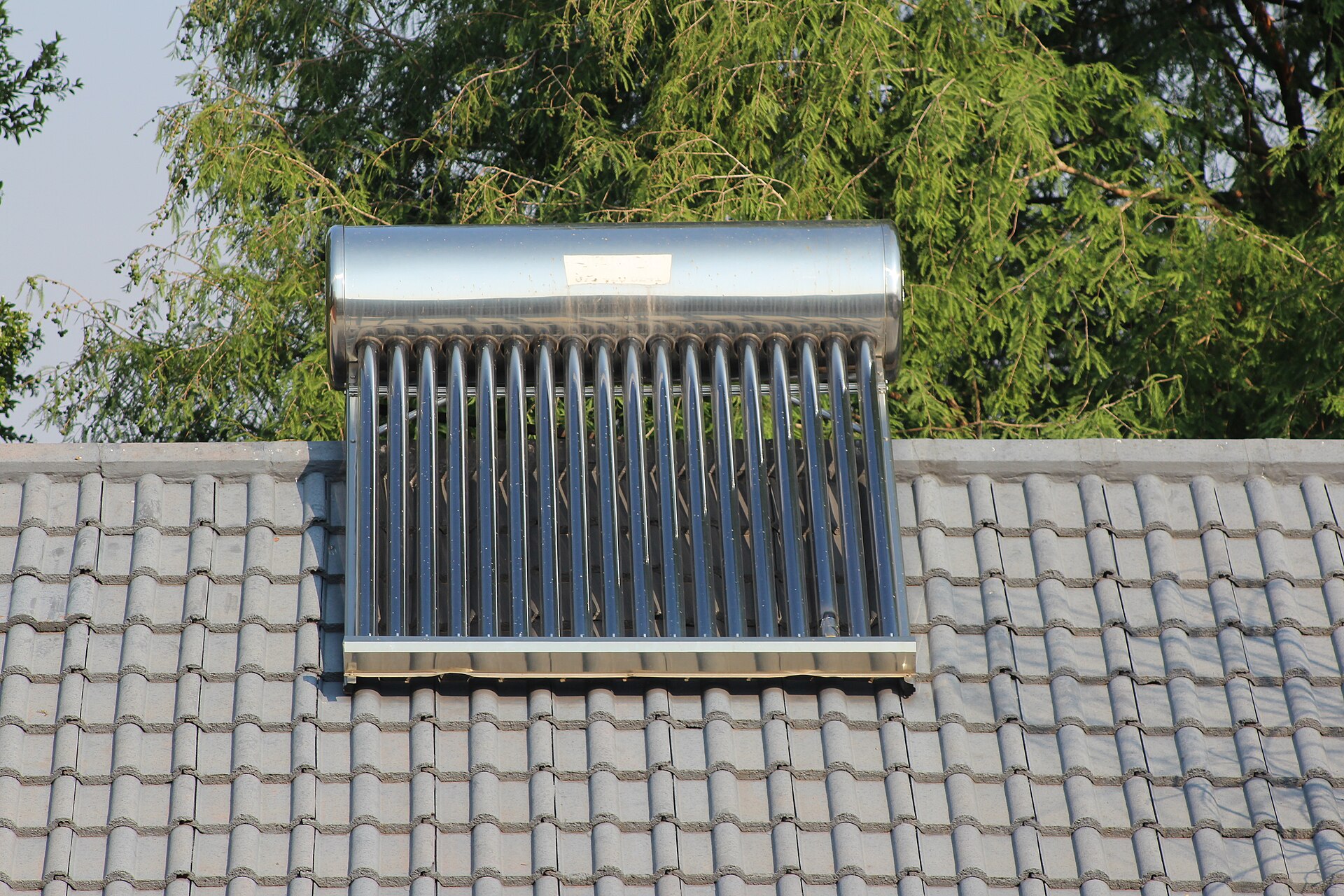
Solar hot water is a thermal system. Panels or glass tubes on your roof heat water directly using sunlight. Nothing turns sun into electricity here, the sun just heats the fluid.
Flat plate collectors are glazed boxes with pipes inside and are the cheaper option. Evacuated tubes hold heat better, so they suit colder areas, but CHOICE notes they cost more and are more fragile. The tank sits either on the roof beside the collectors, which is cheaper but may need the roof reinforced, or on the ground with a pump.
Every system has an electric or gas booster, because the sun does not always deliver. The booster is not a rare backup. In a cloudy southern winter it does a lot of the work, and that is where the running costs come from.
How a heat pump works
A heat pump hot water system is a tank with a small refrigeration unit attached, working like a fridge in reverse. A fan pulls in outside air, a refrigerant cycle strips the heat out of it, and that heat goes into the water. Because it moves heat rather than making it, it uses far less electricity than a plain element.
That efficiency is measured as a coefficient of performance, or COP. A COP of 4 means one unit of electricity delivers four units of heat. The catch is that COP falls as the air gets colder. CHOICE’s heat pump buying guide lists one model at a COP of 2.5 at 0C, 3.45 at 7.5C and 5.65 at 25C. Same unit, very different performance depending on the morning.
Heat pumps need no roof space. They sit outside, usually where the old tank stood.
The third option: an electric tank plus a solar diverter
If you already have rooftop solar, you can skip both and heat a standard electric tank with power you would otherwise export.
A timer is the cheap version. You set the tank to heat at midday instead of overnight so it draws from your panels. It costs almost nothing, but it is blunt. If a cloud sits overhead at 1pm, you buy that power at the retail rate.
A solar diverter is the smart version. It measures what you are about to export and sends exactly that much to the tank’s element instead, second by second. SolarQuotes’ comparison of Australian diverters lists the Catch Power Green Catch at around $1,000 installed and the Blue Catch at around $1,700 for single phase, with the Paladin-2 around $790 and Powerdiverter around $900 supplied but not installed.
This took off because feed-in tariffs have fallen so far. If your feed-in tariff is around 5c per kWh and your peak import rate is closer to 29c, a kilowatt hour sent to the tank is worth roughly six times more than one sold.
The limitation is efficiency. A resistive element is one for one, so one kilowatt hour of solar buys one kilowatt hour of heat. A heat pump gives you three to five. A diverted tank needs three to four times more spare solar to do the same job, and on short winter days you may not have it.
Comparison table
| Solar hot water | Heat pump | Electric tank plus diverter | |
|---|---|---|---|
| Installed cost | $4,000 to $8,000 | Unit $2,360 to $7,910, most $3,000 to $5,500, plus install | Diverter from about $790, timer for nothing |
| STC rebate | Yes | Yes | None |
| Roof space | About 4 sqm of collectors | None | Uses the PV you have |
| Run cost, 4 people, Melbourne | $375 electric boosted, $230 gas boosted | $275 on peak, $150 to $180 with PV | Not published |
| Cold climate | Booster does the winter work | COP drops below about 7C | Short winter days limit it |
| Noise | Silent | 37 to 54 dB(A) by model | Silent |
| Best for | Warm states, north roof, gas boost | Most homes, most climates | Homes with spare daytime solar |
Costs are from CHOICE. Running costs are from Sustainability Victoria, updated July 2025, for a Melbourne home using 150 litres a day at 29.2c per kWh peak.
Upfront cost
The gap between the two big systems is smaller than the headline prices suggest. Solar hot water often means roof work, longer plumbing runs and sometimes structural reinforcement, while a heat pump usually replaces an old tank in the same spot. The diverter path is cheapest if your existing tank is healthy. If it has failed, you are buying a tank plus a diverter, which lands near heat pump money with no rebate attached.
Running cost
Sustainability Victoria’s July 2025 figures for a four person Melbourne household using 150 litres a day:
| System | Annual running cost |
|---|---|
| Electric storage, peak tariff | $1,015 |
| Electric storage, off peak | $770 |
| Gas storage, 5 star | $740 |
| Solar with electric booster, peak | $375 |
| Heat pump, peak tariff, no solar PV | $275 |
| Solar with gas booster | $230 |
| Heat pump with solar PV | $150 to $180 |
In Melbourne, electric boosted solar hot water costs more to run than a heat pump. The booster does enough work through a southern winter to wipe out the advantage of free rooftop heat.
Gas boosted solar is cheapest in that table, but only while you keep a gas connection, and the daily gas supply charge never shows up in a per-appliance table.
The best pairing overall is a heat pump on your own solar, set to heat at midday.
Climate suitability
Warm and sunny (Brisbane, Darwin, Perth, Townsville). Both work well. Collectors get long strong sun so the booster rarely fires, and heat pump COP rises with warm air.
Temperate (Sydney, Adelaide, coastal NSW). Heat pumps are the safer pick. Solar thermal still performs, but winter cloud means more boosting than the brochure suggests.
Cool and cloudy (Melbourne, Hobart, Ballarat, Canberra, the Blue Mountains). Heat pumps win on running cost. Pick a model rated for cold mornings and ask for the published COP at 0C and 7C. Solar thermal here leans hard on its booster from May to August. Neither fails in the cold, they just get dearer to run.
Roof space and noise
Solar hot water needs roof area. CHOICE suggests roughly 4 square metres of collector for a four person household, on a section with good sun, preferably facing north. That is roof you cannot then use for panels, so if your roof is small, shaded or already full of PV, solar thermal gets hard to justify.
A heat pump needs no roof, but it makes noise. CHOICE’s listings show sound levels from 37 dB(A) to 54 dB(A), a big spread on a narrow block. Ask for the decibel rating before you sign, plan where the unit will sit, and check your council’s noise rules. A diverter needs only space at the switchboard.
Maintenance
All three are tanks first. The sacrificial anode inside corrodes so the steel does not, and if you never check it you will buy a new tank early whichever technology you chose.
Solar hot water has the simplest hardware, with no moving parts beyond a pump on split systems. CHOICE suggests an inspection roughly every five years, puts a full service at $300 to $500, and says a well maintained system can last decades. A heat pump adds a compressor and a fan, the parts most likely to fail and the dearest to replace, which is the trade-off for the lower running cost. A diverted tank is simplest of all, with a cheap replaceable element.
Rebates
Solar hot water and heat pumps both earn Small-scale Technology Certificates. A plain electric tank earns none, even if you run it on your own solar. The Clean Energy Regulator’s rules matter before you shop:
- The model must be on the register of solar water heaters. Not listed, no rebate.
- Solar water heaters must be under 700 litres, air source heat pumps 425 litres or less.
- Installation must meet your state or territory’s licensing rules.
- Certificates you create yourself must be created within 12 months. Most people assign that right to the installer, so it appears as a discount on the quote.
The certificate count depends on the model and your postcode zone, and the deeming period shrinks by one year every 1 January because the scheme closes at the end of 2030, so the same system is worth less each year you wait. Check your own number on the REC Registry calculator, and see our guide to the STC rebate for how the value is set.
State schemes stack on top. The Solar Victoria hot water rebate is up to $1,000, or up to $1,400 for eligible locally made products, covering heat pumps and electric boosted solar. You must be an owner occupier with household combined taxable income under $150,000 (lowered from $210,000 on 1 July 2026), the property must be under $3 million, and the system being replaced at least three years old. In New South Wales, the Hot Water Upgrade Incentive runs through the Energy Savings Scheme, covers electric to heat pump, gas to heat pump and electric boosted solar, and is applied by an approved provider at the point of sale. Rebate rules change often, so confirm terms on the scheme’s own page.
Which one suits your home
| Your situation | Best pick | Why |
|---|---|---|
| Have PV, electric tank still working | Timer first, then a diverter | Cheapest path, no new tank |
| Have PV, tank has died | Heat pump set to run midday | Lowest running cost, and it earns STCs |
| No PV, warm climate, spare north roof | Solar hot water, gas boosted if you have gas | Booster barely runs |
| No PV, cool or cloudy climate | Heat pump | Solar thermal boosts all winter |
| Small block, neighbours close | Quiet heat pump sited well, or solar thermal | Noise is the constraint |
| Renting or moving soon | Timer on the existing tank | Nothing else pays back in time |
| Large household, heavy use | Heat pump, sized properly | Running cost gap grows with usage |
On sizing, CHOICE’s heat pump listings suggest 270 to 315 litres for up to six people and 400 litres for up to eight. Whichever way you go, get three written quotes and compare them line by line. Our guide on comparing quotes applies to hot water too, and you can browse installers.
FAQ
Is solar hot water cheaper to run than a heat pump?
Only with a gas booster. Sustainability Victoria’s July 2025 Melbourne figures put gas boosted solar at $230 a year for a family of four, a heat pump at $275, and electric boosted solar at $375. Solar thermal does better than that in warmer states, but a heat pump on rooftop PV is still hard to beat.
Can I add a solar diverter to any electric hot water tank?
You need a tank with a resistive element, which covers standard electric storage tanks, plus room at the switchboard. Diverters differ in the element size they handle and whether they support three phase, so give your electrician the element rating before ordering. They do not work with instantaneous gas or a heat pump. Keep a controlled load tariff or manual boost as a fallback, because wet weeks leave the tank cold.
Does a heat pump work in frosty areas?
Yes, but less efficiently. CHOICE’s data shows one model dropping from a COP of 5.65 at 25C to 2.5 at 0C. It still delivers hot water, it just uses more electricity to do it. Ask the supplier for COP at 0C and 7C, not the headline number.
Do these systems get the same rebate as solar panels?
Same scheme, different maths. Solar water heaters and air source heat pumps earn a one-off block of STCs based on the model and your postcode zone, while panel systems are calculated on system size. Both shrink each January as the scheme heads for its 2030 close.
Related reading
- peak and off-peak electricity times
- the average Australian electricity bill
- what size solar system you need
About this research
This is independent desk research by Solar Cobber. We did not visit sites, request quotes or accept payment for inclusion. Figures are dated and sourced, and pricing and policy details change, so confirm current terms directly before you sign anything.