
SolarEdge
Home Battery
Battery review
Our verdict
The SolarEdge Home Battery is the natural choice if your roof already runs SolarEdge optimisers and a Home Hub inverter, with tidy integration and one app for everything. Outside that ecosystem it is hard to justify, because it is pricier per kWh than most rivals, power is capped at 5 kW per inverter, and the 48V warranty has a strict temperature condition.
- Best for
- Homes with SolarEdge optimisers and a SolarEdge Home Hub inverter
- Look elsewhere if
- Homes without SolarEdge inverters, or anyone wanting high backup power
- Price guide
- Not published
- Warranty
- 10 years with 70% retained capacity; the 48V version is also capped at 2.87 MWh per usable kWh and requires 0°C to 40°C ambient for 95% of the term
Pros
- Integrates with SolarEdge optimisers, Home Hub inverters and the mySolarEdge app
- Single-phase (9.7 kWh) and three-phase (4.85 kWh modules) versions for Australia
- Three-phase 48V version uses LFP cells and has an internal heating procedure for cold charging
- Quiet natural-convection cooling, under 25 dBA
- Warranty is transferable if the battery stays at the original site
Cons
- Only works with SolarEdge inverters, so non-SolarEdge homes face an inverter replacement
- Continuous power is 5 kW, so backup for large loads is limited
- 48V warranty requires ambient temperature between 0°C and 40°C for at least 95% of the warranty period
- Backup needs extra hardware, and some owners report slow switchover in blackouts
- Higher price per kWh than most DC-coupled competitors
Key specifications
| Usable capacity (400V single-phase) | 9.7 kWh per battery, up to 3 per inverter |
|---|---|
| Usable capacity (48V three-phase) | 4.85 kWh per module, up to 5 modules per inverter |
| Continuous power (400V) | 5 kW, 7.5 kW peak for 10 s in backup |
| Continuous power (48V) | 5 kW charge and discharge with multiple modules |
| Round-trip efficiency | Above 94.5% (400V), above 95.4% (48V) peak |
| Chemistry | LFP (48V); listed as NMC lithium-ion by SolarQuotes (400V) |
| Operating temperature (48V) | -10°C to 50°C, with derating below 15°C and above 40°C internal |
| Enclosure rating | IP55 (400V), IP65 (48V), indoor or outdoor |
| Size and weight | 790 x 1,179 x 250 mm, 108 kg (400V); 540 x 500 x 240 mm, 54.7 kg per module (48V) |
| Compatible inverters | SolarEdge Home Hub and Genesis (400V); Home Hub Universal three-phase SE10K-RWB48 (48V) |
From the manufacturer's Australian datasheet. Check the exact model number on your quote.
The SolarEdge Home Battery is the storage half of SolarEdge’s optimiser-based solar system. It is almost always quoted to one of two buyers: a home that already has SolarEdge power optimisers and a SolarEdge inverter, or a new system where the installer favours SolarEdge for panel-level monitoring and shade tolerance. In Australia there are two versions. The 9.7 kWh Home Battery 400V (originally called the Energy Bank) launched here in 2022 for single-phase homes, and the modular Home Battery 48V Three Phase (BAT-05K48) was approved here in late 2025.
Both need a SolarEdge inverter, so this is not a battery you add to any existing system. This review is based on manufacturer documentation, the warranty terms, published pricing and owner and installer feedback; Solar Cobber did not test the product and was not paid by the manufacturer.
What it is and how it works
Both batteries are DC-coupled. Solar power flows through SolarEdge optimisers to a SolarEdge Home Hub inverter, which charges the battery directly on the DC side before converting to AC for the house. That avoids an extra conversion step compared with an AC-coupled battery.
Home Battery 400V (BAT-10K1P). One wall- or floor-mounted unit holds 9.7 kWh usable and delivers 5 kW continuous, with 7.5 kW peak for 10 seconds in backup. Up to three batteries can connect to one inverter. SolarEdge’s Australian datasheet lists the single-phase Energy Hub and Genesis inverters and a three-phase hybrid as compatible. SolarQuotes lists the cell chemistry as NMC lithium-ion rather than LFP.
Home Battery 48V Three Phase (BAT-05K48). A stack of 4.85 kWh LFP modules connects to the SolarEdge Home Hub Universal three-phase inverter (SE10K-RWB48). One module charges at up to 2.8 kW and discharges at up to 4.1 kW; two or more modules reach 5 kW each way. Up to five modules can be connected per inverter, which SolarEdge describes as “up to 23 kWh”.
Blackout backup is optional and needs extra SolarEdge hardware plus a supported configuration. SolarEdge’s datasheet notes backup is for residential installs only and may need additional components and a firmware upgrade.
In market terms, SolarEdge sits at the premium end alongside Tesla and Enphase, and its batteries are rarely the cheapest quote.
Specs that matter in Australia
Power. Both versions top out at 5 kW continuous per inverter. That runs typical evening loads, but not a ducted air conditioner plus cooking at once. If whole-home backup is the priority, compare carefully with higher-powered options.
Temperature limits are the big Australian issue. The 48V datasheet gives an operating range of -10°C to 50°C, but discharge power derates once the battery’s internal temperature passes 40°C and charge power derates below 15°C internal. SolarEdge says it uses an internal heating procedure in the cold, which consumes some charge power. More importantly, the 48V warranty only applies if the battery is installed where ambient temperature stays between 0°C and 40°C for at least 95% of the warranty period. A garage or shaded, ventilated wall is close to essential in most of Australia.
Outdoor rating. The 48V modules are IP65 and the 400V unit IP55, both rated for indoor or outdoor installation. Both are quiet, under 25 dBA.
Single or three-phase. Single-phase homes generally get the 9.7 kWh 400V battery; three-phase homes the 48V modular system. Check which one your quote names.
Size. The 400V unit is 790 x 1,179 x 250 mm and weighs 108 kg. Each 48V module is 540 x 500 x 240 mm and 54.7 kg, and a three-module stack with top cover stands about 1.67 m tall on its floor stand.
Fire extinguisher note. Early Australian units had a built-in fire extinguisher. SolarEdge told SolarQuotes in September 2024 that it was only fitted to roughly the first 400 batteries installed here and was removed after the battery passed UL 9540A testing.
Rebate listing. We confirmed both are on the Clean Energy Council approved batteries list: BAT-10K1P (9.7 kWh usable) approved on 20 December 2024 and listed until 20 December 2027, and BAT-05K48 (4.85 kWh usable per module) approved on 20 November 2025 and listed until 31 December 2027.
Price in Australia
SolarEdge does not publish retail prices and we could not find an independent, dated market range, so our price guide reads “Not published”. SolarQuotes’ battery database lists approximate prices of about A$10,000 for the 9.7 kWh single-phase battery, and A$14,500, A$18,000 and A$23,000 for three-phase systems of 14.55, 19.4 and 24.25 kWh. It does not say whether those figures are before or after the federal discount, so treat them as a rough guide and ask every installer to show both numbers.
What drives the price:
- Inverter. If you do not already have a compatible SolarEdge Home Hub, it must be added or swapped in.
- Backup hardware, which is extra.
- Module count on the three-phase system.
Rebate interaction. The Cheaper Home Batteries discount is paid per usable kWh. For May to December 2026 it is about A$251 to A$272 per kWh on the first 14 kWh (6.8 STCs per kWh), 60% of that from 14 to 28 kWh, and 15% beyond. A 9.7 kWh battery attracts roughly A$2,440, and a five-module 24.25 kWh three-phase stack roughly A$5,070. The rate drops again on 1 January 2027. Our battery rebate guide covers state top-ups, and how much a solar battery costs gives wider context.
Warranty: the fine print
We read the SolarEdge Home Battery 48V Limited Product Warranty (October 2023). Key terms:
- Term: 10 years from installation, or from 12 months after SolarEdge ships the battery if that is earlier. Old stock loses warranty time.
- Capacity: at least 70% usable capacity at the end of the term, or when throughput reaches 2.87 MWh per usable kWh, whichever comes first. For a 4.85 kWh module that is about 13.9 MWh, or roughly 2,870 full cycles, which is less than one cycle a day over 10 years.
- Temperature: ambient between 0°C and 40°C for at least 95% of the warranty period.
- Always online: the battery must stay connected to the SolarEdge monitoring platform for the whole term. SolarEdge says it cannot honour the warranty otherwise.
- Labour excluded: on-site labour for repair, uninstalling and reinstalling is borne by the buyer unless SolarEdge agrees otherwise in writing.
- Credit option: SolarEdge may issue a pro-rated credit note toward other SolarEdge products instead of repairing or replacing.
- Adding modules later: retention is measured on the oldest module still under warranty.
- Transferable to a new owner if the battery is not moved.
For the 400V battery, we could not locate the current Australian warranty document. SolarQuotes describes it as 10 years with unlimited cycles and at least 70% of nominal capacity at year 10. Ask your installer for the warranty PDF for your exact model. SolarEdge’s Australian office is in Melbourne (1800 465 567), according to SolarQuotes, and Australian Consumer Law guarantees apply regardless.
What owners and installers report
SolarEdge batteries average 4.7 out of 5 across 126 owner ratings on SolarQuotes at the time of writing, with 104 five-star and 5 one- or two-star ratings. Most owners describe smooth integration with an existing SolarEdge system and reliable overnight shifting.
The negative reviews, though few, share themes:
- Backup switchover. SolarQuotes notes the backup takes about 3 seconds to switch over, and one owner reported 10 to 20 seconds with household devices restarting.
- Software and commissioning problems. Owners have described occasional software lock-ups that stop the battery until it is reset, and one reported it took six months to get two batteries working properly.
- Support speed. SolarQuotes founder Finn Peacock says SolarEdge has frustrated some installers with its Australian support, while noting it seems to have improved recently. One owner reported waiting weeks for reset instructions.
- Value. At least one owner felt a single 9.7 kWh battery was expensive for its bill impact.
We found no ACCC or Clean Energy Council recall for the SolarEdge Home Battery at the time of writing.
SolarEdge Home Battery vs alternatives
| SolarEdge Home Battery | Tesla Powerwall 3 | Enphase IQ Battery 5P | Sigenergy SigenStor | |
|---|---|---|---|---|
| Usable capacity | 9.7 kWh (400V) or 4.85 kWh modules (48V) | 13.5 kWh per unit | 5.0 kWh per unit | 5.2 to 46.8 kWh usable (CEC listed) |
| Coupling | DC, SolarEdge inverter only | Hybrid, built-in solar inverter | AC, built-in microinverters | DC, integrated Sigen inverter |
| Continuous power | 5 kW | 5, 10 or 11.04 kW models | 3.84 kVA per unit | Varies by inverter model |
| Phase | Single (400V) or three (48V) | Single-phase | Single or three | Single or three |
| Warranty | 10 years, 70% | 10 years | 15 years or 6,000 cycles, 60% at 15 years | 10 years, 70% (extendable) |
| Best fit | Existing SolarEdge homes | New solar plus battery, high power | Enphase microinverter homes | Large integrated systems |
Choose the SolarEdge Home Battery if you already have SolarEdge optimisers and a compatible Home Hub inverter. Choose the Tesla Powerwall 3 for more power and capacity per box on a new single-phase install, the Enphase IQ Battery 5P if your roof runs Enphase microinverters, or Sigenergy SigenStor if you want a larger, integrated system.
Questions to ask your installer
- Is this the 400V BAT-10K1P or the 48V BAT-05K48, and is my inverter compatible?
- Is the price before or after the Cheaper Home Batteries discount, and what is the discount amount?
- Does the quote include backup hardware, and how long will switchover take in a blackout?
- Where will the battery go, and will that spot stay between 0°C and 40°C almost all year?
- How will the battery stay connected to SolarEdge monitoring for the full 10 years?
- Can you give me the Australian warranty PDF for this exact model?
- Who pays for labour if a module fails under warranty?
- What is the shipping date of the stock, given the warranty can start 12 months after shipment?
FAQ
Can I add a SolarEdge Home Battery to my existing inverter?
Only if it is a compatible SolarEdge inverter. Homes with other brands would need a SolarEdge Home Hub inverter, and usually SolarEdge optimisers, as part of the job.
What is the difference between the SolarEdge 400V and 48V batteries?
The 400V battery is a single 9.7 kWh unit used mainly in single-phase homes. The 48V version is a modular LFP stack of 4.85 kWh modules for the three-phase Home Hub Universal inverter in Australia.
How much backup power does the SolarEdge battery provide?
Up to 5 kW continuous, with the 400V unit able to peak at 7.5 kW for 10 seconds. Backup needs extra hardware.
Is the SolarEdge Home Battery on the rebate list?
Yes. Both BAT-10K1P and BAT-05K48 are on the Clean Energy Council approved batteries list used for the Cheaper Home Batteries Program.
Does the SolarEdge battery need internet?
Yes. The 48V warranty requires a continuous connection to SolarEdge monitoring for remote firmware updates.
Can it be installed outside in the sun?
It is rated for outdoor use, but the 48V warranty requires ambient temperatures between 0°C and 40°C for 95% of the term, so a shaded or indoor location is safer.
Find an installer
Pick an installer who designs SolarEdge systems regularly and can show you the exact model and warranty paperwork. Browse our installer directory to compare accredited installers near you.
Battery buying guides
Often quoted alongside
 Battery
Tesla
Tesla Powerwall 3
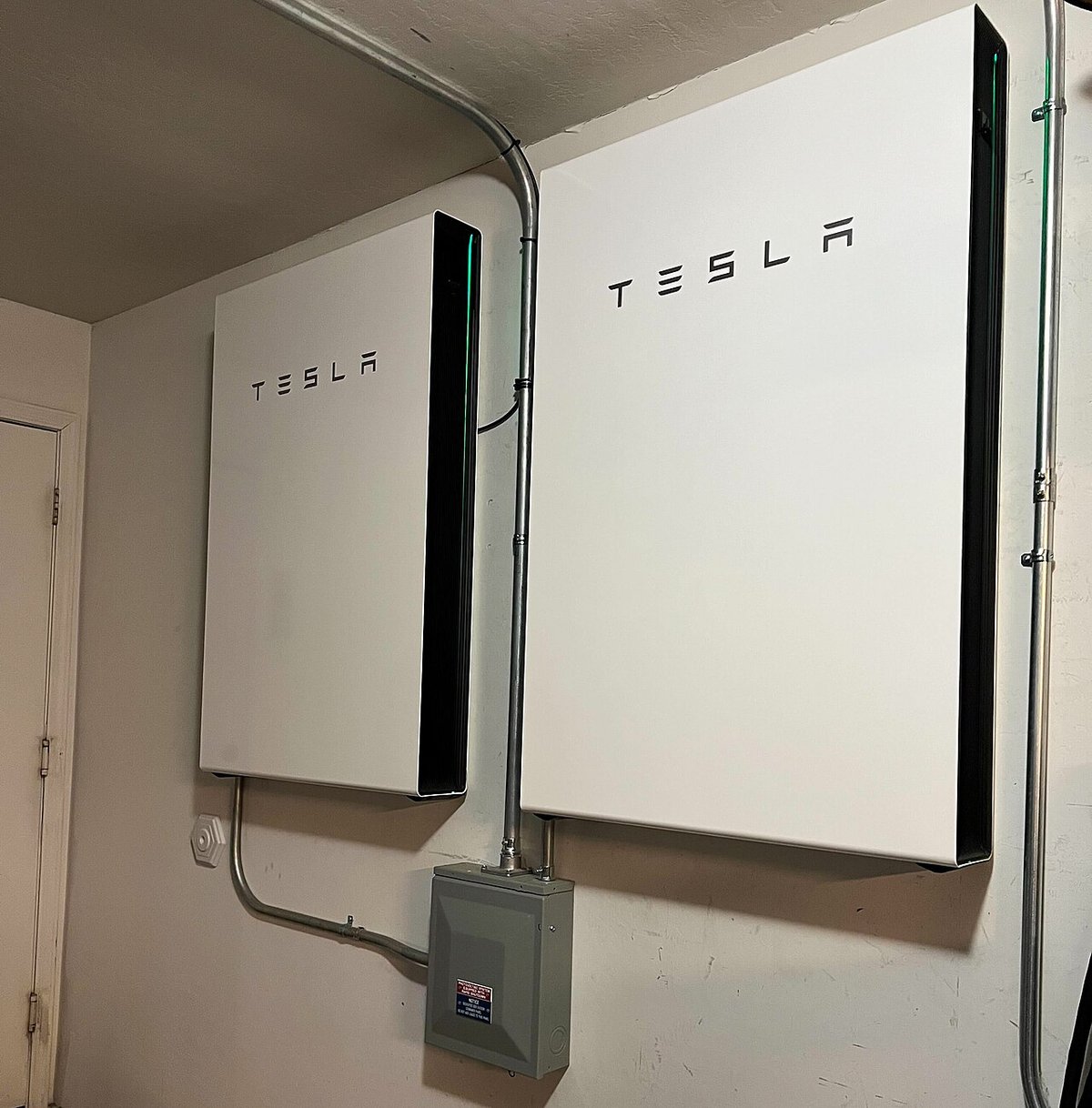
Powerwall 3 is the simplest way to get a big-name 13.5 kWh battery and a 10 kW solar inverter in one box, with strong backup power and a polished app. The trade-offs are a premium price, a 5 kW charging cap and single-phase design that suits three-phase homes poorly.
Best for: Single-phase homes installing new solar and a battery together
Enphase
IQ Battery 5P
Enphase
Enphase IQ Battery 5P
The IQ Battery 5P is the cleanest way to add storage to an Enphase microinverter home, with a 15-year warranty and no high-voltage DC on the wall. The trade-off is cost per kWh and modest power per unit, so you pay more and need several units to run big loads in a blackout.
Best for: Homes with Enphase microinverters wanting a modular, AC-coupled battery
Sigenergy
SigenStor
Sigenergy
Sigenergy SigenStor
SigenStor packs a hybrid inverter, battery and energy manager into one stack, with genuine three-phase options, IP66 weatherproofing and a very detailed app at a competitive price. The trade-offs are a young company with a 2025 recall on some single-phase controllers, mixed owner experiences with support, and a warranty that caps throughput for all uses.
Best for: Three-phase homes, or anyone wanting an all-in-one battery with room to add EV charging
Sources
- SolarEdge Home Battery Three Phase for Australia (BAT-05K48) datasheet, July 2025 (PDF)
- SolarEdge Energy Bank / Home Battery 10 kWh for Australia datasheet (PDF)
- SolarEdge Home Battery 48V Limited Product Warranty, October 2023 (PDF)
- Clean Energy Council approved batteries list
- SolarQuotes: SolarEdge battery owner reviews and verdict
- Green.com.au: Cheaper Home Batteries rebate explained (June 2026)
- CHOICE: Solar home battery rebate changes (June 2026)
Independent desk research by the Solar Cobber editorial team. We did not test this product and were not paid by the manufacturer. Solar Cobber is a free directory that may earn referral or advertising fees from installers; this never affects our reviews.
Get quotes for SolarEdge Home Battery
Browse rated solar installers in your area, check their Google reviews, and ask at least three for itemised quotes. Our guide to comparing solar quotes explains what to look for.
Find a solar installer