

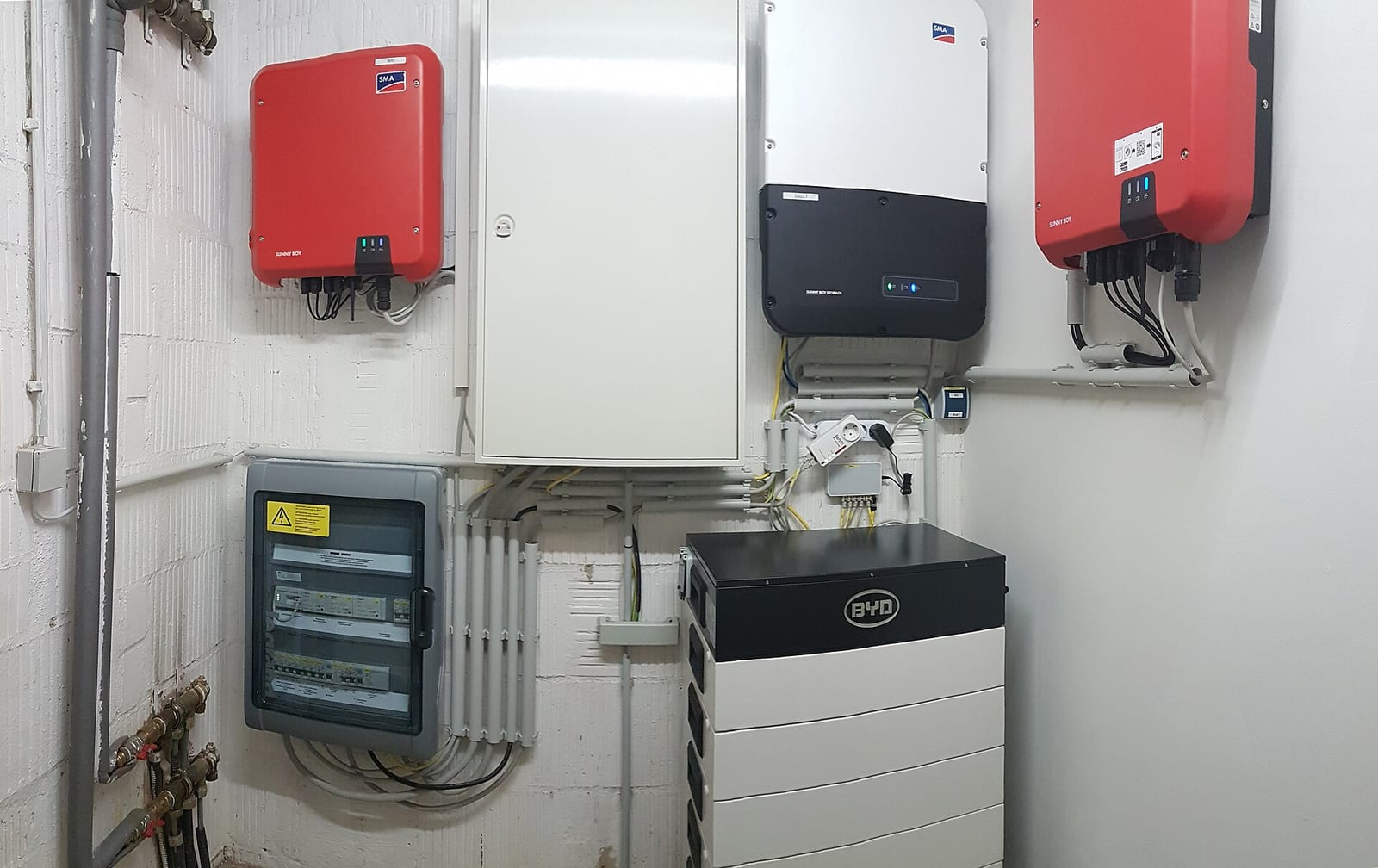
Battery quotes in 2026 keep naming the same brands: Tesla, Sungrow, Sigenergy, BYD, GoodWe, Fox ESS, AlphaESS and Enphase. This guide compares the ten home batteries we have reviewed in full and picks the eight worth shortlisting, each for a specific kind of home. We compared usable capacity, backup power, single and three-phase support, warranty fine print and published 2026 prices after the federal Cheaper Home Batteries discount.
This is independent desk research based on manufacturer datasheets, Australian warranty documents, the Clean Energy Council (CEC) approved battery list, published price surveys and owner and installer feedback. Solar Cobber did not test any battery hands-on or request quotes, and no manufacturer paid for inclusion or placement.
Quick picks
- Best Overall: Sungrow SBR, for value, easy expansion and an unlimited-cycle warranty for normal home use.
- Best All-in-One for Single-Phase Homes: Tesla Powerwall 3, for strong backup and a built-in 10 kW inverter.
- Best for Three-Phase Homes: Sigenergy SigenStor, for full three-phase backup from one stack.
- Best for Fronius and Mixed-Brand Systems: BYD Battery-Box Premium, which works with the widest range of inverters.
- Best for Retrofitting Existing Solar: GoodWe Lynx F G2, which can sit beside any brand of solar inverter.
- Best Budget All-in-One: AlphaESS SMILE-G3, one of the cheapest CEC-listed battery and inverter packages.
- Best for Maximum Storage per Dollar: Fox ESS EQ4800, for big stacks at a low price.
- Best for Enphase Microinverter Homes: Enphase IQ Battery 5P, with the longest warranty term here.
Comparison table
Prices are approximate; “after discount” means after the federal battery discount at May to December 2026 rates.
| Battery | Usable capacity | Inverter | Three-phase backup | Warranty | Price guide (2026) | Best for |
|---|---|---|---|---|---|---|
| Sungrow SBR | 9.6 to 25.6 kWh | Separate Sungrow hybrid | Yes, with Sungrow three-phase hybrid | 10 yrs, unlimited cycles for self-use and backup | A$8,100 for 12.8 kWh after discount, plus inverter and install | Most homes |
| Tesla Powerwall 3 | 13.5 kWh per unit | Built-in 10 kW | No, one phase | 10 yrs, unlimited cycles for self-use and backup | A$10,000 with Gateway after discount, plus install | Single phase |
| Sigenergy SigenStor | 5.2 to 46.8 kWh | Built-in 3 to 30 kW | Yes | 10 yrs or about 3 MWh per kWh | A$8,000 for 13 kWh after discount, plus install | Three phase |
| BYD Battery-Box Premium | 5.1 to 22.1 kWh | Separate, many brands | Yes, inverter dependent | 10 yrs or about 3 MWh per kWh | A$8,100 for 13.8 kWh after discount, plus inverter and install | Fronius owners |
| GoodWe Lynx F G2 | 6.4 to 28.8 kWh | GoodWe hybrid or retrofit | Yes, inverter dependent | 10 yrs or about 1 cycle a day | A$7,900 installed for 12.8 kWh after discount (March 2026) | Existing solar |
| AlphaESS SMILE-G3 | 9.3 to 55.8 kWh | Built-in 5 to 20 kW | Yes, T models | 10 yrs or 3.12 MWh per kWh | A$4,600 for 9.6 kWh after discount, plus install | Tight budgets |
| Fox ESS EQ4800 | 9.32 to 41.93 kWh | Separate Fox ESS hybrid | Yes, inverter dependent | 10 yrs or about 4.2 MWh per kWh | Not published | Big storage |
| Enphase IQ Battery 5P | 5 kWh per unit | Built-in microinverters | Limited, 1.28 kVA per phase per unit | 15 yrs or 6,000 cycles | A$8,100 to A$10,100 installed for one unit before discount | Enphase homes |
Browse every battery we have reviewed on our battery reviews hub.
Best Overall: Sungrow SBR
The Sungrow SBR is the one to shortlist first if you accept a Sungrow hybrid inverter. It costs well under a Powerwall 3 per kWh, grows in 3.2 kWh modules, and its warranty gives unlimited cycles for self-consumption and backup, including grid charging on time-of-use tariffs. In SolarQuotes’ 2025 Installers’ Choice Awards, Sungrow tied with Tesla as the battery installers would put on their own homes.
Pros
- 9.6 to 25.6 kWh per stack, up to four stacks in parallel
- 30 A continuous: 5.76 kW (SBR096) to 15.36 kW (SBR256)
- Full three-phase backup with a three-phase Sungrow hybrid
Cons
- An incompatible inverter voids the battery warranty
- Only IP55 and charges only from 0 °C, so it needs a sheltered spot
- Not transferable, and modules added later inherit the original start date
- CEC listing (BAT-474) runs to 30 November 2026, so confirm renewal before install
Key specs and price: LFP, floor standing, 114 to 279 kg. About A$8,100 for 12.8 kWh after the discount (SolarQuotes, May 2026), plus a Sungrow hybrid (about A$2,300 to A$3,600) and installation.
Warranty fine print: 10 years to 70%. Uses beyond self-consumption and backup, such as some VPP trading, are capped at 2.8 MWh per kWh. If iSolarCloud monitoring data is incomplete, Sungrow commits to only four years.
Skip it if you want to keep a non-Sungrow inverter or expect whole-home backup from a 5 kW model. Only the Sungrow SH8.0RS and SH10RS hybrids have a whole-home bypass.
Best All-in-One for Single-Phase Homes: Tesla Powerwall 3
The Tesla Powerwall 3 puts 13.5 kWh and a 10 kW hybrid inverter in one box, the simplest premium choice for a single-phase home adding solar and a battery together. Its backup output is among the strongest of any single box here. The costs are a premium price, a 5 kW charging cap and a single-phase design.
Pros
- Built-in inverter takes up to 20 kW of panels on 3 MPPTs
- 10 kW continuous in most states (5 kW in WA) and 185 A locked-rotor start for motors
- Unlimited cycles for self-consumption, time-of-use and backup
Cons
- Charging capped at 5 kW, slow to refill on short winter days or cheap overnight windows
- Backs up one phase only and cannot run three-phase appliances
- Backup Gateway 2 is extra, and an Expansion unit costs almost as much as a second Powerwall
- Fans can reach up to 62 dB(A) at 1 m
Key specs and price: IP67, 130 kg. About A$10,000 with Gateway after the discount (SolarQuotes, May 2026), or A$15,000 to A$17,000 installed before the roughly A$3,400 discount (WhySolar, May 2026).
Warranty fine print: 10 years to 70%. Other uses, which SolarQuotes reads as including VPP exports, are capped at 37.8 MWh. Tesla may honour only four years if the battery stays offline, and only Tesla certified installers may fit it.
Skip it if you have three-phase power and want the whole house backed up.
Best for Three-Phase Homes: Sigenergy SigenStor
The Sigenergy SigenStor stacks a hybrid inverter, battery modules and an optional DC EV charger in one footprint. Three-phase controllers back up all three phases, it is IP66 rated, and it is cheaper per kWh than Powerwall 3 on SolarQuotes’ figures. The trade-offs are a young company (founded 2022), a November 2025 recall and mixed support experiences.
Pros
- Controllers from 3 to 12 kW single phase and 5 to 30 kW three phase
- Sigenergy states 0 ms load-side disruption with its Energy Gateway
- 4.9 out of 5 from 1,809 SolarQuotes ratings, and a very detailed app
Cons
- Recall of 8, 10 and 12 kW single-phase controllers over AC plugs that could overheat
- Throughput cap applies to all uses, so heavy cycling or a VPP can end cover early
- One 7.8 kWh module charges and discharges at only 4 kW
- ProductReview reviews average 2.6 out of 5, mostly over slow warranty responses
Key specs and price: 5.2 or 7.8 kWh LFP modules, one to six per controller. About A$8,000 for 13 kWh and A$11,900 for 23.4 kWh after the discount, before installation (SolarQuotes, May 2026).
Warranty fine print: 10 years to 70% or about 3 MWh per usable kWh. Claims must go through the mySigen app within 30 days, and a year offline cuts cover to five years.
Skip it if you want a long track record or an unlimited-cycle warranty for VPP use.
Best for Fronius and Mixed-Brand Systems: BYD Battery-Box Premium
The BYD Battery-Box Premium is the usual partner for a Fronius GEN24 Plus, and BYD’s October 2026 list also includes GoodWe, Sungrow, Kostal and Hoymiles hybrids. Its warranty, though, ends at a throughput cap for every type of use.
Pros
- HVS (5.1 to 12.8 kWh) and HVM (8.3 to 22.1 kWh) towers, 50 A continuous from HVM
- Transferable, and modules added later get their own fresh warranty
Cons
- About 8.3 years of cover at one full cycle a day
- Rated -10 to 50 °C, and the warranty excludes damage outside that range
- Backup depends on the inverter; SolarQuotes reports about 40 seconds of switchover with a Fronius GEN24
- HVM and HVS listings expire in December 2026 and January 2027
Key specs and price: LFP, IP55, up to 319 kg. About A$8,100 for an HVM 13.8 after the discount, before inverter and installation (SolarQuotes, May 2026).
Warranty fine print: 10 years to 70% or roughly 3 MWh per usable kWh, only with an inverter on BYD’s list. Defects must be reported within 30 days.
Skip it if you cycle hard every day, plan a VPP, or prefer one all-in-one unit.
Best for Retrofitting Existing Solar: GoodWe Lynx F G2
The GoodWe Lynx F G2 is a well-priced modular battery with very strong owner ratings, reaching 28.8 kWh on one tower. A GoodWe BH (single phase) or BT (three phase) battery inverter lets it sit beside an existing solar inverter of any brand. The catch is a warranty with more conditions than most.
Pros
- 6.4 to 28.8 kWh in 3.2 kWh steps
- Retrofits to existing Fronius, SMA or other systems
- 4.9 out of 5 from 636 SolarQuotes ratings, and a Victorian office
Cons
- No added capacity more than one year after installation
- Must stay online and run with a GoodWe inverter
- Warranty excludes direct sunlight and temperatures above 50 °C
- After year five, GoodWe covers parts only
Key specs and price: LFP, IP55, 154 kg for 12.8 kWh. A March 2026 guide estimated about A$7,900 installed for 12.8 kWh after the discount, before the May 2026 rebate cut, so expect a little more now.
Warranty fine print: 10 years to 70% or a throughput cap equal to about one cycle a day. Modules must be installed within six months of production.
Skip it if you may want more storage in a few years, or the only spot is a sunny wall.
Best Budget All-in-One: AlphaESS SMILE-G3
The AlphaESS SMILE-G3 is one of the cheapest ways to get a CEC-listed battery with a built-in hybrid inverter, in single and three-phase versions. The risk is AlphaESS’s support record, so the installer matters as much as the hardware.
Pros
- Low price per kWh for an all-in-one system
- Three-phase T models back up all three phases
- B5 AC-coupled version suits homes keeping their solar inverter
Cons
- SolarQuotes calls AlphaESS warranty support “embarrassingly lacklustre”
- The single-phase S5 is capped at 5 kW for charging, discharging and backup
- Throughput cap reached in about 8.5 years at one cycle a day
- The low price attracts cut-price installers
Key specs and price: 9.3 kWh modules, IP65, backup 5,000 VA (S5) or 10,000 VA (T10). About A$4,600 for 9.6 kWh after the discount, or roughly A$7,600 installed (SolarQuotes, May 2026).
Warranty fine print: SolarQuotes reports 10 years to 70% or 3.12 MWh per kWh. We could not obtain the current full Australian document, and earlier terms cut cover for systems offline from monitoring, so ask for the PDF.
Skip it if you want strong manufacturer support or more than 5 kW of single-phase backup.
Best for Maximum Storage per Dollar: Fox ESS EQ4800
The Fox ESS EQ4800 delivers a lot of storage for the money, and a Fox ESS press release says SunWiz ranked Fox ESS first for installed battery capacity in March 2026. Stacks run from 9.32 to 41.93 kWh. Support is still catching up with sales.
Pros
- Low price per kWh against most mainstream batteries
- Single or three phase, IP65 for outdoor installs
- Throughput allowance above one full cycle a day for 10 years
Cons
- Charges only from 0 °C with no cell heater
- Owners of nine-module stacks report about 37.7 kWh measured, not 41.93 kWh
- Only installers can lodge claims; if yours closes, you pay another
- Fox-only inverters, and slow support is a recurring complaint
Key specs and price: 4.66 kWh LFP modules, 356.5 kg for nine. Prices are not published; one Victorian installer advertised 27.96 kWh with a 10 kW hybrid for A$7,980 installed in May 2026, rebate treatment not stated.
Warranty fine print: 10 years but no more than 125 months from manufacture. It must be registered and online, and ambient temperatures outside -10 to 50 °C void performance cover.
Skip it if you get frosty mornings or want proven local support.
Best for Enphase Microinverter Homes: Enphase IQ Battery 5P
The Enphase IQ Battery 5P is the cleanest way to add storage to an Enphase microinverter home. Each 5 kWh unit has six built-in microinverters, so there is no high-voltage DC cabling. It is expensive per kWh and modest on power.
Pros
- Longest warranty term in this list
- Field-replaceable microinverters and boards
- FlexPhase version suits single or three phase
Cons
- 3.84 kVA per unit, or 1.28 kVA per phase on three phase
- Backup needs the separate IQ System Controller 3 INT
- Retention falls to 60% at 15 years, and warranty labour is excluded
Key specs and price: 5.0 kWh, IP55, 83 kg. A July 2026 guide put one unit with the controller at A$8,140 to A$10,140 installed before rebates.
Warranty fine print: 15 years or 6,000 cycles. New owners pay a transfer fee, and the original 5P’s CEC listing expires on 29 October 2026, so insist on the FlexPhase model.
Skip it if you want the lowest price per kWh or strong backup from one unit.
Also considered, and one to avoid
The SolarEdge Home Battery suits existing SolarEdge Home Hub systems, but power is capped at 5 kW and the 48V warranty requires 0 to 40 °C ambient for 95% of the term.
Avoid buying a new Huawei LUNA2000. SolarQuotes reports Huawei no longer sells batteries in Australia, with add-on modules only promised through iStore until the end of 2026.
How we chose
We started with our ten full battery reviews and weighed the factors that change a buying decision:
- Rebate eligibility: current listing on the CEC approved battery list.
- Power and backup: continuous kW, whole-home or essential circuits, and three-phase support.
- Warranty: retention, throughput caps, online rules, expansion and transfer.
- Price: published 2026 figures, mostly SolarQuotes’ May 2026 list.
- Support and reputation: local office, owner ratings, installer awards, complaint patterns and recalls.
Each pick had to win a specific use case. No battery was tested hands-on and no manufacturer was contacted or paid.
What to check on your quote
- Listing. Confirm the exact model is on the CEC list on your install date.
- Discount. For May to December 2026 the federal factor is 6.8 STCs per usable kWh for the first 14 kWh, 60% of that to 28 kWh and 15% to 50 kWh, falling to 5.7 on 1 January 2027. See our battery rebate guide and state rebates list.
- Backup. Get the backup kW, backed-up circuits and switchover time in writing.
- Warranty conditions. Internet rules, throughput caps, expansion windows and transfer.
- Location. Shade, temperature range and any bollards needed in a garage.
- Claims. Who lodges them, and what happens if the installer closes.
- VPPs. Joining is optional; read what a VPP is before signing up.
For installed totals, see how much a solar battery costs, and use our guide on how to compare solar quotes.
FAQ
What is the best solar battery in Australia in 2026?
For most homes, the Sungrow SBR balances price, expansion and warranty best, if you accept a Sungrow inverter. Single-phase buyers wanting one premium box should look at Powerwall 3, and three-phase homes at SigenStor.
How much does a home battery cost after the rebate?
On SolarQuotes’ May 2026 figures, about 13 kWh costs roughly A$8,000 to A$10,000 after the discount, before installation (about A$3,000 in SolarQuotes’ examples) and, for Sungrow or BYD, a separate hybrid inverter.
Which battery is best for a three-phase home?
One that backs up all three phases: SigenStor, a Sungrow SBR or BYD with a three-phase hybrid, or an AlphaESS T model. Read our single vs three phase guide.
Which battery has the best warranty?
Enphase has the longest term. For heavy daily use, Sungrow and Tesla are stronger because self-consumption and backup cycles are unlimited.
Can I add a battery to my existing solar system?
Yes: an AC-coupled Powerwall 3, GoodWe Lynx F G2 with a BH or BT inverter, AlphaESS SMILE-G3-B5 or Enphase IQ Battery 5P. DC batteries usually mean swapping to a hybrid inverter.
Related guides
- The 7 Best Batteries for Blackout Backup in Australia for 2026
- The 7 Best Hybrid Inverters in Australia for 2026
About this guide
Written by the Solar Cobber editorial team. Updated October 2026.
Solar Cobber is a free Australian solar installer directory. We may earn referral or advertising fees from installers, but commercial relationships never affect which products we pick, and no manufacturer paid for or reviewed this guide. Sources include manufacturer datasheets and warranties, the CEC battery list, SolarQuotes’ May 2026 prices and ratings, WhySolar and ProductReview.com.au, as cited in each linked review.
When you are ready for quotes, browse our installer directory or our guide to the best solar battery installers in Australia.