
Sigenergy
SigenStor
Battery review
Our verdict
SigenStor packs a hybrid inverter, battery and energy manager into one stack, with genuine three-phase options, IP66 weatherproofing and a very detailed app at a competitive price. The trade-offs are a young company with a 2025 recall on some single-phase controllers, mixed owner experiences with support, and a warranty that caps throughput for all uses.
- Best for
- Three-phase homes, or anyone wanting an all-in-one battery with room to add EV charging
- Look elsewhere if
- Buyers who want a long brand track record or an unlimited-cycle warranty
- Price guide
- About A$9,300 to A$11,000 installed for a 13 kWh single-phase SigenStor, after the federal battery discount (SolarQuotes 2026 figures)
- Warranty
- 10 years, with retained capacity of 70% or a minimum throughput of about 3 MWh per usable kWh, whichever comes first
Pros
- All-in-one stack: hybrid inverter, battery modules and optional DC EV charger in one footprint
- Single-phase controllers from 3 to 12 kW and three-phase controllers from 5 to 30 kW, with three-phase backup
- IP66 rating and a -20 to 55 °C battery operating range suit outdoor Australian installs
- Near-instant backup switching (0 ms load-side disruption with the Sigen Energy Gateway) and a very detailed app
Cons
- November 2025 recall of 8, 10 and 12 kW single-phase energy controllers over AC plugs that could overheat
- Warranty throughput cap applies to all uses, so heavy cycling or VPP use can end cover before 10 years
- Battery power scales with module count: one 7.8 kWh module charges and discharges at only 4 kW
- Owner reviews on ProductReview average 2.6 out of 5, mostly over slow warranty and support responses
- Must stay online: after 90 days offline the system enters a safe mode, and after a year the warranty drops to 5 years
Key specifications
| Usable capacity per module | 5.2 kWh (BAT 5.0) or 7.8 kWh (BAT 8.0) |
|---|---|
| Modules per controller | 1 to 6 (up to 46.8 kWh with BAT 8.0) |
| Battery power per module | 2.5 kW (BAT 5.0) or 4 kW (BAT 8.0) continuous; 3.75 or 6 kW peak for 10 s |
| Single-phase controller | 3.0 to 12.0 kW (5 to 12 kW models listed in the AU warranty), up to 4 MPPTs |
| Three-phase controller | 5 to 30 kW models listed in the AU warranty |
| PV input | DC/AC ratio up to 2 (for example 20 kW of panels on a 10 kW single-phase controller) |
| Backup switching | 0 ms load-side disruption with Sigen Energy Gateway |
| Battery operating temperature | -20 to 55 °C |
| Ingress rating | IP66 (battery and controller) |
| Module weight and mounting | 55 kg (BAT 5.0), 70 kg (BAT 8.0); floor standing or wall mounted |
| Chemistry | Lithium iron phosphate (LFP), 280 Ah cells |
| CEC approved battery list | Yes (many SigenStor configurations, for example BAT-581 and BAT-964) |
From the manufacturer's Australian datasheet. Check the exact model number on your quote.
The Sigenergy SigenStor is a stackable “all-in-one” home energy system. A hybrid solar inverter called the Sigen Energy Controller sits on top of up to six lithium iron phosphate (LFP) battery modules, with an optional DC electric vehicle charger module in the same stack. Sigenergy was founded in 2022 by former Huawei solar executive Tony Xu and launched SigenStor in Australia in 2023. It has since become one of the most quoted batteries in the country, especially for three-phase homes and buyers comparing it with the Tesla Powerwall 3, the Sungrow SBR and the AlphaESS SMILE-G3. This review is based on manufacturer documentation, warranty terms, published pricing and owner/installer feedback; Solar Cobber did not test the product and was not paid by the manufacturer. Below we cover how the system fits together, its specs in Australian conditions, October 2026 prices, the warranty conditions and the November 2025 recall.
What it is and how it works
A SigenStor stack has three main parts:
- Sigen Energy Controller. This is the hybrid inverter, battery converter and energy management system in one box. Single-phase (SP) versions run from 3 to 12 kW, and the Australian warranty lists 5, 6, 8, 10 and 12 kW SP models. Three-phase (TP) versions cover 5 to 30 kW.
- SigenStor BAT modules. These are 5.2 kWh (BAT 5.0) or 7.8 kWh (BAT 8.0) usable LFP modules, one to six per controller. The Australian warranty also lists 5.84 kWh (BAT 6.0) and 8.76 kWh (BAT 10.0) modules.
- Sigen Energy Gateway. This switches the home to backup during an outage. Sigenergy says the load-side disruption is 0 ms when the Gateway is used.
An optional DC charging module adds 12 or 25 kW DC EV charging, which Sigenergy describes as ready for bidirectional (V2X) use. Solar panels connect directly to the controller, which accepts up to twice its AC rating in panels (a DC/AC ratio of 2).
Because the inverter is built in, SigenStor competes with the Tesla Powerwall 3 and AlphaESS for new solar-plus-battery installs and for homes replacing an old inverter. It sits in the mid-price bracket, cheaper per kWh than Powerwall 3 at most sizes and dearer than budget all-in-one brands.
Specs that matter in Australia
Three-phase support. This is SigenStor’s main strength. A three-phase controller backs up all three phases, so three-phase air conditioners, pumps and EV chargers can keep running in a blackout if the system is sized for them. Single-phase homes use the SP range. If you are not sure what supply you have, read single vs three phase power for solar.
Power depends on module count. Each BAT 8.0 module charges and discharges at up to 4 kW (6 kW peak for 10 seconds), and each BAT 5.0 at 2.5 kW. A single 7.8 kWh module can therefore only supply 4 kW, even with a 10 kW controller. Two BAT 8.0 modules give 8 kW. If you want strong backup or fast charging in a short cheap-tariff window, size the module count with power in mind, not just kWh.
Backup. Sigenergy’s datasheet gives backup peak outputs above the nominal rating for 10 seconds. For example, the 10 kW SP controller is rated at 15 kW peak backup. SolarQuotes reports the system can run off-grid when sized appropriately and installed with the Gateway.
Heat, sun and weather. The battery modules are rated for -20 to 55 °C and the controllers for -30 to 60 °C, all at IP66. That is a higher heat ceiling and better weather sealing than most rivals. The warranty still requires operation within -20 to 55 °C ambient and recommends 10 to 30 °C for battery life, so shade is still worth having. Larger single-phase controllers (8 to 12 kW) use fan cooling, while smaller ones are passively cooled.
Weight and mounting. Modules weigh 55 kg (BAT 5.0) or 70 kg (BAT 8.0) and can be floor standing or wall mounted. SolarQuotes notes installation fixings can be fiddly.
Connectivity requirement. The warranty requires the system to stay online for firmware updates. After 90 days offline it enters a “Safe Operation Mode”, and Sigenergy reserves the right to change operating parameters in that mode.
VPPs. SolarQuotes reports SigenStor has been integrated with several Australian VPP platforms. VPP capability is required for the federal discount; see what a VPP is before signing up, because VPP cycling counts toward the warranty throughput cap.
Price in Australia
SolarQuotes’ May 2026 price list gives these approximate SigenStor prices after the federal battery discount, including GST and excluding installation:
| Configuration | Usable capacity | Approx. price after federal discount, before installation |
|---|---|---|
| SigenStor 13 kWh | 13 kWh | A$8,000 |
| SigenStor 16 kWh | 15.6 kWh | A$8,600 |
| SigenStor 24 kWh | 23.4 kWh | A$11,900 |
| SigenStor 32 kWh | 31.2 kWh | A$15,500 |
| SigenStor 40 kWh | 39 kWh | A$19,600 |
| SigenStor 48 kWh | 46.8 kWh | A$24,000 |
SolarQuotes uses about A$3,000 for installation in its worked examples, which puts a 13 kWh system at about A$11,000 installed. Its separate per-kWh worked example lists a single-phase 13 kWh SigenStor at about A$9,300 installed. Quotes vary with controller size, single or three phase, Gateway and switchboard work.
The federal battery discount for May to December 2026 is 6.8 STCs per usable kWh up to 14 kWh, 60% of that from 14 to 28 kWh, and 15% from 28 to 50 kWh. At about A$37 per STC, a 13 kWh SigenStor earns roughly A$3,300 off, and a 31.2 kWh system roughly A$5,800. Large systems lose most of their discount above 28 kWh, so the per-kWh benefit falls sharply. The factor steps down to 5.7 on 1 January 2027.
Warranty: the fine print
Sigenergy’s Factory Limited Warranty for SigenStor (Australia and New Zealand) applies to products installed on or after 1 November 2023.
- Term: 10 years on the Sigen Battery and Energy Controller and 3 years on the EV DC charging module. SolarQuotes reports 5 years on the Gateway and 2 years on communication modules.
- Start date: installation, activation and registration, or 180 days after factory shipment if it has not been installed by then.
- Performance: at least 70% of usable energy for 10 years or until the battery reaches its Minimum Throughput Energy, whichever comes first. That is 15.84 MWh for BAT 5.0 and 23.77 MWh for BAT 8.0, about 3 MWh per usable kWh. The cap applies to all uses, so there is no unlimited-cycle allowance for self-consumption.
- Internet: if the system is disconnected for more than a year, cover drops to five years from activation.
- Claims: lodge them through the mySigen app within 30 days of a failure, or Sigenergy may treat the claim as abandoned.
- Transfer: the warranty transfers to a new owner only if the equipment stays at its original location.
- What is covered: parts, labour for repair and reinstallation, basic travel and standard freight. Sigenergy may repair, update software, or replace with new or refurbished units, and repaired parts get the remaining term or six months, whichever is longer.
Sigenergy has an Australian office in Sydney (Clarence Street, per SolarQuotes). Australian Consumer Law rights apply in addition.
What owners and installers report
Praise. Installers like SigenStor. In SolarQuotes’ 2025 Installers’ Choice Awards it came second when installers were asked which battery brand they would put on their own homes, and SolarQuotes’ Sigenergy page averages 4.9 out of 5 from 1,809 ratings. SolarQuotes and owners on ProductReview praise the mySigen app, which shows detail down to individual cell voltages and temperatures.
Complaints. Two patterns stand out:
- The 2025 recall. In November 2025, Sigenergy recalled SigenStor EC 8.0, 10.0 and 12.0 kW SP AU energy controllers through the ACCC because AC plugs using quick-connect ferrules could overheat, posing a fire risk. pv magazine reported that the Clean Energy Regulator put the number of affected inverters at about 100. Sigenergy blamed incorrect installation, pushed a firmware update that reduces output under sustained full load, and began replacing units with a redesigned, ferrule-free plug and a two-year warranty extension. SolarQuotes also criticised the company for not being open about the problem.
- Support responsiveness. ProductReview has 18 SigenStor reviews averaging 2.6 out of 5. Several owners describe battery faults or connectivity problems where installers had to escalate repeatedly before Sigenergy acted, sometimes over weeks.
The pattern is that installers rate the product highly, while some owners have struggled with after-sales support from a fast-growing company.
Sigenergy SigenStor vs alternatives
| Sigenergy SigenStor | Tesla Powerwall 3 | Sungrow SBR | AlphaESS SMILE-G3 | |
|---|---|---|---|---|
| Usable capacity per unit or stack | 5.2 to 46.8 kWh | 13.5 kWh | 9.6 to 25.6 kWh | 9.3 to 55.8 kWh (9.3 kWh modules) |
| Inverter | Built-in hybrid controller, 3 to 30 kW | Built-in 10 kW hybrid | Separate Sungrow hybrid | Built-in hybrid, 5 kW single phase or 5 to 20 kW three phase |
| Three-phase backup | Yes, with three-phase controller | No (one phase only) | Yes, with three-phase Sungrow hybrid | Yes, with three-phase T models |
| Retention and throughput | 70% at 10 years or about 3 MWh per kWh, all uses | 70% at 10 years; unlimited cycles for self-use and backup | 70% at 10 years; unlimited cycles for self-use and backup | 70% at 10 years or 3.12 MWh per kWh (as summarised by SolarQuotes) |
| Ingress rating | IP66 | IP67 (wiring IP55) | IP55 | IP65 |
| Approx. price after federal discount, before installation (May 2026) | About A$8,000 for 13 kWh | About A$10,000 with Gateway | About A$8,100 for 12.8 kWh, plus inverter | About A$4,600 for 9.6 kWh (SMILE-G3-S5 with 10.1P battery) |
Choose SigenStor if you have three-phase power, want an outdoor-rated all-in-one system, or plan to add DC EV charging later. Choose Powerwall 3 on a single-phase home if brand track record and an unlimited-cycle warranty matter more than price. Choose Sungrow for value and a warranty that does not count cycles, or AlphaESS if budget is the main constraint and you have a strong installer.
Questions to ask your installer
- Which controller size and how many battery modules are you quoting, and what continuous backup power will that give me?
- If you are quoting an 8, 10 or 12 kW single-phase controller, is it the redesigned version with the new AC plug?
- Is the Sigen Energy Gateway included, and which circuits will be backed up?
- I have three-phase power: is the controller three-phase, and can it start my three-phase loads in a blackout?
- How will the system stay online, and what happens if my internet drops for weeks?
- If I join a VPP, how quickly will I use the warranty throughput cap?
- How do you handle warranty claims with Sigenergy, and how long have recent claims taken?
- What federal and state discounts are included, and how many STCs is that?
FAQ
Is Sigenergy a reliable brand?
It is young (founded 2022) and installers rate it highly, but it had a November 2025 recall on some single-phase controllers and mixed owner feedback on support. Choose an installer with a good record of handling Sigenergy claims.
Was my SigenStor recalled?
The recall covered SigenStor EC 8.0, 10.0 and 12.0 kW single-phase AU energy controllers with quick-connect AC plugs. Sigenergy or your installer is meant to contact affected owners for a free replacement.
Can SigenStor back up a three-phase home?
Yes, with a three-phase energy controller and the Gateway, sized for your loads.
Can I add battery modules later?
Yes, up to six modules per controller. Each module also adds battery power, which helps backup and charging speed.
Does SigenStor work off-grid?
SolarQuotes reports it can run off-grid when sized appropriately and installed with the Gateway. Confirm the design with your installer.
How long is the SigenStor warranty?
Ten years on the battery and controller, or until the throughput cap of about 3 MWh per usable kWh is reached, whichever comes first. It drops to five years if the system is offline for over a year.
Can SigenStor charge an EV?
Yes, with the optional 12 or 25 kW DC charging module, or with Sigenergy’s AC chargers.
Find an installer
With a newer brand, the installer’s experience and willingness to chase warranty claims matter a lot. Use our installer directory to find local companies with Sigenergy installs and reviews, and compare quotes with our guide on how to compare solar quotes, checking the controller size, module count and Gateway on each one.
Battery buying guides
Often quoted alongside
 Battery
Tesla
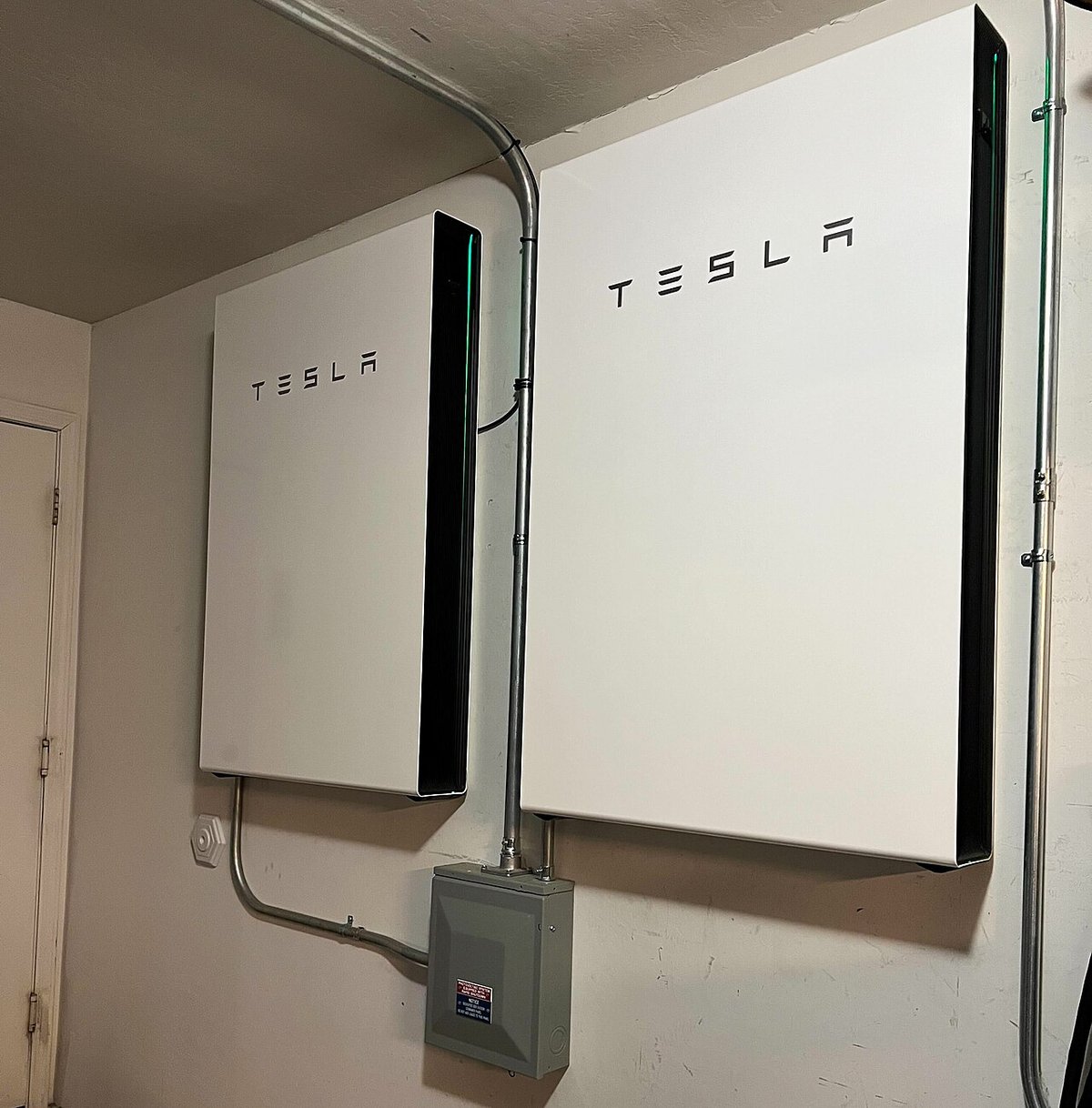
Tesla Powerwall 3
Powerwall 3 is the simplest way to get a big-name 13.5 kWh battery and a 10 kW solar inverter in one box, with strong backup power and a polished app. The trade-offs are a premium price, a 5 kW charging cap and single-phase design that suits three-phase homes poorly.
Best for: Single-phase homes installing new solar and a battery together
Sungrow
SBR
Sungrow
Sungrow SBR
The Sungrow SBR is one of the best-value modular batteries in Australia, with easy expansion in 3.2 kWh steps and a warranty that gives normal households unlimited cycles. The trade-off is that you must pair it with a Sungrow hybrid inverter, and Sungrow's app and phone support are weaker than the hardware.
Best for: Homes wanting a modular battery paired with a Sungrow hybrid inverter
AlphaESS
SMILE-G3
AlphaESS
AlphaESS SMILE-G3
The AlphaESS SMILE-G3 is one of the cheapest ways to get a CEC-listed all-in-one battery and hybrid inverter, with single-phase and three-phase versions and 9.3 kWh modules. The catch is AlphaESS's patchy support record, so the installer you choose matters as much as the hardware.
Best for: Budget-focused homes with a well-reviewed installer who has AlphaESS experience
Sources
- Sigen Energy Controller single phase datasheet (PDF, hosted by SolarQuotes)
- Sigenergy product brochure, Australia (PDF, includes SigenStor BAT datasheet)
- Sigenergy Factory Limited Warranty for SigenStor, Australia and New Zealand (PDF)
- Clean Energy Council approved batteries list
- SolarQuotes: Sigenergy battery review
- SolarQuotes: Sigenergy's terminal problem, melted plugs and throttled inverters
- pv magazine Australia: Sigenergy points to installation practices for product recall (24 November 2025)
- SolarQuotes: Solar battery prices and system costs in Australia (May 2026)
- ProductReview.com.au: Sigenergy SigenStor reviews
- Energy Matters: Cheaper Home Batteries Program changes from 1 May 2026
Independent desk research by the Solar Cobber editorial team. We did not test this product and were not paid by the manufacturer. Solar Cobber is a free directory that may earn referral or advertising fees from installers; this never affects our reviews.
Get quotes for Sigenergy SigenStor
Browse rated solar installers in your area, check their Google reviews, and ask at least three for itemised quotes. Our guide to comparing solar quotes explains what to look for.
Find a solar installer