
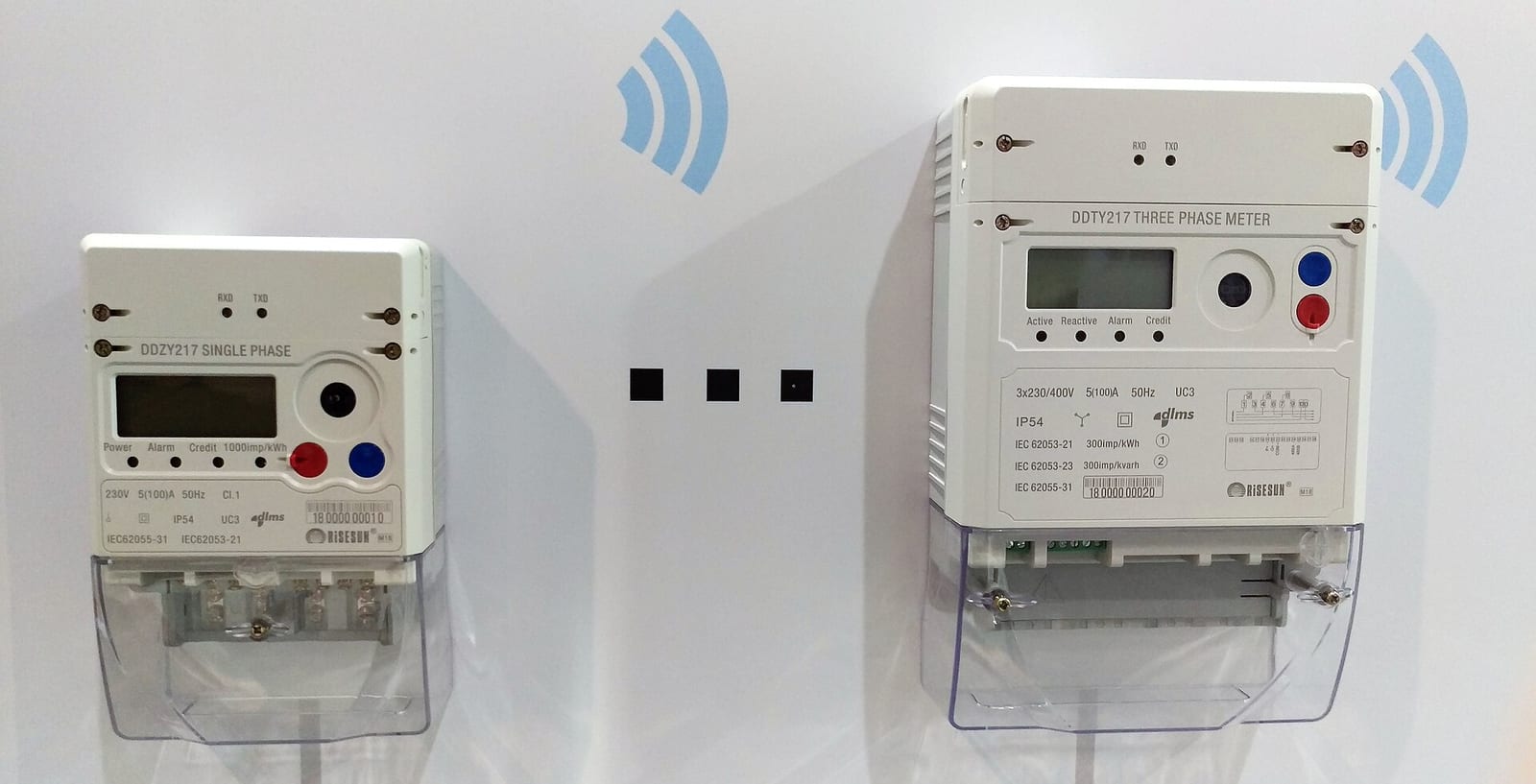
A smart meter is a digital electricity meter that records how much power you use, and how much solar you export, in short intervals and sends the data to your retailer remotely. In the National Electricity Market (NSW, Victoria, Queensland, South Australia, Tasmania and the ACT), the Australian Energy Market Commission (AEMC) has set 30 November 2030 as the end of the rollout. If you are adding solar, a smart meter is normally part of the job.
Key facts
- The Australian Energy Market Commission made its final smart meter rule on 28 November 2024, requiring retailers and metering providers to replace all legacy meters in the National Electricity Market by the end of the rollout period on 30 November 2030.
- From 1 December 2025, a customer whose retailer moves them to a different tariff after a smart meter installation must give explicit informed consent for two years, and the retailer cannot change the tariff without it.
- Retailers cannot charge upfront costs or exit fees for replacing a legacy meter under the rollout, but the AEMC says that protection does not cover a meter installed because you add solar or a battery.
- A customer can ask for a smart meter for any reason, and the retailer must install it within the standard timeframes rather than waiting for the scheduled rollout date.
- Victoria finished its own rollout around 2015, with about 99.6% of residential customers on a smart meter, as reported by SolarQuotes from the Australian Energy Regulator’s data.
- Western Australia and the Northern Territory are outside the National Electricity Market, so the AEMC rule does not apply there.
What is a smart meter?
A smart meter (called a Type 4 meter in the National Electricity Market) is a digital meter that stores interval data and communicates remotely, so nobody has to visit to read it. SolarQuotes describes it as measuring both consumption and exports at regular intervals and sending the data to your retailer for billing.
Older meters are either accumulation meters (a spinning disc or a single dial, read by hand) or “Type 5” and “Type 6” meters, which the AEMC groups as legacy meters. The rule excludes older meters that can already be read remotely, which mainly affects Victoria.
Do I need a smart meter for solar?
In practice yes. A solar home needs a meter that measures power flowing in both directions, and SolarQuotes reports that a smart meter switch-out is part of a solar installation unless one is already fitted. The AEMC’s rule determination treats a solar PV installation as a trigger for a smart meter in the same way as a new connection.
Your installer normally lodges the paperwork, and your retailer or its metering provider books the meter exchange. Ask your installer who arranges it and whether your quote includes any meter fee, because the AEMC’s upfront-charge ban does not cover solar-triggered installs.
Who owns, installs and pays for a smart meter?
Retailers are responsible for meters in the National Electricity Market, and they use accredited metering providers to install and maintain them. The cost is recovered through the metering charge on your bill, and we could not verify a standard dollar amount that applies across the country, so check the metering line on your own bill.
| Situation | Can the retailer charge an upfront fee? | Source |
|---|---|---|
| Legacy meter replaced under the rollout, 1 December 2025 to 30 November 2030 | No upfront costs or exit fees | AEMC final determination, 28 November 2024 |
| New connection | The ban does not apply | AEMC final determination |
| Meter replaced at your request | The ban does not apply | AEMC final determination |
| Meter fitted because you installed solar or a battery | The ban does not apply | AEMC final determination |
The 2030 rollout: what the AEMC rule requires
The AEMC rule requires universal smart meters in the National Electricity Market by 30 November 2030, with each network’s rollout plan aiming to replace roughly 15 to 25 per cent of legacy meters in each 12-month period starting 1 December. Retailers report on progress and face civil penalties if they miss the targets.
Customers can no longer opt out of a new meter under their standard contract. If you request a meter, the retailer must install it within the usual timeframes. During the rollout those timeframes are extended by five business days.
- Before the rollout
- During the rollout
Source: AEMC, Accelerating smart meter deployment rule determination, 28 November 2024. Solar Cobber calculation: the AEMC extends existing timeframes by 5 business days for the rollout period, so the earlier limit is the new limit minus 5.
View the data as a table
| Before the rollout | During the rollout | |
|---|---|---|
| New connection | 6 days | 11 days |
| No site work | 15 days | 20 days |
| Alteration | 15 days | 20 days |
Each installation limit is five business days longer during the rollout, so a new connection can wait up to 11 business days.
How far has the rollout got?
Victoria is finished, Tasmania is leading the rest, and most other states were around 35% to 42% in the Australian Energy Regulator’s 2023 regulatory-year data. Those numbers are older than the current rollout, which only began its main replacement period on 1 December 2025.
Source: Australian Energy Regulator network performance report, as reported by SolarQuotes, September 2024. The AER classes Ausgrid's manually read Type 5 meters as smart, which lifts the NSW figure. Other jurisdictions were roughly 35% to 40%.
View the data as a table
| Residential customers with a smart meter | |
|---|---|
| Victoria | 99.6% |
| Tasmania | 63.0% |
| New South Wales | 42.0% |
Tasmania’s energy minister said the state reached 79 per cent in August 2024, according to the same report. We could not open the Australian Energy Regulator’s latest figures in November 2026, so check its retail performance data for a current national percentage.
What happens to your tariff when you get a smart meter?
A smart meter lets a retailer offer, or move you to, a time of use tariff, where the price per kWh changes by time of day. Under the AEMC rule, a retailer cannot move you to a different tariff structure after a smart meter without your explicit informed consent for the first two years. That covers rollout meters, new connections, customer-requested meters and meters fitted for solar.
After two years, a retailer wanting to change your tariff must give 30 business days’ notice, an estimate of what your bill would have been over the previous 12 months under the new tariff, and information on managing usage. The rule also lets a state require designated retailers to offer a flat tariff to smart meter customers, but that only takes effect if the state implements it.
The two-year consent window protects the retail tariff only. The AEMC notes that networks vary in how they reassign network tariffs after an upgrade. In south east Queensland, for example, properties with a smart meter installed after 1 July 2025 are assigned to Energex tariff 6900 (see our peak and off-peak times guide). The protections do not change the exemptions either: moving house into a property that already has a smart meter, or switching retailers afterwards, is outside the consent rule.
Flat or time of use: what the regulator’s default prices show
The Australian Energy Regulator’s Default Market Offer for 2026-27 sets a flat and a time of use price for each network. For a typical household the annual prices are almost the same, so the real difference comes from when you use power.
- Flat rate
- Time of use
Source: AER Default market offer prices 2026-27 final determination, 26 May 2026.
View the data as a table
| Flat rate | Time of use | |
|---|---|---|
| Ausgrid | A$1,899 | A$1,893 |
| Endeavour | A$2,328 | A$2,320 |
| Energex | A$1,988 | A$1,914 |
| Essential | A$2,604 | A$2,530 |
| SA Power Net. | A$2,334 | A$2,276 |
On the AER’s assumed usage, time of use costs $6 to $74 a year less than flat, and the gap is biggest in south east Queensland and Essential Energy’s area ($74 each).
The per-kWh rates behind those totals are far more spread out, which is why your usage pattern matters.
- Flat
- Time of use highest
- Time of use lowest
Source: AER Default market offer prices 2026-27 final determination, 26 May 2026. Endeavour's highest rate is the April to October weekday 4pm to 8pm peak; its lowest is the 10am to 2pm solar soak.
View the data as a table
| Flat | Time of use highest | Time of use lowest | |
|---|---|---|---|
| Ausgrid | 33.14c | 60.20c | 24.04c |
| Endeavour | 33.73c | 47.14c | 12.35c |
| Energex | 27.97c | 47.79c | 6.98c |
| Essential | 35.01c | 42.12c | 24.14c |
| SA Power Net. | 41.91c | 56.22c | 17.04c |
Energex’s peak rate is about 6.8 times its cheapest rate, the widest gap of the five networks. See peak and off-peak electricity times for each network’s windows.
Solar Cobber calculation: does time of use cost or save?
We worked out one Energex (south east Queensland) household importing 3,000 kWh a year from the grid, using the 2026-27 caps: flat 27.9744 c/kWh with 192.0159 c/day supply, versus time of use with peak 47.7858 c (4pm to 9pm), shoulder 25.2956 c (9pm to 11am), off-peak 6.9848 c (11am to 4pm) and 177.8531 c/day supply. Supply is the daily charge times 365.
| Scenario | Peak kWh | Shoulder kWh | 11am to 4pm kWh | Flat bill | Time of use bill | Difference |
|---|---|---|---|---|---|---|
| Solar home, imports mostly in the evening | 1,050 | 1,800 | 150 | A$1,540 | A$1,617 | Costs A$77 more |
| Same home, load shifted to the day (battery, timers, EV) | 600 | 1,200 | 1,200 | A$1,540 | A$1,323 | Saves A$217 |
The flat bill is A$700.86 supply plus A$839.23 usage. The first time of use bill is A$649.16 supply plus A$501.75, A$455.32 and A$10.48 for each period. The second is A$649.16 plus A$286.71, A$303.55 and A$83.82. The calculation ignores export credits, controlled load and any Solar Sharer free period, and the shares of usage are our assumptions.
Source: Solar Cobber calculation from AER Default Market Offer 2026-27 Energex caps.
View the data as a table
| Annual bill | |
|---|---|
| Flat | A$1,540 |
| ToU evening | A$1,617 |
| ToU by day | A$1,323 |
The same smart meter can cost or save about A$100 to A$200 a year depending on whether the household shifts its usage into the cheap window.
How to read your smart meter
The meter display varies by model, so the retailer’s online account is a more reliable place to read it. Most retailers show half-hourly import and export data in their app or portal, and Western Australian customers can view half-hourly data in Synergy’s online portal, according to an ESD News report of September 2020.
Check three things on your data: when your imports peak, how much solar you export in the middle of the day, and whether your night-time standby load is steady. Those tell you whether a time of use tariff, a battery or a Solar Sharer Offer would suit you.
Use your own interval data when comparing plans, and see our feed-in tariff tracker for current export rates.
ABC News In-depth made this report on how smart meters are changing household power bills; it is about two years old, so check the figures against current tariffs.
State differences: Victoria, WA and the Northern Territory
Victoria has had smart meters in almost every home since its rollout ended around 2015, so the new rule mainly leaves it alone. The AEMC excluded legacy meters that can already be read remotely, so Victorian meters with remote capability are not replaced early. Victoria also no longer has a regulated minimum solar feed-in rate: the Essential Services Commission says retailers set their own, though not below 0 c/kWh. See our Victorian rebate guide.
Western Australia is outside the National Electricity Market. Western Power has installed what it calls advanced meters in new builds and where meters need replacing, and ESD News reported in September 2020 that more than 100,000 were in place across the South West Interconnected System. We did not find a current installed count, so ask Synergy or Western Power for your property. See our WA rebate guide.
The Northern Territory is also outside the AEMC rule. An ABC News report titled “NT smart meter rollout to be completed by 2030” is the only NT source we found, and we could not confirm its detail.
New South Wales, Queensland, South Australia, Tasmania and the ACT are covered by the AEMC rule. Our NSW rebate guide and Queensland rebate guide cover state schemes.
What to check before you get a smart meter
- Ask who arranges the meter and whether any fee is listed on your solar quote.
- Ask your retailer whether it plans to change your tariff, and remember the two-year consent right.
- Check whether your network assigns a network tariff automatically after the meter is installed.
- Compare plans using your own interval data once you have it. Our how to compare solar quotes guide covers quotes, and the STC calculator covers the federal discount.
- Find a local installer on our directory or by region, such as New South Wales and Queensland.
FAQ
Do I need a smart meter to get solar panels?
Normally yes. A solar system needs a meter that records both imports and exports, and a smart meter switch-out is usually part of the installation unless one is already fitted. Your installer and retailer arrange the exchange.
How much does a smart meter cost?
There is no single national price we could verify. Retailers cannot charge upfront costs for rollout replacements, but the ban does not cover solar installs, new connections or meters you request. Check the metering charge on your bill.
Can I refuse a smart meter?
Not under the AEMC rule. Customers can no longer opt out of a new meter under their standard retail contract in the National Electricity Market, though the rule does not stop you raising problems with a defective installation.
Will I be put on time of use pricing?
Not without your agreement for the first two years. A retailer needs your explicit informed consent to change your tariff structure after a smart meter installation, and later changes need 30 business days’ notice and a historical bill comparison.
When will every home have a smart meter?
By 30 November 2030 under the AEMC rule in the National Electricity Market. Victoria is already essentially complete, and Tasmania is the next most advanced state in the Australian Energy Regulator’s published data.
Can I ask for a smart meter now?
Yes. Customers can request a smart meter for any reason, and the retailer must install it within the standard timeframes, which are 11 or 20 business days during the rollout depending on the work needed.
Do smart meters work with a home battery?
Yes. The AEMC lists solar, batteries and electric vehicles among the devices smart meters support. Time of use tariffs and the Solar Sharer Offer need a smart meter, and a battery helps you shift usage into cheap periods.
Is a smart meter needed for net metering?
Net metering is not a national term in the rules we read. What matters is that a meter measures imports and exports separately, which a smart meter does, and your retailer then pays a feed-in rate for exports.
Sources
- AEMC, Accelerating smart meter deployment rule determination, 28 November 2024 (published by the Office of Impact Analysis)
- ESD News, AEMC finalises rule to roll out smart meters by 2030, 28 November 2024
- SolarQuotes, Australian smart meter rollout, September 2024, reporting the AER network performance report
- AER, Default market offer prices 2026-27 final determination, 26 May 2026
- ESD News, Advanced meters benefit WA homes, 3 September 2020
- Essential Services Commission, minimum feed-in tariff
About this guide
Written by the Solar Cobber editorial team from independent desk research checked in November 2026. Solar Cobber is a free directory that may earn referral or advertising fees from installers; commercial relationships never affect our content. This is general information, not financial advice. Corrections are welcome through /contact.
Filed under Solar Basics
Back to blog