
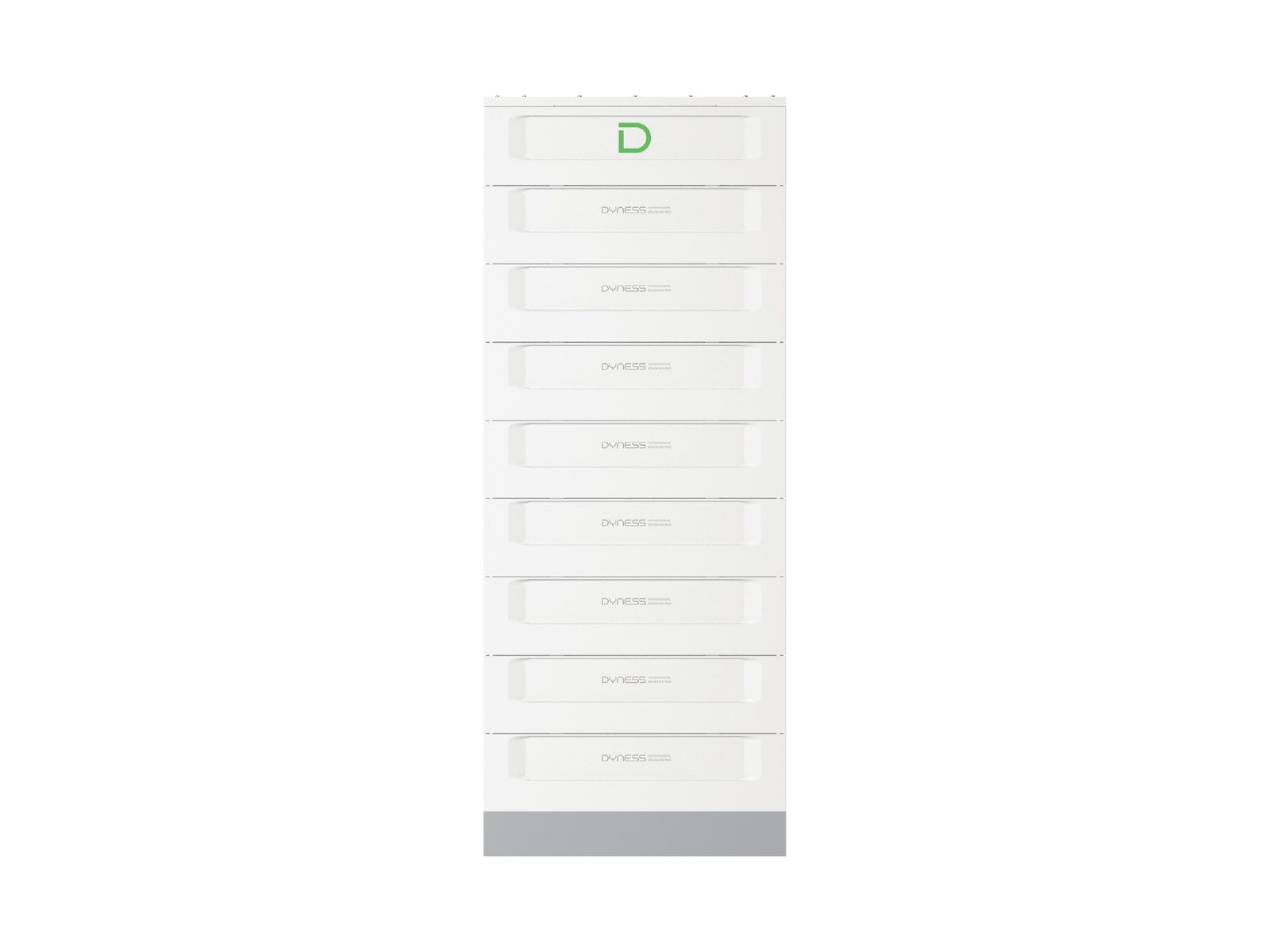
Our verdict
Dyness now has a credible Australian line-up led by the IP66 STACK100 Pro and the Cygni all-in-one, with a throughput allowance that explicitly covers VPP use and works with many hybrid inverter brands. The trade-offs are a short local track record, strict claim deadlines and coastal exclusions, and mixed-brand systems where the battery and inverter makers can blame each other.
- Best for
- Value-focused homes pairing a battery with a GoodWe, Solis, Deye or similar hybrid, or large homes wanting 30 kWh or more
- Look elsewhere if
- Homes within 1 km of the coast, or buyers who want one brand responsible for the whole system
- Price guide
- About A$9,800 installed for a 14.6 kWh Cygni before rebates, about A$5,900 after the federal discount (published Perth estimate, 2026); STACK100 Pro pricing not published
- Warranty
- 10 years, with retained capacity of 70% or a throughput cap (about 3.65 MWh per kWh on STACK100 Pro, VPP use included), whichever comes first
Pros
05- STACK100 Pro scales from 15.36 to 76.8 kWh in one stack in 5.12 kWh steps, with 100% usable capacity on the CEC listing
- IP66 rating, natural cooling and a built-in aerosol fire extinguisher on the STACK100 Pro and Cygni
- STACK100 Pro warranty explicitly covers VPP participation, with about 3.65 MWh of throughput per kWh
- Battery-only models work with many hybrid brands, including GoodWe, Solis, Deye, SAJ and Growatt, so you are not locked to one inverter
- STACK100 Pro warranty transfers to the next owner of the building if the battery stays installed
Cons
06- Warranty excludes installs within 1 km of the coastline, and STACK100 Pro faults must be reported within 30 days (Cygni terms mention 48 hours and 2 weeks)
- Mixed-brand systems split responsibility: installers on Whirlpool warn that battery and inverter makers can blame each other for faults
- Spec inconsistencies: the STACK100 Pro is sold as 1C, but its warranty asks for long-term continuous current at or below 0.5C
- Short local track record, with only 11 owner reviews on SolarQuotes and early Cygni software complaints
- Cygni is single phase only (8 or 10 kW), and its warranty falls to 3 years if it runs without a communication connection
- No Dyness Tower model is on the current CEC approved list, so a new Tower install would not attract the federal discount
Dyness is a Chinese lithium iron phosphate (LFP) battery maker, founded in 2017 and headquartered in Suzhou, that has sold home batteries in Australia since 2018 through a Melbourne-based importer. Once mainly a budget low-voltage brand, it now has a broader line-up. The models installers quote now are the STACK100 Pro high-voltage stack, the Cygni all-in-one battery and inverter, and the PowerBox G2 and PowerBox Pro wall-mounted batteries. Dyness is usually quoted to value-focused buyers, often paired with a GoodWe, Solis or Deye hybrid inverter, and it competes with Fox ESS, GoodWe’s Lynx and AlphaESS. This review is based on manufacturer documentation, warranty terms, published pricing and owner/installer feedback; Solar Cobber did not test the product and was not paid by the manufacturer. We focus on the STACK100 Pro and Cygni, and explain what happened to the older Tower series.
What it is and how it works
Dyness sells two kinds of home battery in Australia.
Battery-only models connect to someone else’s hybrid inverter. The STACK100 Pro is the flagship. It stacks 5.12 kWh modules (called S51100 Pro) under a control box, with no cables between modules. One stack takes 3 to 15 modules, or 15.36 to 76.8 kWh, and Dyness says up to 12 stacks can run in parallel. The STACK100 Pro joined the Clean Energy Council (CEC) approved list on 10 April 2026. The earlier STACK100 is still listed and sold, but its CEC listing is for indoor use only and shows 95% of nominal capacity as usable, against 100% for the Pro. The PowerBox G2 and PowerBox Pro are 10.24 kWh low-voltage units that hang on a wall.
The Cygni is an all-in-one: an 8 kW or 10 kW single-phase hybrid inverter with 2 to 12 stackable 3.84 kWh modules (7.3 to 43.77 kWh usable). Solar panels connect straight to it, so you do not need a separate solar inverter. An AC-coupled version for homes with existing solar is also in the datasheet, but only the hybrid (HS) models were on the CEC list when we checked.
What about the Tower? Dyness’s Tower and Tower Pro high-voltage batteries were common in Australian quotes in earlier years, and Dyness Australia still hosts their manuals and warranty terms. When we checked the CEC approved list on 14 October 2026, though, no Tower model was on it. CEC listing is required for the federal Cheaper Home Batteries discount, so a new Tower install would not attract it. If a quote names a Tower today, ask why.
The STACK100 Pro does not lock you into one inverter brand. Dyness’s Australian manual lists GoodWe, Solis, Deye, Solplanet, Solinteg, Sunways, Hoymiles, SAJ, Sinexcel, Growatt, Atess, Megarevo and Sineng. Sungrow, Fronius, SMA and Huawei are not on that list.
Specs that matter in Australia
Power. The STACK100 Pro datasheet gives a rated power of 0.5C (50 A), from 7.68 kW for three modules to 38.4 kW for 15, and a maximum of 1C (100 A). But the warranty appendix says long-term continuous charge and discharge current “should be ≤0.5C”. Plan around 0.5C, and remember the inverter usually sets the real limit anyway.
Heat, cold and weather. The STACK100 Pro and Cygni are rated IP66 and use passive cooling. The STACK100 Pro datasheet rates charging and discharging from -20 to 50 °C, but the Australian user manual gives a charging range of 2 to 50 °C for units without a heating function, and -20 °C only for units with heating. The same manual says to avoid direct sunlight and direct rain despite the IP66 rating. The Cygni datasheet gives an operating range of 0 to 50 °C.
Coastal homes. Both the STACK100 Pro and Cygni warranty appendices say the equipment must be installed at least one kilometre from the coastline. For many Australian homes that is a deal-breaker unless Dyness confirms otherwise in writing.
Size and weight. A STACK100 Pro stack is 657 mm wide and 460 mm deep. Height is 292 mm plus 169 mm per module, so a 6-module (30.72 kWh) stack is about 1.3 m tall. Weight is 34.6 kg plus 55 kg per module, about 365 kg for six. The Cygni is slimmer at 180 mm deep and can be wall mounted or floor standing.
Single or three phase. The STACK100 Pro’s phase capability depends on the hybrid it is paired with. The Cygni is single phase only.
Backup and VPPs. The Cygni datasheet claims backup switchover in under 10 ms and up to 12 kVA peak backup on the 10 kW model. Dyness markets the Cygni as VPP-ready, and the STACK100 Pro warranty explicitly includes VPP participation. Check that your chosen VPP supports your exact inverter and battery.
Price in Australia
Dyness pricing is less transparent than the big brands. What we could find:
| Source | Product | Price | Basis |
|---|---|---|---|
| Solar Battery Perth estimate (2026) | Cygni 10.0HS-M4, 14.59 kWh | About A$9,800 | Installed, before rebates |
| Same estimate | Cygni 10.0HS-M4, 14.59 kWh | About A$5,900 | Installed, after the federal discount at May to December 2026 rates |
| Solar Battery Supermarket (October 2026) | Cygni 10 kW with 23.04 to 46.08 kWh | A$11,535 to A$22,235 | Supply-only package; the page does not say whether the discount is applied |
| SolarQuotes battery database | PowerBox, 9.6 kWh | About A$6,600 | Approximate price; basis not stated on the page |
We could not find a published Australian price for the STACK100 Pro. Bundled solar and battery ads using it do not separate the battery price. In July 2025, under the higher original discount rate, one Adelaide retailer advertised a PowerBox Pro 20.48 kWh with a Solis 8 kW hybrid for A$2,299. Compare full quotes, not headlines.
Federal discount. From 1 May to 31 December 2026 the Cheaper Home Batteries Program pays 6.8 STCs per usable kWh for the first 14 kWh, 60% of that from 14 to 28 kWh, and 15% from 28 to 50 kWh. That works out to about 98 STCs for a 14.59 kWh Cygni (roughly A$3,600 to A$3,900 at STC prices of A$37 to A$40), about 101 STCs for a 15.36 kWh STACK100 Pro-3S, and about 155 STCs for a 30.72 kWh STACK100 Pro-6S (roughly A$5,700 to A$6,200). The factor drops to 5.7 on 1 January 2027. See our federal battery rebate guide.
Warranty: the fine print
Dyness publishes separate Australian warranty terms for each product. The STACK100 Pro terms (March 2026) say:
- Term: 10 years from the date the installer completes the installation.
- Performance: 70% of usable energy at 10 years, or a minimum energy throughput, whichever comes first. Throughput runs from 56.064 MWh (Pro-3S, 15.36 kWh) to 280.32 MWh (Pro-15S, 76.8 kWh), about 3.65 MWh per kWh. That is more than one full cycle a day for 10 years.
- VPP use: explicitly included in the warranty terms.
- Transfer: if installed in a building, the warranty transfers to the next owner of the building or product while it stays installed.
- Claims: contact your installer first, then Dyness. Claims must be made within 30 days of the failure date, or Dyness treats the right as abandoned.
- Exclusions: incompatible inverters, removal to a new site without written consent, and installs closer than one kilometre to the coastline. The appendix also lists ambient operation limits of -20 to 55 °C and says the warranty covers “≥6000 cycles”. That is below the datasheet’s 8,000 cycles and does not match the throughput table.
- Remedy: repair or replacement, possibly with refurbished units; labour and travel are not mentioned as covered.
The Cygni terms (July 2025) cover the inverter and battery for 10 years each, with 70% retention. The throughput table only lists 2 to 4 module systems (22.6 to 45.3 MWh, about 2.95 MWh per kWh), even though the CEC lists Cygni up to 12 modules. The terms also contain two different fault-reporting windows (48 hours and 2 weeks), and they cut the warranty to 3 years if the system runs without a communication connection.
The Australian importer is Dyness Aus Pty Ltd, 8/125 Highbury Road, Burwood VIC 3125, phone 1300 396 377. Australian Consumer Law guarantees apply in addition.
What owners and installers report
Praise. Dyness has only 11 owner reviews on SolarQuotes, averaging 4.4 out of 5 (seven five-star, three four-star, one one-star). A New South Wales owner with 30 kWh of PowerBox G2 on a Solis 8 kW hybrid said it had served them well since October 2025, and chose it because they needed a wall-mounted battery. On Whirlpool, an installer who had fitted several PowerBox Pro systems reported “great monitoring, easy to install” and no issues, with one gripe about the single-pole isolator. A Victorian owner of a 46.08 kWh Cygni rated the hardware “a solid 10/10”.
Complaints. The recurring themes are:
- Early software. The same Cygni owner reported in May 2026 that the state of charge could suddenly drop by about 20%, triggering grid charging, and that time-based charging for off-peak tariffs was missing. By August 2026 a software update had added scheduling, though they still advise charging to 100% regularly so the battery management system recalibrates.
- Mixed-brand support. Whirlpool posters warn that with a Dyness battery on another brand’s inverter, each maker can blame the other or external causes when something fails.
- Price versus established brands. Some buyers on Whirlpool found Dyness quotes no cheaper than Sungrow or GoodWe, which removes its main selling point.
- Installer dependence. SolarQuotes’ one one-star review (Queensland, February 2026) describes a battery that never worked and an installer who would not return for weeks. That looks like an installer failure as much as a product one.
The CEC’s recall page lists no Dyness recalls as of October 2026, although we could not query the ACCC recall database directly.
Dyness vs alternatives
| Dyness STACK100 Pro | Dyness Cygni | Fox ESS EQ4800 | GoodWe Lynx F G2 | AlphaESS SMILE-G3 | |
|---|---|---|---|---|---|
| Type | HV battery stack | All-in-one with inverter | HV battery stack | HV battery stack | All-in-one with inverter |
| Usable capacity | 15.36 to 76.8 kWh | 7.3 to 43.77 kWh | 9.32 to 41.93 kWh | 6.4 to 28.8 kWh | 9.3 to 55.8 kWh |
| Inverter | Many third-party hybrids | Built-in 8 or 10 kW, single phase | Fox ESS hybrids only | GoodWe hybrids only | Built-in 5 to 20 kW, single or three phase |
| Ingress rating | IP66 | IP66 | IP65 | IP55 | IP65 |
| Warranty throughput | About 3.65 MWh per kWh, VPP included | About 2.95 MWh per kWh (2 to 4 modules) | About 4.2 MWh per kWh | About 3.65 MWh per kWh | 3.12 MWh per kWh |
| Lowest charging temperature | -20 °C (datasheet) or 2 °C without heater (manual) | 0 °C | 0 °C | 0 °C | -20 °C (operating) |
| Price guide (2026) | Not published | About A$5,900 installed after discount, 14.6 kWh (estimate) | Not published | About A$7,900 installed after discount, 12.8 kWh | About A$7,600 installed after discount, about 10 kWh |
Choose the STACK100 Pro if you have a compatible hybrid, want a large IP66 stack and value a warranty that covers VPP use. Choose a Fox ESS or GoodWe Lynx if you would rather have the battery and inverter from one maker. Choose the Cygni or an AlphaESS SMILE-G3 if you want a single all-in-one unit; the AlphaESS also comes in three phase.
Questions to ask your installer
- Which Dyness model is this exactly, STACK100 Pro or the older STACK100, and what is its CEC listing number?
- Is my inverter on Dyness’s compatibility list for this battery, and who handles a fault that could be either the battery or the inverter?
- How far is my home from the coastline, and has Dyness confirmed in writing that the warranty applies?
- Does this unit have the cell heating function, and what is the lowest temperature at which it will charge?
- What battery power will the inverter actually deliver at night and during a blackout?
- How many STCs have you claimed, based on what usable capacity?
- For a Cygni larger than four modules, what throughput does Dyness warrant?
- If something fails, who reports it to Dyness, and how will you meet the 30-day claim deadline?
FAQ
Is Dyness a good battery brand?
It is an established LFP maker with an Australian importer and competitive specs, but its local track record is much thinner than Sungrow, Tesla or BYD.
Which Dyness batteries are sold in Australia in 2026?
The CEC list includes the STACK100 Pro, STACK100, Cygni, PowerBox G2, PowerBox Pro and DL5.0. No Tower models were listed when we checked in October 2026.
What is the difference between the STACK100 and STACK100 Pro?
Both use 5.12 kWh modules and scale to 76.8 kWh. The Pro is listed for outdoor use with IP66 and 100% usable capacity, while the STACK100’s CEC listing is indoor only with 95% usable.
Does the Dyness STACK100 Pro work with a Sungrow or Fronius inverter?
Neither brand appears on the compatibility list in Dyness’s Australian manual, so assume not unless Dyness confirms it in writing. Using an incompatible inverter voids the warranty.
How much is the federal rebate on a Dyness battery?
At May to December 2026 rates, roughly A$3,600 to A$3,900 for a 14.59 kWh Cygni and A$5,700 to A$6,200 for a 30.72 kWh STACK100 Pro, depending on STC prices.
Can a Dyness battery be installed outside?
The STACK100 Pro, Cygni and PowerBox G2 are listed for outdoor use, but the STACK100 Pro manual says to avoid direct sun and rain, and the STACK100 Pro and Cygni warranties require sites at least 1 km from the coast.
Is the Dyness warranty transferable?
The STACK100 Pro warranty transfers to the next owner of the building as long as the battery stays installed where it was put in.
Find an installer
With Dyness, the installer handles the first round of any warranty claim, so choose carefully. Use our installer directory to find local companies with recent Dyness jobs and good reviews, and check every quote with our guide on how to compare solar quotes, including the exact model, inverter brand and STCs claimed.
Read next
Battery buying guides
Often quoted alongside
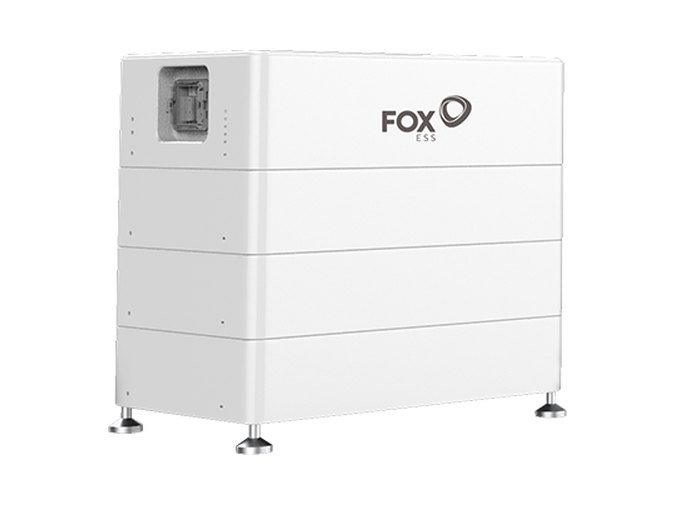
Fox ESS
Fox ESS EQ4800
The Fox ESS EQ4800 delivers a lot of storage for the money and has become one of the most installed batteries in Australia since the federal rebate began. The trade-offs are a support track record still catching up with sales, no cell heating for cold-climate charging, and owner reports of real capacity falling short on the biggest stacks.
Best for
Budget-focused homes wanting 9 to 28 kWh of storage on a Fox ESS hybrid inverter
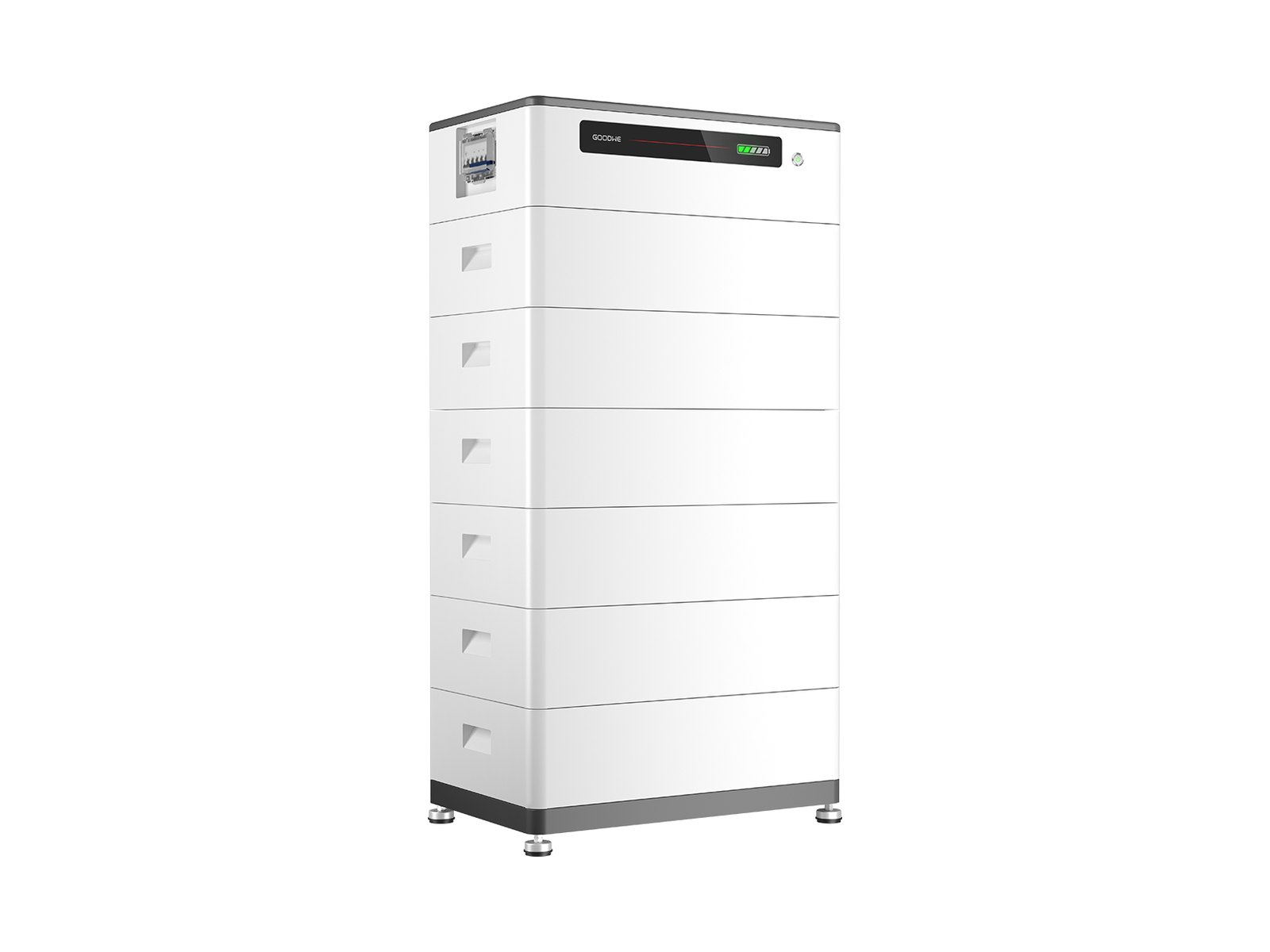
GoodWe
GoodWe Lynx Home F
The GoodWe Lynx F is a sensible, well-priced modular battery with strong owner ratings, and the current G2 version stretches to 28.8 kWh on one tower. The catch is a warranty with more conditions than most, including a GoodWe-inverter requirement, a mandatory internet connection and a one-year window to add modules.
Best for
Homes wanting a mid-priced modular battery with a GoodWe hybrid or retrofit inverter
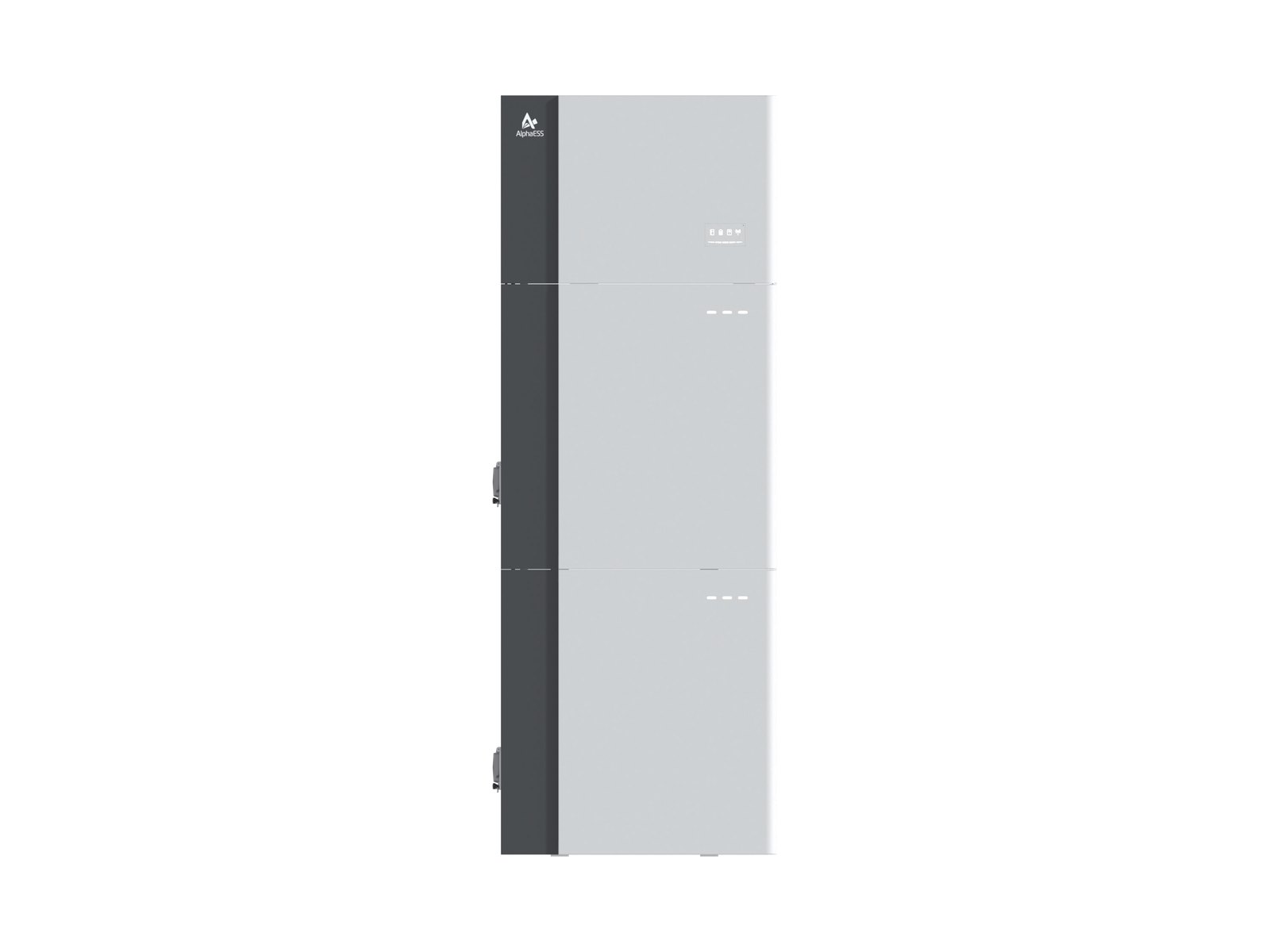
AlphaESS
AlphaESS SMILE-G3
The AlphaESS SMILE-G3 is one of the cheapest ways to get a CEC-listed all-in-one battery and hybrid inverter, with single-phase and three-phase versions and 9.3 kWh modules. The catch is AlphaESS's patchy support record, so the installer you choose matters as much as the hardware.
Best for
Budget-focused homes with a well-reviewed installer who has AlphaESS experience
Sources
Independent desk research by the Solar Cobber editorial team. We did not test this product and were not paid by the manufacturer. Solar Cobber is a free directory that may earn referral or advertising fees from installers; this never affects our reviews.
- 01Dyness STACK100 Pro datasheet, Australia, April 2026 (PDF)
- 02Dyness STACK100 Pro warranty terms, Australia, March 2026 (PDF)
- 03Dyness STACK100 Pro user manual, Australia (PDF)
- 04Dyness Cygni series datasheet, October 2025 (PDF)
- 05Dyness warranty terms for Cygni series, July 2025 (PDF)
- 06Dyness Australia: product literature download centre
- 07Dyness Australia: STACK100 Pro joins CEC approved list (April 2026)
- 08Clean Energy Council approved batteries list
- 09SolarQuotes: Dyness battery review and owner reviews
- 10Solar Battery Perth: Dyness Cygni 10.0HS-M4 price estimate
- 11Solar Battery Supermarket: Dyness Cygni system packages
- 12Whirlpool Forums: Dyness Powerbox Pro
- 13Whirlpool Forums: Dyness Powerbox Pro 20 kWh for $2299
- 14DCCEEW: Cheaper Home Batteries Program, 1 May 2026 changes
- 15Clean Energy Council: product recalls
Get quotes for Dyness STACK100 Pro
Browse rated solar installers in your area, check their Google reviews, and ask at least three for itemised quotes. Our guide to comparing solar quotes explains what to look for.