
Our verdict
The Primo GEN24 is a well-supported, quiet single-phase string inverter with a strong Australian service record and a cheap path to adding a battery later. You pay a clear premium over Sungrow for that, and the free 10-year warranty depends on registration and promotion terms you should confirm in writing.
- Best for
- Single-phase homes wanting a premium European string inverter with an upgrade path to a battery
- Look elsewhere if
- Budget-focused buyers, or homes that already know they want a battery on day one
- Price guide
- About A$2,200 to A$3,500 installed for the inverter in a 5 to 6.6 kW system (April to July 2026 market range)
- Warranty
- 5 years Fronius Warranty Plus (parts, labour, transport) as standard; a further 5 years on Solar.web registration, with cover type depending on the promotion in force
Pros
- Two MPP trackers with a 22 A input, so modern high-current panels fit on the main tracker
- Can be converted to a hybrid (GEN24 Plus) by software later, without replacing the inverter
- PV Point gives a 3,000 VA emergency outlet during daytime blackouts, even with no battery
- IP66 enclosure rated for -40 to +60 °C ambient
- Local Fronius office in Victoria and a long installer track record
Cons
- Why Solar's April 2026 ranges put it roughly A$800 to A$1,000 above a same-size Sungrow installed
- Only five years of full parts-and-labour cover is guaranteed; years six to ten depend on registration and the promotion running when you install
- Warranty claims run through the installer, so owners whose installer has closed report paying for diagnosis before Fronius acts
- Second MPPT on 3.0 to 6.0 kW models is limited to 12 A, which constrains split-roof designs with high-current panels
- PV Point is a single outlet that drops out when clouds pass, not a household backup
Key specifications
| Power range (Primo GEN24) | 3.0, 3.6, 4.0, 4.6, 5.0, 6.0, 8.0 and 10.0 kW AC |
|---|---|
| Grid connection | Single phase (Symo models cover three phase) |
| MPP trackers | 2 |
| Max input current (Primo GEN24 6.0) | 22 A / 12 A |
| Max PV array (Fronius rating) | 150% of AC rating, e.g. 9 kWp on the 6.0 |
| MPP voltage range (6.0) | 230 to 480 V |
| Max / European efficiency (6.0) | 97.6% / 96.1 to 97.1% |
| Enclosure rating | IP66 |
| Ambient temperature range | -40 to +60 °C |
| Weight (3.0 to 6.0 kW) | 15.38 kg |
| Basic backup | PV Point, 3,000 VA single outlet, 15 s switchover |
| CEC approved list | Primo GEN24 3.0 to 10.0 listed (checked October 2026) |
From the manufacturer's Australian datasheet. Check the exact model number on your quote.
If your solar quote lists a “Fronius Primo”, you are looking at the inverter many Australian installers treat as the safe premium pick for single-phase homes. In 2026 that name usually means the Primo GEN24, the model that replaced the older Primo SnapINverter after Fronius cleared remaining SnapINverter stock in 2024. It is most often quoted on 6.6 to 10 kW rooftop systems for owners who want a European brand with a local service team and who are not buying a battery yet, but might later. Three-phase homes get the same family under the Symo name, covered briefly below.
This review is based on manufacturer documentation, warranty terms, published pricing and owner and installer feedback; Solar Cobber did not test the product and was not paid by the manufacturer.
What it is and how it works
The Primo is a grid-connected string inverter. Your panels are wired in series into one or two strings, each string feeds one of the inverter’s two maximum power point trackers (MPPTs), and the inverter converts the DC from the panels into 230 V AC for your home and the grid. Fronius is an Austrian company with an Australian subsidiary based in Tullamarine, Victoria.
There are two generations you may still see on quotes:
- Primo GEN24 (current). Sold in 3.0, 3.6, 4.0, 4.6, 5.0, 6.0, 8.0 and 10.0 kW sizes. It ships as a solar-only inverter but uses the same hardware platform as the GEN24 Plus hybrid, so it can be converted to a battery-ready hybrid by a paid software upgrade. SolarQuotes put that upgrade at roughly $650 to $1,000 depending on size when the SnapINverter was retired in 2024; confirm the current price before relying on it.
- Primo SnapINverter (outgoing). Sold from 2014 in 3.0 to 8.2 kW sizes. Fronius ran a $400-off clearance in mid-2024, and the SnapINverter Primo models stay on the Clean Energy Council (CEC) list only until 24 November 2026. If a quote in late 2026 still offers one, ask why, and make sure it will be installed before the listing expires or the system may not qualify for STCs.
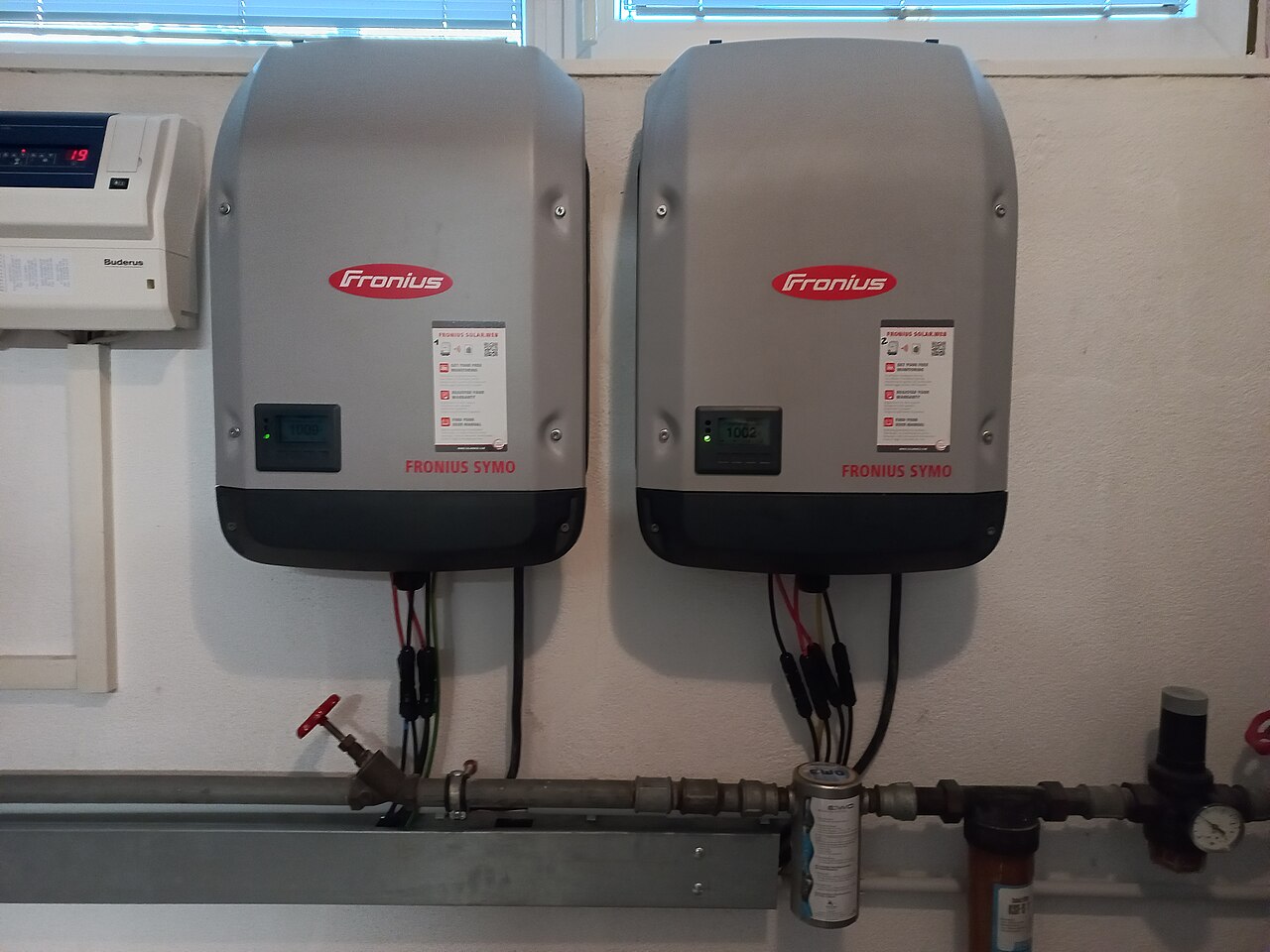
Three phase: the Symo. The Symo is the same idea for three-phase supply. The SnapINverter Symo (3.0 to 20.0 kW) is also on its way out, with CEC listings expiring between November and December 2026. The current Symo GEN24 comes in 3.0 to 12.0 kW sizes; Fronius lists the Symo GEN24 10.0 with two MPPTs (25 A and 12.5 A), a 15 kWp maximum array and 98.2% peak efficiency. If you have three-phase power and a large roof, see our guide to single vs three phase solar before deciding.
In the market, the Primo sits at the premium end of string inverters alongside SMA, above value brands such as Sungrow and GoodWe. It is not a microinverter or optimiser system, so a shaded panel still affects the rest of its string.
Specs that matter in Australia
Tracker currents and modern panels. Fronius lists the Primo GEN24 3.0 and 6.0 with a maximum input current of 22 A on tracker one and 12 A on tracker two, while the 10.0 has 22 A on both. Many current high-wattage panels operate at more than 12 A, so on the smaller models your installer will normally put the main roof face on tracker one. If you have an east and west split with similar string sizes, ask how the second string will be handled.
Oversizing. Fronius rates the Primo GEN24 for up to 150% of its AC output in panels (9 kWp on the 6.0). Under the federal STC rules, though, only panels up to 133% of inverter capacity attract the upfront discount, which is why a 5 kW Primo is so often paired with 6.6 kW of panels. Our STC rebate explainer covers the rule.
Heat and outdoor mounting. The GEN24 is IP66 rated and Fronius gives an ambient operating range of -40 to +60 °C. That is a wide envelope, but like every inverter it reduces output when internal temperatures climb, so a west-facing wall in full afternoon sun in Perth or western Sydney is a poor spot. Ask for a shaded wall or a sunshade. The GEN24 uses active (fan) cooling. SolarQuotes reports the GEN24 is much quieter than the SnapINverter, whose fan noise on hot days was a long-running owner complaint.
Single phase and export limits. Most Australian networks limit how much a single-phase home can export, commonly to around 5 kW, so an 8.0 or 10.0 kW Primo will usually need export limiting set up with a Fronius Smart Meter. That is standard practice, but it means the meter should be on your quote.
PV Point backup. Every GEN24 includes PV Point: during a blackout, a dedicated outlet can supply up to 3,000 VA from the panels alone, with a switchover time of 15 seconds on the 6.0 (Fronius lists 20 seconds on the 8.0). It only works while the sun is shining and drops out when clouds pass. Treat it as a way to keep a fridge or phone chargers going, not as household backup.
Monitoring. The inverter has built-in WLAN and Ethernet and reports to Fronius Solar.web. Registration on Solar.web is also how the extended warranty is claimed (see below).
CEC listing. We checked the CEC approved inverter list in October 2026: the Primo GEN24 3.0 to 6.0 are listed to January 2027, newer SC-suffix versions to July 2029, and the 8.0 and 10.0 to August 2029. Listings are renewed routinely, but your installer must use a listed model on the install date.
Price in Australia
Fronius does not publish retail prices. Market guides give these ranges:
| What | Range | Source and date |
|---|---|---|
| Inverter, installed, 5 to 6.6 kW system (Primo or GEN24 Plus) | A$2,200 to A$3,500 | Why Solar, April 2026 |
| Same-size Sungrow SG or SH series, installed | A$1,400 to A$2,500 | Why Solar, April 2026 |
| Complete premium 6.6 kW system (Fronius or SMA inverter, premium panels), after STCs | A$7,000 to A$9,500 | Solar Nerds, July 2026 |
What moves the price: inverter size, whether a Smart Meter is included for export limiting, panel brand, roof complexity and switchboard work. The Primo itself does not change your STC entitlement, which depends on the panel capacity and your postcode.
If you think you will add a battery within a couple of years, price both paths: a Primo GEN24 now plus the hybrid upgrade later, against a GEN24 Plus from day one. The upgrade route spreads the cost but adds a second callout.
Warranty: the fine print
Fronius’s warranty in Australia has two layers, and the difference matters.
- Standard cover. Every Fronius inverter gets five years of Fronius Warranty Plus, which Fronius says covers materials, labour and transport Australia-wide.
- Years six to ten. Registering the inverter on Solar.web adds five more years. Under the promotion for inverters installed from 1 October 2024 to 31 December 2025, those extra years were also Warranty Plus, provided the inverter was registered and the extension claimed within 24 months of installation. Under earlier terms the extra five years were plain Fronius Warranty, which covers parts only, so you or your installer pay labour and transport. Fronius Australia’s promotions page still advertises the free five-year Warranty Plus extension in October 2026 but does not state an end date. Ask your installer which version applies on your install date and keep the certificate.
- Paid extensions to up to 15 years are offered, with a limited window to buy them.
- Who handles claims. Claims go through your installer, who raises a case with Fronius Australia (Tullamarine, Victoria; customer service 03 8340 2900). Fronius may ask for the invoice, serial number and Certificate of Electrical Safety. SolarQuotes notes that owners whose installer has closed have had to pay a qualified electrician to diagnose the fault before Fronius would act.
Your rights under the Australian Consumer Law sit on top of any written warranty.
What owners and installers report
Praise. On SolarQuotes, Fronius inverters hold a 4.8 out of 5 rating from more than 9,300 owner ratings (brand-wide, not GEN24 alone). Recurring themes are reliability, strong yields and good local support. Fronius also won the SolarQuotes Installers’ Choice award for inverters four years running to 2024 and placed first again in 2025, which reflects installer experience with warranty claims and support lines.
Complaints.
- Solar.web glitches. Owners on SolarQuotes regularly mention “communication errors” and find Solar.web less friendly than third-party monitoring.
- Fan noise on older units. This is mostly a SnapINverter problem; reviewers describe the GEN24 as much quieter.
- Warranty friction without an installer. See above. This is the complaint most likely to cost an owner money.
- Price. The premium over Sungrow is the main reason installers give for quoting something else.
Recalls. The CEC’s product recall register, checked October 2026, lists no Fronius inverter recalls.
Fronius Primo vs alternatives
| Fronius Primo GEN24 | SMA Sunny Boy (AV-41) | Sungrow SG RS | Fronius GEN24 Plus | |
|---|---|---|---|---|
| Type | String, upgradable to hybrid | String | String | Hybrid (battery-ready) |
| Single-phase sizes | 3.0 to 10.0 kW | 3.0 to 6.0 kW | 2.0 to 10 kW | 3.0 to 10.0 kW |
| MPPTs (5 to 6 kW model) | 2 | 2 | 2 (SG5.0RS) or 3 (SG5.0RS-ADA) | 2 |
| Max current per MPPT | 22 A / 12 A | 15 A / 15 A | 16 A | 22 A / 12 A |
| Cooling | Fan | Convection, no fan | Natural convection | Fan |
| Standard AU warranty | 5 yrs full, +5 on registration | 5 yrs (SMA offers +5 on some terms) | 10 yrs | 5 yrs full, +5 on registration |
| Installed inverter price | A$2,200 to A$3,500 | Not published (SMA has exited AU home market) | A$1,400 to A$2,500 | A$2,500 to A$4,500 |
Choose the Primo GEN24 if you want a premium brand with a local service team, may add a battery later, and are happy to pay for it. Choose the Sungrow SG RS if price matters most; it has a longer standard warranty and more tracker current, at the cost of a less consistent support record. Skip the SMA Sunny Boy unless it is heavily discounted remaining stock, because SMA withdrew from Australian residential sales in 2026. Choose the GEN24 Plus if the battery is going in now.
Questions to ask your installer
- Is this the Primo GEN24 or an old SnapINverter, and what is the exact model number?
- Which roof faces go on tracker one (22 A) and tracker two (12 A), and are my panels within those limits?
- Will you register the inverter on Solar.web and claim the warranty extension, and is it Warranty Plus or parts-only for years six to ten?
- Is a Fronius Smart Meter included, and what export limit will my network apply?
- Where will the inverter be mounted, and will it be out of afternoon sun?
- If I add a battery later, what will the hybrid upgrade and battery cost, and which batteries are compatible?
- Will you wire a PV Point outlet, and where will it be?
FAQ
Is the Fronius Primo still sold in Australia?
The Primo SnapINverter has been discontinued and is being cleared out; its CEC listing expires in November 2026. The current single-phase model is the Primo GEN24, available in 3.0 to 10.0 kW sizes.
What is the difference between the Primo GEN24 and the GEN24 Plus?
The hardware platform is shared. The Plus has battery functions enabled out of the box; the standard GEN24 can be upgraded to Plus later with a paid software unlock.
Can the Primo GEN24 power my house in a blackout?
Only one PV Point outlet, up to 3,000 VA, and only while the panels are producing. For whole-home or circuit backup you need a GEN24 Plus, a compatible battery and extra switching hardware.
How long is the Fronius warranty in Australia?
Five years of parts, labour and transport cover as standard. Registration on Solar.web adds five more years; whether those years include labour depends on the promotion running when you install.
Is the Fronius Primo worth the extra cost over Sungrow?
For many homes the energy yield difference is small. The premium buys Fronius’s service record, installer preference and the software upgrade path. If your budget is tight, a Sungrow SG RS with its 10-year standard warranty is a reasonable choice.
What size Primo do I need for 6.6 kW of panels?
A 5.0 kW inverter is the usual match, because 6.6 kW is within the 133% oversizing limit for STCs and within most single-phase export limits.
Find an installer
The installer matters as much as the inverter, especially because Fronius warranty claims run through them. Compare several quotes using our guide to comparing solar quotes, then use our installer directory to find established Fronius installers near you.
Inverter buying guides
Often quoted alongside
SMA
Sunny Boy
SMA
SMA Sunny Boy
The Sunny Boy AV-41 is a quiet, fan-less string inverter with a long reliability record, but SMA withdrew from Australian home solar sales in 2026. Only buy one as clearly discounted remaining stock with the warranty terms in writing; for a new system, a Fronius or Sungrow inverter is the safer choice.
Best for: Like-for-like replacement of a failed Sunny Boy, or buyers offered heavily discounted remaining stock
Sungrow
SG RS
Sungrow
Sungrow SG RS
The Sungrow SG RS is the value benchmark for single-phase string inverters, with generous tracker current, fan-less cooling and a 10-year standard warranty at a price well below Fronius. The trade-off is a more uneven support experience, a one-year warranty on the Wi-Fi dongle and meter, and no battery port.
Best for: Single-phase homes wanting a capable, well-warranted solar-only inverter at a mid-market price
Fronius
GEN24 Plus
Fronius
Fronius GEN24 Plus
The GEN24 Plus is a well-built, well-supported hybrid that suits owners who value Fronius service and want three-phase backup or a Fronius-branded battery. Its backup is not seamless, its battery list is short and it costs more than a Sungrow hybrid, so it only makes sense if those trade-offs do not bother you.
Best for: Homes adding a battery now that want premium local support and optional whole-home or three-phase backup
Sources
- Fronius Australia: Primo GEN24 6.0 technical data
- Fronius Australia: Primo GEN24 10.0 technical data
- Fronius Australia: Primo 5.0-1 (SnapINverter) technical data
- Fronius Australia: Symo GEN24 10.0 technical data
- Fronius Australia: warranty models
- Fronius Australia: 10 Year Warranty Plus promotion terms (PDF, Sept 2024)
- Clean Energy Council: approved inverters list
- Clean Energy Council: product recalls
- SolarQuotes: Fronius inverter review and owner ratings
- SolarQuotes: A final salute to the Fronius SnapINverter? (May 2024)
- Why Solar: Fronius solar inverter review Australia (April 2026 pricing)
- Solar Nerds: How much does a premium solar system cost? (July 2026)
Independent desk research by the Solar Cobber editorial team. We did not test this product and were not paid by the manufacturer. Solar Cobber is a free directory that may earn referral or advertising fees from installers; this never affects our reviews.
Get quotes for Fronius Primo
Browse rated solar installers in your area, check their Google reviews, and ask at least three for itemised quotes. Our guide to comparing solar quotes explains what to look for.
Find a solar installer