

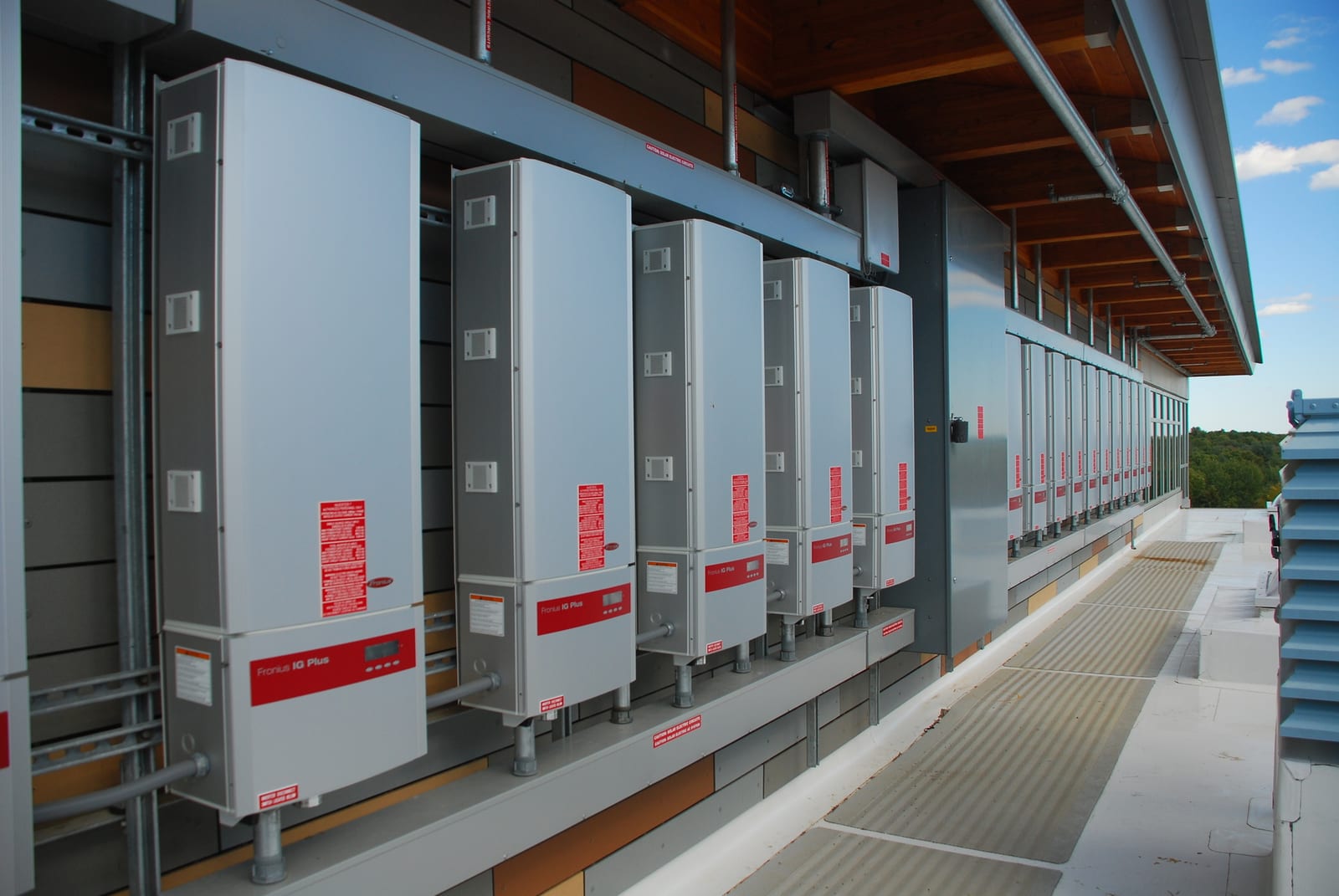
The inverter is the part of a solar system most likely to fail, and it decides whether you can add a battery, ride through a blackout or live with a shaded roof. This guide is for Australian homeowners comparing quotes in 2026.
We compared eight inverters actively sold here, from Sungrow, Fronius, GoodWe, Solis, Enphase and SolarEdge. Each was judged on warranty terms, backup, battery compatibility, published pricing, Clean Energy Council (CEC) listing and owner feedback. Two brands that have left the home market, SMA and Huawei, appear only as warnings.
This is independent desk research built on our full inverter reviews. Solar Cobber did not test any inverter, and no manufacturer paid for inclusion.
Quick picks
- Best overall string inverter: Sungrow SG RS, for a 10-year standard warranty and modern tracker current at a mid-market price.
- Best premium string inverter: Fronius Primo GEN24, for local support and a software path to a battery.
- Best hybrid for blackouts: Sungrow SH8.0RS and SH10RS, with whole-home backup in under 10 ms.
- Best premium hybrid and three-phase backup: Fronius GEN24 Plus.
- Best budget inverter: GoodWe DNS G4, provided it is registered for the 10-year warranty.
- Best for third-party 48 V batteries: Solis S6-EH1P.
- Best for shaded or split roofs: Enphase IQ8 microinverters.
- Best panel-level system with a DC battery path: SolarEdge Home Hub.
Comparison table
| Inverter | Type | Phase and sizes | Standard AU warranty | Price guide | Blackout backup | Best for |
|---|---|---|---|---|---|---|
| Sungrow SG RS | String | Single, 2 to 10 kW | 10 yrs, accessories 1 yr | A$1,400 to A$2,500 installed (5 to 6.6 kW system) | None | Solar-only value |
| Fronius Primo GEN24 | String, upgradable | Single, 3 to 10 kW (Symo GEN24 for three phase) | 5 yrs full, +5 on registration | A$2,200 to A$3,500 installed | PV Point outlet, 3,000 VA, daytime only | Premium support |
| Sungrow SH RS | Hybrid | Single, 5 to 10 kW (SH RT and SH T for three phase) | 10 yrs, accessories 1 yr | A$2,000 to A$2,800 (SH5.0RS, inverter) | Under 10 ms; whole home on 8 and 10 kW | Battery now, fast backup |
| Fronius GEN24 Plus | Hybrid | Single 3 to 10 kW; three 3 to 12 kW | 5 yrs full, +5 on registration | A$2,500 to A$4,500 installed | 10 s Full Backup with extra hardware | Three-phase backup |
| GoodWe DNS G4 / ET G2 | String / hybrid | DNS single 3 to 6 kW; ET G2 three 6 to 15 kW | DNS 5 yrs (10 via SEMS); ET G2 10 yrs | A$900 to A$1,300 (5 kW DNS, inverter) | DNS none; ET G2 backup circuits | Tight budgets |
| Solis S6 | String / hybrid | Single and three, 3 to 20 kW | 5 yrs (10 if kept online) | Inverter price not published | Hybrids under 10 ms | Mixed battery brands |
| Enphase IQ8 | Microinverter | Single and three | 25 yrs parts only | A$2,500 to A$4,000 hardware (6.6 kW) | Only with Enphase battery and controller | Shade, split roofs |
| SolarEdge Home Hub | Optimiser hybrid | Single 3 to 10 kW; three phase options | 12 yrs inverter, 25 yrs optimisers | A$3,000 to A$4,500 (5 kW, inverter) plus optimisers | With Backup Interface and battery | Panel data plus battery |
Prices are 2026 ranges from Why Solar and SolarQuotes; some are installed and some hardware only, as marked.
Best Overall String Inverter: Sungrow SG RS
The SG RS is the value benchmark for single-phase homes not adding a battery yet. It suits today’s high-current panels, cools without a fan and carries a 10-year warranty with no registration step, for well under Fronius money. Sungrow also topped the 2026 SolarQuotes Installers’ Choice inverter vote with 27% (a brand-level result).
Pros
- 16 A per tracker, with three trackers on the SG5.0RS-ADA, SG8.0RS and SG10RS
- 10-year standard warranty, no registration needed
- Fan-less, IP65 and C5 corrosion rated, with built-in arc fault protection
Cons
- No battery port or backup outlet
- The Wi-Fi dongle and smart meter carry only one year, yet monitoring and export limiting depend on them
- SolarQuotes describes Sungrow tech support as “patchy”
Key specs: 2.0 to 10 kW single phase, 97.9% max efficiency (SG5.0RS), CEC-listed to July 2028. Price: about A$1,400 to A$2,500 installed in a 5 to 6.6 kW system (Why Solar, April 2026). Warranty fine print: 10 years from installation but capped at 11 years from manufacture, transport capped at A$200, and only a fixed labour rebate to the installer. Skip it if: a battery is likely within a few years; the SH RS hybrid usually costs less than a later swap.
Read our full Sungrow SG RS review.
Best Premium String Inverter: Fronius Primo GEN24
The Primo GEN24 is the premium European choice, backed by a Victorian office and a long installer track record. Fronius topped the SolarQuotes installer vote in 2025 and came third in 2026 with 13%. A paid software unlock turns it into the GEN24 Plus hybrid later.
Pros
- Software upgrade to a hybrid, with no inverter swap
- PV Point gives a 3,000 VA emergency outlet in daytime blackouts
- 4.8 out of 5 from more than 9,300 owner ratings on SolarQuotes (brand-wide)
Cons
- Roughly A$800 to A$1,000 more installed than a same-size Sungrow
- The second tracker on 3.0 to 6.0 kW models takes only 12 A, which limits split-roof designs
- Owners whose installer has closed report paying for diagnosis before Fronius acts
Key specs: 3.0 to 10.0 kW single phase, two trackers (22 A and 12 A), IP66, -40 to +60 °C. Price: about A$2,200 to A$3,500 installed in a 5 to 6.6 kW system (Why Solar, April 2026). Warranty fine print: five years of parts, labour and transport cover, then five more on Solar.web registration. Whether years six to ten include labour depends on the promotion running when you install, so get it in writing. Skip it if: price matters most, or you know you want a battery on day one.
Read our full Fronius Primo review.
Best Hybrid for Blackouts: Sungrow SH RS
The SH RS is the hybrid many battery quotes are built around, usually paired with Sungrow’s own battery. Its switchover is under 10 ms, so most appliances will not notice an outage. The catch: only the SH8.0RS and SH10RS run the whole house.
Pros
- Backup switchover under 10 ms on all SH RS models
- SH8.0RS and SH10RS include a 63 A bypass for whole-home backup
- Wattever’s October 2026 table lists it with seven Australian VPPs
Cons
- SH5.0RS and SH6.0RS back up one dedicated circuit, limited to 5 or 6 kW
- Effectively tied to Sungrow batteries
- Sungrow’s SBR battery CEC listing runs to 30 November 2026, so confirm it has been renewed before install
Key specs: 5.0 to 10 kW single phase, 2 or 4 trackers, battery power 6.6 kW (5 and 6 kW models) or 10 kW (8 and 10 kW models). Price: about A$2,000 to A$2,800 for an SH5.0RS, inverter only (Why Solar, April 2026). A Sungrow SBR battery adds about A$9,000 to A$14,500 installed before the federal battery discount. Warranty fine print: 10 years (capped at 11 from manufacture), accessories one year, and the battery is warranted separately. Skip it if: you want to choose any battery brand, or expect whole-home backup from a 5 or 6 kW model.
Read our full Sungrow SH RS review.
Best Premium Hybrid: Fronius GEN24 Plus
The GEN24 Plus suits buyers who want Fronius support behind a battery, or backup on a three-phase home. With Fronius’s own Reserva battery, one company stands behind both. Backup is real but not seamless.
Pros
- Single-phase (Primo) and three-phase (Symo) versions, with three-phase Full Backup on Symo 6.0 and above
- Pairs with Fronius Reserva, so one brand covers the whole system
- IP66 and rated to +60 °C
Cons
- Full Backup takes about 10 seconds, so clocks reset
- Backup runs at 53 Hz, which stops other brands’ AC-coupled inverters working during an outage
- Short battery list (Reserva, BYD Battery-Box Premium HVS/HVM, LG FLEX) and battery power capped at 22 A
Key specs: Primo 3.0 to 10.0 kW, Symo 3.0 to 12.0 kW, two trackers, high-voltage batteries only. Price: about A$2,500 to A$4,500 installed, inverter only (Why Solar, 2026), plus battery and backup hardware. Warranty fine print: same 5 plus 5 structure as the Primo; the battery has its own warranty. Forum owners of GEN24 and BYD HVM systems report a flat battery after a long blackout may need a manual restart. Skip it if: you need uninterrupted power or the cheapest hybrid.
Read our full Fronius GEN24 Plus review.
Best Budget Inverter: GoodWe DNS G4
GoodWe is usually the cheapest reputable inverter on a quote, with a Melbourne office. The DNS G4 handles high-current panels well, and the ET G2 is a capable three-phase hybrid. Read the warranty conditions closely.
Pros
- About A$900 to A$1,300 for a 5 kW DNS, inverter only
- 20 A per tracker on the DNS G4
- ET G2 three-phase hybrid has a 10-year standard warranty
Cons
- DNS warranty is five years unless the inverter is registered and connected on SEMS
- SolarQuotes and owners report heat derating in hot climates
- Two Australian safety recalls (MS-30 string inverters, and EHB hybrids in September 2025); neither covers the DNS G4 or ET G2
Key specs: DNS G4 3 to 6 kW single phase, IP66, 25 dB; ET G2 6 to 15 kW three phase, 150 to 720 V batteries. Price: DNS about A$900 to A$1,300; EH hybrid about A$2,000 to A$2,800 (Why Solar, April 2026). Warranty fine print: EH and ET 5 to 10 kW hybrids only reach 10 years with a GoodWe Lynx Home F battery. Accessories get two years, coastal sites need GoodWe’s written approval, and labour is at GoodWe’s discretion. Skip it if: it must go on a hot, unshaded west wall.
Read our full GoodWe inverter review.
Best for Third-Party 48 V Batteries: Solis S6
Solis, sold here since 2011 through a Melbourne-based subsidiary, makes a solid budget string inverter. Its S6-EH1P-L hybrid takes 48 V lithium batteries from many brands rather than locking you into one.
Pros
- 48 V hybrids work with multiple battery brands, with backup in under 10 ms
- Warranty starts at the later of installation or purchase
- S6-GR1P string model has 16 A trackers and built-in zero-export control
Cons
- The 10-year term depends on staying connected to SolisCloud
- Labour, removal and transport are not covered, and homes more than 50 km from a service agent pay freight
- 4.5 out of 5 from about 380 SolarQuotes ratings, with reports of failures around years five to six
Key specs: S6-GR1P 3 to 10 kW; S5-GR3P three phase 5 to 20 kW; S6-EH1P hybrids 3 to 16 kW. Price: inverter-only prices are not published; owner-reported 5 to 10 kW systems run about A$4,450 to A$10,660 (SolarQuotes, October 2026). Warranty fine print: accessories get two years. Several CEC listings, including the S6-GR1P-S and S6-EH1P-L-AU, expire in October and November 2026, so confirm the listing on your install date. Skip it if: your home Wi-Fi is unreliable.
Read our full Solis inverter review.
Best for Shaded or Split Roofs: Enphase IQ8
Enphase puts a microinverter under every panel, so a shaded panel only affects itself and there is no high-voltage DC in the roof. It is the strongest choice for roofs with several faces or tree shade, but on a simple sunny roof you pay a lot for little extra energy.
Pros
- Panel-level output, monitoring and low-voltage DC
- 25-year microinverter warranty for units activated from 1 October 2024
- No single inverter to fail
Cons
- Microinverters cost about A$2,500 to A$4,000 for 6.6 kW, versus A$1,000 to A$2,000 for a string inverter
- No blackout power without an IQ System Controller 3 INT and IQ Battery 5P
- Local data access needs an Enphase cloud token
Key specs: IQ8HC 380 VA, 505 W max panel, 14 A input, IP67, fan-less. Price: about A$150 to A$250 per microinverter (Why Solar, April 2026). Warranty fine print: parts only. Installer labour reimbursement stops 10 years after activation, and the gateway, relay and CTs carry five years. Skip it if: your roof is unshaded and faces one way.
Read our full Enphase IQ8 review.
Best Panel-Level System With a Battery Path: SolarEdge Home Hub
SolarEdge pairs one wall inverter with an optimiser on each panel: panel monitoring and shade tolerance for less than microinverters, plus a DC-coupled SolarEdge Home Battery later.
Pros
- Optimisers drop to 1 V each when the inverter is off
- 25-year optimiser warranty and 12-year inverter warranty
- Installer 1KOMMA5 estimates it costs about A$2,500 less than Enphase on 6.6 kW
Cons
- The wall inverter is still a single point of failure, and SolarQuotes flags weak thermal management
- Owners report replacement waits of weeks to months
- About 1,800 job cuts worldwide in 2024 and early 2025 (Q2 2026 results showed a return to non-GAAP operating profit)
Key specs: SE3000H-MM to SE10000H-MM single phase, 99.2% max efficiency, about 4,050 W backup from a single 5 kW unit. Price: about A$3,000 to A$4,500 for a 5 kW Home Hub, plus one optimiser per panel. Warranty fine print: parts only, and the clock can start four months after shipping. The three-phase SE5K to SE10K-AUB listings expire on 17 December 2026. Skip it if: you want the fewest parts on the roof.
Read our full SolarEdge Home Hub review.
Warnings: SMA and Huawei
SMA Sunny Boy. SMA withdrew from Australian residential and commercial inverter sales in 2026. SolarQuotes reports SMA will honour existing warranties, but buy a Sunny Boy only as a like-for-like replacement or heavily discounted stock, with warranty terms in writing. See our SMA Sunny Boy review.
Huawei SUN2000. Huawei stopped selling here under its own brand in early 2024, and no Huawei inverter was on the CEC approved list in October 2026, so a new install would not earn STCs. Owners should note that LUNA2000 expansion modules are only available until 31 December 2026. See our Huawei SUN2000 review.
How we chose
We started with the 10 inverter brands we have reviewed in full and removed the two that have left the home market. The other eight were compared on Australian warranty terms (labour, accessories, registration conditions), CEC listing dates, backup, battery compatibility, 2026 pricing, recalls, SolarQuotes owner ratings and recurring complaints. Each won the use case where its trade-offs hurt least.
All-in-one battery systems with built-in inverters, such as Tesla Powerwall 3 and Sigenergy SigenStor, are covered in our battery reviews instead.
What to check on your quote
- Exact model and CEC listing. A model must be listed on the install day for the system to earn STCs. See our STC explainer.
- Tracker current. Modern panels often run 13 to 16 A.
- Warranty conditions. Registration (Fronius, GoodWe, Solis), staying online (Solis, Enphase), and who pays labour.
- Accessory cover. Dongles and meters often get one or two years.
- Backup in writing. Which circuits, what power limit, and how long the switchover takes.
- Phase and export limit. See single vs three phase solar.
- Mounting spot. Out of afternoon sun.
- Battery pricing. Before or after the federal discount; see our battery rebate guide.
FAQ
What is the best solar inverter in Australia?
No single winner. For solar-only single-phase systems, the Sungrow SG RS balances price and warranty best; Fronius suits buyers paying for support, and Enphase suits shaded roofs.
Is Fronius worth the extra cost over Sungrow?
The energy yield difference is small. The premium buys Fronius’s service record and a battery upgrade path. On a tight budget, Sungrow’s 10-year standard warranty is a reasonable alternative.
Should I buy a hybrid inverter now if I want a battery later?
If a battery is likely within a few years, usually yes, because replacing a working string inverter later often costs more. The Fronius Primo GEN24 is the exception, as it upgrades by software.
Are microinverters better than string inverters?
On shaded or multi-face roofs, often yes. On an unshaded single-orientation roof, a good string inverter captures nearly the same energy for much less. Our guide to string inverters vs microinverters explains the trade-off.
Is it safe to buy an SMA or Huawei inverter in 2026?
Keep a working one, but avoid buying new. SMA has left the home market, and Huawei inverters are not on the CEC list.
How long should a solar inverter warranty be?
Ten years is the norm for string and hybrid inverters, but several brands give five years standard and the rest only after registration or with a constant internet connection.
Related guides
- The 7 Best Hybrid Inverters in Australia for 2026
- The 8 Best Solar Batteries in Australia for 2026, Compared
About this guide
Written by the Solar Cobber editorial team. Updated October 2026.
This roundup is independent desk research. We did not test any inverter, request quotes or contact manufacturers, and no manufacturer paid to be included. Solar Cobber is a free installer directory and may earn referral or advertising fees from installers; those commercial relationships never affect which products we recommend. Sources include manufacturer datasheets and Australian warranty documents, the CEC approved inverter list, Why Solar and SolarQuotes pricing, the SolarQuotes 2026 Installers’ Choice awards, owner feedback on SolarQuotes and ProductReview, and Product Safety Australia recalls, as cited in each full review. When you are ready to compare quotes, use our installer directory and our guide to comparing solar quotes.