

A hybrid inverter runs your solar panels and a battery from one box, so it decides how much backup power you get, which batteries you can buy, and often how long your warranty really lasts. This guide is for homeowners adding a battery now, or installing solar with a battery planned. We compared seven hybrid platforms sold in Australia (Sungrow, Fronius, Sigenergy, GoodWe, Solis, SolarEdge and Fox ESS) on backup design and switchover, battery compatibility, phase options, warranty conditions and published 2026 prices.
This is independent desk research using manufacturer datasheets, Australian warranty documents, the Clean Energy Council (CEC) approved inverter list, published price guides and owner and installer feedback. Solar Cobber did not test any inverter hands-on or request quotes, and no manufacturer paid for inclusion or placement.
Quick picks
- Best Overall Value: Sungrow SH RS and SH RT, for fast backup and broad VPP support at a mid-market price.
- Best Premium Brand with Local Support: Fronius GEN24 Plus, for build quality, service and battery choice beyond one brand.
- Best All-in-One for Three-Phase and EV Charging: Sigenergy Sigen Energy Controller, the hybrid at the heart of SigenStor.
- Best Budget Three-Phase Hybrid: GoodWe ET G2, with a 10-year standard warranty.
- Best for Third-Party 48 V Batteries: Solis S6-EH1P, which works with many battery brands.
- Best for Shaded or Split Roofs: SolarEdge Home Hub, with panel-level optimisers.
- Best for Large Budget Battery Systems: Fox ESS H1-G2, KH and H3 hybrids.
Comparison table
| Hybrid | Phase and sizes | Batteries | Backup and switchover | Standard warranty | Installed price guide | Best for |
|---|---|---|---|---|---|---|
| Sungrow SH RS / RT | Single 5 to 10 kW; three phase SH RT and SH T | Sungrow high voltage | Whole home on SH8.0RS and SH10RS; under 10 ms | 10 yrs | A$1,200 to A$2,800 (SG/SH range) | Value |
| Fronius GEN24 Plus | Single 3 to 10 kW; three phase 3 to 12 kW | Reserva, BYD HVS/HVM, LG FLEX | Full Backup with extra hardware; 10 s | 5 yrs plus 5 on registration | A$2,500 to A$4,500 | Premium support |
| Sigen Energy Controller | Single 3 to 12 kW; three phase 5 to 30 kW | SigenStor modules only | Via Gateway; 0 ms load side | 10 yrs | Sold as a system: A$8,000 for 13 kWh after discount | Three phase, EVs |
| GoodWe ET G2 (EH single phase) | Three phase 6 to 15 kW; EH 3.6 to 6 kW | GoodWe Lynx, BYD on BYD’s list | Essential circuits; not published | 10 yrs (ET G2), 5 yrs (EH) | EH 5 kW A$2,000 to A$2,800 | Budget three phase |
| Solis S6-EH1P | Single 3 to 16 kW; S6-EH3P three phase 5 to 10 kW | Many 48 V brands (single phase) | Backup port; under 10 ms | 5 yrs, 10 if kept online | Not published | Battery choice |
| SolarEdge Home Hub | Single 3 to 10 kW; three phase SE10K-RWB48 | SolarEdge Home Battery, LG RESU Prime | Backup Interface; about 3 s reported | 12 yrs inverter, 25 yrs optimisers | A$3,000 to A$4,500 plus optimisers | Shade |
| Fox ESS hybrids | Single 3 to 10.5 kW; three phase 5 to 30 kW | Fox high voltage | EPS output; confirm on quote | 10 yrs | Not published | Big batteries |
Prices are inverter only, mostly from Why Solar’s 2026 guides. See all our inverter reviews.
Best Overall Value: Sungrow SH RS and SH RT
The Sungrow SH RS hybrid is the value pick for a solar and battery system, with switchover Sungrow lists as under 10 ms, high solar oversizing and wide VPP support at well below Fronius prices. Check the model, though: the SH8.0RS and SH10RS have a 63 A whole-home bypass, while the SH5.0RS and SH6.0RS back up only a dedicated circuit.
Pros
- Under 10 ms switchover, so most appliances ride through a blackout
- Up to 12 kWp of panels on the SH5.0RS and 20 kWp on the SH10RS
- Wattever’s October 2026 table lists seven compatible Australian VPPs
- 10-year standard warranty with no registration step
Cons
- Effectively tied to Sungrow batteries such as the Sungrow SBR
- SH5.0RS and SH6.0RS cap backup at 5 or 6 kW and battery power at 6.6 kW
- SolarQuotes calls tech support “patchy”; the dongle and meter carry one year
- Three-phase quotes may be the older SH RT or newer SH T, so check which
Key specs: 2 MPPTs (SH5.0/6.0RS) or 4 (SH8.0/10RS), 80 to 460 V battery, IP65, -25 to +60 °C.
Price: A$1,200 to A$2,800 installed for Sungrow SG and SH inverters (Why Solar, 2026).
Warranty fine print: 10 years from installation, capped at 11 years from manufacture. Transport is capped at A$200, and labour is a fixed rebate to the installer.
Skip it if you want to choose any battery brand, or want whole-home backup from a 5 or 6 kW model.
Best Premium Brand with Local Support: Fronius GEN24 Plus
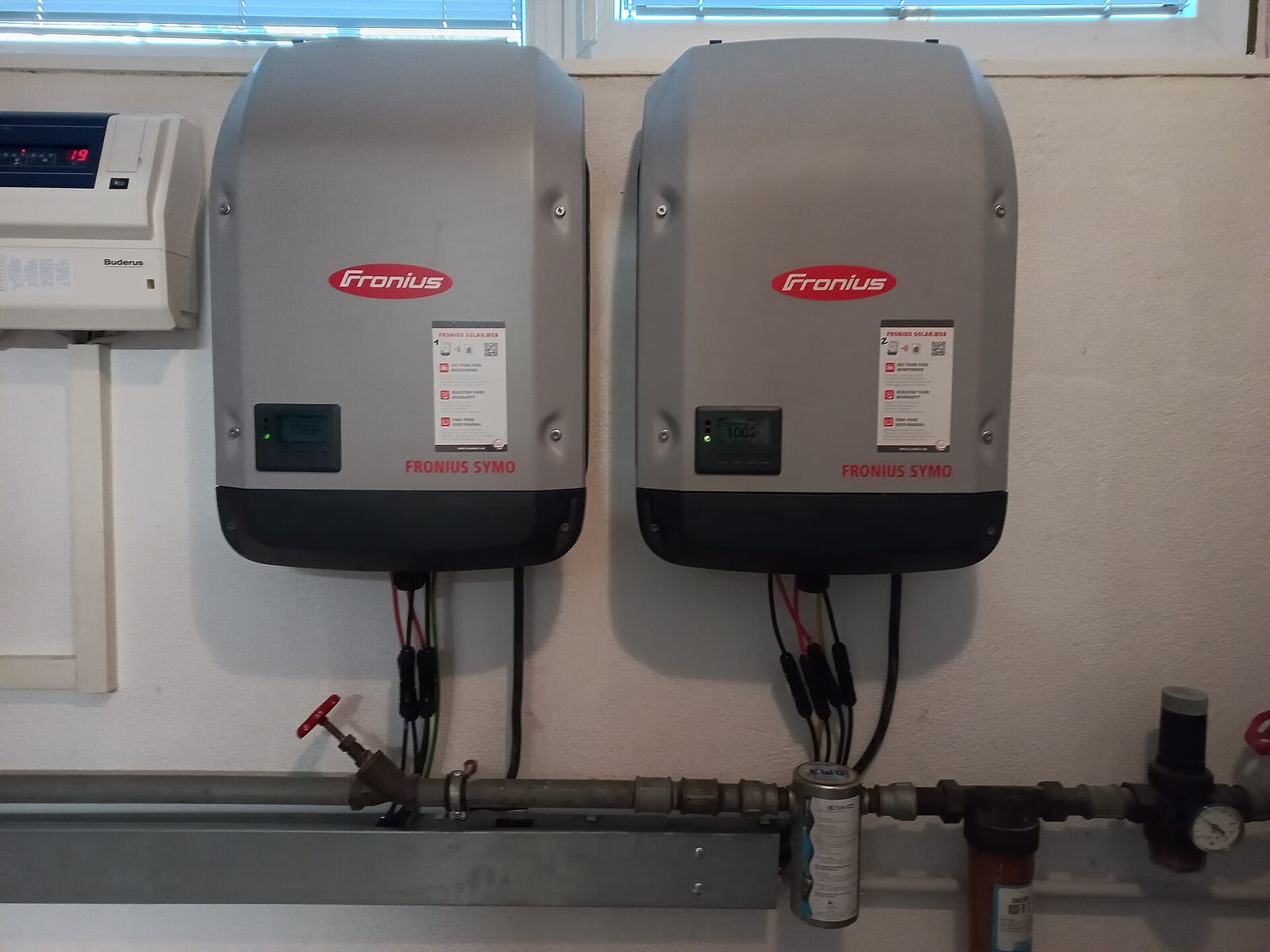
The Fronius GEN24 Plus is a well-built hybrid with a strong installer reputation, an Australian office and three-phase Full Backup on the larger Symo models. Fronius topped SolarQuotes’ Installers’ Choice inverter category again in 2025. Its backup is not seamless, though, and it costs more than a Sungrow.
Pros
- PV Point gives a 3,000 VA outlet from the panels in a blackout, even without a battery
- Works with Fronius Reserva, BYD Battery-Box Premium and LG FLEX
- IP66 and rated for -40 to +60 °C
- A standard Primo GEN24 can be upgraded to Plus with software later
Cons
- Fronius lists 10 seconds for Full Backup, so clocks reset and computers restart
- Backup runs at 53 Hz, which stops other brands’ AC-coupled inverters working in an outage
- Battery port capped at 22 A, about 6.2 kW on the Primo 6.0 Plus
- Wattever lists Reserva with only one VPP (Amber SmartShift)
Key specs: 2 MPPTs, high-voltage batteries only (150 to 455 V on the Primo 6.0 Plus), Full Backup not available on the Symo 3.0 to 5.0.
Price: A$2,500 to A$4,500 installed, inverter only (Why Solar, 2026), roughly A$1,300 to A$1,700 more than a Sungrow.
Warranty fine print: 5 years of Fronius Warranty Plus, plus 5 more on Solar.web registration. Fronius currently advertises the extension as full Warranty Plus, but get the terms for your install date in writing. The battery is warranted separately.
Skip it if you need near-uninterrupted backup or the lowest hybrid price.
Best All-in-One for Three-Phase and EV Charging: Sigenergy Sigen Energy Controller
The Sigen Energy Controller is the hybrid inverter, battery converter and energy manager inside the Sigenergy SigenStor. It covers 3 to 12 kW single phase and 5 to 30 kW three phase, backs up all three phases, and takes an optional 12 or 25 kW DC EV charging module in the same stack.
Pros
- Genuine three-phase backup, and Sigenergy states 0 ms load-side disruption with its Gateway
- Accepts panels up to twice its AC rating
- IP66 controllers rated for -30 to 60 °C
Cons
- Works only with SigenStor battery modules
- November 2025 recall of 8, 10 and 12 kW single-phase controllers over overheating AC plugs
- Backup power depends on module count (4 kW per 7.8 kWh module)
- Owner reviews describe slow warranty support
Key specs: Up to 4 MPPTs on single phase, 15 kW peak backup for 10 seconds on the 10 kW single-phase controller.
Price: Sold as a system. About A$8,000 for 13 kWh after the federal battery discount, before installation (SolarQuotes, May 2026).
Warranty fine print: 10 years on the controller, 3 years on the EV module. After a year offline, cover drops to five years.
Skip it if you want to choose your own battery brand.
Best Budget Three-Phase Hybrid: GoodWe ET G2
GoodWe’s ET G2 and EH hybrids are usually among the cheapest reputable options on a quote. The ET G2 covers 6 to 15 kW three-phase homes, accepts high-voltage batteries from 150 to 720 V, and carries a 10-year standard warranty. The single-phase EH is cheaper still, but its warranty is more conditional.
Pros
- ET G2 has 10 years standard, 98.2% maximum efficiency and up to 200% PV oversizing
- Pairs with GoodWe’s Lynx F G2 battery, and BYD lists GoodWe hybrids as compatible
- Melbourne office and 4.8 out of 5 from about 3,950 SolarQuotes ratings
Cons
- EH and ET 5 to 10 kW models (not the ET G2) get 5 years unless paired with a GoodWe Lynx battery and registered
- Owners and SolarQuotes report heat derating in hot climates
- September 2025 recall of EHB hybrids (a firmware fix), and dongles and meters carry 2 years
- Backup output figures are not published in what we reviewed, so get them in writing
Key specs: ET G2 16 A per string, 150 to 720 V battery input, backup output for essential circuits when a battery is fitted.
Price: A$2,000 to A$2,800 for a 5 kW EH hybrid, inverter only (Why Solar, April 2026). We found no published ET G2 range.
Warranty fine print: Coastal and saltwater damage is excluded without GoodWe’s written approval, and labour is at GoodWe’s discretion.
Skip it if the inverter must go on a hot west wall with no shade.
Best for Third-Party 48 V Batteries: Solis S6-EH1P
The Solis S6-EH1P is a low-voltage (48 V) single-phase hybrid, which means it works with many brands of 48 V lithium battery rather than one maker’s high-voltage stack. It switches to backup in under 10 ms and is sold through many volume installers.
Pros
- Battery choice across multiple 48 V brands on Solis’s approved list
- Under 10 ms backup switching, with 7 kVA (5 kW model) or 8 kVA (6 kW model) for 60 seconds
- Warranty starts at the later of installation or purchase
Cons
- The 10-year term depends on staying connected to SolisCloud, and its wording for hybrids is ambiguous
- About 94% charge and 93.5% discharge efficiency through the battery, below high-voltage designs
- Labour and removal are not covered, and homes over 50 km from a service agent pay freight
- 4.5 out of 5 from about 380 SolarQuotes ratings, with reports of failures at 5 to 6 years
Key specs: 3 to 8 kW (S6-EH1P-L), 10 to 16 kW models listed July 2026, 42 to 58 V battery, IP66.
Price: No current inverter-only range is published.
Warranty fine print: 5 years standard, 10 if registered, kept online and installed by an SAA-accredited installer. Several listings, including the S6-EH1P-L-AU, expire in October and November 2026, so confirm the model is current.
Skip it if your home internet is unreliable.
Best for Shaded or Split Roofs: SolarEdge Home Hub
The SolarEdge Home Hub pairs a wall inverter with an optimiser under every panel, so shade or panels split across several faces cost less energy. It is battery-ready for a DC-coupled SolarEdge Home Battery and backup via a Backup Interface.
Pros
- Panel-level optimisation and monitoring
- Optimisers drop to 1 V each when the inverter is off
- 12-year inverter and 25-year optimiser warranty
Cons
- Batteries limited to SolarEdge Home Battery or LG RESU Prime
- Backup is modest: about 4,050 W from a single 5 kW Home Hub, and SolarQuotes reports about 3 seconds of switchover
- SolarQuotes flags weak thermal management, and owners report slow replacements
- Warranty is parts only
Key specs: SE3000H-MM to SE10000H-MM, 99.2% maximum efficiency, IP65; three-phase battery systems use the SE10K-RWB48.
Price: A$3,000 to A$4,500 for a 5 kW unit, plus one optimiser per panel (Why Solar, April 2026).
Warranty fine print: Starts at installation or four months after shipping, whichever is earlier. Labour, travel and reinstallation are excluded.
Skip it if your roof is unshaded and you want the simplest, cheapest hybrid.
Best for Large Budget Battery Systems: Fox ESS Hybrids
Fox ESS sells single-phase H1-G2 (3 to 6 kW) and KH (7 to 10.5 kW) hybrids and three-phase H3 Smart (5 to 15 kW) and H3 Pro (15 to 30 kW) models, designed around its own high-voltage batteries such as the Fox ESS EQ4800. They often appear on low-priced quotes with very large batteries.
Pros
- Low system prices with large battery stacks
- 10-year standard warranty under Fox’s April 2026 inverter policy, extendable to 20 years
- Fox’s policy commits it to approve and dispatch replacements within 3 working days, subject to stock
Cons
- Designed around Fox batteries, so you are locked into the brand
- Only the installer (or Fox staff) can lodge a claim
- Support responsiveness is a recurring owner complaint
- We could not verify backup (EPS) output figures from Fox’s datasheets
Key specs: IP65, high-voltage battery input, single and three phase.
Price: Not published separately; one May 2026 ad listed a 10 kW hybrid with 27.96 kWh for A$7,980 installed, rebate treatment not stated.
Warranty fine print: 10 years from installation but no more than 132 months from manufacture. The paid FoxPro extension must be bought within 36 months of commissioning.
Skip it if you want independent battery choice or premium-brand support.
Inverters to avoid on a new quote
- Huawei SUN2000: Huawei stopped selling home inverters in Australia under its own brand in early 2024, and no Huawei inverter was on the CEC list in October 2026. See our Huawei SUN2000 review.
- SMA Sunny Boy Smart Energy: SMA withdrew from Australian home solar sales in 2026. See our SMA Sunny Boy review.
If you would rather skip a separate hybrid, the Tesla Powerwall 3 and AlphaESS SMILE-G3 build the inverter into the battery. Enphase systems couple batteries on the AC side instead; our string vs microinverter guide explains the difference.
How we chose
We started from our full inverter and battery reviews and weighed: backup design (whole home or circuits, switchover, three-phase support), battery compatibility, solar input and oversizing, CEC listing status, warranty terms and conditions, published price, local support and owner feedback. Each pick had to win a specific use case. No inverter was tested hands-on, and no manufacturer was contacted or paid.
What to check on your quote
- Exact model. SH5.0RS vs SH10RS, or EH vs ET G2, changes backup and warranty.
- Backup design. Which circuits, what kW, the switchover time, and whether backup hardware is included.
- Battery pairing. Is your battery on the inverter maker’s list, and on the CEC battery list on your install date?
- Warranty conditions. Registration, internet connection, accessory terms and labour cover.
- Oversizing and STCs. Hybrids accept large arrays, but STCs are paid only on panels up to 133% of inverter capacity. See our STC rebate explainer.
- Phase. Read single vs three phase solar before accepting a single-phase hybrid on a three-phase home.
- Battery discount. It is paid on the battery, not the inverter. See our battery rebate guide.
Then compare quotes line by line with our guide on how to compare solar quotes.
FAQ
What is the best hybrid inverter in Australia?
For most homes, a Sungrow SH RS (the SH8.0RS or SH10RS if you want whole-home backup) offers the best value. Choose Fronius GEN24 Plus for premium support and wider battery choice, or Sigenergy for three-phase all-in-one systems.
Do I need a hybrid inverter to add a battery?
No. AC-coupled options such as Powerwall 3, Enphase IQ Battery 5P or a GoodWe BH/BT battery inverter keep your existing solar inverter. A hybrid suits new systems or replacing an old inverter.
Which hybrid inverter switches to backup fastest?
On published figures, Sigenergy (0 ms load side with its Gateway) and Sungrow and Solis (under 10 ms). Fronius lists 10 seconds for Full Backup.
Can I use any battery with a hybrid inverter?
Usually not. Sungrow, Sigenergy and Fox ESS are effectively single-brand, Fronius lists three battery families, and Solis’s 48 V hybrids accept several brands from its approved list.
Which hybrid has the longest warranty?
SolarEdge offers 12 years on the inverter and 25 on optimisers, parts only. Sungrow, Sigenergy, GoodWe ET G2 and Fox ESS give 10 years standard, while Fronius and Solis reach 10 only with registration.
Is a hybrid inverter worth it without a battery yet?
Only if a battery is likely within a few years. Otherwise a string inverter is cheaper, and a Fronius Primo GEN24 can be upgraded to Plus with software later.
Related guides
- The Best Solar Inverters in Australia for 2026: String, Micro and Hybrid Picks
- The 8 Best Solar Batteries in Australia for 2026, Compared
- The 7 Best Batteries for Blackout Backup in Australia for 2026
About this guide
Written by the Solar Cobber editorial team. Updated October 2026.
Solar Cobber is a free Australian solar installer directory. We may earn referral or advertising fees from installers, but commercial relationships never affect our picks, and no manufacturer paid for or reviewed this guide. Sources include manufacturer datasheets and Australian warranties (including Fox ESS’s April 2026 inverter warranty policy), the CEC approved inverter list, Why Solar’s 2026 inverter price guides, SolarQuotes, Wattever and the sources cited in each linked review.
When you are ready for quotes, browse our installer directory.