
Sungrow
SG RS
Inverter review
Our verdict
The Sungrow SG RS is the value benchmark for single-phase string inverters, with generous tracker current, fan-less cooling and a 10-year standard warranty at a price well below Fronius. The trade-off is a more uneven support experience, a one-year warranty on the Wi-Fi dongle and meter, and no battery port.
- Best for
- Single-phase homes wanting a capable, well-warranted solar-only inverter at a mid-market price
- Look elsewhere if
- Homes adding a battery soon (choose a hybrid) or owners who put local support quality above price
- Price guide
- About A$1,400 to A$2,500 installed for the inverter in a 5 to 6.6 kW system (April 2026 market range)
- Warranty
- 10 years from installation (capped at 11 years from manufacture), with a A$200 transport cap and a fixed labour rebate to the installer; accessories 1 year
Pros
- 16 A per tracker suits current high-current panels
- Three trackers on the SG5.0RS-ADA, SG8.0RS and SG10RS for multi-face roofs
- Natural convection cooling, no fan
- 10-year standard warranty with no registration step, plus optional paid extensions
- Integrated arc fault circuit interrupter (AFCI) and C5 corrosion rating
Cons
- No battery port or backup outlet; adding a DC battery later means replacing the inverter with a hybrid
- Wi-Fi dongle and smart meter carry only a one-year warranty, yet monitoring and export limiting depend on them
- Warranty covers transport up to A$200 and a fixed labour rebate, not full on-site costs
- Installer and owner feedback on Sungrow tech support is uneven, with SolarQuotes describing it as patchy
Key specifications
| Single-phase models (CEC listed) | 2.0, 3.0, 5.0, 8.0 and 10 kW |
|---|---|
| MPP trackers | 2 (SG5.0RS); 3 (SG5.0RS-ADA, SG8.0RS, SG10RS) |
| Max input current per tracker | 16 A (20 A short circuit) |
| Recommended max PV array | 7.5 kWp (5.0), 12 kWp (8.0), 15 kWp (10) |
| Max input voltage / MPP range | 600 V / 40 to 560 V |
| Max / European efficiency | 97.9% / 97.3% (SG5.0RS); 97.8% / 97.4% (SG10RS) |
| Cooling | Natural convection |
| Enclosure and corrosion | IP65, C5 |
| Ambient temperature range | -25 to +60 °C |
| Weight | 10 kg (SG5.0RS); 19 kg (SG8.0RS, SG10RS) |
| Grid inputs | DI for ripple control and DRM |
| CEC listing | Listed to July 2028 (checked October 2026) |
From the manufacturer's Australian datasheet. Check the exact model number on your quote.
Sungrow’s SG RS range is a staple of mid-market Australian solar quotes for single-phase homes. It is usually quoted on 6.6 to 13 kW rooftop systems for households that want a well-known brand with a long standard warranty but do not want to pay Fronius prices, and it is the inverter many installers use to hit a sharp price on a good-quality panel package. Sungrow is a large Chinese manufacturer with an Australian subsidiary in North Sydney.
This review is based on manufacturer documentation, warranty terms, published pricing and owner and installer feedback; Solar Cobber did not test the product and was not paid by the manufacturer.
What it is and how it works
The SG RS is a transformerless, grid-connected string inverter for single-phase homes. Panels are wired in strings, each string goes to one of the inverter’s maximum power point trackers (MPPTs), and the inverter converts the DC to 230 V AC. It has no battery port and no backup outlet, which is the key difference from Sungrow’s SH RS hybrid.
On the CEC approved inverter list (checked October 2026) the current Australian line-up is:
- SG2.0RS-S and SG3.0RS for small arrays
- SG5.0RS (2 trackers), the most common model, usually paired with about 6.6 kW of panels
- SG5.0RS-ADA (3 trackers), a 5 kW variant for roofs with three panel faces
- SG8.0RS and SG10RS (3 trackers) for larger single-phase arrays, normally export-limited
All are listed until 7 July 2028. Sungrow’s warranty document also covers older sizes such as the SG3.6RS, SG4.0RS and SG6.0RS, which you may still see on quotes from stock, but they are not on the current CEC list. A model must be on the list on the day of installation for the system to qualify for STCs.
In the market, the SG RS sits in the mid tier: priced well below Fronius and SMA, above budget brands, and with a standard warranty longer than either premium European brand’s. If you are weighing it against panel-level electronics, our guide to string inverters vs microinverters explains when shading changes the answer.
Specs that matter in Australia
Tracker current suits modern panels. Each tracker accepts 16 A operating current (20 A short circuit). That comfortably covers the higher-current panels now common on Australian roofs, and it is more than the 12 A second tracker on the smaller Fronius models or the 15 A trackers on the SMA Sunny Boy.
Three trackers when you need them. If your roof has north, east and west faces, the SG5.0RS-ADA, SG8.0RS and SG10RS each give three independent trackers, so each face can run at its own optimum.
Heat and outdoor mounting. The SG RS is IP65 rated, C5 corrosion rated (relevant near the coast) and rated for -25 to +60 °C ambient. It uses natural convection rather than a fan, so it is quiet, but it relies on free airflow. Like any inverter it derates when hot, so mount it in shade and leave the clearances shown in the manual. Sungrow’s warranty excludes damage from “insufficient ventilation”.
Oversizing and STCs. Sungrow recommends up to 7.5 kWp of panels on the SG5.0RS and 15 kWp on the SG10RS (150%). Under the federal STC rules only panels up to 133% of inverter capacity attract the upfront discount. See our STC explainer.
Export limits and grid signals. Most Australian networks limit how much a single-phase home can export, commonly to around 5 kW, so the SG8.0RS and SG10RS will usually be paired with a Sungrow smart meter for export limiting. The datasheet lists a digital input for ripple control and demand response modes (DRM), which some networks use to curtail or switch off solar remotely. Our guide to single vs three phase solar covers what to do if your array is outgrowing a single-phase connection.
Safety features. An integrated arc fault circuit interrupter (AFCI), PV string current monitoring and Type II surge protection on both DC and AC sides are standard on the datasheet.
Monitoring. The inverter reports to Sungrow’s iSolarCloud app through a plug-in Wi-Fi dongle (Ethernet and RS485 are also available). Note the dongle’s short warranty below.
Price in Australia
Sungrow does not publish retail prices. Published Australian guides give:
| What | Range | Source and date |
|---|---|---|
| Sungrow SG or SH series, installed, 5 to 6.6 kW system | A$1,400 to A$2,500 | Why Solar, April 2026 |
| Fronius Primo or GEN24 Plus, installed, same size | A$2,200 to A$3,500 | Why Solar, April 2026 |
| Complete mid-tier 6.6 kW system (Jinko or Trina panels, 5 kW Sungrow), after STCs | about A$6,200 | Solar Nerds, July 2026 |
What changes the price: inverter size, whether a smart meter is included, panel brand, roof complexity and switchboard upgrades. The inverter brand does not change your STC entitlement.
If a battery is likely within a few years, compare this quote with a Sungrow SH RS hybrid. The extra cost of a hybrid now is usually less than replacing a working SG RS later.
Warranty: the fine print
Sungrow’s Australian warranty (version 4.2, April 2024) covers the SG RS range as follows:
- Term. Ten years from installation, but no more than eleven years from the manufacture date, whichever comes first. Stock that has sat in a warehouse for a long time loses warranty time, so check the manufacture date on older stock.
- No registration step. The 10 years is standard and does not depend on online registration.
- Accessories: one year. The Wi-Fi dongle, smart energy meter and similar accessories are covered for one year from installation (no more than two from manufacture). SolarQuotes has criticised this, because monitoring and export limiting depend on those parts.
- What is paid. Sungrow repairs or replaces the inverter, possibly with a different current model. It pays outbound and return transport up to A$200 in total, and pays the installer a standard service rebate towards replacement labour. Travel and other on-site costs are not covered. Fuses, surge suppressors and filters are excluded.
- Claims process. Contact your installer first; claims are lodged online through Sungrow’s Australian service portal with proof of purchase and installation date. If Sungrow finds no defect, it may recover its costs from the claimant.
- Transfer and extensions. The current document says the warranty is transferable with original proof of purchase. Extensions (parts-only or standard) can be bought until the standard period ends.
- Local office. Sungrow Australia Group, Suite 701, 1 Elizabeth Plaza, North Sydney NSW 2060; 1800 786 476.
Your Australian Consumer Law rights apply on top of the written warranty.
What owners and installers report
Praise. Sungrow holds a 4.8 out of 5 rating from more than 5,400 owner ratings on SolarQuotes (brand-wide). Owners and installers credit value for money and reliability, and Sungrow placed second in the 2025 SolarQuotes Installers’ Choice awards while winning best-value inverter for the fourth year running.
Complaint patterns.
- Support consistency. SolarQuotes’ review describes tech support as “patchy”, with some calls handled by script readers rather than technicians.
- Failures and warranty work. The same review notes that failure rates and the resulting warranty work have made “some installers gun-shy”.
- Self-selected negative reviews. On ProductReview.com.au, Sungrow scores 1.9 out of 5 from 41 reviews, covering all Sungrow products including hybrids and batteries. Complaints there cluster around unanswered phone lines, slow warranty claims, Wi-Fi dongle failures and iSolarCloud reporting glitches. That sample is small and skewed towards unhappy owners, but the themes match SolarQuotes’ criticisms.
- Dongle drop-outs. Repeated Wi-Fi dongle replacements come up often enough that it is worth asking for a wired Ethernet connection if your router is nearby.
Recalls. The CEC’s product recall register, checked October 2026, lists no Sungrow inverter recalls.
Sungrow SG RS vs alternatives
| Sungrow SG RS | Fronius Primo GEN24 | SMA Sunny Boy (AV-41) | Sungrow SH RS | |
|---|---|---|---|---|
| Type | String | String, upgradable to hybrid | String | Hybrid |
| Single-phase sizes | 2.0 to 10 kW | 3.0 to 10.0 kW | 3.0 to 6.0 kW | 5.0 to 10 kW |
| MPPTs (5 to 6 kW model) | 2 (SG5.0RS) or 3 (ADA) | 2 | 2 | 2 |
| Max current per MPPT | 16 A | 22 A / 12 A | 15 A / 15 A | 16 A |
| Cooling | Natural convection | Fan | Convection, no fan | Natural convection |
| Standard AU warranty | 10 yrs | 5 yrs full, +5 on registration | 5 yrs (+5 on some terms) | 10 yrs |
| Installed inverter price | A$1,400 to A$2,500 | A$2,200 to A$3,500 | Not published | A$1,400 to A$2,500 (SG/SH range) |
Choose the SG RS for a capable solar-only inverter at a mid-market price with a 10-year standard warranty. Choose the Fronius Primo GEN24 if you will pay more for Fronius’s support record and a software path to a battery. Avoid the SMA Sunny Boy for new systems now that SMA has left the Australian home market. Choose the Sungrow SH RS if a battery is on the cards within a few years.
Questions to ask your installer
- Which exact model is quoted (SG5.0RS or SG5.0RS-ADA), and how will my roof faces map to the trackers?
- What is the inverter’s manufacture date, given the 11-year cap on the warranty?
- Is a Sungrow smart meter included, and what export limit applies on my network?
- Can the inverter connect by Ethernet instead of the Wi-Fi dongle?
- Who pays for labour if the inverter fails in year six, beyond Sungrow’s service rebate?
- If I add a battery within five years, would a hybrid be cheaper overall than this inverter now?
- Where will it be mounted, and will it be out of direct afternoon sun?
FAQ
Is the Sungrow SG RS a good inverter?
For most single-phase homes it is a solid, good-value string inverter with useful tracker current and a 10-year standard warranty. Support quality is the main point of difference with Fronius.
What is the difference between Sungrow SG and SH inverters?
SG models are solar-only string inverters. SH models are hybrids with a battery port and a backup output.
What does the “ADA” in SG5.0RS-ADA mean for me?
It is a 5 kW model with three trackers instead of two, sharing a datasheet with the SG8.0RS and SG10RS, and suits roofs with three panel faces.
How long is the Sungrow inverter warranty in Australia?
Ten years from installation, capped at eleven years from manufacture. Accessories such as the Wi-Fi dongle and smart meter get one year.
Does the Sungrow SG RS have a fan?
No. Sungrow lists natural convection cooling.
Can I add a battery to a Sungrow SG RS later?
Not directly, as it has no battery port. You would add an AC-coupled battery or replace the inverter with an SH RS hybrid.
Find an installer
Because Sungrow’s warranty expects your installer to troubleshoot first, pick a company you expect to be around for a decade. Compare local Sungrow installers in our installer directory.
Inverter buying guides
Often quoted alongside
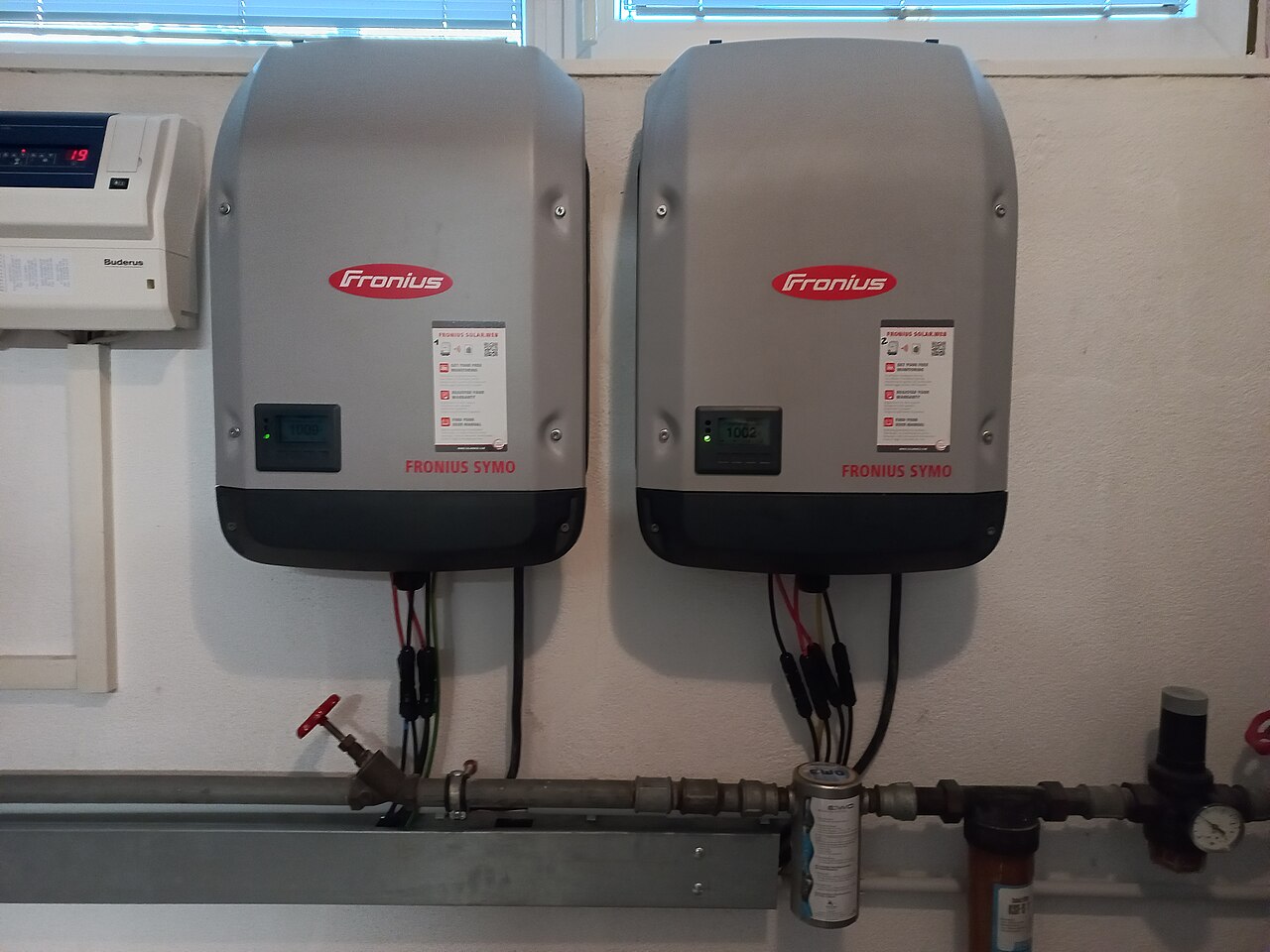 Inverter
Fronius
Fronius Primo
The Primo GEN24 is a well-supported, quiet single-phase string inverter with a strong Australian service record and a cheap path to adding a battery later. You pay a clear premium over Sungrow for that, and the free 10-year warranty depends on registration and promotion terms you should confirm in writing.
Best for: Single-phase homes wanting a premium European string inverter with an upgrade path to a battery
SMA
Sunny Boy
SMA
SMA Sunny Boy
The Sunny Boy AV-41 is a quiet, fan-less string inverter with a long reliability record, but SMA withdrew from Australian home solar sales in 2026. Only buy one as clearly discounted remaining stock with the warranty terms in writing; for a new system, a Fronius or Sungrow inverter is the safer choice.
Best for: Like-for-like replacement of a failed Sunny Boy, or buyers offered heavily discounted remaining stock
Sungrow
SH RS / RT hybrid
Sungrow
Sungrow SH RS / RT hybrid
The Sungrow SH RS is the value pick for a single-phase solar and battery system, with near-instant backup, high solar oversizing and broad VPP support at well below Fronius prices. Check which model you are quoted, because only the SH8.0RS and SH10RS offer whole-home backup, and accept that you are tied to Sungrow batteries.
Best for: Homes adding a Sungrow battery now that want fast backup and VPP options at a mid-market price
Sources
- Sungrow SG5.0/6.0RS datasheet, version 12 (PDF)
- Sungrow SG5.0RS-ADA / SG8.0RS / SG10RS datasheet, version 12 (PDF)
- Sungrow Australia: Inverters 10-Year Limited Warranty V4.2, April 2024 (PDF)
- Clean Energy Council: approved inverters list
- Clean Energy Council: product recalls
- SolarQuotes: Sungrow inverter review and owner ratings
- SolarQuotes: Sungrow inverter warranty analysis (April 2023)
- ProductReview.com.au: Sungrow reviews
- Why Solar: Fronius solar inverter review Australia (April 2026 price table)
- Solar Nerds: Solar system cost breakdown examples (July 2026)
Independent desk research by the Solar Cobber editorial team. We did not test this product and were not paid by the manufacturer. Solar Cobber is a free directory that may earn referral or advertising fees from installers; this never affects our reviews.
Get quotes for Sungrow SG RS
Browse rated solar installers in your area, check their Google reviews, and ask at least three for itemised quotes. Our guide to comparing solar quotes explains what to look for.
Find a solar installer