
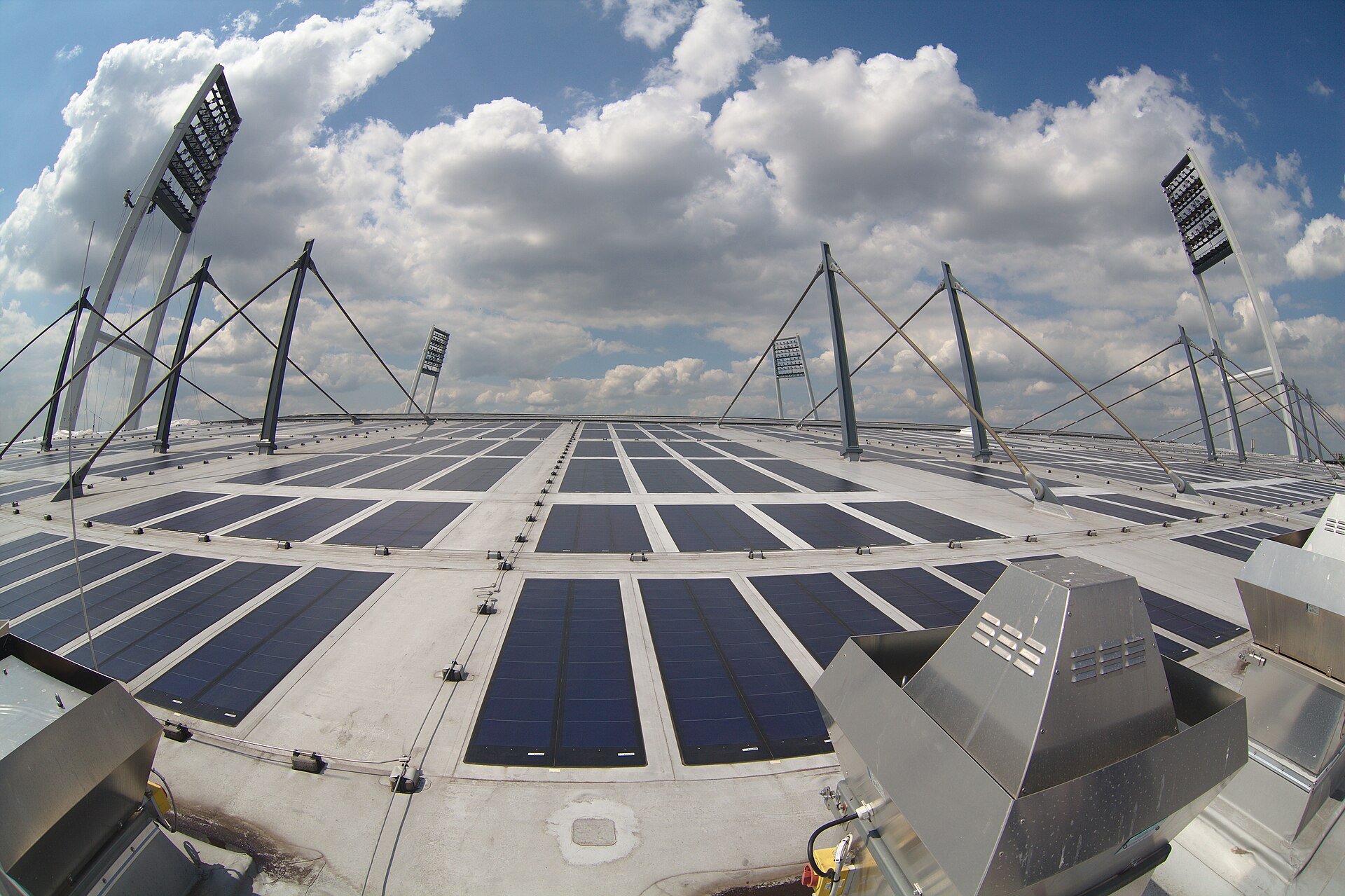
Single phase power brings one live wire into your home. Three phase power brings three, each carrying the same voltage but timed slightly apart, so the supply is smoother and can carry roughly three times the load.
For solar, the difference matters more than most people expect. In most parts of Australia a three phase home can install a bigger inverter and export three times as much power to the grid as the identical house next door on single phase. This guide explains three phase power in plain terms, shows you how to check what you have, and then covers the solar-specific parts that most explainers skip.
Three phase power explained
Electricity from the grid is alternating current. It rises and falls in a wave, many times a second.
With single phase power you get one of those waves, on one active wire plus a neutral and an earth. In Australia the nominal voltage is 230 volts, set by the standard AS 60038. That is what most older suburban homes have.
With three phase power you get three separate waves on three active wires. Each is 230 volts to neutral, and they are offset from each other by a third of a cycle. Because the peaks and troughs are staggered, there is never a moment when all three are at zero. Measured between any two active wires you get about 400 volts, which is why three phase is often called 415 volt power (the old nominal figure before the 2000 change).
Two things follow. You get roughly three times the total capacity, and you get smoother delivery, so big motors like a ducted air conditioner compressor or a bore pump start more gently and run better.
How to tell which one you have
You do not need an electrician. Open your meter box and look for two things.
Count the service fuses. These are the large black rectangular blocks near the top of the board. One fuse means single phase, three means three phase. Two fuses means two phases, which does happen.
Check the width of the main switch. A single phase main switch is one pole wide, a narrow single toggle. A three phase main switch is three poles wide, so it looks like three switches joined under one handle.
Reduction Revolution’s guide to identifying phases makes an important point. Do not go by the meter alone, because a three phase capable smart meter can be fitted where only one phase is actually connected.
Other clues: a ducted air conditioner, a large pool pump, a workshop with machinery, or a home built or rewired in the last decade or so. If you are still unsure, your installer will confirm it at the site inspection, and a good quote states it up front. Our guide on how to compare solar quotes covers what else that document should spell out.
Why three phase homes can install bigger systems
Every distribution network in Australia sets two caps: how big your inverter can be, and how much you can push back into the grid. Both are usually written per phase, so a three phase connection gets three times the allowance.
In most networks a single phase home is limited to a 10 kW inverter, while a three phase home is allowed 30 kW. That is the difference between about 13 kW of panels and nearly 40 kW on the same roof, if you have the space. It is the biggest solar advantage of three phase, and it only counts if your roof and budget can use it. Work out how much you actually need before chasing the maximum. See how many solar panels do I need.
Export limits by network and phase
Export limits are where the gap really shows. Most networks allow 5 kW per phase, so a three phase home can send 15 kW to the grid while its single phase neighbour is capped at 5 kW.
Below is a snapshot of standard residential limits as at 2 August 2026, from SolarQuotes’ state grid connection pages and the networks’ own published material. These change often and vary by street, not just by network. Weak rural lines and congested feeders are treated differently. Use it as a starting point and confirm your own limit with your distributor.
| Network | Area | Single phase export | Three phase export | Notes |
|---|---|---|---|---|
| Ausgrid | Nth Sydney, Central Coast, Hunter | 10 kW | 30 kW | No set limit up to 10 kW per phase |
| Endeavour Energy | Sth west Sydney, Illawarra | 5 kW | 15 kW | Flexible exports to 10 kW per phase rolling out from late 2026 |
| Essential Energy | Regional NSW | 5 kW | 15 kW | Some rural lines limited to about 3 kW per phase |
| Energex | South east QLD | 5 kW | 15 kW | Dynamic connection option, 1.5 kW to 10 kW per phase |
| Ergon Energy | Regional QLD | 5 kW | 15 kW | 2 kW on single wire earth return lines |
| CitiPower, Powercor, Jemena, AusNet, United Energy | Victoria | 5 kW | 15 kW | Must be set to 5 kW on each phase |
| SA Power Networks | South Australia | Flexible to 10 kW, fixed option 1.5 kW | Flexible to 30 kW, fixed option 4.5 kW | Flexible exports are now the default offer |
| Evoenergy | ACT | 5 kVA | 15 kVA | 5 kVA per phase for all residential solar |
| TasNetworks | Tasmania | 10 kW | 30 kW | |
| Western Power | South west WA | 1.5 kW fixed, higher with remote export control | Higher with remote export control | WA connection rules changed during 2026, check current terms |
| Horizon Power | Regional WA | 5 kW | 15 kW | Rural connections often stricter |
| Power and Water | Northern Territory | 5 kW | 7 kW | Larger systems allowed if zero export limited |
Sources: SolarQuotes grid connection guides (current as at May 2026), SA Power Networks Flexible Exports, Endeavour Energy Flexible Exports, and Evoenergy solar and battery connections.
Before you get excited about a 15 kW allowance, check what you are paid for it. Feed-in tariffs are only a few cents per kilowatt hour now, and some networks charge for exports at busy times. A high export limit is worth real money at 12 cents and much less at 3 cents. Our feed-in tariff guide has the current picture.
Putting a single phase inverter on a three phase home
This is common, because single phase inverters are cheaper.
The good news first. Your billing is fine. Australian smart meters on three phase connections net the three phases together before applying tariffs. If your inverter sits on phase A and your fridge and lights sit on phases B and C, the meter still nets it out. You are not paying import rates on one phase while being paid export rates on another. That is the thing people worry about most, and it is not a real problem here.
The genuine downsides are different:
You lose the export headroom. AS/NZS 4777.1, the installation standard, does not allow a phase imbalance of more than 5 kVA across the installation. That effectively caps a single phase inverter on a three phase home at around 5 kW. You cannot put a 15 kW single phase inverter on one leg and export 15 kW. If bigger exports were the reason you wanted three phase, a single phase inverter throws that away.
Voltage rise concentrates on one phase. All the output is pushed up one wire. On a long street or a loaded feeder, that phase can climb toward the upper voltage limit and the inverter starts tripping off or throttling back on sunny days. Spreading generation across three phases keeps voltage rise lower on each.
Backup only covers one phase. More on that next.
If you are installing 6 kW on a three phase home with no plans to expand, a single phase inverter is usually the sensible call. At 10 kW or more, or if a battery and EV charger are coming, the three phase unit is generally worth the extra.
Batteries and backup on three phase
This trips up a lot of buyers. A single phase battery on a three phase home gives you single phase backup only. During a blackout it energises the one phase it is wired to, and anything on the other two phases stays dead. Two or three single phase batteries cannot be ganged together to recreate a synchronised three phase supply either.
Whether that matters depends on your house. Almost everything in a normal home is single phase: lights, fridge, power points, wifi, most split systems. The genuinely three phase loads are usually the ducted air conditioner, a bore or pool pump, and workshop machinery. For many households, moving the essential circuits onto the backed-up phase gives most of what you want for far less than full three phase backup.
If you want every phase live in a blackout, you need a three phase hybrid inverter and battery designed for it. Brands offering true three phase backup here include Fronius, Sungrow, GoodWe, SolarEdge and Sigenergy. Expect to pay more. Our battery cost guide covers pricing.
Ask any installer quoting a battery on a three phase home one direct question: in a blackout, exactly which circuits stay on? Get it in writing.
EV chargers
A single phase home tops out at about 7.4 kW of AC charging, roughly 40 km of range per hour, which fills almost any EV overnight.
Three phase allows 11 kW or 22 kW chargers, up to around 120 km per hour. The catch is that very few EVs sold here accept 22 kW AC. Most support 7 kW or 11 kW on the onboard charger, so a 22 kW wall unit is limited by the car anyway. For one car charged overnight, three phase charging is a convenience, not a need. It matters with two EVs or a vehicle that needs fast top-ups between trips.
Single phase vs three phase for solar, side by side
| Single phase | Three phase | |
|---|---|---|
| Active wires into the home | 1 | 3 |
| Nominal voltage | 230 V | 230 V per phase, about 400 V between phases |
| Typical inverter cap | 10 kW | 30 kW |
| Typical export cap | 5 kW | 15 kW |
| Practical panel array before caps bite | Around 13 kW | Around 40 kW |
| Inverter cost | Lower | Higher for an equivalent three phase unit |
| Battery backup | Backs up the whole home | Needs a three phase battery for full backup |
| Max home EV charging | About 7.4 kW | 11 kW or 22 kW |
| Runs three phase appliances | No | Yes |
| Common in | Most established suburban homes | Newer builds, larger homes, rural properties, anything with ducted air conditioning |
What it costs to upgrade
Going from single phase to three phase is real electrical work, not a paperwork change. It usually means new consumer mains from the street, a new three phase switchboard, a network connection application and a meter change.
Published 2026 pricing from Australian electrical contractors puts a standard residential upgrade in a broad band. Electrx in Melbourne quotes $3,500 to $10,000, with $5,000 to $8,000 typical once the switchboard is included. SEQ Sparky in Brisbane quotes $3,500 to $6,500 fitted, covering the Energex work request, new board, supply cable, testing and safety certificate. Costs rise when the property sits a long way from the street supply, when the old switchboard has asbestos backing, or when the network has to upgrade the connection at the pole or pit.
Is it worth doing just for solar? For most homes, no. Spending $6,000 to lift an export cap from 5 kW to 15 kW rarely pays back at current feed-in tariffs. The exceptions are homes that need three phase anyway for a ducted system, a workshop, a pool, two EVs or a genuinely large array. If it is going in for one of those reasons, the solar benefits come along free.
Get the upgrade quoted separately from the solar quote so you can see each cost on its own. Local installers in our directory can usually arrange both, but keep the numbers split.
Frequently asked questions
Can I install solar on a three phase home with a single phase inverter?
Yes, and it is common. Billing is unaffected because the meter nets all three phases together. The trade-offs are that AS/NZS 4777.1 limits phase imbalance to 5 kVA, which effectively caps you around 5 kW, and voltage rise concentrates on one phase, which can cause more inverter tripping on hot sunny days.
Do three phase homes really get a 15 kW export limit?
In most networks, yes, because the limit is set per phase and 5 kW per phase is the common figure. Ausgrid and TasNetworks allow more. SA Power Networks and Western Power work differently again. Limits vary street by street, so ask your distributor about your address before you commit to a system size.
Will a single phase battery back up my whole three phase house?
No. It energises only the phase it is connected to, and everything on the other two phases stays off during a blackout. If you want all phases live you need a three phase hybrid inverter and battery. Moving the essential circuits onto the backed-up phase is often the cheaper fix.
Should I upgrade to three phase before installing solar?
Usually not, if solar is the only reason. The upgrade runs into thousands and the extra export earnings at today’s feed-in tariffs will not recover it quickly. Upgrade if you need three phase for a ducted air conditioner, a workshop, a pool pump or fast EV charging, and treat the bigger solar allowance as a bonus.
Does three phase power cost more on my electricity bill?
The daily supply charge can be higher on some three phase tariffs, though many retailers charge the same. Ask your retailer what your supply charge would be before you upgrade, and compare plans on the government’s Energy Made Easy site.
Related reading
About this research
This is independent desk research by Solar Cobber. We did not visit sites, request quotes or accept payment for inclusion. Figures are dated and sourced, and pricing and policy details change, so confirm current terms directly before you sign anything.