
Sungrow
SBR
Battery review
Our verdict
The Sungrow SBR is one of the best-value modular batteries in Australia, with easy expansion in 3.2 kWh steps and a warranty that gives normal households unlimited cycles. The trade-off is that you must pair it with a Sungrow hybrid inverter, and Sungrow's app and phone support are weaker than the hardware.
- Best for
- Homes wanting a modular battery paired with a Sungrow hybrid inverter
- Look elsewhere if
- Homes that want to keep a non-Sungrow inverter or need an all-in-one unit
- Price guide
- About A$8,800 to A$14,700 installed for 12.8 kWh with a Sungrow hybrid inverter, after the federal battery discount (2026 published figures)
- Warranty
- 10 years, with retained capacity of 70% (unlimited cycles for self-consumption and backup; throughput limits apply to other uses)
Pros
- Modular 3.2 kWh steps from 9.6 to 25.6 kWh per stack, and extra modules can be dropped in later
- High continuous power for its size: 30 A, from 5.76 kW (SBR096) to 15.36 kW (SBR256)
- Warranty allows unlimited cycles for daily self-consumption and backup, including grid charging
- Works with Sungrow's three-phase hybrids for full three-phase backup from one battery
Cons
- Locked to Sungrow hybrid inverters: using an incompatible inverter voids the battery warranty
- Datasheet rates charging only from 0 °C upwards, and it is rated only IP55, so it needs a sheltered spot
- Warranty is not transferable to a new home owner and modules added later inherit the original start date
- iSolarCloud app is detailed but hard to navigate, and owners report patchy phone support at busy times
- Current CEC listing (BAT-474) runs to 30 November 2026, so check it is still listed on install day
Key specifications
| Usable capacity | 9.6 to 25.6 kWh per stack (6.4 kWh SBR064 also sold) |
|---|---|
| Module size | 3.2 kWh, 33 kg, 3 to 8 modules per stack |
| Parallel stacks | Up to 4 stacks (about 100 kWh) |
| Continuous charge and discharge | 30 A; 5.76 kW (SBR096) to 15.36 kW (SBR256) |
| Nominal voltage | 192 V (SBR096) to 512 V (SBR256) |
| Chemistry | Lithium iron phosphate (LFP), prismatic cells |
| Operating temperature | Charge 0 to 50 °C, discharge -20 to 50 °C |
| Ingress rating and cooling | IP55, natural convection, floor standing |
| Dimensions and weight | 625 x 545 x 330 mm, 114 kg (SBR096) to 625 x 1195 x 330 mm, 279 kg (SBR256) |
| Compatible inverters | Sungrow SH-RS (single phase), SH-RT and SH-T (three phase) |
| CEC approved battery list | Yes (BAT-474, listing expiry 30 November 2026) |
From the manufacturer's Australian datasheet. Check the exact model number on your quote.
The Sungrow SBR is a high-voltage, modular lithium iron phosphate (LFP) battery built from 3.2 kWh modules stacked on a floor-standing base. Most installs use three to eight modules, giving 9.6 to 25.6 kWh per stack. It is one of the most commonly quoted batteries in Australia, usually as part of a package with a Sungrow hybrid inverter for homes adding solar and storage together, or for homes replacing an old string inverter. Installers often put it up against BYD’s Battery-Box, the Sigenergy SigenStor and the Tesla Powerwall 3. This review is based on manufacturer documentation, warranty terms, published pricing and owner/installer feedback; Solar Cobber did not test the product and was not paid by the manufacturer. Below we explain how the SBR fits into a Sungrow system, what the specs mean in Australian conditions, what it costs in October 2026 and what the warranty actually promises.
What it is and how it works
The SBR is a DC battery. It does not have its own inverter, so it connects to a Sungrow hybrid inverter that also runs your solar panels. Sungrow makes single-phase hybrids (the SH-RS range) and three-phase hybrids (SH-RT and the larger SH-T models). ENGIE’s VPP eligibility list, for example, names the SH5.0RS, SH8.0RS and SH10RS single-phase models and SH5.0RT to SH25T three-phase models as SBR-compatible.
Each stack has a battery control unit on top and modules underneath that plug into each other without cables. SolarQuotes founder Finn Peacock, who owns an SBR, documented an installer adding a fourth module to his 12.8 kWh stack in 33 minutes. One quirk: all modules must be at the same state of charge first, so his installer remotely brought the stack to 20% the night before.
Because the SBR runs at 192 to 512 V depending on module count, it can sit further from the inverter than low-voltage batteries. That flexibility helps meet Australia’s battery location rules. Up to four stacks can run in parallel for about 100 kWh, though few homes need that.
In market terms, the SBR is the value benchmark among established brands. It costs less than a Powerwall 3 per kWh, comes from a company that has had an Australian office since 2012, and has been on the market since 2021. Sungrow also sells the larger SBH battery (5 kWh modules, 20 to 40 kWh per stack), which shares the same Australian warranty.
Specs that matter in Australia
Power. Each stack charges and discharges at up to 30 A continuously. That works out to 5.76 kW for an SBR096, 7.68 kW for an SBR128 and 15.36 kW for an SBR256. In practice the hybrid inverter sets the limit. A 5 kW single-phase Sungrow hybrid cannot deliver more than about 5 kW of backup, however many modules you add, so match the inverter to the backup you want.
Single or three phase. This is where Sungrow does well. With a three-phase Sungrow hybrid, one SBR stack can supply three-phase backup, so a three-phase home can keep its three-phase loads running in a blackout. On single-phase homes the SH-RS range is the usual pairing. Our guide to single vs three phase power explains which you have and why it matters.
Heat, cold and weather. The 2023 datasheet gives an operating range of 0 to 50 °C for charging and -20 to 50 °C for discharging. The Australian warranty (V8.0) excludes damage from operating outside -20 to 50 °C ambient. That is an improvement on earlier terms, which SolarQuotes criticised in 2023 for an installation-manual requirement of 0 to 45 °C. The cold limit on charging matters in Canberra and inland frost areas. The heat limit matters in western Sydney and Adelaide, where 45 °C days happen. The SBR is rated IP55 and uses passive cooling, so SolarQuotes recommends installing it out of direct rain and sun.
Weight and footprint. The SBR stands on the floor and weighs 114 kg (SBR096) to 279 kg (SBR256), with a 625 x 330 mm footprint. Garage installs often need bollards to protect it from cars.
Solar sizing. SolarQuotes notes that Sungrow’s single-phase hybrids accept panel capacity of around twice the inverter rating when a battery is installed, and the three-phase hybrids around 50% more. That lets you fill the roof and keep a larger battery charged in winter.
Export limits and VPPs. Sungrow hybrids handle network export limits through the inverter’s settings. The system is VPP-capable, which is a requirement for the federal discount. ENGIE, for example, lists SBR plus Sungrow hybrids as eligible for its VPP. Check the warranty implications before joining one (see below).
Price in Australia
SolarQuotes’ May 2026 price list gives these approximate prices for the SBR after the federal battery discount, including GST and excluding installation:
| SBR size | Usable capacity | Approx. price after federal discount, before installation |
|---|---|---|
| SBR128 | 12.8 kWh | A$8,100 |
| SBR160 | 16 kWh | A$9,300 |
| SBR192 | 19.2 kWh | A$11,000 |
| SBR224 | 22.4 kWh | A$12,300 |
| SBR256 | 25.6 kWh | A$14,000 |
You also need a Sungrow hybrid inverter, which SolarQuotes prices at about A$2,300 for 5 kW and A$3,600 for 10 kW, plus installation (SolarQuotes assumes about A$3,000 in its worked examples). Adding those up gives about A$13,400 to A$14,700 for a 12.8 kWh system after the discount. SolarQuotes’ own worked example, which uses a different pricing basis, puts a 12.8 kWh SBR at about A$8,800 installed. Treat the gap as a sign of how much quotes vary between installers, and compare like with like.
The discount is worth about A$250 per usable kWh for the first 14 kWh at May to December 2026 rates (6.8 STCs per kWh at roughly A$37 each), so about A$3,200 on an SBR128. Capacity between 14 and 28 kWh earns 60% of the full rate, so an SBR256 gets roughly A$5,300 in total rather than double. The factor falls to 5.7 on 1 January 2027. See our federal battery rebate guide and state-by-state battery rebates for what stacks on top.
The main price drivers are the inverter size, whether you are replacing an existing inverter, switchboard work, and how many modules you buy. Larger stacks are cheaper per kWh because the base unit, inverter and labour are shared.
Warranty: the fine print
Sungrow Australia Group’s HV Battery Limited Warranty V8.0 applies to SBR and SBH batteries installed in Australia on or after 1 October 2024.
- Term: 10 years from installation, or 10.5 years from manufacture, whichever comes first.
- Retention: at least 70% of initial capacity at 10 years.
- Unlimited cycles for daily self-consumption and backup. Sungrow defines self-consumption as storing energy from solar or the grid and using it in the home, which suits time-of-use tariffs.
- Throughput caps apply to any other application, or any mix that includes one. The caps are 26.88 MWh for an SBR096, 35.84 MWh for an SBR128, 44.80 MWh for an SBR160 and 71.68 MWh for an SBR256 (2.8 MWh per kWh). VPP or wholesale trading use is the likely trigger, so ask how Sungrow treats your VPP.
- Inverter lock-in: use of an incompatible inverter or third-party parts voids cover.
- Monitoring required: the battery must be monitored in iSolarCloud. If performance data is incomplete or altered, Sungrow will honour the warranty for at least four years from installation.
- Not transferable: the warranty is given to the original end user and removing and reinstalling the battery elsewhere voids it.
- Added modules: modules added to an existing stack take the warranty start date of the original system, so a module added in year six has only four years of cover.
- Remedy: Sungrow supplies parts or a new or refurbished replacement and pays installers a standard service rebate for labour. If the product is discontinued, it may refund a depreciated value (straight-line over 120 months).
Claims go through your installer first, then via Sungrow’s online claim portal. Australian Consumer Law guarantees apply in addition.
What owners and installers report
Praise. Installers consistently rate Sungrow batteries highly. In SolarQuotes’ Installers’ Choice Awards, Sungrow won Best Value in 2023 and 2024 and tied with Tesla for first in 2025 when installers were asked which battery brand they would put on their own home. SolarQuotes’ Sungrow battery page averages 4.9 out of 5 from 1,094 ratings and calls the support from onshore technical staff good, though not perfect. Owners and installers like the modular expansion, the solid alloy housings and the amount of data available in the app.
Complaints. The recurring themes are:
- App usability. SolarQuotes describes the iSolarCloud interface as hard to navigate, even though it shows plenty of detail.
- Support bottlenecks. SolarQuotes notes Sungrow’s tech support is occasionally overwhelmed, with calls sometimes diverted.
- Capacity disputes. Owners on Whirlpool have questioned the “up to 100% usable” claim after seeing less delivered energy than the nameplate figure. Other Whirlpool posts describe single modules drifting out of balance and being replaced by Sungrow.
None of the Australian sources we reviewed reported a product safety recall of SBR batteries, although we could not query the ACCC recall database directly.
Sungrow SBR vs alternatives
| Sungrow SBR | BYD Battery-Box Premium HVS/HVM | Sigenergy SigenStor | Tesla Powerwall 3 | |
|---|---|---|---|---|
| Usable capacity per unit or stack | 9.6 to 25.6 kWh | 5.1 to 12.8 kWh (HVS), 8.3 to 22.1 kWh (HVM) | 5.2 to 46.8 kWh | 13.5 kWh |
| Inverter | Separate Sungrow hybrid | Separate compatible hybrid (Fronius, Sungrow, GoodWe and others) | Built-in hybrid controller, 3 to 30 kW | Built-in 10 kW hybrid |
| Three-phase backup | Yes, with three-phase Sungrow hybrid | Yes, with a compatible three-phase inverter | Yes, with three-phase controller | No (one phase only) |
| Retention and throughput | 70% at 10 years; unlimited cycles for self-use and backup | 70% at 10 years or about 3 MWh per kWh, all uses | 70% at 10 years or about 3 MWh per kWh, all uses | 70% at 10 years; unlimited cycles for self-use and backup |
| Ingress rating | IP55 | IP55 | IP66 | IP67 (wiring IP55) |
| Approx. price after federal discount, before installation (May 2026) | About A$8,100 for 12.8 kWh, plus inverter | About A$8,100 for HVM 13.8, plus inverter | About A$8,000 for 13 kWh | About A$10,000 with Gateway |
Choose the SBR if you want strong value, easy expansion and a warranty that does not count cycles for normal home use. Choose BYD if you prefer a Fronius or other non-Sungrow inverter. Choose a SigenStor or a Powerwall 3 if you want an all-in-one unit with no separate inverter on the wall.
Questions to ask your installer
- Which Sungrow hybrid inverter are you quoting, and how many kW of backup will I actually get?
- I have three-phase power: is the inverter three-phase, and will it back up all three phases?
- Will the battery be in shade and out of the rain, and what is the coldest the location gets in winter?
- Is the SBR still on the CEC approved list on my install date, given the current listing runs to 30 November 2026?
- How many STCs have you claimed for the federal discount, and is any state rebate included?
- If I add modules later, what will it cost, and do you understand that new modules inherit the original warranty start date?
- If I join a VPP, does Sungrow treat that as self-consumption or as an application subject to the throughput cap?
- Will you register the warranty on Sungrow’s portal and connect the system to iSolarCloud?
FAQ
Can the Sungrow SBR work with my existing inverter?
Only if it is a compatible Sungrow hybrid. Otherwise you need to replace the inverter or choose a different battery. Using an incompatible inverter voids the battery warranty.
How big a Sungrow SBR do I need?
Many households use 10 to 16 kWh in the evening and overnight. The SolarQuotes installer interviewed for its expansion test said most homes they see do well with about 16 kWh. Base it on your own interval data from your bill or meter.
Can I add more modules later?
Yes, up to eight per stack. Expect an installer call-out and a module price, and note that added modules inherit the original warranty start date.
Does the SBR provide blackout backup?
Yes, when paired with a Sungrow hybrid wired for backup. The inverter’s backup rating, not the battery, sets how much load you can run.
Is the Sungrow SBR safe to install outside?
It is rated for indoor or outdoor use at IP55, but it should be out of direct sun and rain and must meet Australian battery location rules.
How much is the federal rebate on a Sungrow SBR?
At May to December 2026 rates, about A$3,200 on a 12.8 kWh SBR128 and about A$5,300 on a 25.6 kWh SBR256, depending on STC prices.
Is the warranty transferable if I sell my house?
The Australian warranty says Sungrow’s standard warranties are not otherwise transferable beyond the original end user, so check with Sungrow before relying on it in a sale.
Find an installer
Sungrow batteries are widely installed, so the installer matters more than the brand. Use our installer directory to find local companies with recent Sungrow battery jobs and reviews, and check every quote against our guide on how to compare solar quotes, including the inverter model, module count and discount applied.
Battery buying guides
Often quoted alongside
BYD
Battery-Box Premium
BYD
BYD Battery-Box Premium
The BYD Battery-Box Premium is a proven, stackable battery that works with more inverter brands than most, which makes it the default partner for Fronius hybrid systems. Its warranty ends at a throughput cap for every type of use, so households that cycle hard every day may run out of cover before 10 years.
Best for: Homes pairing a battery with a Fronius GEN24 Plus or another listed hybrid inverter
Sigenergy
SigenStor
Sigenergy
Sigenergy SigenStor
SigenStor packs a hybrid inverter, battery and energy manager into one stack, with genuine three-phase options, IP66 weatherproofing and a very detailed app at a competitive price. The trade-offs are a young company with a 2025 recall on some single-phase controllers, mixed owner experiences with support, and a warranty that caps throughput for all uses.
Best for: Three-phase homes, or anyone wanting an all-in-one battery with room to add EV charging
 Battery
Tesla
Tesla Powerwall 3
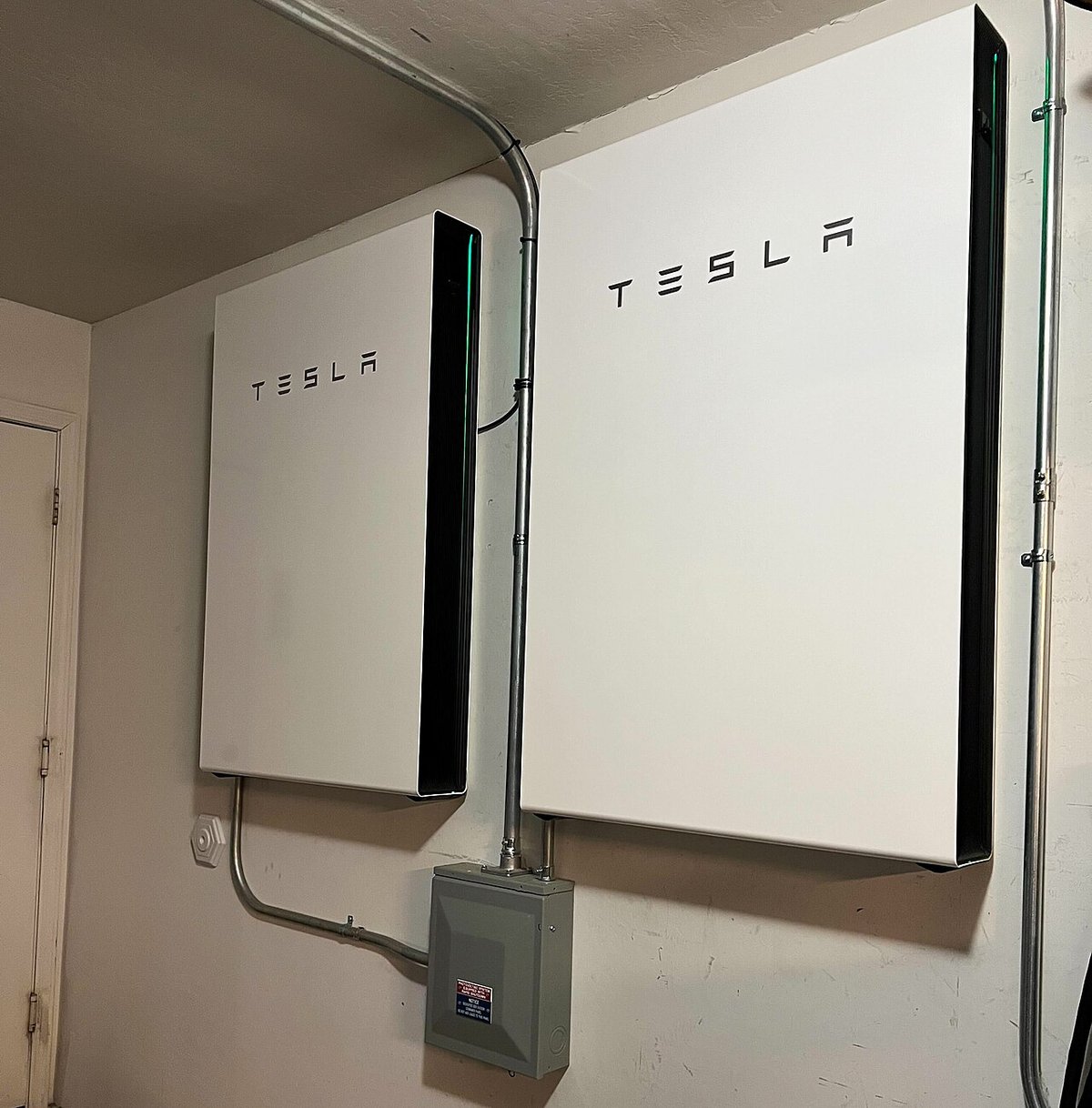
Powerwall 3 is the simplest way to get a big-name 13.5 kWh battery and a 10 kW solar inverter in one box, with strong backup power and a polished app. The trade-offs are a premium price, a 5 kW charging cap and single-phase design that suits three-phase homes poorly.
Best for: Single-phase homes installing new solar and a battery together
Sources
- Sungrow SBR064 to SBR256 datasheet, 2023 (PDF)
- Sungrow HV Battery Limited Warranty, Australia, V8.0 (PDF)
- Clean Energy Council approved batteries list
- SolarQuotes: Sungrow battery review
- SolarQuotes: Solar battery prices and system costs in Australia (May 2026)
- SolarQuotes: My experience expanding a modular Sungrow battery
- SolarQuotes: A deep dive into the Sungrow battery warranty
- ENGIE VPP: Sungrow eligible batteries and inverters
- Whirlpool Forums: Sungrow stated battery capacity not being met
- Energy Matters: Cheaper Home Batteries Program changes from 1 May 2026
Independent desk research by the Solar Cobber editorial team. We did not test this product and were not paid by the manufacturer. Solar Cobber is a free directory that may earn referral or advertising fees from installers; this never affects our reviews.
Get quotes for Sungrow SBR
Browse rated solar installers in your area, check their Google reviews, and ask at least three for itemised quotes. Our guide to comparing solar quotes explains what to look for.
Find a solar installer