
Solis
S6 series
Inverter review
Our verdict
Solis makes a solid budget string inverter with a local office in Melbourne and a 10-year warranty once registered on SolisCloud, and its 48 V hybrids work with many battery brands. The catches are a warranty that drops to 5 years if the inverter goes offline, labour and freight you may pay yourself, and owner ratings a notch below GoodWe's.
- Best for
- Budget single-phase systems, and hybrids paired with a third-party 48 V battery
- Look elsewhere if
- Homes with patchy Wi-Fi or buyers who want premium-brand service
- Price guide
- About A$4,450 to A$10,660 for complete 5 to 10 kW systems with a Solis inverter (owner-reported prices on SolarQuotes, Oct 2026); inverter-only range not published
- Warranty
- 5 years standard, 10 years if registered and kept connected on SolisCloud and installed by an SAA-accredited installer; accessories 2 years
Pros
- Budget price point, often among the cheapest reputable inverters on a quote
- S6-GR1P string inverter takes 16 A per tracker, IP66 rated, with integrated zero-export control
- S6-EH1P-L hybrids accept many brands of 48 V lithium battery, with backup switching under 10 ms
- Australian subsidiary (Solis Australasia) with a Melbourne service office
- Warranty starts at installation or purchase, whichever is later
Cons
- The 10-year term depends on staying connected to SolisCloud; lose the connection and you risk dropping to 5 years
- Labour, removal and transport are not covered, and homes more than 50 km from a service agent pay freight
- Lower owner rating (4.5 out of 5) than several rivals, with reports of failures after 5 to 6 years and slow claim responses
- 48 V hybrids are less efficient through the battery than high-voltage designs (about 94% charge, 93.5% discharge)
- Several current CEC listings (including S6-GR1P-S and S6-EH1P-L-AU) expire in October and November 2026
Key specifications
| Range covered | S6-GR1P 3 to 10 kW and S5-GR3P 5 to 20 kW string; S6-EH1P 3 to 16 kW and S6-EH3P 5 to 10 kW hybrid |
|---|---|
| S6-GR1P(3-6)K-S MPP trackers | 2 (1 string each) |
| S6-GR1P max input current per MPPT | 16 A (22 A short circuit) |
| S6-GR1P max input voltage / MPPT range | 550 V / 90 to 550 V |
| S6-GR1P max / EU efficiency | Up to 97.7% / up to 97.1% |
| Operating temperature | -25 to +60°C |
| Enclosure and cooling | IP66, natural convection |
| S6-GR1P weight | 8.3 to 9 kg |
| S6-EH1P-L-AU battery voltage | 42 to 58 V (48 V lithium or lead-acid) |
| S6-EH1P-L-AU max charge/discharge | Up to 6 kW / 125 A (6 kW model) |
| S6-EH1P-L-AU backup switching | Under 10 ms; 8 kVA for 60 s on 6 kW model |
From the manufacturer's Australian datasheet. Check the exact model number on your quote.
Solis is the inverter brand of Ginlong Technologies, a Chinese manufacturer that has sold in Australia since 2011 through its local subsidiary, Solis Australasia. On Australian quotes it shows up mainly on budget and volume-installer systems: the S6-GR1P single-phase string inverter on a typical 6.6 kW roof, the S5-GR3P on three-phase homes, and the S6-EH1P hybrids where a battery is part of the plan.
This review covers the residential string and hybrid ranges currently on the Clean Energy Council list, with most detail on the S6-GR1P(3-6)K-S string inverter and the S6-EH1P(3-6)K-L-AU hybrid. It is based on manufacturer documentation, warranty terms, published pricing and owner and installer feedback; Solar Cobber did not test the product and was not paid by the manufacturer.
What it is and how it works
All Solis residential inverters are transformerless string or hybrid units that mount on a wall and convert DC from one or two strings of panels into 230 V AC. The main residential families on the CEC approved inverter list in October 2026:
| Family | Type | Phase | Sizes | Battery |
|---|---|---|---|---|
| S6-GR1P(3-6)K-S | String | Single | 3 to 6 kW | None |
| S6-GR1P(5-10)K03-NV-ND-AU | String | Single | 5 to 10 kW | None |
| S5-GR3P | String | Three | 5 to 20 kW | None |
| S6-EH1P-L-AU and L-PLUS-AU | Hybrid | Single | 3 to 8 kW | 48 V low voltage |
| S6-EH1P 03-NV-YD-L-AU | Hybrid | Single | 10 to 16 kW | 48 V low voltage (listed July 2026) |
| S6-EH3P-H-AU | Hybrid | Three | 5 to 10 kW | High voltage |
The key design choice on the single-phase hybrids is the battery voltage. The S6-EH1P-L models are low-voltage (48 V nominal) hybrids. That means they work with a wide range of 48 V lithium batteries from different brands, rather than locking you into one maker’s high-voltage battery. The trade-off is higher current and slightly lower battery round-trip efficiency, covered below.
Specs that matter in Australia
Heat. Solis rates both the S6-GR1P and S6-EH1P at -25 to +60°C ambient, with natural convection cooling and IP66 enclosures, so they can go outdoors. The datasheets list temperature protection but do not publish the temperature at which output starts to derate. Put the inverter on a shaded wall or under an eave; SolarQuotes’ Finn Peacock says Solis units have generally held up well under Australian conditions.
Panel compatibility. The S6-GR1P(3-6)K-S accepts 16 A per tracker (22 A short-circuit), enough for most current 54-cell and 108 half-cell panels. Its maximum input voltage is 550 V with an MPPT range of 90 to 550 V, a little lower than some rivals’ 600 V, which can limit how many panels go on each string.
Two trackers. Both the string and hybrid models have two MPPTs, so an installer can run east and west strings separately.
Export limits. The S6-GR1P has integrated zero-export power control, useful where your network caps exports (often at 5 kW per phase, or lower in congested areas). In practice this uses an export power management device (a meter or CT), which Solis classes as an accessory with a 2-year warranty. The S6-GR1P is also listed as AS/NZS 4777.2:2020 compliant.
Arc fault protection. Both datasheets list integrated AFCI (DC arc-fault protection) with the note “activation required”, so ask your installer to confirm it is switched on.
Backup on hybrids. The S6-EH1P(3-6)K-L-AU switches to backup in under 10 ms (Solis’s UPS mode). Its rated backup output equals its grid rating (5 kW on the 5 kW model), with short peaks of 7 kVA (5 kW model) or 8 kVA (6 kW model) for 60 seconds, which helps with motor start-up.
48 V battery efficiency. Solis quotes battery charge-from-PV efficiency above 94.9%, and battery charge and discharge to AC at above 94.33% and 93.51%. High-voltage hybrids typically avoid some of that conversion loss, so on a 48 V system a little more of each kilowatt-hour is lost through the battery.
Phases. Single-phase homes use the S6-GR1P or S6-EH1P; three-phase homes use the S5-GR3P or the S6-EH3P-H hybrid. See single vs three phase solar for how that affects your export allowance.
Price in Australia
We could not find a current published inverter-only price range for Solis in Australia. What is published:
- SolarQuotes’ Solis page lists owner-reported system prices of about A$4,450 to A$10,660 for 5 to 10 kW systems with a Solis inverter (October 2026).
- Solar Proof’s 2026 price guide groups Solis with Sungrow and GoodWe as the cheapest category of reputable budget string inverters, with premium brands such as Fronius and SMA adding several hundred dollars.
- For context, Why Solar’s April 2026 guide puts comparable 5 kW budget string inverters at about A$900 to A$1,300 (GoodWe DNS) and A$1,000 to A$1,500 (Sungrow SG5.0RS).
What drives the price: inverter size, whether you need a three-phase model, any export meter, and for hybrids the battery. If you add a battery to an S6-EH1P, it may qualify for the federal Cheaper Home Batteries discount if the battery is on the approved list at installation; see our solar battery rebate guide.
Warranty: the fine print
Solis’s Australia and New Zealand limited warranty terms (August 2024) and Solis Australasia’s 2024 warranty statement set out the following for products manufactured or purchased from 1 January 2024:
- 5 years standard on Solis inverters.
- An extra 5 years (10 in total) for inverters up to 110 kW, but only if: the inverter is registered on SolisCloud; it stays connected to SolisCloud; and it is installed and maintained by an SAA-accredited (or SEANZ) installer.
- Accessories (communication dongles, export power management devices) carry 2 years and cannot be extended.
- Paid extensions to 15 or 20 years must be bought within 12 months of the warranty start, and cover hardware only.
One wording difference to note: the warranty terms describe the extra 5 years as applying to Solis string inverters under 110 kW, while the 2024 statement says all Solis inverters up to 110 kW. If you are buying a hybrid, ask your installer to confirm in writing which applies.
Other fine print:
- The warranty starts on the later of installation or purchase date, which is more generous than rivals that start the clock at shipment.
- You must notify Solis within 30 days of noticing a defect, and lodge details online within a further 3 days.
- Removal, reinstallation and transport costs are not covered unless Solis agrees in writing. If you live more than 50 km from Solis’s nearest authorised service agent, you pay the freight.
- If a technician attends and finds no covered defect, you are charged the call-out.
- Solis may replace with new or refurbished units.
The claim goes to Solis Australasia Pty Ltd, Cheltenham, Victoria. Australian Consumer Law rights apply on top.
What owners and installers report
On SolarQuotes, Solis averages 4.5 out of 5 from about 380 owner ratings, lower and from fewer reviews than GoodWe (4.8 from about 3,950). Finn Peacock recommends Solis for budget buyers, saying the inverters have generally held up well under Australian conditions with a decent warranty backed by local support.
Praise patterns: owners like the Wi-Fi monitoring and SolisCloud app when it is working, and report reliable long-term output.
Complaint patterns:
- App setup. Owners say the app can be tricky to configure. Given the warranty depends on staying connected to SolisCloud, this matters more than usual.
- Failures after 5 to 6 years. Several SolarQuotes reviews describe inverters failing around the 5 to 6 year mark, which is right where the standard warranty ends and the conditional extension begins.
- Slow claims. Some owners describe slow responses to warranty claims.
- Freight for regional owners, because of the 50 km rule.
Our searches of ACCC Product Safety Australia recall notices did not turn up a Solis inverter recall at the time of writing.
Solis vs alternatives
| Solis S6 | GoodWe DNS G4 / ET G2 | Sungrow SG-RS | Sungrow SH-RS | |
|---|---|---|---|---|
| Type | String (GR1P) or hybrid (EH1P) | String (DNS) or 3-phase hybrid (ET G2) | String | Single-phase hybrid |
| Standard AU warranty | 5 yrs | 5 yrs (DNS); 10 yrs (ET G2) | 10 yrs (5 full, 5 parts) | 10 yrs |
| Route to 10 years | Register and stay connected on SolisCloud | Register on SEMS (DNS) | Standard term | Standard term |
| Indicative 5 kW inverter price | Not published | A$900 to A$1,300 (DNS) | A$1,000 to A$1,500 | A$2,000 to A$2,800 |
| Hybrid battery type | 48 V, multiple brands | High voltage, 150 to 720 V (ET G2) | Not applicable | Sungrow battery |
Choose Solis if your installer offers it at a clear saving and you have reliable home internet to keep the 10-year warranty alive, or if you want a hybrid that works with a third-party 48 V battery. Choose GoodWe for similar money with stronger owner ratings and higher input current. Choose Sungrow SG-RS or SH-RS if you want 10 years as the standard term rather than an extension that depends on staying connected to monitoring.
Questions to ask your installer
- Which exact Solis model are you quoting, and is its CEC listing current on my installation date?
- Will you register the inverter on SolisCloud and give me the login so I can keep the 10-year warranty?
- For a hybrid: does the extra 5 years apply to this model in writing, and which batteries are on Solis’s approved list?
- Is the export power management device included, and how will you set my network’s export limit?
- Is the arc fault protection (AFCI) activated?
- Am I within 50 km of a Solis service agent, and who pays freight and labour if it fails?
- Where will it be mounted, and how will you keep it out of direct afternoon sun?
FAQ
Is Solis a good inverter brand?
It is a reputable budget brand with an Australian subsidiary and office, and SolarQuotes says it has generally held up well here. Owner ratings (4.5 out of 5) are a little below GoodWe and Huawei.
Is the Solis warranty 5 or 10 years in Australia?
5 years standard, 10 years in total if the inverter is registered on SolisCloud, stays connected, and was installed by an SAA-accredited installer. Accessories are 2 years.
Is Solis approved in Australia?
Yes. S6-GR1P, S5-GR3P and S6-EH1P models were on the Clean Energy Council approved inverter list when we checked in October 2026. Several listings expire in late 2026, so confirm the exact model is still listed when you install.
Can a Solis hybrid use any battery?
Not any, but many. The S6-EH1P-L hybrids take 48 V lithium batteries from multiple brands, and Solis’s warranty excludes damage from batteries not on its approved list.
Does a Solis inverter work in a blackout?
The S6-GR1P string inverter does not. The S6-EH1P hybrids switch to backup in under 10 ms when a battery is connected.
What happens to my warranty if my Wi-Fi changes?
Reconnect the dongle to SolisCloud promptly. The 10-year term is conditional on maintaining the connection.
Find an installer
Solis is usually sold by volume installers, so the installer’s own workmanship and service matter as much as the inverter. Use our installer directory to compare Solis installers near you, and read how to compare solar quotes before you sign.
Inverter buying guides
Often quoted alongside
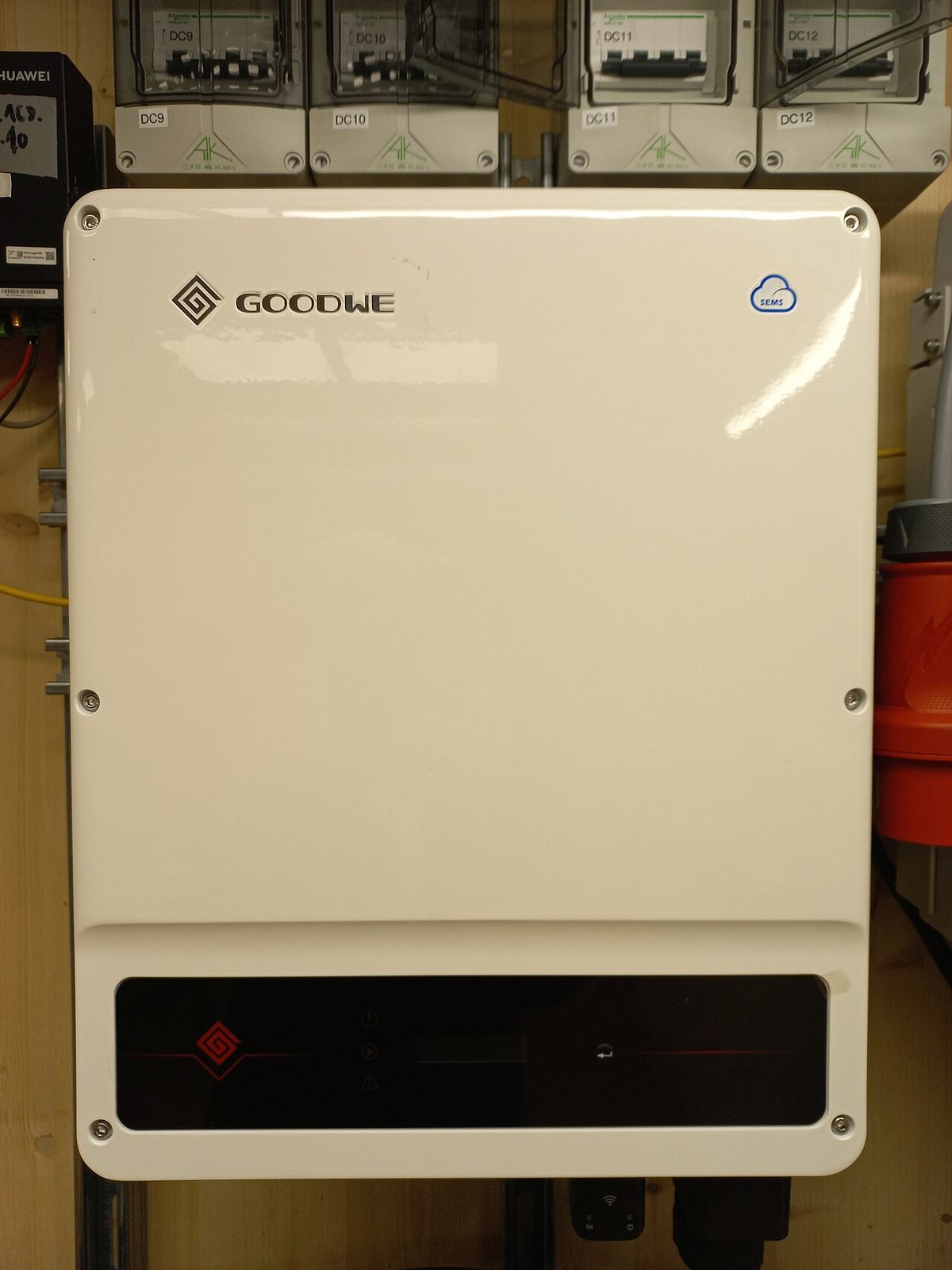 Inverter
GoodWe
GoodWe DNS, EH and ET
GoodWe's DNS string inverters are a sound budget pick with a local office and a 10-year warranty once registered online, and the ET G2 is a capable three-phase hybrid. Read the warranty conditions closely, though: several hybrids only get 10 years if paired with a GoodWe battery, and owners in hot climates report noticeable summer derating.
Best for: Budget to mid-range single-phase systems and three-phase homes wanting a hybrid
Sungrow
SG RS
Sungrow
Sungrow SG RS
The Sungrow SG RS is the value benchmark for single-phase string inverters, with generous tracker current, fan-less cooling and a 10-year standard warranty at a price well below Fronius. The trade-off is a more uneven support experience, a one-year warranty on the Wi-Fi dongle and meter, and no battery port.
Best for: Single-phase homes wanting a capable, well-warranted solar-only inverter at a mid-market price
Sungrow
SH RS / RT hybrid
Sungrow
Sungrow SH RS / RT hybrid
The Sungrow SH RS is the value pick for a single-phase solar and battery system, with near-instant backup, high solar oversizing and broad VPP support at well below Fronius prices. Check which model you are quoted, because only the SH8.0RS and SH10RS offer whole-home backup, and accept that you are tied to Sungrow batteries.
Best for: Homes adding a Sungrow battery now that want fast backup and VPP options at a mid-market price
Sources
- Solis S6-GR1P(3-6)K-S datasheet, Australia (PDF)
- Solis S6-EH1P(3-6)K-L-AU datasheet, V1.5 2025 (PDF)
- Solis Limited Warranty Terms and Conditions for Australia and New Zealand, August 2024 (PDF)
- Solis Australasia warranty statement: enhanced 10-year warranty, 2024 (PDF)
- Clean Energy Council approved inverter list
- SolarQuotes: Solis inverter reviews and expert verdict
- Solar Proof: Australian solar system prices 2026
- Why Solar: Solar inverter cost in Australia (Apr 2026)
Independent desk research by the Solar Cobber editorial team. We did not test this product and were not paid by the manufacturer. Solar Cobber is a free directory that may earn referral or advertising fees from installers; this never affects our reviews.
Get quotes for Solis S6 series
Browse rated solar installers in your area, check their Google reviews, and ask at least three for itemised quotes. Our guide to comparing solar quotes explains what to look for.
Find a solar installer