
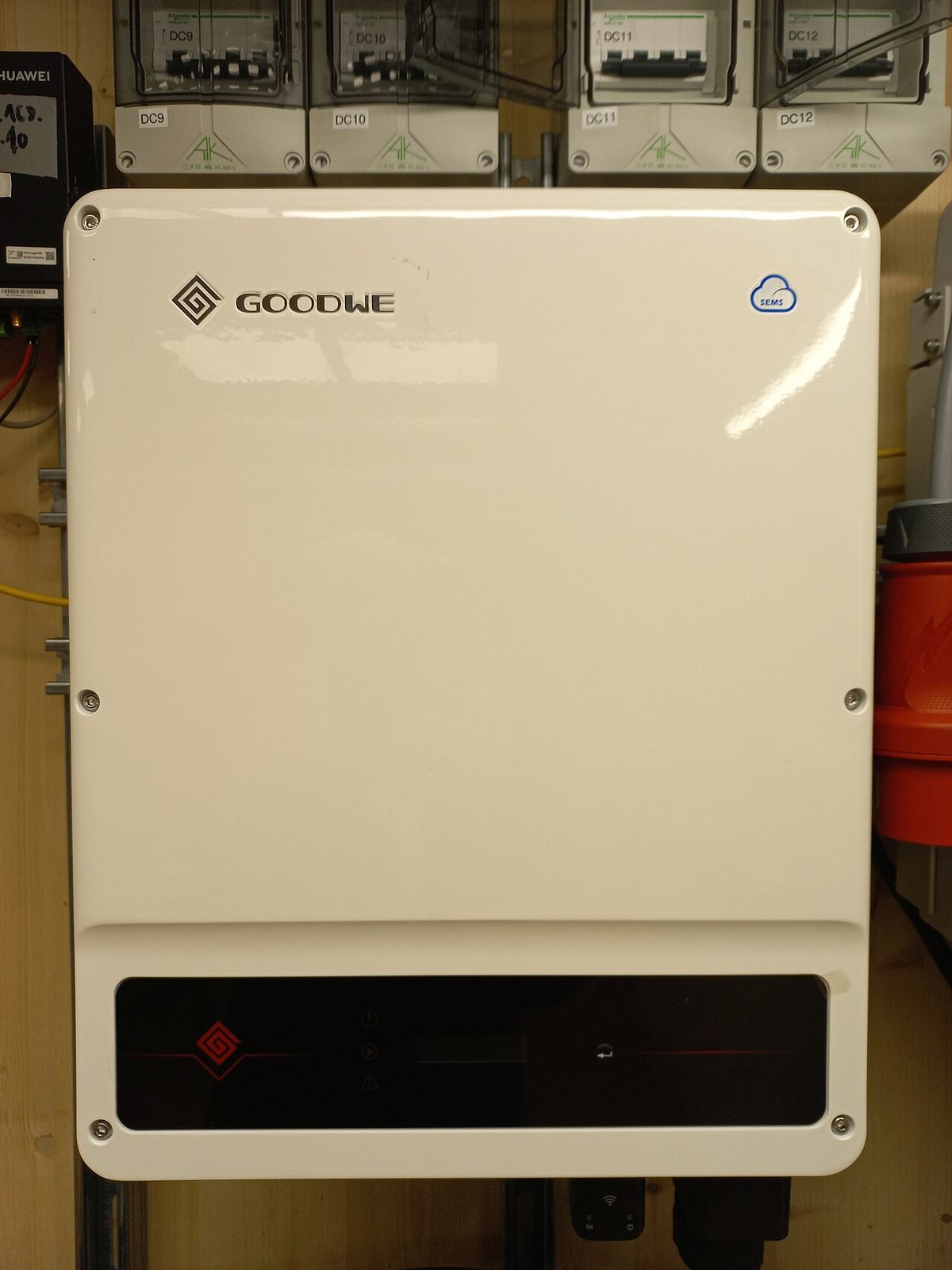
Our verdict
GoodWe's DNS string inverters are a sound budget pick with a local office and a 10-year warranty once registered online, and the ET G2 is a capable three-phase hybrid. Read the warranty conditions closely, though: several hybrids only get 10 years if paired with a GoodWe battery, and owners in hot climates report noticeable summer derating.
- Best for
- Budget to mid-range single-phase systems and three-phase homes wanting a hybrid
- Look elsewhere if
- Hot west-facing walls without shade, or buyers who want premium-brand support
- Price guide
- About A$900 to A$1,300 for a 5 kW DNS string inverter, or A$2,000 to A$2,800 for a 5 kW EH hybrid, inverter only (Apr 2026 market range)
- Warranty
- 5 years standard on DNS, XS, EH and ET 5-10 kW; 10 years for grid-tied models registered on SEMS; ET G2 10 years standard
Pros
- Usually one of the cheapest reputable inverters on a quote
- DNS G4 takes 20 A per tracker, so it suits today's high-current panels
- IP66 enclosure and quiet natural-convection cooling
- Melbourne office and a large Australian installer base
- ET G2 hybrid covers 6 to 15 kW three-phase homes with high-voltage batteries
Cons
- Standard warranty on DNS, XS and EH is only 5 years; the 10-year term depends on SEMS registration or a GoodWe battery
- Owners and SolarQuotes report heat derating in hot climates
- Wi-Fi dongles and smart meters carry only 2 years, and owners report monitoring dropouts
- GoodWe has had two Australian safety recalls (MS-30 string inverters and EHB hybrids)
- Labour on warranty swaps is at GoodWe's discretion, at an undisclosed rate
Key specifications
| Range covered | XS G3 0.7 to 3.3 kW; DNS G4 3 to 6 kW; EH 3.6 to 6 kW hybrid; ET G2 6 to 15 kW three-phase hybrid |
|---|---|
| DNS G4 MPP trackers | 2 (1 string each) |
| DNS G4 max input voltage / MPPT range | 600 V / 40 to 560 V |
| DNS G4 max input current per MPPT | 20 A |
| DNS G4 max / EU efficiency (5 kW) | 98.1% / 97.4% |
| DNS G4 operating temperature | -25 to +60°C |
| DNS G4 enclosure and noise | IP66, natural convection, 25 dB |
| DNS G4 weight | 9.2 kg |
| ET G2 battery voltage range | 150 to 720 V |
| ET G2 max efficiency and PV oversizing | 98.2%, up to 200% |
From the manufacturer's Australian datasheet. Check the exact model number on your quote.
GoodWe is a Chinese inverter maker that has become one of the most common names on Australian solar quotes, particularly on budget and mid-priced systems. Most homeowners will see one of four families: the DNS single-phase string inverter (now in its fourth generation, DNS G4), the small XS for compact systems, the EH single-phase hybrid, or the ET three-phase hybrid (now ET G2). Installers like GoodWe because it is cheap, easy to commission and has a Melbourne office.
This review covers those four families as sold in Australia, with most detail on the DNS G4 and ET G2. It is based on manufacturer documentation, warranty terms, published pricing and owner and installer feedback; Solar Cobber did not test the product and was not paid by the manufacturer.
What it is and how it works
All four are transformerless string or hybrid inverters: your panels are wired in series into one or more strings, and a single wall-mounted box converts the DC to 230 V AC. The differences:
| Family | Type | Phase | Sizes on CEC list | Who it suits |
|---|---|---|---|---|
| XS G3 | String | Single | 0.7 to 3.3 kW | Small roofs, granny flats |
| DNS G4 (and DNS G3) | String | Single | 3 to 6 kW | Most 6.6 kW home systems |
| EH | Hybrid | Single | 3.6 to 6 kW | Single-phase homes adding a battery |
| ET G2 | Hybrid | Three | 6 to 15 kW | Three-phase homes with a battery |
The DNS G4 has two maximum power point trackers (MPPTs), which lets an installer run, for example, an east string and a west string at different voltages. Hybrids add a high-voltage battery input and a backup output, so they can charge a battery directly from the panels.
All the models above were on the Clean Energy Council’s approved inverter list when we checked in October 2026. GoodWe also sells a newer all-in-one ESA hybrid (inverter plus stackable battery) that is CEC listed; it sits outside the scope of this review. For battery pairing, see our GoodWe Lynx Home battery review.
Specs that matter in Australia
Heat. This is the big one. The DNS G4 is rated -25 to +60°C and cools by natural convection (no fans), which keeps it quiet at 25 dB. But SolarQuotes’ expert review says GoodWe inverters are prone to derating in high temperatures because of that convection cooling, and owners report reduced summer output. On a west or north-facing wall in full afternoon sun, ask for a shaded spot or a sun shield.
Ingress protection. The DNS G4 is IP66, which is fine for outdoor installation. GoodWe’s warranty, however, excludes rust and damage from sea coasts or saltwater environments unless GoodWe has given written approval before installation. If you live near the beach, get that approval in writing.
High-current panels. Many current panels exceed 13 to 14 A. The DNS G4 accepts 20 A per tracker (26 A short-circuit), and the ET G2 accepts 16 A per string, so modern 54-cell and 108 half-cell panels fit without clipping on current. That is a real improvement on older GoodWe models.
Oversizing. GoodWe advertises 200% PV oversizing on the DNS G4 and ET G2, but STC rules cap panels at 133% of inverter capacity for the rebate, so in practice a 5 kW DNS gets about 6.6 kW of panels.
Single vs three phase. The DNS, XS and EH are single phase only. Three-phase homes either use a three-phase string inverter or the ET G2 hybrid. See our guide to single vs three phase solar for why this affects your export allowance.
Export limits. Most networks cap exports at 5 kW per phase, and some apply dynamic limits. Soft export limiting on GoodWe normally relies on a GoodWe smart meter at the switchboard. Note that the meter, like the Wi-Fi dongle, carries only a 2-year warranty.
Backup. The EH and ET hybrids have a backup output for essential circuits during a blackout when a battery is fitted. What is actually backed up depends on how your installer wires the backup circuits, so ask.
Price in Australia
GoodWe is usually the cheapest reputable brand on a quote. Why Solar’s April 2026 inverter cost guide puts:
- a GoodWe DNS 5 kW string inverter at about A$900 to A$1,300, against A$1,000 to A$1,500 for a Sungrow SG5.0RS and A$1,800 to A$2,500 for a Fronius Primo 5.0;
- a GoodWe GW5000-EH hybrid at about A$2,000 to A$2,800, the same range it gives the Sungrow SH5.0RS hybrid.
SolarQuotes’ Finn Peacock estimates GoodWe at roughly A$1,200 cheaper than premium brands on a typical system. Whole systems with a GoodWe string inverter tend to sit in the lower half of SolarQuotes’ June 2026 range of A$5,500 to A$8,000 for a quality 6.6 kW system after STCs.
What drives the price: inverter size and type (string vs hybrid), whether a smart meter is included for export limiting, and, for hybrids, the battery. Batteries paired with an EH or ET may qualify for the federal Cheaper Home Batteries discount if the battery is on the approved list; see our solar battery rebate guide.
Warranty: the fine print
GoodWe’s Australia and New Zealand limited warranty (Rev 5.6, November 2025) is more complicated than “10 years”. Here is how it actually works:
- 5 years standard for the XS, XS G3, DNS, DNS G3, DNS G4, EH, EH Plus and ET 5 to 10 kW.
- 10 years standard for the ET G2, EHB and ESA 3 to 10 kW.
- 10 years for grid-tied models via a promotion (DNS, XS and other on-grid models): the inverter must be installed, registered and connected on GoodWe’s SEMS monitoring portal after 1 January 2021, and manufactured after 1 July 2020. GoodWe announced this in January 2021.
- EH and ET 5 to 10 kW hybrids only get the extra 5 years if they run with a GoodWe Lynx Home F or Lynx Home F Plus+ battery, stay connected to SEMS, and both inverter and battery serial numbers are registered on GoodWe’s warranty site.
- Accessories such as the Wi-Fi module, smart meter and EzLink carry 2 years.
The warranty starts on the earlier of installation or 12 months after production, so old stock can arrive with time already used. Claims must be made within one month of the failure. GoodWe covers ground freight up to an undisclosed cap, and may, at its discretion, pay an undisclosed labour rebate to whoever does the swap, provided GoodWe authorised the visit beforehand. It may replace a failed unit with a refurbished or upgraded one. Coastal and saltwater damage is excluded without prior written approval, and GoodWe says the warranty may not apply if you stop it from pushing firmware updates through SEMS.
Your claim goes to your installer or distributor first, then to GoodWe. The local office is in Rowville, Victoria, according to SolarQuotes. Australian Consumer Law rights apply on top.
What owners and installers report
On SolarQuotes, GoodWe averages 4.8 out of 5 from about 3,950 owner ratings, and Finn Peacock credits it with good local support, competitive pricing and easy commissioning. Owners commonly praise reliable output, quiet operation and the SEMS+ app’s real-time data.
Recurring complaints:
- Monitoring connectivity. Wi-Fi dongle and meter connection dropouts come up repeatedly, and SolarQuotes notes Wi-Fi issues with GoodWe’s HomeKit consumption meter.
- Summer derating in hot climates, as covered above.
- App limits. Owners and SolarQuotes describe the app as a little clunky, with complaints such as not being able to enter tariff values.
- Battery expansion window. SolarQuotes notes GoodWe battery modules cannot be added more than a year after installation, which limits later expansion of a hybrid system.
Recalls. GoodWe has had two Australian electrical safety recalls. The MS-30 string inverters (GW5000-MS-30 to GW10K-MS-30) were recalled because an AC plug could be removed without tools, exposing live terminals. In September 2025 GoodWe recalled EHB hybrids (GW5K, GW8.6K and GW9.99K-EHB-AU-G11) and GE-branded GEH units because, in backup mode with the bypass switch set to bypass, they could export to the grid. GoodWe’s fix is a firmware update, pushed remotely to online units and by technician visit to offline ones. Neither recall covers the DNS G4 or ET G2, but if you own an EHB, check that firmware 050531 or later is installed.
GoodWe vs alternatives
| GoodWe DNS G4 / ET G2 | Sungrow SG-RS | Fronius Primo | Sungrow SH-RS | |
|---|---|---|---|---|
| Type | String (DNS) or 3-phase hybrid (ET G2) | String | String | Single-phase hybrid |
| Direct battery connection | No (DNS); yes (ET G2, EH) | No | No | Yes |
| Standard AU warranty | 5 yrs, 10 with SEMS registration (DNS); 10 yrs (ET G2) | 10 yrs (5 full, 5 parts) | 10 yrs with online registration | 10 yrs |
| Indicative 5 kW inverter price | A$900 to A$1,300 (DNS) | A$1,000 to A$1,500 | A$1,800 to A$2,500 | A$2,000 to A$2,800 |
| Main watch-out | Heat derating, conditional warranty | Back half of warranty is parts only | Price premium | Battery choice tied to Sungrow’s list |
Choose GoodWe DNS G4 if you want a budget single-phase inverter and will register it on SEMS so you get the full 10 years. Choose Sungrow SG-RS for similar money with an unconditional 10-year term, or Fronius Primo if you want a premium European brand and are happy to pay about double. For a single-phase hybrid, compare GoodWe EH with Sungrow SH-RS, which costs about the same.
Questions to ask your installer
- Which exact model are you quoting (for example GW5K-DNS-G40), and is it on the current CEC list?
- Will you register the inverter on SEMS so I get the 10-year warranty, and will you give me the login?
- Where will it be mounted, and will it be out of direct afternoon sun?
- Is a GoodWe smart meter included for export limiting, and how will you set my network’s limit?
- For a hybrid: will the 10-year warranty apply with the battery you are quoting, or only 5 years?
- I am near the coast; will you get GoodWe’s written approval for this location?
- If the inverter fails, who handles the claim, and will you charge for the swap?
- For an existing EHB hybrid: has the recall firmware been installed?
FAQ
Is GoodWe a good inverter brand?
It is a reputable budget brand with a local office and strong owner ratings (4.8 out of 5 on SolarQuotes). Its weak points are heat derating and a warranty that needs registration to reach 10 years.
Is the GoodWe warranty 5 or 10 years?
Both, depending on model. DNS and XS are 5 years standard and 10 years if registered and connected on SEMS. EH and ET 5 to 10 kW hybrids only reach 10 years with a GoodWe Lynx Home F battery. ET G2 is 10 years standard.
Is GoodWe approved in Australia?
Yes. The DNS G4, DNS G3, XS G3, EH and ET G2 models were on the Clean Energy Council approved inverter list when we checked in October 2026.
Which GoodWe inverter was recalled?
The MS-30 string inverter series and, in September 2025, the EHB hybrid series (plus GE-branded GEH units). The DNS G4 and ET G2 are not covered by those recalls.
Can a GoodWe DNS be upgraded to take a battery?
No, the DNS is grid-only. You would add an AC-coupled battery or swap to a hybrid such as the EH or ET G2.
Does GoodWe work during a blackout?
The DNS string inverters shut down. The EH and ET hybrids can power backup circuits when a compatible battery is installed.
Find an installer
GoodWe’s value depends heavily on the installer: placement out of the sun, SEMS registration and handling warranty claims all sit with them. Use our installer directory to find GoodWe installers near you, and check our guide on how to compare solar quotes.
Inverter buying guides
Often quoted alongside
Sungrow
SG RS
Sungrow
Sungrow SG RS
The Sungrow SG RS is the value benchmark for single-phase string inverters, with generous tracker current, fan-less cooling and a 10-year standard warranty at a price well below Fronius. The trade-off is a more uneven support experience, a one-year warranty on the Wi-Fi dongle and meter, and no battery port.
Best for: Single-phase homes wanting a capable, well-warranted solar-only inverter at a mid-market price
 Inverter
Fronius
Fronius Primo
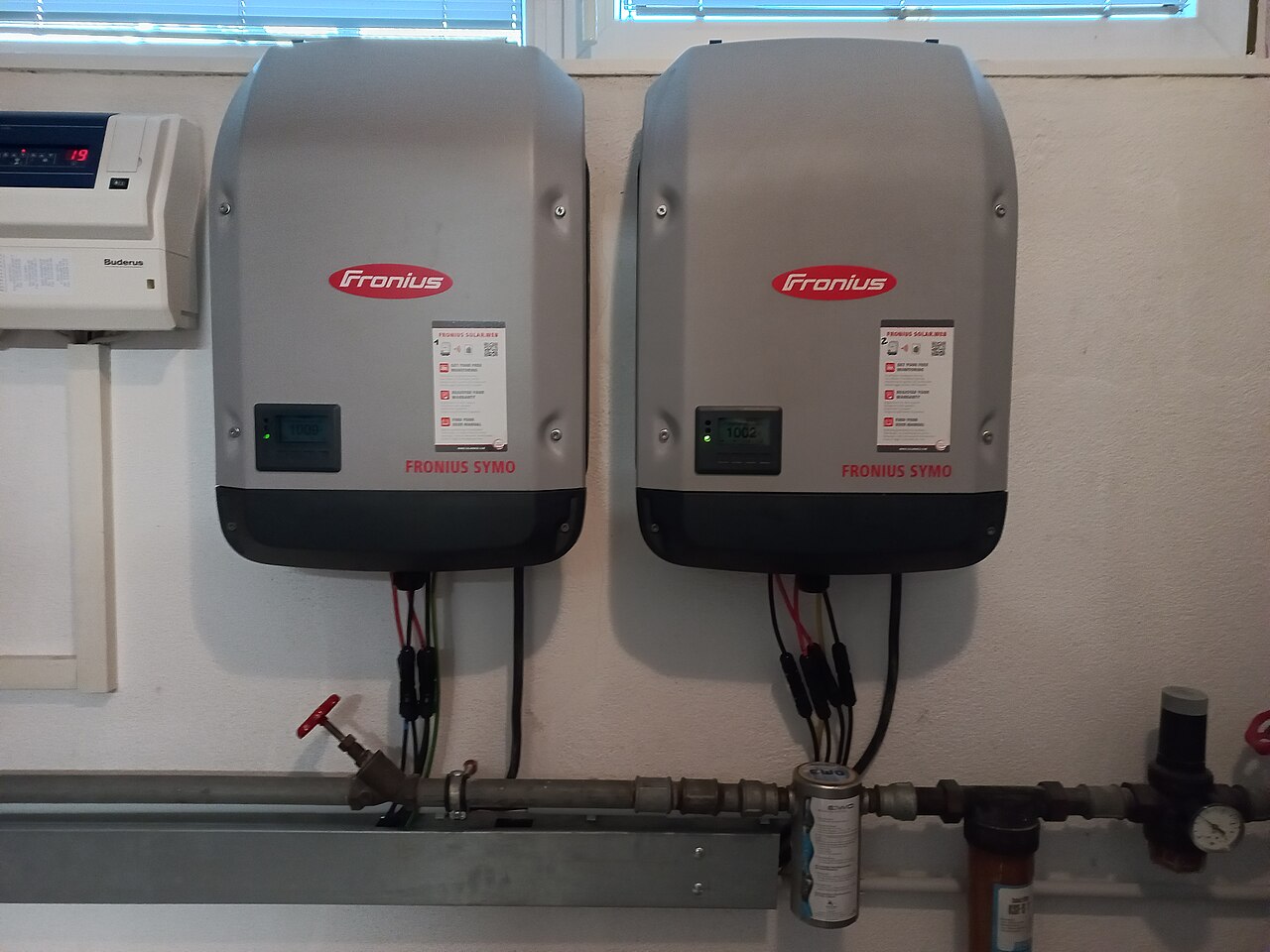
The Primo GEN24 is a well-supported, quiet single-phase string inverter with a strong Australian service record and a cheap path to adding a battery later. You pay a clear premium over Sungrow for that, and the free 10-year warranty depends on registration and promotion terms you should confirm in writing.
Best for: Single-phase homes wanting a premium European string inverter with an upgrade path to a battery
Sungrow
SH RS / RT hybrid
Sungrow
Sungrow SH RS / RT hybrid
The Sungrow SH RS is the value pick for a single-phase solar and battery system, with near-instant backup, high solar oversizing and broad VPP support at well below Fronius prices. Check which model you are quoted, because only the SH8.0RS and SH10RS offer whole-home backup, and accept that you are tied to Sungrow batteries.
Best for: Homes adding a Sungrow battery now that want fast backup and VPP options at a mid-market price
Sources
- GoodWe DNS G4 series datasheet (PDF)
- GoodWe AU&NZ: ET G2 series product page
- GoodWe Limited Warranty for Inverter System, Australia and New Zealand, Rev 5.6 (PDF)
- Clean Energy Council approved inverter list
- GoodWe electrical safety recall notice: EHB and GEH series (PDF)
- Product Safety Australia: GoodWe MS-30 solar inverter recall
- SolarQuotes: GoodWe inverter reviews and expert verdict
- pv magazine Australia: Inverter manufacturer doubles warranty for Australian market (Jan 2021)
- Why Solar: Solar inverter cost in Australia (Apr 2026)
Independent desk research by the Solar Cobber editorial team. We did not test this product and were not paid by the manufacturer. Solar Cobber is a free directory that may earn referral or advertising fees from installers; this never affects our reviews.
Get quotes for GoodWe DNS, EH and ET
Browse rated solar installers in your area, check their Google reviews, and ask at least three for itemised quotes. Our guide to comparing solar quotes explains what to look for.
Find a solar installer