
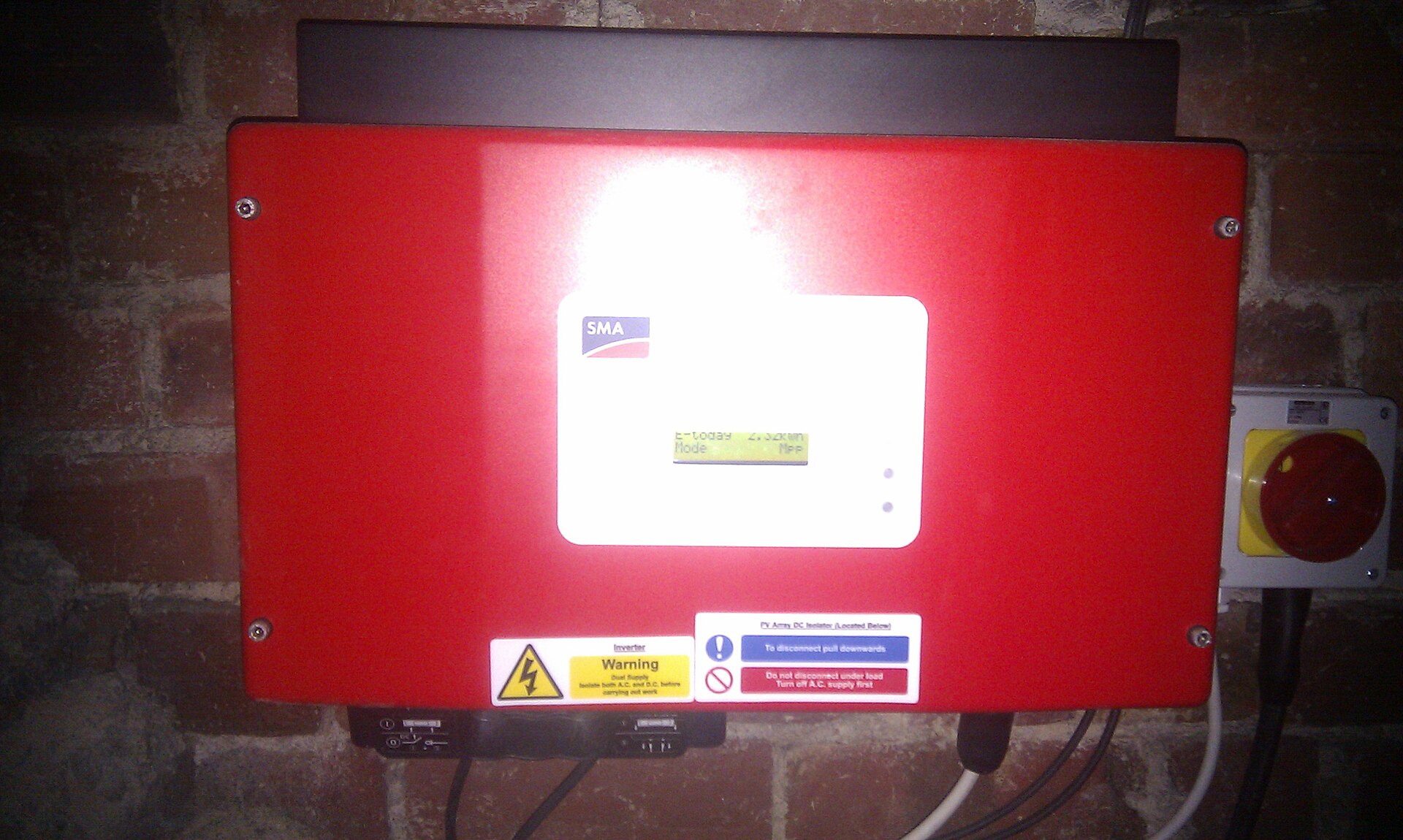
MPPT stands for maximum power point tracking. It is the job your inverter does every second of daylight, hunting for the exact voltage and current combination that squeezes the most power out of your panels. Where that hunting happens, once for a whole string of panels or once for every panel, is the real difference between a string inverter, a string inverter with optimisers, and microinverters.
This guide explains MPPT in plain words, then compares the three setups on cost, shade, monitoring, failure modes, lifespan and rooftop safety. The short version for most Australian homes: if your roof faces one or two directions and nothing shades it, a plain string inverter is the right call, and the upsell to panel level electronics is money you do not need to spend.
What MPPT means, in plain English
A solar panel is not like a battery that puts out a fixed voltage. How much power it gives depends on the voltage the inverter pulls it down to.
Push a panel to zero volts and you get plenty of current but no power. Let it sit at open circuit voltage and you get plenty of volts but no current, so again no power. Somewhere in the middle is one sweet spot where volts multiplied by amps is highest. That is the maximum power point.
The MPPT circuit nudges the operating voltage up and down, watches the power, and settles on that spot. Then it does it again a fraction of a second later, because the sweet spot never sits still. Cloud moves it in seconds. Heat moves it, since panels lose voltage as they get hot on a 40 degree day. Dirt, shade and slow ageing move it too.
A good MPPT rarely loses more than a percent or two. This is mature technology, and nearly every inverter on the Clean Energy Council approved inverter list does it competently.
Per string tracking versus per panel tracking
Here is the bit that matters for your quote.
In a string inverter system, panels are wired in series into a “string”. The same current flows through every panel, like water through one pipe. A single MPPT finds one compromise setting for the whole string. If every panel sees the same sun, that compromise is perfect and you lose nothing.
If one panel is shaded it cannot pass as much current, so it drags on the rest. Panels have built in bypass diodes that route current around the shaded section, which limits the damage, but you still lose more than that one panel’s share.
Optimisers and microinverters move the tracking down to each panel, so a weak panel no longer sets the pace for its neighbours. That is the entire pitch for panel level electronics. Whether it is worth paying for depends on your roof.
The three setups compared
| String inverter | String inverter + optimisers | Microinverters | |
|---|---|---|---|
| Where MPPT happens | Per string, usually 2 per inverter | Per panel | Per panel |
| Cost | Baseline | Adds a per panel cost on top | Around 20% to 40% more on small systems |
| Shade tolerance | Good on clean roofs, weaker with heavy shade | Strong on shaded panels | Strong on shaded panels |
| Panel level monitoring | No | Yes | Yes |
| What can fail | One box | Inverter plus every optimiser | Every microinverter |
| Where the failure sits | Wall, at ground level | Wall and roof | Roof only |
| One failure means | Whole system offline | Whole system offline if the inverter dies | One panel offline |
| High voltage DC on the roof | Yes | Yes | No |
| Typical warranty | 5 to 10 years standard | 25 years on SolarEdge optimisers | Up to 25 years on Enphase IQ8 here |
| Realistic lifespan | About 10 to 15 years | Inverter 10 to 15 years, optimisers longer | Longer, but replacement needs roof access |
| Adding panels later | Limited by string voltage and MPPT capacity | Easier | Easiest |
| Best for | Simple unshaded roofs | One or two problem panels | Complex or heavily shaded roofs |
Read warranty numbers carefully. Enphase moved its Australian IQ8 warranty to 25 years for units activated from 1 October 2024, up from 15. SolarQuotes reported the change and noted two catches: the warranty does not cover the labour to remove and refit the unit, and supporting gear such as the gateway carries a much shorter term. SolarEdge publishes 25 years on its power optimisers through its Australian warranty page, with the inverter covered separately.
String inverters: the default, and usually the right one
A string inverter is one box on a wall near your switchboard or in the garage. Panels feed it DC, it makes AC, done.
It is the cheapest option, the simplest to service, and the one every Australian installer knows. Most residential models have two MPPT inputs. The Fronius Primo GEN24 5.0 Plus, a common choice here, lists two MPP trackers and a 600 V maximum DC input, which is typical.
The honest downsides: no panel level monitoring, so a lazy panel can go unnoticed for years. Standard warranties are often 5 to 10 years and real life is around 10 to 15, so budget for one replacement across the life of the panels. Australian installers commonly publish like for like replacement costs from roughly $1,500 to $3,000, more if you move to a hybrid inverter for a battery. The upside is that swapping a wall mounted box is a short job with no roof work.
Who it suits: simple pitched roofs facing one or two directions with clear sky, which describes most Australian houses.
String inverter plus DC optimisers
Optimisers are small units that bolt behind individual panels. Each does the MPPT work for its own panel and passes conditioned DC down to the string inverter. SolarEdge builds a system where every panel needs one. Tigo lets you fit them only to the panels that have a problem.
The selective approach is usually the smarter buy. If a chimney shadows three panels, optimising the other seventeen achieves nothing. SolarQuotes has made this point for years in its microinverters versus DC optimisers comparison, recommending optimisers on shade affected panels only for most homes.
The honest downsides: you now have two things that can fail instead of one, and half sit on the roof. If the central inverter dies, the whole system still stops. You keep high voltage DC cabling on the roof. In a full SolarEdge system you are also tied to that brand’s inverter for the life of the array.
Who it suits: a mostly good roof with one identifiable problem such as a vent pipe, a neighbour’s tree or a small dormer.
Microinverters
A microinverter sits under each panel and converts DC to AC right there, so only AC cabling leaves the roof. Each panel is tracked, monitored and reported on its own.
They are genuinely good on hard roofs. Four small faces at different angles, or trees moving shade across the array all afternoon, and microinverters remove a lot of design headache. Adding panels later is simple too: one panel, one micro, no string maths.
On cost, published Australian installer pricing shows the gap clearly and shows it closing with size. Perth installer PSC Energy publishes indicative pricing of about $2.00 per watt for a 5 kW microinverter system against about $1.00 per watt for a string system, narrowing to about $1.30 per watt at 10 kW and about $1.10 per watt at 16 kW while the string system holds near $1.00. Their view is that under 8 kW a string system almost always wins on price, and the maths gets interesting above 9 kW.
The honest downsides: every failure is a roof job. On a two storey home that can mean scaffolding, a real cost no parts warranty covers. You also multiply the number of electronic devices sitting in the hottest place on your property.
Who it suits: cut up roofs, heavy or moving shade, owners who genuinely want per panel data, and larger arrays where the price gap has shrunk.
What the shading evidence actually shows
Marketing implies microinverters always win on a shaded roof. Testing does not back that up cleanly.
SolarQuotes reported side by side testing by MC Electrical comparing a Fronius string inverter against Enphase microinverters on the same shaded array. In the published results, shade along the side of the array favoured the string inverter by about 3.5% in sunny conditions, while the microinverters were about 2% ahead when overcast. Shade across the bottom of the array flipped it, with the microinverters ahead by roughly 6% to 8.5% depending on how many panels were affected.
So the shape and direction of the shadow matters more than the technology label. Modern string inverter MPPT is far better than it was ten years ago. If an installer says microinverters will fix shading without asking where the shadow falls and at what time of day, treat that as a sales line.
Where the failure sits matters as much as whether it fails
A wall mounted string inverter fails in a way you notice straight away and fix in a couple of hours from ground level. One product, one claim, one visit.
Roof mounted electronics fail quietly. A dead microinverter costs you one panel’s output, which may never show up on a bill. That is exactly why panel level monitoring is bundled with these systems. When you do act, someone has to get on the roof and lift a panel. So ask who pays labour on a warranty replacement, what roof access costs on your house, and who does the work if the installer is no longer trading. Our guide on how to compare solar quotes in Australia covers the wording to look for.
Rooftop DC safety
Australia was once the only country that forced a DC isolator switch onto the roof of every solar home. Those switches sat in sun and rain and became a leading cause of solar fires. pv magazine reported on the change to AS/NZS 5033 that removed the blanket mandate, citing Fire and Rescue NSW data showing solar PV fires had risen five fold in five years, with isolation switches blamed for close to half of module fires.
Microinverters avoid the issue by keeping DC to the short run between panel and micro. Optimiser systems still carry high voltage DC on the roof, though the makers say optimisers shut panel voltage down on fault. For a normal house with a competent installer working to current standards, DC is not something to lose sleep over.
How many MPPT inputs do you need
The rule of thumb: panels that see meaningfully different sun need different MPPT inputs. Different orientation, different tilt or a different shade pattern all count.
| Your roof | MPPT inputs to look for |
|---|---|
| One face, one tilt, no shade | 1 is enough, 2 is standard anyway |
| North plus west, or north plus east | 2 |
| East and west split, equal panels, same tilt | 1 can work, 2 is safer |
| Three faces (north, east, west) | 3, or 2 plus optimisers on the odd group |
| Four or more faces, or fragmented sections | Panel level electronics, or a multi MPPT three phase inverter |
The east west case is the interesting one. SolarQuotes covered research showing an east west split on a single MPPT can produce over 98% of what two MPPTs would deliver, but only with equal panel numbers each way, a gently sloping roof, near true east and west, matching tilt and no local shading. Miss any of those and the loss grows. That study was done in Germany, so treat it as a guide rather than an Australian measurement.
Two sizing points to raise with your installer. First, each MPPT has a minimum and maximum string voltage, so too few panels means the inverter will not start on a dull morning and too many breaches the input limit on a cold one. That is why you cannot always add three panels later. Second, the Clean Energy Council’s grid connected design guidelines cap panel capacity at 133% of inverter capacity for a system to stay eligible for small scale technology certificates, which shapes the inverter size on your quote. Our STC rebate explainer covers how those certificates work.
Which setup for your roof
| Roof situation | Recommended | Why |
|---|---|---|
| Single north facing roof, clear sky | String inverter | Cheapest and simplest, nothing to gain from panel level gear |
| Two faces, no shade | String inverter with 2 MPPTs | Handled by a standard inverter |
| Mostly clear, 2 to 4 shaded panels | String inverter plus optimisers on those panels | Fixes the actual problem only |
| Trees shading different panels through the day | Microinverters or a full optimiser system | The shade pattern moves, so a few units will not fix it |
| Three or more roof faces | Microinverters, or a 3+ MPPT inverter | String design gets messy fast |
| Two storey with hard roof access | String inverter unless shade forces otherwise | Keeps serviceable parts at ground level |
| Adding panels in stages | Microinverters | No string voltage constraints |
| Large array, 10 kW and up | Compare both properly | The microinverter price gap narrows at this size |
What to ask before you sign
- How many MPPT inputs does the quoted inverter have, and which panels go on each one?
- If optimisers are quoted, which panels get them and what shade problem are they solving?
- What is the standard inverter warranty, and is an extension included in the price?
- Does the warranty cover labour and roof access, or parts only?
- Is a plain string inverter an option here, and what would it cost instead?
That last one matters most. If the answer is vague, get another quote. Our guides on choosing a solar installer and working out system size help you pressure test the rest of the proposal, and you can compare installers in your area through our directory.
Frequently asked questions
Is more MPPT inputs always better?
No. Extra MPPTs only help if you have panel groups facing different ways or shaded differently. On a single orientation roof a second MPPT does nothing. Pay for the MPPTs your roof needs, not for a bigger number on the datasheet.
Do microinverters really produce more energy?
On a clear, single orientation roof the difference is small enough that it will not pay back the premium. On a shaded or cut up roof the gain can be real, but as the MC Electrical testing showed, it depends on where the shadow falls. Ask for a shade analysis, not a blanket claim.
Which lasts longer, a string inverter or microinverters?
Microinverters carry longer warranties, up to 25 years on Enphase IQ8 units activated in Australia from October 2024, against 5 to 10 years standard on many string inverters. Warranty length is not the same as total cost, though. Parts warranties usually exclude the labour and roof access needed to replace a rooftop unit, while a wall mounted swap is straightforward. Our post on solar panel maintenance and longevity covers what else ages on a system.
Can I add optimisers to an existing string system?
Often yes, using Tigo style units that work alongside many standard inverters. It can be a sensible fix if a tree has grown into your array since installation. Check compatibility with your exact inverter model first, and have the shading assessed so you only pay for the panels that need it.
Do I still need a DC isolator on my roof?
The blanket requirement was removed from AS/NZS 5033, so modern installs may use other disconnection arrangements. Your installer works to the current standard and your network’s rules. If you have an older system with a rooftop isolator, have its condition checked, since weathered isolators were a leading cause of solar fires.
Related reading
About this research
This is independent desk research by Solar Cobber. We did not visit sites, request quotes or accept payment for inclusion. Figures are dated and sourced, and pricing and policy details change, so confirm current terms directly before you sign anything.