
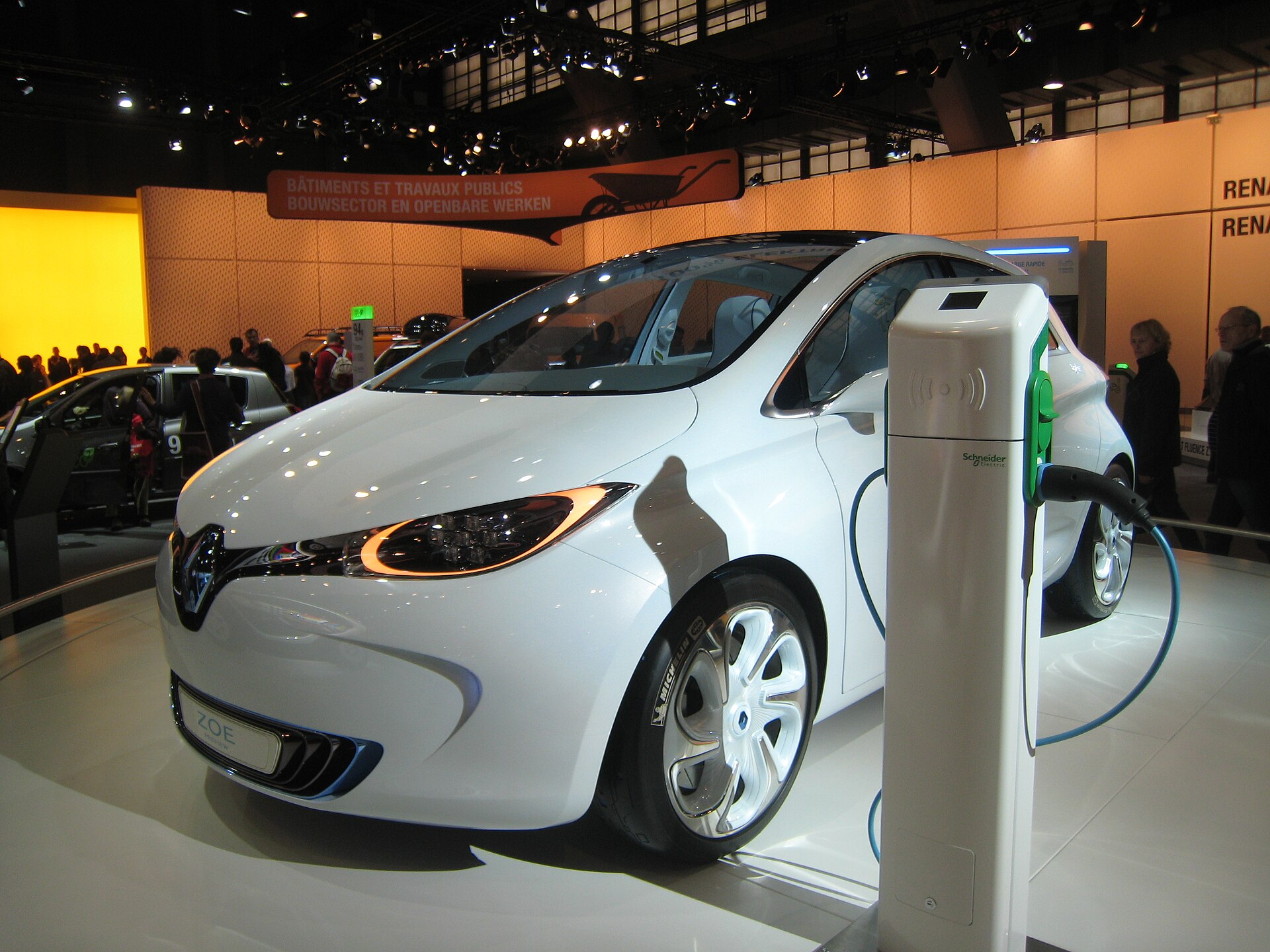
For a typical Australian driver, EV charging with solar needs about 1.5 kW to 2 kW of extra panels, which is three to five more panels on the roof. An electric car sounds like a huge new load, but spread across a week it is smaller than most people expect, and cheaper to cover with your own panels than with anything else.
How much extra solar does an EV need?
Start with two numbers: how far you drive, and how much power your car uses. The Electric Vehicle Council uses 17 kWh per 100 km as a typical figure, roughly the same job as 7 litres of petrol per 100 km. Real-world testing backs that up. The Australian Automobile Association’s Real-World Testing Program measured the 2025 Tesla Model Y Long Range at 151 Wh/km, the BYD Atto 3 Essential at 171 Wh/km and the Kia EV5 Earth at 219 Wh/km. Most EVs sold here sit between 15 and 22 kWh per 100 km on the road.
Charging is not perfectly efficient, so the meter reads higher than what lands in the battery. For planning we use 18 kWh per 100 km at the wall, the EVC figure with a small allowance for losses.
For distance, the last ABS Survey of Motor Vehicle Use (12 months to 30 June 2020, the final release) put passenger vehicles at 11,100 km a year, about 215 km a week. The Electric Vehicle Council works on 14,000 km a year, closer to 270 km a week. Most households land in between.
The table below turns weekly driving into extra solar, assuming an annual average of about 4 kWh per day for every 1 kW of panels. That is a fair national middle. Sydney sits near 3.9, Melbourne near 3.6, Brisbane and Adelaide near 4.2 and Perth near 4.4.
| Weekly driving | Roughly per year | Energy needed per week | Extra solar to add | Extra panels (440W) |
|---|---|---|---|---|
| 100 km | 5,200 km | 18 kWh | 0.7 kW | 2 panels |
| 200 km | 10,400 km | 36 kWh | 1.3 kW | 3 panels |
| 300 km | 15,600 km | 54 kWh | 2 kW | 4 to 5 panels |
| 400 km | 20,800 km | 72 kWh | 2.6 kW | 6 panels |
| 500 km | 26,000 km | 90 kWh | 3.2 kW | 7 to 8 panels |
| 700 km | 36,400 km | 126 kWh | 4.5 kW | 10 to 11 panels |
Two caveats. These are annual averages, so in Melbourne or Hobart add roughly a third more to cover winter. And the table assumes every kilowatt hour comes from your roof, which will not happen every day.
If you are still working out your base system size, our guide on how many solar panels you need covers the household side. Add the EV figure on top.
The three charging levels, and which one you want
Charging is split into three levels. Only one makes sense for a home with solar.
| Level | What it is | Typical power | Range added per hour | Best for |
|---|---|---|---|---|
| Level 1 | Standard 10A power point | 1.8 to 2.4 kW | Around 10 to 13 km | Backup, plug-in hybrids, very low kilometres |
| Level 2 | Dedicated AC wallbox | 7 kW single phase, 11 or 22 kW three phase | 40 to 120 km | Home charging, this is the one |
| Level 3 | DC fast charging | 25 kW to 350 kW | Hundreds of km | Road trips only, not installed at homes |
The Level 1 “granny lead” that comes with the car is a poor match for solar, because your panels produce a big midday surge and a 2 kW trickle cannot soak that up. Level 3 is not a home option, since DC units cost tens of thousands of dollars and need a serious grid connection. That leaves Level 2, a hardwired wallbox, which on single phase charges at up to 7 kW and adds around 40 km of range per hour.
What “solar-aware” charging actually means
A plain wallbox has one setting: charge at full speed until the car is full. If it starts at 2pm and your panels are only sending 3 kW to the grid, the other 4 kW comes off the grid at full retail price. You have not charged on solar, you have bought power at the worst rate available.
A solar-aware charger fixes this. It reads a sensor at your switchboard, sees how much you are exporting, and adjusts the car’s charging current to use only the surplus. Clouds pass, the rate dips, the sun returns, it ramps back up. Most units offer three modes:
- Solar only. The car charges only when there is spare solar. Nothing comes off the grid.
- Solar plus top-up. Uses surplus solar but pulls from the grid to hold a minimum rate, so the car is ready by morning.
- Fast. Full speed regardless of source, for when you need to leave in an hour.
Chargers that do it in Australia
- myenergi Zappi. The best known solar-diverting charger here. It works with any inverter brand because it does its own measuring at the switchboard, and comes in 7 kW single phase and 22 kW three phase versions.
- Fronius Wattpilot. Strong software, but its surplus solar mode only works if you already own a Fronius inverter. If you do, it is a natural pairing.
- Tesla Charge on Solar. Built into the Tesla app rather than the charger. It needs a Powerwall with solar connected, since the Powerwall provides the measurement, plus a compatible Tesla.
- App-based options. Services such as Charge HQ link your inverter’s data to the car’s API and control charging through the car, which suits a plain wallbox you already own.
One quirk worth knowing. The charging standard has a minimum current of 6A, about 1.4 kW on single phase, and below that the car stops. On a three-phase charger in three-phase mode, that minimum becomes roughly 4.2 kW of surplus before charging starts at all, so on a cloudy day a single-phase setup captures far more solar. Some chargers switch between one and three phases automatically to get around this.
Why charging from solar beats exporting it
The whole argument in one line: you are paid a few cents to export and charged thirty-odd cents to buy back, so every kilowatt hour you put into the car instead of the grid is worth the difference. Feed-in tariffs are now commonly a few cents to about ten cents per kWh, and they have fallen for reasons we cover in our guide to solar feed-in tariffs. The real cost of charging on your own solar is not zero, it is the credit you gave up, and at 5c per kWh that is very cheap driving.
The table compares the options at 18 kWh per 100 km, with yearly figures based on 14,000 km.
| Where you charge | Typical rate | Cost per 100 km | Cost per year (14,000 km) |
|---|---|---|---|
| Your own solar, instead of exporting | 5c per kWh forgone | $0.90 | Around $125 |
| Off-peak or EV night plan | 8c per kWh | $1.45 | Around $200 |
| Grid at a flat anytime rate | 32c per kWh | $5.75 | Around $800 |
| Public AC charger | 25c to 45c per kWh | $4.50 to $8.10 | $630 to $1,135 |
| Public DC fast charger | 40c to 70c per kWh | $7.20 to $12.60 | $1,010 to $1,765 |
| Petrol car, for comparison | About 7 L per 100 km | Around $14 | Around $2,000 |
The Electric Vehicle Council’s own figures line up closely, putting home charging at roughly $800 a year on peak rates and around $200 a year on off-peak, against about $2,000 a year for petrol. Two things stand out. Solar is cheapest, but a good off-peak EV plan is not far behind and costs nothing to switch to. And public DC fast charging is expensive enough that relying on it wipes out most of the running-cost advantage of an EV.
Do you need a battery as well?
Only if the timing does not work, and even then, check the cheaper option first. Solar peaks between 10am and 3pm, so if the car leaves at 7am and returns at 6pm it is not home when the power is free. You have three choices.
- Charge on the days the car is home. Weekends and work-from-home days often cover a whole week of driving, since a 7 kW charger needs only a few hours of good sun to add 200 km.
- Move to an EV or off-peak plan and charge overnight. Super off-peak windows on EV plans are commonly under 10c per kWh, close enough to the 5c you gave up on the feed-in tariff that the yearly difference is small.
- Add a battery. Store the midday surplus and charge the car from it in the evening.
Option three works, but be clear-eyed. Storage bought purely to shift energy into a car is expensive per kilowatt hour moved, and adding 8 kWh to the car overnight uses most of a 10 kWh battery, leaving nothing for the house. Think of it the other way round. A battery is bought for household load, evening peak pricing and blackout backup, and charging the car is a bonus on days with spare capacity. The federal Cheaper Home Batteries Program cuts roughly 30 per cent off the installed cost, and our solar battery rebate guide has the detail.
If you are buying solar now and expect an EV later, oversize the panels today. Panels are the cheapest part of a system per kilowatt, and adding them later means paying twice for scaffolding and labour.
Single phase or three phase
Most Australian homes are single phase, which caps AC charging at about 7.4 kW, or 32A. That is not the limit people fear. At 7 kW you add roughly 40 km of range per hour, so an overnight plug-in covers more driving than nearly anyone does in a day.
Three phase allows 11 kW or 22 kW charging, but two things temper that. Most EVs sold here have an onboard AC charger capped at 7 kW or 11 kW, so a 22 kW wallbox often cannot run at full speed anyway. And three-phase solar diversion needs a much larger surplus before it starts.
Upgrading from single phase to three phase just to charge a car is rarely worth it, since it involves your distributor, your switchboard and possibly a new service cable. If your home already has three phase, use it, and ask about a charger that can drop to single phase for solar charging.
Either way, your electrician deals with the local distributor. Networks increasingly want to be told about new chargers above a certain size, and some now expect load control so the charger can be wound back during peak demand. Routine paperwork, but confirm your installer is handling it.
What a home charger costs installed
Solar Choice’s EV Charger Price Index put the average installed cost of a home EV charger at $2,269 as of June 2026, covering hardware and a basic installation. Practical bands to expect:
- Basic 7 kW wallbox, short cable run, tidy switchboard: roughly $1,200 to $2,000 installed.
- Solar-aware 7 kW charger such as a Zappi or Wattpilot: roughly $1,800 to $3,000 installed, since the hardware costs more and a sensor has to be fitted at the switchboard.
- Three-phase 11 kW or 22 kW unit: commonly $2,500 to $4,500 installed.
What pushes a job up is cable distance from the switchboard to the parking spot, switchboard upgrades, and anything involving a wall cavity, a conduit run or a second storey. Ask for the cable run as a separate line.
There is no national rebate for home chargers, and state schemes have come and gone, so check your state energy department’s current page before you buy.
Treat the charger like any other electrical work and compare quotes properly. Our guide on comparing solar quotes applies here too. Many solar installers now fit chargers, so browse companies in your area to find one who does both.
FAQ
How many solar panels do I need to charge an electric car?
For average Australian driving of around 200 to 300 km a week, about three to five extra 440W panels, or 1.5 kW to 2 kW of capacity. Heavy drivers covering 500 km a week need closer to seven or eight extra panels.
Can I charge my EV with solar without a battery?
Yes. A solar-aware charger sends surplus solar straight to the car during daylight, no battery involved. The car just has to be home when the sun is out, so it suits weekends, work-from-home days and anyone with a second car.
Is a 6.6 kW solar system enough for a house and an EV?
Usually not for both. A 6.6 kW system produces roughly 26 kWh on a good day and a typical household uses much of that, so adding an EV generally means stepping up to 8 kW or 10 kW.
Do I need a special charger to use solar?
To charge only from surplus, yes. A standard wallbox charges at a fixed rate and pulls grid power whenever the sun is not keeping up. Solar diversion needs a charger that measures your export and modulates the charge current, or an app that controls the car directly.
Related reading
About this research
This is independent desk research by Solar Cobber. We did not visit sites, request quotes or accept payment for inclusion. Figures are dated and sourced, and pricing and policy details change, so confirm current terms directly before you sign anything.