
Solar battery installation costs about A$3,000 for a good-quality, straightforward job in Australia, as at November 2026 (SolarQuotes’ stated assumption, page updated 12 May 2026), and A$4,000 to A$9,000 or more when the switchboard, cable run, backup circuits or phase add work. This guide covers the installation itself, not the battery hardware.
Key facts
- SolarQuotes assumes A$3,000 for a “straightforward” battery installation: battery beside the switchboard, no bollards, two backup circuits, no switchboard upgrade and no fire-resistant backing (SolarQuotes, updated 12 May 2026).
- A long cable run from the switchboard to the battery can add A$1,000 or more, because it takes at least two people many hours (SolarQuotes, 12 May 2026).
- The NSW Government’s energy program puts a switchboard upgrade at A$1,500 to A$4,000 depending on scope; EcoGeneration (3 February 2026, based on SolarQuotes analysis) says compliance upgrades typically start at around A$1,000.
- Choosing three phase adds at least A$500 to installation and about A$900 to a Sungrow 10 kW inverter, though most three-phase homes do not need a three-phase battery system (SolarQuotes, 12 May 2026).
- Adding a battery to existing solar that needs a hybrid inverter swap costs “~$3,000+” for the inverter alone, while buying solar and battery together can save about A$1,000 (SolarQuotes, 12 May 2026).
- The federal discount on a 10 kWh battery installed in November 2026 is about A$2,720 (68 certificates at A$40), which is less than the A$3,000 installation assumption (Solar Cobber calculation).
Source: SolarQuotes; NSW Government Climate and Energy Action, checked November 2026.
How much does it cost to install a solar battery?
A straightforward installation costs about A$3,000, and it is already inside most advertised installed prices. SolarQuotes lists battery prices that include the federal rebate and GST but exclude installation, then assumes A$3,000 for the install. Solar Choice’s November 2026 index, updated 6 November, says its averages “include installation, GST and the federal battery rebate” and do not ordinarily include meter fees or “additional costs for difficult installations”.
That matches our 10 kWh battery price guide, which adds the same A$3,000 to SolarQuotes’ battery-only prices. The difference in this guide is that it looks at what moves the installation line itself.
What is included in a standard battery installation?
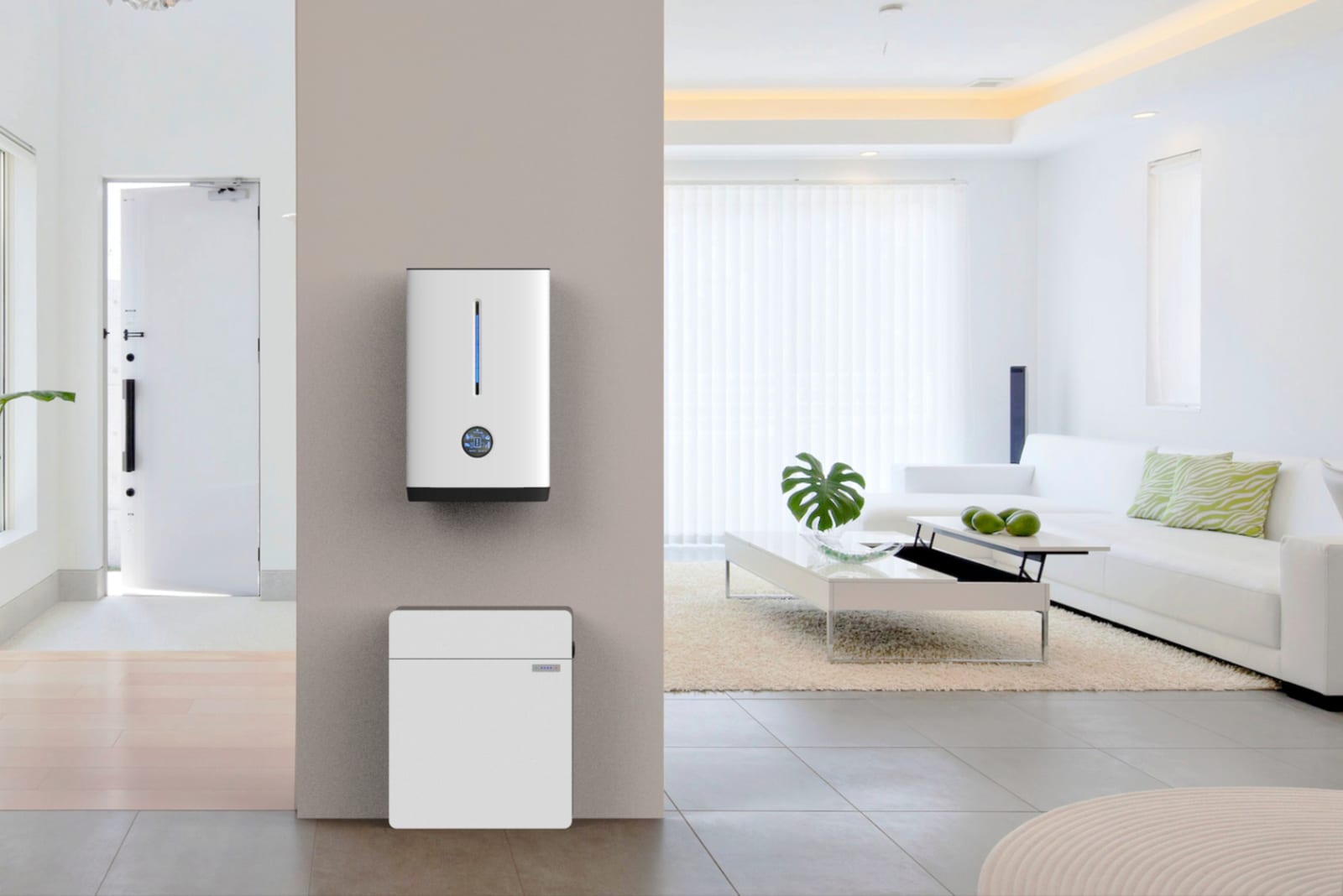
A standard job mounts the battery, connects it to the switchboard or inverter, sets up two backup circuits if backup is wanted, commissions the system and registers the warranty. SolarQuotes says an AC-coupled battery with no wiring or switchboard problems takes an electrician and an assistant about half a day. Hybrid systems, longer runs or switchboard work take a full day to two days, and an install rarely exceeds two days unless it is unusually complex or off-grid.
What adds to the installation cost?
Seven items move the installation bill, and each has a published figure or range. The table shows what we found, who said it and when.
| Cost driver | Published amount | What it is | Source and date |
|---|---|---|---|
| Base installation | A$3,000 | Straightforward job as defined above | SolarQuotes, 12 May 2026 |
| Long cable run | A$1,000 or more | Battery not beside the switchboard | SolarQuotes, 12 May 2026 |
| Backup override switch | About A$200 | Keeps the house powered if the battery system fails | SolarQuotes, 12 May 2026 |
| Switchboard upgrade | A$1,500 to A$4,000 | Scope and model dependent | NSW Government Climate and Energy Action |
| Compliance upgrade (Type A RCDs) | From about A$1,000 | Rebuilding an older board | EcoGeneration, 3 February 2026 |
| Three-phase installation | At least A$500 more | Plus about A$900 on a Sungrow 10 kW inverter | SolarQuotes, 12 May 2026 |
| Hybrid inverter swap (retrofit) | About A$3,000 or more | Inverter only, if the battery has none | SolarQuotes, 12 May 2026 |
SolarQuotes does not publish a price for bollards or fire-rated backing, so we do not give one. Ask for each as a separate line.
Source: SolarQuotes (12 May 2026); NSW Government Climate and Energy Action; Solar Cobber calculation. Each column adds one extra to the A$3,000 base, except the last, which adds A$200, A$1,000, A$500 and A$1,500 together. Several figures are 'or more', so these are floors.
View the data as a table
| Minimum installation cost | |
|---|---|
| Basic job | A$3,000 |
| + override | A$3,200 |
| + long cable | A$4,000 |
| + three phase | A$3,500 |
| + switchboard | A$4,500 |
| All four | A$6,200 |
An awkward job reaches about A$6,200 at the lowest published figures, double the basic assumption, and about A$8,700 if the switchboard hits the top of the NSW range.
Do I need a switchboard upgrade for a home battery?
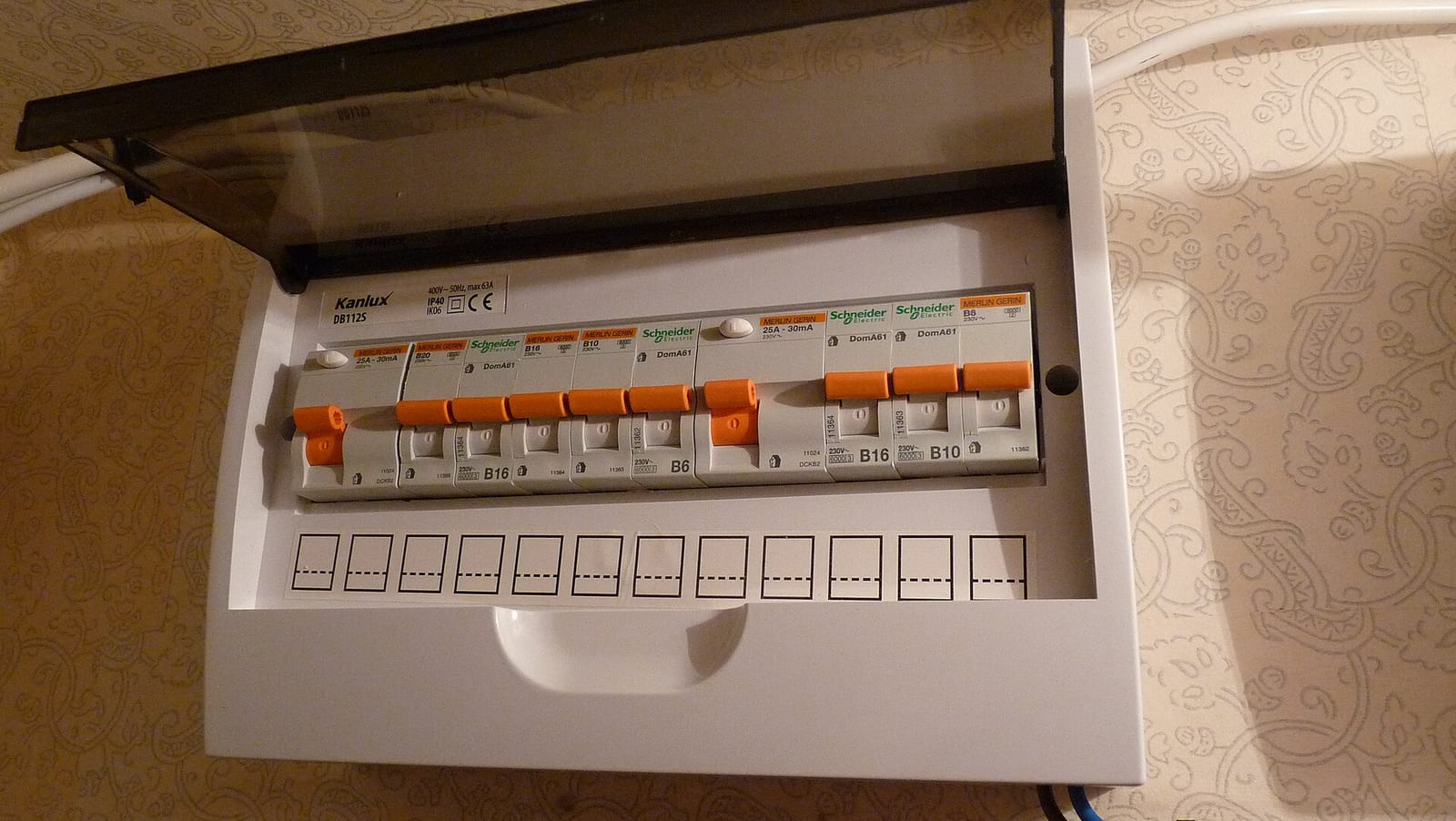
Often yes in an older home. A switchboard upgrade is likely when the board is old, full or still has Type AC safety switches. EcoGeneration, in an article based on SolarQuotes analysis, says Type AC residual current devices have not been permitted in new electrical work, alterations or additions since April 2023, so a battery installation generally needs Type A devices on affected circuits. It reports costs “typically” from about A$1,000, rising with circuit count and whether individual RCBOs are used.
The NSW Government says an upgrade is worth considering for homes 25 years or older with an original board, and lists A$1,500 to A$4,000. NSW also offers a zero-interest Home Energy Saver loan of up to A$15,000 for eligible households, including switchboard upgrades. Ask whether your quote includes the switchboard work, because EcoGeneration notes cheaper quotes sometimes leave it out.
How much does battery backup add?
Backup adds hardware and circuit work, and the more you back up, the more it costs. SolarQuotes says a handful of lights, refrigeration and some power points needs a smaller system than whole-house backup. Motors in fridges and air conditioners draw high start-up currents, which can call for powerful inverters such as a Selectronic or the one built into a Powerwall 3. Backup that keeps solar working in a blackout usually costs more than backup that shuts solar down. Our blackout backup battery guide covers the models.
Where can a battery go, and what does it cost?
Location rules drive cable length, backing and bollards. AS/NZS 5139 is the Australian battery installation standard. Amendment 1 (AS/NZS 5139:2019 Amd 1:2025) was published on 19 December 2025 and the NSW Building Commission says it is mandatory in NSW. Western Australia requires full compliance with the amended standard from 19 June 2026, according to WA Building and Energy (announced 13 May 2026).
Changes the NSW Building Commission lists include:
- A battery may now be within 600 mm of an opening if the opening is wider than 900 mm, such as a garage door.
- Inverters count as associated appliances allowed in a restricted location.
- Exempt materials used as a barrier to habitable rooms must be at least 6 mm thick.
- A physical copy of the Safety Data Sheet must be left with the owner.
SolarQuotes’ installation guide (updated 13 January 2026) explains the practical effect: a bedroom, kitchen or living room behind the battery calls for a fire-rated backboard, and its cost page describes backing that extends 600 mm to the sides and above. The same guide says a 300 mm gap from the wall can avoid backing when nothing flammable is nearby. A garage floor usually needs at least one bollard, which a high wall mount can avoid. Rules differ by state and installers must follow the current text of the standard, so treat these as examples and not instructions.
How much does three-phase add?
Three phase adds roughly A$500 or more to installation and about A$900 for the inverter, and most homes do not need it. SolarQuotes says a single-phase battery works on a three-phase home but cannot support three-phase loads without the grid, and that more models are available in single phase. See our single-phase versus three-phase guide. Choose three-phase backup only if a specific three-phase load, such as a large air conditioner, must run in a blackout.
Adding a battery to existing solar: AC-coupled or hybrid inverter swap?
An AC-coupled battery avoids replacing the solar inverter, while a hybrid swap adds about A$3,000 or more. SolarQuotes lists three buyers: solar and battery together (one shared hybrid inverter, bundled labour), an owner with a hybrid already (simplest), and an owner with a standard inverter, who must swap to a hybrid at about A$3,000 or more or buy a battery with a built-in inverter. The third case can involve rewiring and switchboard changes. Our AC versus DC coupled guide compares the two, and the Solar Cobber hybrid inverter pricing covers inverter costs.
Does installation cost shrink with a bigger battery?
Yes, as a share of the price. The installation cost is largely fixed, so it falls from about 30% of a 10 kWh battery to about 7% of a 50 kWh one. This is a Solar Cobber calculation: we divide an assumed A$3,000 installation by Solar Choice’s pre-rebate battery-only price (pre-rebate A$ per kWh times capacity, index updated 6 November 2026). Solar Choice does not publish its own installation component, so the A$3,000 is SolarQuotes’ assumption applied across sizes.
| Usable capacity | Solar Choice pre-rebate price (battery only) | A$3,000 as a share |
|---|---|---|
| 10 kWh | A$9,900 | 30.3% |
| 20 kWh | A$18,600 | 16.1% |
| 30 kWh | A$26,400 | 11.4% |
| 40 kWh | A$34,000 | 8.8% |
| 50 kWh | A$42,000 | 7.1% |
View the data as a table
| Installation share of price | |
|---|---|
| 10 kWh | 30.3% |
| 20 kWh | 16.1% |
| 30 kWh | 11.4% |
| 40 kWh | 8.8% |
| 50 kWh | 7.1% |
Installation is a third of a small battery’s price and a fraction of a large one’s.
How does the federal discount compare with installation cost?
On a 10 kWh battery the discount (A$2,720) covers about 91% of a basic installation (A$3,000). The Cheaper Home Batteries Program pays by usable kWh, not by installation, so the comparison is only a guide to scale. The discount values come from the Solar Cobber working in our battery rebates by state guide: the first 14 kWh earns the full factor of 6.8 certificates per kWh, the next 14 kWh earns 60% and the next 22 kWh earns 15%, at A$40 a certificate.
| Usable kWh | Discount, installed Nov 2026 | Discount, installed Jan 2027 | Assumed installation |
|---|---|---|---|
| 5 | A$1,360 | A$1,120 | A$3,000 |
| 10 | A$2,720 | A$2,280 | A$3,000 |
| 20 | A$4,760 | A$4,000 | A$3,000 |
| 30 | A$6,160 | A$5,160 | A$3,000 |
- Federal discount
- Assumed installation
View the data as a table
| Federal discount | Assumed installation | |
|---|---|---|
| 5 kWh | A$1,360 | A$3,000 |
| 10 kWh | A$2,720 | A$3,000 |
| 20 kWh | A$4,760 | A$3,000 |
| 30 kWh | A$6,160 | A$3,000 |
From 1 January 2027 the 10 kWh discount falls to about A$2,280, so a basic installation costs more than the discount covers.
What should be itemised on your installation quote?
Ask for each of these as a line, because headline prices often leave them out:
- Installation labour, and the number of installers and days.
- Switchboard work: what is being replaced, and whether Type A RCDs or RCBOs are included.
- Backup circuits: how many, and whether an override switch is included.
- Cable run length and the proposed battery location, with the AS/NZS 5139 reasoning.
- Bollards, sun shade and fire-rated backing, each listed or marked “not required”.
- Phase, and whether a three-phase inverter is needed.
- Meter fees from your network, which Solar Choice says its averages do not ordinarily include.
- The STC discount as a separate line.
Compare local installers in our directory, and see the full solar battery cost guide. The what size battery guide helps pick the capacity first.
FAQ
How much does it cost to install a solar battery in Australia?
About A$3,000 for a straightforward job, as at November 2026, on SolarQuotes’ stated assumption. Switchboard work, a long cable run, backup extras and three phase can push it to A$6,000 or more.
How much does a switchboard upgrade for a battery cost?
The NSW Government lists A$1,500 to A$4,000 depending on scope and model. EcoGeneration (3 February 2026) says compliance upgrades typically start at about A$1,000.
How much does it cost to add a battery to existing solar?
The installation is about A$3,000, plus the battery. If your inverter is not a hybrid, SolarQuotes says a hybrid swap costs about A$3,000 or more, so choose an AC-coupled or built-in inverter battery to avoid it.
How long does a battery installation take?
Half a day for a simple AC-coupled battery with an electrician and an assistant, according to SolarQuotes. Hybrid systems, long cable runs or switchboard upgrades take one to two days.
Is installation included in the battery price?
It depends on the source. SolarQuotes’ battery prices exclude installation, while Solar Choice’s November 2026 index includes installation, GST and the rebate. Check your quote.
Do I need a bollard for a home battery?
If the battery is on a garage floor, it will likely need at least one bollard, according to SolarQuotes. Mounting it high on a wall can avoid the cost.
Does a three-phase home need a three-phase battery?
Usually no. SolarQuotes says single-phase works for most three-phase homes, and three phase adds at least A$500 to installation plus about A$900 for a Sungrow 10 kW inverter.
Can I install a home battery myself?
No. Battery installs must be done by a licensed electrician following AS/NZS 5139, and the federal discount needs an accredited installer. Check the Clean Energy Council and Solar Accreditation Australia registers yourself.
Sources
- SolarQuotes, Solar Battery Prices and System Costs, updated 12 May 2026
- SolarQuotes, Home Battery Installation guide, updated 13 January 2026
- Solar Choice Battery Price Index, updated 6 November 2026
- NSW Government Climate and Energy Action, switchboard upgrade
- EcoGeneration, The switchboard trap undermining battery budgets, 3 February 2026
- Building Commission NSW, Changes to the Battery Standard, updated 25 March 2026
- WA Building and Energy, updated electrical installation standards for battery systems, 13 May 2026
- Explanatory Statement, Renewable Energy Legislation (2026 Measures No. 1) Amendment Regulations 2026 (F2026L00093)
About this guide
Written by the Solar Cobber editorial team from independent desk research, checked in November 2026. Solar Cobber is a free directory that may earn referral or advertising fees from installers, and commercial relationships never affect our content. This is general information, not financial advice. To report a correction, contact us.
Filed under Savings
Back to blog