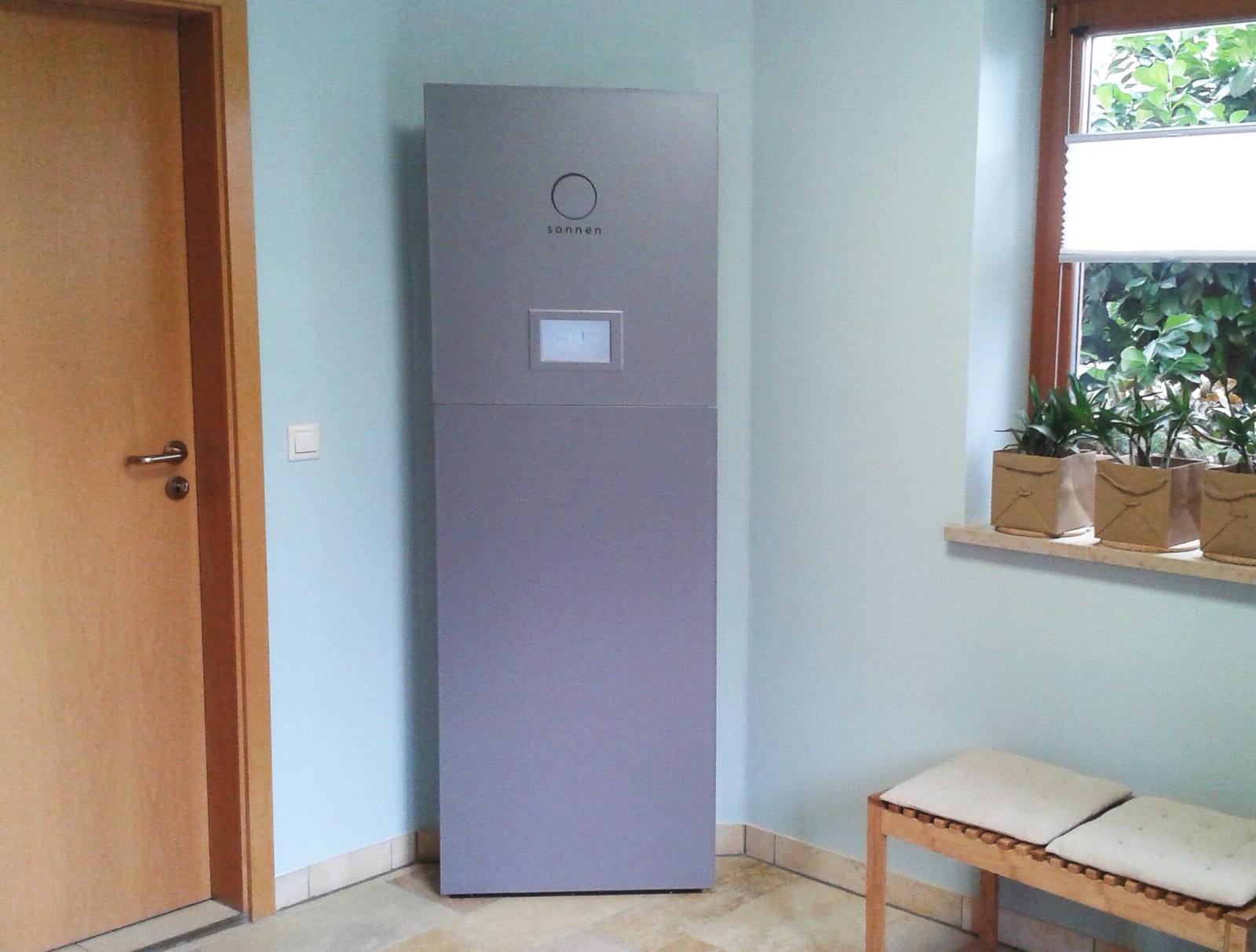

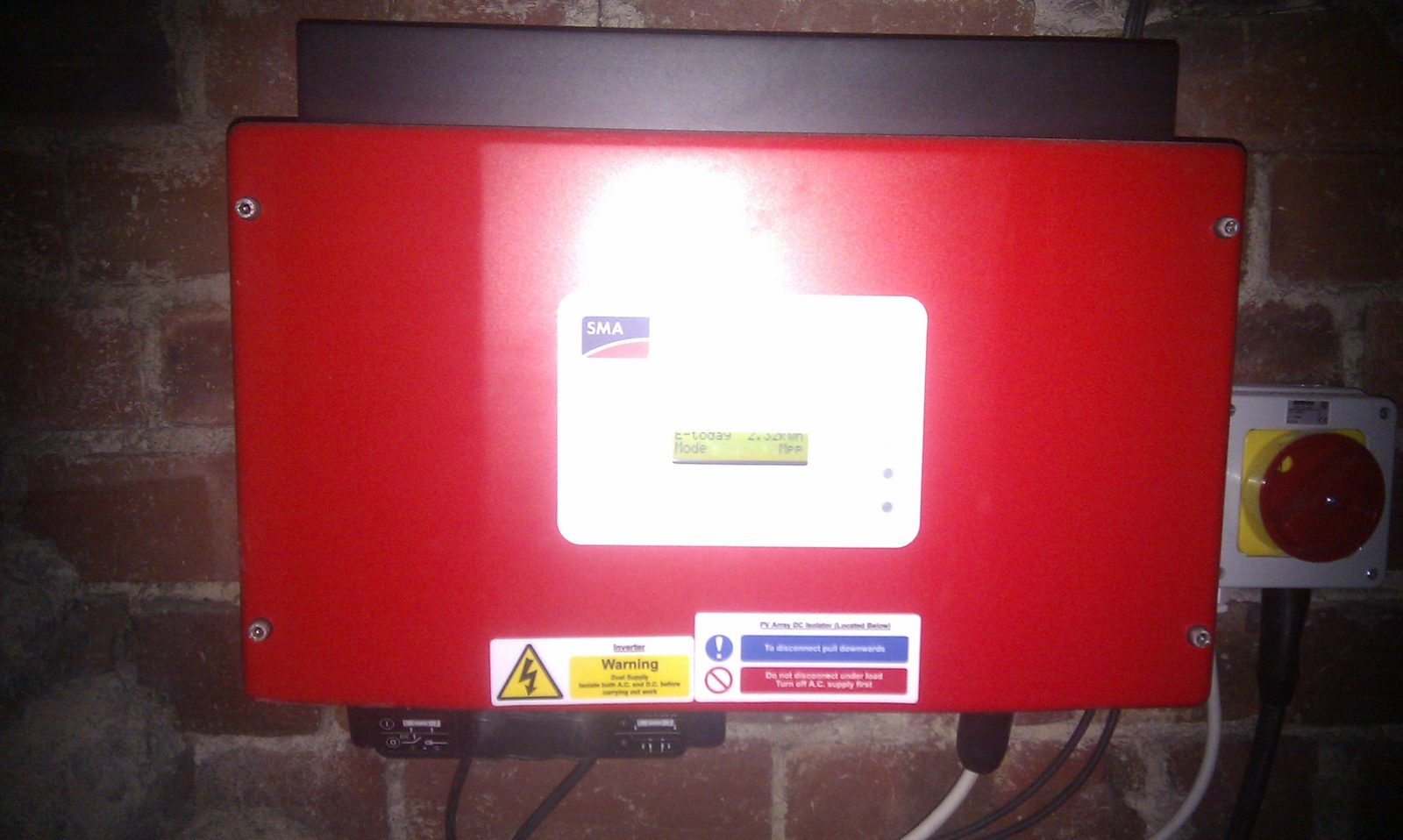
Yes, you can add a battery to existing solar in Australia, and an AC coupled battery does it without replacing your solar inverter. It carries its own inverter and connects at the switchboard. As at November 2026 the trade-off is a few percentage points of efficiency and a second inverter to pay for. A DC coupled battery is more efficient but usually needs a hybrid inverter that replaces yours.
Key facts
- An AC coupled battery has its own inverter and connects to the home’s AC wiring, so it works alongside almost any existing solar inverter.
- A DC coupled battery connects to a hybrid inverter that also runs the solar panels, so retrofitting one usually means replacing the existing solar inverter.
- SolarQuotes (October 2025) puts the real-world efficiency penalty of AC coupling at about 5 to 15 per cent, or roughly 10 per cent on the charging leg.
- As at November 2026 the Clean Energy Regulator says the Cheaper Home Batteries Program discount applies to a battery installed with a new or existing solar system.
- The federal battery discount factor falls from 6.8 to 5.7 certificates per usable kWh on 1 January 2027, so the installation date matters more than the coupling type.
- Queensland’s Solar Bonus Scheme 44c feed-in tariff ends on 1 July 2028 and can be lost by increasing inverter capacity or running a battery while the solar system operates.
What are AC coupling and DC coupling?
AC coupling connects a battery through its own inverter on the AC side of the home, so solar power converts from DC to AC, back to DC to charge the battery, then to AC again when used. DC coupling connects the battery to the same hybrid inverter as the solar panels, so solar power charges the battery as DC without the extra conversions.
A hybrid inverter is a single inverter that manages panels, battery and grid together; see the best hybrid inverters in Australia.
Can I add a battery to my existing solar system?
Yes. Both routes work on a system of any age. The Clean Energy Regulator says existing panels need not be on the Clean Energy Council product list for the battery discount, but must meet state electrical safety rules. Microinverter systems and healthy string inverters usually suit AC coupling. A string inverter near the end of its life can justify DC coupling, because you are buying an inverter anyway.
Do I need a new inverter for a battery?
You need a new inverter in both cases, but it is a different one. With AC coupling the new inverter is built into the battery or sits beside it, and your solar inverter stays. With DC coupling a hybrid inverter replaces your solar inverter.
The hybrid route often locks you to one brand: our review notes the Sungrow SBR works only with compatible Sungrow hybrids, and an incompatible inverter voids its warranty. For replacement costs, see solar inverter repair and replacement cost.
AC coupled vs DC coupled battery: how big is the efficiency difference?
DC coupling is more efficient because solar energy passes through fewer conversions. SolarQuotes (Finn Peacock, October 2025) says the real-world loss from AC coupling is about 5 to 15 per cent, using two conversions at roughly 95 per cent each, so about 10 per cent is lost charging the battery.
Manufacturer figures point the same way, though they are not like-for-like tests. Enphase lists 90 per cent round trip for its AC-coupled IQ Battery 5P and 96 per cent for DC. Anker lists up to 90.2 per cent for its AC-coupled X1. BYD quotes 96 per cent for its DC battery alone, and SolarQuotes notes inverter losses come on top (figures via our reviews, checked November 2026).
Worked example: what the efficiency gap is worth
For a household storing 10 kWh of surplus solar each day, a 5 percentage point gap is worth very little. Assume an AC route returns 90 per cent and a DC route 95 per cent (both inside the published ranges above), so AC delivers 9.0 kWh and DC delivers 9.5 kWh.
The 0.5 kWh gap is worth about A$0.15 a day at an assumed 30c/kWh avoided import price, or about A$55 a year, and about A$9 a year if valued at an assumed 5c/kWh feed-in tariff. Our Sungrow hybrid inverter review gives A$1,200 to A$2,800 installed for a hybrid inverter alone (2026 market ranges), so the efficiency gain rarely pays for replacing a healthy inverter.
What is the cost difference between AC and DC coupling?
No source we found publishes a like-for-like price for the same battery both ways. What is published, as at November 2026, is below. Ranges mix before and after discount figures.
| Option | Published installed price range | Source and month |
|---|---|---|
| Hybrid inverter only (Sungrow SH RS) | About A$1,200 to A$2,800 | Our Sungrow SH RS review, 2026 market ranges |
| Sungrow SBR battery with a Sungrow hybrid, 12.8 kWh | About A$8,800 to A$14,700 after the federal discount | Our Sungrow SBR review, 2026 published figures |
| Enphase IQ Battery 5P, one 5 kWh unit plus controller (AC) | About A$8,100 to A$10,100 before the discount | Our Enphase review, mid-2026 published range |
SolarQuotes says the loss from AC coupling costs nothing if you are export limited, and about 20c a day on a 10c feed-in tariff for a 20 kWh battery.
Which batteries we have reviewed are AC coupled or DC coupled?
Most batteries we have reviewed are DC coupled and tied to a specific hybrid inverter; a few come in both versions. The table summarises our reviews as checked in November 2026, so confirm model numbers with your installer.
| Battery | Coupling | Needs a brand-matched hybrid inverter? | Backup capable |
|---|---|---|---|
| Enphase IQ Battery 5P | AC (six built-in microinverters) | No, works with Enphase microinverter systems | Yes, with the separate IQ System Controller 3 INT |
| Anker SOLIX X1 | AC-coupled and hybrid versions | AC version no; hybrid versions yes | AC version cannot use existing solar in a blackout without the Power Dock Pro |
| AlphaESS SMILE-G3 | Hybrid (S5, T5 to T20) and AC-coupled (B5) | Hybrid yes; B5 no | Hybrid: yes, single phase limited to 5 kW; B5 not confirmed in our review |
| GoodWe Lynx F | DC with a GoodWe hybrid, or via a GoodWe BH or BT battery inverter beside existing solar | Yes, GoodWe equipment only | Depends on the GoodWe inverter |
| Tesla Powerwall 3 | Built-in hybrid; can also AC couple to existing solar | No separate inverter | Yes, with Backup Gateway 2 |
| Sungrow SBR and SBH, Fox ESS EQ4800 | DC | Yes, Sungrow hybrid only | Via the hybrid; whole-home backup on only some models |
| Sigenergy SigenStor | DC, all-in-one hybrid | Yes, Sigen controller | Yes, with the Sigen Energy Gateway |
| BYD Battery-Box Premium | DC | No, works with listed hybrids from several brands | Inverter dependent |
| Huawei LUNA2000, SolarEdge Home Battery, Growatt APX HV, iStore | DC | Yes, own-brand hybrid only | Needs extra hardware or a specific model |
For Powerwall 3, SolarQuotes reports AC coupling works without extra configuration when the existing inverter is 5 kW or less per Powerwall 3. See all our battery reviews.
Second inverter: inverter capacity and export limits
Adding an AC coupled battery adds a second inverter, and your electricity distributor may count both against its limit for your connection. Rules vary by network, so ask your distributor before signing.
Ausgrid’s published figures (read on ausgrid.com.au in November 2026) fit together once you separate approval from export. Its solar page says up to 10 kW of total inverter nameplate rating per phase may be approved through its streamlined process, and anything above that needs a technical review. Its connection charges page prices single-phase systems of up to 10 kW total at 5 business days, systems above 10 kW and up to 30 kW at 10 business days, and lists single-phase systems above 30 kW as not permitted. It sizes systems by the sum of all inverter nameplate ratings for each connection. On export, Ausgrid says a flexible connection can export up to 10 kW on a single-phase supply and 30 kW on three phase, reduced to as low as 1.5 kW per site when needed, while a fixed connection is 3 kW per system. Ausgrid’s pages do not say how an existing solar inverter plus an AC coupled battery inverter is counted, although the sum-of-nameplates wording suggests both would be. Ask Ausgrid or your installer, and treat 10 kW as the planning figure for a single-phase home. We have not checked other distributors.
Does the Cheaper Home Batteries Program apply to retrofits?
Yes. The Clean Energy Regulator says the battery can be installed with a new or existing solar system of no more than 1 MW. Installers turn the small-scale technology certificates (STCs) it creates into an invoice discount.
Conditions from the regulator’s page, checked November 2026: the battery must be new, on the Clean Energy Council approved list, 5 to 100 kWh nominal, and VPP-capable; an existing hybrid inverter must be CEC-listed or have been listed at commissioning; a Solar Accreditation Australia installer with a battery endorsement must install it; and only one eligible battery is allowed per premises.
The certificate factor is 6.8 per usable kWh for installs from May to December 2026 and 5.7 from January to June 2027, as set out in our state-by-state battery rebate guide. On a 13.5 kWh battery that is about 91 certificates this year and about 76 from 1 January 2027, a gap of roughly A$570 to A$600 on the same hardware.
What happens to my legacy feed-in tariff if I add a battery or inverter?
It depends on the scheme, and the safe rule is to ask your retailer and distributor in writing before any work. Queensland’s rules are the clearest.
The Queensland Government says households lose the 44c Solar Bonus Scheme tariff by increasing inverter capacity, replacing the inverter with a larger one, or adding panels that exceed the existing inverter’s rated capacity. It also says using a battery or other alternative source while the 44c system is operating causes loss of eligibility, unless the battery has a separate network connection. The scheme ends on 1 July 2028.
Victoria’s premium feed-in tariff ended on 1 November 2024, according to Powercor’s notice and retailers such as ENGIE and GloBird (we could not open the Victorian Government page it now redirects to), and the NSW Solar Bonus Scheme and ACT legacy scheme have closed, so they no longer restrict retrofit choices. If you hold a 44c tariff, adding a battery can cost more than it saves, so get the answer in writing first.
Hybrid inverter vs AC coupled: which suits my situation?
AC coupling suits healthy equipment you want to keep, and hybrid DC coupling suits a system that needs a new inverter anyway. The table sets out the common situations.
| Your situation | Usual better fit | Why |
|---|---|---|
| Old string inverter near end of life | Hybrid inverter (DC coupled) | You are buying an inverter anyway, so one box replaces two; see inverter replacement costs |
| Healthy string inverter, newer system | AC coupled | Keeps your inverter and its warranty |
| Microinverters (for example Enphase) | AC coupled | Microinverters have no shared DC bus; see string vs microinverter |
| New solar and battery together | All-in-one or hybrid (DC coupled) | One inverter and higher efficiency; size it with our battery sizing guide |
| Three phase home | Three-phase hybrid or AC unit | Three-phase backup needs a three-phase inverter; Enphase 5P gives 1.28 kVA per phase per unit |
| Holding a 44c Queensland tariff | Ask your distributor first | Battery use can end the tariff |
What to check on your quote
Ask for the coupling type, inverter model and export limit in writing, then compare at least three quotes from accredited installers in our installer directory.
- Does the quote say AC coupled or DC coupled, and which inverter is being replaced or added?
- Is the battery on the Clean Energy Council approved list, and is the installer battery-endorsed?
- Has the distributor approved the combined inverter capacity?
FAQ
Can I add a battery to my existing solar system?
Yes. Any solar system can take a battery, either an AC coupled battery beside your inverter or a hybrid that replaces it. Existing solar qualifies for the federal discount if it meets state electrical safety rules.
Do I need a new inverter to add a battery?
You need a battery inverter, but not always a new solar inverter. An AC coupled battery brings its own inverter and keeps yours, while a DC coupled battery needs a hybrid that replaces yours.
Is AC coupled or DC coupled better?
DC coupled is more efficient and tidier for new systems, and AC coupled is usually easier for retrofits. SolarQuotes (October 2025) estimates AC coupling loses about 5 to 15 per cent in real-world use.
Does the Cheaper Home Batteries discount apply if I add a battery to old solar?
Yes. The Clean Energy Regulator says the battery can be installed with a new or existing solar system. The discount factor drops from 6.8 to 5.7 certificates per usable kWh on 1 January 2027.
Will adding a battery cancel my 44c feed-in tariff?
It can in Queensland. The Queensland Government says using a battery while the 44c system operates, or increasing inverter capacity, can end eligibility, unless the battery has a separate network connection.
Can an AC coupled battery work in a blackout?
Yes, with the right hardware. The Enphase IQ Battery 5P needs the IQ System Controller 3 INT, and the Anker SOLIX X1 AC version needs the Power Dock Pro to use existing solar in an outage.
Sources
- Solar batteries, Clean Energy Regulator
- Cheaper Home Batteries Program, DCCEEW
- The Truth About AC and DC Coupling, SolarQuotes (October 2025)
- Solar Bonus Scheme 44c feed-in tariff, Queensland Government
- Solar premium feed-in tariff, Victorian Government (redirect target of Powercor’s page; not opened)
- Choosing a solar system, Ausgrid
- Solar charges, Ausgrid
About this guide
This guide was written by the Solar Cobber editorial team from independent desk research checked in November 2026. Solar Cobber is a free directory that may earn referral or advertising fees from installers, and commercial relationships never affect our content. This is general information, not financial advice. To report an error, use /contact.
Filed under Solar Guides
Back to blog