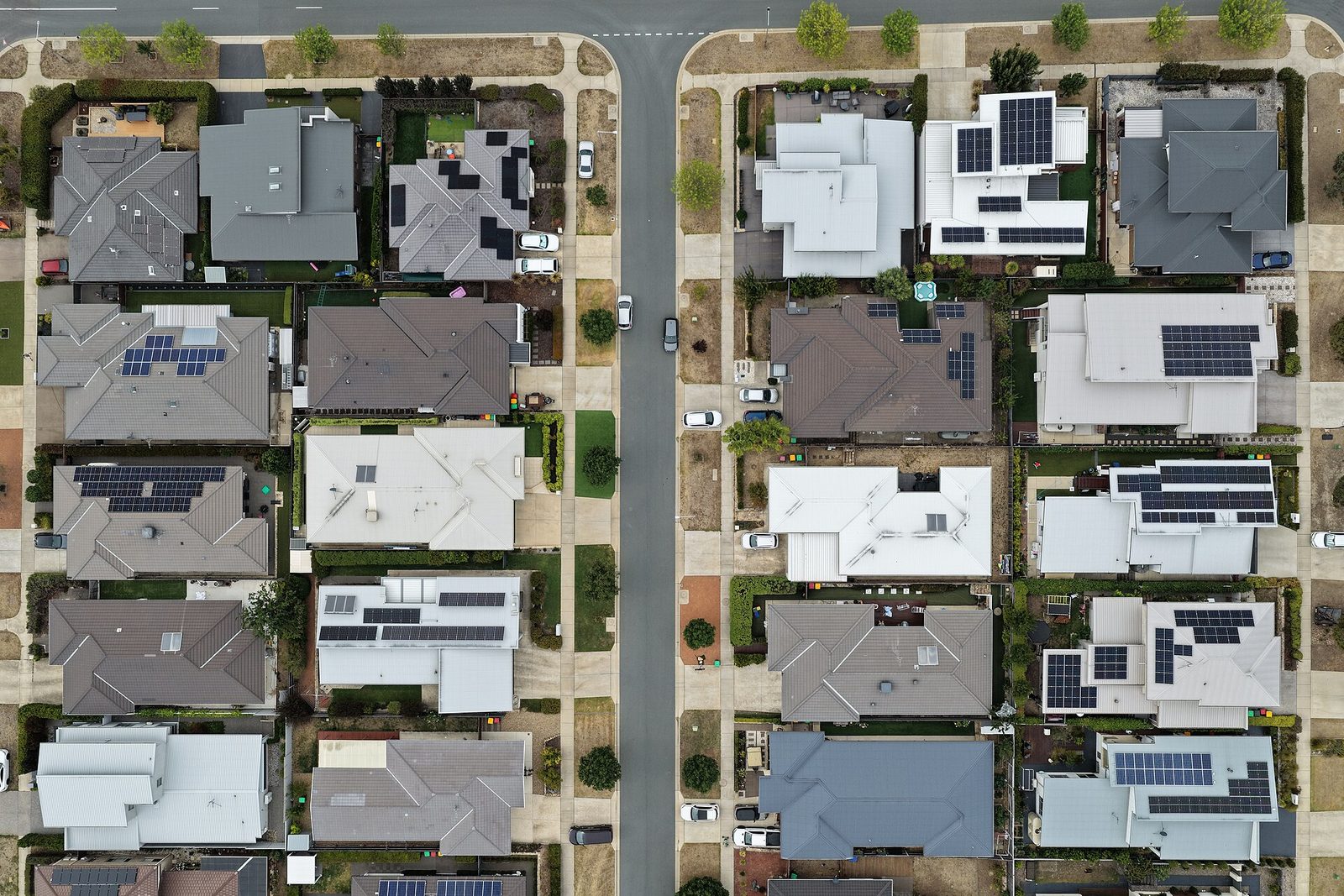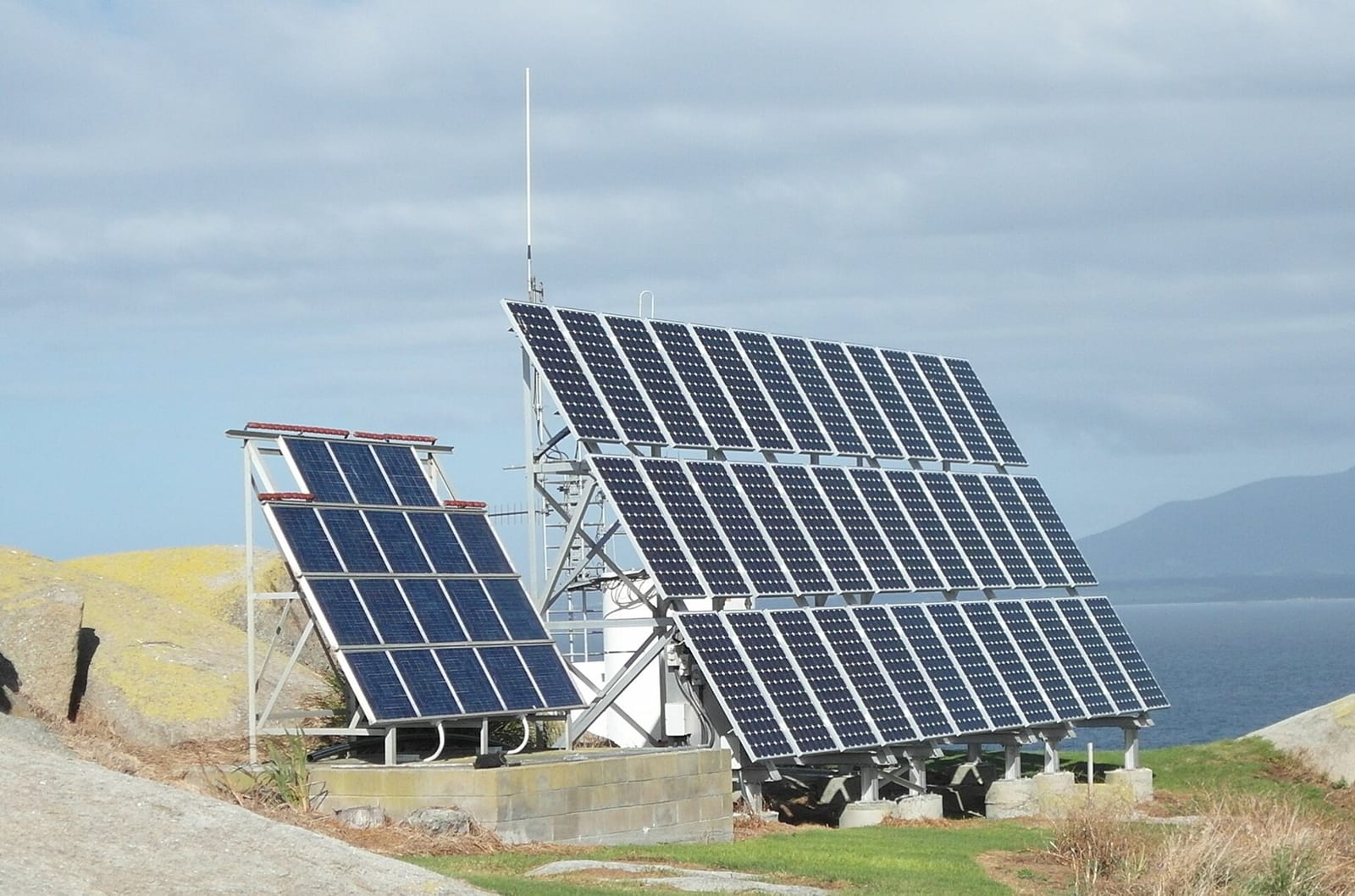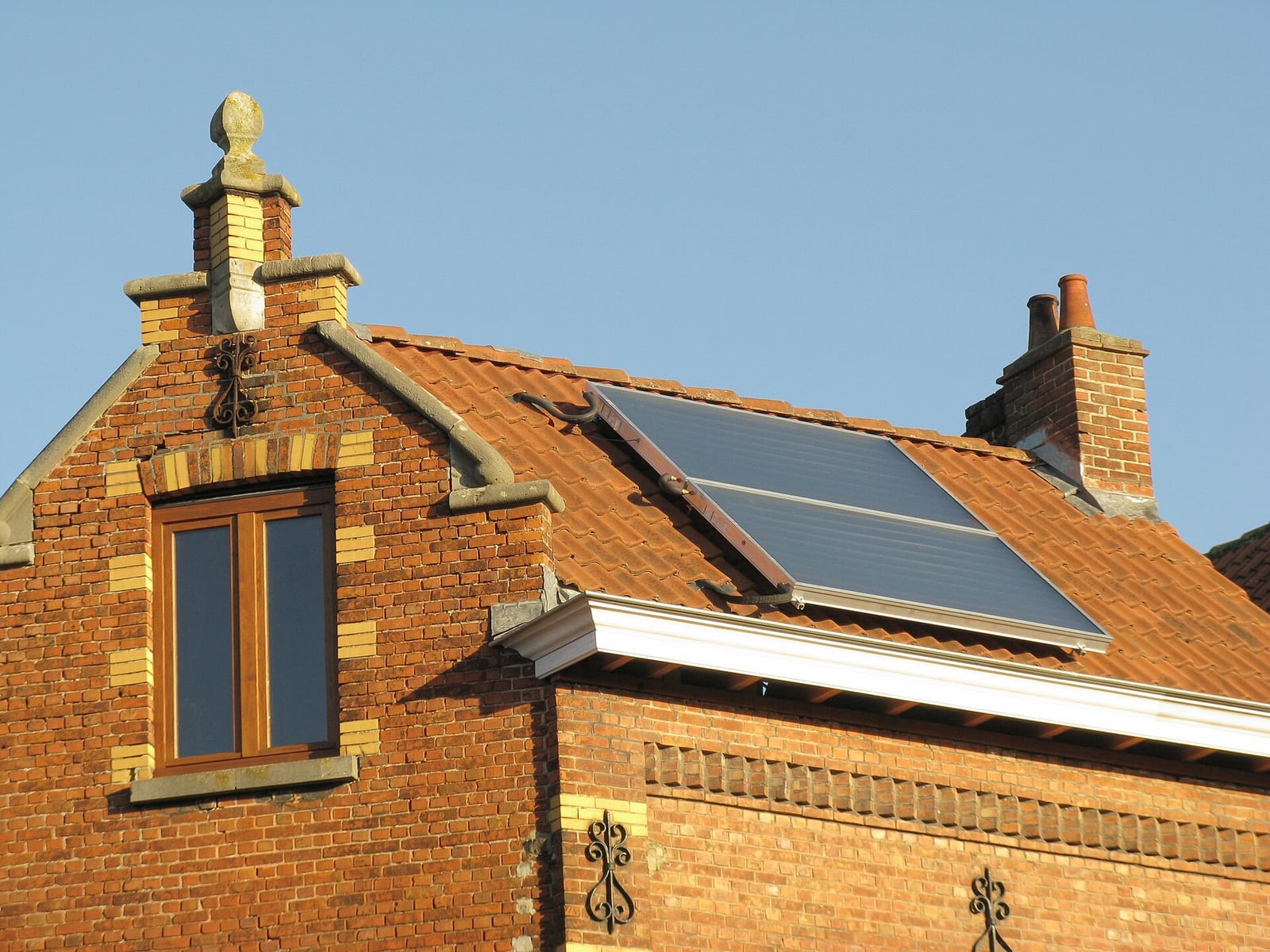

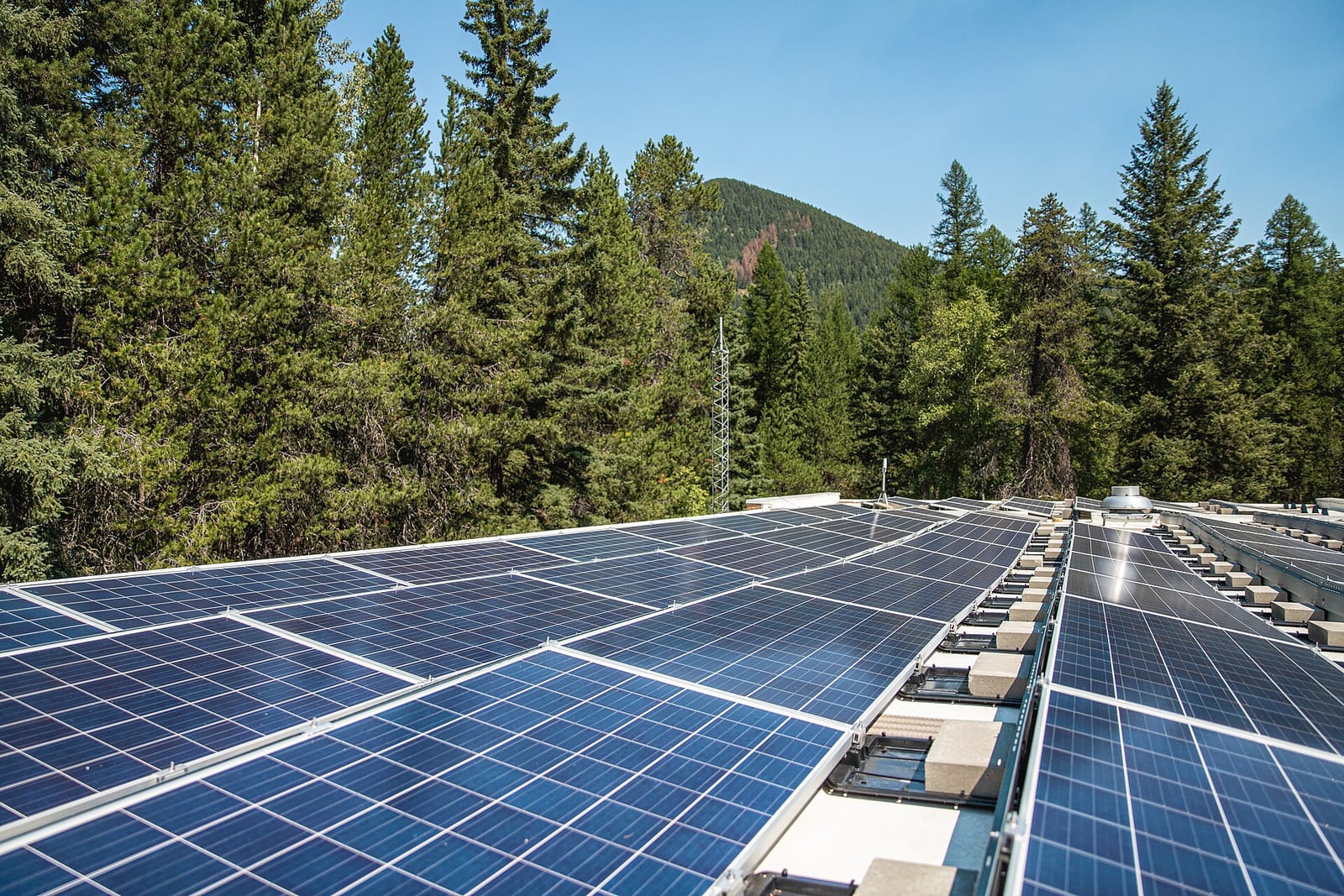
A typical residential solar panel sold in Australia in 2026 measures about 1.72 to 1.76 metres long and 1.13 metres wide (roughly 2 square metres), weighs 20 to 24 kg and produces 440 to 485 W, according to current manufacturer datasheets. A 6.6 kW system needs 14 to 15 of these panels and about 28 to 29 square metres of unshaded roof, as at November 2026.
Key facts
- A mainstream residential solar panel in Australia in 2026 is about 1722 to 1762 mm long, 1134 mm wide and 30 mm thick, according to Jinko, Trina, LONGi and AIKO datasheets.
- The REC Alpha Pure-RX is wider than most at 1728 x 1205 mm (2.08 square metres), according to REC’s Australian datasheet dated August 2024.
- Residential panels on the datasheets we checked weigh 20.6 kg (AIKO Neostar) to 24.4 kg (Jinko Tiger Neo 3.0, dual glass), so a 21-panel, 10 kW array adds roughly 430 to 510 kg of panels before racking.
- Panel power has risen from 250 W for an older 60-cell Trina panel (1650 x 992 mm) to 440 to 485 W in a barely larger footprint, so the same roof area now holds roughly 50 to 60% more kW.
- Solar Cobber’s calculation puts current residential panels at 4.1 to 4.5 square metres of panel per kW, so 6.6 kW needs about 28 to 29 square metres, 10 kW about 42 to 45 and 13 kW about 54 to 59.
- Commercial-format panels such as the Trina Vertex N (2384 x 1303 mm, 38.3 kg, 685 to 695 W) are about 55% larger in area than a home panel.
How big is a solar panel in Australia?
A current Australian residential panel is a 54-cell or 108-half-cell module about 1.72 to 1.80 metres long and 1.13 metres wide. Thickness is 30 to 35 mm, with a few brands at 40 mm.
The table below lists current and recent residential models from manufacturer datasheets, read November 2026. Area is length times width (our calculation) unless the datasheet states it. Efficiency is the datasheet’s range across its power classes, so the highest figure belongs to the highest-wattage version.
| Model | Power range | Dimensions (mm) | Area (m2) | Weight | Efficiency |
|---|---|---|---|---|---|
| Jinko Tiger Neo N-type 54HL4 | 420 to 440 W | 1722 x 1134 x 30 | 1.95 | 22 kg | 21.51% to 22.53% |
| Jinko Tiger Neo 3.0 (48QL6) | 460 to 485 W | 1762 x 1134 x 30 | 2.00 | 24.4 kg | 23.02% to 24.27% |
| Trina Vertex S+ TSM-NEG9R.28 | 440 to 470 W | 1762 x 1134 x 30 | 2.00 | 21.0 kg | 22.0% to 23.5% |
| LONGi Hi-MO 6 Scientist | 440 to 450 W | 1722 x 1134 x 30 | 1.95 | 20.8 kg | up to 23.0% |
| AIKO Neostar 2P A-MAH54Mw | 450 to 485 W | 1757 x 1134 x 30 | 1.99 | 20.6 kg | 22.6% to 24.3% |
| REC Alpha Pure-RX | 440 to 470 W | 1728 x 1205 x 30 | 2.08 | 22.7 kg | 21.1% to 22.6% |
| Maxeon 7 | 445 W | 1787 x 1035 x 40 | 1.85 | 20.7 kg | 24.1% |
| Tindo Walara G4P | 440 W or 475 W | 1722 x 1133 x 35 or 1910 x 1133 x 35 | 1.95 or 2.16 | 21.0 kg or 23.5 kg | 22.6% (440 W) |
Sources: the Jinko, Trina, LONGi, AIKO and REC rows come from the manufacturer datasheets listed under Sources (Jinko and LONGi are older-generation dealer-hosted copies; the Jinko Tiger Neo 3.0 row is from our Jinko review). The Maxeon and Tindo rows come from our reviews of the Maxeon 7 and Tindo Walara.
How have solar panel sizes changed?
Panel footprints have grown only slightly while power has nearly doubled. An older Trina 60-cell panel (TSM-250 PC/PA05A) is 1650 x 992 x 40 mm, weighs 19.5 kg and makes 250 W at 15.3% efficiency, according to its datasheet hosted by Energy Matters. Current residential panels cover about 20 to 25% more area but make 75 to 95% more power.
The chart ranks panels by watts per square metre of panel area (Solar Cobber calculation: top power class divided by length times width).
Source: Manufacturer datasheets read November 2026; Solar Cobber calculation. Panel area is length times width from the datasheet (REC states 2.08 m2). Older Trina datasheet: Energy Matters copy.
View the data as a table
| Watts per m2 | |
|---|---|
| AIKO Neostar 485 W | 243 W |
| Maxeon 7 445 W | 241 W |
| Trina Vertex S+ 470 W | 235 W |
| LONGi Hi-MO 6 450 W | 230 W |
| REC Alpha Pure-RX 470 W | 226 W |
| Jinko Tiger Neo 440 W | 225 W |
| Trina Vertex N 695 W (commercial) | 224 W |
| Older Trina 250 W (60-cell) | 153 W |
Today’s best residential panels deliver about 240 W per square metre, against about 153 W for the older Trina 60-cell panel.
How much does a solar panel weigh?
A residential solar panel weighs 20 to 25 kg, and a commercial-format panel weighs 28 to 39 kg. Dual-glass panels (glass on both sides) are heavier than glass-and-backsheet panels of the same size.
Source: Manufacturer datasheets and Solar Cobber product reviews, November 2026.
View the data as a table
| Weight | |
|---|---|
| Trina Vertex N 685 to 695 W (large format) | 38.3 kg |
| Jinko 72HL4R 560 to 585 W (large format) | 28.5 kg |
| Jinko Tiger Neo 3.0 (dual glass) | 24.4 kg |
| REC Alpha Pure-RX | 22.7 kg |
| Jinko Tiger Neo 54HL4 | 22.0 kg |
| Trina Vertex S+ | 21.0 kg |
| Tindo Walara 440 W | 21.0 kg |
| LONGi Hi-MO 6 | 20.8 kg |
| Maxeon 7 | 20.7 kg |
| AIKO Neostar | 20.6 kg |
| Older Trina 250 W | 19.5 kg |
Most home panels sit between 20 and 25 kg, but the large-format Trina Vertex N weighs 38.3 kg per panel.
Weight matters for one practical reason: roofers and installers carry panels up ladders and across the roof, and older or lightweight roof structures may need checking. Ask the installer to confirm the structure, because panel weight alone does not tell you what your roof can carry. See our Jinko review for how the 24.4 kg dual-glass panel compares with lighter single-glass rivals.
What is the wattage of a solar panel?
Most new residential panels in Australia are rated 440 to 485 W, and Solar Choice describes residential panels as “commonly in the 440 to 475W range” (November 2026 price index). Premium back-contact models reach about 485 to 500 W in a standard-size body. Wattage is the panel’s power under standard test conditions; it is not the energy it produces. For the difference between kW and kWh, see kW vs kWh explained.
Panel hardware prices on the same Solar Choice page (hardware only, not installed, November 2026): Seraphim 440 W about A$80 to A$100 a panel, Jinko 440 to 475 W about A$95 to A$130, Aiko 470 to 475 W about A$125 to A$150, REC 400 to 410 W about A$250 to A$300 plus. For whole-system prices see solar panel cost in Australia.
How much roof space do solar panels need?
Current residential panels need about 4.1 to 4.5 square metres of panel area per kW, so 6.6 kW needs about 28 to 29 square metres, 10 kW about 42 to 45 and 13 kW about 54 to 59.
Solar Cobber calculation: panels needed is system size divided by panel watts, rounded to the nearest whole panel; area is panels times (length x width) from the datasheet; weight is panels times datasheet weight (panels only, no racking). Real roofs lose space to gaps, setbacks from the ridge and edges, vents and skylights, so an installer’s layout always comes first.
| System | Panel | Panels | Actual size | Panel area | Panel weight |
|---|---|---|---|---|---|
| 6.6 kW | Jinko 440 W | 15 | 6.60 kW | 29.3 m2 | 330 kg |
| 6.6 kW | Trina Vertex S+ 470 W | 14 | 6.58 kW | 28.0 m2 | 294 kg |
| 6.6 kW | AIKO Neostar 485 W | 14 | 6.79 kW | 27.9 m2 | 288 kg |
| 10 kW | Jinko 440 W | 23 | 10.12 kW | 44.9 m2 | 506 kg |
| 10 kW | Trina Vertex S+ 470 W | 21 | 9.87 kW | 42.0 m2 | 441 kg |
| 10 kW | AIKO Neostar 485 W | 21 | 10.19 kW | 41.8 m2 | 433 kg |
| 13 kW | Jinko 440 W | 30 | 13.20 kW | 58.6 m2 | 660 kg |
| 13 kW | Trina Vertex S+ 470 W | 28 | 13.16 kW | 55.9 m2 | 588 kg |
| 13 kW | AIKO Neostar 485 W | 27 | 13.10 kW | 53.8 m2 | 556 kg |
- 440 W panel
- 470 W panel
- 485 W panel
Source: Solar Cobber calculation from Jinko, Trina and AIKO datasheet power classes. Panel counts only; the 470 W row gives 9.87 kW at 21 panels.
View the data as a table
| 440 W panel | 470 W panel | 485 W panel | |
|---|---|---|---|
| 6.6 kW | 15 panels | 14 panels | 14 panels |
| 10 kW | 23 panels | 21 panels | 21 panels |
| 13 kW | 30 panels | 28 panels | 27 panels |
A 10 kW system takes 21 to 23 panels depending on wattage, and moving from 440 W to 485 W panels saves two panels on a 10 kW system.
Source: Manufacturer datasheets; Solar Cobber calculation. Area is length times width; REC uses its stated 2.08 m2.
View the data as a table
| m2 per kW | |
|---|---|
| Older Trina 250 W (60-cell) | 6.55 m2 |
| Trina Vertex N 695 W | 4.47 m2 |
| Jinko Tiger Neo 440 W | 4.44 m2 |
| REC Alpha Pure-RX 470 W | 4.43 m2 |
| Trina Vertex S+ 470 W | 4.25 m2 |
| AIKO Neostar 485 W | 4.11 m2 |
Roof area per kW has fallen from about 6.6 square metres for the older 250 W panel to about 4.1 to 4.4 for current models. For how many panels your household needs, see how many solar panels do I need and what size solar system do I need. Our 6.6 kW guide and 10 kW price guide cover price and output for those sizes, and the orientation of your roof is covered in solar panel angle and orientation in Australia.
Do bigger panels always mean more power?
No. A bigger panel makes more total watts, but efficiency decides how much power each square metre makes. Efficiency is the share of the sunlight hitting the panel that becomes electricity; our guide to solar panel efficiency covers it in detail.
The AIKO Neostar and the Trina Vertex S+ have nearly the same footprint (1757 or 1762 x 1134 mm), yet AIKO’s datasheet lists up to 485 W against Trina’s 470 W. The REC Alpha Pure-RX is 4% larger in area than the Trina (2.08 against 2.00 square metres) and rated the same 470 W. On a small or awkward roof, the better question is watts per square metre, not watts per panel. See our reviews of the AIKO Neostar, Trina Vertex S+, REC Alpha Pure-RX and LONGi Hi-MO X6, and our best solar panels in Australia roundup.
What size are commercial solar panels?
Large-format panels are about 2.3 to 2.4 metres long and 1.13 to 1.30 metres wide, weigh 28 to 39 kg and make 560 to 695 W. They are typically used on commercial roofs and ground-mount arrays, where two people and a lift or crane handle them.
| Model | Power | Dimensions (mm) | Area | Weight | Datasheet |
|---|---|---|---|---|---|
| Trina Vertex N TSM-NEG21C.20 | 685 to 695 W | 2384 x 1303 x 33 | 3.11 m2 | 38.3 kg | Trina Australia datasheet, version 2025 B |
| Jinko Tiger Neo 72HL4R | 560 to 585 W | 2335 x 1134 x 35 | 2.65 m2 | 28.5 kg | Jinko Australia CEC datasheet |
A 3.11 square metre Trina Vertex N is about 55% larger than a 2.00 square metre residential panel and about 14 to 18 kg heavier. Its watts per square metre (224 W) are no better than a good home panel. For business systems see commercial solar systems.
What size panel fits my roof?
Match the panel to the roof, not the other way round. Measure the usable area between obstacles, then ask the installer for a panel layout of two options: a standard 1134 mm wide panel and a wider one such as the REC at 1205 mm. A few centimetres of width can decide whether a row holds three panels or two.
- Measure the unshaded roof faces (north, east and west in most of Australia) in metres, noting vents, skylights, chimneys and edge setbacks.
- Ask for the layout in portrait and landscape, with the panel model named.
- Check that the installer lists the exact model and wattage on the quote, so you can find its datasheet.
- Compare quotes by total kW and by price per watt, not by panel count. For help, see how to compare solar quotes and use our installer directory.
FAQ
How big is a standard solar panel in Australia?
A standard residential solar panel in Australia is about 1.72 to 1.76 metres long, 1.13 metres wide and 30 mm thick. That is roughly 2 square metres, and a few models are wider, such as the REC Alpha Pure-RX at 1.205 metres. These sizes come from current Jinko, Trina, LONGi, AIKO and REC datasheets read in November 2026.
What are the dimensions of a 400 W solar panel?
A 400 W panel is typically around 1.7 to 1.8 metres by 1.0 to 1.1 metres, though exact size depends on the model. The REC Alpha Pure-R (400 to 430 W) measures 1730 x 1118 mm, according to our REC review. Most new panels sold in Australia in 2026 are 440 W or more.
How much does a solar panel weigh?
A residential solar panel weighs about 20 to 25 kg. The AIKO Neostar is 20.6 kg and the dual-glass Jinko Tiger Neo 3.0 is 24.4 kg. A large commercial format such as the Trina Vertex N weighs 38.3 kg.
How many solar panels fit on a 6.6 kW system?
A 6.6 kW system uses 14 or 15 panels with current 440 to 485 W panels. For example, 15 Jinko 440 W panels make exactly 6.6 kW, and 14 Trina Vertex S+ 470 W panels make 6.58 kW. That needs about 28 to 29 square metres of unshaded roof.
What is the wattage of a typical solar panel?
A typical new residential panel in Australia is 440 to 485 W. Solar Choice’s November 2026 price index describes the common range as 440 to 475 W. Older 60-cell panels were around 250 W.
How much roof space do I need for 10 kW of solar?
About 42 to 45 square metres of panel area for a 10 kW system, which is 21 to 23 panels. This is Solar Cobber’s calculation from datasheet dimensions, and real roofs need extra for gaps, edges and obstacles.
Are bigger solar panels better?
Not necessarily. A bigger panel makes more watts in total but is not more efficient, and large commercial panels give about the same watts per square metre as a good home panel. Efficiency and watts per square metre matter more on a small roof.
Do solar panels come in different sizes for houses and businesses?
Yes. Houses mostly use panels of about 2 square metres, while commercial and ground-mount projects often use panels of 2.65 to 3.11 square metres. The larger panels are heavier (28.5 to 38.3 kg in the datasheets above), so they suit installers with lifting equipment.
Sources
- Trina Solar, Vertex S+ TSM-NEG9R.28 datasheet (APAC English, 2025 D): www-cdn.trinasolar.com
- Trina Solar, Vertex N TSM-NEG21C.20 685 to 695 W Australian datasheet (2025 B): www-cdn.trinasolar.com
- Trina Solar, TSM-245 to 260 PC/PA05A datasheet (older 60-cell panel), copy hosted by Energy Matters: energymatters.com.au
- Jinko Solar, Tiger Neo N-type 54HL4 datasheet, copy hosted by SolarQuotes: solarquotes.com.au
- Jinko Solar, JKM560 to 585N 72HL4R Australian CEC datasheet: solarproof.com.au
- LONGi, Hi-MO 6 Scientist datasheet, copy hosted by SolarQuotes: solarquotes.com.au
- AIKO, Neostar 2P A-MAH54Mw datasheet (V4.1, October 2025): aikosolar.com
- REC Group, Alpha Pure-RX Australia datasheet (August 2024): recgroup.com
- Solar Choice, Solar Panel Price Index, November 2026: solarchoice.net.au
About this guide
This guide was written by the Solar Cobber editorial team from independent desk research checked in November 2026. Solar Cobber is a free directory that may earn referral or advertising fees from installers; commercial relationships never affect our content. Panel specifications change between datasheet versions, so confirm the exact model on your quote. This is general information, not financial or engineering advice. To report a correction, contact us.
Filed under Solar Basics
Back to blog