
BYD
Battery-Box Premium
Battery review
Our verdict
The BYD Battery-Box Premium is a proven, stackable battery that works with more inverter brands than most, which makes it the default partner for Fronius hybrid systems. Its warranty ends at a throughput cap for every type of use, so households that cycle hard every day may run out of cover before 10 years.
- Best for
- Homes pairing a battery with a Fronius GEN24 Plus or another listed hybrid inverter
- Look elsewhere if
- Heavy daily cyclers and VPP members wanting unlimited-cycle warranty cover
- Price guide
- About A$8,100 for an HVM 13.8 (13.8 kWh) after the federal battery discount, plus a compatible hybrid inverter and installation (SolarQuotes, May 2026)
- Warranty
- 10 years, with retained capacity of 70% or a minimum throughput of about 3 MWh per usable kWh, whichever comes first
Pros
- Compatible with hybrid inverters from Fronius, Sungrow, GoodWe, Kostal, Hoymiles and others, so you are not locked to one inverter brand
- Two module sizes: HVS for smaller homes (5.1 to 12.8 kWh) and HVM for larger ones (8.3 to 22.1 kWh), stackable in one tower
- High power relative to capacity, with 50 A continuous from an HVM tower
- Warranty is transferable to later owners, and modules added later get their own fresh warranty start date
Cons
- Warranty ends at a throughput cap for all uses: about 8.3 years if fully cycled once a day, sooner with a VPP or two cycles a day
- Operating range stops at -10 to 50 °C, and the warranty excludes damage from temperatures outside that range
- Backup speed and power depend on the inverter; SolarQuotes reports about 40 seconds of switchover with a Fronius GEN24
- Strict claim conditions: report a defect within 30 days and install within one month of the invoice date
- Current HVM and HVS CEC listings expire in December 2026 and January 2027, with newer BYD series (HVM+, HVB, HVE) now listed
Key specifications
| Usable capacity (HVS) | 5.12 to 12.8 kWh per tower (2 to 5 modules of 2.56 kWh) |
|---|---|
| Usable capacity (HVM) | 8.28 to 22.08 kWh per tower (3 to 8 modules of 2.76 kWh) |
| Parallel towers | Up to 3: 38.4 kWh (HVS) or 66.2 kWh (HVM) |
| Continuous output current | 25 A (HVS), 50 A (HVM); peak 50 A or 75 A for 3 s |
| Nominal voltage | 204.8 to 512 V (HVS), 153.6 to 409.6 V (HVM) |
| Round-trip efficiency | 96% (DC, battery only) |
| Operating temperature | -10 to 50 °C (power derates from -10 to 5 °C) |
| Ingress rating | IP55, indoor or outdoor, floor standing |
| Weight | 91 kg (HVS 5.1) to 291 to 319 kg (HVM 22.1) |
| Applications | On-grid, on-grid with backup, off-grid (inverter dependent) |
| CEC approved battery list | Yes (HVS BAT-489 to January 2027; HVM BAT-451 to December 2026) |
From the manufacturer's Australian datasheet. Check the exact model number on your quote.
The BYD Battery-Box Premium is a modular, high-voltage lithium iron phosphate (LFP) battery made by the Chinese battery and EV giant BYD. It comes in two versions that look the same but use different module sizes: the HVS (5.1 to 12.8 kWh per tower) and the HVM (8.3 to 22.1 kWh per tower). Australian installers most often quote it alongside a Fronius GEN24 Plus hybrid inverter, because Fronius does not make its own home battery, but it is also paired with Sungrow, GoodWe and other hybrids. That makes it a natural rival to the Sungrow SBR, the Sigenergy SigenStor and the Tesla Powerwall 3. This review is based on manufacturer documentation, warranty terms, published pricing and owner/installer feedback; Solar Cobber did not test the product and was not paid by the manufacturer. Below we explain which version suits which home, what it costs in October 2026, and the warranty clauses that deserve a careful read.
What it is and how it works
Each Battery-Box tower has a battery control unit (BCU) on top and a stack of modules below that plug into each other with BYD’s internal connectors, so no cabling is needed between modules. The tower sits on a floor stand. The current datasheets cover the second-generation control unit, called BCU 2.0.
The two versions:
- HVS uses 2.56 kWh modules at 102.4 V each, two to five per tower, for 5.12 to 12.8 kWh. It suits smaller homes or anyone wanting a compact first battery.
- HVM uses 2.76 kWh modules at 51.2 V each, three to eight per tower, for 8.28 to 22.08 kWh. It suits larger homes and higher evening loads.
Up to three identical towers can run in parallel, for 38.4 kWh (HVS) or 66.2 kWh (HVM). BYD’s compatibility list notes Fronius inverters cannot run three HVM 22.1 towers in parallel.
The Battery-Box has no inverter of its own. It connects to a hybrid inverter from BYD’s compatible inverter list, which also runs your solar panels and the backup circuit. The October 2026 list (V2.22) includes the Fronius Symo GEN24 Plus, Primo GEN24 Plus and Verto Plus, GoodWe ET, EH, BT, BH and EHB models, Kostal Plenticore, Sungrow SH-RS and SH-RT, and Hoymiles HYT-HV, among others. Each pairing has its own minimum and maximum module counts. For example, the single-phase Primo GEN24 Plus accepts only two or three HVS modules or four to seven HVM modules.
In market terms, the Battery-Box is a mid-priced, well-established option. BYD entered the Australian home battery market in 2017, and its main appeal is that it works with the inverter you prefer.
Specs that matter in Australia
Power. An HVS tower supplies 25 A continuous (50 A for 3 seconds) and an HVM tower 50 A continuous (75 A for 3 seconds). SolarQuotes estimates that works out to roughly 78% of usable capacity in kW for HVS and about 72% for HVM, so an HVM 11.0 can deliver about 7.9 kW. In practice, the inverter’s rating usually sets the ceiling for both everyday use and backup.
Backup behaviour. Backup depends entirely on the inverter. SolarQuotes reports that a Fronius GEN24 takes around 40 seconds to switch to backup, and Fronius says it can take up to 90 seconds. That is fine for lights and fridges but will reboot computers and modems unless they have their own UPS. Check whether your chosen inverter can also recharge the battery from solar during an outage.
Single or three phase. Because the Battery-Box works with both single-phase and three-phase hybrids (for example the Symo GEN24 Plus or Sungrow SH-RT), it can supply three-phase backup on three-phase homes when the inverter supports it. Read our guide to single vs three phase power if you are unsure which you have.
Heat and cold. The operating range is -10 to 50 °C, with power derating between -10 and 5 °C. SolarQuotes notes the 50 °C ceiling is lower than some rivals. The Australian warranty excludes defects caused by temperatures above 50 °C or below -10 °C, so avoid west-facing walls in full afternoon sun. The battery is rated IP55 and SolarQuotes recommends keeping it out of direct rain and sunshine.
Size and weight. Towers are 585 mm wide and 298 mm deep. Height and weight range from 762 mm and 91 kg (HVS 5.1) to 2,160 mm and up to 319 kg (HVM 22.1). A full HVM tower is taller than most doorways, so check the wall height in garages and under eaves.
Efficiency. BYD quotes 96% round-trip efficiency for the battery alone. SolarQuotes points out that inverter losses come on top, so a system figure in the low 90s is more realistic.
VPPs and export limits. Export limiting and VPP participation are handled by the inverter, so ask about your inverter’s VPP support rather than the battery’s.
Price in Australia
SolarQuotes’ May 2026 price list gives these approximate HVM prices after the federal battery discount, including GST and excluding installation and the inverter:
| HVM size | Usable capacity | Approx. price after federal discount, before inverter and installation |
|---|---|---|
| HVM 11.0 | 11.04 kWh | A$7,100 |
| HVM 13.8 | 13.80 kWh | A$8,100 |
| HVM 16.6 | 16.56 kWh | A$9,300 |
| HVM 19.3 | 19.32 kWh | A$10,600 |
| HVM 22.1 | 22.08 kWh | A$12,200 |
SolarQuotes did not list current HVS prices. On top of the battery, you need a compatible hybrid inverter and installation. SolarQuotes uses about A$3,000 for installation in its worked examples, and hybrid inverter prices vary widely by brand and size, so get the inverter priced as a separate line item.
The federal battery discount for May to December 2026 is 6.8 STCs per usable kWh for the first 14 kWh, 60% of that from 14 to 28 kWh and 15% from 28 to 50 kWh. At about A$37 per STC, an HVM 13.8 earns roughly A$3,500 and an HVM 22.1 roughly A$4,700. The factor drops to 5.7 on 1 January 2027. For a broader view of system costs, see how much a solar battery costs in Australia.
What raises the price: a premium inverter brand, three-phase inverters, switchboard upgrades, and protection such as bollards for a floor-standing tower in a garage.
Warranty: the fine print
The Australian warranty (V1.1) applies to HVS and HVM products bought and installed in Australia on or after 1 November 2024. It is given by Shenzhen BYD Electronics, with Alps Power Pty Ltd (Riverwood, NSW) as the authorised Australian service partner.
- Product warranty: 10 years from the sale date on the original invoice.
- Performance warranty: 70% of usable energy for 10 years or until the battery reaches its Minimum Throughput Energy, whichever comes first. The caps are 15.41 MWh (HVS 5.1), 38.53 MWh (HVS 12.8), 25.62 MWh (HVM 8.3), 42.69 MWh (HVM 13.8) and 68.31 MWh (HVM 22.1), roughly 3 MWh per usable kWh.
- No unlimited-cycle exception. Unlike Tesla and Sungrow, BYD applies the throughput cap to all uses. SolarQuotes calculates that a battery discharging its full capacity once a day would reach the cap in about 8.3 years, or about 5.5 years at 1.5 cycles a day. A VPP or a plan that charges overnight and again from solar uses it up faster.
- Inverter lock-in: the warranty does not apply with an inverter that is not on BYD’s compatible list.
- Tight deadlines: you must notify BYD or Alps Power within 30 days of becoming aware of a defect, and the battery must be installed within one month of the invoice date.
- Other exclusions: the battery not being operated for six months or more, temperatures outside -10 to 50 °C, and refusing BYD access to performance data over the internet after a claim.
- Transferable: subsequent owners with proof of ownership can claim.
- Added modules: modules bought later get a performance warranty from their own sale date.
- Remedy: BYD chooses between repair, replacement (which may use equivalent refurbished parts) or a pro-rata partial refund. It may charge inspection costs if no defect is found.
Australian Consumer Law guarantees apply on top of these terms.
What owners and installers report
Praise. SolarQuotes’ BYD battery page averages 4.9 out of 5 from 273 ratings. Installers ranked BYD second for Best Battery and Best Value in SolarQuotes’ 2023 Installers’ Choice Awards, third across support, value and premium categories in 2024, and third in 2025 when asked which battery brand they would use on their own homes. SolarQuotes calls it excellent quality, genuinely stackable and well supported, and says BYD gives good notice before discontinuing older models.
Complaints and caveats. We did not find a recurring pattern of Battery-Box hardware failures in Australian owner reviews or forums, and none of the sources we reviewed mentioned a product safety recall (we could not query the ACCC database directly). The common caveats installers and SolarQuotes raise are:
- Backup performance is only as good as the inverter, and the Fronius GEN24’s switchover delay surprises some owners.
- The 50 °C operating limit and IP55 rating need a shaded, sheltered location.
- The throughput-capped warranty is less generous than Sungrow’s for heavy daily use.
- Correct commissioning matters. BYD’s compatibility list specifies minimum firmware versions for both the battery and the inverter, so mismatched firmware can cause problems.
BYD has also added newer HVM+, HVB and HVE batteries to the Clean Energy Council list in 2025 and 2026, so some installers may quote those instead.
BYD Battery-Box Premium vs alternatives
| BYD Battery-Box Premium HVS/HVM | Sungrow SBR | Sigenergy SigenStor | Tesla Powerwall 3 | |
|---|---|---|---|---|
| Usable capacity per unit or stack | 5.1 to 12.8 kWh (HVS), 8.3 to 22.1 kWh (HVM) | 9.6 to 25.6 kWh | 5.2 to 46.8 kWh | 13.5 kWh |
| Inverter | Separate compatible hybrid (Fronius, Sungrow, GoodWe and others) | Separate Sungrow hybrid | Built-in hybrid controller, 3 to 30 kW | Built-in 10 kW hybrid |
| Three-phase backup | Yes, with a compatible three-phase inverter | Yes, with three-phase Sungrow hybrid | Yes, with three-phase controller | No (one phase only) |
| Retention and throughput | 70% at 10 years or about 3 MWh per kWh, all uses | 70% at 10 years; unlimited cycles for self-use and backup | 70% at 10 years or about 3 MWh per kWh, all uses | 70% at 10 years; unlimited cycles for self-use and backup |
| Ingress rating | IP55 | IP55 | IP66 | IP67 (wiring IP55) |
| Approx. price after federal discount, before installation (May 2026) | About A$8,100 for HVM 13.8, plus inverter | About A$8,100 for 12.8 kWh, plus inverter | About A$8,000 for 13 kWh | About A$10,000 with Gateway |
Choose BYD if you want a Fronius or other non-Sungrow hybrid inverter, or want the freedom to change inverter brand later. Choose the Sungrow SBR if you are happy with a Sungrow inverter and plan to cycle hard or join a VPP, because its warranty does not count cycles for normal home use. Choose a SigenStor or Powerwall 3 if you would rather have one integrated unit.
Questions to ask your installer
- Which inverter are you pairing it with, and is that exact model and module count on BYD’s current compatible inverter list?
- Are you quoting HVS or HVM, and why that version for my usage?
- How long will my home be without power when the grid fails, and which circuits are backed up?
- Will the battery and inverter be updated to at least the minimum firmware versions BYD lists?
- Where will the tower go, is it in shade, and does the location stay between -10 and 50 °C?
- Is the HVS or HVM still on the CEC approved list on my install date, or are you quoting a newer BYD series?
- If I join a VPP, how quickly will I use up the warranty throughput cap?
- What federal and state discounts are included, and how many STCs is that?
FAQ
What is the difference between BYD HVS and HVM?
HVS uses 2.56 kWh modules (5.1 to 12.8 kWh per tower). HVM uses 2.76 kWh modules (8.3 to 22.1 kWh per tower) and delivers more current. Choose based on how much storage you need.
Does a BYD battery work with a Fronius inverter?
Yes. The Fronius Symo GEN24 Plus, Primo GEN24 Plus and Verto Plus are on BYD’s compatible list, with set module ranges for each.
Can I add modules to a BYD Battery-Box later?
Yes, up to the tower maximum allowed for your inverter. Added modules get a warranty from their own invoice date.
How long does the BYD warranty last?
Ten years, or until the battery reaches its throughput cap of about 3 MWh per usable kWh, whichever comes first. Heavy daily cycling can end cover before 10 years.
Can a BYD Battery-Box be installed outside?
Yes, it is rated IP55 for indoor or outdoor use, but it should be shaded and sheltered because the warranty excludes temperatures above 50 °C.
Does the BYD battery work off-grid?
BYD lists off-grid as a supported application, but only with an inverter that supports it, so check with your installer.
Find an installer
Because the Battery-Box relies on the inverter for backup, monitoring and VPP features, choose an installer experienced with your inverter brand as well as with BYD. Search our installer directory for local companies, and use our guide on how to compare solar quotes to check each quote lists the exact inverter model, module count and discount applied.
Battery buying guides
Often quoted alongside
Sungrow
SBR
Sungrow
Sungrow SBR
The Sungrow SBR is one of the best-value modular batteries in Australia, with easy expansion in 3.2 kWh steps and a warranty that gives normal households unlimited cycles. The trade-off is that you must pair it with a Sungrow hybrid inverter, and Sungrow's app and phone support are weaker than the hardware.
Best for: Homes wanting a modular battery paired with a Sungrow hybrid inverter
Sigenergy
SigenStor
Sigenergy
Sigenergy SigenStor
SigenStor packs a hybrid inverter, battery and energy manager into one stack, with genuine three-phase options, IP66 weatherproofing and a very detailed app at a competitive price. The trade-offs are a young company with a 2025 recall on some single-phase controllers, mixed owner experiences with support, and a warranty that caps throughput for all uses.
Best for: Three-phase homes, or anyone wanting an all-in-one battery with room to add EV charging
 Battery
Tesla
Tesla Powerwall 3
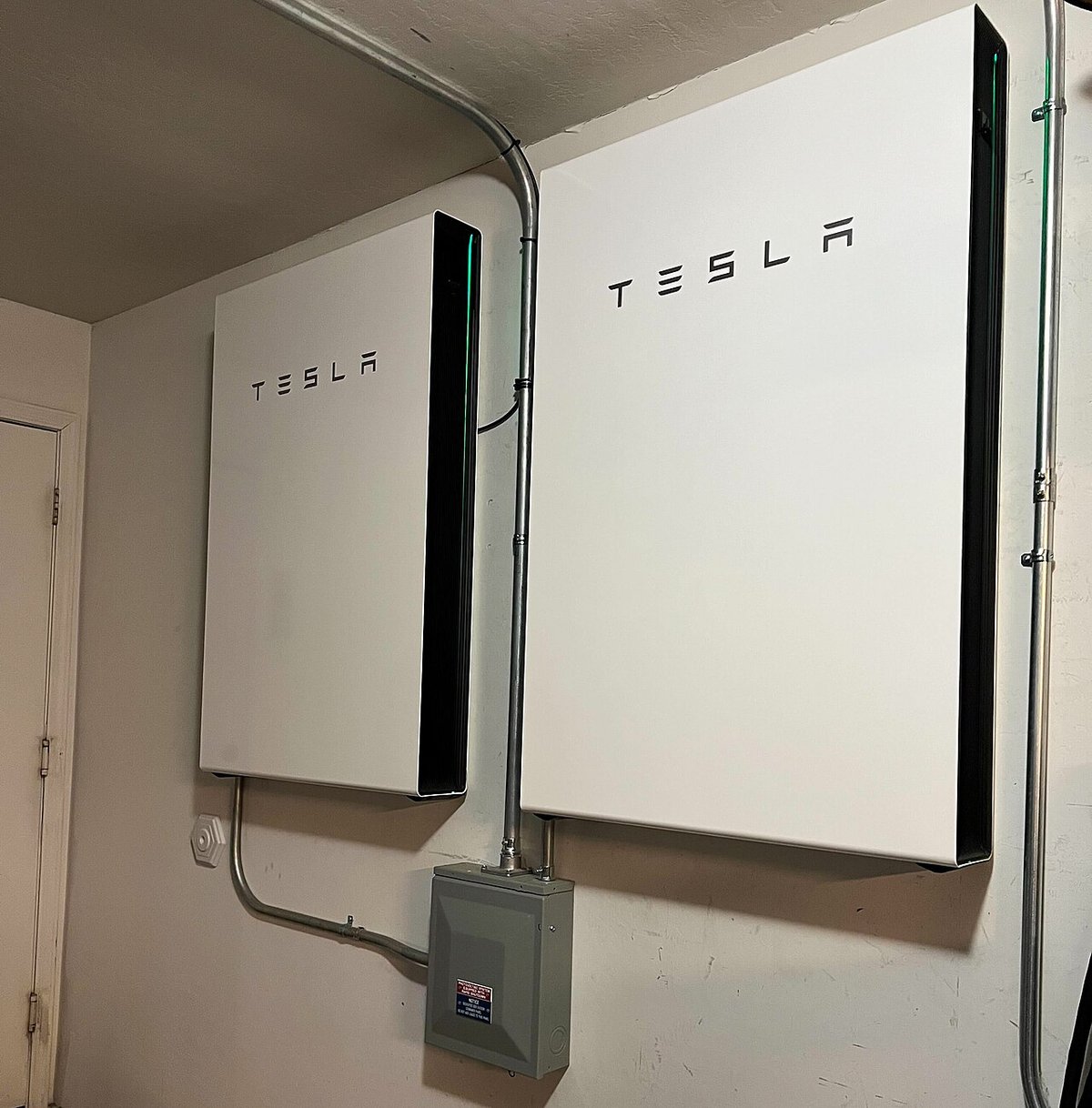
Powerwall 3 is the simplest way to get a big-name 13.5 kWh battery and a 10 kW solar inverter in one box, with strong backup power and a polished app. The trade-offs are a premium price, a 5 kW charging cap and single-phase design that suits three-phase homes poorly.
Best for: Single-phase homes installing new solar and a battery together
Sources
- BYD Battery-Box Premium HVM datasheet, BCU 2.0, EN (PDF)
- BYD Battery-Box Premium HVS datasheet, BCU 2.0, EN (PDF)
- BYD Battery-Box Premium HV Limited Warranty, Australia, V1.1 (PDF)
- BYD Battery-Box Premium HVS and HVM compatible inverter list V2.22, October 2026 (PDF)
- Clean Energy Council approved batteries list
- SolarQuotes: BYD battery review
- SolarQuotes: Solar battery prices and system costs in Australia (May 2026)
- Energy Matters: Cheaper Home Batteries Program changes from 1 May 2026
Independent desk research by the Solar Cobber editorial team. We did not test this product and were not paid by the manufacturer. Solar Cobber is a free directory that may earn referral or advertising fees from installers; this never affects our reviews.
Get quotes for BYD Battery-Box Premium
Browse rated solar installers in your area, check their Google reviews, and ask at least three for itemised quotes. Our guide to comparing solar quotes explains what to look for.
Find a solar installer