
Enphase
IQ8
Inverter review
Our verdict
The IQ8 is the strongest choice for shaded, multi-orientation or awkward roofs, with low-voltage DC on the roof and a 25-year microinverter warranty. You pay a clear premium over a good string inverter, and the warranty covers parts only, so on a simple sunny roof the extra money buys less than the brochure suggests.
- Best for
- Shaded or split roofs where panel-level output and low-voltage DC matter
- Look elsewhere if
- Simple unshaded north-facing roofs on a tight budget
- Price guide
- Microinverter hardware about A$2,500 to A$4,000 for a 6.6 kW system, versus about A$1,000 to A$2,000 for a string inverter (Feb to Apr 2026 market range)
- Warranty
- 25 years parts-only for IQ8 activated from 1 October 2024; IQ Gateway, IQ Relay and CTs 5 years; labour not covered
Pros
- Each panel has its own inverter, so shade, dirt or a failed panel only affects that one panel
- Low-voltage DC on the roof (no high-voltage DC string cabling running through the house)
- 25-year Australian warranty on the microinverters, which Enphase says is the longest standard residential inverter term in Australia
- Panel-by-panel monitoring makes faults easy to spot
- Easy to expand one panel at a time within circuit limits
Cons
- Clear price premium over a quality string inverter, which grows with system size
- Warranty is parts only; Enphase's installer labour reimbursement stops 10 years after activation
- No backup power without adding Enphase's IQ System Controller 3 INT and IQ Battery 5P
- Gateway, relay and CTs carry only 5 years, and local data access now needs an Enphase cloud token
- Batteries and add-ons push you towards Enphase's own ecosystem
Key specifications
| AU models (CEC listed) | IQ8AC, IQ8HC, IQ8X, IQ8P (IQ8MC in AC modules only) |
|---|---|
| Peak output (IQ8AC / IQ8HC) | 366 VA / 384 VA |
| Rated output (IQ8AC / IQ8HC) | 360 VA / 380 VA |
| Max input power (IQ8AC / IQ8HC) | 480 W / 505 W |
| Max DC input current | 14 A |
| MPP voltage range (IQ8HC) | 29.5 to 45 V |
| Max / EU weighted efficiency (IQ8HC) | 97.4% / 96.8% |
| Ambient operating temperature | -40 to 60°C |
| Ingress rating and cooling | IP67, natural convection (no fans) |
| Weight | 1.1 kg |
| Grid standard | AS/NZS 4777.2:2020 (with IQ Relay) |
From the manufacturer's Australian datasheet. Check the exact model number on your quote.
The Enphase IQ8 is a microinverter: a small inverter that bolts under each solar panel and turns that panel’s DC output into 230 V AC right on the roof. In Australia it is usually quoted on premium systems, on roofs split across several orientations, and on homes where trees, chimneys or a neighbour’s second storey shade part of the array for some of the day. Installers who sell it tend to pitch three things: panel-level output, low-voltage DC on the roof, and a 25-year warranty.
This review covers the IQ8 models actually listed for sale in Australia, what they cost compared with a string inverter, what the warranty really covers, and what owners report. It is based on manufacturer documentation, warranty terms, published pricing and owner and installer feedback; Solar Cobber did not test the product and was not paid by the manufacturer.
What it is and how it works
A conventional string inverter takes all your panels wired in series, often 300 to 500 V DC, and converts it in one box on the wall. Enphase splits the job up. Each panel gets its own IQ8, every microinverter feeds AC into a trunk cable (Enphase calls it IQ Cable), and that cable runs to your switchboard. An IQ Gateway near the board collects data from every microinverter over power-line communication and handles monitoring, export limiting and firmware updates. In Australia an IQ Relay is also required for grid protection, as the AS/NZS 4777.2:2020 compliance on the datasheet is stated “with IQ Relay”.
Enphase says the IQ8 is built around its own application-specific chip and can form a microgrid, which is what allows it to run during a blackout. In Australia, though, that only works as part of a full Enphase Energy System with an IQ System Controller 3 INT and an IQ Battery 5P. On its own, an IQ8 system shuts down when the grid goes down, just like a string inverter.
The Clean Energy Council’s approved inverter list (checked October 2026) includes these IQ8 variants:
| Model | Rated AC output | Typical use |
|---|---|---|
| IQ8AC-72-M-INT | 360 VA | Mainstream 54 to 72 cell panels |
| IQ8HC-72-M-INT | 380 VA | Higher-output 54 to 72 cell panels |
| IQ8X-80-M-INT | 380 VA | 80 and 96 cell panels |
| IQ8P-72-2-INT | 475 VA | Large-format panels, listed August 2025 |
| IQ8MC-72-M-ACM-INT | 325 VA | Factory-fitted AC modules only |
For most homes with today’s 400 to 475 W panels, the quote will name the IQ8HC or IQ8AC. If you want the side-by-side architecture explanation, our guide to string inverters vs microinverters covers it in more depth.
Specs that matter in Australia
Power rating and clipping. The IQ8HC is rated at 380 VA continuous (384 VA peak) and accepts up to 505 W of panel. Pair it with a 440 W panel and the panel will occasionally produce more than the microinverter can pass, mostly on cool, clear spring days. Enphase’s ANZ datasheet says there is no enforced DC to AC ratio but warns that pairing above the limit “may result in additional clipping losses”. In practice that loss is small, but it is worth asking how your installer sized the pairing.
Heat. The IQ8 sits in the hot, still air under a panel, not on a shaded wall. It has no fans, a Class II double-insulated polymer enclosure, an IP67 rating and an ambient range of -40 to 60°C. Enphase publishes a derating curve that reduces output at high internal temperatures; it does not state at what roof temperature that starts in typical Australian conditions, so treat summer-afternoon output with some caution on dark, poorly ventilated tin roofs.
Shade and orientation. This is the IQ8’s real strength. Because every panel runs its own maximum power point tracking (MPP range 29.5 to 45 V on the IQ8HC), a shaded or east-facing panel does not drag down the rest. On a roof with panels on three faces, a string inverter needs careful stringing across its two trackers; with microinverters you simply place panels where they fit.
Low-voltage DC. DC voltage on the roof never exceeds a single panel’s open-circuit voltage (the IQ8 accepts up to 60 V). There is no high-voltage DC cable running through your roof space and no DC isolator on the roof, which many buyers see as a fire-safety advantage.
Phases and circuit limits. IQ8 works on single-phase homes and, with multi-phase IQ Cable, spreads output evenly across three phases. The datasheet allows up to 10 IQ8HC (or 11 IQ8AC) on a single-phase 20 A branch circuit. Larger systems need more circuits, which adds switchboard work. Our explainer on single vs three phase solar covers why a three-phase home may get a larger export allowance.
Export limits and grid functions. Power export limiting, phase imbalance management and loss-of-phase detection are supported, but Enphase notes some of these need the IQ Gateway Metered with current transformers (CTs) and the IQ Relay installed. If your network caps exports at 5 kW per phase or less, make sure the quote includes the metered gateway and CTs.
Mixing generations. The ANZ datasheet states IQ8 cannot be mixed with IQ7 or IQ6 microinverters on the same IQ Gateway. Enphase has since announced software allowing IQ7 systems to be expanded with IQ8 in some markets, so if you are adding to an older Enphase system, ask your installer what applies to your site today.
Price in Australia
Microinverters cost more than a single string inverter because you are buying 15 or more small inverters instead of one. Published Australian ranges put the gap clearly:
- Why Solar’s February 2026 pricing guide puts microinverters at about A$2,500 to A$4,000 for a 6.6 kW system, against about A$1,000 to A$2,000 for a string inverter.
- Its April 2026 inverter cost guide puts individual Enphase microinverters at about A$150 to A$250 each.
- SolarQuotes, using installation data updated June 2026, says a quality 6.6 kW system generally costs A$5,500 to A$8,000 after the STC rebate. An Enphase system will usually sit in the upper part of that range or above it.
What drives the price: the number of panels (one microinverter each), the number of AC circuits needed, whether the quote includes the IQ Gateway Metered with CTs, the IQ Relay, and any switchboard upgrades. The premium scales with panel count, so it hurts more on a 13 kW system than on a 6.6 kW one.
Rebates: IQ8 microinverters do not attract a separate rebate. The federal STC discount applies to the whole solar system based on panel capacity, and Enphase’s datasheet reminds installers not to exceed the STC limit on panel wattage. Our guide to the STC solar rebate explains how that discount is calculated. If you add an IQ Battery 5P later, that battery is assessed under the Cheaper Home Batteries Program separately.
Warranty: the fine print
Enphase’s Australia and New Zealand limited warranty (LGL-00031, and later versions on the same terms for activation dates since) gives IQ8 microinverters 25 years from the activation date for systems activated on or after 1 October 2024. Units activated before that started on 15 years, and Enphase publishes a separate warranty document for each activation window, so check the one that matches your install date.
The parts that matter:
- Parts only. The warranty explicitly excludes labour for removing the faulty unit, fitting the replacement or troubleshooting your electrical system. Enphase repairs, replaces or (in limited cases) refunds the product.
- Labour reimbursement is separate and limited. Under Enphase’s ANZ labour reimbursement program (August 2025 version), an installer without a direct purchase agreement can claim A$200 per site visit plus A$25 per replaced microinverter. For microinverters, the replacement must happen within 10 years of activation, after Enphase has remotely diagnosed the fault and issued an RMA, and the claim must be lodged within six months. From year 11 to year 25, expect to pay an electrician’s call-out yourself.
- The rest of the system is shorter. The IQ Gateway Metered, IQ Relay and consumption CTs carry 5 years; the line filter carries 2 years.
- Internet connection. The warranty says products “should be continuously connected to the internet”, and the datasheet says the 25-year term is valid provided an internet-connected IQ Gateway is installed.
- Claims window and transfer. Claims must be made within 30 days of discovering a defect. A new owner must lodge a Change of Ownership form and pay a transfer fee to keep cover.
Your rights under the Australian Consumer Law sit on top of all this. Enphase’s local importer is Enphase Energy Aust. Pty Ltd in South Melbourne, so there is a local entity to claim against.
What owners and installers report
On SolarQuotes, Enphase holds a 4.8 out of 5 average from about 2,400 Australian owner reviews. The recurring praise is consistent: owners like seeing each panel’s output in the app, many report long fault-free runs, and owners with partial shade say the system keeps producing when one panel is shaded.
The complaint patterns are just as consistent:
- Price. Cost is the most frequent negative in owner reviews, with several owners noting they paid well above string-inverter quotes.
- App and gateway quirks. Some owners report the IQ Gateway dropping off Wi-Fi and needing a reboot. Finn Peacock, SolarQuotes’ founder, has praised the hardware but called the app poor.
- Closed ecosystem. Since IQ Gateway firmware 7, local access to your own data needs a token issued from Enphase’s cloud (Home Assistant’s documentation describes the one-year token). Owners who use home automation have found this frustrating, and SolarQuotes has criticised how hard Enphase makes it for other products to interface with its system.
- Warranty logistics. Where the original installer has gone out of business, owners describe having to find a new Enphase installer to do the swap, which is where the labour limits above start to bite.
Our searches of ACCC Product Safety Australia recall notices did not turn up an IQ8 microinverter recall at the time of writing.
Enphase IQ8 vs alternatives
| Enphase IQ8 | SolarEdge Home Hub | Fronius Primo | Sungrow SG-RS | |
|---|---|---|---|---|
| Architecture | Microinverter on every panel | Wall inverter plus optimiser on every panel | Single string inverter | Single string inverter |
| Panel-level MPPT | Yes | Yes (optimisers) | No | No |
| High-voltage DC on roof | No | Reduced on shutdown (SolarEdge claim) | Yes | Yes |
| Standard AU warranty | 25 yrs micros, parts only | 12 yrs inverter, 25 yrs optimisers | 10 yrs with online registration | 10 yrs (5 full, then 5 parts) |
| Indicative hardware cost | A$2,500 to A$4,000 for 6.6 kW of micros | A$3,000 to A$4,500 for a 5 kW Home Hub, plus optimisers | A$1,800 to A$2,500 (5 kW) | A$1,000 to A$1,500 (5 kW) |
| Battery path | AC-coupled Enphase IQ Battery 5P | DC-coupled SolarEdge battery | AC-coupled, any brand | AC-coupled, any brand |
Choose the IQ8 if your roof is shaded or split across several faces, you want no high-voltage DC in the roof, and you value a 25-year term enough to pay for it. Choose SolarEdge Home Hub if you also want panel-level optimisation but plan a DC-coupled battery, and accept a single wall inverter as the main failure point. Choose Fronius Primo or Sungrow SG-RS on a clean, unshaded roof where a well-designed string inverter delivers almost the same energy for much less money.
Questions to ask your installer
- Which IQ8 model are you quoting (IQ8AC, IQ8HC, IQ8X or IQ8P), and what is the panel-to-microinverter pairing ratio?
- Does the quote include the IQ Gateway Metered, consumption CTs and the IQ Relay, or are they extra?
- How many AC branch circuits will the system need, and is any switchboard work included?
- My network has an export limit; how will you configure export limiting on the gateway?
- If a microinverter fails after year 10, what will you charge for the call-out and swap?
- Are you an Enphase-trained installer, and how long have you been installing Enphase systems?
- If I want backup later, what exactly would I need to add, and roughly what would it cost?
- I already have older Enphase micros; can IQ8 be added to my existing gateway?
FAQ
Is the Enphase IQ8 approved for use in Australia?
Yes. The IQ8AC, IQ8HC, IQ8X, IQ8P and the AC-module IQ8MC variants were on the Clean Energy Council’s approved inverter list when we checked in October 2026. Listings carry expiry dates, so confirm the exact model is still listed before installation.
Does the IQ8 give me power during a blackout?
Not by itself. Enphase says the IQ8 can keep running during an outage only when installed with an IQ System Controller 3 INT and IQ Battery 5P. Without those, it shuts down when the grid fails.
Is the 25-year warranty really 25 years?
The microinverter parts cover is 25 years for units activated from 1 October 2024. Labour is excluded, the installer reimbursement scheme only applies within 10 years, and the gateway, relay and CTs carry 5 years.
Are microinverters worth it on a simple north-facing roof?
Often not on cost alone. On an unshaded single-orientation roof, a quality string inverter captures nearly the same energy for much less. The case for the IQ8 there rests on low-voltage DC, panel monitoring and the longer warranty.
Can I pair IQ8 with any brand of solar panel?
Generally yes, provided the panel’s voltage and current fit the microinverter limits. Enphase provides a module compatibility calculator for installers, and the IQ8 accepts up to 14 A DC input, which suits most current high-current panels.
Do I need internet for an Enphase system?
The system produces power without it, but Enphase’s warranty expects the gateway to stay connected, and monitoring and firmware updates depend on it.
Find an installer
Enphase is a system you want installed by someone who does it often, because circuit design, gateway setup and future warranty swaps all depend on the installer. Use our installer directory to find Enphase-experienced companies near you, and read our guide on how to compare solar quotes before you sign.
Inverter buying guides
Often quoted alongside
SolarEdge
Home Hub
SolarEdge
SolarEdge Home Hub
SolarEdge gives you panel-level optimisation and monitoring for less than a full microinverter system, plus a clean upgrade path to a DC-coupled SolarEdge battery and backup. The trade-off is a single wall inverter that owners in hot climates report failing more often than they would like, and a support record that only improved after 2023.
Best for: Shaded or multi-face roofs where you want panel monitoring and a SolarEdge battery later
 Inverter
Fronius
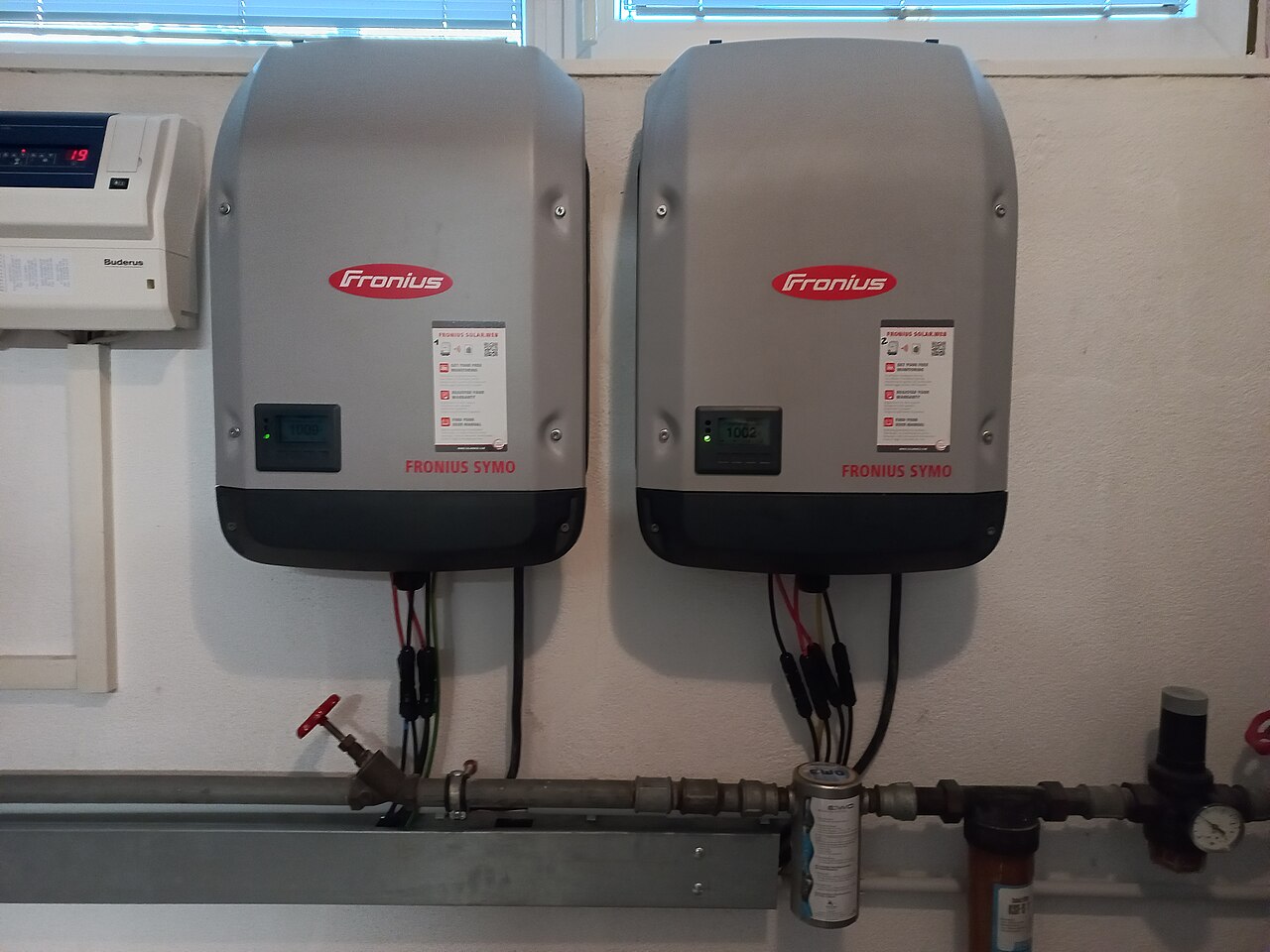
Fronius Primo
The Primo GEN24 is a well-supported, quiet single-phase string inverter with a strong Australian service record and a cheap path to adding a battery later. You pay a clear premium over Sungrow for that, and the free 10-year warranty depends on registration and promotion terms you should confirm in writing.
Best for: Single-phase homes wanting a premium European string inverter with an upgrade path to a battery
Sungrow
SG RS
Sungrow
Sungrow SG RS
The Sungrow SG RS is the value benchmark for single-phase string inverters, with generous tracker current, fan-less cooling and a 10-year standard warranty at a price well below Fronius. The trade-off is a more uneven support experience, a one-year warranty on the Wi-Fi dongle and meter, and no battery port.
Best for: Single-phase homes wanting a capable, well-warranted solar-only inverter at a mid-market price
Sources
- Enphase IQ8 Series Microinverters ANZ data sheet, October 2024 (PDF)
- Enphase Limited Warranty, Australia and New Zealand, LGL-00031 (PDF)
- Enphase Australia warranty documents index
- Enphase labor reimbursement for warranty service, ANZ (PDF)
- Clean Energy Council approved inverter list
- Enphase: IQ8 Series microinverters, latest information for installers (AU)
- pv magazine Australia: Enphase launch comes with series-wide 25-year warranty
- SolarQuotes: Enphase beefs up Australian IQ8 microinverter warranty
- SolarQuotes: Enphase inverter owner reviews
- Why Solar: 6.6kW solar system price in Australia (Feb 2026)
- Why Solar: Solar inverter cost in Australia (Apr 2026)
- Home Assistant: Enphase Envoy integration (token requirement for firmware 7+)
Independent desk research by the Solar Cobber editorial team. We did not test this product and were not paid by the manufacturer. Solar Cobber is a free directory that may earn referral or advertising fees from installers; this never affects our reviews.
Get quotes for Enphase IQ8
Browse rated solar installers in your area, check their Google reviews, and ask at least three for itemised quotes. Our guide to comparing solar quotes explains what to look for.
Find a solar installer