
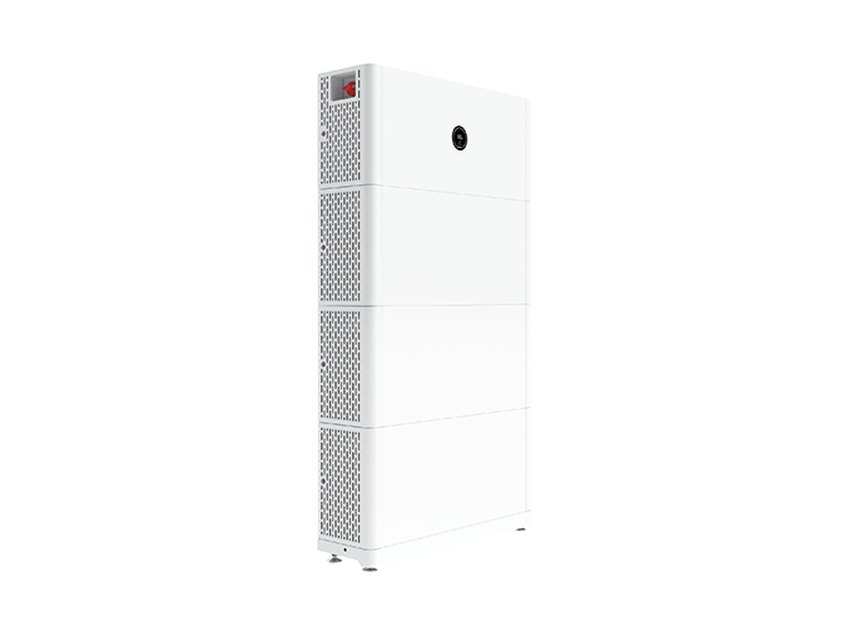
Our verdict
The Growatt APX HV is a slim, outdoor-rated and genuinely cheap way to add 10 to 30 kWh to a Growatt hybrid system, and the Australian versions are rebate listed at their full nameplate capacity. The catch is the warranty: capacity is only guaranteed at 70% for five years and 50% after that, with a yearly cycle allowance that heavy users can exceed.
- Best for
- Budget buyers with a Growatt MIN, MOD or MID hybrid who cycle the battery moderately
- Look elsewhere if
- Homes that will cycle hard every day, or buyers who want a 70% ten-year capacity guarantee
- Price guide
- About A$7,500 to A$8,500 installed for 10 kWh, up to A$15,500 to A$18,000 for 30 kWh, before the federal battery discount (one installer's published table, Oct 2026)
- Warranty
- 10 years, but retained capacity is guaranteed at only 70% for years 1 to 5 and 50% for years 6 to 10, with a 300 full cycles a year allowance; falls to 3 years if not kept on Growatt monitoring
Pros
05- Low installed price per kWh compared with most mainstream batteries
- 5 kWh modules stack from 5 to 30 kWh, and Growatt says old and new modules can be mixed
- Australian AU models are on the CEC list at 100% usable capacity, so the rebate is calculated on the full nameplate figure
- IP66 rated, only 185 mm deep, with a fuse and aerosol fire suppression in each module (Growatt claim)
- Single-phase (S0) and three-phase (S2) versions, with up to 15 kW charge and discharge on a full three-phase stack
Cons
05- Weak performance warranty: 70% for the first five years, then only 50%, and Growatt may buy the battery back pro rata in years 6 to 10
- Yearly allowance of 300 full cycles; a battery fully cycled every day can exceed it and lose its performance cover
- Warranty excludes outdoor installs without proper shelter and installs in direct sun, despite the IP66 rating
- Only works with Growatt XH and HU hybrids, and single-phase MIN systems need an extra Backup Box for blackout power
- Owners report inaccurate figures in the ShinePhone app and slow handover help from low-cost installers
Growatt is a Chinese inverter maker best known in Australia for cheap string inverters, and since the Cheaper Home Batteries Program began in July 2025 its batteries have become a regular sight on low-priced quotes. The battery you will most often be quoted now is the APX HV, a stack of 5 kWh high-voltage modules that pairs with a Growatt hybrid inverter. It is usually sold by volume installers competing on price per kWh.
Growatt also sells the low-voltage ALP battery for its SPH hybrids, and is rolling out a second-generation APX 2.0. The older ARK batteries that SolarQuotes reviewed in 2023 are no longer on Growatt’s Australian product list or the Clean Energy Council (CEC) battery list. This review focuses on the APX HV Battery AU. It is based on manufacturer documentation, the Australian warranty terms, published pricing and owner and installer feedback; Solar Cobber did not test the product and was not paid by the manufacturer.
What it is and how it works
The APX HV is a DC-coupled lithium iron phosphate (LFP) battery. Each stack has one power module (the controller) on a base, with one to six APX 5.0P-B1 battery modules of 5 kWh each, so a single stack runs from 5 to 30 kWh. Each module contains its own DC-DC converter, which Growatt calls a module-level energy optimiser. Growatt says this lets modules of different ages or states of charge work together, which matters if you want to add capacity years later.
There are two Australian versions, and the suffix on your quote tells you which:
- APX …P-S0 AU (single phase): uses the APX 55027-P0 power module and connects to a Growatt MIN-XH series hybrid inverter.
- APX …P-S2 AU (three phase): uses the APX 98034-P2 power module and connects to Growatt MOD-XH, MID-XH, MOD-HU or MID-HU hybrids.
The battery will not work with another brand’s inverter, so if you already have solar from a different maker, a Growatt quote normally replaces your inverter.
What about the other Growatt batteries? The ALP is a 51.2 V low-voltage battery (5 kWh modules, 5 to 50 kWh) for the SPH-HUB and SPA hybrids; its January 2026 datasheet lists a heating film and aerosol suppression. The APX 2.0 (APX 7.0-84.0M-S3) uses 7 kWh modules and a built-in heating film, and Growatt’s July 2026 MOD-HU datasheet already lists it as compatible. However, when we searched the CEC battery list on 14 October 2026 we could not find any APX M-S3 model, so check it is listed before you sign a quote that relies on the rebate.
In market terms Growatt sits in the value tier with Fox ESS, well below Tesla and Enphase on price.
Specs that matter in Australia
Power, not just capacity. On single-phase S0 stacks, continuous charge and discharge is 2.5 kW with one module, 5 kW with two and 6.2 kW from three modules upward, with a 10 kW peak for 60 seconds. A 30 kWh single-phase stack therefore still delivers about 6 kW at most, and the MIN-XH2 inverter caps charging at 6 kW. On three-phase S2 stacks, power scales at 2.5 kW per module to 15 kW, though the inverter sets the real limit (the MOD 5-15KTL3-HU lists 5 to 15 kW discharge depending on model).
Usable capacity. Growatt rates depth of discharge at 100%. The AU-suffix models are on the CEC list with usable capacity equal to nominal (10 kWh for the APX 10.0P-S0 AU), whereas the older non-AU APX listings show 90% (9 kWh for a 10 kWh stack). In practice owners on Whirlpool and SolarQuotes say the battery stops at a 10% minimum by default, so plan on using about 90% day to day.
Heat and placement. The datasheet allows -10°C to 50°C ambient and the enclosure is IP66 with natural cooling. The warranty is stricter than the datasheet, though: it excludes “outdoor installation or outdoor usage without proper shelter” and “installation under the direct sun light”. Treat a shaded, roofed wall as mandatory, not optional. One Whirlpool owner with an externally mounted south-facing install reported battery temperatures up to 45°C during a heatwave without derating.
Cold climates. The current AU datasheet does not mention cell heating, and Growatt markets a heating film as a new feature of APX 2.0. If you live somewhere with frosty winter mornings, ask your installer how charging behaves near the -10°C limit.
Backup. The three-phase MOD-HU has a built-in backup output. The single-phase MIN-XH2 datasheet says backup “need[s] a Backup Box accessory”, and SolarQuotes warns that not every Growatt setup includes backup. Confirm in writing whether a Backup Box is in the price.
Phase and export. Most Australian homes are single phase and will get the S0 version with a MIN-XH inverter of 2.5 to 6 kW. Three-phase homes can use larger MOD and MID hybrids. Check your meter box if you are unsure which supply you have.
VPPs. Growatt says its batteries work with Evergen, the retailer for the NSW VPP incentive, and that Western Australian certification was in progress in 2025. Amber’s SmartShift compatibility list did not include Growatt when we checked in October 2026. Confirm the VPP offer with the retailer before you count on that income.
Price in Australia
Growatt does not publish retail prices and we found no independent price survey for the APX HV. One installer, Austar Solar, published this installed price table in October 2026, before rebates, and notes that the inverter cost varies depending on whether you already have a compatible Growatt inverter:
| Model | Installed, before rebate | Approx. federal discount |
|---|---|---|
| APX HV 10.0 (10 kWh) | A$7,500 to A$8,500 | A$2,520 |
| APX HV 15.0 (15 kWh) | A$9,000 to A$10,500 | A$3,670 |
| APX HV 20.0 (20 kWh) | A$10,500 to A$12,500 | A$4,430 |
| APX HV 25.0 (25 kWh) | A$12,500 to A$15,000 | A$5,180 |
| APX HV 30.0 (30 kWh) | A$15,500 to A$18,000 | A$5,710 |
The discount column is our estimate using the Clean Energy Regulator’s May to December 2026 settings: 6.8 STCs per usable kWh for the first 14 kWh, 60% of that from 14 to 28 kWh and 15% from 28 to 50 kWh, at about A$37 per certificate. The actual value depends on the certificate price your installer gets. SolarQuotes lists lower “approximate prices” of A$6,500 to A$13,000 for the 10 to 30 kWh models; its comparison table describes its estimates as hardware only, including GST and the federal rebate, so they are not directly comparable.
Whirlpool owners have posted much lower all-in deals, such as a 20 kWh APX with a 5 kW three-phase hybrid, Backup Box and 6.6 kW of solar for A$10,461 after rebates in May 2025. Those quotes predate the 1 May 2026 rebate cut, so do not expect them now. Our guides to what a battery costs and the battery rebate cover state top-ups.
Warranty: the fine print
The Australian warranty card covers the APX 5.0 to 30.0P-S0 AU and S2 AU models and is issued by Growatt New Energy Technology Co., Ltd, with Growatt New Energy Australia Pty Ltd in Sydney as the local contact. This is the weakest part of the product.
- Term: 10 years from purchase, but no more than 10 years and 3 months from Growatt’s delivery date, and the battery must be installed within six months of delivery. It is non-transferable.
- Capacity: at least 70% of nominal energy for the first 5 years, then only 50% for the next 5 years. Most rivals guarantee 70% at year 10.
- Cycle allowance: discharge must not exceed 300 times nominal energy per year, which the card sets at 1,350 kWh per 5 kWh module. Above that, the warranted capacity is reduced by a sliding formula, and if the cumulative reduction passes 30% the performance warranty is void. By our reading, a stack fully cycled every day would exceed the allowance by about 22% a year at 90% usable, and could pass the 30% void point in its second year. Ask Growatt or your installer to confirm how they apply it.
- Monitoring: the system must stay connected to Growatt’s monitoring platform or the warranty drops to 3 years.
- Years 6 to 10: Growatt may choose to buy the battery back at a pro rata price, or offer a newer battery at a price you pay, and does not cover logistics or labour in that period.
- Exclusions: outdoor use without shelter, direct sun, use with non-Growatt inverters, and mixing different battery module types.
- Claims: report to your supplier within 14 days of signs of a problem and lodge the claim form within one month of failure. The card names Chinese law and a Shenzhen jurisdiction, but also states that Australian Consumer Law guarantees apply.
Check the inverter separately. Growatt’s AU datasheets for the MIN-XH2 and MOD-HU list a 10-year warranty, but its Australian service commitment table lists 5 years for solar and SPH storage inverters. Get the term for your exact inverter in writing.
What owners and installers report
On SolarQuotes, Growatt batteries have 111 owner reviews averaging about 4.6 out of 5 (89 five-star and 4 one-star) at the time of writing. Owners praise the slim 185 mm depth, the price and having power during blackouts. SolarQuotes founder Finn Peacock is less positive: he writes that “some owners love them, many installers hate them”, lists the warranty as “the worst I’ve read to date” (his review discusses Growatt’s older ARK terms) and says he would pay more for a Sungrow.
Recurring patterns in owner comments:
- App accuracy. Several owners on Whirlpool describe the ShinePhone app misreporting solar production, load and charge totals, especially with the battery at 10% or 100%. A September 2026 app update fixed some of this, according to one owner.
- Handover and installer support. Owners report waiting weeks for monitoring access after low-cost installs, and in one case Growatt Australia sorted it out directly within days.
- Confusing quotes. Owners note that adverts often just say “Growatt battery”, although the ALP and APX are different systems, and backup hardware may not be included.
We found no ACCC or CEC recall for a Growatt battery. Growatt’s past Australian recall was for the 8000MTL-S solar inverter.
Growatt APX HV vs alternatives
| Growatt APX HV | Fox ESS EQ4800 | Sungrow SBR | GoodWe Lynx F G2 | |
|---|---|---|---|---|
| Module size | 5 kWh | 4.66 kWh | 3.2 kWh | 3.2 kWh |
| Capacity range (one stack) | 5 to 30 kWh | 9.32 to 41.93 kWh | 6.4 to 25.6 kWh | 6.4 to 28.8 kWh |
| Ingress rating | IP66 | IP65 | IP55 | IP55 |
| Capacity guarantee | 70% to year 5, 50% to year 10 | 70% at 10 years | 70% at 10 years | 70% at 10 years |
| Usage limit | About 300 full cycles a year | Throughput cap, about 4,200 cycles | Unlimited for self-consumption and backup | Throughput cap (46.72 MWh for 12.8 kWh) |
| Inverter lock-in | Growatt XH or HU hybrid | Fox ESS hybrid | Sungrow hybrid | GoodWe hybrid or battery inverter |
Choose the Growatt APX HV if you want the lowest upfront cost, already own a compatible Growatt inverter, and will use the battery moderately. The Fox ESS EQ4800 is similarly priced with a cleaner 70% ten-year guarantee. The Sungrow SBR and GoodWe Lynx F G2 cost more but come with stronger warranties and longer Australian track records.
Questions to ask your installer
- Is this the APX S0 AU or S2 AU model, and is the exact configuration on the CEC list today?
- Which Growatt inverter is included, and what warranty term applies to it in Australia?
- Is a Backup Box included, which circuits are backed up, and how many kW can I run in a blackout?
- Is the price before or after the Cheaper Home Batteries discount, and how many STCs are you claiming?
- Where will the battery go, and is that spot sheltered from rain and direct sun as the warranty requires?
- Will you register the system and give me owner access to Growatt monitoring at handover?
- How many full cycles a year do you expect for my usage, and how does that fit Growatt’s 300-cycle allowance?
- If you are quoting the APX 2.0, can you show me its CEC listing?
FAQ
Is Growatt a good battery brand?
It is a large manufacturer offering cheap, well-specified hardware, and owner ratings are good. The weak points are a warranty that guarantees only 50% capacity after five years and an installer base skewed towards budget operators.
What is the difference between Growatt APX and ALP batteries?
The APX is a high-voltage battery for Growatt’s MIN, MOD and MID hybrids. The ALP is a 51.2 V low-voltage battery for the SPH and SPA hybrids. They are not interchangeable.
Does the Growatt APX get the federal battery rebate?
Yes, the AU-suffix APX models are on the CEC approved list until 31 December 2027, which is what the rebate requires. We could not find the newer APX 2.0 on the list in October 2026.
Can I install a Growatt battery outside?
It is IP66 rated, but the warranty excludes outdoor installs without proper shelter and installs in direct sun. Put it under a roof or eave in a shaded spot.
How long does the Growatt battery warranty last?
Ten years, with capacity guaranteed at 70% for five years and 50% for the next five, provided you stay within about 300 full cycles a year and keep the system online. Without monitoring it falls to three years.
Can I add more Growatt modules later?
Yes, up to six per stack, and Growatt says new and old modules can be mixed thanks to the module-level optimiser. Confirm the module type is the same, since mixing different module types is excluded from the warranty.
Find an installer
With a budget brand, the installer makes the difference between a tidy, supported system and months of chasing monitoring access. Browse our installer directory to compare accredited installers near you, and ask each one to list the battery model suffix, inverter, Backup Box and rebate amount line by line.
Read next
Battery buying guides
Often quoted alongside
Fox ESS
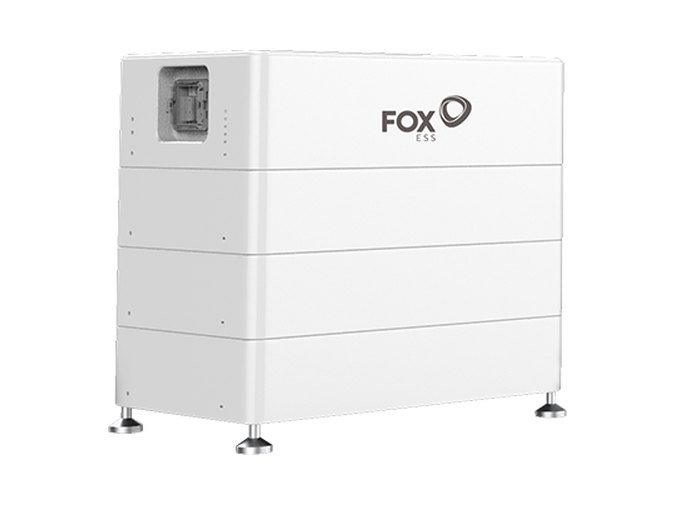
Fox ESS EQ4800
The Fox ESS EQ4800 delivers a lot of storage for the money and has become one of the most installed batteries in Australia since the federal rebate began. The trade-offs are a support track record still catching up with sales, no cell heating for cold-climate charging, and owner reports of real capacity falling short on the biggest stacks.
Best for
Budget-focused homes wanting 9 to 28 kWh of storage on a Fox ESS hybrid inverter
Sungrow
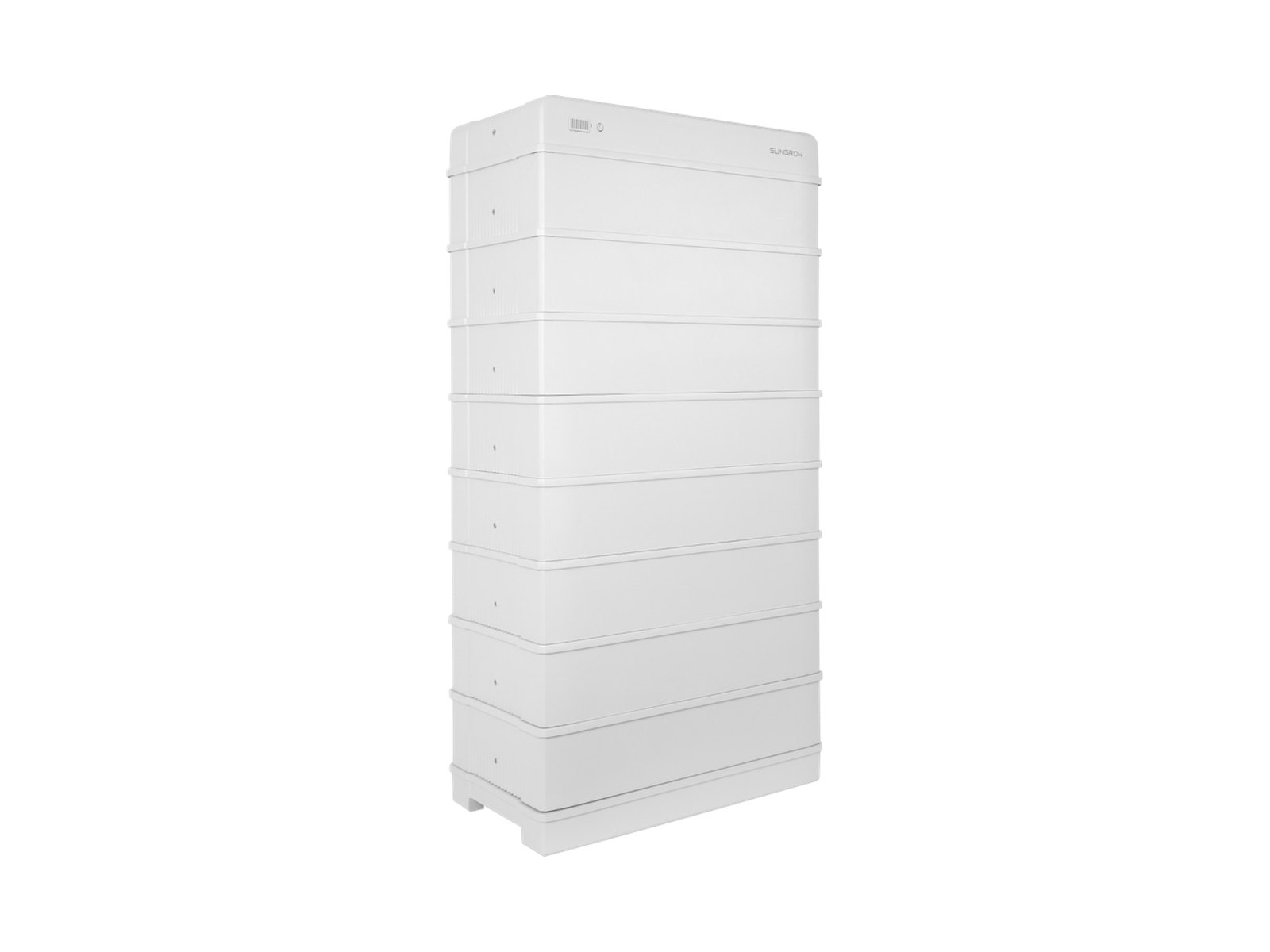
Sungrow SBR
The Sungrow SBR is one of the best-value modular batteries in Australia, with easy expansion in 3.2 kWh steps and a warranty that gives normal households unlimited cycles. The trade-off is that you must pair it with a Sungrow hybrid inverter, and Sungrow's app and phone support are weaker than the hardware.
Best for
Homes wanting a modular battery paired with a Sungrow hybrid inverter
GoodWe
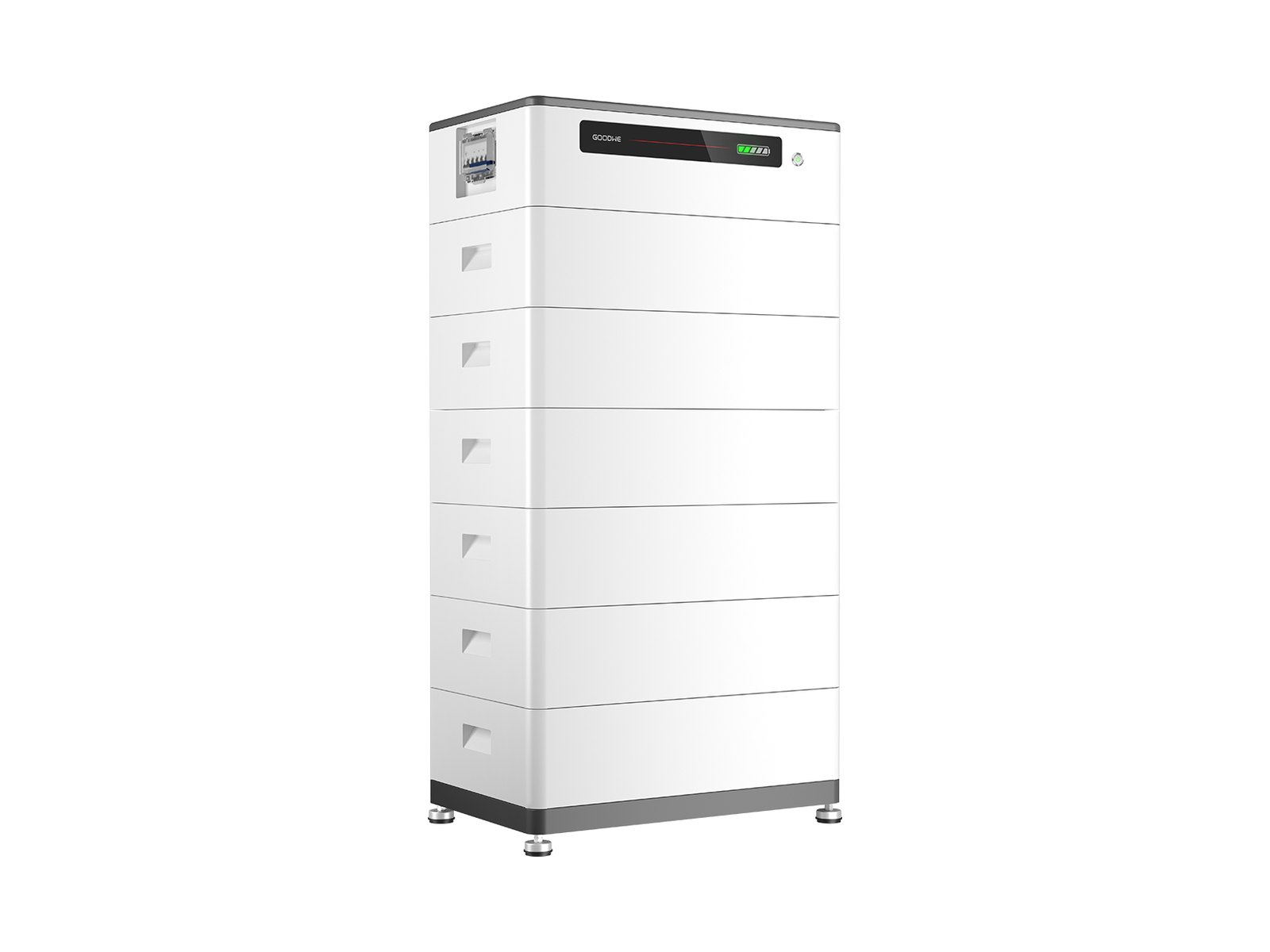
GoodWe Lynx Home F
The GoodWe Lynx F is a sensible, well-priced modular battery with strong owner ratings, and the current G2 version stretches to 28.8 kWh on one tower. The catch is a warranty with more conditions than most, including a GoodWe-inverter requirement, a mandatory internet connection and a one-year window to add modules.
Best for
Homes wanting a mid-priced modular battery with a GoodWe hybrid or retrofit inverter
Sources
Independent desk research by the Solar Cobber editorial team. We did not test this product and were not paid by the manufacturer. Solar Cobber is a free directory that may earn referral or advertising fees from installers; this never affects our reviews.
- 01Growatt Australia: APX HV Battery AU product page and downloads
- 02Growatt APX HV Battery-S0 AU datasheet (March 2026, PDF)
- 03Growatt APX HV Battery-S2 AU datasheet (March 2026, PDF)
- 04Growatt Battery Warranty Card, APX HV Battery AU, 10 years (PDF)
- 05Growatt APX 7.0-84.0M-S3 AU user manual (August 2026, PDF)
- 06Growatt MIN 2500-6000TL-XH2 datasheet (PDF)
- 07Growatt MOD 5-15KTL3-HU AU datasheet (July 2026, PDF)
- 08Growatt ALP LV battery ALP 5.0L-E2 AU datasheet (January 2026, PDF)
- 09Growatt Australia warranty and service commitment page
- 10Growatt Australia Helpdesk: battery and hybrid inverter eligibility for rebates and VPPs
- 11Clean Energy Council approved batteries list
- 12Clean Energy Regulator: solar batteries STC factor and size tiers
- 13SolarQuotes: Growatt battery review and owner reviews
- 14Whirlpool Forums: Growatt Batteries thread (May 2025 to September 2026)
- 15Austar Solar: Growatt battery review with installed price table (October 2026)
- 16Clean Energy Council: product recalls
Get quotes for Growatt APX HV
Browse rated solar installers in your area, check their Google reviews, and ask at least three for itemised quotes. Our guide to comparing solar quotes explains what to look for.