
Our verdict
The SUN2000 L1 and M1 were well-liked, efficient hybrid-ready inverters, and owners still rate them highly. But Huawei stopped selling them in Australia in early 2024 and no Huawei inverter is on the Clean Energy Council approved list, so do not accept one on a new quote; if you already own one, plan around the end-2026 battery expansion cut-off.
- Best for
- Existing owners checking warranty, support and battery expansion options
- Look elsewhere if
- Anyone buying a new solar system in 2026
- Price guide
- Not published (no longer sold new in Australia under the Huawei brand since early 2024)
- Warranty
- 10 years on SUN2000 inverters, 25 years on SUN2000-450W-P optimisers, 2 years on dongle, power sensor and Backup Box (Huawei AU terms)
Pros
- High conversion efficiency (up to 98.4% on the L1 and 98.6% on the 6 kW M1)
- Hybrid-ready: a LUNA2000 battery connects directly without replacing the inverter
- FusionSolar app is well regarded by owners
- Huawei's AU terms commit to shipping replacement inverters within 2 business days of a confirmed fault
- Optional panel optimisers for shaded roofs
Cons
- No longer sold in Australia under the Huawei brand, and no Huawei inverter is on the CEC approved list (Oct 2026), so a new install would not qualify for STCs
- LUNA2000 battery expansion modules are only available until 31 December 2026, and new modules are not compatible with old ones
- Low input current per tracker (12.5 A on the L1, 11 A on the M1) clips many current high-current panels
- Warranty labour contribution is a fixed A$150 per incident, paid to installers only
- The M1 Australian datasheet cites the older AS/NZS 4777:2015 grid standard
Key specifications
| Models covered | SUN2000-2 to 6KTL-L1 (single phase); SUN2000-5 to 10KTL-M1 (three phase) |
|---|---|
| MPP trackers | 2 (1 string each) |
| Max input current per MPPT | 12.5 A (L1) / 11 A (M1) |
| Max DC input voltage in Australia | 600 V (M1 limited to 600 V under AS/NZS 4777.1) |
| Max efficiency | 98.4% (L1 4 to 6 kW) / 98.6% (M1 6 kW) |
| European weighted efficiency | 97.8% (L1 5 kW) / 97.7% (M1 6 kW) |
| Compatible battery | Huawei LUNA2000, 5 to 30 kWh (L1 also LG RESU H_R) |
| Backup output | Via optional Backup Box (B0 for L1, B1 for M1); up to 5,000 VA on L1 5 kW |
| Operating temperature | -25 to +60°C |
| Enclosure, cooling, weight | IP65, natural convection, 12 kg (L1) / 17 kg (M1) |
| CEC approved list status | Not listed (checked October 2026) |
From the manufacturer's Australian datasheet. Check the exact model number on your quote.
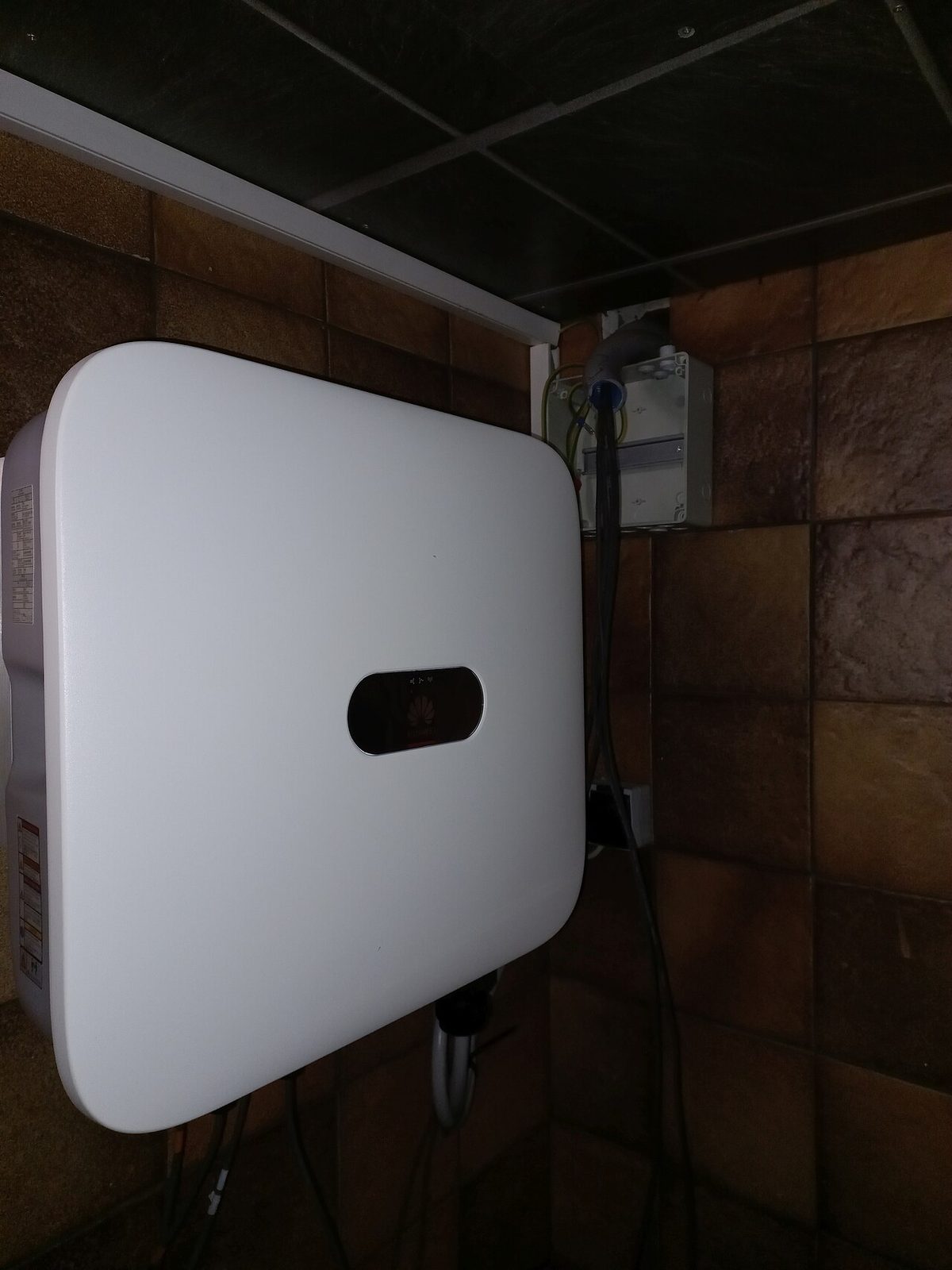
Huawei’s SUN2000 inverters were a common sight on Australian quotes until early 2024, especially the single-phase SUN2000 L1 (2 to 6 kW) and the three-phase SUN2000 M1. Installers sold them as mid-priced, battery-ready “smart energy controllers” that could take a Huawei LUNA2000 battery later. SolarQuotes estimates around 40,000 Huawei hybrid inverter systems are installed in Australia.
The situation is different in 2026. Huawei stopped selling residential inverters in Australia under its own brand in early 2024, and when we checked the Clean Energy Council’s approved inverter list in October 2026 it contained no Huawei inverters at all. So this review is mainly for people who already own one, are buying a house with one, or have been offered old stock. It is based on manufacturer documentation, warranty terms, published pricing and owner and installer feedback; Solar Cobber did not test the product and was not paid by the manufacturer.
What it is and how it works
The SUN2000 L1 and M1 are transformerless string inverters with two maximum power point trackers (MPPTs), so an installer can run two separate strings, for example east and west. Huawei calls them hybrid-ready because a high-voltage LUNA2000 battery plugs straight into the inverter’s DC battery input, so the battery charges directly from the panels without a second inverter.
The L1 is single phase. The datasheet lists 2, 3, 3.68, 4, 4.6, 5 and 6 kW models, with output capped at 4,999 VA on the 5 kW model under Australia’s AS/NZS 4777.2 settings. The M1 is three phase, and Huawei’s Australian warranty document lists 5, 6, 8 and 10 kW M1 models. Both work with Huawei’s optional SUN2000-450W-P panel optimisers for shaded roofs, and with a Backup Box (B0 for the L1, B1 for the M1) to run backup circuits in a blackout when a battery is fitted. Monitoring is through Huawei’s FusionSolar app and portal.
Where it sits now. SolarQuotes says Huawei withdrew from the Australian market because its position became “politically untenable”, and that Australian company iStore now handles battery expansion for existing Huawei owners. iStore sells its own branded hybrid inverters, which are on the CEC list with iStore (QLD) Pty Ltd named as manufacturer. We could not confirm which iStore models, if any, are built by Huawei, so do not assume an iStore inverter is a renamed SUN2000.
Specs that matter in Australia
Panel current is the big limitation. The L1 accepts 12.5 A per tracker and the M1 only 11 A. Many current 54-cell and 108 half-cell panels have a maximum power current of about 13 to 14 A. Pair those with an L1 or M1 and the inverter clips the panel’s current on bright days. This was not a problem with the panels of 2019, but it matters if you are adding or replacing panels today.
Voltage limits. The M1 can technically take 1,100 V DC, but the Australian datasheet says to limit input to 600 V to comply with AS/NZS 4777.1, which restricts how many panels go on each string.
Heat. Both are rated -25 to +60°C, fan-less (natural convection) and IP65 for outdoor installation. Huawei’s datasheets do not state the temperature at which output starts to derate. As with any wall-mounted inverter, a shaded spot out of the afternoon sun helps.
Grid standard and approval. The M1 Australian datasheet we found cites AS/NZS 4777:2015, the older grid standard. Since 23 August 2025, inverters must comply with AS/NZS 4777.2:2020 Amendment 2:2024 to remain on the CEC list, and non-compliant models were removed. Whatever the reason, the practical result is that no Huawei inverter is currently listed, so a new installation would not be eligible for small-scale technology certificates (STCs). Our guide to the STC solar rebate explains why that matters for the price.
Single vs three phase. Use the L1 on single-phase homes and the M1 on three-phase homes. The M1 spreads output across all three phases, which can help where your network allows more export on three-phase connections. See single vs three phase solar.
Backup. Backup needs the Backup Box and a LUNA2000 battery. On the L1 5 kW, backup output is up to 5,000 VA. Without a battery and Backup Box, the inverter shuts down when the grid fails.
Price in Australia
There is no current published price for a new SUN2000 L1 or M1 in Australia, because Huawei has not sold them here under its own brand since early 2024. Before that, SolarQuotes placed Huawei in the mid-range of its recommended inverter brands.
What matters for owners is the cost of the alternatives if an out-of-warranty unit fails. Why Solar’s April 2026 inverter cost guide puts a replacement 5 kW hybrid at about A$2,000 to A$2,800 for a Sungrow SH5.0RS or GoodWe GW5000-EH, and A$2,500 to A$3,500 for a Fronius GEN24 5.0 Plus, before installation. Swapping a hybrid also means checking whether your existing LUNA2000 battery will work with the replacement, which it generally will not with another brand.
If you are adding a battery, the federal Cheaper Home Batteries discount applies only to batteries on the current approved list; see our battery rebate guide.
Warranty: the fine print
Huawei Technologies (Australia) Pty Ltd’s warranty and service conditions for the SUN2000 series set out:
- 10 years on SUN2000 inverters (L1, M1 and others), covering the spare device, logistics and a replacement fee.
- 25 years on the SUN2000-450W-P optimiser (spare device and logistics only).
- 2 years on the Smart Dongle, Smart Power Sensor and Backup Box B0/B1.
- 10 years on LUNA2000 batteries, with a throughput cap of 16.45 MWh at 60% end-of-life capacity for each 5 kWh pack. Our LUNA2000 battery review covers this in detail.
The warranty starts on the earlier of installation or 180 days after the product shipped from Huawei’s factory. Inventory that sat in a warehouse can therefore have lost months of cover before it reached your roof.
Huawei commits to shipping a replacement inverter within 2 business days of a confirmed fault (30 calendar days for a LUNA2000), and the replacement carries the remainder of the original warranty. Labour is covered only through a fixed replacement fee of A$150 per incident plus A$25 per additional unit, paid to the installer or retailer, never to the homeowner. Cables and connectors are excluded. Huawei’s AU contact is in Chatswood, NSW, and SolarQuotes says existing warranties remain in place and service continues. Your Australian Consumer Law rights apply regardless.
What owners and installers report
Owner sentiment remains strong. Huawei averages 4.9 out of 5 from about 1,280 ratings on SolarQuotes. Recurring praise covers the FusionSolar app (owners like having data in both tables and graphs), quiet operation, battery-ready design and warranty claims that were processed efficiently.
Complaints are fewer but recurring:
- Wi-Fi and dongle connectivity, though owners describe this as uncommon.
- Software glitches that needed a technician to follow up.
- Battery expansion uncertainty. SolarQuotes warned in March 2026 that many Huawei owners do not realise they must contact iStore to expand their LUNA2000 battery. Expansion modules are only available until 31 December 2026 or while stocks last, and the new 7 kWh modules are not compatible with the older 5 kWh ones.
- Security concerns. Huawei’s broader position in Australia has been shaped by national security debates; SolarQuotes noted in 2018 that Huawei was not allowed to bid for the NBN over spying concerns. That 2018 review said it had yet to see good evidence of Huawei using equipment outside China to spy, but SolarQuotes later described Huawei’s market position as politically untenable.
Our searches of ACCC Product Safety Australia recall notices did not turn up a Huawei SUN2000 recall at the time of writing.
Huawei SUN2000 vs alternatives
| Huawei SUN2000 L1 | Sungrow SH-RS | GoodWe EH | Fronius GEN24 Plus | |
|---|---|---|---|---|
| Sold new in AU (Oct 2026) | No | Yes | Yes | Yes |
| On CEC approved list (Oct 2026) | No | Yes (SH5.0RS) | Yes | Yes |
| Eligible for STCs on a new install | No | Yes | Yes | Yes |
| Standard AU warranty | 10 yrs | 10 yrs | 5 yrs (10 with GoodWe battery) | 10 yrs with registration |
| Indicative 5 kW price | Not published | A$2,000 to A$2,800 | A$2,000 to A$2,800 | A$2,500 to A$3,500 |
| Battery pairing | LUNA2000 (expansion until end 2026) | Sungrow battery | GoodWe Lynx Home | Compatible high-voltage battery |
If you are buying new, choose Sungrow SH-RS or GoodWe EH for a similarly priced single-phase hybrid, or Fronius GEN24 Plus if you want a European brand and are happy to pay more. Keep a working Huawei SUN2000 as long as it runs well, and plan any battery expansion before the end of 2026.
Questions to ask your installer
- If you are quoting a Huawei inverter, why, and how will the system qualify for STCs when Huawei is not on the CEC list?
- For my existing L1 or M1: what is the warranty start date on my unit, and how many years remain?
- Can my LUNA2000 battery still be expanded through iStore before 31 December 2026, and what will it cost?
- My panels are being replaced; will their current exceed the inverter’s 12.5 A (or 11 A) per tracker limit?
- If the inverter fails out of warranty, which replacement hybrid will work with my LUNA2000, if any?
- Is my Backup Box still covered (it carries only 2 years)?
- Are you a Huawei-certified installer who can lodge warranty claims?
FAQ
Can I still buy a Huawei SUN2000 inverter in Australia?
Not through Huawei. SolarQuotes reports Huawei stopped selling here under its own brand in early 2024, and no Huawei inverter was on the Clean Energy Council approved list when we checked in October 2026.
Is my Huawei inverter warranty still valid?
According to SolarQuotes, existing Huawei warranties remain intact and service continues. The SUN2000 warranty runs 10 years from installation or 180 days after factory shipment, whichever came first.
Can I add more battery to my Huawei system?
Only until 31 December 2026 or while stocks last, through iStore, according to SolarQuotes. After that, adding modules to an existing LUNA2000 will not be possible.
Are Huawei inverters safe to keep using?
We found no Australian safety recall for the SUN2000 L1 or M1. They were certified for grid connection when installed, and owners rate them highly.
Is iStore the same as Huawei?
No. iStore is an Australian company that supports existing Huawei owners with battery expansion and sells its own branded inverters. We could not confirm whether any iStore models are made by Huawei.
Will a Huawei inverter work with new high-current panels?
With clipping. The L1 accepts 12.5 A and the M1 11 A per tracker, below the operating current of many current panels.
Find an installer
Whether you need a warranty swap, a battery expansion before the deadline or a replacement hybrid, you need an installer who knows Huawei systems. Use our installer directory to find one near you.
Inverter buying guides
Often quoted alongside
Sungrow
SH RS / RT hybrid
Sungrow
Sungrow SH RS / RT hybrid
The Sungrow SH RS is the value pick for a single-phase solar and battery system, with near-instant backup, high solar oversizing and broad VPP support at well below Fronius prices. Check which model you are quoted, because only the SH8.0RS and SH10RS offer whole-home backup, and accept that you are tied to Sungrow batteries.
Best for: Homes adding a Sungrow battery now that want fast backup and VPP options at a mid-market price
 Inverter
GoodWe
GoodWe DNS, EH and ET
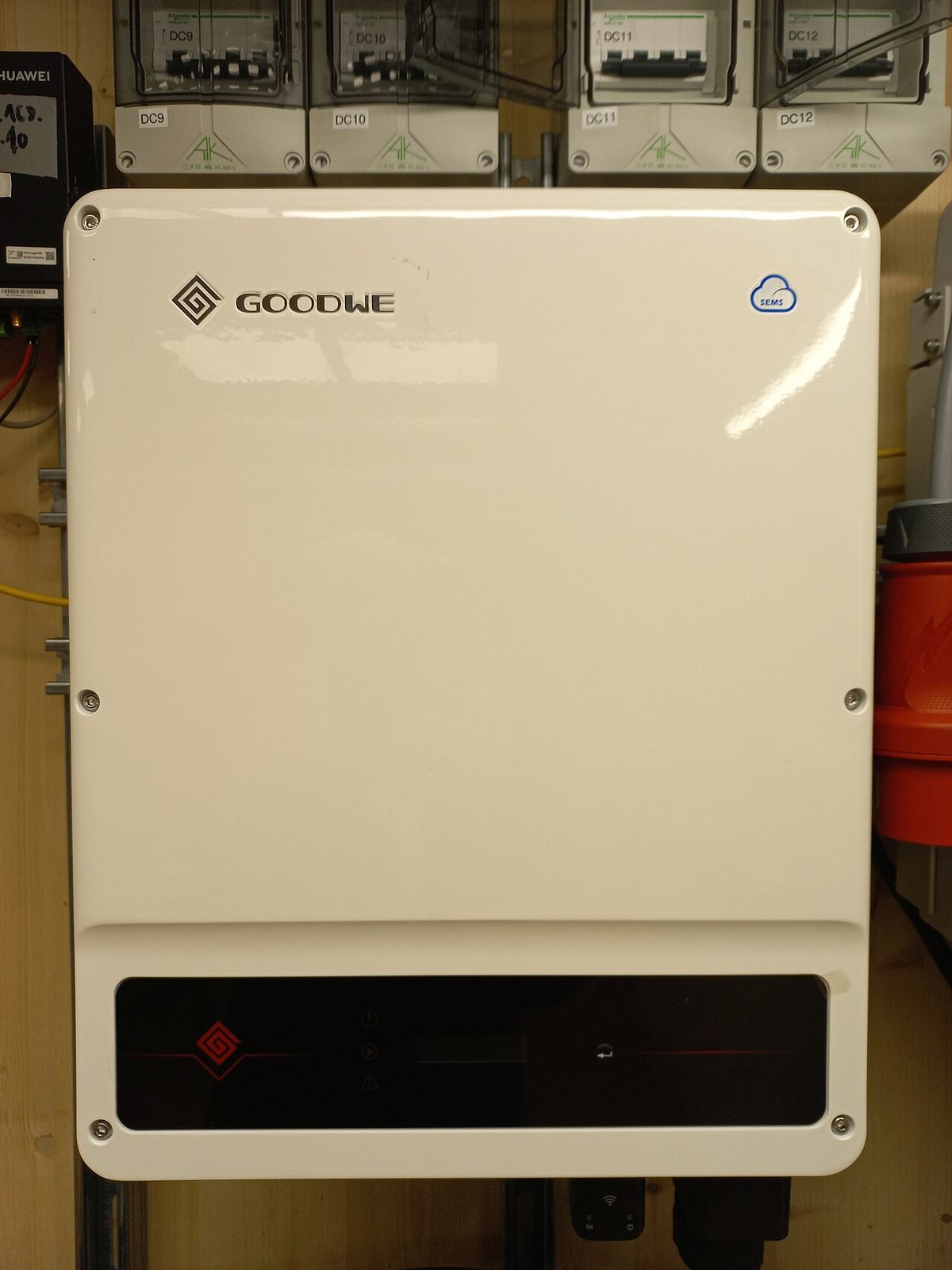
GoodWe's DNS string inverters are a sound budget pick with a local office and a 10-year warranty once registered online, and the ET G2 is a capable three-phase hybrid. Read the warranty conditions closely, though: several hybrids only get 10 years if paired with a GoodWe battery, and owners in hot climates report noticeable summer derating.
Best for: Budget to mid-range single-phase systems and three-phase homes wanting a hybrid
Fronius
GEN24 Plus
Fronius
Fronius GEN24 Plus
The GEN24 Plus is a well-built, well-supported hybrid that suits owners who value Fronius service and want three-phase backup or a Fronius-branded battery. Its backup is not seamless, its battery list is short and it costs more than a Sungrow hybrid, so it only makes sense if those trade-offs do not bother you.
Best for: Homes adding a battery now that want premium local support and optional whole-home or three-phase backup
Sources
- Huawei SUN2000-2/3/3.68/4/4.6/5/6KTL-L1 datasheet (PDF)
- Huawei SUN2000-5/6KTL-M1 Australian datasheet (PDF)
- Huawei SUN2000 Inverter Warranty and Service Conditions, Huawei Technologies (Australia) (PDF)
- Clean Energy Council approved inverter list
- SolarQuotes: Huawei inverter reviews and expert verdict
- SolarQuotes: Huawei battery expansion? Talk to iStore before it's too late (Mar 2026)
- SolarQuotes: Huawei inverter review, there's no spying going on here (2018)
- Why Solar: Solar inverter cost in Australia (Apr 2026)
Independent desk research by the Solar Cobber editorial team. We did not test this product and were not paid by the manufacturer. Solar Cobber is a free directory that may earn referral or advertising fees from installers; this never affects our reviews.
Get quotes for Huawei SUN2000
Browse rated solar installers in your area, check their Google reviews, and ask at least three for itemised quotes. Our guide to comparing solar quotes explains what to look for.
Find a solar installer