
Our verdict
Neovolt is one of the cheapest all-in-one batteries in Australia, and the current warranty on the 9.6 kWh battery is generous, at 12 years with unlimited cycles for normal home use. The trade-off is a messy compliance record (most configurations have been suspended from the federal rebate since 15 September 2026) and after-sales support that depends heavily on who sold it to you.
- Best for
- Budget single-phase homes whose installer confirms in writing that the exact Neovolt configuration is rebate-eligible
- Look elsewhere if
- Buyers who want a long local support record or certainty on the federal battery discount
- Price guide
- About A$8,100 to A$10,200 installed for 9.6 to 19.2 kWh after the federal battery discount, if the configuration is eligible (SolarQuotes May 2026 prices plus A$3,000 installation)
- Warranty
- 12 years and 70% retained capacity on the BW-BAT-9.6P (10 years on the 10.1P and 4.8S); unlimited cycles for self-consumption, time-of-use and backup, 39.36 MWh cap per 9.6P for other uses
Pros
04- Among the lowest prices per kWh of any all-in-one battery on SolarQuotes' May 2026 price list
- 12-year warranty on the BW-BAT-9.6P, with unlimited cycles for self-consumption, time-of-use shifting (including grid charging) and backup
- Expands in 9.6 kWh steps up to six batteries, and up to six inverters can run in parallel sharing one battery bank
- Single-phase 5 kW hybrid accepts up to 10 kW of solar, and the IP65 hardware has no internal fans
Cons
05- Seven BW-BAT-9.6P models were suspended from the federal rebate on 15 September 2026; only the single-unit listing was restored on 7 October, and the six variant listings remain suspended
- Single-phase backup is capped by the inverter at 5 kVA continuous (3.68 kVA on the 3.6 kW model), however many batteries you add
- Support usually runs from the retailer to Bytewatt, and Whirlpool owners report slow fixes for faulty commissioning
- The warranty is governed by Chinese law and claims must go through the installer; systems bought before 1 November 2024 were sold with a 5-year warranty
- Usable capacity figures conflict between Neovolt's own datasheet, the CEC listing and VoltX's package specs
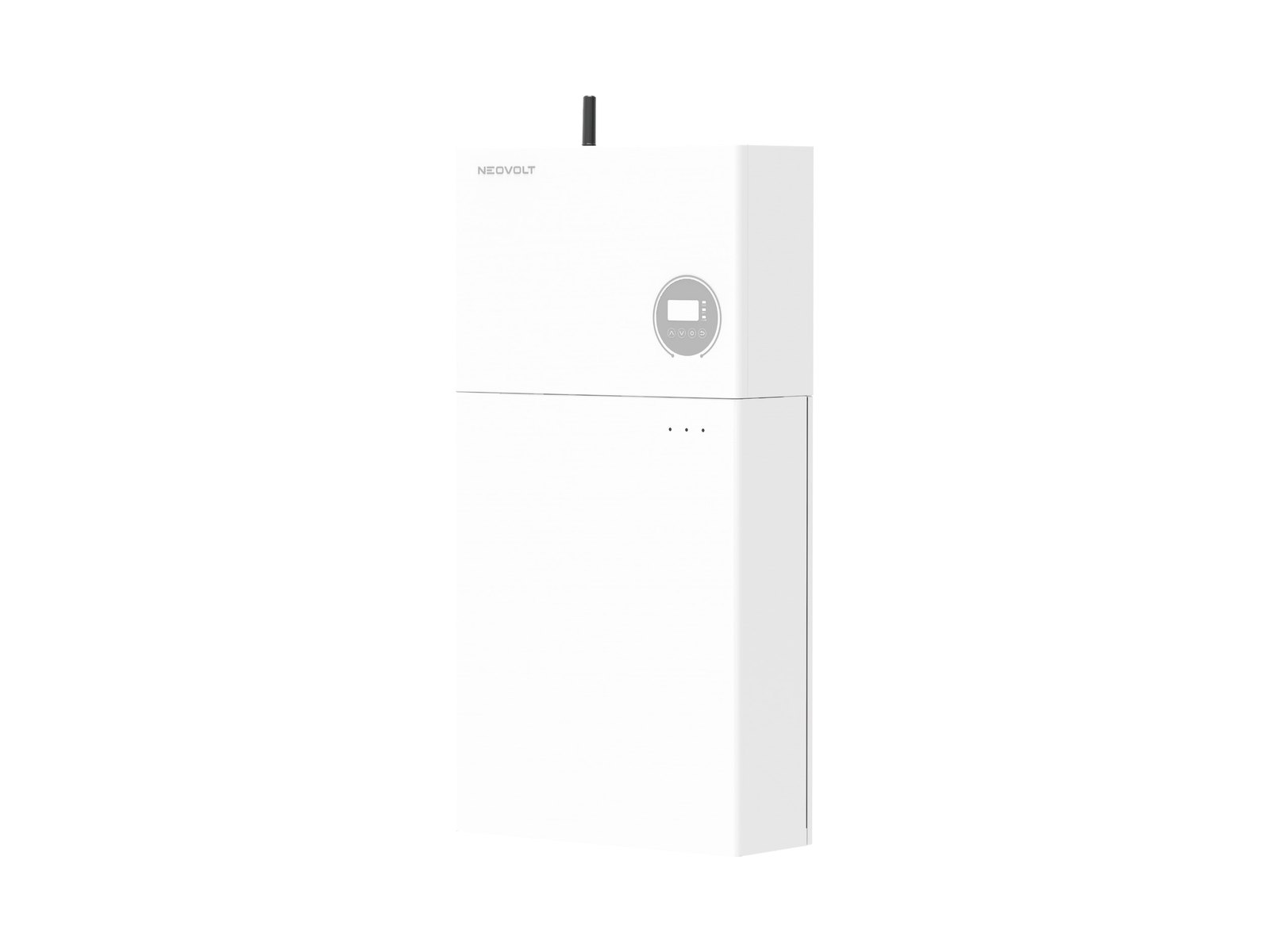
Neovolt is the home battery brand of Bytewatt Technology, a manufacturer based in Suzhou, China. In Australia it is usually sold as an all-in-one system: a white Neovolt hybrid inverter mounted above one or more 9.6 kWh BW-BAT-9.6P batteries, or an AC-coupled battery inverter for homes that already have solar. VoltX Energy installed most of the systems reviewed on SolarQuotes and markets it as the “VoltX Neovolt”, but installers such as SAE Group, Tenet Tech and DSW Energy also sell it. SolarQuotes says it is advertised at up to nearly a third less than better-known brands of similar capacity, and Whirlpool buyers most often weigh it against AlphaESS. This review is based on manufacturer documentation, warranty terms, published pricing and owner/installer feedback; Solar Cobber did not test the product and was not paid by the manufacturer. One issue matters more than the specs in October 2026: the Clean Energy Council (CEC) has suspended most Neovolt battery listings from the federal rebate. We explain what that means for your quote below.
What it is and how it works
Neovolt’s Australian range, per its AU website and the CEC list, has three building blocks:
- Single-phase BW-ESS system. A BW-INV-SPH3.6K or SPH5K hybrid inverter that runs your panels and the battery, with white BW-BAT-9.6P batteries. An older blue design uses the BW-BAT-10.1P (10.1 kWh nominal, 9.6 kWh usable).
- AC-coupled system. The BW-INV-SPB5K battery inverter, which connects at the switchboard alongside an existing solar inverter.
- Three-phase BW-ESS system. BW-INV-TPH4K to TPH10K hybrids (4 to 10 kW) with 4.8S or 9.6P batteries.
Each battery runs at 96 V nominal and connects in parallel. Neovolt allows one to six batteries per system and up to six inverters sharing one battery bank, and says the built-in energy management supports VPP and FCAS services.
Bytewatt has an Australian office in Rouse Hill, NSW, and its registered importer is Solar Capital Australia in Underdale, SA. Whirlpool owners note that the Neovolt app looks the same as the older AlphaESS app, and AlphaESS also sells a battery called BAT-10.1P. We could not confirm any corporate link, so treat that as an owner observation only.
Specs that matter in Australia
Backup power. The 5 kW single-phase hybrid is rated for 5 kVA of continuous backup with a 10 kVA surge, and the 3.6 kW model for 3.68 kVA with a 7.36 kVA surge. The datasheet gives a transfer time under 10 ms, while SolarQuotes quotes 20 ms. Adding batteries adds hours of backup, not more power; Whirlpool owners who wanted more output added a second inverter. SolarQuotes notes that backup covers selected circuits, which may cost extra. On the solar side, the SPH5K accepts up to 10 kW of panels across two MPPTs.
Solar during a blackout. On a single-phase hybrid, SolarQuotes says your panels can keep charging the battery during a blackout. Neovolt says its grid-forming function also lets an existing on-grid solar inverter keep working in an outage, which matters for AC-coupled installs.
Heat and cold. The battery charges from 0 to 50 °C and discharges from -10 to 50 °C, and the warranty requires ambient temperatures inside -10 to 50 °C. It is rated IP65 with no fans, so outdoor installs are allowed, but a shaded wall helps on 45 °C days, and in Canberra frosts it will not charge below 0 °C.
Single or three phase. Most Australian homes are single phase, and that is the version retailers advertise most. Three-phase homes can choose the TPH hybrids, which provide three-phase backup output. Our guide to single vs three phase power explains which you have.
Usable capacity. Neovolt’s documents disagree. The February 2026 datasheet lists 9.6 kWh usable at 100% depth of discharge, but its own parallel table lists 9.1 kWh per battery. The CEC lists 9.6 kWh usable for the BW-BAT-9.6P, and VoltX’s spec table for its 28.8 kWh package says 25 kWh usable. The rebate uses the CEC figure, so ask which number your quote uses.
Efficiency. Neovolt’s single-phase system datasheet lists a maximum round-trip efficiency of 90%, lower than the 97% figures on its website, which describe one-way conversion (AC to battery, or solar to battery and loads).
Export limits and VPPs. The system manages export limits with a meter or CT clamps. Read our explainer on what a VPP is before signing up, because VPP use may fall outside the warranty’s unlimited-cycle category (see below).
Price in Australia
SolarQuotes’ May 2026 list gives these approximate Neovolt prices after the federal battery discount, including GST and excluding installation:
| Neovolt system | Usable capacity | Approx. price after federal discount, before installation |
|---|---|---|
| Neovolt 10 kWh | 9.6 kWh | A$5,100 |
| Neovolt 20 kWh | 19.2 kWh | A$7,200 |
| Neovolt 30 kWh | 28.8 kWh | A$10,000 |
| Neovolt 40 kWh | 38.4 kWh | A$13,400 |
| Neovolt 50 kWh | 48 kWh | A$17,000 |
Adding the A$3,000 installation cost SolarQuotes uses in its worked examples gives about A$8,100 for 9.6 kWh and A$10,200 for 19.2 kWh. SolarQuotes does not spell out whether these include the hybrid inverter, so confirm that. VoltX advertises much lower installed prices after the discount (A$5,799 for 28 kWh with a 5 kW inverter, A$10,699 for 48 kWh), but every configuration showed as out of stock on 14 October 2026. Use our guide on solar battery costs to compare like with like.
The federal discount. From May to December 2026, the Cheaper Home Batteries Program pays 6.8 STCs per usable kWh for the first 14 kWh (about A$250 per kWh at roughly A$37 per STC), 60% of that rate from 14 to 28 kWh and 15% from 28 to 50 kWh. That works out to about A$2,400 on 9.6 kWh, A$4,300 on 19.2 kWh and A$5,700 on 28.8 kWh. The factor falls to 5.7 on 1 January 2027. See our federal battery rebate guide for the details.
What the CEC suspension means for your quote
On 15 September 2026 the CEC suspended seven BW-BAT-9.6P listings because nameplate labels on batteries supplied in Australia did not match the testing and certification documents. An earlier CEC notice reposted on Whirlpool also cited an invalid IEC compliance certificate. The CEC says this was not a recall or a safety issue. Suspended products cannot earn STCs, and they are also ineligible for any state program or network that requires CEC approved products.
On 7 October 2026 the CEC relisted the base BW-BAT-9.6P only (BAT-1093, to 31 December 2027), and only batteries whose nameplate shows a working voltage of DC 90 to 105.6 V, a maximum continuous current of DC 52.5 A and the designation IFpP52/161/120/[(10S)3S]E/-10+50/90 are eligible. Those values differ from Neovolt’s February 2026 datasheet (90 to 108 V and 50 A), so check the physical nameplate, not the datasheet. Installs completed between 15 September and 6 October 2026 cannot claim STCs.
The six variant listings, BW-BAT-9.6P I to VI, remain suspended. Neovolt’s own warranty appendix lists them with nominal capacities from 9.6 kWh (I) to 57.6 kWh (VI), which matches systems of one to six batteries. Without corrective action by 14 December 2026, the CEC will delist them on 15 December. We could not confirm how a multi-battery system is claimed meanwhile, so get your installer to state in writing which CEC model number they will enter in the REC Registry. The BW-BAT-10.1P (BAT-1090, listed 29 September 2026) and the three-phase BW-BAT-4.8S (BAT-568) are currently listed.
Warranty: the fine print
Bytewatt’s warranty conditions for Australia and New Zealand (the version filed with the CEC on 28 September 2026) set these terms:
- Term: 10 years for inverters; 12 years for the BW-BAT-9.6P and its variants; 10 years for the 10.1P and 4.8S, all from the installation date.
- Retention: at least 70% of usable capacity at the end of the term.
- Unlimited cycles for solar self-consumption, time-based control (storing solar or grid power for time-of-use shifting) and backup.
- Throughput caps for any other application, or any mix that includes one: 39.36 MWh per 9.6P, 38.38 MWh per 10.1P and 18.24 MWh per 4.8S, measured at the battery AC output. Ask whether your VPP counts as “other”.
- Temperature condition: ambient operation must stay between -10 and 50 °C.
- Claims: the installer lodges them with fault evidence. Bytewatt says it dispatches approved replacements within three working days, subject to stock, and charges an inspection fee if a returned unit is not faulty. Replacements may differ in specification or be refurbished.
- Disputes: the warranty is governed by Chinese law, with Chinese courts having non-exclusive jurisdiction. Australian Consumer Law guarantees still apply.
- Transfer: the document does not say whether the warranty passes to a new owner if you sell the house.
The history matters for older systems. Bytewatt’s warranty update statement says the warranty was extended from 5 to 10 years for systems purchased from 1 November 2024, with “transitional” service for earlier buyers. SolarQuotes’ review still describes 10 years and 80% retention with a 3 MWh per kWh limit, which does not match the current document. VoltX advertises a 10-year battery warranty and says it handles warranty support itself. Ask for the warranty document that applies to your serial numbers.
What owners and installers report
Ratings. As of 14 October 2026, SolarQuotes shows 89 Neovolt owner reviews: 69 five-star, 13 four-star, 2 three-star, 1 two-star and 4 one-star. Most systems were installed by VoltX, and several reviews are flagged as incentivised by VoltX or SAE Group, so treat the average with care.
Praise. Owners consistently mention big bill reductions, a simple app, quiet operation and backup that worked through outages, and some use it on Amber or GloBird plans. On Reddit, one owner described Neovolt as a good budget brand after running 20 kWh without issues and expanding to 50 kWh.
Complaints. The recurring themes on Whirlpool’s long-running Neovolt and VoltX thread are:
- Commissioning faults. The most common problem owners describe is CT clamps installed backwards, which makes the app show wrong load and export figures until an installer returns.
- Slow support. Several owners describe confused or slow responses from VoltX’s phone support, with VoltX forwarding issues to Neovolt. One long-time owner says VoltX outsources most installs to electrical contractors, and that Neovolt’s own web portal complaint system and remote firmware pushes fix problems faster.
- Integration limits. A Fronius inverter sees the Neovolt system only as a load.
SolarQuotes owners also report a lost-communication fault, an export setting that stopped working at a set charge level, and an AC-coupled inverter too small to fill the batteries quickly. After the suspension, at least one waiting buyer on Whirlpool said they had been offered an AlphaESS SMILE-G3 instead. We found no ACCC recall for Neovolt batteries, though we could not query the recall database directly.
Neovolt vs alternatives
| Neovolt | AlphaESS SMILE-G3 | Fox ESS EQ4800 | Sungrow SBR | |
|---|---|---|---|---|
| Usable capacity per system | 9.6 to 57.6 kWh (9.6P) | 9.3 to 37.2 kWh (S5); up to 55.8 kWh (T5/T10) | 9.32 to 41.93 kWh | 9.6 to 25.6 kWh per stack |
| Inverter | Built-in Neovolt hybrid or AC-coupled unit | Built-in AlphaESS hybrid | Separate Fox ESS hybrid | Separate Sungrow hybrid |
| Phase options | 3.68 or 5 kW single phase; 4 to 10 kW three phase | 5 kW single phase; 5 to 20 kW three phase | Fox single-phase or three-phase hybrids | SH-RS single phase; SH-RT and SH-T three phase |
| Retention and throughput | 70% at 12 years (9.6P); unlimited cycles for self-use, time-of-use and backup | 70% at 10 years or 3.12 MWh per usable kWh | 70% at 10 years or a throughput cap | 70% at 10 years; unlimited cycles for self-use and backup |
| Ingress rating | IP65 | IP65 | IP65 | IP55 |
| Approx. price for about 19 kWh after federal discount, before installation (May 2026) | About A$7,200 | About A$7,800 (G3-S5, 19.2 kWh usable) | About A$5,100 for 18.64 kWh, plus inverter | About A$11,000 for 19.2 kWh, plus inverter |
| CEC listing, October 2026 | Single-unit 9.6P listed; variants I to VI suspended | Listed | Listed | Listed (BAT-474) |
Choose Neovolt only if the price saving is large and your installer can prove the exact configuration is rebate-eligible. The AlphaESS SMILE-G3 is a similar all-in-one with a cleaner listing record and an app that Whirlpool owners say has been updated more recently. Fox ESS batteries cost less per kWh but need a separate Fox hybrid inverter. The Sungrow SBR costs more but comes from a company with an Australian office since 2012.
Questions to ask your installer
- Which exact Neovolt models are you quoting, and which CEC model number will you enter in the REC Registry?
- Will you photograph the battery nameplate before install to confirm it matches the CEC’s eligible BW-BAT-9.6P details?
- If my system has more than one battery and the variant listings are still suspended, how will the federal discount be claimed, and who pays if the STCs are rejected?
- Is the hybrid inverter included in the price, and is it the 3.6 kW or 5 kW model?
- Who handles warranty claims: you, VoltX or Bytewatt directly? Can I have the warranty document that applies to my serial numbers?
- Will you check the CT clamp direction and confirm the app readings before you leave?
- If I join a VPP, does Bytewatt treat that as self-consumption or as an application subject to the 39.36 MWh cap?
FAQ
Is Neovolt a good battery?
The specs are competitive for the price and many owners are happy, but the 2026 suspension and uneven retailer support make it riskier than AlphaESS or Sungrow.
Is the Neovolt battery still eligible for the rebate?
Partly. The base BW-BAT-9.6P was relisted on 7 October 2026 for units with specific nameplate details, but the six variant listings remain suspended. The 10.1P and 4.8S are listed.
How much does a Neovolt battery cost?
Roughly A$8,100 to A$10,200 installed for 9.6 to 19.2 kWh after the federal discount, if the configuration is eligible.
Can I add more Neovolt batteries later?
Yes, up to six batteries per system. Any battery added later needs to be CEC listed on its installation date to attract the discount.
What is the difference between Neovolt and VoltX?
Neovolt is Bytewatt’s brand. VoltX Energy is an Australian retailer that sells Neovolt systems as “VoltX Neovolt” and promises to handle warranty support itself.
Find an installer
With Neovolt, the installer matters more than usual, because they handle commissioning, warranty claims and the rebate paperwork. Use our installer directory to find local companies with recent battery jobs and reviews, and ask any Neovolt seller to put the CEC model number and rebate amount in writing.
Read next
Battery buying guides
Often quoted alongside
AlphaESS
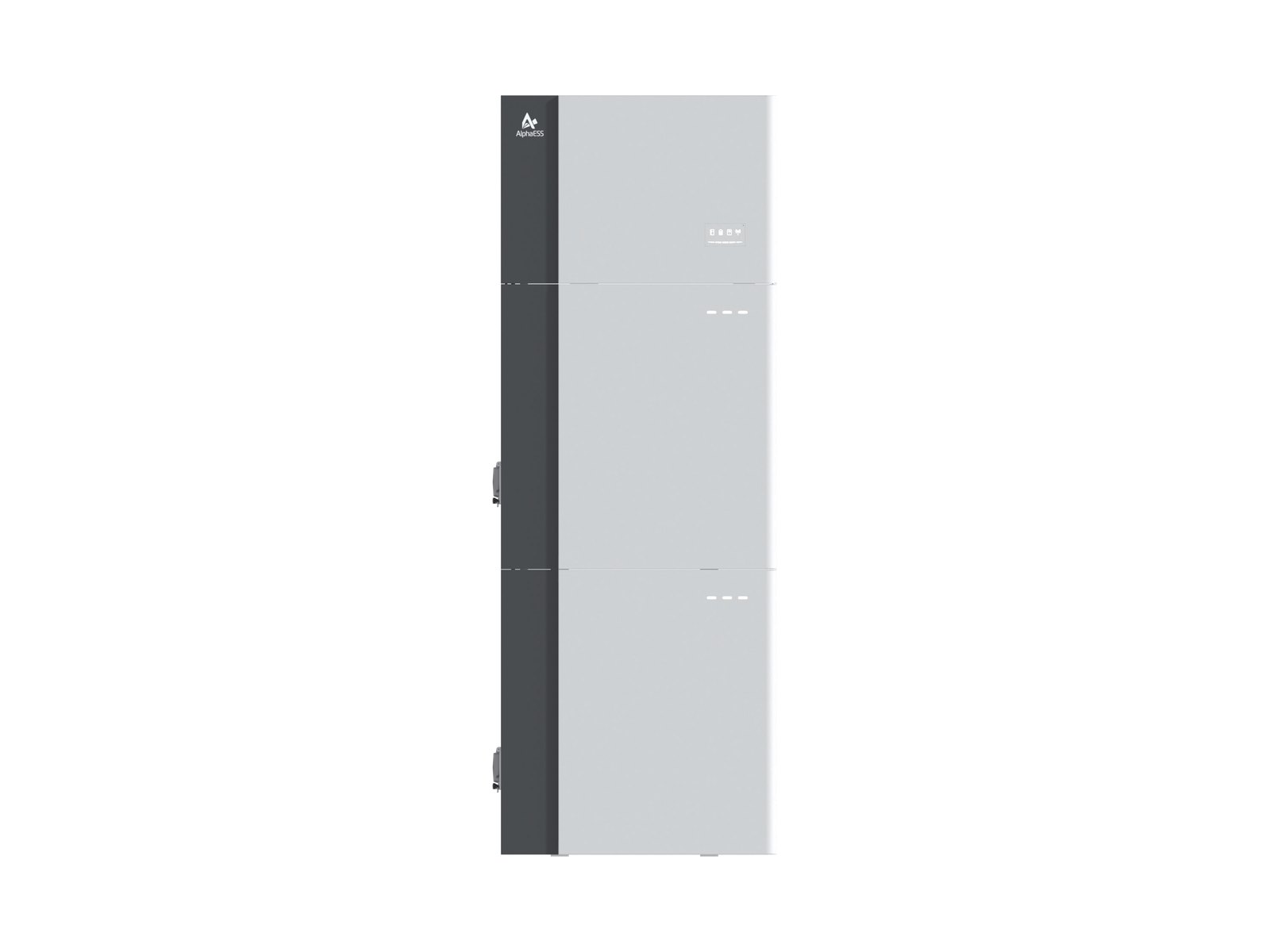
AlphaESS SMILE-G3
The AlphaESS SMILE-G3 is one of the cheapest ways to get a CEC-listed all-in-one battery and hybrid inverter, with single-phase and three-phase versions and 9.3 kWh modules. The catch is AlphaESS's patchy support record, so the installer you choose matters as much as the hardware.
Best for
Budget-focused homes with a well-reviewed installer who has AlphaESS experience
Fox ESS
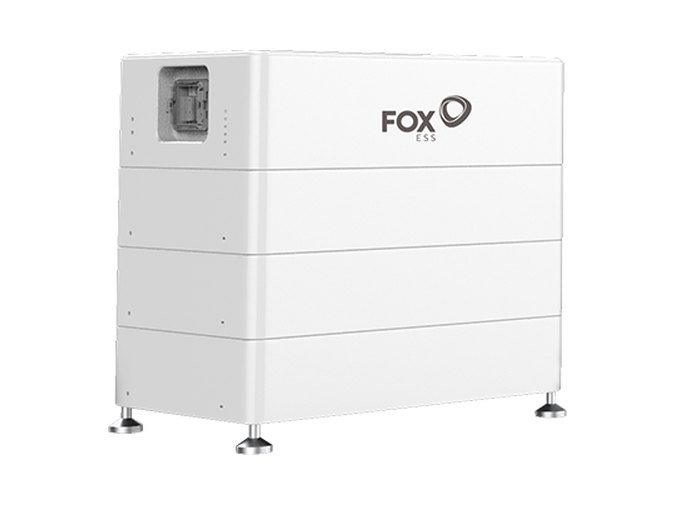
Fox ESS EQ4800
The Fox ESS EQ4800 delivers a lot of storage for the money and has become one of the most installed batteries in Australia since the federal rebate began. The trade-offs are a support track record still catching up with sales, no cell heating for cold-climate charging, and owner reports of real capacity falling short on the biggest stacks.
Best for
Budget-focused homes wanting 9 to 28 kWh of storage on a Fox ESS hybrid inverter
Sungrow
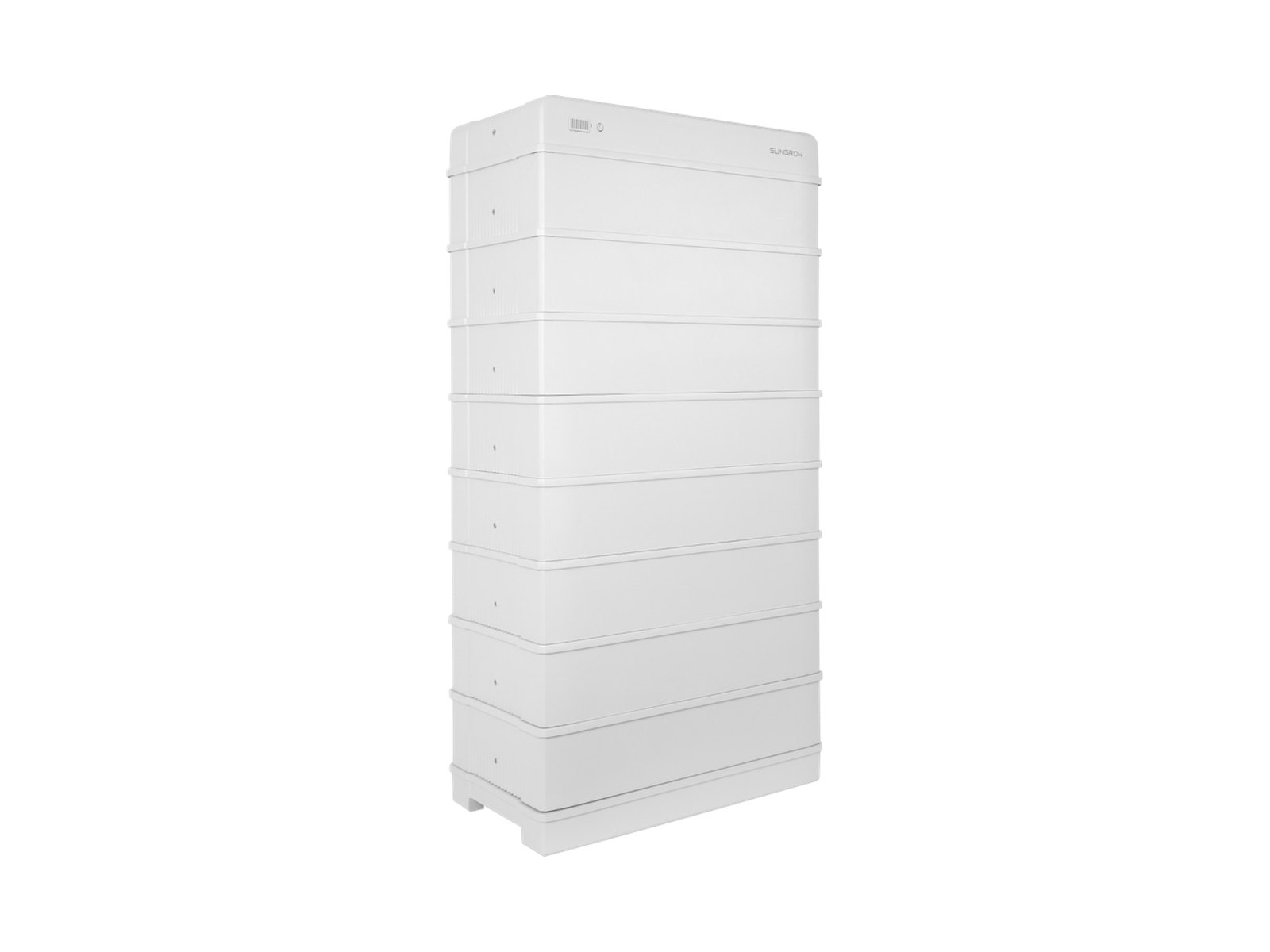
Sungrow SBR
The Sungrow SBR is one of the best-value modular batteries in Australia, with easy expansion in 3.2 kWh steps and a warranty that gives normal households unlimited cycles. The trade-off is that you must pair it with a Sungrow hybrid inverter, and Sungrow's app and phone support are weaker than the hardware.
Best for
Homes wanting a modular battery paired with a Sungrow hybrid inverter
Sources
Independent desk research by the Solar Cobber editorial team. We did not test this product and were not paid by the manufacturer. Solar Cobber is a free directory that may earn referral or advertising fees from installers; this never affects our reviews.
- 01Clean Energy Council: Bytewatt Technology (NEOVOLT) product suspension, updated 7 October 2026
- 02Clean Energy Council approved batteries list
- 03Neovolt AU: BW-BAT-9.6P (9.6 kWh) datasheet, February 2026 (PDF)
- 04Neovolt AU: BW-ESS 3.6 to 5 kW (9.6P) single-phase system datasheet, February 2026 (PDF)
- 05Neovolt AU: BW-ESS 4 to 10 kW three-phase datasheet (PDF)
- 06Neovolt AU: BW-BAT-10.1P datasheet, CEC version 28 September 2026 (PDF)
- 07Bytewatt warranty conditions for residential products, Australia and New Zealand, CEC version 28 September 2026 (PDF)
- 08Bytewatt warranty update statement, effective 1 November 2024 (PDF)
- 09SolarQuotes: Bytewatt Neovolt battery review and owner reviews
- 10SolarQuotes: Solar battery prices and system costs in Australia (May 2026)
- 11VoltX Energy: VoltX Neovolt hybrid battery packages
- 12Whirlpool Forums: Neovolt and VoltX discussion
- 13Energy Matters: Cheaper Home Batteries Program changes from 1 May 2026
Get quotes for Neovolt
Browse rated solar installers in your area, check their Google reviews, and ask at least three for itemised quotes. Our guide to comparing solar quotes explains what to look for.