
As at November 2026, charging an electric car at home in Australia costs about A$4.50 to A$7.50 per 100 km on a flat regulated rate, against about A$16.40 for a petrol car using 7 L per 100 km. Charging in a cheap midday solar window drops that to about A$1 to A$2, and public DC fast chargers cost about A$8 to A$14 per 100 km. This guide works every figure out and shows the working.
Key facts
- The Australian Institute of Petroleum reported a national average retail petrol price of 234.5 cents per litre in the week ending 8 November 2026.
- The Electric Vehicle Council uses 17 kWh per 100 km as a typical electric car energy use, which it equates to about 7 L per 100 km in a petrol car.
- Solar Cobber calculation: at 18 kWh per 100 km from the wall, a car charged on the Ausgrid Default Market Offer flat rate of 33.14c per kWh costs A$5.97 per 100 km, against A$16.42 for a petrol car using 7 L per 100 km.
- Solar Cobber calculation: charging in the Energex solar window (6.98c per kWh, 11am to 4pm) costs A$1.26 per 100 km, or about A$176 a year at 14,000 km.
- Under the Solar Sharer Offer, the first 24 kWh used in the free midday period is free for eligible customers in the NSW, South East Queensland and South Australian networks, according to the Australian Energy Regulator.
- Public DC fast chargers are the expensive option: secondary price lists put them at roughly 58c to 79c per kWh, or about A$10 to A$14 per 100 km at 18 kWh per 100 km.
How much does it cost to charge an electric car at home?
At home, an electric car costs about A$4.50 to A$7.50 per 100 km on a flat regulated electricity rate, depending on your state. That is the regulator-set reference price; many market offers are cheaper, and a time of use tariff or solar can cut it to a fraction of that.
The working is simple: energy used per 100 km, multiplied by your price per kWh. We use 18 kWh per 100 km from the wall, which is the Electric Vehicle Council’s 17 kWh per 100 km plus a small allowance for charging losses. Flat usage rates are those in our guide to electricity cost per kWh in Australia, from the Australian Energy Regulator (AER) Default Market Offer and the Essential Services Commission’s Victorian Default Offer, all including GST from 1 July 2026.
View the data as a table
| Cost per 100 km | |
|---|---|
| SA Power Networks (SA) | A$7.54 |
| ACT standard contract | A$6.63 |
| Essential Energy (NSW) | A$6.30 |
| Endeavour (NSW) | A$6.07 |
| Synergy A1 (WA) | A$5.99 |
| Ausgrid (NSW) | A$5.97 |
| AusNet (Vic) | A$5.76 |
| Jacana (NT) | A$5.70 |
| Powercor (Vic) | A$5.08 |
| Energex (Qld) | A$5.03 |
| Jemena (Vic) | A$4.94 |
| United Energy (Vic) | A$4.92 |
| CitiPower (Vic) | A$4.67 |
| Aurora T32 (Tas) | A$4.46 |
Charging costs the most in South Australia (A$7.54 per 100 km) and the least in Tasmania (A$4.46), a gap of about 69%.
The extra kWh does not add to your daily supply charge, so only the usage rate matters for the marginal cost of charging.
What does it cost at off-peak and solar rates?
Charging in a cheap window costs A$0.90 to A$4.33 per 100 km, because many networks now price midday or overnight power far below the flat rate. These regulated time of use rates from the AER and ESC show how wide the spread is.
| Network | Cheap window | Rate (c/kWh) | Peak rate to avoid (c/kWh) |
|---|---|---|---|
| Energex (SE Qld) | Off-peak 11am to 4pm | 6.98 | 47.79 (4pm to 9pm) |
| Endeavour Energy (NSW) | Solar soak 10am to 2pm | 12.35 | 46.57 to 47.14 (4pm to 8pm weekdays) |
| SA Power Networks | Solar soak 10am to 4pm | 17.04 | 56.22 (6am to 10am, 4pm to midnight) |
| Victoria (five zones) | Solar soak 11am to 4pm | 16.59 to 17.65 | 37.57 to 47.64 (4pm to 9pm) |
| Victoria (five zones) | Off-peak 9pm to 11am | 21.17 to 22.60 | as above |
| Ausgrid (NSW) | Off-peak, all other hours | 24.04 | 60.20 (3pm to 9pm, Nov to Mar and Jun to Aug) |
| Essential Energy (NSW) | Off-peak, all other hours | 24.14 | 42.12 (7am to 10am, 3pm to 10pm) |
Sources: AER Default Market Offer 2026-27 final determination and ESC Victorian Default Offer, checked November 2026. Our peak and off-peak guide lists the windows for every network.
The catch is the peak rate. Plugging in at 6pm on a time of use plan can cost more than a flat rate, so a timer on the car or charger is essential.
Is charging with solar free?
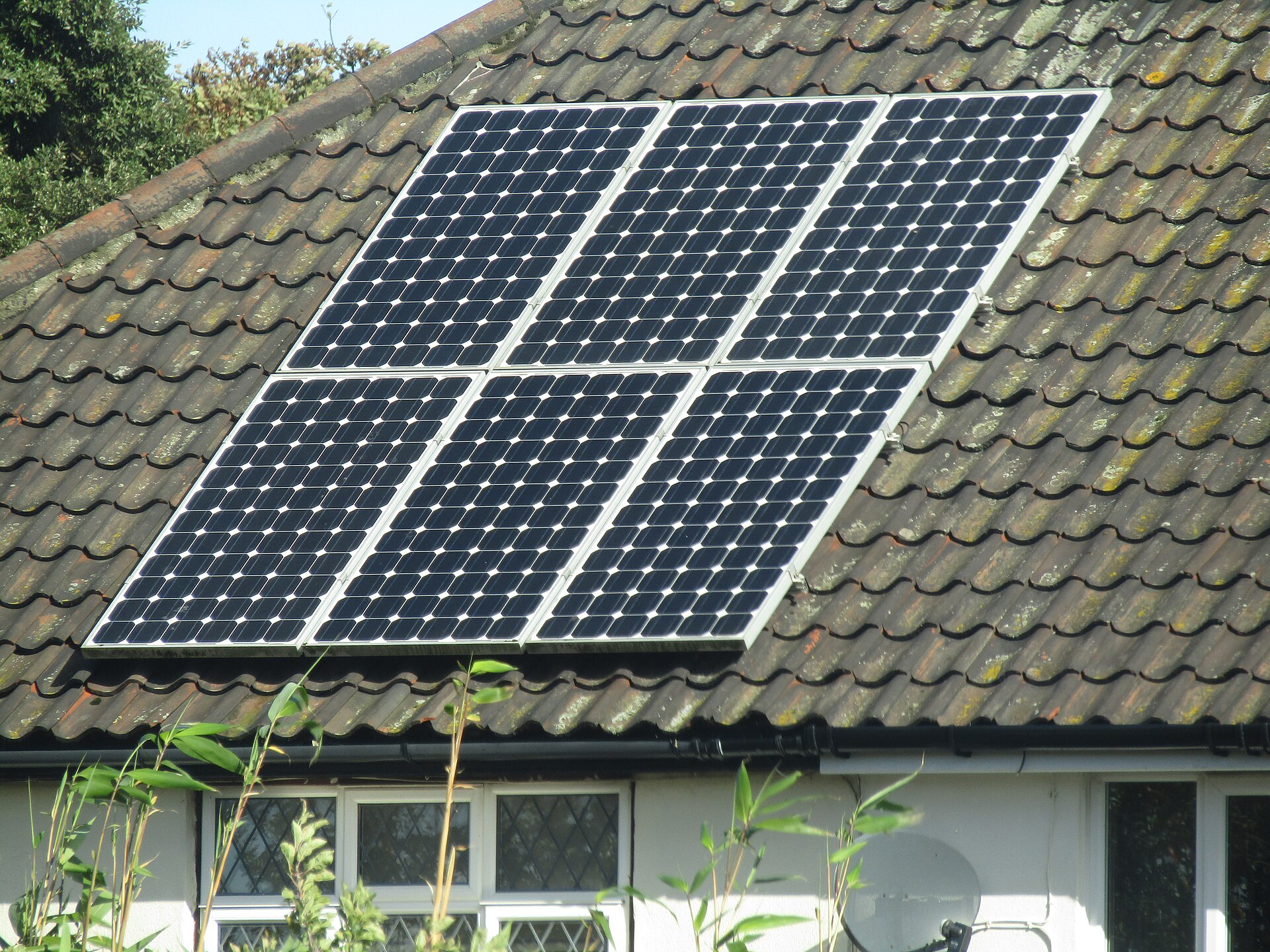
Charging from your own rooftop solar is close to free, because the real cost is the feed-in tariff you give up, commonly about 5c per kWh. At 18 kWh per 100 km that is about A$0.90 per 100 km, or about A$126 a year. Our guide to charging an EV with solar covers the panel size you need.
The Solar Sharer Offer goes further. It is a regulated retail offer with free power for three hours at midday: 11am to 2pm in the NSW and South East Queensland networks and 12pm to 3pm in South Australia, with usage above 24 kWh in that period charged at a capped rate. A 7 kW single phase charger delivers about 21 kWh in three hours, so it fits under the cap. See our Solar Sharer Offer guide for who qualifies.
How much does a full charge cost for popular models?
A full charge from empty costs about A$22 to A$30 at a flat Sydney rate for the five models below, and about A$4.60 to A$6.30 in a cheap solar window. Public DC charging costs roughly A$38 to A$53 for the same fill.
We used each model’s WLTP combined energy consumption and usable battery from the Australian specification pages on Zecar, checked November 2026, then added 10% for charging losses (a Solar Cobber assumption). Zecar’s figures are the standard laboratory test, so real-world use is usually higher.
| Model | WLTP use (Wh/km) | Usable battery (kWh) | Wall energy per 100 km (kWh) | Full charge, kWh from wall |
|---|---|---|---|---|
| Tesla Model Y Rear-Wheel Drive | 129 | 60 | 14.2 | 66.0 |
| MG4 77 kWh | 140 | 74.2 | 15.4 | 81.6 |
| BYD Atto 3 Extended Range | 144 | 60.5 | 15.8 | 66.6 |
| Hyundai Ioniq 5 Rear-Wheel Drive | 146 | 74 (estimate) | 16.1 | 81.4 |
| BYD Sealion 7 Premium | 171 | 82.5 | 18.8 | 90.8 |
- Energex solar window
- Ausgrid flat rate
- Public DC at 58c
View the data as a table
| Energex solar window | Ausgrid flat rate | Public DC at 58c | |
|---|---|---|---|
| Model Y RWD | A$0.99 | A$4.70 | A$8.23 |
| MG4 77 | A$1.07 | A$5.10 | A$8.93 |
| Atto 3 | A$1.11 | A$5.25 | A$9.19 |
| Ioniq 5 RWD | A$1.12 | A$5.32 | A$9.31 |
| Sealion 7 | A$1.31 | A$6.23 | A$10.91 |
The most efficient car here, the Model Y, costs about 25% less per 100 km to charge than the Sealion 7, whichever rate you pay.
| Model | Full charge, Energex solar window (6.98c) | Full charge, Ausgrid flat (33.14c) | Full charge, public DC (58c) |
|---|---|---|---|
| Tesla Model Y Rear-Wheel Drive | A$4.61 | A$21.87 | A$38.28 |
| MG4 77 kWh | A$5.70 | A$27.05 | A$47.34 |
| BYD Atto 3 Extended Range | A$4.65 | A$22.05 | A$38.60 |
| Hyundai Ioniq 5 Rear-Wheel Drive | A$5.68 | A$26.98 | A$47.21 |
| BYD Sealion 7 Premium | A$6.33 | A$30.07 | A$52.64 |
How much does it cost to charge a Tesla?
A Tesla Model Y Rear-Wheel Drive costs about A$4.70 per 100 km on a Sydney flat rate and about A$22 for a full charge from empty, on the figures above. At Tesla Superchargers, one secondary price list gives A$0.69 to A$0.77 per kWh for Tesla owners and A$0.79 for other brands, or A$0.64 with a monthly subscription, which is about A$9.80 to A$11.20 per 100 km at 14.2 kWh. Check the Tesla app for the live price, because it varies by site and time. Our Tesla Wall Connector review covers the home charger.
How much do public chargers cost?
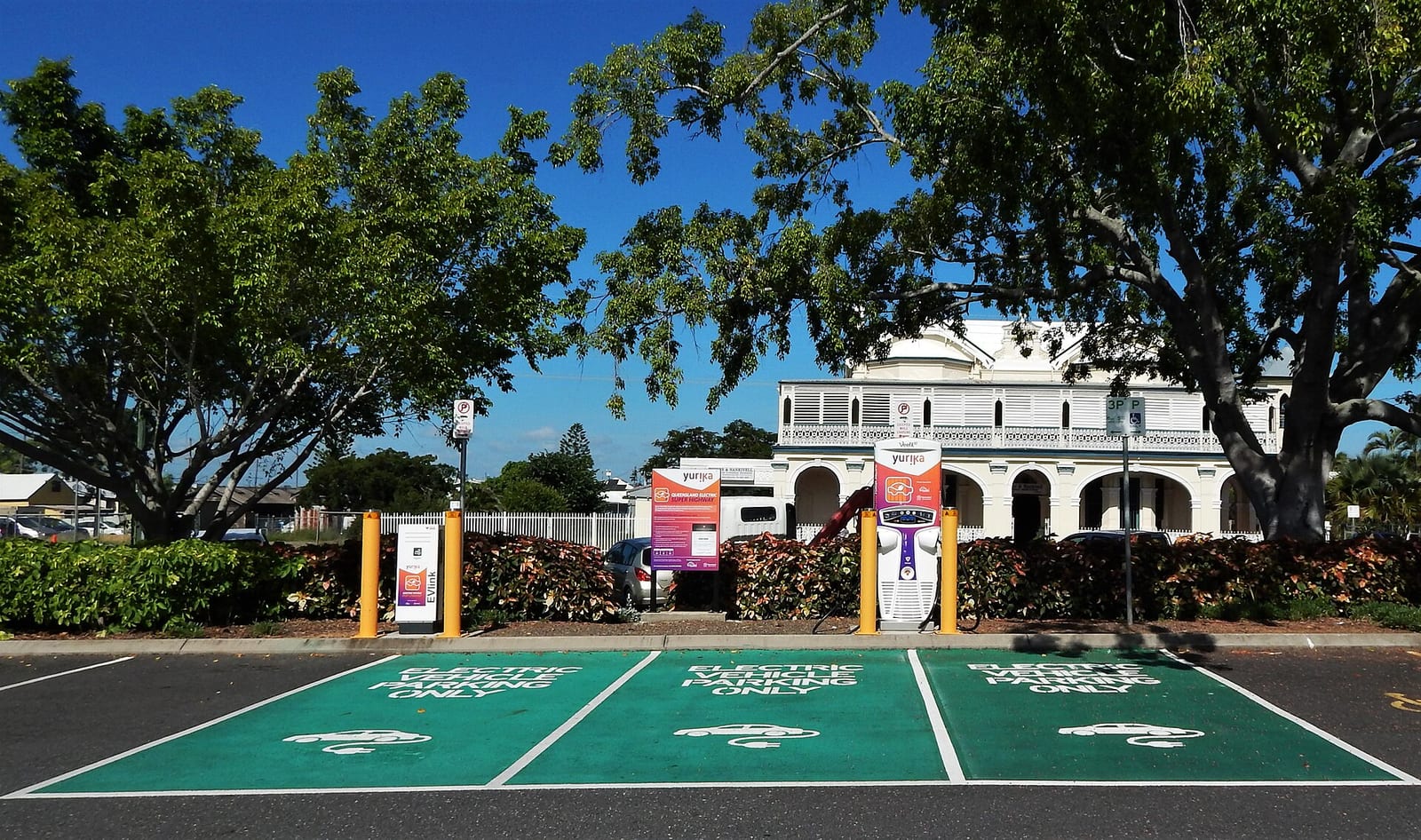
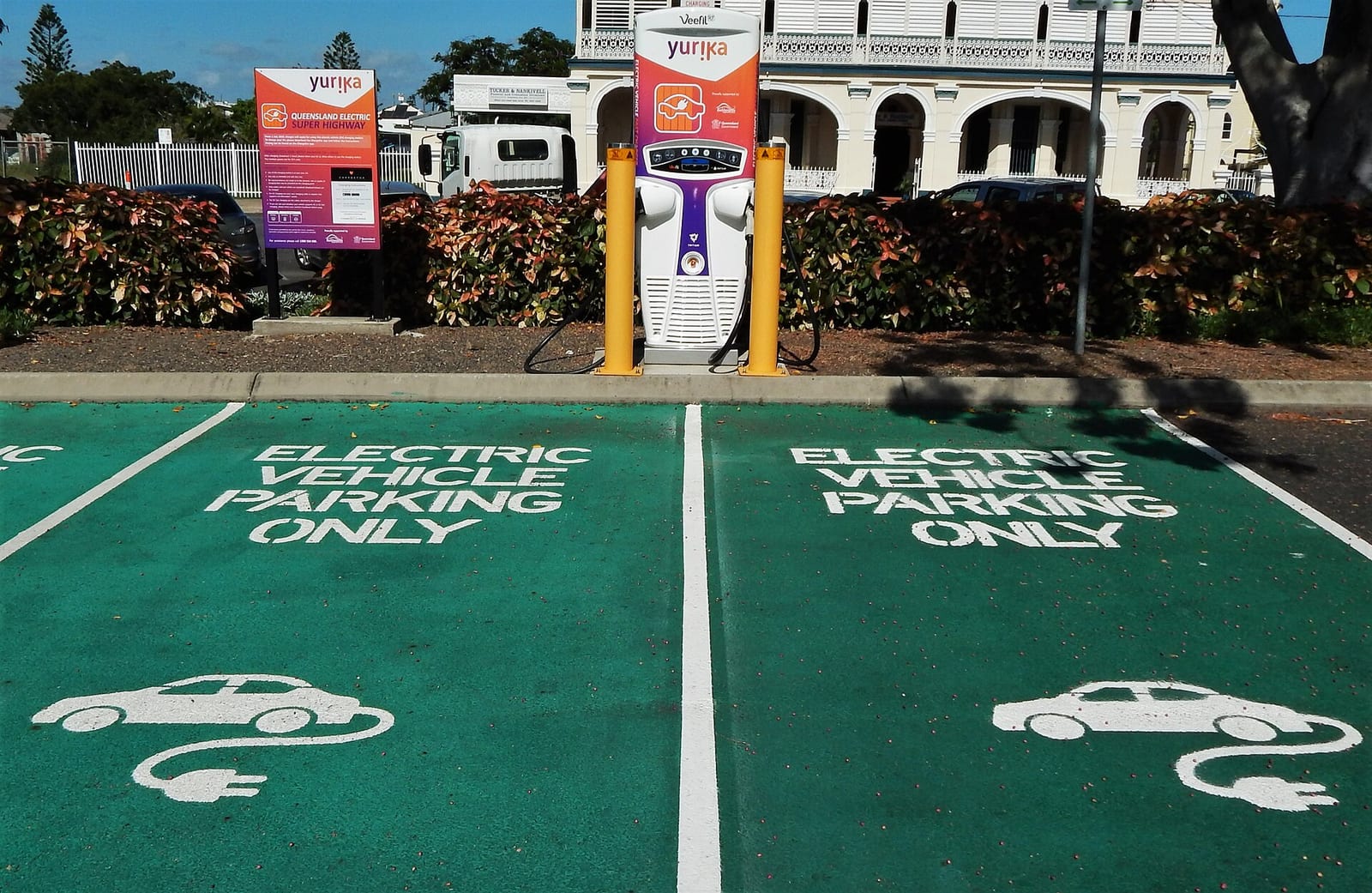
Public AC chargers cost about 25c to 45c per kWh and DC fast chargers about 40c to 75c per kWh, which works out at A$4.50 to A$8.10 and A$7.20 to A$13.50 per 100 km at 18 kWh per 100 km. We could not open an operator-published price list for every network, so treat the table as a guide and check the app before you plug in.
| Charger type | Price range per kWh | Cost per 100 km at 18 kWh | Source |
|---|---|---|---|
| Public AC (7 to 22 kW) | 25c to 45c | A$4.50 to A$8.10 | SolarQuotes charging cost guide |
| Public DC fast | 40c to 75c | A$7.20 to A$13.50 | SolarQuotes charging cost guide |
| Evie Networks 50 and 75 kW DC | 58c | A$10.44 | Zecar provider guide (undated) |
| BP Pulse 75 kW DC | 66c | A$11.88 | Zecar provider guide (undated) |
| AmpCharge (Ampol) 150 kW DC | 69c | A$12.42 | Zecar provider guide (undated) |
| Tesla Supercharger, non-Tesla | 79c, or 64c on subscription | A$14.22, or A$11.52 | Zecar provider guide (undated) |
| Jolt kerbside | 7 kWh free daily, then 54c | A$9.72 after the free allowance | Zecar provider guide (undated) |
Sources: SolarQuotes and Zecar. The Zecar page does not attribute prices to operators and some of its own figures conflict (for example Evie 350 kW at 73c in one place and a 58c to 75c range in another), so we show only the single-price rows. A separate evee.com.au summary gives Tesla at 43c to 69c, Chargefox at 45c to 60c and Evie at 58c to 73c, again unattributed.
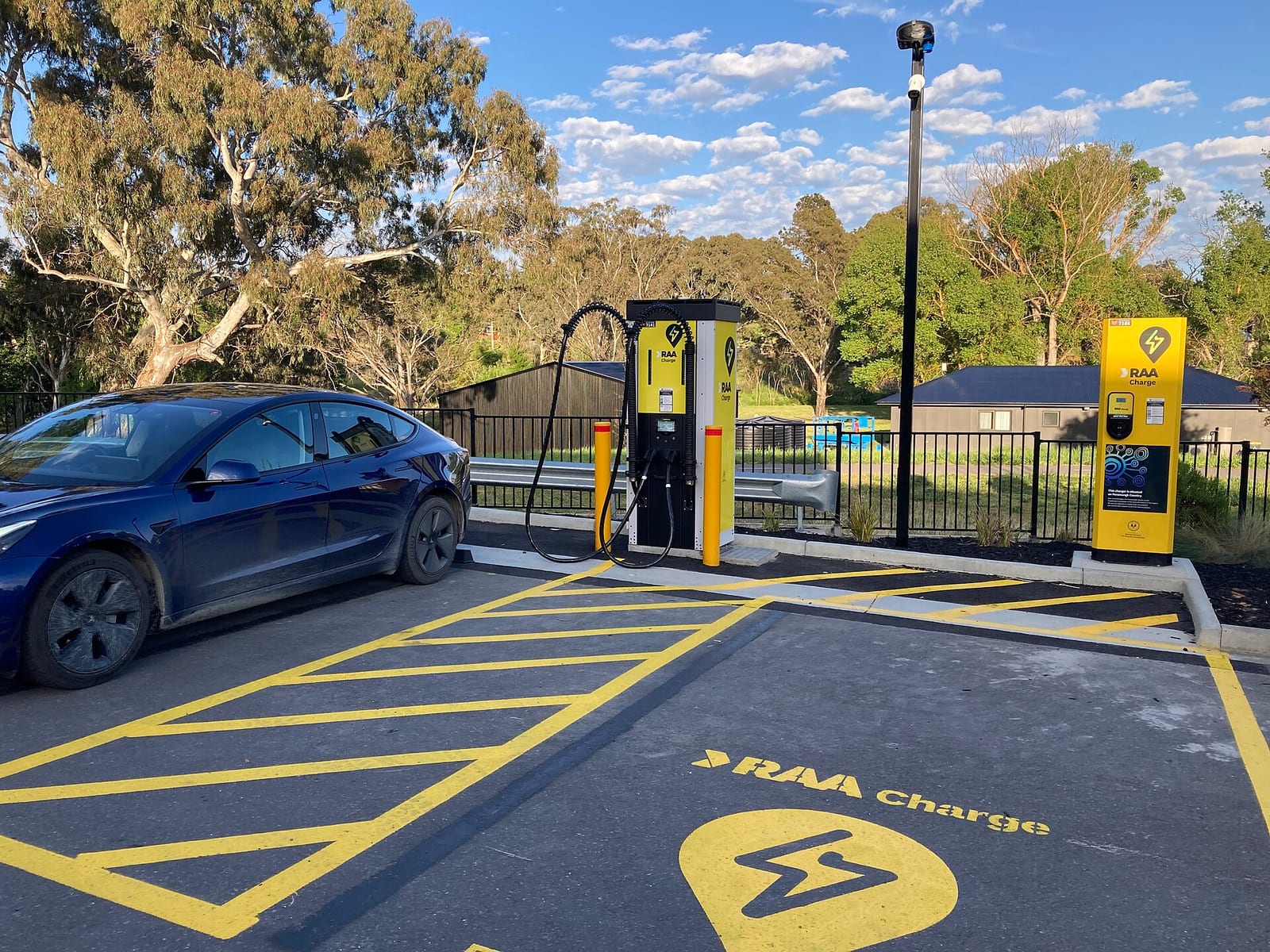
Is it cheaper to charge an EV than fill a petrol car?
Yes, in every scenario we calculated except the dearest public charger, which roughly matches a petrol car. At 234.5c per litre, a petrol car using 7 L per 100 km costs A$16.42 per 100 km and about A$2,298 a year at 14,000 km.
View the data as a table
| Cost per 100 km | |
|---|---|
| Petrol car (7 L per 100 km) | A$16.42 |
| Public DC, 79c per kWh | A$14.22 |
| Public DC, 58c per kWh | A$10.44 |
| SA Power Networks flat 41.91c | A$7.54 |
| Ausgrid flat 33.14c | A$5.97 |
| Energex flat 27.97c | A$5.03 |
| Ausgrid off-peak 24.04c | A$4.33 |
| Endeavour solar soak 12.35c | A$2.22 |
| Energex solar window 6.98c | A$1.26 |
| Surplus solar, 5c forgone | A$0.90 |
An electric car on a flat Sydney rate costs about 64% less per 100 km than petrol, and one charged in the Energex solar window costs about 92% less.
| Scenario at 14,000 km a year | Energy used | Cost per year |
|---|---|---|
| Petrol, 7 L per 100 km at 234.5c | 980 L | A$2,298 |
| Petrol SUV, 9 L per 100 km at 234.5c | 1,260 L | A$2,955 |
| EV, Ausgrid flat 33.14c | 2,520 kWh | A$835 |
| EV, Ausgrid off-peak 24.04c | 2,520 kWh | A$606 |
| EV, Energex solar window 6.98c | 2,520 kWh | A$176 |
| EV, surplus solar at 5c forgone | 2,520 kWh | A$126 |
| EV, public DC at 58c | 2,520 kWh | A$1,462 |
The Electric Vehicle Council’s own estimates, undated, are about A$2,000 for petrol, A$800 on peak-time electricity and A$200 on off-peak. Our petrol figure is higher because the pump price is now 234.5c per litre. Switching also changes your electricity use: 2,520 kWh a year is about 65% more than the AER’s 3,900 kWh Ausgrid household assumption.
How long does it take to charge an electric car?
At home, a 7 kW charger adds about 39 km of range per hour and fills a 60 to 80 kWh car overnight in 9 to 13 hours. A standard 2 kW power point adds about 11 km per hour, and a DC fast charger takes a car from 10% to 80% in about 18 to 45 minutes.
| Charger | Power | Energy per hour | Range added per hour at 18 kWh per 100 km |
|---|---|---|---|
| Standard power point | 2 kW | 2 kWh | 11 km |
| Single phase wall charger | 7 kW | 7 kWh | 39 km |
| Three phase wall charger | 11 kW | 11 kWh | 61 km |
Solar Cobber calculation: power times one hour, divided by 0.18 kWh per km. It ignores the slower charge near full, and some cars (the Atto 3 accepts 7 kW AC) cannot use 11 kW. Our EV charger installation cost guide and best home EV chargers roundup cover the hardware.
View the data as a table
| Minutes, 10 to 80% | |
|---|---|
| Hyundai Ioniq 5 RWD | 18 min |
| Tesla Model Y RWD | 24 min |
| BYD Sealion 7 Premium | 31 min |
| BYD Atto 3 Extended | 45 min |
The Ioniq 5 charges 10% to 80% in 18 minutes, the Atto 3 takes 45 minutes, and the maximum DC rates are 150 kW for the Sealion 7, 175 kW for the Model Y and 89 kW for the Atto 3.
What does it add to your electricity bill?
At 14,000 km a year an electric car adds about 2,520 kWh, or A$835 on the Ausgrid flat rate (A$606 off-peak). Whether that is worth it depends on your tariff and whether you own solar. Over 4.3 million households had rooftop solar at the end of 2025, according to the Clean Energy Council, so many drivers can charge from their own panels.
A home battery can also shift cheap midday solar into an evening charge, and some retailers sell EV plans. Compare plans on our Default Market Offer explainer, read how wholesale-priced plans work in our Amber Electric review, and see vehicle-to-grid for cars that feed the home. Purchase incentives are in our EV rebates guide.
Ways to cut your charging cost
Put the car on a timer for the cheapest window, use the Solar Sharer free window if you qualify, keep DC fast charging for road trips, and add solar if you drive more than about 10,000 km a year (compare local installers).
What to check before you rely on these numbers
Your real cost depends on your own plan, so check your bill for the usage rate and time of use windows, and confirm public prices in the operator’s app. Ask installers to include the extra 2,500 kWh a year when sizing solar.
FAQ
How much does it cost to charge an electric car at home in Australia?
About A$4.50 to A$7.50 per 100 km on a flat regulated rate in 2026, or A$22 to A$30 for a full charge of a typical 60 to 80 kWh car in Sydney. It drops to A$1 to A$2 per 100 km in a cheap solar window.
How much does it cost to charge an electric car per km?
About 4.5c to 7.5c per km at home on a flat rate and 10c to 14c per km at a DC fast charger, at 18 kWh per 100 km. Petrol at 7 L per 100 km and 234.5c per litre costs about 16.4c per km.
How long does it take to charge an electric car?
About 9 to 13 hours from empty on a 7 kW home charger and 18 to 45 minutes for 10% to 80% on a DC fast charger. A standard 2 kW power point adds only about 11 km of range per hour.
Is it cheaper to charge an EV at night?
Only on a tariff with a cheap overnight rate. On Victoria’s default tariff off-peak runs 9pm to 11am at 21.17c to 22.60c per kWh, and on Ausgrid’s time of use tariff all non-peak hours cost 24.04c per kWh. On a flat rate, timing makes no difference.
Is public EV charging more expensive than home charging?
Yes. Secondary price lists put public DC fast charging at about 40c to 79c per kWh, compared with 25c to 42c on a flat home rate. Public AC charging can be similar to a flat home rate.
How much does it cost to charge a Tesla Model Y?
About A$4.70 per 100 km on a Sydney flat rate and about A$22 for a full charge, using Tesla’s 129 Wh per km WLTP figure plus 10% charging losses. Tesla Superchargers cost about A$9.80 to A$11.20 per 100 km on one secondary price list.
Can I charge my electric car for free with solar?
Almost. Your own solar costs only the feed-in tariff you forgo, about 5c per kWh. The Solar Sharer Offer also gives the first 24 kWh free in a three-hour midday window for eligible NSW, South East Queensland and South Australian customers.
How much does an EV add to my electricity bill?
About 2,520 kWh a year at 14,000 km and 18 kWh per 100 km, or about A$835 on the Ausgrid flat rate. That is roughly 65% on top of the AER’s Ausgrid household assumption of 3,900 kWh.
Sources
- Australian Institute of Petroleum, Weekly Petrol Prices Report, week ending 8 November 2026
- Electric Vehicle Council, how much extra electricity an EV uses
- Electric Vehicle Council, State of Electric Vehicles 2026 summary
- Australian Energy Regulator, Default Market Offer 2026-27 final determination
- Essential Services Commission, Victorian Default Offer
- Clean Energy Council, Clean Energy Australia 2026
- SolarQuotes, EV charging cost
- Zecar, Tesla Model Y Rear-Wheel Drive, MG4 77 kWh, BYD Atto 3, Hyundai Ioniq 5, BYD Sealion 7
- Zecar, EV charging providers in Australia
About this guide
This guide was written by the Solar Cobber editorial team from independent desk research checked in November 2026. Solar Cobber is a free directory that may earn referral or advertising fees from installers, but commercial relationships never affect our content. This is general information, not financial advice. Spotted an error? Tell us via /contact.
Filed under Savings
Back to blog