
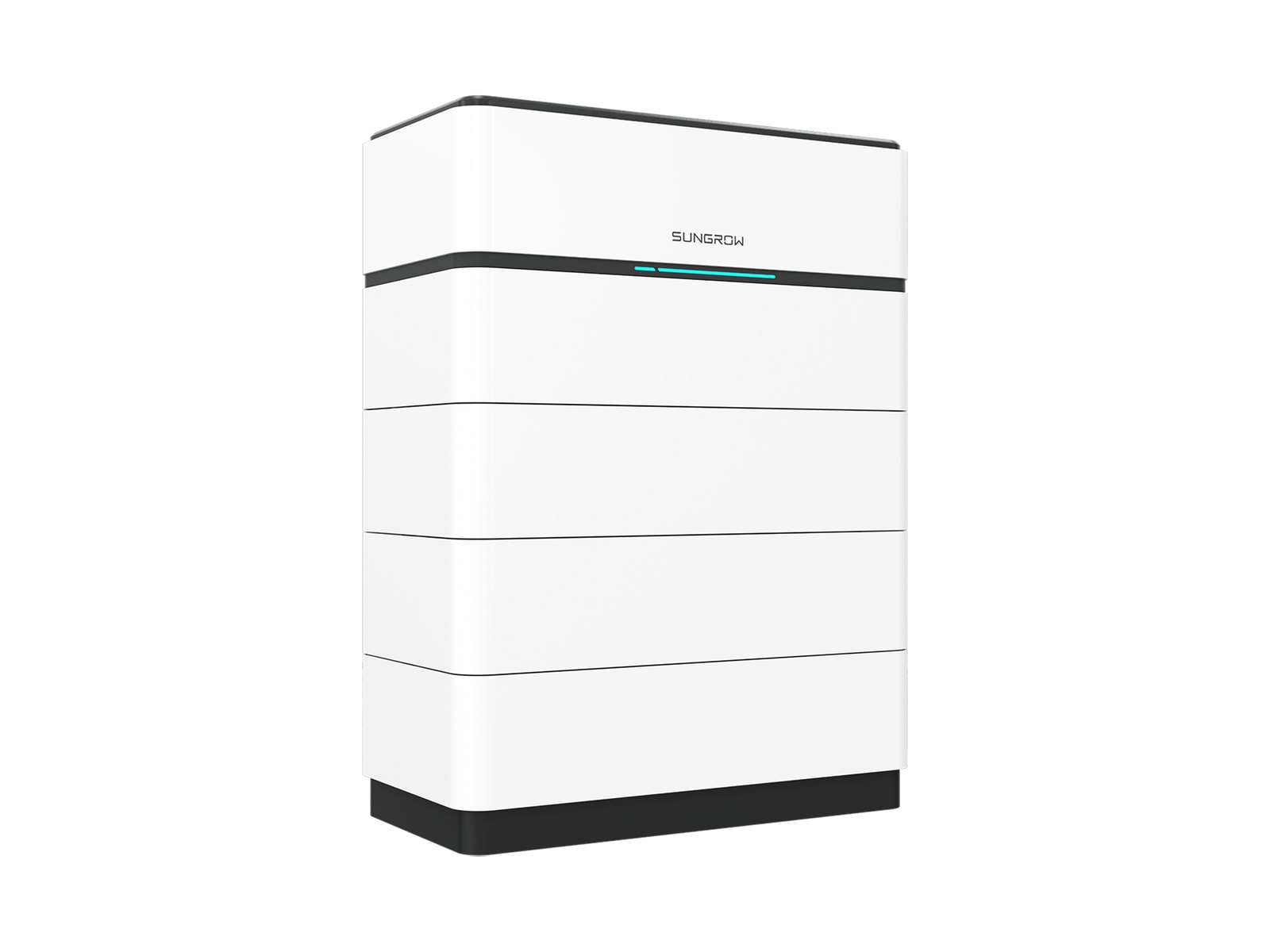
Our verdict
The Sungrow SBH is the SBR's bigger and more powerful sibling, with 5 kWh modules, 50 A of battery current and up to 40 kWh in one stack, at a similar price per kWh after the federal discount. It makes most sense for large or three-phase homes on a Sungrow SH-T hybrid; smaller single-phase homes usually get the same value from an SBR without paying for power their inverter cannot use.
- Best for
- Large or three-phase homes wanting 20 kWh or more and whole-home backup on a Sungrow SH-T hybrid
- Look elsewhere if
- Small single-phase homes, or anyone who wants to keep a non-Sungrow inverter
- Price guide
- About A$11,700 (20 kWh SBH200) to A$23,700 (40 kWh SBH400) after the federal battery discount, battery only, excluding the inverter and installation (SolarQuotes, May 2026)
- Warranty
- 10 years, with retained capacity of 70% (unlimited cycles for self-consumption and backup; throughput caps, and from May 2026 temperature conditions, apply)
Pros
05- 50 A continuous charge and discharge, so a stack can deliver 14.08 kW (SBH200) up to 28.16 kW (SBH400)
- Large 5 kWh modules give up to 40 kWh in one stack and 160 kWh across four stacks
- Same unlimited-cycle warranty as the SBR for daily self-consumption and backup, with grid charging counted as self-consumption
- Price per usable kWh after the federal discount is close to the SBR's, at about A$560 to A$600 on SolarQuotes' May 2026 list
- Pairs with Sungrow's SH15T, SH20T and SH25T three-phase hybrids, which Sungrow says have a 63 A bypass for whole-home backup
Cons
06- Big and heavy: the smallest Australian size was 20 kWh until the SBH150 (15 kWh) arrived in 2026, and an SBH400 weighs 376 kg
- Full 50 A needs the right inverter: Sungrow's chart limits the SH5.0RS, SH6.0RS and SH-RT models to 30 A, and SBH350 and SBH400 exceed the SH-RS voltage range
- Warranty V9.0 (installs from 21 May 2026) can withdraw performance cover if the battery spends 90 or more days a year at 35 to 40 °C or 30 or more days above 40 °C
- Rated only IP55 and charges only from 0 °C, so it needs a shaded, sheltered spot
- CEC listing BAT-505 expires on 4 January 2027, so installs after that date depend on Sungrow renewing it
- Locked to Sungrow hybrid inverters, and the warranty is not transferable beyond the original end user
The Sungrow SBH is a high-voltage, modular lithium iron phosphate (LFP) battery that stacks 5 kWh modules on a floor-standing base. Sungrow launched it in Australia in May 2024 alongside its SH15T, SH20T and SH25T three-phase hybrid inverters, and it now sits above the long-running Sungrow SBR in the range. Australian stacks run from 15 kWh (SBH150) to 40 kWh (SBH400). Installers usually quote it to large or three-phase homes wanting whole-home backup, often against BYD’s Battery-Box Premium HVM, the Sigenergy SigenStor or a bigger SBR. This review is based on manufacturer documentation, warranty terms, published pricing and owner/installer feedback; Solar Cobber did not test the product and was not paid by the manufacturer. Below we cover how it differs from the SBR, October 2026 prices, which inverters can use its extra power, and the new heat conditions in Sungrow’s 2026 warranty.
What it is and how it works
Like the SBR, the SBH is a DC battery with no inverter of its own. It plugs into a Sungrow hybrid inverter that also runs your solar panels. Each stack has a control unit on top and modules underneath that connect without cables between them.
The SBH and SBR look like siblings but they are separate product lines. You cannot add SBH modules to an SBR stack, or the reverse; a Whirlpool member answered an owner’s question about whether they were interchangeable with a flat “No”. The module sizes, voltages and current ratings are all different:
| Sungrow SBR | Sungrow SBH | |
|---|---|---|
| Module size | 3.2 kWh, 33 kg | 5.0 kWh, 45 kg |
| Stack sizes sold in Australia | 6.4 to 25.6 kWh | 15 to 40 kWh |
| Continuous current | 30 A | 50 A |
| Rated power per stack | 3.84 to 15.36 kW | 10.56 to 28.16 kW |
| Footprint | 625 x 330 mm | 675 x 350 mm |
| Max with 4 stacks | About 100 kWh | 160 kWh |
The practical difference is power. Because each SBH stack can push 50 A instead of 30 A, an SBH200 delivers 14.08 kW from 20 kWh, where an SBR192 of similar capacity is rated at 11.52 kW. That matters when a big three-phase inverter has to run ducted air conditioning and a pool pump at night from the battery alone.
Expansion works the same way on both: the existing modules are first brought to the same state of charge as the new ones in iSolarCloud, with any VPP control switched off.
At launch the smallest SBH sold here was the 20 kWh SBH200, and Sungrow’s 2024 manual said the SBH100 and SBH150 were not for sale in Australia. That changed in 2026: the 15 kWh SBH150 appears in the Australian warranty from May 2026. The SBH100 is CEC listed but still absent from the Australian warranty.
Specs that matter in Australia
Inverter pairing sets the real power. Sungrow’s cross-reference chart (V2.4, October 2025) is the key document. In summary:
- Single-phase SH-RS: SBH200 and SBH250 are fully compatible with the SH8.0RS and SH10RS. The SBH300 needs special firmware from Sungrow service, and the SBH350 and SBH400 exceed the inverter’s voltage range. The SH5.0RS and SH6.0RS are limited to 30 A on the battery, so they cannot use the SBH’s extra current.
- Three-phase SH-RT: the SH5.0RT and SH10RT also cap battery current at 30 A, work with SBH200 to SBH350, and cannot take an SBH400.
- Three-phase SH5T to SH25T: every SBH size from SBH200 to SBH400 is compatible. With the bigger inverters, small stacks limit battery power: an SBH200 tops out at 14.08 kW on an SH15T, SH20T or SH25T, and only an SBH400 lets an SH25T deliver its full rating from the battery.
SolarQuotes’ battery table lists 17.6 kW for the SBH300 to SBH400, which conflicts with Sungrow’s datasheet; we use the datasheet figures. The chart does not yet cover the SBH150, so get the pairing confirmed in writing. In short, the SBH earns its keep on SH-T three-phase hybrids; on a 5 or 6 kW single-phase inverter it behaves like a big SBR. Our guide to single vs three phase power explains which you have.
Backup. Sungrow says the SH15T to SH25T have a 63 A bypass for whole-home backup and a 10 ms switchover. A Whirlpool owner described an SH15T and SBH250 running the house, including ducted air conditioning, through a nine-hour planned outage on a sunny day. A commenter on SolarQuotes quoted a Sungrow technical specialist saying the three-phase hybrids do not share power between phases, so a 15 kW model supplies at most 5 kW per phase.
Heat, cold and weather. The datasheet rates charging from 0 to 50 °C and discharging from -20 to 50 °C. It is IP55 with passive cooling, the same as the SBR, so it should go in shade and out of the rain. The cold limit matters in frosty areas, and the heat limit now matters for the warranty (see below).
Weight and space. The SBH is 675 mm wide and 350 mm deep. An SBH200 is 900 mm tall and 196 kg; an SBH400 is 1.54 m tall and 376 kg. Garage installs often need bollards. Sungrow’s chart also calls for at least 10 mm² DC cable for the SBH, against 6 mm² for the SBR.
Export limits and VPPs. Export limits are set in the inverter. Confirm with any VPP operator that it supports the SBH on your inverter, and check the warranty treatment first.
Price in Australia
SolarQuotes’ May 2026 price list gives these prices after the federal battery discount, including GST, excluding installation and the inverter:
| SBH size | Usable capacity | Approx. price after federal discount | Per usable kWh |
|---|---|---|---|
| SBH200 | 20 kWh | A$11,700 | A$585 |
| SBH250 | 25 kWh | A$14,000 | A$560 |
| SBH300 | 30 kWh | A$17,000 | A$567 |
| SBH350 | 35 kWh | A$21,000 | A$600 |
| SBH400 | 40 kWh | A$23,700 | A$593 |
For comparison, the same list puts an SBR192 (19.2 kWh) at about A$11,000 and an SBR256 (25.6 kWh) at about A$14,000. Per kWh the two are close. SolarQuotes had not published an SBH150 price when we checked.
You also need a Sungrow hybrid inverter and installation. In early 2025, before the federal discount existed, Whirlpool owners in Queensland reported installed SBH200 quotes of about A$15,200 (backup to three circuits) and A$16,100 (full-home backup), and another owner paid about A$29,000 supplied and installed for an SBH400.
The Cheaper Home Batteries Program discount is calculated per usable kWh. From 1 May to 31 December 2026 the factor is 6.8 STCs per kWh for the first 14 kWh, 60% of that from 14 to 28 kWh and 15% from 28 to 50 kWh. That gives about 120 STCs for an SBH200 (roughly A$4,400 to A$4,800 at STC prices of A$37 to A$40) and about 165 STCs for an SBH400 (roughly A$6,100 to A$6,600). Doubling from 20 to 40 kWh adds only about 40% more discount, so an SBH400 costs about twice an SBH200 after it. The factor falls to 5.7 on 1 January 2027. See our federal battery rebate guide for what stacks on top.
Warranty: the fine print
Sungrow Australia’s HV Battery Limited Warranty covers SBR and SBH. Version 9.0 applies to installs from 21 May 2026.
- Term: 10 years from installation, or 10.5 years from manufacture, whichever comes first.
- Retention: at least 70% of initial capacity at 10 years.
- Unlimited cycles for daily self-consumption and backup, where self-consumption includes storing energy from solar or the grid.
- Throughput caps for any other application, or any mix that includes one: 42 MWh (SBH150), 56 MWh (SBH200), 70 MWh (SBH250), 84 MWh (SBH300), 98 MWh (SBH350) and 112 MWh (SBH400). That is 2.8 MWh per kWh. VPP or wholesale trading is the likely trigger, so ask how Sungrow treats your VPP.
- New in V9.0, a heat profile: the performance warranty applies where the battery sees fewer than 90 days a year between 35 and 40 °C, fewer than 30 days above 40 °C, and an average below 25 °C for the rest of the year. Outside that, Sungrow says performance and throughput cover “may not” apply. This was not in V8.0, and a battery in a hot, sunny spot in western Sydney or inland Queensland could plausibly breach it.
- Exclusions: incompatible inverters, third-party parts, operating outside -20 to 50 °C, no iSolarCloud monitoring, and moving the battery without consent. If performance data is incomplete, Sungrow commits to a minimum of four years.
- Added modules take the original system’s warranty start date.
- Transfer: cover is given to the original end user and is “not otherwise transferable”.
Claims go through your installer, then Sungrow Australia’s online portal (North Sydney office, 1800 786 476). Australian Consumer Law rights apply in addition.
What owners and installers report
Praise. SolarQuotes’ Sungrow battery page averages 4.9 out of 5 from 1,094 owner ratings, though that covers all Sungrow batteries, not just the SBH. On Whirlpool, early buyers quoted an SBR switched to the SBH for the 50 A rating, an SH15T owner describes backup carrying the house through an outage, and an SBH250 owner singled out the unlimited-cycle warranty. An SH25T and SBH400 owner advises matching battery power to the inverter, or night-time backup falls short.
Complaints and quirks. The patterns we found:
- Charge rate control. A Whirlpool owner with an SH15T and SBH250 found off-peak grid charging runs at the full 15 kW until nearly full, and could not find a setting in iSolarCloud to charge more gently.
- Cabling disputes. Owners report installers and Sungrow disagreeing over cable size for full-home backup; one was told by Sungrow to use 16 mm² cable for a 63 A supply where the installer proposed 6 mm².
- Phase behaviour. An SH20T owner on the Clean Energy Reviews forum reported importing and exporting at the same time across phases while the battery ran the house.
The Clean Energy Council’s recall page lists no Sungrow battery recalls as of October 2026, although we could not query the ACCC recall database directly.
Sungrow SBH vs alternatives
| Sungrow SBH | Sungrow SBR | BYD Battery-Box Premium HVM | Sigenergy SigenStor | |
|---|---|---|---|---|
| Usable capacity per stack | 15 to 40 kWh | 9.6 to 25.6 kWh (6.4 kWh also sold) | 8.3 to 22.1 kWh | 5.2 to 46.8 kWh |
| Module size | 5.0 kWh | 3.2 kWh | 2.76 kWh | 5.2 or 7.8 kWh |
| Continuous battery current or power | 50 A (up to 28.16 kW) | 30 A (up to 15.36 kW) | 50 A | 2.5 or 4 kW per module |
| Inverter | Separate Sungrow hybrid | Separate Sungrow hybrid | Separate compatible hybrid (Fronius, Sungrow, GoodWe and others) | Built-in hybrid controller, 3 to 30 kW |
| Warranty basis | 70% at 10 years; unlimited cycles for self-use and backup | 70% at 10 years; unlimited cycles for self-use and backup | 70% at 10 years or about 3 MWh per kWh, all uses | 70% at 10 years or about 3 MWh per kWh, all uses |
| Ingress rating | IP55 | IP55 | IP55 | IP66 |
| Approx. price after federal discount, before installation (May 2026) | A$11,700 for 20 kWh, plus inverter | A$8,100 for 12.8 kWh, plus inverter | A$8,100 for HVM 13.8, plus inverter | About A$8,000 for 13 kWh |
Choose the SBH with a Sungrow SH-T three-phase hybrid when you want 20 kWh or more and enough battery power for whole-home backup. Choose the SBR on single phase or under 20 kWh, since a 5 or 6 kW inverter cannot use the SBH’s extra current. Choose BYD’s Battery-Box Premium to keep a Fronius or other non-Sungrow inverter, or a SigenStor for an all-in-one IP66 unit.
Questions to ask your installer
- Which Sungrow hybrid are you quoting, and does Sungrow’s cross-reference chart list my SBH size as fully compatible, or limited?
- How many kW can the battery supply on its own at night, and how many kW per phase?
- Where will the battery go, and how many days a year above 35 °C will that spot see, given the V9.0 warranty heat conditions?
- What cable size are you using to and from the inverter for full-home backup?
- Is the SBH still on the CEC approved list on my install date, given BAT-505 expires on 4 January 2027?
- How many STCs have you claimed for the federal discount, and is any state rebate included?
- If I join a VPP, will Sungrow treat it as self-consumption or as an application under the throughput cap?
FAQ
What is the difference between the Sungrow SBH and SBR?
The SBH uses 5 kWh modules at 50 A (15 to 40 kWh, up to 28.16 kW per stack); the SBR uses 3.2 kWh modules at 30 A (6.4 to 25.6 kWh, up to 15.36 kW). They share a warranty, but the modules cannot be mixed.
Is the SBH worth it over the SBR?
Only if your inverter can use the extra power, which in practice means a Sungrow SH-T three-phase hybrid, or if you want more than 25.6 kWh in one stack.
Does the Sungrow SBH work with my single-phase inverter?
The SH8.0RS and SH10RS work fully with SBH200 and SBH250. The SH5.0RS and SH6.0RS work but limit battery current to 30 A. The SBH350 and SBH400 are not compatible with any SH-RS model.
How much is the federal rebate on an SBH?
At May to December 2026 rates, roughly A$4,400 to A$4,800 on an SBH200 and A$6,100 to A$6,600 on an SBH400, depending on STC prices. The rate drops on 1 January 2027.
Can I add modules to an SBH later?
Yes, up to eight per stack or four stacks in parallel. Added modules inherit the original warranty start date.
Can the SBH be installed outside?
Yes, at IP55, but it should be shaded and out of the rain, and a hot location can affect cover under the 2026 warranty.
Is the warranty transferable if I sell?
The Australian warranty says it is not transferable beyond the original end user, so ask Sungrow before relying on it in a sale.
Find an installer
The SBH only pays off when the inverter, cabling and location are right. Use our installer directory to find local companies with Sungrow three-phase experience, and compare quotes line by line with our guide on how to compare solar quotes, including the inverter model, SBH size and STCs claimed.
Read next
Battery buying guides
Often quoted alongside
Sungrow
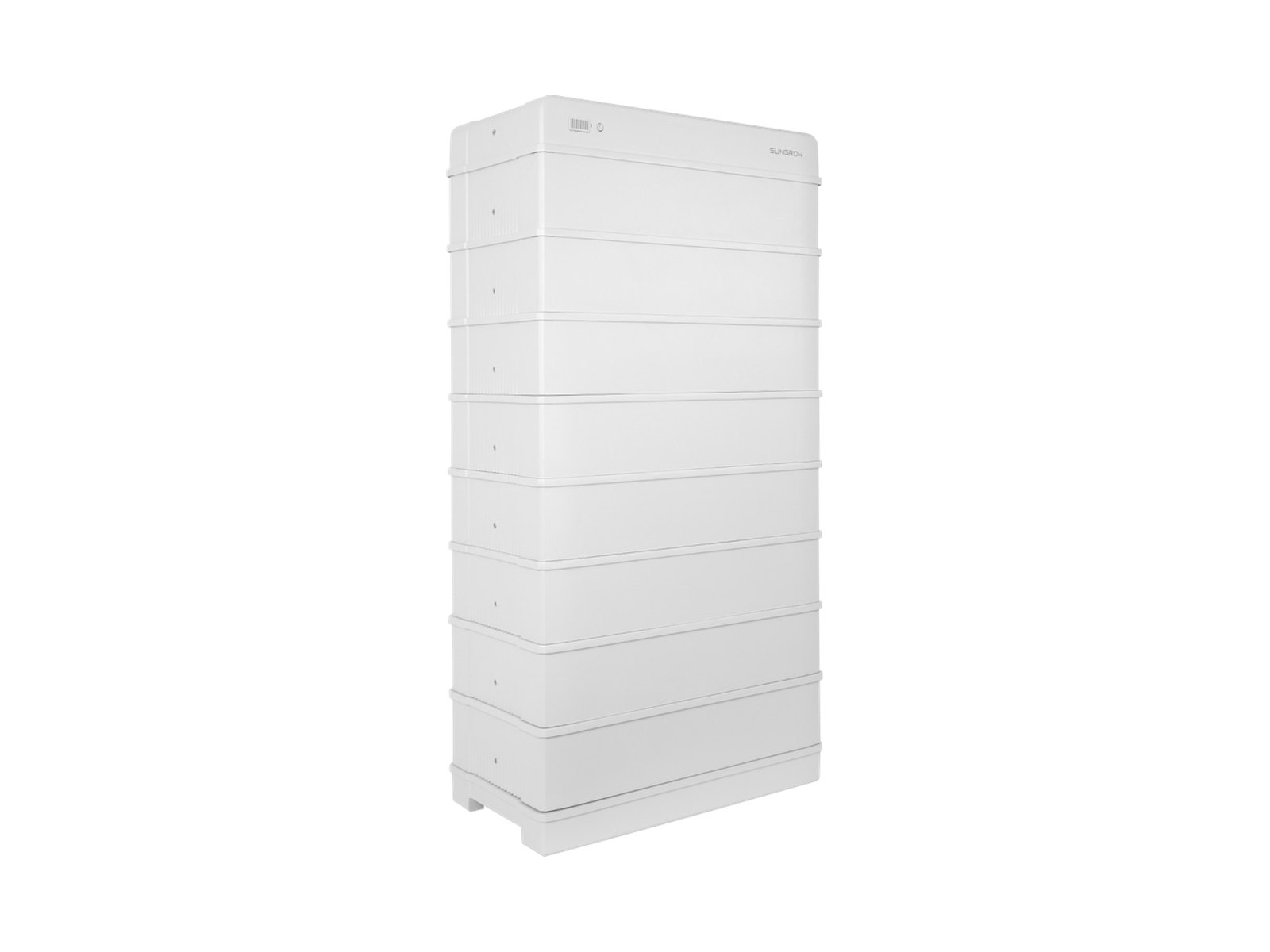
Sungrow SBR
The Sungrow SBR is one of the best-value modular batteries in Australia, with easy expansion in 3.2 kWh steps and a warranty that gives normal households unlimited cycles. The trade-off is that you must pair it with a Sungrow hybrid inverter, and Sungrow's app and phone support are weaker than the hardware.
Best for
Homes wanting a modular battery paired with a Sungrow hybrid inverter
BYD
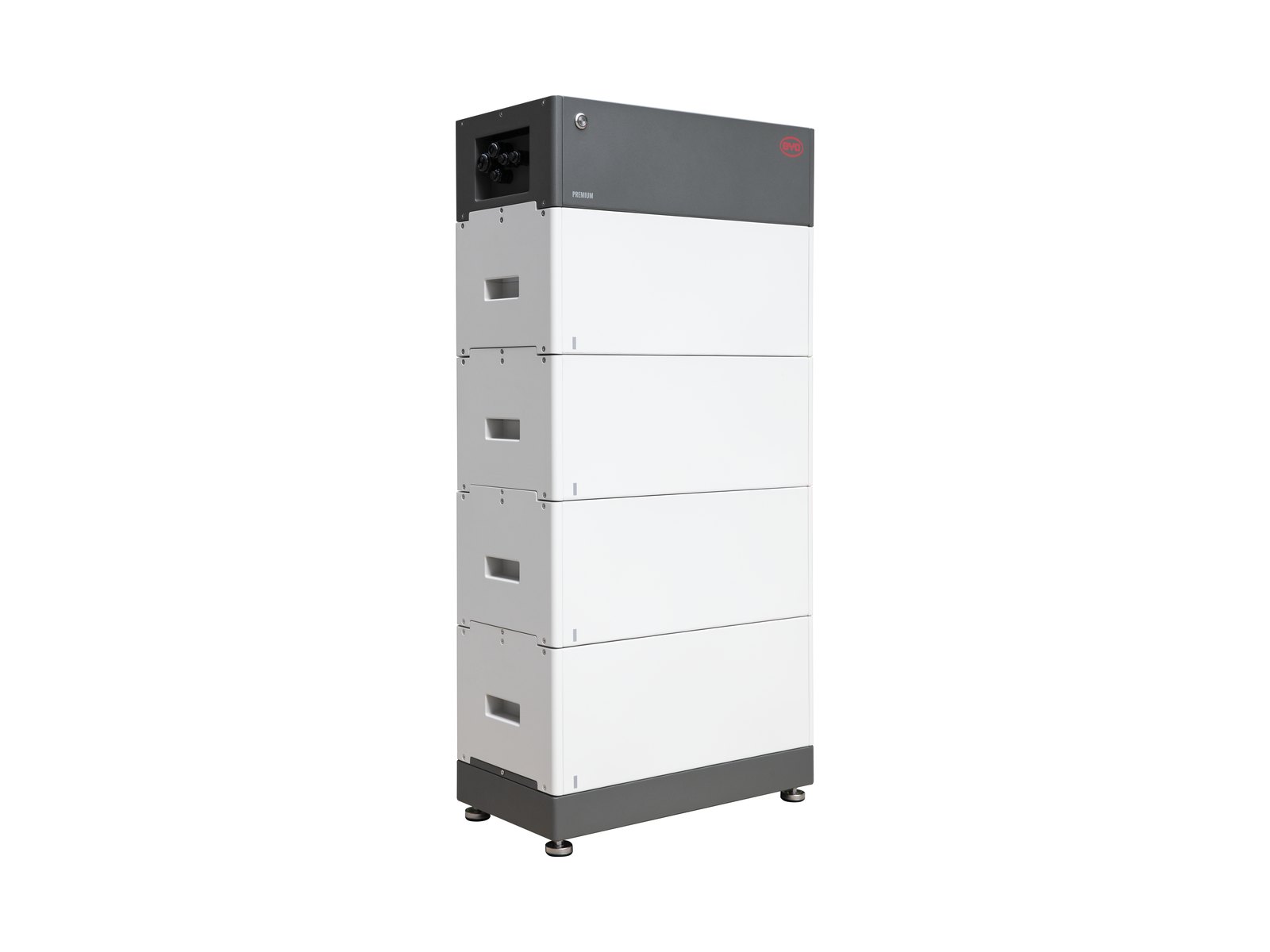
BYD Battery-Box Premium
The BYD Battery-Box Premium is a proven, stackable battery that works with more inverter brands than most, which makes it the default partner for Fronius hybrid systems. Its warranty ends at a throughput cap for every type of use, so households that cycle hard every day may run out of cover before 10 years.
Best for
Homes pairing a battery with a Fronius GEN24 Plus or another listed hybrid inverter
Sigenergy
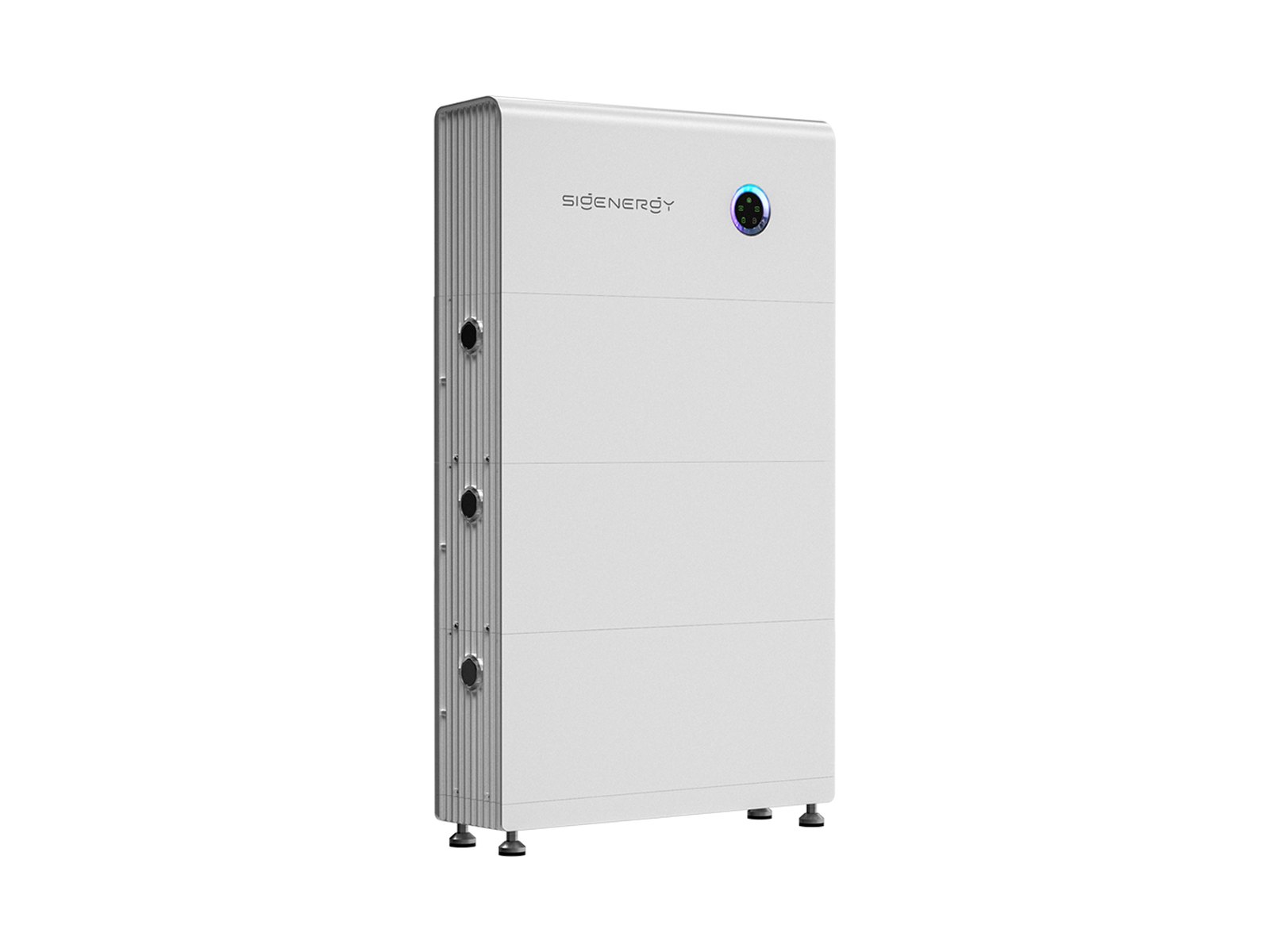
Sigenergy SigenStor
SigenStor packs a hybrid inverter, battery and energy manager into one stack, with genuine three-phase options, IP66 weatherproofing and a very detailed app at a competitive price. The trade-offs are a young company with a 2025 recall on some single-phase controllers, mixed owner experiences with support, and a warranty that caps throughput for all uses.
Best for
Three-phase homes, or anyone wanting an all-in-one battery with room to add EV charging
Sources
Independent desk research by the Solar Cobber editorial team. We did not test this product and were not paid by the manufacturer. Solar Cobber is a free directory that may earn referral or advertising fees from installers; this never affects our reviews.
- 01Sungrow SBH200 to SBH400 datasheet V3, Australia (PDF)
- 02Sungrow SBH100 to SBH400 datasheet V4 (PDF)
- 03Sungrow HV Battery Limited Warranty, Australia, V9.0 (May 2026, PDF)
- 04Sungrow HV Battery Limited Warranty, Australia, V8.0 (PDF)
- 05Sungrow Australia: SBR and SBH battery and inverter cross-reference chart V2.4 (PDF)
- 06Sungrow Australia: SBR/SBH HV battery extension manual V2.1 (PDF)
- 07Sungrow SBH100 to SBH400 user manual, Ver13 2024 (PDF)
- 08Sungrow global SBH100 to SBH400 product page
- 09Clean Energy Council approved batteries list
- 10SolarQuotes: Solar battery prices and system costs in Australia (May 2026)
- 11SolarQuotes: Sungrow battery review
- 12SolarQuotes: Sungrow shows off new solar gear for Australia (SBH launch, May 2024)
- 13Whirlpool Forums: Sungrow SBH200-400 battery systems
- 14Clean Energy Reviews Forum: Sungrow SBH battery mirror feed-in and grid consumption issue
- 15DCCEEW: Cheaper Home Batteries Program, 1 May 2026 changes
- 16Clean Energy Council: product recalls
Get quotes for Sungrow SBH
Browse rated solar installers in your area, check their Google reviews, and ask at least three for itemised quotes. Our guide to comparing solar quotes explains what to look for.