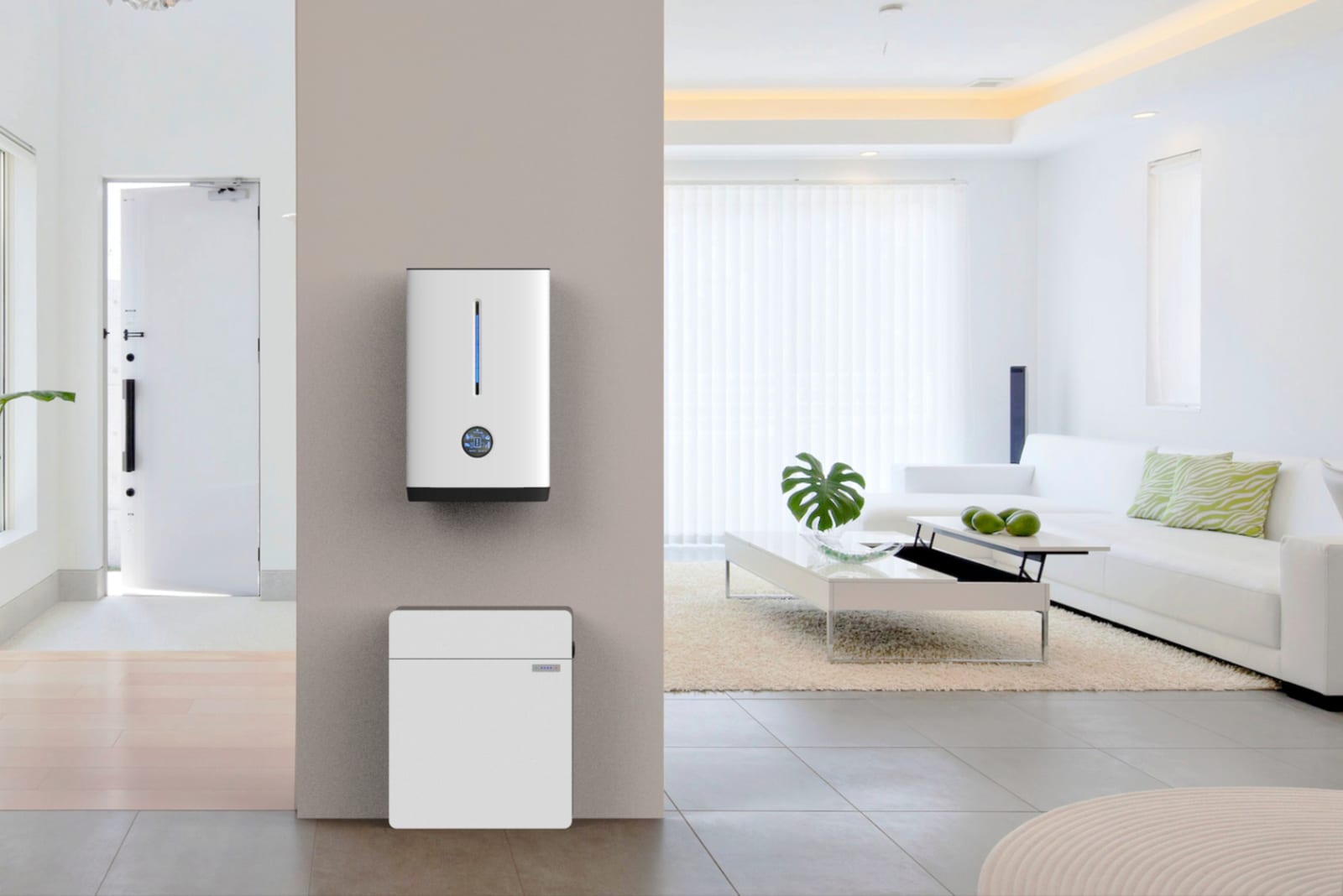
A home battery without solar panels can work in Australia, but only on the right electricity plan. On a free midday power plan such as the Solar Sharer Offer, our calculation shows a 10 kWh battery paying back in about 6 to 8 years in four networks. If you pay for the charging, payback stretches to about 10 to 14 years. The federal discount does not apply without solar, so the price is higher.
This guide shows the working, state by state, as at November 2026. It is independent desk research, not a quote.
Key facts
- Solar Cobber’s calculation, using the Australian Energy Regulator’s 2026-27 Solar Sharer Offer rate caps, puts a 10 kWh battery charged in the free midday window at a payback of about 6.1 to 7.6 years in Sydney, Western Sydney, South East Queensland and Adelaide.
- Charging the same 10 kWh battery from paid off-peak power stretches the same calculation to about 9.7 to 14.1 years in those four networks.
- The Solar Choice Battery Price Index, updated 6 November 2026, averages A$1,050 per usable kWh before the rebate for a battery plus inverter, or about A$10,500 for 10 kWh.
- The federal Cheaper Home Batteries Program only applies to a battery connected to a solar PV system, new or existing, so a battery with no panels is priced without the discount.
- The Solar Sharer Offer gives up to 24 kWh a day of free power from 11am to 2pm in NSW and South East Queensland and 12pm to 3pm in South Australia, and it does not require solar.
- A battery with no panels earns nothing from exports, so every kilowatt hour it delivers must displace power you would otherwise buy at a higher price.
How does a battery work without solar?
A battery without solar is a grid-charged store: it fills when power is cheap and empties when power is expensive. Electricians and retailers call this arbitrage, meaning you profit from the price difference between two times of day.
You need three things for it to work: a time-of-use or free-window plan, a smart meter, and evening use big enough to drain the battery. Without solar, the battery needs its own inverter or a hybrid inverter that takes grid power, and it must be installed by an accredited installer to Australian standards. Our peak and off-peak times guide lists each network’s price windows, and smart meters and solar explains why you need an interval meter.
Does the federal battery discount apply without solar?
No. The Clean Energy Regulator says batteries must be connected to a valid solar PV system to be eligible for small-scale technology certificates (STCs), and the legislation’s explanatory statement describes the program as covering batteries connected to new or existing solar PV systems. A battery with no panels earns no certificates. See our guides on the Cheaper Home Batteries Program and battery rebates by state. State schemes have their own rules, so ask your installer in writing about any state support and show it as a separate line on the quote.
Where it does apply, the discount is large. For installs from 1 May to 31 December 2026 the factor is 6.8 STCs per usable kWh, so a 10 kWh battery earns roughly A$2,600 to A$2,700 off, according to our rebates by state guide. The factor drops to 5.7 on 1 January 2027.
How much does a battery cost without the discount?
A 10 kWh battery plus inverter averages about A$7,984 after the rebate and about A$10,500 before it, per the Solar Choice Battery Price Index. Solar Choice says its prices include installation, GST and the federal rebate, and it states the pre-rebate cost per kWh separately.
The table shows the “battery plus inverter” column, which fits a home without hybrid-ready solar, as read on 14 November 2026.
| Usable capacity | Average installed cost after rebate | Pre-rebate cost per usable kWh | Pre-rebate installed cost (Solar Cobber calculation) |
|---|---|---|---|
| 10 kWh | A$7,984 | A$1,050 | A$10,500 |
| 20 kWh | A$15,172 | A$980 | A$19,600 |
| 30 kWh | A$21,889 | A$920 | A$27,600 |
Source: Solar Choice Battery Price Index, updated 6 November 2026. The last column is the per-kWh price multiplied by capacity.
Source: Solar Choice Battery Price Index, updated 6 November 2026.
View the data as a table
| Price per usable kWh | |
|---|---|
| 10 kWh | A$1,050 |
| 20 kWh | A$980 |
| 30 kWh | A$920 |
Bigger batteries cost less per kWh, but without solar they cost more in total and take longer to fill and empty usefully. See our battery price guide and the 10 kWh battery price page.
Is a battery worth it without solar? A worked payback by network
A 10 kWh battery is worth it without solar only when the gap between your cheapest and dearest power is wide, and a free midday window makes that gap huge. The Solar Sharer Offer is the clearest example, because the first 24 kWh used in the window each day is free. Read our Solar Sharer Offer guide for eligibility.
Here are the rates we used, from the Australian Energy Regulator’s Default Market Offer page, as published in our Solar Sharer guide and checked November 2026. They include GST and are the maximum a retailer can charge.
| Network | Peak rate | Shoulder or off-peak rate | Cheapest paid rate |
|---|---|---|---|
| Ausgrid (Sydney, Hunter) | 63.72c/kWh | 27.56c/kWh | 27.56c/kWh |
| Endeavour Energy (Western Sydney) | 48.75c/kWh | 37.53c/kWh | 14.19c/kWh |
| Energex (South East Queensland) | 48.90c/kWh | 26.41c/kWh | 8.10c/kWh |
| SA Power Networks (South Australia) | 58.84c/kWh | 35.17c/kWh | 19.66c/kWh |
Solar Cobber calculation: the working
We assumed a 10 kWh usable battery cycled once a day, 90 per cent round-trip efficiency (our VPP guide notes losses of roughly 10 per cent), so 9 kWh comes out and 10 kWh goes in. We assumed the output displaces peak-rate power on 250 days a year and shoulder-rate power on the other 115. Peak windows do not run every day in every network, which is why we used a blended year.
- Free-window case: annual saving is 250 days times 9 kWh times the peak rate, plus 115 days times 9 kWh times the shoulder rate. Charging costs nothing. Energex: 250 x 9 x 0.489 + 115 x 9 x 0.2641 = A$1,374.
- Pay-to-charge case: each day’s saving is 9 kWh at the displaced rate minus 10 kWh at the cheapest paid rate, floored at zero. Energex: 250 x (9 x 0.489 - 10 x 0.081) + 115 x (9 x 0.2641 - 10 x 0.081) = A$1,078.
- Payback: the A$10,500 pre-rebate price divided by the annual saving.
Assumptions that flatter the result: you use 9 kWh of peak-priced power every evening, and retailers charge the capped maximum rates. Assumptions that hurt it: no discount, no VPP income, no price rises, and no cost of capital.
| Network | Annual saving, free window | Annual saving, paying to charge | Payback, free window | Payback, paying to charge |
|---|---|---|---|---|
| Ausgrid | A$1,719 | A$745 | 6.1 years | 14.1 years |
| SA Power Networks | A$1,688 | A$970 | 6.2 years | 10.8 years |
| Endeavour Energy | A$1,485 | A$967 | 7.1 years | 10.9 years |
| Energex | A$1,374 | A$1,078 | 7.6 years | 9.7 years |
- Free window charging
- Paying to charge
Source: Solar Cobber calculation using AER Default Market Offer Solar Sharer rate caps, checked November 2026. 10 kWh usable, 90% round trip, 250 peak-priced days and 115 shoulder-priced days.
View the data as a table
| Free window charging | Paying to charge | |
|---|---|---|
| Ausgrid | A$1,719 | A$745 |
| SA Power | A$1,688 | A$970 |
| Endeavour | A$1,485 | A$967 |
| Energex | A$1,374 | A$1,078 |
A free midday window roughly doubles the saving in Sydney and adds about 30 to 75 per cent elsewhere.
Source: Solar Cobber calculation from AER rate caps and the Solar Choice Battery Price Index, November 2026.
View the data as a table
| Payback (years) | |
|---|---|
| Ausgrid, paying to charge | 14.1 years |
| SA Power, paying to charge | 10.8 years |
| Endeavour, paying to charge | 10.9 years |
| Energex, paying to charge | 9.7 years |
| Energex, free window | 7.6 years |
| Endeavour, free window | 7.1 years |
| SA Power, free window | 6.2 years |
| Ausgrid, free window | 6.1 years |
On the best plan a no-solar battery pays back in about 6 to 8 years; paying to charge it takes 10 to 14.
One caution: Solar Sharer peak and shoulder rates are higher than on a standard plan. The Australian Energy Regulator says Solar Sharer usage rates outside the free period are 1 to 4 cents per kWh higher than the matching time-of-use default tariff in 2026-27, so check your own bill against the alternative rather than the cap alone.
Can you charge a battery from the grid off peak?
Yes. Any grid-connected battery with a hybrid or battery inverter can charge from the grid on a schedule, and most brands let you set the hours in their app. The saving is the gap between the charging rate and the rate you avoid, less about 10 per cent lost in the round trip.
Free windows are the cleanest case. GloBird’s ZEROHERO plan gives three free hours from 12pm to 3pm for homes with a battery and does not need solar, as covered in our GloBird Energy review. Our review of OVO Energy covers another free-power plan. Amber passes wholesale prices through, which creates larger gaps on some days and negative prices on others, with a monthly subscription. Check each plan’s current rates before choosing.
If your plan has only a small off-peak discount, a battery usually fails. Ausgrid’s shoulder and cheapest paid rate are both 27.56c/kWh in the table above, so charging at the cheapest paid rate gives the weakest result there.
Can a VPP make a no-solar battery pay?
A virtual power plant (VPP) can shave a year or two off payback but rarely changes the answer. A VPP is a group of batteries an operator controls together and pays for access to. Our VPP guide lists published offers such as AGL at A$180 a year (SolarQuotes, April 2026) and Diamond Energy’s WATTBANK at A$250 to A$450 a year depending on solar size, which hints that no-solar homes may qualify for less.
Origin Loop pays A$1 per kWh discharged in events, capped at 200 kWh a year, plus a A$200 sign-up credit. Without solar the VPP money is a bonus to the arbitrage, not a replacement for it. Read the control terms first.
What about blackout protection?
Backup is the other reason people buy a battery without panels, and it is real but unpriced. Whether a battery keeps your lights on depends on the model, the backup gateway and the circuits wired to it. Without solar, the battery supplies the home alone until it empties, so an outage of many hours needs a large battery or few circuits. See our guide to the best batteries for blackout backup. We have not put a dollar value on backup in the paybacks above.
Battery without solar, or solar first?
Solar first is usually cheaper and better. Panels cut your daytime bills directly and open the discount, while the battery then stores surplus rather than grid power. Our are solar batteries worth it guide has paybacks for homes with panels. If you later add panels, an AC coupled battery or a hybrid inverter can be planned now, so ask your installer which they would fit.
For sizing, see what size solar battery do I need, and for lifespan, how long solar batteries last.
What to check on your quote
- Is the federal discount shown as a line item, and does the installer confirm in writing whether it applies with no panels?
- Which inverter is included, and does it support grid charging on a schedule?
- Is the battery on the approved product list and installed by an accredited installer?
- What are the usable (not nominal) kWh and the warranty throughput?
- Which of your plans has a free or cheap window, and what are its rates today?
- Is the quote before or after rebate, and including GST?
Compare installers through our solar company directory and the battery reviews.
FAQ
Is a home battery worth it without solar panels?
A home battery without solar is worth it only on a plan with a large price gap or a free window. On Solar Sharer rate caps our calculation gives about 6 to 8 years for a 10 kWh battery with free charging. Paying to charge gives about 10 to 14 years.
Can you install a home battery without solar?
Yes. A battery with its own inverter or a hybrid inverter can be installed without panels and charged from the grid. It must be installed by an accredited installer, and you need a smart meter for time-of-use pricing.
Do you get the battery rebate without solar?
No, not the federal discount. The Clean Energy Regulator says batteries must be connected to a valid solar PV system to be eligible for certificates under the Cheaper Home Batteries Program. State schemes have their own rules, so ask your installer.
Can I charge a battery from the grid off peak?
Yes. Most battery apps let you schedule grid charging in the cheap or free window. You save the difference between that rate and the rate you avoid, minus about 10 per cent round-trip loss.
How much does a 10 kWh battery cost without the rebate?
About A$10,500 installed for a battery plus inverter. That is the Solar Choice Battery Price Index figure of A$1,050 per usable kWh before the rebate, updated 6 November 2026.
Which electricity plan suits a battery without solar?
A plan with a free or very cheap window and an expensive peak. The Solar Sharer Offer in NSW, South East Queensland and South Australia and GloBird’s ZEROHERO are examples. Check current rates before signing.
Can a battery without solar join a VPP?
Often yes, but offers vary and some are priced on solar size. Published offers run from about A$180 to A$450 a year. Read the terms on control and warranty before joining.
Will a battery keep my power on in a blackout without solar?
Only if it has backup capability and a gateway, and it will run until it empties because nothing recharges it. Check circuits, power rating and usable capacity on the quote.
Sources
- Solar Choice Battery Price Index, updated 6 November 2026
- Australian Energy Regulator, Default Market Offer
- Clean Energy Regulator, Quarterly Carbon Market Report, June quarter 2026, consumer energy resources
- Explanatory Statement, Renewable Energy Legislation (2026 Measures No. 1) Amendment Regulations 2026 (F2026L00093)
- SolarQuotes VPP comparison
- Solar Cobber guides: Solar Sharer Offer, battery rebates by state, VPP guide
About this guide
Written by the Solar Cobber editorial team from independent desk research checked in November 2026. Solar Cobber is a free directory that may earn referral or advertising fees from installers; commercial relationships never affect content. This is not financial advice. Spot an error? Tell us via /contact.
Filed under Savings
Back to blog