Solar inverter repair in Australia usually starts with a licensed electrician diagnosing the fault, and the repair-or-replace decision turns on the inverter’s age and warranty. As at November 2026, Why Solar’s published guide puts a string inverter replacement at A$1,500 to A$3,500 and a diagnostic visit at A$150 to A$300. Owners can safely read the display and restart the unit by its label. Anything inside the cabling or isolators is electrician work.
Key facts
- As at November 2026, Why Solar (a lead-generation site for installers) publishes A$1,500 to A$3,500 as the cost of replacing a string solar inverter in Australia, and A$150 to A$300 for a full system health check and diagnostic.
- 1KOMMA5, an Australian installer, says a replacement inverter costs about A$3,000 installed, and that a 3 kW and a 5 kW unit cost about the same because the smallest SMA inverter sold in Australia is 3 kW.
- SolarQuotes’ inverter guide puts replacing a single microinverter, labour included, at about A$300 to A$400.
- Why Solar publishes A$200 to A$500 for replacing a failed DC isolator switch on a rooftop solar system.
- Since 23 August 2025, the Clean Energy Council (CEC) has accepted new approved-inverter listings only if they meet AS/NZS 4777.2:2020 Amendment 2:2024, and it removed models without a compliance declaration from its list on that date.
- If the original installer has closed, the manufacturer or its Australian importer is usually the next contact for an inverter warranty claim, according to SolarQuotes commentary.
What should I do when my solar inverter stops working?
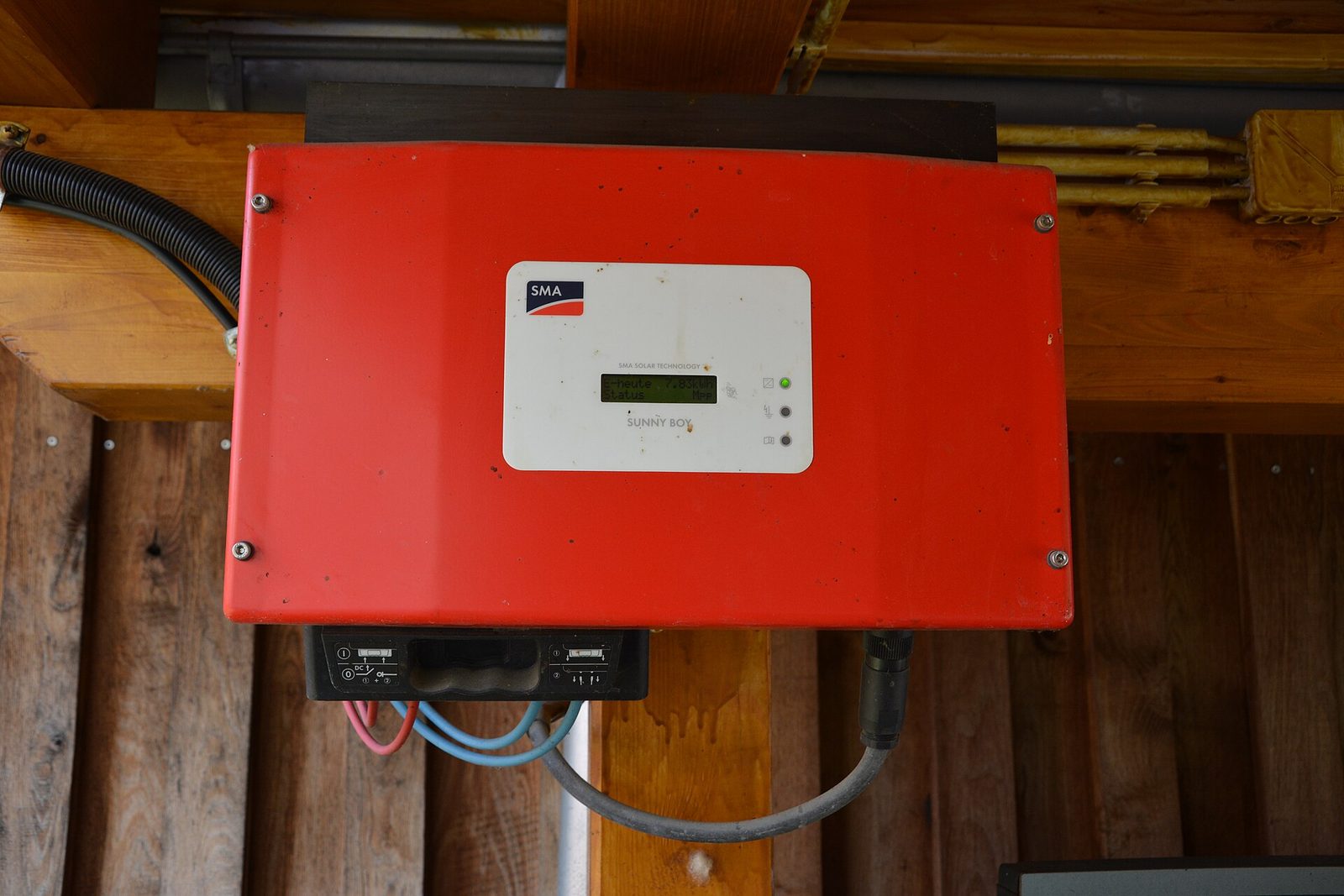
Check the inverter display or app first, note any fault code, and follow the shutdown and restart procedure printed on the inverter label if the fault looks like a one-off. If the fault returns, or the inverter is dead, call a licensed electrician or your installer.
The safe checks for an owner are limited to things you can do without opening any cover or touching cabling:
- Read the display or app and photograph the fault code.
- Look for a tripped solar supply main switch at the switchboard. Reset it once only.
- Follow the shutdown and restart procedure on the inverter label. Solis and GoodWe guidance describes AC off first, then DC, and the reverse to restart, but your own label overrides this.
- Check whether the grid is up. A street outage will shut a grid-connected inverter down by design.
Leave to an electrician: opening the inverter, anything on the DC side, the rooftop isolator, damaged cables, and any system that is wet, burnt or smells of burning. The Queensland Electrical Safety Office’s solar brochure (published 2020, read in November 2026) says not to attempt to turn off a solar system if any component is water or storm damaged, and to call an electrician or installer instead. The Western Australian Government’s electrical safety guide for homes (Building and Energy, read in November 2026) says the system should be shut down before anyone accesses the roof, gutters or panels, and that panels keep producing power in daylight even after shutdown at the switchboard. Both say to leave solar maintenance to electricians and installers.
What are the common solar inverter faults?
The most common reasons a solar inverter stops are an earth or isolation fault, a grid voltage or frequency fault, a failed DC isolator, and an internal component failure. The table sets out each in plain terms. The causes are typical patterns, not a diagnosis of your system.
| Fault | What it means in plain terms | Likely cause | Who fixes it |
|---|---|---|---|
| Earth or isolation fault | The inverter has detected current leaking from the panel wiring to earth | Damp or damaged DC cable, water in a connector, a damaged panel | Licensed electrician or CEC-accredited installer |
| Grid voltage or frequency fault | The inverter shut itself off because grid voltage was outside its allowed range | Local network voltage high at midday, loose connection, wrong grid settings | Electrician first, then the network operator if the voltage is the cause |
| Failed DC isolator | The rooftop or inverter-side DC switch has stopped working or overheated | Water ingress, age, a faulty batch | Electrician; replace the switch rather than repair it |
| Dead inverter, no display | No power, no lights, no app connection | Internal failure, surge damage, tripped supply switch | Check the switch, then electrician or manufacturer |
Grid voltage faults can be the network’s problem rather than the inverter’s, so ask the electrician to log the voltage before replacing anything. Our maintenance and longevity guide covers monitoring checks.
Should I repair or replace a solar inverter?
Repair is usually worth trying when the unit is under warranty or the fault is a cheap part, and replacement makes sense when the inverter is past about 10 to 15 years or the quote approaches the price of a new unit.
SolarQuotes said in November 2022 that it had seen an older inverter repaired for around A$300, and that a new inverter with wiring typically costs A$1,500 to A$2,000 or more. It favoured repair, but noted the hard part is finding a repairer who offers a warranty.
Replacement is more than a swap. SolarQuotes noted that wiring changes can make an install non-compliant. If the electrician finds damaged panels, you may be pushed toward a full system replacement, which can affect an existing feed-in tariff. Rules vary by network, so ask your network operator before the work. SolarQuotes reported that SA Power Networks allowed like-for-like replacements within a 0.5 kVA tolerance, with approval first.
How long do solar inverters last?
String and hybrid inverters typically last about 10 to 15 years, and microinverters are warranted for up to 25 years. SolarQuotes’ inverter guide calls inverters the component most likely to fail within 10 to 15 years. Our panel lifespan guide explains why the inverter usually goes before the panels.
How much does a solar inverter replacement cost?
Published Australian ranges for replacing a string inverter run from about A$1,500 to A$3,500 installed, with one installer quoting about A$3,000. Microinverters are replaced individually. The table collects the figures we could open; all are guide or installer estimates rather than quotes, and the 2022 row is out of date. We did not find a government or regulator price source for inverter replacement.
Table: published inverter replacement and related costs in Australia, with source and date checked (November 2026). These are guide figures only, and installed prices vary by brand, phase, state and site.
| Item | Published range | Source and date |
|---|---|---|
| String inverter replacement (single phase, typical home) | A$1,500 to A$3,500 | Why Solar guide, 1 March 2026 |
| Replacement inverter, installed | About A$3,000 | 1KOMMA5 article, undated (installer’s own estimate) |
| New inverter plus wiring (older systems) | A$1,500 to A$2,000 or more | SolarQuotes, 10 November 2022 (four years old, likely understated now) |
| Single microinverter replacement, labour included | About A$300 to A$400 | SolarQuotes inverter guide, accessed November 2026 |
| Like-for-like string inverter, installed (typical A$1,800) | A$1,000 to A$3,000 | whatsthedamage.com.au cost guide, “verified November 2026”; a cost-guide site whose method page we could not read, so treat as indicative |
We found no published, dated price list that splits replacement cost by inverter kW size for Australia. The 1KOMMA5 note that 3 kW and 5 kW units cost about the same is the closest published statement. Three-phase and larger units generally cost more, according to the energy.gov.au point cited by Why Solar, but we could not confirm a dollar figure for them. Ask for model, labour and isolator work as separate lines.
What do solar repair call-outs and inspections cost?
Why Solar publishes A$150 to A$300 for a full system health check and diagnostic, A$150 to A$400 for wiring and connection fixes, and A$200 to A$500 for a DC isolator replacement. It lists no separate call-out fee. A solar panel inspection is often bundled into that diagnostic fee. Ask for a written fee before anyone attends.
What if the inverter is still under warranty?
Check the inverter warranty before paying anything. The common standard is 5 years, with SolarQuotes listing 10 years for Fronius and Enphase, 12 for SolarEdge, and SMA 10 for an extra fee, and many hybrid brands now offer 10 years. Some warranties are parts only, cap transport or need online registration, so labour and transport can fall to the owner.
If the installer has closed, a warranty can still be claimed from the manufacturer. SolarQuotes commentary says to approach the manufacturer, or its local importer if there is no Australian office, and that Australian Consumer Law guarantees cannot be excluded by a written warranty. That article dates from 2012, so treat it as background and check current rules with your state consumer affairs office. See our tracker of Australian solar company failures.
Does a replacement inverter have to meet the current standard?
A replacement inverter generally has to be a model the network accepts, and networks rely on the CEC approved list, which since 23 August 2025 reflects AS/NZS 4777.2:2020 Amendment 2:2024. Whether a given like-for-like swap is exempt depends on your network operator, so confirm before buying.
What we could verify: the CEC says applications received from 23 August 2025 must meet the 2024 amendment, and models without a declaration were removed that day. SolarQuotes (November 2022) said replacement inverters must meet current technical requirements such as AS/NZS 4777 and network rules, and noted that the Fronius Galvo was not certified to the 2020 standard and not on the CEC list, so some states might not allow it as a replacement. We found no national exemption for replacements.
When does a hybrid inverter replacement make sense?
Replacing a failed string inverter with a hybrid makes sense when you plan to add a battery within a few years, because it avoids buying two inverters. It does not make sense if you have no battery plans, since the hybrid costs more up front.
Our guide to hybrid inverters compares seven brands. See also our Sungrow SH RS hybrid review. Ask the installer to confirm in writing which batteries the inverter supports.
For string replacements, see our reviews of the SMA Sunny Boy, Sungrow SG RS and Enphase IQ8 microinverter, all our inverter reviews, and the best solar inverters in Australia roundup.
Worked example: repair or replace a 12-year-old 5 kW inverter?
Assumptions, which are ours and not a quote: a 12-year-old 5 kW string inverter, out of warranty, in a home that uses 8 kWh of the system’s 20 kWh daily output and exports 12 kWh. We assume a retail price of 30 c/kWh and a feed-in tariff of 5 c/kWh.
| Option | Cost (A$) | Notes |
|---|---|---|
| Repair, if a part fix is possible | About 300 | SolarQuotes saw this in 2022; repair warranty varies |
| Replace with new string inverter | 1,500 to 3,500 | Why Solar, March 2026 |
| Lost generation value while down | About 3 a day | 8 kWh x 0.30 plus 12 kWh x 0.05 |
A month of waiting costs roughly A$90 in lost solar value. A repair wins only if it carries a warranty. Without one, at 12 years old, replacement is the safer pick, and if a battery is planned, ask for a hybrid quote at the same visit.
When to call a professional
Call a licensed electrician or CEC-accredited installer for any fault that returns after one restart, any burning smell or damage, and any DC-side work. Use our installer directory to find local businesses, and check each company’s accreditation yourself on the Clean Energy Council and Solar Accreditation Australia registers, because Solar Cobber does not verify accreditation. When searching for solar repairs near me, compare two written quotes and ask who honours the repair warranty.
FAQ
How much does solar inverter repair cost in Australia?
Published guide figures run from about A$150 to A$300 for a diagnostic and A$150 to A$400 for connection fixes. SolarQuotes saw an older inverter repaired for about A$300 in 2022. Ask for a written quote.
How much does a solar inverter replacement cost?
A string inverter replacement is published at A$1,500 to A$3,500 by Why Solar (March 2026), and about A$3,000 by 1KOMMA5. Microinverters cost about A$300 to A$400 each. Hybrid inverters cost more, and prices vary by brand and phase.
How long do solar inverters last?
String and hybrid inverters typically last about 10 to 15 years, and microinverters are warranted for 25 years.
Why is my solar inverter not working?
The common causes are a tripped solar supply main switch, a grid outage, an earth fault, a grid voltage fault or a failed inverter. Read the display, note the code, restart it once using the label procedure, and call an electrician if it fails again.
Who fixes a solar inverter when my installer has closed?
Contact the inverter manufacturer or its Australian importer for a warranty claim, and a licensed electrician for work. SolarQuotes commentary points to the manufacturer when an installer has closed.
Do solar repairs near me need to be done by an accredited installer?
Electrical work on a solar system must be done by a licensed electrician, and many retailers use CEC-accredited installers. Check the register yourself, and ask your state electrical regulator about local rules.
Should I replace my inverter with a hybrid if I want a battery?
Yes, if a battery is likely within a few years, since one hybrid avoids buying twice. Confirm the supported batteries and warranty in writing.
Sources
- Why Solar, Solar maintenance and repair guide, 1 March 2026
- Why Solar, Solar inverter cost Australia 2026, updated 29 October 2026 (read November 2026; gives no dollar figures)
- 1KOMMA5, cost of replacing a solar inverter
- SolarQuotes, Help! My vintage solar inverter has finally failed, 10 November 2022
- SolarQuotes, Solar inverters guide
- SolarQuotes, Your solar panel and inverter warranty and the law, 2012
- Clean Energy Council, changes to the inverter standard AS/NZS 4777.2:2020
- Queensland Electrical Safety Office, solar power system electrical safety brochure (2020)
- Western Australian Government, Solar PV systems (electrical safety at home)
- whatsthedamage.com.au, solar cost guide, November 2026
About this guide
Written by the Solar Cobber editorial team from independent desk research checked in November 2026. Solar Cobber is a free directory that may earn referral or advertising fees from installers, and commercial relationships never affect our content. This is general information, not financial or electrical advice. Corrections are welcome via /contact.
Filed under Maintenance
Back to blog