
Our verdict
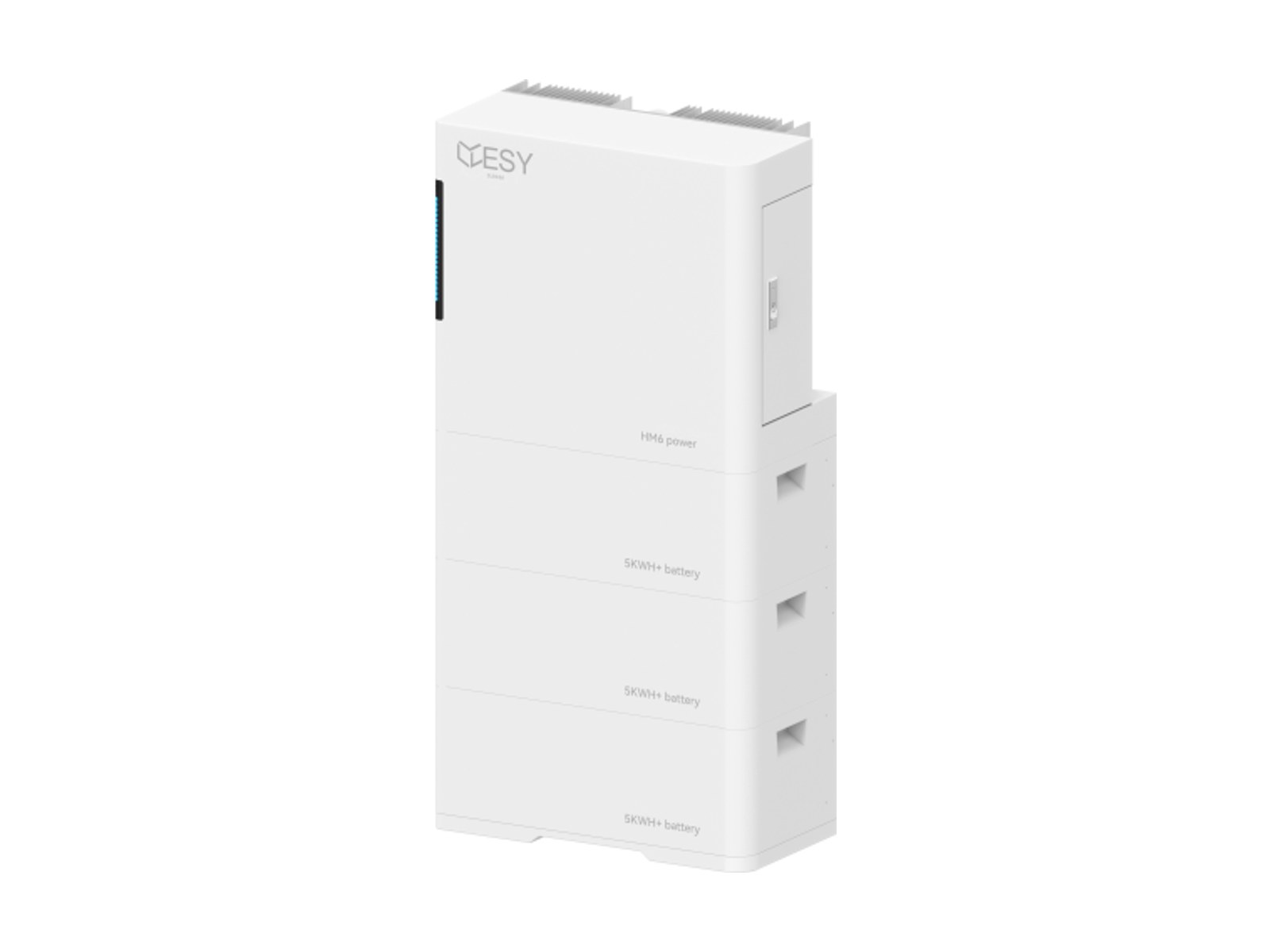
The ESY Sunhome HM6 is one of the cheapest all-in-one batteries per usable kWh in Australia, with a generous throughput allowance and a built-in 6 kW inverter. The trade-offs are a 6 kW ceiling on solar charging and backup, a short track record, and a warranty with strict conditions: it needs a constant internet connection and expansion only within the first year.
- Best for
- Single-phase homes wanting a large, low-cost all-in-one battery of 10 to 30 kWh
- Look elsewhere if
- Homes that need more than 6 kW of backup, a battery added after year one, or a long local track record
- Price guide
- About A$5,500 for the HM6-15 (14.59 kWh usable) and A$10,300 for the HM6-30 (29.18 kWh), after the federal discount, GST included, excluding installation (SolarQuotes, 12 May 2026)
- Warranty
- 10 years, retaining at least 70% of capacity, with a throughput limit of 21.5 MWh per 5.12 kWh module (about 4.2 MWh per kWh)
Pros
04- Among the lowest prices per usable kWh of the all-in-one batteries SolarQuotes lists, about A$350 to A$470 per kWh before installation after the federal discount
- Warranty throughput of about 4.2 MWh per nominal kWh is higher than the roughly 3 MWh per kWh allowed by several better-known brands
- Single box of inverter and modules, 5.12 kWh steps up to 30.72 kWh, IP66 rating and -25 to 60 °C operating range on the datasheet
- Three-phase range (HM10-H, HM15, HM20) runs to 94.86 kWh with 10 to 20 kW backup, CEC listed to December 2027 for the batteries
Cons
05- HM6 backup and solar charging are capped by a 6 kW inverter, so a 30 kWh stack takes close to six hours to fill at full charge rate and cannot run big loads together in a blackout
- The Australian warranty allows expansion only within the first year, requires the system to stay online, and caps accepted-claim costs at A$180 plus GST
- Short local track record: the Australian office opened in 2023 and SolarQuotes had little installer feedback at its last review update
- Single-phase CEC battery listing BAT-502 expires on 19 December 2026 and the HM6 inverter listing on 13 December 2026, so check the listing on install day
- Owner reviews describe app, Wi-Fi and firmware teething problems and uneven installer after-sales support
The ESY Sunhome HM6 is an all-in-one home battery: a 6 kW single-phase hybrid inverter plus stackable 5.12 kWh lithium iron phosphate (LFP) modules, from one module up to six (30.72 kWh nominal). It is sold in Australia by ESY SUNHOME AUSTRALIA PTY LTD of Greenacre, NSW, and is usually quoted by installers as a low-cost way to add 15 to 30 kWh of storage. ESY Sunhome also sells a smaller HM5 and a three-phase range (HM10-H, HM15, HM20). This review is based on manufacturer documentation, warranty terms, published pricing and owner/installer feedback; Solar Cobber did not test the product and was not paid by the manufacturer. Everything below was checked in November 2026, and it covers which models are sold here, what they cost, what the warranty really says and where the risks sit.
What it is and how it works
ESY Sunhome (ESYsunhome Co., Ltd) is a Shenzhen company that SolarQuotes says started in 2004 making small-device batteries, moved into battery management systems and launched its first home storage product in 2021. The HM6 followed in January 2023 and the Australian office opened the same year, according to SolarQuotes.
“All-in-one” means the hybrid inverter that runs your solar panels and the battery are one stack: the HM6 power unit sits on top and up to six battery modules go underneath, connected without loose cables. That suits homes buying solar and storage together, or homes whose old string inverter would otherwise need replacing (see AC-coupled vs DC-coupled batteries).
The video above, from ESY Sunhome’s own channel, shows how to switch the system between its regular, emergency and sale modes in the ESY app. It is a manufacturer video, so treat it as a demonstration of the software, not an independent test.
Which models are sold in Australia
Australian warranty documents exist for five inverter models: HM5 and HM6 (single phase) and HM10-H, HM15 and HM20 (three phase). The Clean Energy Council (CEC) inverter list also shows HM5-MAX, HM10 and HM12 single-phase models approved in June 2026, but we found no Australian warranty document or datasheet for those three as at 14 November 2026, so confirm with ESY Sunhome before accepting a quote that names them. ESY Sunhome also showed a next-generation “HM II” range at All Energy Australia in Melbourne on 28 and 29 October 2026; we found no CEC listing under the HM II names yet.
| Model | Phase | Inverter and backup power | Battery configurations (nominal) | Australian warranty document |
|---|---|---|---|---|
| HM5 | Single | 5 kW | HM5-05 to HM5-30, 5.12 to 30.72 kWh | Yes (v4.3) |
| HM6 | Single | 6 kW | HM6-05 to HM6-30, 5.12 to 30.72 kWh | Yes (v4.3) |
| HM10-H | Three | 10 kW | 20.99 to 94.46 kWh | Yes (v1.0) |
| HM15 | Three | 15 kW | 20.99 to 94.46 kWh | Yes (v1.0) |
| HM20 | Three | 20 kW | 20.99 to 94.46 kWh | Yes (v1.0) |
Specs that matter in Australia
Usable capacity. The headline number is nominal. The CEC list shows usable capacity at about 95% of nominal, so a “15 kWh” HM6-15 is 14.59 kWh usable. The federal discount and good quotes use usable kWh.
- Nominal
- Usable (CEC)
Source: Clean Energy Council approved batteries list, certificate BAT-502, checked 14 November 2026.
View the data as a table
| Nominal | Usable (CEC) | |
|---|---|---|
| HM6-05 | 5.12 kWh | 4.86 kWh |
| HM6-10 | 10.24 kWh | 9.73 kWh |
| HM6-15 | 15.36 kWh | 14.59 kWh |
| HM6-20 | 20.48 kWh | 19.46 kWh |
| HM6-25 | 25.60 kWh | 24.32 kWh |
| HM6-30 | 30.72 kWh | 29.18 kWh |
Every HM6 configuration loses about 5% between the label and the usable figure; the six-module HM6-30 delivers 29.18 kWh.
Power is the main limit. The HM6 datasheet (v1.5, January 2026) gives a 6 kW rated output in backup mode, up to 8,000 W of solar input across two MPPT trackers, and maximum battery charge and discharge currents of 100 A and 120 A at 51.2 V. Solar Cobber calculation: 100 A at 51.2 V is about 5.1 kW, so filling 29.18 kWh at the full charge rate takes about 5.7 hours. That is the trade-off for the low price per kWh: a big stack has plenty of energy but only 6 kW to move it. For a three-phase home, the HM10-H, HM15 and HM20 raise backup to 10, 15 and 20 kW. Our single vs three phase guide explains which you have.
Backup. The datasheet lists a 20 ms switch time for the HM6 (10 ms or less for the three-phase range), which is fast enough for most electronics but not a zero-break UPS. SolarQuotes reports that ESY Sunhome told it the battery can charge from solar during a blackout.
Heat and weather. The datasheet rates the HM6 at IP66, with an operating range of -25 to 60 °C and derating above 45 °C, cooled by natural convection at 25 dB or less. The warranty excludes damage from excess heat, salt, water entry and poor ventilation, so shade and airflow still matter in hot inland areas and coastal salt air. Ask the installer where it goes: the full stack is floor standing, 305 mm deep and up to 1,878 mm high, and weighs 343 kg at six modules.
Efficiency and chemistry. The datasheet claims 97.8% maximum inverter efficiency, 99.9% MPPT efficiency, and 6,000 cycles or more at 25 °C to 70% state of health. These are manufacturer figures, not independent measurements.
VPPs. ESY Sunhome says the HM series is virtual power plant compatible. Which retailer programs actually accept it is a separate question: we could not confirm acceptance on any retailer’s own list in November 2026, and one SolarQuotes owner review wished for Amber compatibility. Check the retailer’s current compatibility checker before you buy. Our VPP guide explains what to look for.
Clean Energy Council approval
The ESY Sunhome batteries appear on the Clean Energy Council approved batteries list under two certificates, and the inverters appear on its approved inverter list. The federal Cheaper Home Batteries discount requires an approved battery, so these dates matter.
| Product | CEC certificate | Approved | Listing expires | Usable capacity listed |
|---|---|---|---|---|
| ESYSUNHOME 5KWH+ to 30KWH+ (single phase, 6 sizes) | BAT-502 | 19 Dec 2023 | 19 Dec 2026 | 4.86 to 29.18 kWh |
| ESYSUNHOME10KWH+H-20 to H-90 (three phase, 8 sizes) | BAT-905 | 11 Feb 2026 | 31 Dec 2027 | 20.57 to 92.57 kWh |
| Inverter HM6 | CS11175N | 14 Sep 2023 | 13 Dec 2026 | 6 kW, single phase |
| Inverter HM5 | EESS-240934-1 | 28 Mar 2025 | 28 Mar 2028 | 5 kW, single phase |
| Inverters HM10-H, HM15, HM20 | AZ 69028596 | 7 Jan 2026 | 7 Jan 2029 | 10, 15, 20 kW, three phase |
The table shows what the CEC lists showed on 14 November 2026. Both single-phase HM6 listings expire within about five weeks of today. A listing expiring does not necessarily mean the product is dropped, and ESY Sunhome may renew or replace it, but ask your installer to confirm that the exact model number is listed on the day of installation.
Price in Australia
SolarQuotes’ battery price list (updated 12 May 2026) shows the HM6 range at the prices below. SolarQuotes says its listed prices already include the federal battery discount and GST, and exclude installation. Because the HM6 is all-in-one, the inverter is included.
| Configuration | Usable capacity | Price after federal discount (SolarQuotes, 12 May 2026) | Per usable kWh |
|---|---|---|---|
| HM6-10 | 9.73 kWh | A$4,600 | A$473 |
| HM6-15 | 14.59 kWh | A$5,500 | A$377 |
| HM6-20 | 19.46 kWh | A$7,300 | A$375 |
| HM6-25 | 24.32 kWh | A$8,500 | A$350 |
| HM6-30 | 29.18 kWh | A$10,300 | A$353 |
One installer, Aussie Solar Tech, advertises about A$5,599 for a 15 kWh system and A$7,399 for 25 kWh on its ESY Sunhome page (checked November 2026), without saying whether the price is before or after the discount or whether installation is included. We have not used those figures in the calculations below. Prices vary with state, the switchboard and backup circuits and the installer, so get three written quotes (how to compare solar quotes).
Solar Cobber calculation: what the federal discount is worth on each HM6
The federal discount is paid as small-scale technology certificates (STCs) on usable capacity. Using the rules in our federal battery rebate guide and state-by-state rebate guide: 6.8 STCs per usable kWh for installs from 1 May to 31 December 2026 and 5.7 from 1 January 2027, full rate on the first 14 kWh, 60% on the next 14 kWh and 15% from 28 kWh to 50 kWh. At about A$37 per STC (an assumption, the market price moves), the HM6-15 earns 97.6 STCs, about A$3,600.
- Install by 31 Dec 2026 (6.8)
- Install from 1 Jan 2027 (5.7)
Source: Solar Cobber calculation from Clean Energy Council usable capacities and the federal STC factors in our battery rebate guides. The STC price is an assumption of A$37; actual certificate prices vary.
View the data as a table
| Install by 31 Dec 2026 (6.8) | Install from 1 Jan 2027 (5.7) | |
|---|---|---|
| HM6-05 | A$1,224 | A$1,026 |
| HM6-10 | A$2,448 | A$2,052 |
| HM6-15 | A$3,612 | A$3,028 |
| HM6-20 | A$4,346 | A$3,643 |
| HM6-25 | A$5,080 | A$4,258 |
| HM6-30 | A$5,681 | A$4,762 |
The discount rises with size but at a falling rate: the HM6-30 earns about A$5,700, only A$2,070 more than the HM6-15 for twice the capacity. Waiting until January 2027 costs roughly A$600 to A$900 on the larger models.
Solar Cobber calculation: indicative installed price per usable kWh
SolarQuotes’ worked examples for other brands assume A$3,000 for installation and include the inverter. Adding the same A$3,000 to the HM6 prices, and using SolarQuotes’ own published installed figures for the others, gives a like-for-like view. This is an indicative figure only: ESY Sunhome is not in SolarQuotes’ worked examples, so the HM6 installed prices are ours.
View the data as a table
| A$ per usable kWh | |
|---|---|
| Alpha ESS Smile-G3-S5, 9.6 kWh | A$792 |
| ESY HM6-10, 9.73 kWh | A$781 |
| SigenStor, 13 kWh | A$720 |
| Sungrow SBR, 12.8 kWh | A$690 |
| ESY HM6-15, 14.59 kWh | A$583 |
| Sungrow SBR, 25.6 kWh | A$550 |
| SigenStor, 31.2 kWh | A$540 |
| Alpha ESS Smile-G3-S5, 28.8 kWh | A$503 |
| ESY HM6-30, 29.18 kWh | A$456 |
At 29 to 30 kWh the HM6-30 is about A$456 per usable kWh, the lowest of the nine rows, while at 9 to 10 kWh the HM6 has no price advantage over Alpha ESS. The saving comes from sharing one inverter across more modules, as with every modular system.
Warranty: the fine print
ESY SUNHOME AUSTRALIA PTY LTD provides the Australian warranty (single-phase terms v4.3 and three-phase terms v1.0, both uploaded February 2026). The headline is 10 years (120 months) from initial installation, with the product retaining at least 70% of available capacity. The conditions matter more than the headline:
- Throughput cap. Energy throughput must stay at or below the table’s minimum throughput: 21.5 MWh per 5.12 kWh module (43.0 MWh for two modules up to 129.0 MWh for six). The three-phase table allows 83.8 MWh for the smallest system (20.99 kWh) up to 377.1 MWh for 94.46 kWh. SolarQuotes calculates that a module only runs out early if it discharges more than about 5.9 kWh a day, which is more than a typical home.
- Internet connection. Every system must be online for monitoring, and failing to keep it online may void the limited warranty. Owners must report outages and, if the system is offline, supply photos and log data with any claim.
- Expansion only in year one. Capacity can be added only within the first year after initial installation, and new modules take the original system’s warranty period.
- Installer conditions. Single-phase systems must be installed by a CEC-certified installer, three-phase by a Solar Accreditation Australia (SAA) certified installer, within six months of the production date and following the manual.
- Claims. Report faults within ten working days of failure and lodge a claim within one month of diagnosis. ESY Sunhome will reimburse reasonable accepted-claim costs (processing, parts, shipping, removal and reinstallation) up to A$180 plus GST per claim. If a claim is rejected, the customer bears costs up to the same cap.
- Refurbished parts. A repair may use refurbished parts or replace the unit with a refurbished one.
- Transfer. Normally non-transferable, but the warranty passes to a new owner if the product stays at its original site and the property and product are transferred together.
- Exclusions. Incompatible inverters, unauthorised repairs, salt and sand, hail and surges, and use as primary power for life support or medical equipment are excluded.
The warranty names a Greenacre NSW address, phone 02 9166 7642 and the email addresses info-au@esysunhome.com.au (general) and support@esysunhome.com (claims). The Australian website address esysunhome.com.au showed a domain parking page when we checked on 14 November 2026, so use the contacts in the warranty document.
Source: ESY Sunhome Australian warranty v4.3 and v1.0 with Clean Energy Council usable capacities (Solar Cobber calculation: 21.5 MWh / 4.864 kWh and 83.8 MWh / 20.57 kWh); Alpha ESS and Sigenergy figures from our reviews of those products. Sigenergy is quoted as about 3 MWh per usable kWh in our review.
View the data as a table
| MWh per usable kWh | |
|---|---|
| ESY Sunhome HM6 (single phase) | 4.42 MWh |
| ESY Sunhome three phase (H-20) | 4.07 MWh |
| Alpha ESS SMILE-G3 | 3.12 MWh |
| Sigenergy SigenStor | 3.00 MWh |
ESY Sunhome’s cap is the highest of the products charted: the single-phase warranty allows about 4,420 full cycles of the usable capacity over ten years, roughly 1.2 full cycles a day. The catch is the conditions above, not the cap.
What owners and installers report
SolarQuotes shows ESY Sunhome at 4.5 out of 5 from 67 owner ratings (page updated 30 August 2026). SolarQuotes’ own reviewer said in March 2025 that it had little feedback from installers and customers, and lists “prompt technical support” as a pro and a short Australian track record as a con.
Source: SolarQuotes ESY Sunhome review page, ratings as shown on 14 November 2026.
View the data as a table
| Ratings | |
|---|---|
| 5 stars | 51 |
| 4 stars | 9 |
| 3 stars | 2 |
| 2 stars | 1 |
| 1 star | 4 |
Three-quarters of the ratings (51 of 67) are five stars, and four are one star.
Praise. Owners on SolarQuotes describe the battery running through blackouts and winter heating loads, and report quick fixes from ESY Sunhome support, including same-day technician visits, a replaced Wi-Fi dongle and remote firmware updates.
Complaints. The recurring themes in the SolarQuotes reviews are initial firmware, app and Wi-Fi problems (one owner says the app lost the Wi-Fi password and needed re-entry after outages), and weak after-sales support from some installers rather than from ESY Sunhome itself. One detailed 1-star review about a Sydney installer describes a delayed install, unanswered calls and a blackout circuit that was not wired until months later; that is one owner’s account and says more about that installer than the product. Another owner wished for Amber VPP compatibility. These are patterns from a small sample on one platform, so choose the installer carefully.
We found no ACCC product safety recall for ESY Sunhome batteries, though we could not query the ACCC recalls database directly.
ESY Sunhome HM6 vs alternatives
| ESY Sunhome HM6 | Alpha ESS SMILE-G3 | Sigenergy SigenStor | Tesla Powerwall 3 | |
|---|---|---|---|---|
| Usable capacity | 4.86 to 29.18 kWh | 9.3 to 37.2 kWh (S5) | 5.2 or 7.8 kWh modules, up to 46.8 kWh | 13.5 kWh per unit |
| Inverter | Built-in 6 kW | Built-in 5 kW (S5) | Built-in controller 3 to 30 kW | Built-in |
| Ingress rating | IP66 | IP65 | IP66 | IP67 (wiring IP55) |
| Warranty | 10 years, 70%, about 4.4 MWh per usable kWh | 10 years, 70%, 3.12 MWh per usable kWh | 10 years, 70%, about 3 MWh per usable kWh | 10 years, 70%, unlimited self-consumption cycles |
| Price after discount, excl. install (SolarQuotes, May 2026) | A$5,500 for 14.59 kWh | A$4,600 for 9.6 kWh | See our review | A$10,000 including Gateway |
Choose the HM6 if price per kWh and a large stack matter and 6 kW is enough. Choose Alpha ESS for a similar price with a short stack, SigenStor for higher power and three-phase backup from one system, or a Powerwall 3 for premium software and unlimited self-use cycles.
Questions to ask your installer
- Which exact HM model and configuration is quoted (for example HM6-20), and is that model number on the CEC list today?
- The single-phase battery listing expires on 19 December 2026: what happens if my install date is after that?
- Will the 6 kW backup run my essential loads, and which circuits are on the backup board?
- Is the quote before or after the federal discount, and how many STCs are being claimed on usable kWh?
- If I might expand, can I add modules in the first year, and what if I want more in year two?
- Who is the warranty contact if you stop trading, and who handles the A$180 plus GST claim cost cap?
- Is there a reliable internet connection at the battery site, and how will you commission the app and Wi-Fi?
- Is the system eligible for the VPP I want to join, and can you show the retailer’s own list?
FAQ
What is the ESY Sunhome battery?
It is a Shenzhen-made all-in-one home battery with a built-in hybrid inverter and stackable 5.12 kWh LFP modules. In Australia the main model is the single-phase HM6 (6 kW, up to 30.72 kWh nominal), with a three-phase range up to 94.46 kWh.
Is ESY Sunhome on the Clean Energy Council approved list?
Yes. As at 14 November 2026 the single-phase batteries are listed as BAT-502 until 19 December 2026 and the three-phase batteries as BAT-905 until 31 December 2027, and the HM inverters are also listed. Ask your installer to confirm the listing on install day.
How much does the ESY Sunhome HM6 cost?
SolarQuotes listed A$5,500 for the 14.59 kWh HM6-15 and A$10,300 for the 29.18 kWh HM6-30 on 12 May 2026, after the federal discount, with GST and without installation. Add installation, which varies by home and installer.
How long is the ESY Sunhome warranty?
Ten years from installation, keeping at least 70% of capacity, with a throughput limit of 21.5 MWh per 5.12 kWh module. The system must stay online and expansion is allowed only in the first year.
Can the ESY Sunhome HM6 back up my whole house?
Not usually. The HM6 backup output is rated at 6 kW with a 20 ms switch time, enough for essentials but not several large loads at once. A three-phase home should look at the HM10-H, HM15 or HM20.
Does ESY Sunhome work with a VPP?
ESY Sunhome says the HM series is VPP compatible, but we could not confirm any retailer’s accepted-battery list. Check the retailer’s own checker before relying on it.
Is ESY Sunhome any good?
It is a good-value, well-specified product with a short Australian track record. SolarQuotes shows 4.5 out of 5 from 67 owner ratings, and the main complaints concern installers, app set-up and firmware rather than hardware failures.
Find an installer
The installer matters as much as the battery, especially for a newer brand. Use our installer directory to find local companies, read our guide to how much a solar battery costs, and use what size battery you need before accepting a quote.
Read next
Battery buying guides
Often quoted alongside
Sigenergy
Sigenergy SigenStor
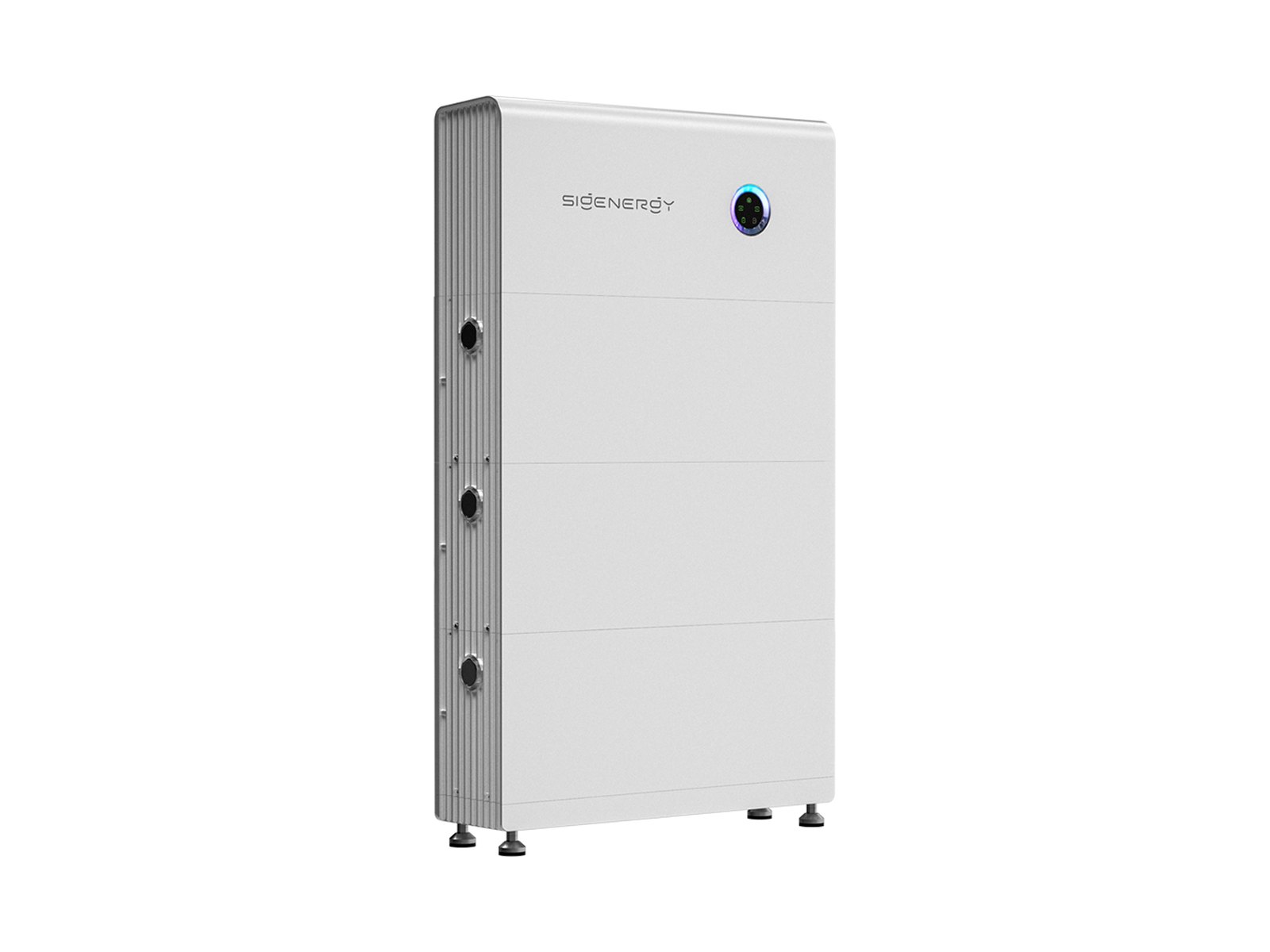
SigenStor packs a hybrid inverter, battery and energy manager into one stack, with genuine three-phase options, IP66 weatherproofing and a very detailed app at a competitive price. The trade-offs are a young company with a 2025 recall on some single-phase controllers, mixed owner experiences with support, and a warranty that caps throughput for all uses.
Best for
Three-phase homes, or anyone wanting an all-in-one battery with room to add EV charging
Tesla
Tesla Powerwall 3
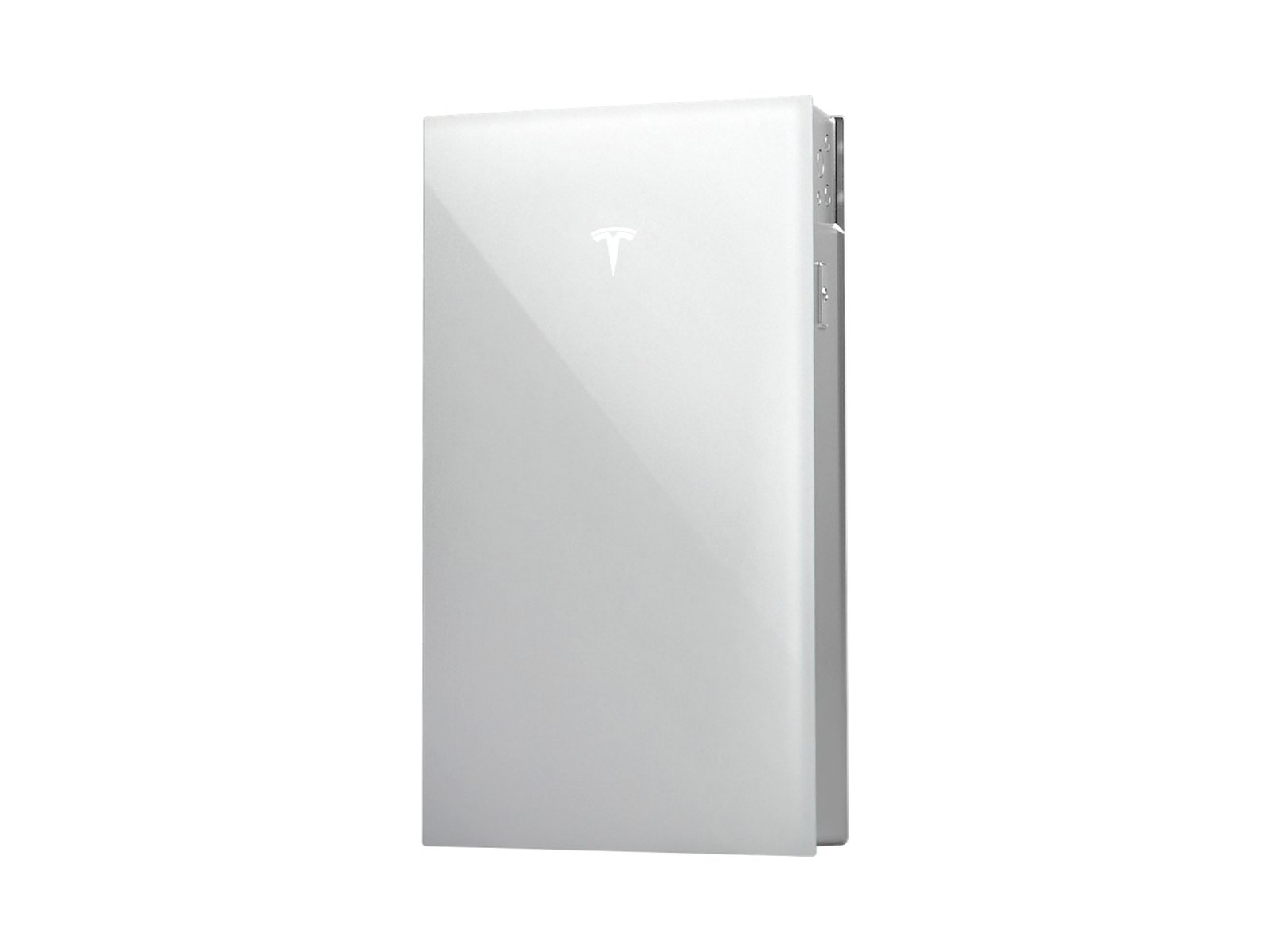
Powerwall 3 is the simplest way to get a big-name 13.5 kWh battery and a 10 kW solar inverter in one box, with strong backup power and a polished app. The trade-offs are a premium price, a 5 kW charging cap and single-phase design that suits three-phase homes poorly.
Best for
Single-phase homes installing new solar and a battery together
AlphaESS
AlphaESS SMILE-G3
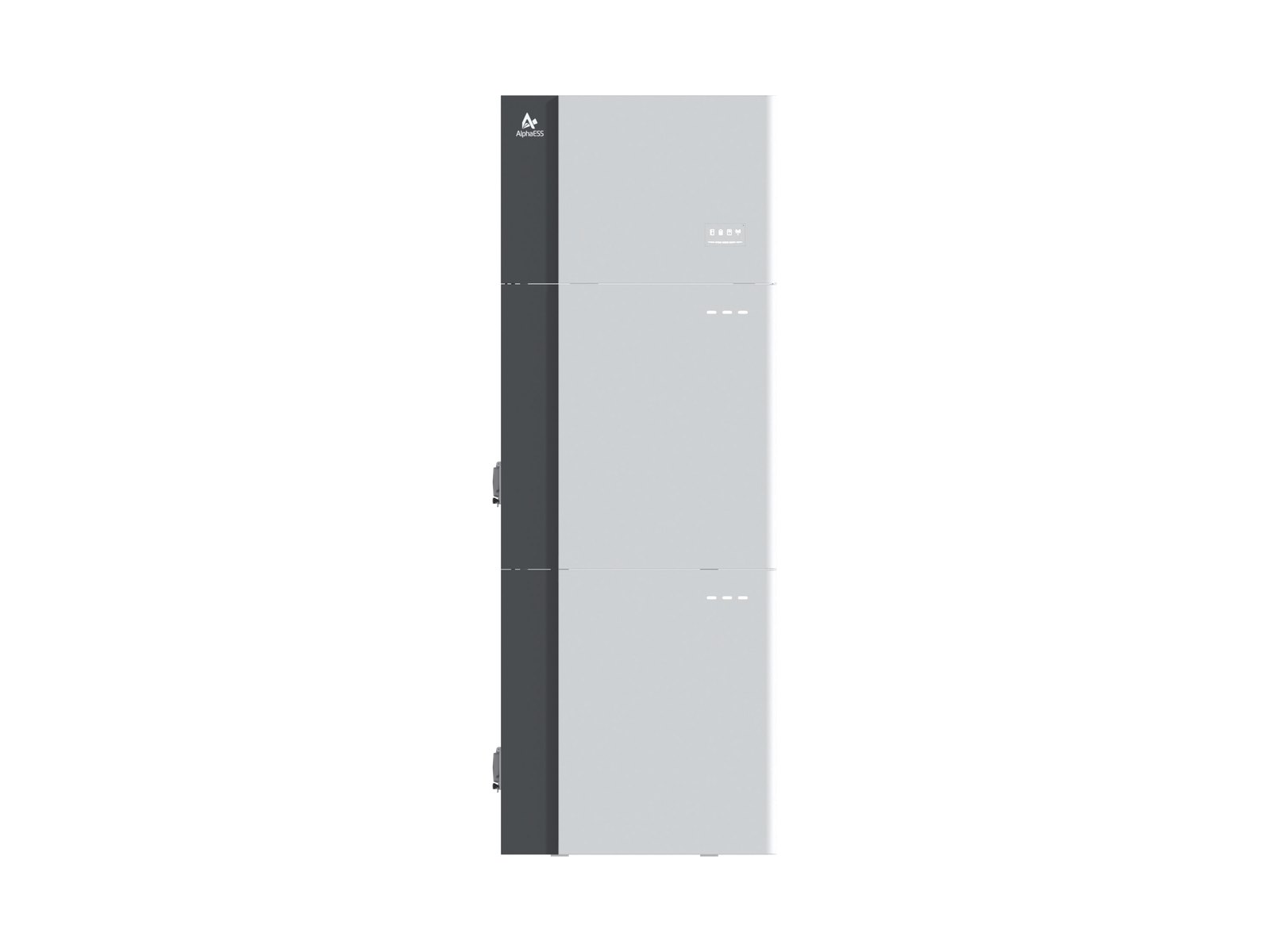
The AlphaESS SMILE-G3 is one of the cheapest ways to get a CEC-listed all-in-one battery and hybrid inverter, with single-phase and three-phase versions and 9.3 kWh modules. The catch is AlphaESS's patchy support record, so the installer you choose matters as much as the hardware.
Best for
Budget-focused homes with a well-reviewed installer who has AlphaESS experience
Sources
Independent desk research by the Solar Cobber editorial team. We did not test this product and were not paid by the manufacturer. Solar Cobber is a free directory that may earn referral or advertising fees from installers; this never affects our reviews.
- 01ESYsunhome HM5 and HM6 datasheet v1.5 (PDF, January 2026)
- 02ESYsunhome HM10-H, HM15 and HM20 three-phase datasheet (PDF, January 2026)
- 03ESY SUNHOME Warranty Terms and Conditions, single-phase system, Australia v4.3 (PDF)
- 04ESY SUNHOME Warranty Terms and Conditions, three-phase HM10-H, HM15, HM20, Australia v1.0 (PDF)
- 05Clean Energy Council approved batteries list (ESYSUNHOME, checked 14 November 2026)
- 06Clean Energy Council approved inverters list (ESYSUNHOME HM series, checked 14 November 2026)
- 07SolarQuotes: ESY Sunhome battery review and owner ratings
- 08SolarQuotes: Solar battery prices and system costs (updated 12 May 2026)
- 09ESYsunhome: HM6 product page
- 10ESYsunhome: All Energy Australia 2026 news (3 November 2026)
Get quotes for ESY Sunhome HM6
Browse rated solar installers in your area, check their Google reviews, and ask at least three for itemised quotes. Our guide to comparing solar quotes explains what to look for.