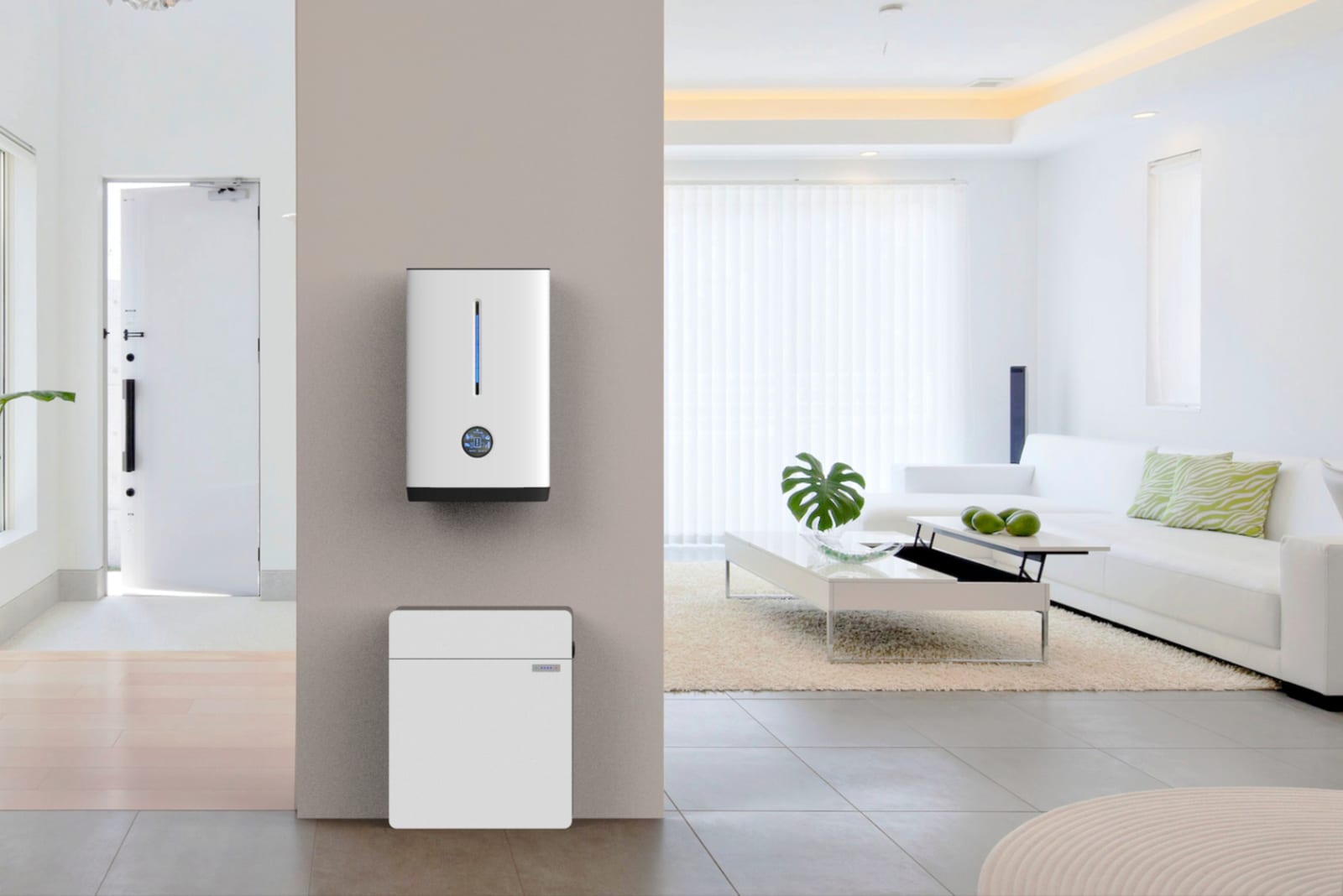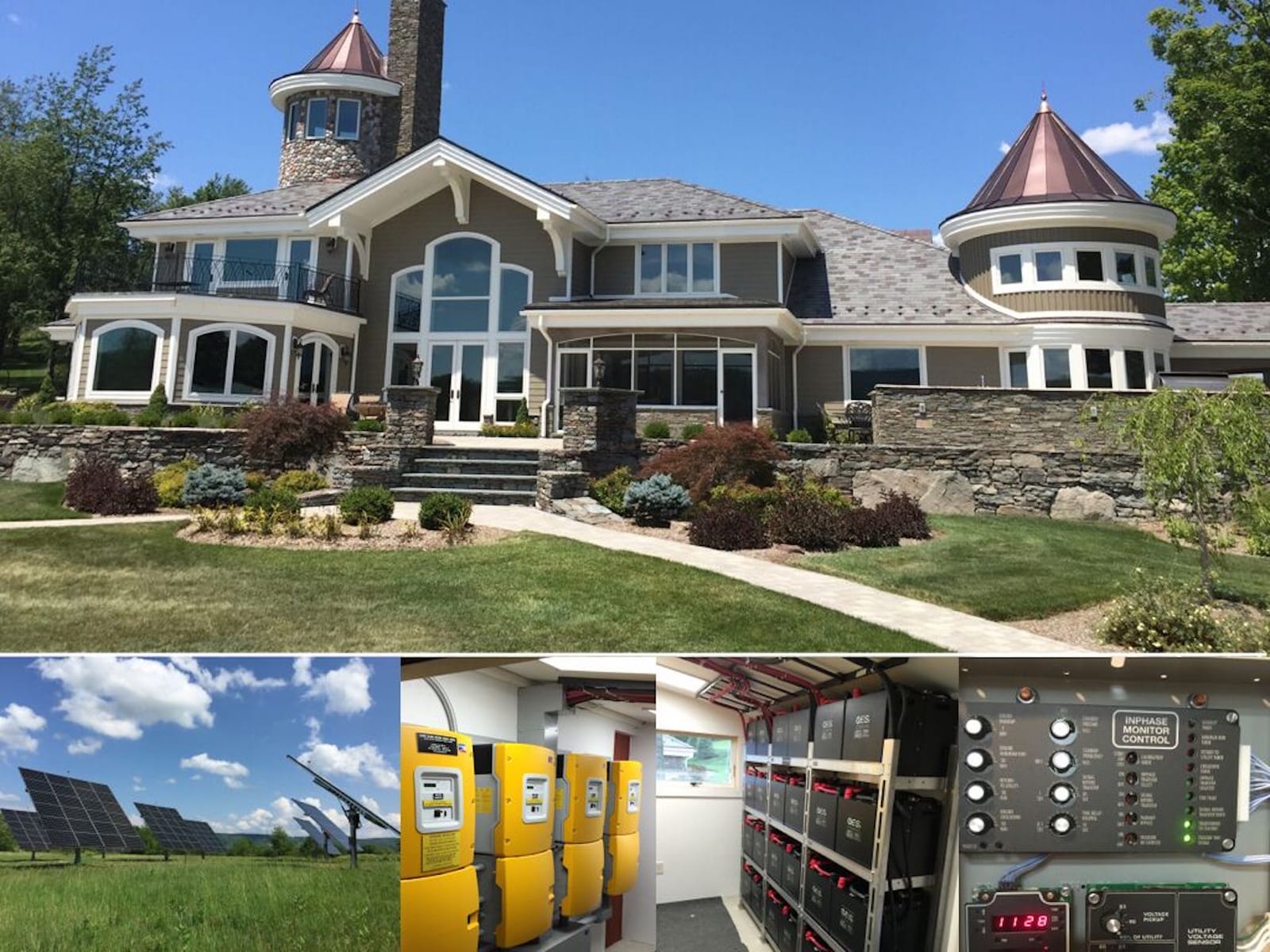

The Enphase battery price in Australia, as at November 2026, is about A$8,140 to A$10,140 installed for one 5 kWh Enphase IQ Battery 5P with its System Controller, or about A$6,780 to A$8,880 after the federal Cheaper Home Batteries discount. Most homes need two to four units, which costs about A$10,400 to A$20,500 after the discount (Solar Cobber calculation, not a quote).
Enphase does not publish retail prices, so every figure here comes from a dated third-party page. This is independent desk research: Solar Cobber obtained no quotes and was not paid by Enphase or any installer. Our Enphase IQ Battery 5P review covers the product, and our Enphase guide covers the brand.
Source: Aussie Solar Tech (16 July 2026); Clean Energy Regulator STC factors (page updated 29 October 2026).
Key facts
- Aussie Solar Tech priced one Enphase IQ Battery 5P at about A$4,940, its IQ System Controller at A$2,200 and installation at A$1,000 to A$3,000, a total of A$8,140 to A$10,140, on a page updated 16 July 2026.
- The Clean Energy Regulator sets the federal battery discount factor at 6.8 certificates per usable kWh for installs from May to December 2026 and 5.7 from January to June 2027.
- One Enphase IQ Battery 5P (5 kWh) earns 34 certificates, worth about A$1,260 to A$1,360 at A$37 to A$40 each (Solar Cobber calculation).
- SolarQuotes lists the Enphase IQ Battery 5P at A$7,200 after the federal discount, before installation, on its price list dated 12 May 2026, which is about A$1,440 per usable kWh.
- SolarQuotes says the Enphase IQ System Controller, needed for blackout backup, costs “around $2,000” and rates Enphase batteries 4.8 out of 5 from 80 owner ratings in November 2026.
- Solar Choice’s Battery Price Index (updated 6 November 2026) puts a typical 10 kWh battery with an inverter at A$7,984 installed after the federal rebate, which is below our calculated A$10,360 to A$12,564 for two Enphase units.
Enphase battery price list (November 2026)
An Enphase battery is sold in 5 kWh units, so the price depends on how many you stack. The table shows what one to four units cost installed, before and after the federal discount.
Solar Cobber calculation: units x A$4,940 + A$2,200 for one System Controller + A$1,000 to A$3,000 installation, from the Aussie Solar Tech page. Discount is certificates x A$37 to A$40, with 100% of the factor on the first 14 kWh and 60% from 14 to 28 kWh. After-discount low = before-discount low minus the discount at A$40; high = before-discount high minus the discount at A$37.
| Units | Usable kWh | Installed before discount | Certificates | Federal discount | Installed after discount | After discount per usable kWh |
|---|---|---|---|---|---|---|
| 1 | 5 | A$8,140 to A$10,140 | 34 | A$1,258 to A$1,360 | A$6,780 to A$8,882 | A$1,356 to A$1,776 |
| 2 | 10 | A$13,080 to A$15,080 | 68 | A$2,516 to A$2,720 | A$10,360 to A$12,564 | A$1,036 to A$1,256 |
| 3 | 15 | A$18,020 to A$20,020 | 99 | A$3,673 to A$3,971 | A$14,049 to A$16,347 | A$937 to A$1,090 |
| 4 | 20 | A$22,960 to A$24,960 | 119 | A$4,428 to A$4,787 | A$18,173 to A$20,532 | A$909 to A$1,027 |
We found no published price for a two, three or four unit install, so the multi-unit rows are our arithmetic. They assume installation labour stays at A$1,000 to A$3,000 however many units you fit, which probably understates the real quote. The Clean Energy Regulator page does not print the rounding rule for battery certificates, so confirm the exact count on your quote.
- Low
- High
Source: Solar Cobber calculation from Aussie Solar Tech (16 July 2026) and Clean Energy Regulator STC factors (29 October 2026). Assumes one System Controller and A$1,000 to A$3,000 installation at any size.
View the data as a table
| Low | High | |
|---|---|---|
| 1 unit | A$1,356 | A$1,776 |
| 2 units | A$1,036 | A$1,256 |
| 3 units | A$937 | A$1,090 |
| 4 units | A$909 | A$1,027 |
The cost per kWh falls by about a third from one unit to two, because the single A$2,200 System Controller is shared, then flattens. Buying one unit is the most expensive way to own an Enphase battery.
Two caveats on the sources. SolarQuotes’ A$7,200 for one unit is higher than Aussie Solar Tech’s A$4,940 battery plus A$2,200 controller (A$7,140) once the discount is taken off, and SolarQuotes does not say whether its figure includes the controller. We use the Aussie Solar Tech build-up for the table because it itemises each part, and the SolarQuotes list for like-for-like comparison with other brands below. Our Enphase brand guide uses the same single-unit range.
Enphase battery vs rival batteries on price
The Enphase IQ Battery 5P is the most expensive battery per usable kWh on SolarQuotes’ list of batteries after the federal discount, about double the price of most DC-coupled rivals. The chart uses a single source, SolarQuotes’ price list dated 12 May 2026, which shows prices after the federal rebate and GST but before installation.
Solar Cobber calculation: SolarQuotes price divided by usable kWh. Tesla Powerwall 3 includes its Gateway. Some rivals, such as the Fox ESS and Sigenergy products, are priced by SolarQuotes without an inverter, so they are not like-for-like with a complete system.
Source: SolarQuotes battery price list, last updated 12 May 2026. Prices exclude installation. Whether the Enphase figure includes the System Controller is not stated.
View the data as a table
| A$ per usable kWh | |
|---|---|
| Enphase IQ Battery 5P (5 kWh) | A$1,440 |
| iStore Smart Battery (10 kWh) | A$1,050 |
| Tesla Powerwall 3 (13.5 kWh) | A$741 |
| SolaX X1 (13.8 kWh) | A$681 |
| Fronius Reserva (12.63 kWh) | A$673 |
| Sungrow SBR128 (12.8 kWh) | A$633 |
| Growatt APX HV (13.5 kWh) | A$593 |
| BYD HVM 13.8 (13.8 kWh) | A$587 |
| Fox ESS EQ4800 (13.98 kWh) | A$286 |
| Sigenergy SigenStor (18 kWh) | A$272 |
The Enphase price is more than twice the Tesla Powerwall 3 per kWh on the same list. You are paying for modular AC coupling, a 15-year warranty and an Enphase microinverter fit, covered in our Powerwall 3 price guide, Sungrow battery price guide and Sigenergy battery price guide. For all-brand benchmarks see how much a solar battery costs.
| Battery | Usable kWh | Price after discount, not installed (SolarQuotes, May 2026) | Coupling |
|---|---|---|---|
| Enphase IQ Battery 5P | 5.0 | A$7,200 | AC, built-in microinverters |
| Tesla Powerwall 3 | 13.5 | A$10,000 | Built-in hybrid inverter |
| Sungrow SBR128 | 12.8 | A$8,100 | DC, needs hybrid inverter |
| BYD Battery-Box Premium HVM 13.8 | 13.8 | A$8,100 | DC, needs hybrid inverter |
How the federal battery discount applies to an Enphase battery
The Cheaper Home Batteries Program pays per usable kWh through small-scale technology certificates (STCs), which your installer sells and deducts from the invoice. For installs from May to December 2026 the factor is 6.8 STCs per kWh, applied in full to the first 14 kWh, at 60% for kWh 15 to 28, and at 15% from 28 to 50 kWh, according to the Clean Energy Regulator (page updated 29 October 2026).
Worked example for three units (15 kWh): 14 x 6.8 = 95.2, plus 1 x 6.8 x 0.6 = 4.08, so about 99 STCs. At A$40 that is about A$3,970. Because Enphase sells in 5 kWh steps, a three-unit system only just crosses the 14 kWh line, and the extra kWh earns 60%. The Clearing House price is A$40 (Clean Energy Regulator, September 2026), and the October 2026 spot range was A$39.85 to A$39.90 (Demand Manager).
Source: Clean Energy Regulator, STC factors for solar batteries, page updated 29 October 2026.
View the data as a table
| Certificates per kWh | |
|---|---|
| Jan-Apr 2026 | 8.4 |
| May-Dec 2026 | 6.8 |
| Jan-Jun 2027 | 5.7 |
| Jul-Dec 2027 | 5.2 |
| Jan-Jun 2028 | 4.6 |
| Jul-Dec 2028 | 4.1 |
The factor falls from 6.8 to 5.7 on 1 January 2027, then again each half year. The same three-unit install in January 2027 earns about 83 STCs (14 x 5.7 + 1 x 5.7 x 0.6), roughly A$3,080 to A$3,330, a loss of about A$590 to A$640. The factor is set by installation date, not the date you sign. State top-ups are in battery rebates by state and the national scheme is in our battery rebate guide.
The battery must be on the Clean Energy Council approved list. Our October 2026 review recorded ten IQ Battery 5P with FlexPhase models listed until 31 December 2027, and an older original 5P listing expiring on 29 October 2026, so confirm your quote names the FlexPhase model.
What changes the price of an Enphase battery
The System Controller, the number of units and the switchboard work move the quote most.
- System Controller. Backup needs the IQ System Controller 3 INT. Aussie Solar Tech priced it at A$2,200 and SolarQuotes at “around $2,000”. Without it the battery does self-consumption only.
- Number of units. Each extra unit is about A$4,940 of hardware on Aussie Solar Tech’s figure, with no extra controller.
- Switchboard and backup circuits. Splitting circuits for backup adds labour. See solar battery installation cost.
- Three phase. One unit gives only 1.28 kVA per phase, so a three-phase home needs more units for useful backup.
- Existing Enphase system. AC coupling lets the battery work with Enphase microinverters you already own. A DC-coupled battery usually needs a new hybrid inverter, as explained in AC-coupled vs DC-coupled batteries.
The video is Enphase’s own short introduction to the IQ Battery 5P, so it is the manufacturer’s account of its product.
Is an Enphase battery worth it? A worked payback example
Two Enphase IQ Battery 5P units pay for themselves in about 9 to 17 years, which is inside the 15-year warranty only in South Australia and in the lower half of the Sydney range (our calculation, not a measured result).
Assumptions: the system delivers 8 kWh a day of stored solar to the home, each kWh avoids grid power at the 2026-27 Default Market Offer usage rate and gives up a 3 c/kWh feed-in credit, and losses and degradation are ignored. Usage rates are the Australian Energy Regulator’s flat-rate caps: SA Power Networks 41.9 c/kWh, Ausgrid 33.1 c/kWh and Energex 28.0 c/kWh. The two prices are our calculated A$10,360 and A$12,564 for two units after the discount.
| Network area | Saving per year | Payback at A$10,360 | Payback at A$12,564 |
|---|---|---|---|
| SA Power Networks (Adelaide) | About A$1,136 | 9.1 years | 11.1 years |
| Ausgrid (Sydney) | About A$880 | 11.8 years | 14.3 years |
| Energex (South East Queensland) | About A$729 | 14.2 years | 17.2 years |
- At A$10,360
- At A$12,564
Source: Solar Cobber calculation; AER Default Market Offer 2026-27 final determination (26 May 2026). Savings: 8 kWh x 365 x (usage rate minus 3 c/kWh).
View the data as a table
| At A$10,360 | At A$12,564 | |
|---|---|---|
| Adelaide | 9.1 yrs | 11.1 yrs |
| Sydney | 11.8 yrs | 14.3 yrs |
| SE Queensland | 14.2 yrs | 17.2 yrs |
The case where it does not pay: a Brisbane household that stores 4 kWh a day saves about A$365 a year, a payback of 28 years or more at these prices. Our 10 kWh battery price guide and 20 kWh battery price guide show cheaper ways to buy the same capacity.
Solar Cobber calculation: the warranty covers 15 years or 6,000 cycles. Per unit that is 6,000 x 5 kWh = 30,000 kWh of throughput. A four-unit system after the discount costs about A$18,173 to A$20,532 for 120,000 kWh, or about 15 to 17 cents per kWh delivered over the warranty, against 23 to 30 cents for a single unit. Real cycling depends on your use and the warranty’s capacity floor of 60% at 15 years.
What to check on your Enphase battery quote
- The exact model: IQ Battery 5P with FlexPhase, and the power rating (1.65 to 3.84 kVA) configured.
- The number of units, and whether the IQ System Controller 3 INT is a separate line.
- Whether the price is before or after the federal discount, and how many certificates were claimed.
- The installation date, since installs from 1 January 2027 earn fewer certificates.
- Written confirmation the model is on the Clean Energy Council approved list on that date.
- Who pays labour if a unit fails, since Enphase’s warranty excludes removal and refitting.
Get at least three quotes (how to compare solar quotes), find installers in our directory, and check any installer yourself on the Clean Energy Council approved retailer list and the Solar Accreditation Australia installer register. Enphase owners can monitor the battery with the Enphase App.
FAQ
How much does an Enphase battery cost in Australia?
One Enphase IQ Battery 5P with System Controller costs about A$8,140 to A$10,140 installed before the federal discount, as at July 2026. After the discount it is about A$6,780 to A$8,880.
How much is an Enphase IQ Battery 5P?
The Enphase IQ Battery 5P itself is about A$4,940 per 5 kWh unit on Aussie Solar Tech’s page updated 16 July 2026. SolarQuotes lists it at A$7,200 after the federal discount and before installation, dated 12 May 2026.
How much does a 10 kWh Enphase battery cost?
A 10 kWh Enphase system is two units, which we calculate at about A$13,080 to A$15,080 installed before the discount and A$10,360 to A$12,564 after it. No published price exists for two units, so this is our arithmetic.
Is the Enphase battery eligible for the federal battery rebate?
Yes, when the model is on the Clean Energy Council approved list and your installer is accredited. Ten IQ Battery 5P with FlexPhase models were listed until 31 December 2027 when we checked in October 2026.
Why is the Enphase battery more expensive than other batteries?
It costs more per kWh because each 5 kWh unit has its own microinverters and the single System Controller is a fixed cost. On SolarQuotes’ list it is about A$1,440 per usable kWh against A$587 to A$741 for the Sungrow, BYD, Growatt and Tesla options.
Does the Enphase battery work in a blackout?
Only with the IQ System Controller 3 INT, and one unit gives up to 3.84 kVA continuous on single phase. Heavy loads need several units.
How long is the Enphase battery warranty?
15 years or 6,000 cycles, whichever comes first, with at least 70% capacity at 10 years and 60% at 15 years. Labour for warranty swaps is excluded.
Will the Enphase battery rebate drop in 2027?
Yes. The factor falls from 6.8 to 5.7 certificates per kWh on 1 January 2027, which cuts a three-unit discount by about A$590 to A$640.
Sources
- Clean Energy Regulator: STC entitlements and battery factors (updated 29 October 2026)
- Aussie Solar Tech: Enphase IQ Battery 5P review and price (16 July 2026)
- SolarQuotes: battery price list (12 May 2026)
- SolarQuotes: Enphase battery owner reviews
- Solar Choice: Solar Battery Price Index (6 November 2026)
- AER: Default Market Offer 2026-27 final determination
- Clean Energy Council approved batteries
- Enphase IQ Battery 5P with FlexPhase datasheet (ANZ, July 2025)
About this guide
This guide was written by the Solar Cobber editorial team from independent desk research checked in November 2026. Solar Cobber is a free directory that may earn referral or advertising fees from installers, but commercial relationships never affect our content. This is general information, not financial advice. To report a correction, contact us.
Filed under Savings
Back to blog