
A 30kWh battery costs about A$26,400 to A$27,600 installed in Australia before the federal discount and about A$20,700 to A$21,900 after it, on Solar Choice’s November 2026 averages. Budget stacks are advertised far lower, from about A$8,400 installed. Since 1 May 2026, capacity above 28 kWh earns only 15% of the full federal discount rate.
This guide is independent desk research; we did not request quotes or test any product. Sizes are usable capacity, which is the energy a battery can actually discharge and the figure the federal discount is calculated on.
Key facts
- As at November 2026, the Solar Choice Battery Price Index puts the average installed price of a 30 kWh home battery in Australia at A$20,689 without an inverter and A$21,889 with one, after the federal discount.
- The same Solar Choice index puts a 20 kWh battery at A$14,172 to A$15,172, a 40 kWh battery at A$27,911 to A$29,511 and a 50 kWh battery at A$35,534 to A$38,034, installed, after the federal discount.
- Since 1 May 2026 the Cheaper Home Batteries Program applies its certificate factor at 100% for the first 14 kWh of usable capacity, 60% from 14 to 28 kWh and 15% from 28 to 50 kWh, according to the Department of Climate Change, Energy, the Environment and Water.
- For installations from 1 May to 31 December 2026, a 30 kWh battery earns about 154 certificates worth A$5,698 to A$6,160, and a 50 kWh battery earns about 174 certificates, only 20 more.
- Each usable kWh above 28 kWh attracts about A$38 to A$41 of federal battery discount in 2026, compared with A$252 to A$272 for each of the first 14 kWh, and the factor falls from 6.8 to 5.7 on 1 January 2027.
Large home battery price list (November 2026)
A big home battery in Australia averages roughly A$690 to A$760 per usable kWh installed after the federal discount, whatever its size from 20 to 50 kWh. The table shows Solar Choice Battery Price Index averages for November 2026 beside the lowest advertised installed price we found. The lower average is battery only and the higher includes an inverter. Before-discount figures are Solar Choice’s pre-rebate price per kWh multiplied by size.
| Usable capacity | Average installed before discount | Federal discount in the average | Average installed after discount | Lowest advertised installed price found |
|---|---|---|---|---|
| 20 kWh | A$18,600 to A$19,600 | A$4,428 | A$14,172 to A$15,172 | A$7,999 |
| 30 kWh | A$26,400 to A$27,600 | A$5,711 | A$20,689 to A$21,889 | A$8,400 |
| 40 kWh | A$34,000 to A$35,600 | A$6,089 | A$27,911 to A$29,511 | A$10,900 |
| 50 kWh | A$42,000 to A$44,500 | A$6,466 | A$35,534 to A$38,034 | Not found |
The advertised prices are from Grow Energy, a Melbourne installer, for a Sungrow SBH stack with a 5 kW hybrid inverter, standard installation and the May to December 2026 discount applied (checked 12 November 2026). They are advertisements, not quotes. Solar Choice averages many brands and sites, while the cheapest offers pair a stack battery with a small inverter.
What changes the price
Brand and inverter choice move the price of a large battery more than size does.
- Inverter. A stack battery needs a compatible hybrid inverter. Grow Energy lists upgrades from a 5 kW single-phase unit at A$350 (6 kW) to A$5,200 (25 kW three phase).
- Installation. SolarQuotes says a simple installation adds at least A$3,000 and a complicated one A$4,000 or more.
- Site work. Whole-home backup, garage bollards, a non-combustible backing sheet, long cable runs and switchboard upgrades all cost extra.
How the federal battery discount applies above 14 kWh
The federal discount on a large battery is the sum of three tiers, and the top tier is worth very little. The Cheaper Home Batteries Program pays in small-scale technology certificates (STCs), which are tradeable certificates your installer claims and deducts from the invoice. The Clean Energy Regulator and the Department of Climate Change, Energy, the Environment and Water publish a factor of 6.8 certificates per usable kWh for installations from 1 May to 31 December 2026, applied at 100% up to 14 kWh, 60% from 14 to 28 kWh and 15% from 28 to 50 kWh. Nothing is paid above 50 kWh, and totals are rounded down.
Each kWh is therefore worth 6.8 certificates in the first tier, 4.08 in the second and 1.02 in the third. This table is our arithmetic from those factors, checked 12 November 2026.
| Usable capacity | Working (May to Dec 2026) | Certificates | Discount at A$37 to A$40 each | Discount per kWh | Certificates from 1 Jan 2027 |
|---|---|---|---|---|---|
| 14 kWh | 14 x 6.8 | 95 | A$3,515 to A$3,800 | A$251 to A$271 | 79 |
| 20 kWh | 95.2 + (6 x 4.08) | 119 | A$4,403 to A$4,760 | A$220 to A$238 | 100 |
| 30 kWh | 95.2 + 57.12 + (2 x 1.02) | 154 | A$5,698 to A$6,160 | A$190 to A$205 | 129 |
| 40 kWh | 95.2 + 57.12 + (12 x 1.02) | 164 | A$6,068 to A$6,560 | A$152 to A$164 | 137 |
| 50 kWh | 95.2 + 57.12 + (22 x 1.02) | 174 | A$6,438 to A$6,960 | A$129 to A$139 | 146 |
Demand Manager’s spot market showed A$39.60 per STC on 12 November 2026 and the Clean Energy Regulator’s Clearing House price is A$40; the A$37 lower end is our assumption for what installers pass on. Going from 30 to 50 kWh adds 20 kWh of storage but only about A$740 to A$800 of discount.
The factor is set by installation date. The Clean Energy Regulator allows one claim per premises, so modules added after a claim earn no certificates. State top-ups are covered in our guide to battery rebates by state.
20, 30, 40 and 50 kWh battery prices by product
Among batteries we have reviewed, hardware for about 30 kWh ranges from A$7,200 to A$17,000 after the federal discount, before installation. Prices are from the SolarQuotes battery comparison table, updated 12 November 2026, and include GST and the discount. The last column adds the A$3,000 minimum installation figure SolarQuotes uses. Confirm whether a hybrid inverter is included in your quote.
| Battery | Usable capacity | Continuous power listed | Hardware after discount | With A$3,000 installation |
|---|---|---|---|---|
| Fox ESS EQ4800 | 18.64 kWh | 8.96 kW | A$5,100 | A$8,100 |
| Neovolt 20 | 19.2 kWh | 5 kW | A$7,200 | A$10,200 |
| Sigenergy SigenStor | 27 kWh | 5 kW | A$7,200 | A$10,200 |
| Fox ESS EQ4800 | 27.96 kWh | 13.44 kW | A$8,100 | A$11,100 |
| AlphaESS SMILE-G3-S5 | 28.8 kWh | 5 kW | A$11,500 | A$14,500 |
| Sungrow SBH300 | 30 kWh | 17.6 kW | A$17,000 | A$20,000 |
| Sungrow SBH400 | 40 kWh | 17.6 kW | A$23,700 | A$26,700 |
| Fox ESS EQ4800 | 41.94 kWh | 20.16 kW | A$13,000 | A$16,000 |
| Sigenergy SigenStor | 45 kWh | 10 kW | A$14,700 | A$17,700 |
| Neovolt 50 | 48 kWh | 5 kW | A$17,000 | A$20,000 |
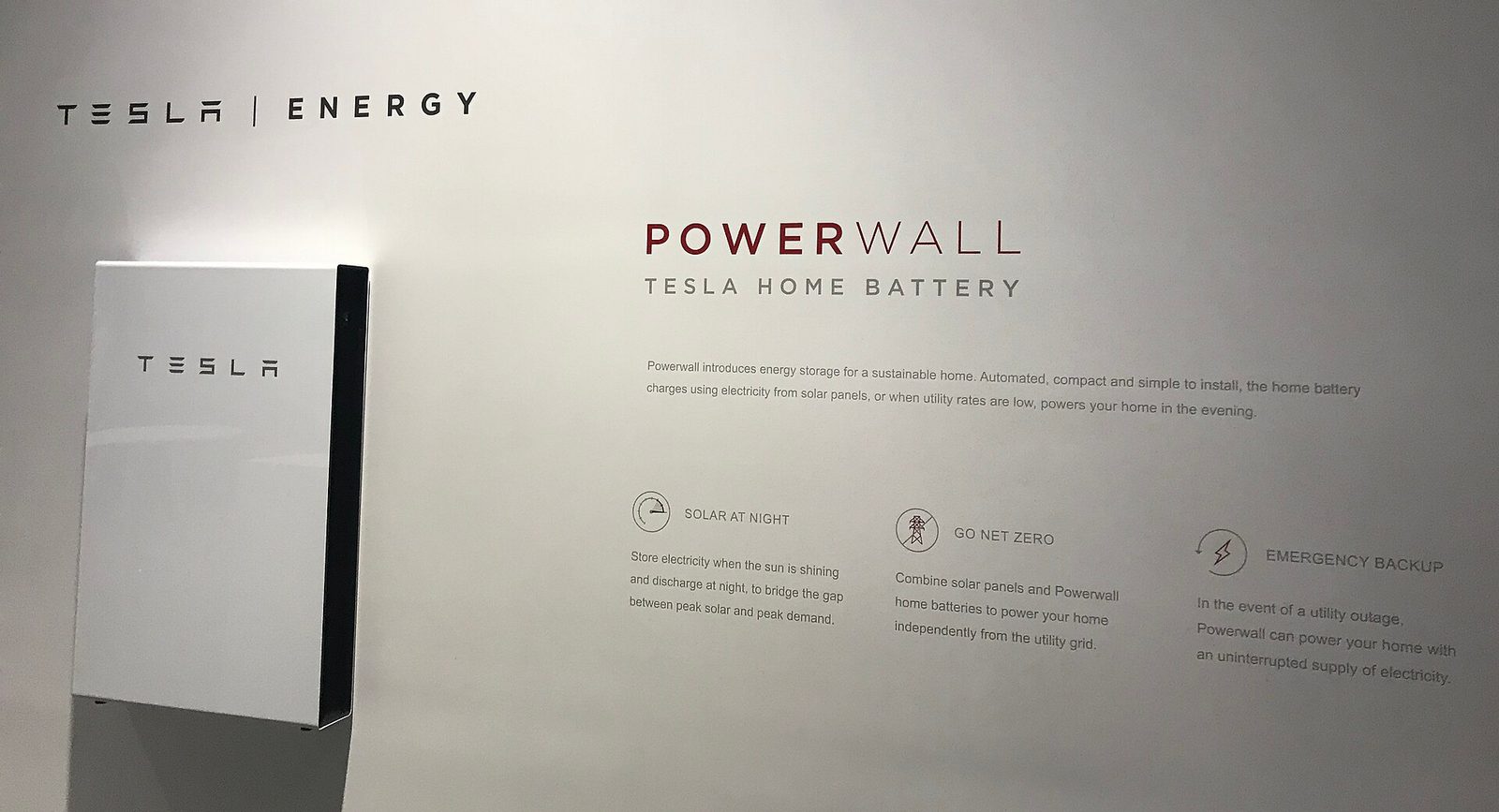
A Tesla Powerwall 3 with one Expansion unit (27 kWh) is advertised by Grow Energy at A$16,974 installed after the discount, and with two Expansions (40.5 kWh) at A$24,274 (checked 12 November 2026).
Who actually needs a 20kWh solar battery or bigger?
Most homes do not need 30 kWh or more, because a typical household uses less than that in a day. The Australian Energy Regulator’s 2026-27 benchmark usage is 3,900 kWh a year in Sydney’s Ausgrid area, about 10.7 kWh a day, as set out in our average electricity bill guide. A 30 kWh battery holds nearly three days of that.
Large storage suits all-electric homes with heavy night loads such as EV charging, off-peak grid chargers and rural properties wanting days of backup. See what size solar battery you need.
Inverter power, single-phase limits and where a 40kWh battery can go
Power. Capacity (kWh) is how much energy is stored, and power (kW) is how fast it moves. SolarQuotes lists the Neovolt and AlphaESS SMILE-G3-S5 at 5 kW at every size, so a 28.8 kWh stack takes almost six hours to fill or empty.
Single phase. Networks cap inverter capacity per phase. Energex’s AS/NZS 4777.1 guidance (February 2025) sets 10 kVA of inverter capacity and 5 kW of export on a static single-phase connection. Ausgrid says up to 10 kW of total inverter rating per phase can be approved through its streamlined process (checked November 2026). Other networks differ. See single vs three phase power for solar.
Location. The Clean Energy Regulator requires batteries to comply with AS/NZS 5139:2019. Guidance endorsed by Australian electrical safety regulators through the Electrical Regulatory Authorities Council says a battery must not go in ceiling spaces, wall cavities, under stairways, in exit paths, or within 600 mm beside or 900 mm below a window or vent to a habitable room. Other appliances must stay 600 mm clear, a wall backing onto a habitable room needs a non-combustible barrier, and a battery exposed to vehicles, as in a garage, needs protection such as bollards. A nine-module Fox ESS EQ4800 stands 1,352 mm tall and weighs 356.5 kg, so big systems need more compliant space.
Is it worth it? A worked payback example
A 30 kWh battery pays back inside a typical 10-year warranty only if the home uses most of it every night, or the price is near the bottom of the market. This is our own calculation, not a measured result. Assumptions: Ausgrid flat rate of 33.1 c/kWh, a 3 c/kWh feed-in rate, about 3.4 c/kWh of feed-in income given up per stored kWh after losses, and no price rises, degradation or virtual power plant income. Each kWh used from the battery saves about 29.7 cents. The budget price is the 27.96 kWh Fox ESS EQ4800 with installation from the table above.
| Energy used from the battery | Annual saving | Payback at A$21,889 (average) | Payback at A$11,100 (budget) |
|---|---|---|---|
| 10 kWh a day | About A$1,085 | About 20 years | About 10 years |
| 20 kWh a day | About A$2,170 | About 10 years | About 5 years |
| 28 kWh a day | About A$3,035 | About 7 years | About 3.7 years |
A household that draws 10 kWh a night gets nothing from the other 20 kWh. Solar Choice’s average 10 kWh battery with inverter, at A$7,984, pays back in about 7.4 years on that usage.
What to check on your quote
A quote for a large battery should show usable capacity, certificates and inverter size as separate lines:
- Usable capacity in kWh, and the certificate count against the table above.
- The planned installation date, because the factor drops on 1 January 2027.
- The inverter model, its kW rating and whether it is single or three phase.
- Written network approval for the inverter size and export limit.
- The exact location, with any barrier, bollards and cable runs priced.
Compare at least three quotes with our guide to comparing solar quotes, and check the Solar Accreditation Australia installer register and the Clean Energy Council approved retailer list yourself. Browse installers in our directory.
FAQ
How much does a 30kWh battery cost in Australia?
A 30kWh battery averages A$20,689 to A$21,889 installed after the federal discount, according to the Solar Choice Battery Price Index for November 2026. Budget stacks are advertised from about A$8,400.
What is the 20kWh battery price in 2026?
A 20 kWh battery averages A$14,172 to A$15,172 installed after the federal discount in November 2026, on Solar Choice figures. The discount on 20 kWh is about 119 certificates, worth A$4,403 to A$4,760.
What is the 50kWh battery price in Australia?
A 50 kWh battery averages A$35,534 to A$38,034 installed after the federal discount in November 2026, on Solar Choice figures. SolarQuotes lists 45 to 48 kWh hardware from A$14,700 to A$17,000 after the discount, before installation.
What is the 15kWh battery price?
A 15 kWh battery earns about 99 certificates, worth A$3,663 to A$3,960 off, for installations to 31 December 2026. SolarQuotes lists hardware of about that size from A$5,500 (ESY Sunhome HM6-15, 14.59 kWh) to A$9,700 (Fronius Reserva 15.8) after the discount, before installation of A$3,000 or more.
How much is the federal rebate on a 30kWh battery?
The federal discount on a 30 kWh battery is about 154 certificates, worth A$5,698 to A$6,160, for installations from 1 May to 31 December 2026. From 1 January 2027 the same battery earns about 129 certificates.
Can I install a 30kWh battery on single-phase power?
Yes, storage capacity is not what networks limit, but inverter capacity is. Energex allows 10 kVA of inverter capacity on a static single-phase connection and Ausgrid streamlines up to 10 kW per phase.
Sources
- DCCEEW: Cheaper Home Batteries Program
- DCCEEW: Small-scale technology certificates for batteries
- Clean Energy Regulator: Solar batteries
- REC Registry: STC calculator
- Solar Choice: Battery Price Index, November 2026
- SolarQuotes: battery comparison table, updated 12 November 2026
- Grow Energy: Sungrow SBH advertised prices
- Grow Energy: Tesla Powerwall 3 advertised prices
- Electrical Regulatory Authorities Council: battery installation requirements under AS/NZS 5139:2019
- Energex: AS/NZS 4777.1 frequently asked questions
- Ausgrid: Choosing a solar system
- Demand Manager: STC spot price, 12 November 2026
About this guide
The Solar Cobber editorial team wrote this guide from independent desk research, checked in November 2026. Solar Cobber is a free directory that may earn referral or advertising fees from installers, and commercial relationships never affect our content. This is general information, not financial advice. Send corrections via our contact page.
Filed under Solar Products
Back to blog