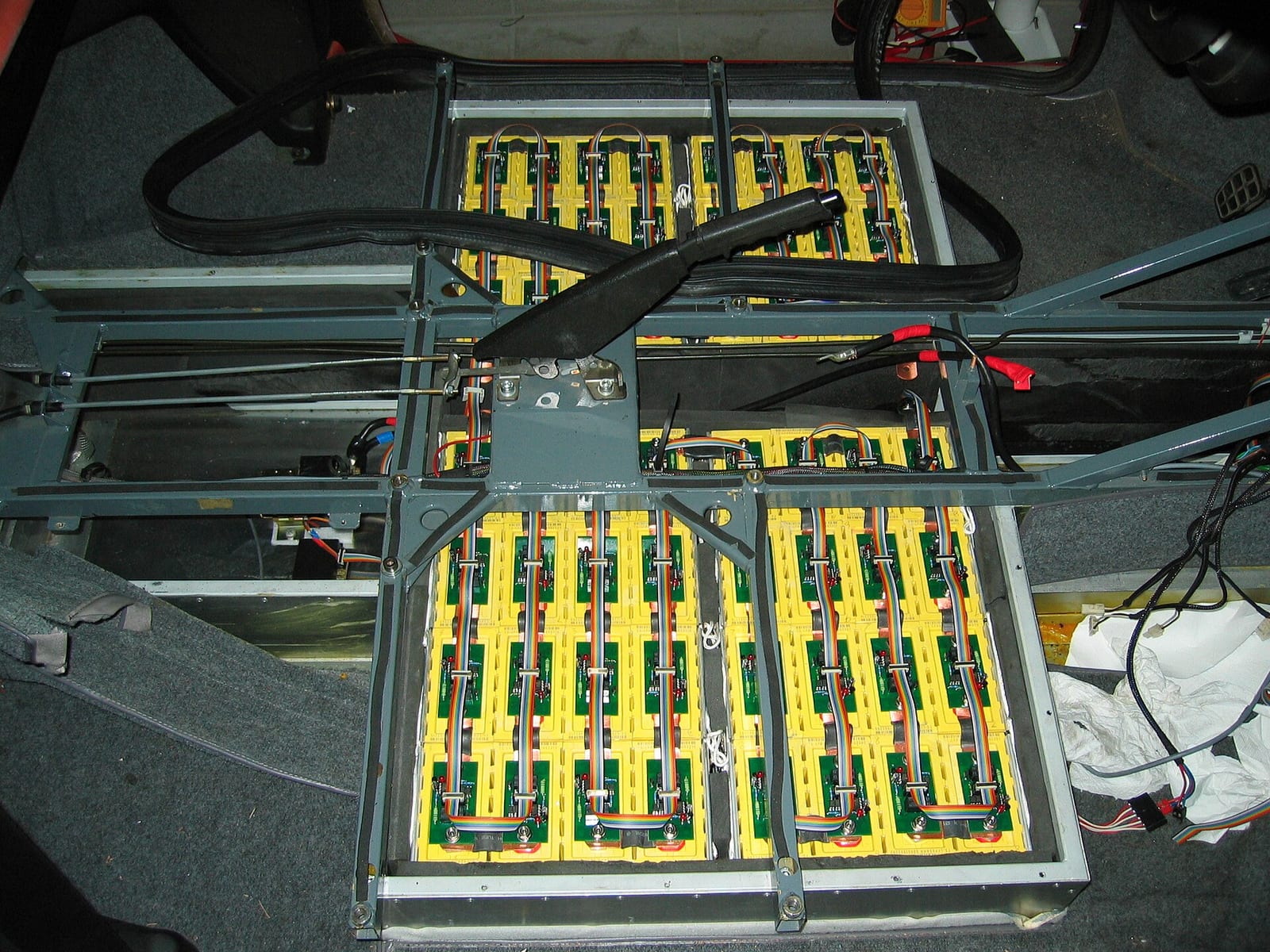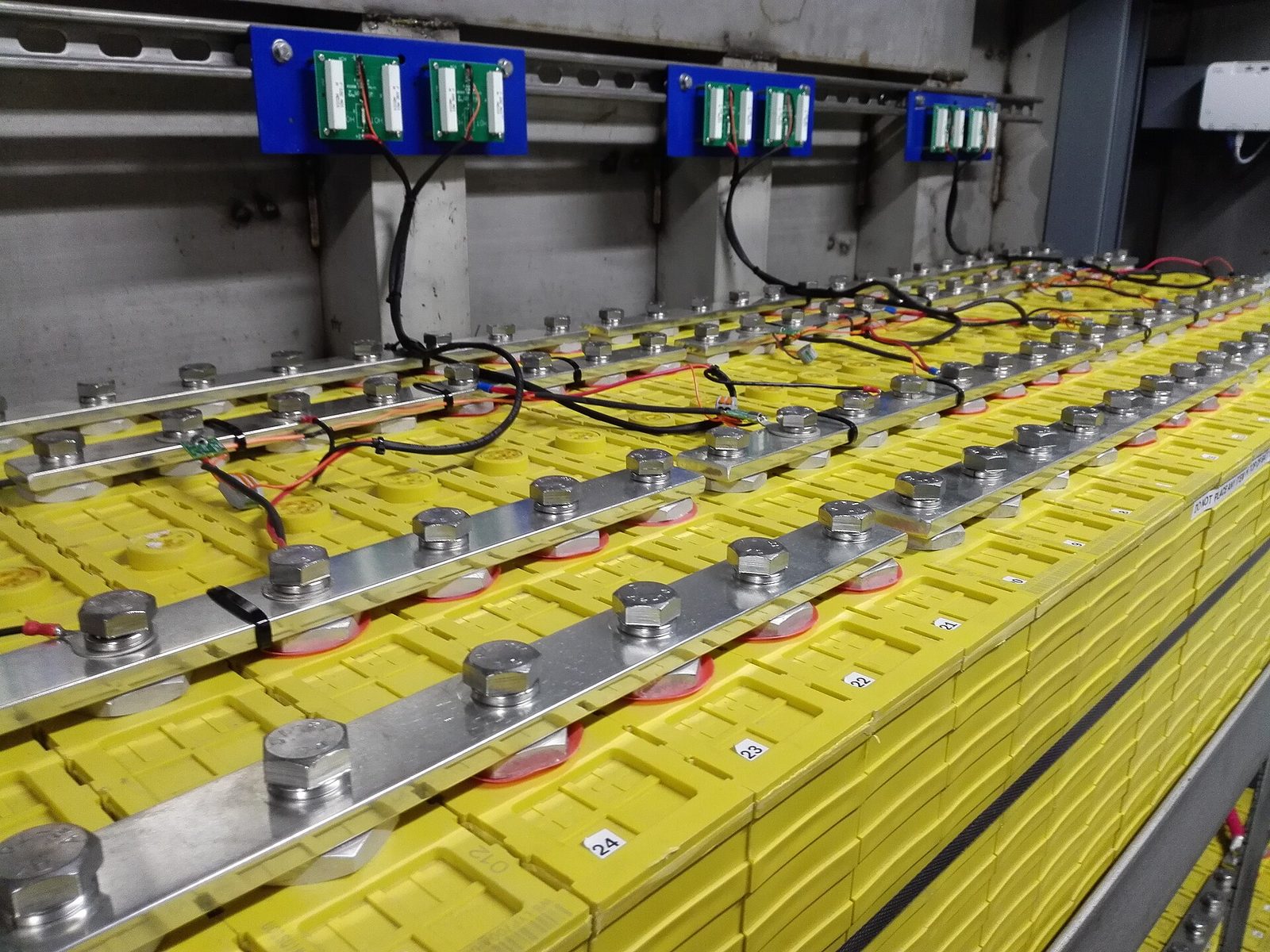

Can you buy a sodium ion battery in Australia in 2026? Only for commercial, industrial and off-grid use. As at November 2026, we found no sodium-ion home battery on the Clean Energy Council (CEC) approved list, so none qualifies for the federal Cheaper Home Batteries Program discount. Brisbane maker PowerCap lists a 10.3 kWh residential unit, but publishes no price or CEC listing. If you want a rebate-eligible home battery now, buy lithium iron phosphate (LFP).
Source: Energy Matters (30 September 2026); PowerCap website (checked November 2026).
Key facts
- As at August 2026, Energy Matters reported that none of the more than 3,400 products on the Clean Energy Council approved list used sodium-ion chemistry, and we found no later report of one being added.
- The federal Cheaper Home Batteries Program discount applies only to batteries on the approved product list, so a sodium-ion battery that is not listed gets no federal discount.
- RenewEconomy reported in November 2025 that many electricity networks also require CEC certification before a home battery can connect, which shuts sodium-ion out of most home installs.
- PowerCap, a Brisbane manufacturer, lists a 10.3 kWh POD Residential sodium-ion battery with a 15 year performance warranty on its website in November 2026, without a published price or CEC status.
- Foton, the Australian distributor for Cospowers, announced a 100 kW and 200 kWh commercial sodium-ion system sale in August 2026, which RenewEconomy reported on 14 August 2026.
- Published sodium-ion energy density figures range from about 75 to 175 Wh/kg, against about 90 to 200 Wh/kg for LFP, depending on the source.
- The Clean Energy Council will accept new battery applications only under SA TS 5398 from 1 January 2027, and has said the approved list will show battery chemistry during 2026.
What is a sodium-ion battery?
A sodium-ion battery stores energy by moving sodium ions between two electrodes, in the same way a lithium-ion battery moves lithium ions. Sodium is far more abundant than lithium, and sodium-ion cells do not need lithium, cobalt or nickel. The trade is lower energy density, so for the same capacity a sodium-ion pack is usually heavier and bigger than an LFP pack.
For a home battery bolted to a garage wall, weight matters much less than price, safety and lifespan. That is why sodium-ion is being pitched at stationary storage first. For how the incumbent works, see our guide to LFP batteries.
Sodium-ion vs lithium (LFP): how do they compare?
Sodium-ion has lower energy density than LFP in most published figures, similar or better cold and heat tolerance, and a cycle life that sources disagree on. The honest summary is that the numbers vary widely by source, product and test method, so treat every figure below as a published claim or industry range, not a guarantee.
| Measure | Sodium-ion | LFP | Source |
|---|---|---|---|
| Energy density (cell) | About 75 to 175 Wh/kg | About 175 to 200 Wh/kg | Energy Matters, 30 September 2026 |
| Energy density (cell) | About 75 to 160 Wh/kg | About 90 to 160 Wh/kg | Energy Matters, 1 October 2026 |
| Energy density (cell) | 100 to 160 Wh/kg, prototypes near 200 | Not given | pv magazine, 10 August 2026 |
| Cycle life | About 8,000 to 10,000 | About 6,000 or more | Energy Matters, 30 September 2026 |
| Cycle life at 80% depth of discharge | About 2,000 to 4,000 | About 3,000 to 6,000 | Energy Matters, 1 October 2026 |
| Operating temperature | About minus 40 to 70 C | About minus 20 to 60 C | Energy Matters, 30 September 2026 |
| Thermal runaway onset | About 250 C | About 270 C | Energy Matters, 1 October 2026 |
The two Energy Matters articles, published a day apart, give different energy density and cycle life ranges for the same chemistries. That is a useful warning: no single page on the internet, including this one, settles sodium-ion’s real-world cycle life.
- Low end
- High end
View the data as a table
| Low end | High end | |
|---|---|---|
| LFP (Energy Matters, 30 Sep) | 175 Wh/kg | 200 Wh/kg |
| LFP (Energy Matters, 1 Oct) | 90 Wh/kg | 160 Wh/kg |
| Sodium-ion (Energy Matters, 30 Sep) | 75 Wh/kg | 175 Wh/kg |
| Sodium-ion (Energy Matters, 1 Oct) | 75 Wh/kg | 160 Wh/kg |
| Sodium-ion (pv magazine review, 10 Aug) | 100 Wh/kg | 160 Wh/kg |
| CATL Naxtra (company claim) | n/a | 175 Wh/kg |
Sodium-ion energy density ranges from 75 to 175 Wh/kg across 2026 sources and overlaps the LFP range, but the sources do not agree on where either range sits.
- Low end
- High end
Source: Energy Matters (30 September and 1 October 2026); PowerCap website (November 2026). PowerCap states 10,000+ cycles without naming the product or test conditions.
View the data as a table
| Low end | High end | |
|---|---|---|
| LFP (Energy Matters, 30 Sep) | 6,000 cycles | n/a |
| LFP (Energy Matters, 1 Oct) | 3,000 cycles | 6,000 cycles |
| Sodium-ion (Energy Matters, 30 Sep) | 8,000 cycles | 10,000 cycles |
| Sodium-ion (Energy Matters, 1 Oct) | 2,000 cycles | 4,000 cycles |
| PowerCap (company claim) | 10,000 cycles | n/a |
Cycle life claims for sodium-ion run from 2,000 to more than 10,000 cycles, so the spread between sources is wider than the gap between the chemistries.
The video is a technical review of sodium-ion cells by the independent engineering channel The Limiting Factor, about a year old, so use it for the chemistry, not current prices.
Which sodium-ion batteries are on sale in Australia in November 2026?
Sodium-ion batteries are on sale in Australia only as commercial, industrial and off-grid products, and the one residential product we found has no published price or CEC listing. The table lists each product we could verify from a named source.
| Product or supplier | Capacity | Market | What is published | On CEC approved list? |
|---|---|---|---|---|
| PowerCap POD Residential | 10.3 kWh | Residential, off-grid | 15 year performance warranty; 10,000+ cycles claimed; no price | Not stated by PowerCap; none found on the list as at August 2026 |
| PowerCap commercial batteries | 52.86 kWh and 60.41 kWh | Commercial | 15 year performance warranty | Not stated |
| Foton (Cospowers) system | 100 kW and 200 kWh | Commercial and industrial | Sale announced August 2026; price not disclosed | Not applicable to commercial |
| CATL TENER Sodium | Utility scale | Grid and large commercial | Shown at All-Energy Australia in Melbourne in late October 2026, as reported by trade media | Not applicable to home use |
PowerCap’s website lists the three batteries and says the company is internationally certified, without naming a standard. RenewEconomy reported in November 2025 that PowerCap’s market entry was delayed by TUV Rheinland safety certification and that the company was targeting large-scale, commercial and off-grid buyers. Energy Matters reports PowerCap pricing at about A$900 per kWh and describes ARENA-funded sodium-ion pilots (a 5 kWh unit and a 30 kWh system) as research demonstrations rather than products for sale.
We did not open CATL’s own announcement, so treat its TENER Sodium details as company claims relayed by trade media. A utility-scale container is not something a household can buy.
Why can’t you get the federal discount on a sodium-ion battery?
A sodium-ion battery cannot get the federal discount because the Cheaper Home Batteries Program requires the battery to be on the approved product list, and the list has not included sodium-ion. Our solar battery rebate guide sets out the full eligibility rules, including accredited installers and Australian standards.
RenewEconomy reported in November 2025 that the Clean Energy Council had registered only lithium-ion batteries and was working with Standards Australia on accrediting other chemistries, with no timeline. Since then the Clean Energy Council has moved the list onto Standards Australia’s SA TS 5398 safety specification, published in October 2025. Its transition page says the list will show battery chemistry during 2026, accepts either the old Best Practice Guide or SA TS 5398 until the end of 2026, and takes only SA TS 5398 applications from 1 January 2027. The page does not mention sodium-ion by name, and lead-acid is the only non-lithium chemistry it names.
In practice, check the exact model number on the Clean Energy Council approved batteries list before paying any deposit. If the model is not listed, the discount cannot be claimed.
What does the lost rebate mean in dollars? A Solar Cobber calculation
For a 13.5 kWh home battery, the missing federal discount is worth about A$3,500 today, which is enough to make a A$900 per kWh sodium-ion battery cost more than a typical LFP battery. The working uses the certificate rules on our battery rebate pages and Energy Matters’ September 2026 prices.
- Certificates: a 13.5 kWh battery earns about 91 small-scale technology certificates (STCs) at the 6.8 factor that applies until 31 December 2026 (13.5 kWh times 6.8, rounded down).
- Dollar value: we assume A$39 per certificate, the mid-point of the A$38 to A$40 range implied by our rebate guide, so the discount is about A$3,549.
- LFP: Energy Matters gives about A$13,500 gross for 13.5 kWh, or about A$9,951 after the discount.
- Sodium-ion: about A$900 per kWh is A$12,150 for 13.5 kWh with no discount.
Source: Energy Matters (30 September 2026) for gross prices; Solar Cobber calculation for the discount. Solar Cobber calculation: 13.5 kWh x 6.8 = 91 certificates; 91 x A$39 = A$3,549; A$13,500 less A$3,549 = A$9,951.
View the data as a table
| Cost | |
|---|---|
| Sodium-ion | A$12,150 |
| LFP before discount | A$13,500 |
| LFP after discount | A$9,951 |
With the federal discount, a 13.5 kWh LFP battery costs about A$9,951 against about A$12,150 for sodium-ion, a gap of roughly A$2,200.
How cheap would sodium-ion have to get to match LFP?
To match LFP after the discount, sodium-ion would need to fall from about A$900 to about A$737 per kWh installed, a drop of about 18%. The break-even price rises as the federal discount steps down, to A$780 per kWh from 1 January 2027 and A$798 per kWh from 1 July 2027, because LFP’s discount shrinks while sodium-ion’s stays at zero.
| Period | STC factor | Certificates (13.5 kWh) | Discount at A$39 | LFP net (A$13,500 gross) | Break-even sodium-ion price per kWh |
|---|---|---|---|---|---|
| To 31 December 2026 | 6.8 | 91 | A$3,549 | A$9,951 | A$737 |
| 1 January to 30 June 2027 | 5.7 | 76 | A$2,964 | A$10,536 | A$780 |
| 1 July to 31 December 2027 | 5.2 | 70 | A$2,730 | A$10,770 | A$798 |
- Break-even sodium-ion price
- Reported sodium-ion price
Source: Solar Cobber calculation from Energy Matters (30 September 2026) LFP price and the federal STC factors in our rebate guide. Assumes A$39 per certificate and a constant LFP price; the actual STC price and hardware prices move.
View the data as a table
| Break-even sodium-ion price | Reported sodium-ion price | |
|---|---|---|
| To Dec 2026 | A$737 | A$900 |
| Jan to Jun 2027 | A$780 | A$900 |
| Jul to Dec 2027 | A$798 | A$900 |
Even at the lower 2027 discount, a sodium-ion battery would need to be about 11 to 18% cheaper than the A$900 per kWh figure to win on price. That is the number to watch if you are waiting.
Is sodium-ion safer than LFP?
Sodium-ion is claimed to be very safe, but the published evidence for home batteries is thin, and LFP is already considered a low-risk chemistry. Energy Matters (September 2026) calls sodium-ion’s fire risk “very low” and says it can be shipped discharged to zero volts, without citing a test standard. Its October 2026 article, drawn on in our LFP guide, puts thermal runaway onset at about 250 C for sodium-ion and about 270 C for LFP, so the two are close. For how safety is actually managed in Australian homes, read are solar batteries safe.
Should you wait for sodium-ion batteries?
No, not for a typical home, because a sodium-ion battery has no rebate path, no confirmed price advantage and no proven home track record as at November 2026. The rebate steps down every six months, so waiting costs about A$585 on a 13.5 kWh battery from 1 January 2027 (the drop from 91 to 76 certificates at A$39).
Waiting could make sense in one case: you are off-grid, in extreme heat or cold, and not claiming a rebate anyway. Then ask PowerCap for a written price, warranty terms, the standards it is certified to and who services it in your area.
Timing guesses vary. In February 2026, Why Solar expected the first residential products from Chinese manufacturers in late 2026 or early 2027, and a 1KOMMA5 guide pointed to 2027. Neither is a commitment. Rebate eligibility, not hardware, is the gating item, so a sodium-ion home battery on the approved list is the event to wait for.
What to buy instead of waiting
An LFP battery from a rebate-eligible range is the practical choice now. Our Sungrow SBR review, Sigenergy SigenStor review and BYD Battery-Box Premium review are LFP-based examples, and how long solar batteries last compares warranties. Browse all battery reviews, check prices in how much a solar battery costs, and size it with what size solar battery you need.
What to check on any sodium-ion quote
Ask for the exact model number to check on the Clean Energy Council list, the standards it is certified to (such as SA TS 5398), who honours the warranty, and whether your network will connect a non-CEC battery. Use an accredited installer from the solar companies directory and compare three quotes.
FAQ
Can I buy a sodium-ion battery for my home in Australia?
Not one that is rebate-eligible. As at November 2026 we found no sodium-ion home battery on the Clean Energy Council approved list, although PowerCap lists a 10.3 kWh residential unit on its website. Ask PowerCap for a price and certification details before relying on it.
Is a sodium-ion battery better than lithium?
Not for most homes today. Sodium-ion generally has lower energy density and, in Australia, no rebate eligibility. Its claimed advantages are lower material cost, wider temperature range and possibly longer cycle life, but published figures conflict.
Do sodium-ion batteries qualify for the federal battery rebate?
No, not unless the model is on the approved product list. RenewEconomy reported in November 2025 that the Clean Energy Council registered only lithium-ion batteries, and Energy Matters found none listed as at August 2026. Check the live list before buying.
How much does a sodium-ion battery cost in Australia?
About A$900 per kWh installed for commercial supply, as reported by RenewEconomy in November 2025 and Energy Matters in September 2026. That is about A$12,150 for 13.5 kWh, and no federal discount applies.
When will sodium batteries be available in Australia?
Commercial sodium-ion systems are already sold in Australia. Residential rebate-eligible ones depend on the Clean Energy Council accepting the chemistry, which has no announced date. Some guides expect first residential products in late 2026 or 2027.
Should I wait for sodium-ion before buying a home battery?
Usually no. The federal discount steps down every six months, and a sodium-ion battery would need to cost about 11 to 18% less than A$900 per kWh to match a discounted LFP battery.
Sources
- Energy Matters, Sodium-Ion vs Lithium-Ion Batteries: Which Is Better for Home Storage? (30 September 2026)
- RenewEconomy, Sodium-ion batteries could be the next big thing in storage, but face a frustrating hurdle on the home front (7 November 2025)
- RenewEconomy, sodium-ion battery sale hailed as a first for Australia (14 August 2026)
- AltEnergy, Foton Energy sells its first C&I sodium-ion system in Australia (13 August 2026)
- PowerCap, sodium-ion battery range
- Clean Energy Council, battery specs change: transitioning to SA TS 5398
- Clean Energy Council, approved batteries list
- pv magazine, advanced sodium-ion battery prototypes approaching 200 Wh/kg (10 August 2026)
- R&D World, how CATL’s Naxtra architecture moves sodium-ion beyond the lab
- Why Solar, Sodium-Ion Battery Guide Australia 2026
About this guide
This guide was written by the Solar Cobber editorial team from independent desk research checked in November 2026. Solar Cobber is a free directory that may earn referral or advertising fees from installers, and commercial relationships never affect our content. This is general information, not financial advice. Spotted a mistake? Tell us at /contact.
Filed under Innovation
Back to blog