
Our verdict
The Deye AI-W5.1-B is one of the cheapest CEC-listed batteries in Australia per usable kWh, in 5.12 kWh steps that suit homes adding capacity gradually. The trade-offs are a warranty that only holds with a Deye-certified inverter, a short Australian track record with very little independent feedback, and a throughput cap of about 3.1 MWh per kWh.
- Best for
- Budget-minded homes wanting 10 to 30 kWh of low voltage storage from a Deye hybrid inverter or all-in-one
- Look elsewhere if
- Homes wanting a long Australian track record, a non-Deye inverter, or independent test results before they buy
- Price guide
- About A$366 to A$511 per usable kWh for the battery modules and PDU alone, before the federal discount and excluding inverter and installation (Buzz Energy listed prices, 14 November 2026)
- Warranty
- 10 years, 70% retained capacity or 6,000 cycles, or 16 MWh throughput per 5.12 kWh module, whichever comes first (Australian warranty, January 2026)
Pros
04- Among the lowest hardware prices per usable kWh we found for a CEC-listed battery: about A$366 for a 30.72 kWh stack and A$425 for 10.24 kWh, before the discount
- Modular 5.12 kWh steps from 5.12 to 30.72 kWh on the CEC list, with IP65 stacking and outdoor use listed by the Clean Energy Council
- Warranted throughput of 16 MWh per 5.12 kWh module (about 3.1 MWh per usable kWh) is in line with Alpha ESS and Sigenergy
- Deye is a large inverter maker (founded 2007 in Ningbo) with a 10 year Australian inverter warranty and a Melbourne subsidiary named in its warranty
Cons
05- The battery warranty is voided if the battery runs with an inverter that is not Deye certified, and it also requires installation within one month of purchase
- SolarQuotes shows only 14 owner ratings and its reviewer says Deye's batteries have not been on the market long enough to recommend or warn against them
- The warranty text sets charging limits (above 50 or below minus 20 degrees C) that differ from the datasheet's 0 to 55 degrees C charging range, so ask the installer which applies
- Warranty claims need the installer or Deye to read the system's performance data online, and the warranty lapses if the battery goes unused for 6 months
- The AI-W5.1-B CEC listing (BAT-900) runs to 31 December 2027, and the larger 16 kWh AI-W16 is not on the CEC battery list as at 14 November 2026
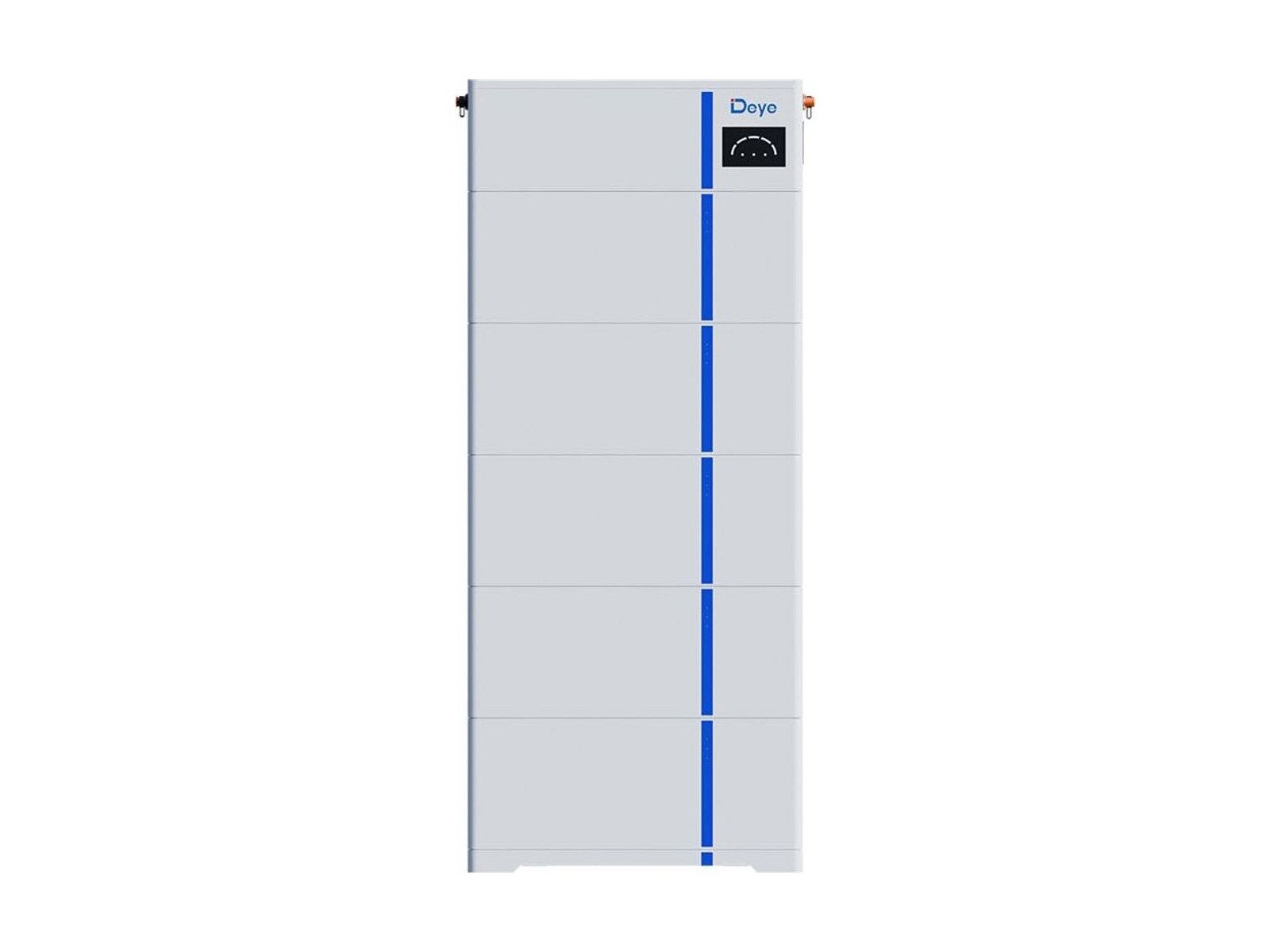
The Deye AI-W5.1-B is a low voltage lithium iron phosphate (LFP) battery built from 5.12 kWh modules that stack on a control unit, giving 5.12 to 30.72 kWh on the Clean Energy Council (CEC) approved list. Deye is a Chinese inverter maker that moved into batteries in 2020, and its Australian systems are quoted mostly by smaller installers and online retailers. This review is based on manufacturer documentation, warranty terms, published pricing and owner feedback; Solar Cobber did not test the product and was not paid by the manufacturer. As at November 2026 the modules cost roughly A$366 to A$511 per usable kWh in hardware before the federal discount, which makes Deye one of the cheapest options, with the catch that it is a young product in this market.
What it is and how it works
The AI-W5.1-B is a 51.2 V battery module (5.12 kWh, 55 kg) that connects to a Deye low voltage hybrid inverter through a power distribution unit (PDU) and a base. Deye sells the same hardware two ways: as a battery stack for a separate Deye hybrid inverter such as the single-phase SUN-10K-SG02LP1-AU, or as the AI-W5.1 “all-in-one”, where the inverter, PDU and battery modules stack into one column. The Australian brochure (28 August 2026) lists single phase systems from 3.6 to 10 kW and three phase from 5 to 12 kW.
Because the battery is low voltage (about 48 V), it carries high current, up to 90 to 240 A on the datasheet depending on the inverter. That is normal for this class, but it is why a low voltage battery is paired closely with its inverter. Our guide to AC-coupled vs DC-coupled batteries explains where a hybrid system fits, and what a hybrid inverter does covers the inverter side.
Deye also has other batteries on the CEC list: the BOS-G high voltage series (15.36 to 61.44 kWh, BAT-498, listed to 1 March 2027, not rated for outdoor use), the GE-F60 all-in-one (61.44 kWh, BAT-519) and the 6.14 kWh RW-M6.1-B (BAT-520), the last two to 23 May 2027. The AI-W5.1-B is the one most households are quoted, so it is the focus here.
In market terms, SolarQuotes says Deye is a well-established company that began making solar inverters in 2007 and started its battery business in 2020, using cells bought from other manufacturers. It has held an Australian Business Number since 2022. SolarQuotes lists an office in Mount Waverley, Victoria, while Deye’s own warranty names Deye New Energy Australia Pty Ltd at 566 St Kilda Road, Melbourne, so confirm the current service contact before you rely on either.
The video above, from Deye’s own channel, shows an installer connecting the AI-W5.1-B to an Australian-market Deye hybrid inverter. It is a manufacturer video, so treat it as a look at the hardware and the installation steps, not an independent test.
Specs that matter in Australia
Capacity. The CEC lists the AI-W5.1-B at 5.12 kWh usable and nominal for each module, from one module (AI-W5.1-B) to six (AI-W30.7-B). Because usable equals nominal, the federal discount is calculated on the full 5.12 kWh a module. Deye’s datasheet allows up to 36 modules in parallel, but only 5.12 to 30.72 kWh are listed for the discount.
Power and backup. The battery’s usable power depends on the inverter. A 5 kW hybrid limits you to about 5 kW of charge, discharge and backup no matter how many modules you add. The inverter can deliver twice its rated power for 10 seconds in backup, which helps start motors. Pair it with a three phase inverter if you want three phase backup, and check our single vs three phase guide.
Heat and cold. The datasheet gives 0 to 55 degrees C for charging and minus 20 to 55 degrees C for discharging, with IP65 once stacked. The Australian warranty, however, excludes damage where the charging temperature is above 50 or below minus 20 degrees C. That is a stricter-looking upper limit than the datasheet and a lower one that does not match the datasheet’s 0 degrees C charging floor. Ask your installer to confirm in writing which limits apply to your site, particularly for a garage or western wall in a hot climate.
Standards. Deye lists AS/NZS 4777.2 as a grid regulation for the inverter, and the CEC lists the battery as suitable for outdoor use. Where the stack goes must still meet the battery location rules in AS/NZS 5139, which your installer should confirm for your property.
Price in Australia
Deye does not publish Australian retail prices, and SolarQuotes’ battery price list (updated 12 May 2026) does not include Deye. The only complete public price list we found is from an online retailer, Buzz Energy, whose Deye AI-W5.1-B page lists modules plus a PDU1-B. It states that prices are before rebates and exclude installation. We read these on 14 November 2026.
| Configuration | Usable capacity | Hardware price (Buzz Energy) | Per usable kWh |
|---|---|---|---|
| 1 module + PDU1-B | 5.12 kWh | A$2,615 | A$511 |
| 2 modules + PDU1-B | 10.24 kWh | A$4,348 | A$425 |
| 3 modules + PDU1-B | 15.36 kWh | A$6,082 | A$396 |
| 4 modules + PDU1-B | 20.48 kWh | A$7,777 | A$380 |
| 5 modules + PDU1-B | 25.6 kWh | A$9,511 | A$372 |
| 6 modules + PDU1-B | 30.72 kWh | A$11,246 | A$366 |
These are retailer hardware prices only. You also need a Deye hybrid inverter and installation, and an installed quote will be higher. Treat the table as an indicator of the hardware cost, not a quote. Our battery cost guide shows what fully installed systems cost across brands.
- Listed price
- After discount (installs to 31 Dec 2026)
Source: Buzz Energy listed prices, 14 November 2026; Solar Cobber calculation of the discount from CEC usable capacities. Price after discount is the listed price less the STC value, divided by usable kWh. Inverter and installation are extra.
View the data as a table
| Listed price | After discount (installs to 31 Dec 2026) | |
|---|---|---|
| 5.12 kWh | A$511 | A$259 |
| 10.24 kWh | A$425 | A$173 |
| 15.36 kWh | A$396 | A$153 |
| 20.48 kWh | A$380 | A$160 |
| 25.6 kWh | A$372 | A$166 |
| 30.72 kWh | A$366 | A$179 |
The cost per kWh falls as you add modules, but after the discount it is lowest at about 15 kWh, because the discount per kWh drops once you pass 14 kWh.
Solar Cobber calculation: what the federal discount is worth
The Cheaper Home Batteries Program pays small-scale technology certificates (STCs) on usable capacity. Under the rules in our federal battery rebate guide and state-by-state rebate guide, the factor is 6.8 STCs per usable kWh for installs to 31 December 2026 and 5.7 from 1 January 2027, with the full rate on the first 14 kWh, 60% on the next 14 kWh and 15% from 28 to 50 kWh. For a 15.36 kWh stack: 14 + (1.36 x 0.6) = 14.816 kWh, times 6.8 is 100.7 STCs, and at an assumed A$37 each that is about A$3,728.
- Install by 31 Dec 2026 (6.8)
- Install from 1 Jan 2027 (5.7)
Source: Solar Cobber calculation from Clean Energy Council usable capacities and the federal STC factors in our battery rebate guides. The STC price is an assumption of A$37; actual certificate prices vary and your installer sets the discount on your quote.
View the data as a table
| Install by 31 Dec 2026 (6.8) | Install from 1 Jan 2027 (5.7) | |
|---|---|---|
| 5.12 kWh | A$1,288 | A$1,080 |
| 10.24 kWh | A$2,576 | A$2,160 |
| 15.36 kWh | A$3,728 | A$3,125 |
| 20.48 kWh | A$4,501 | A$3,773 |
| 25.6 kWh | A$5,274 | A$4,420 |
| 30.72 kWh | A$5,738 | A$4,810 |
Installing a 15.36 kWh Deye stack before the end of 2026 earns about A$600 more than after 1 January 2027. The discount rises with size, but a 30.72 kWh stack earns only about A$2,000 more than a 15.36 kWh one.
Warranty: the fine print
Deye ESS’s Australian battery warranty for the AI-W5.1-B (PDF dated January 2026) applies to batteries installed in Australia, and the inverter has a separate 10 year warranty (V2.18, uploaded 14 October 2026). The headline is 10 years. The conditions decide what that is worth.
- Term and cap: 10 years from the warranty start date, which is the earlier of the installation date or six months after production. The warranty ends at 6,000 cycles with 70% of capacity retained, or at a minimum throughput of 16 MWh per 5.12 kWh module, whichever comes first.
- Installation window: the battery must be installed within one month of purchase.
- Inverter lock-in: the warranty does not apply if the battery runs with an inverter that is not Deye certified.
- Monitoring access: the warranty excludes cases where the owner does not give Deye or its partners access to the battery’s performance data over the internet after a claim, or alters that data.
- Idle batteries: it does not apply if the product has not been used for six months or more.
- Claims: the document says to declare a failure within two weeks in one clause and within 30 days of discovery in another. Claims go to a Deye partner first, with the invoice, serial numbers and inverter details.
- Remedy: repair or replace at Deye’s discretion, possibly with used parts. If it cannot be fixed, the refund formula depreciates the product value over 120 months.
- Accessories: other accessories, such as the PDU, carry 5 years.
- Inverter warranty: the SUN and AI series inverters are covered for 10 years, but only the first five years include parts and labour. In years six to ten, parts are covered excluding the LCD and fan, and labour costs are not.
The throughput cap works out to about 3,125 full cycles per module (16 MWh divided by 5.12 kWh), a little over one cycle a day for ten years. That is typical, but below ESY Sunhome’s allowance and above Sungrow’s.
Source: Deye Australian battery warranty, January 2026 (16 MWh divided by 5.12 kWh); other figures from our reviews of each product. Solar Cobber calculation for Deye. Tesla Powerwall 3 has no cap for self-consumption use so is not shown.
View the data as a table
| MWh per usable kWh | |
|---|---|
| ESY Sunhome HM6 | 4.42 MWh |
| Deye AI-W5.1-B | 3.13 MWh |
| Alpha ESS SMILE-G3 | 3.12 MWh |
| Sigenergy SigenStor | 3.00 MWh |
| Sungrow SBR | 2.80 MWh |
Deye’s cap is level with Alpha ESS and Sigenergy; only ESY Sunhome allows noticeably more. For a household cycling the battery once a day, it takes about 8.5 years of daily full cycles to reach the cap.
What owners and installers report
Independent feedback is thin. SolarQuotes shows Deye batteries at 4.7 out of 5 from 14 owner ratings, as shown on 14 November 2026. Thirteen are five-star and one is one-star. The most recent reviews are dated August to November 2026 and each carries a reply from Deye, so treat the score as a small sample from a company that is actively collecting reviews.
Source: SolarQuotes Deye battery review page, ratings as shown on 14 November 2026.
View the data as a table
| Ratings | |
|---|---|
| 5 stars | 13 |
| 4 stars | 0 |
| 3 stars | 0 |
| 2 stars | 0 |
| 1 star | 1 |
SolarQuotes’ own reviewer says Deye’s batteries have not been on the market long enough to recommend them one way or the other, and lists little Australian performance information as the main con. Owner comments we could read praise lower grid imports after install, but they are short.
Elsewhere, an Australian owner on the Clean Energy Reviews forum said a Deye hybrid inverter ran without problems, while another said the Solarman monitoring app was unreliable. Those comments concern inverters, not this battery, and a forum is anecdote, not data. Forum threads from South Africa and Ireland describe battery state-of-charge mismatches between inverter and BMS that were fixed with firmware updates. We found no ACCC product safety recall for Deye batteries, but we could not query the ACCC database directly.
Deye vs alternatives
| Deye AI-W5.1-B | Alpha ESS SMILE-G3 | Sigenergy SigenStor | ESY Sunhome HM6 | |
|---|---|---|---|---|
| Usable capacity per module | 5.12 kWh | 9.3 kWh | 5.2 or 7.8 kWh | 5.12 kWh nominal (4.86 kWh CEC usable) |
| Listed range | 5.12 to 30.72 kWh | 9.3 to 55.8 kWh | Up to 46.8 kWh | 4.86 to 29.18 kWh |
| Inverter | Separate Deye hybrid or all-in-one | Built-in 5 to 20 kW | Separate controller, 3 to 30 kW | Built-in 6 kW |
| Ingress rating | IP65 | IP65 | IP66 | IP66 |
| Warranty | 10 years or 3.1 MWh per kWh | 10 years or 3.12 MWh per kWh | 10 years or about 3 MWh per kWh | 10 years or about 4.4 MWh per kWh |
| Inverter lock-in | Deye certified inverter | Alpha ESS inverter | Sigenergy controller | Own inverter |
| Hardware price per usable kWh | About A$366 to A$511, before discount | See our review | See our review | See our review |
Choose the Alpha ESS SMILE-G3 if you want a long-running all-in-one with a larger module and more service history. Choose the Sigenergy SigenStor for stronger backup and an IP66 rating. Choose the ESY Sunhome HM6 if you want a similarly priced all-in-one with a higher throughput allowance. Choose Deye if the quote is clearly cheaper per usable kWh and you are happy to rely on the installer for support.
Questions to ask your installer
- Which Deye inverter model are you quoting, and is it listed in the Deye warranty as a Deye-certified inverter for this battery?
- Are you quoting the AI-W5.1-B modules (CEC listing BAT-900), and have you checked the listing is current on the install date?
- How many STCs have you claimed under the federal discount, and has the installation date been set before 1 January 2027?
- Which charging temperature limit applies at my site, the datasheet’s or the warranty’s?
- Who handles warranty claims if you stop trading, and does Deye’s Australian office or a partner service the system?
- Will you keep the system online, and register the battery with Deye so performance data is available for a claim?
- What happens if I join a VPP: does it change how throughput is counted?
- Can I see the inverter and battery warranty documents for my install date?
FAQ
Is Deye a good battery?
Deye’s AI-W5.1-B is a competitively priced LFP battery with a standard 10 year warranty, but independent evidence in Australia is thin. SolarQuotes shows 4.7 out of 5 from 14 ratings, and its reviewer says the battery has not been on the market long enough to recommend. Buy it from an installer you trust to support it.
Is the Deye AI-W5.1-B on the CEC approved list?
Yes. As at 14 November 2026 the Clean Energy Council lists the AI-W5.1-B family under certificate BAT-900 (5.12 to 30.72 kWh, approved 5 February 2026, expiry 31 December 2027). Check the list again on your install date.
How much does a Deye battery cost in Australia?
Hardware alone is about A$2,615 for one 5.12 kWh module with PDU up to A$11,246 for six modules, per Buzz Energy on 14 November 2026, before the federal discount. An installed system with a hybrid inverter will cost more, so get written quotes.
Can I use a Deye battery with a non-Deye inverter?
Not safely for the warranty. Deye’s Australian warranty excludes batteries run with an inverter that is not Deye certified, so confirm compatibility in writing before you mix brands.
What is the Deye battery warranty?
10 years from the warranty start date, ending sooner at 6,000 cycles or 16 MWh throughput per 5.12 kWh module. It must be installed within one month of purchase and kept in use.
Does the Deye battery qualify for the federal battery discount?
Yes, if it is a CEC-listed configuration and installed by an eligible installer. We calculate about A$3,728 for 15.36 kWh in 2026 at 6.8 STCs per kWh and A$37 per STC, and about A$3,125 from 1 January 2027.
What is the Deye AI-W16?
A 16 kWh stackable battery (up to 96 kWh) with IP66 and a 50 MWh throughput, listed on Deye’s Australian site with a datasheet dated 25 August 2026. It is not on the CEC battery list as at 14 November 2026, so it would not qualify for the federal discount.
Find an installer
Deye systems are quoted mostly by smaller specialist installers, so check recent jobs and warranty handling before you sign. Use our installer directory to compare local companies, and read how to compare solar quotes so each quote shows the inverter model, number of modules and discount applied.
Read next
Battery buying guides
Often quoted alongside
Sigenergy
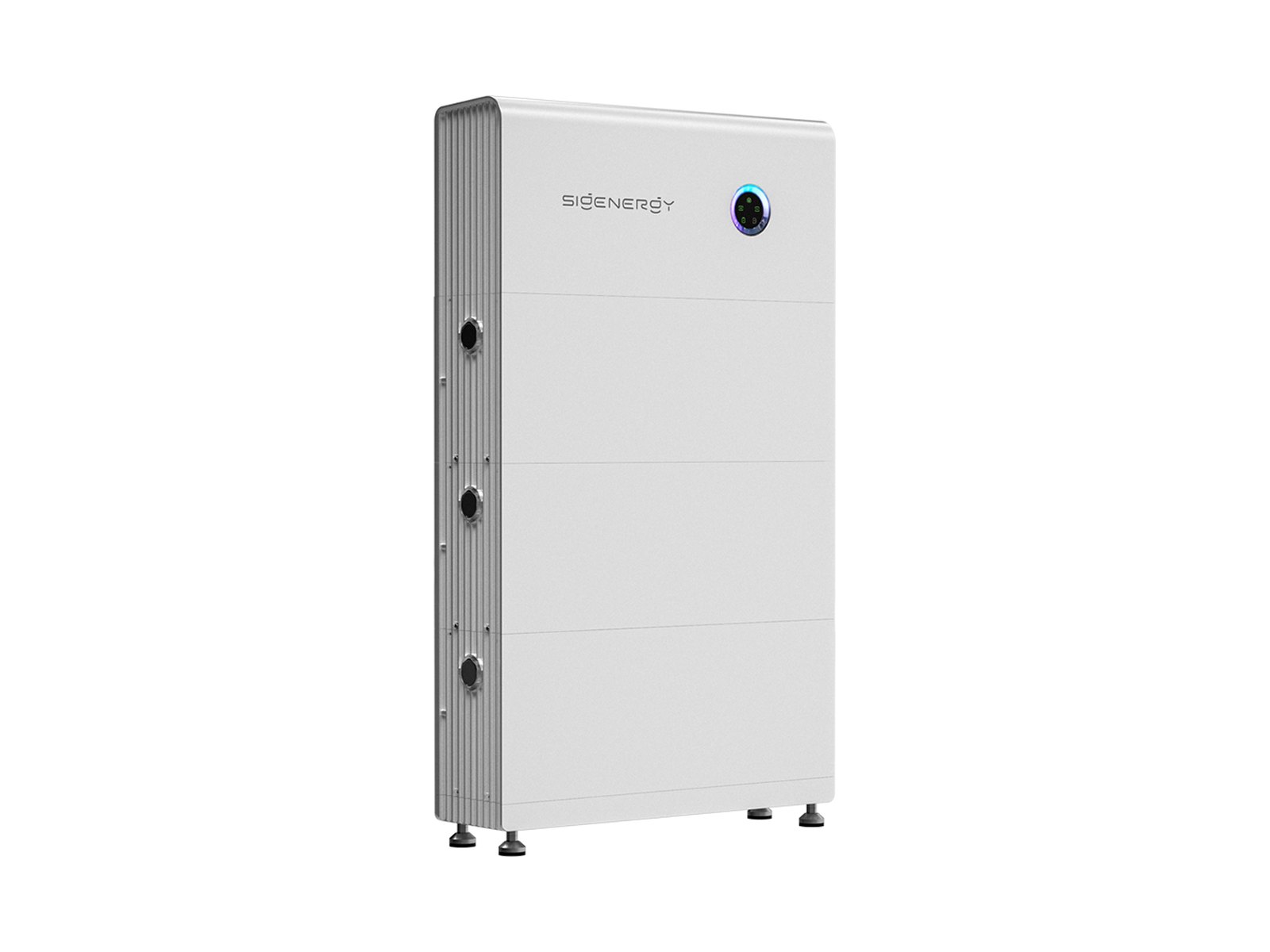
Sigenergy SigenStor
SigenStor packs a hybrid inverter, battery and energy manager into one stack, with genuine three-phase options, IP66 weatherproofing and a very detailed app at a competitive price. The trade-offs are a young company with a 2025 recall on some single-phase controllers, mixed owner experiences with support, and a warranty that caps throughput for all uses.
Best for
Three-phase homes, or anyone wanting an all-in-one battery with room to add EV charging
AlphaESS
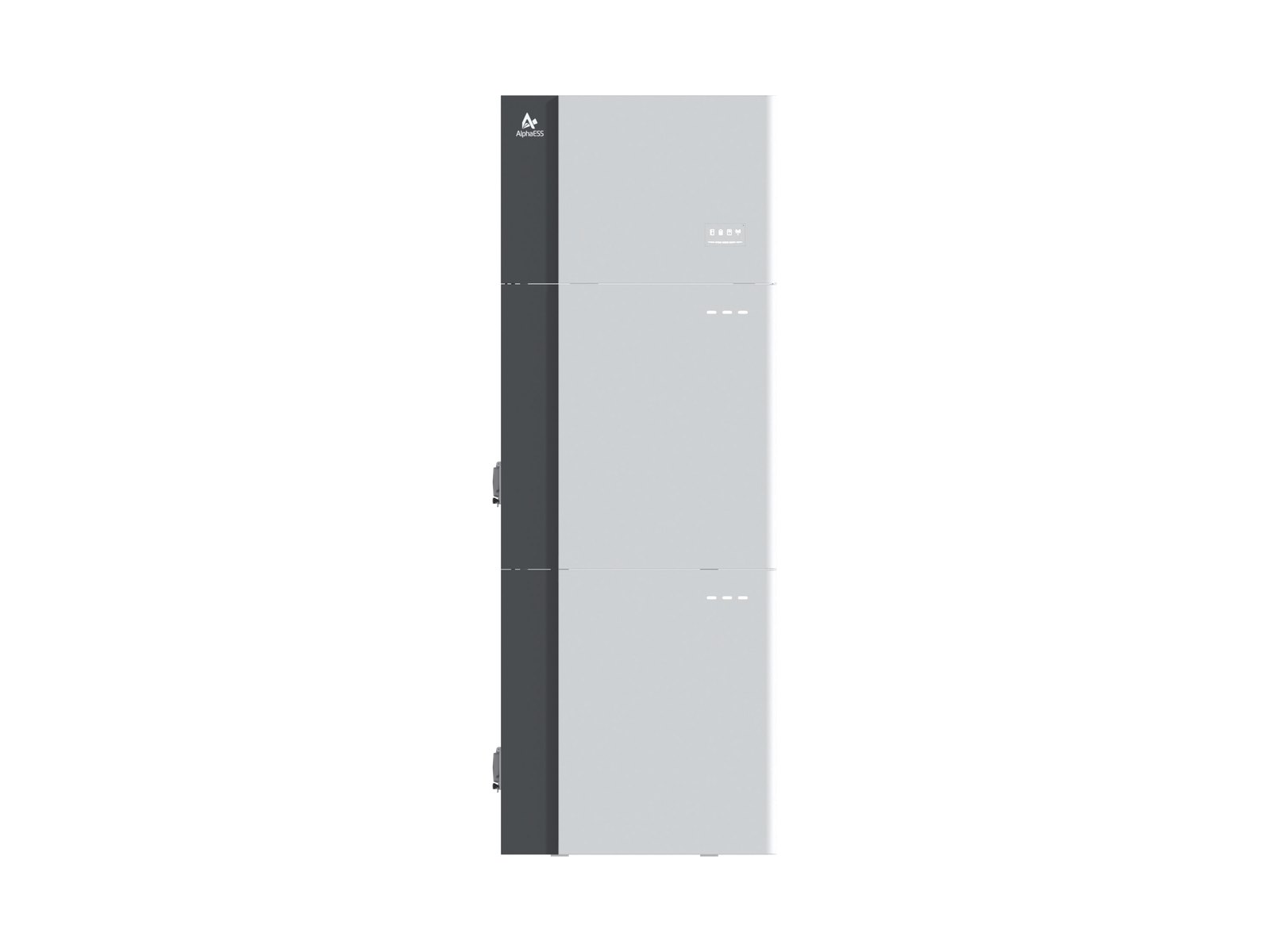
AlphaESS SMILE-G3
The AlphaESS SMILE-G3 is one of the cheapest ways to get a CEC-listed all-in-one battery and hybrid inverter, with single-phase and three-phase versions and 9.3 kWh modules. The catch is AlphaESS's patchy support record, so the installer you choose matters as much as the hardware.
Best for
Budget-focused homes with a well-reviewed installer who has AlphaESS experience
ESY Sunhome
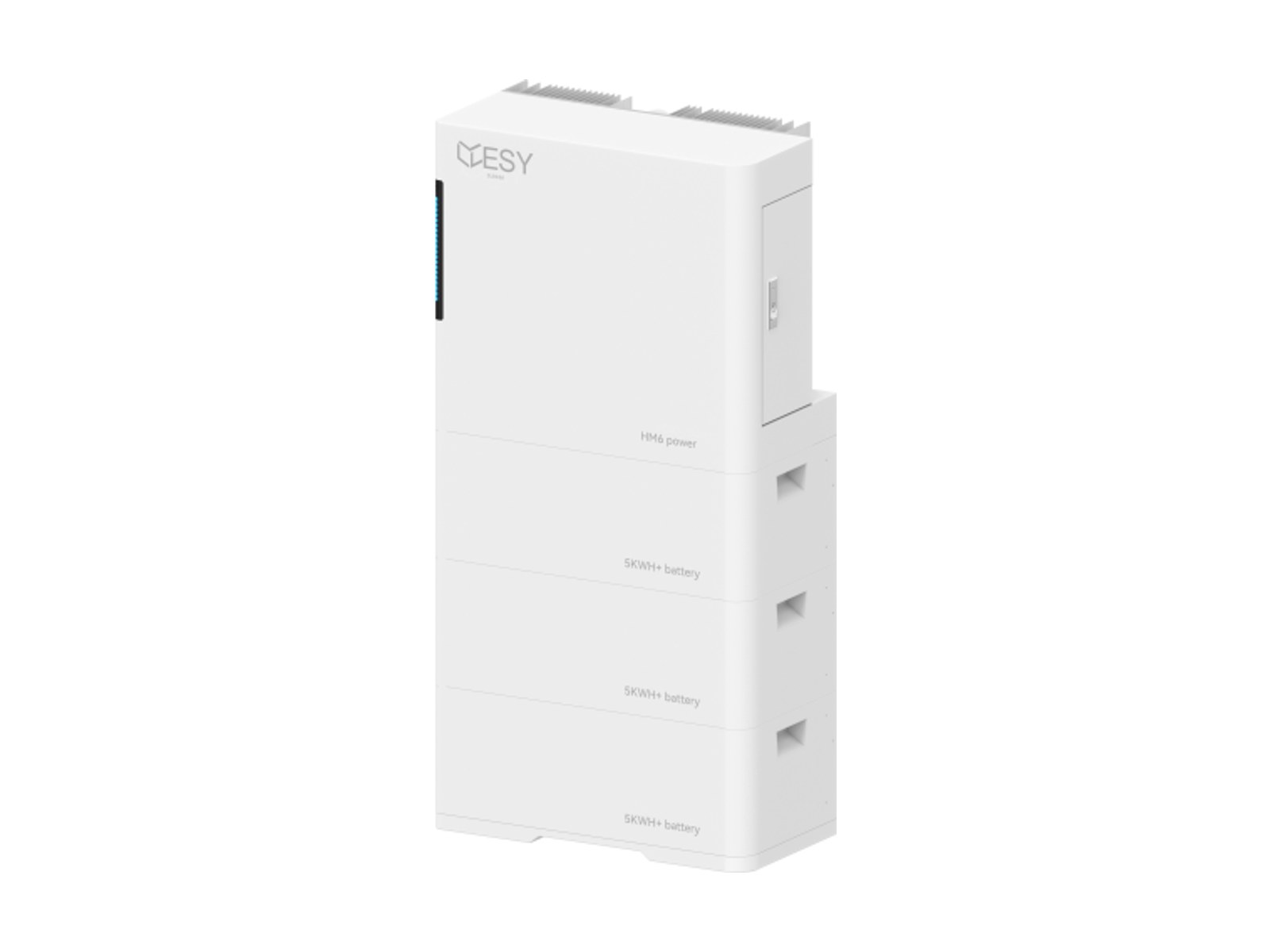
ESY Sunhome HM6
The ESY Sunhome HM6 is one of the cheapest all-in-one batteries per usable kWh in Australia, with a generous throughput allowance and a built-in 6 kW inverter. The trade-offs are a 6 kW ceiling on solar charging and backup, a short track record, and a warranty with strict conditions: it needs a constant internet connection and expansion only within the first year.
Best for
Single-phase homes wanting a large, low-cost all-in-one battery of 10 to 30 kWh
Sources
Independent desk research by the Solar Cobber editorial team. We did not test this product and were not paid by the manufacturer. Solar Cobber is a free directory that may earn referral or advertising fees from installers; this never affects our reviews.
- 01Deye AI-W5.1-B Australian battery limited warranty (PDF, January 2026)
- 02Deye SUN Series inverter 10-year limited warranty for Australia and New Zealand, V2.18 (PDF, 14 October 2026)
- 03Deye Australia: LV residential ESS (AI-W5.1-B) specifications
- 04Deye AI-W5.1-B ESS series Australian brochure (PDF, 28 August 2026)
- 05Deye Australia: stackable energy storage system AI-W16 (datasheet 25 August 2026)
- 06Clean Energy Council approved batteries list (Deye entries BAT-900, BAT-498, BAT-519, BAT-520)
- 07SolarQuotes: Deye battery review and owner ratings
- 08Buzz Energy: Deye AI-W5.1-B low voltage battery system price list
- 09Clean Energy Reviews forum: Deye hybrid inverter review thread (Australian owner comments)
- 10Deye New Energy: How to install the AI-W5.1-B battery (YouTube)
Get quotes for Deye AI-W5.1-B
Browse rated solar installers in your area, check their Google reviews, and ask at least three for itemised quotes. Our guide to comparing solar quotes explains what to look for.