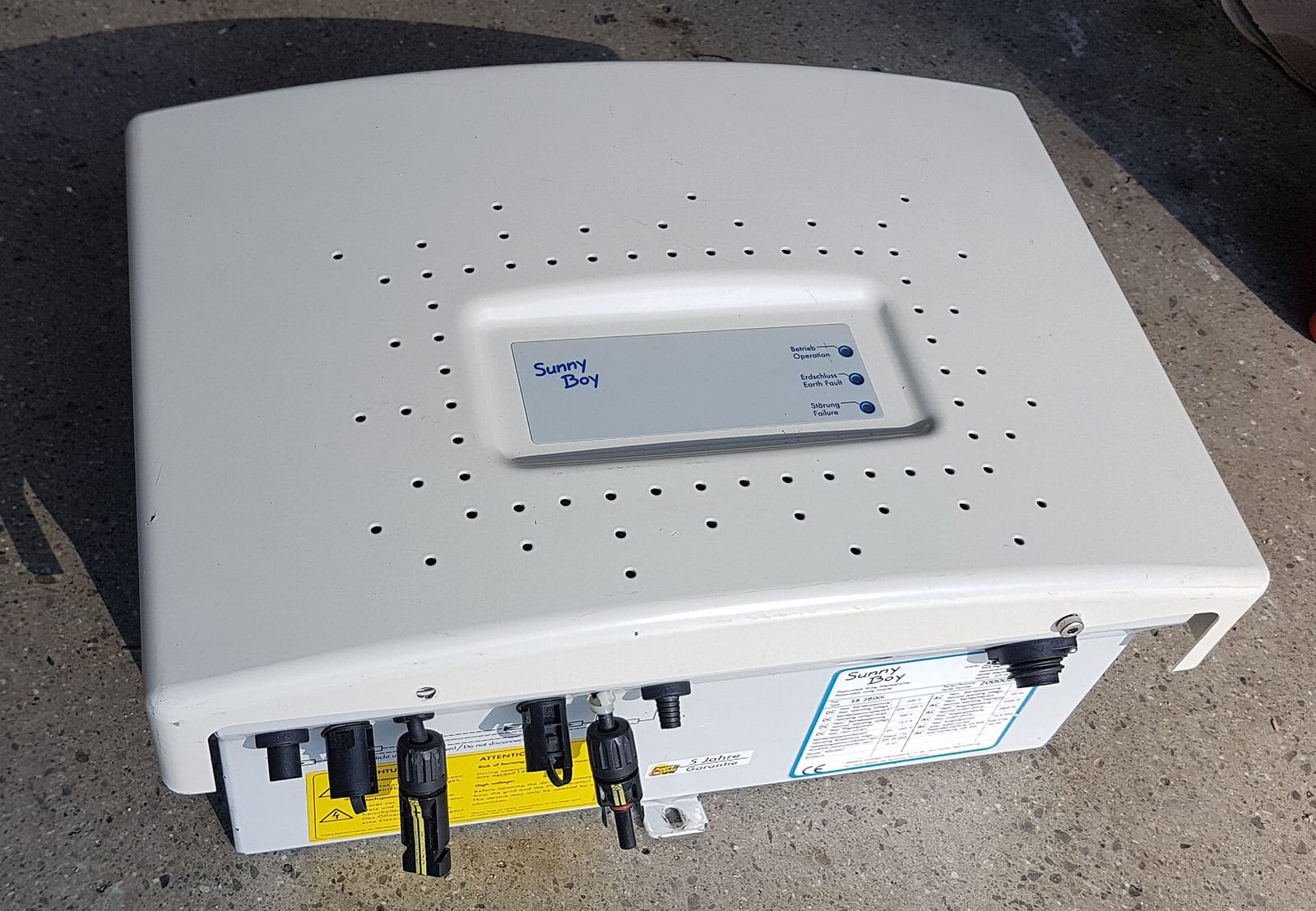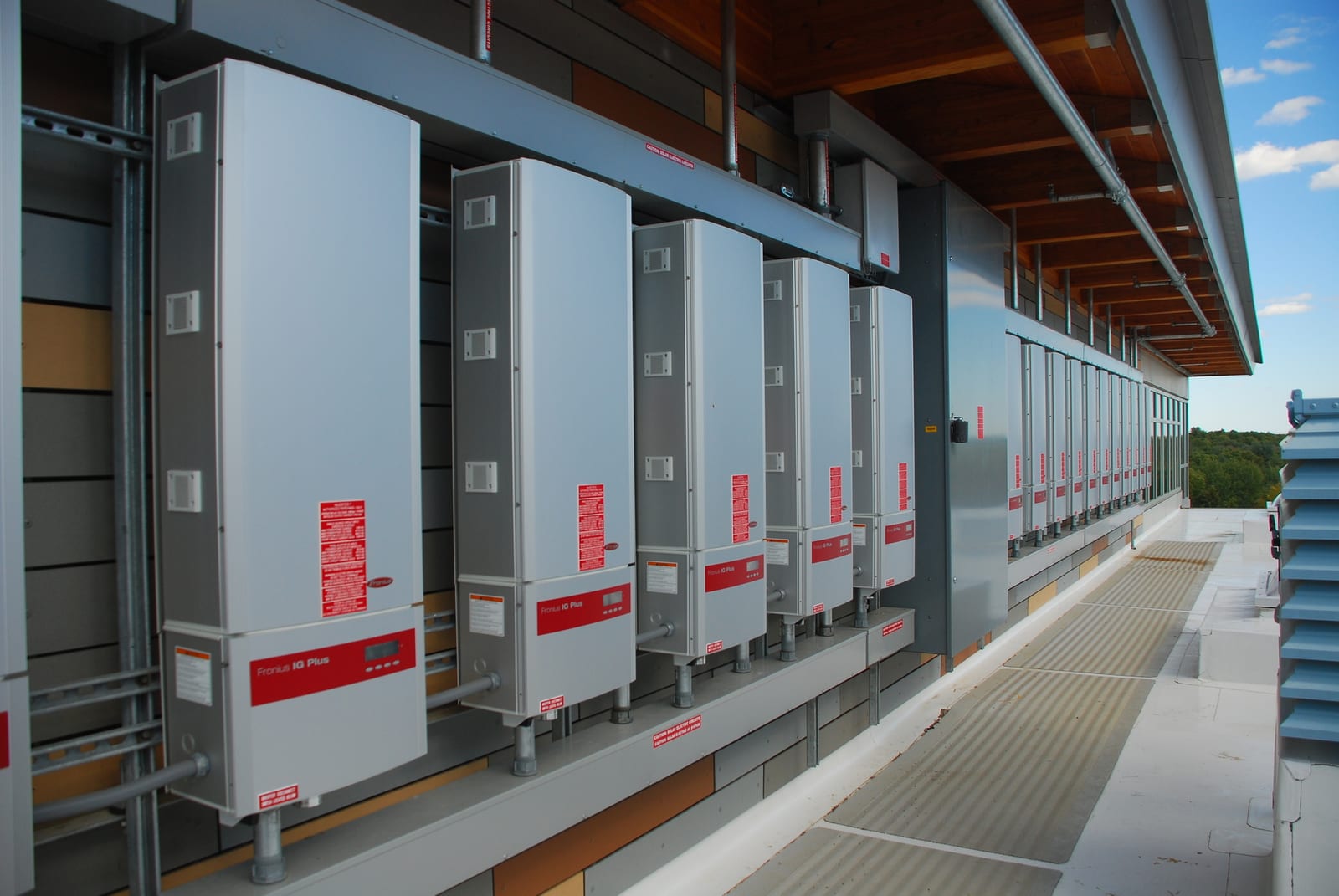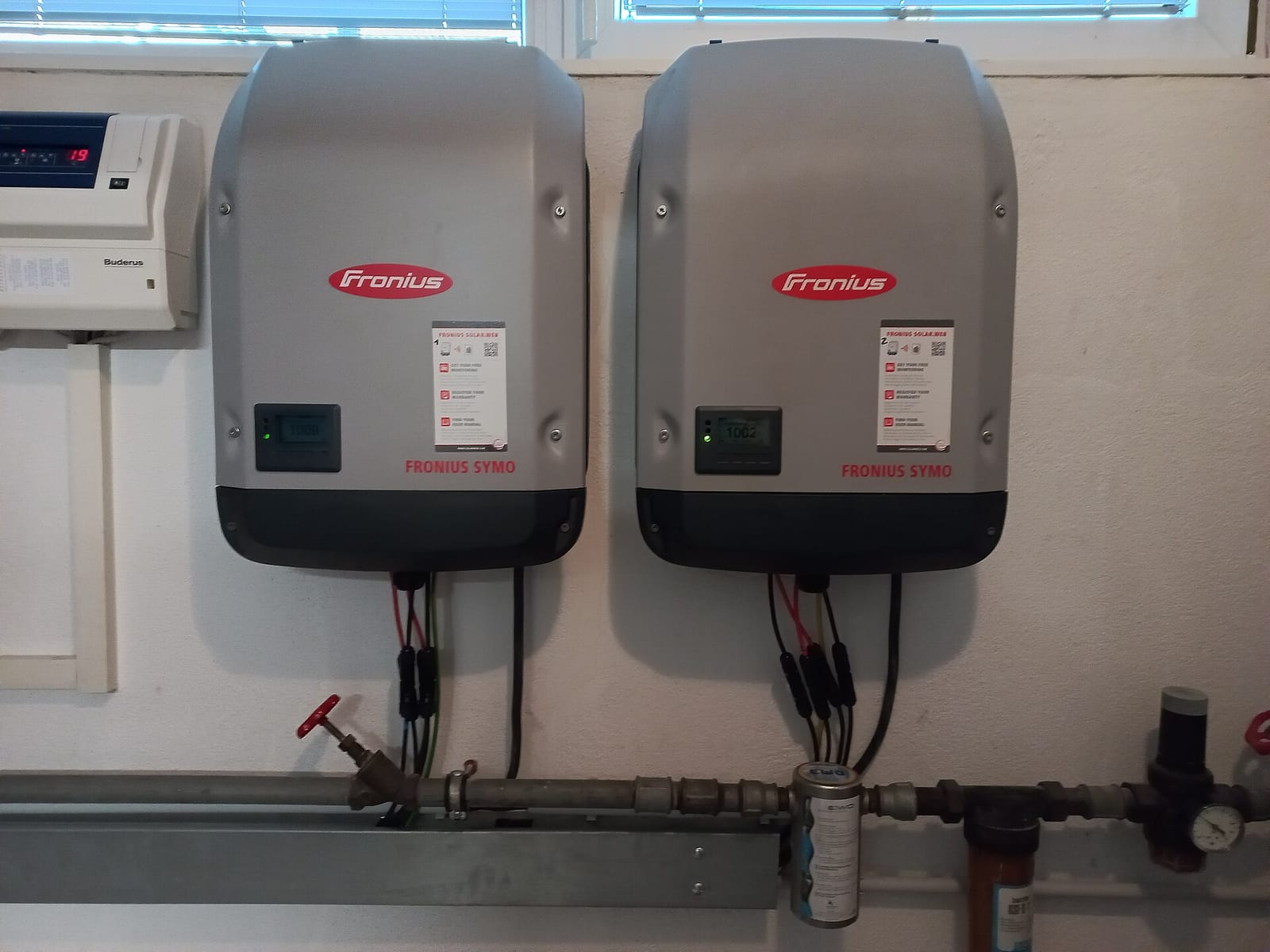
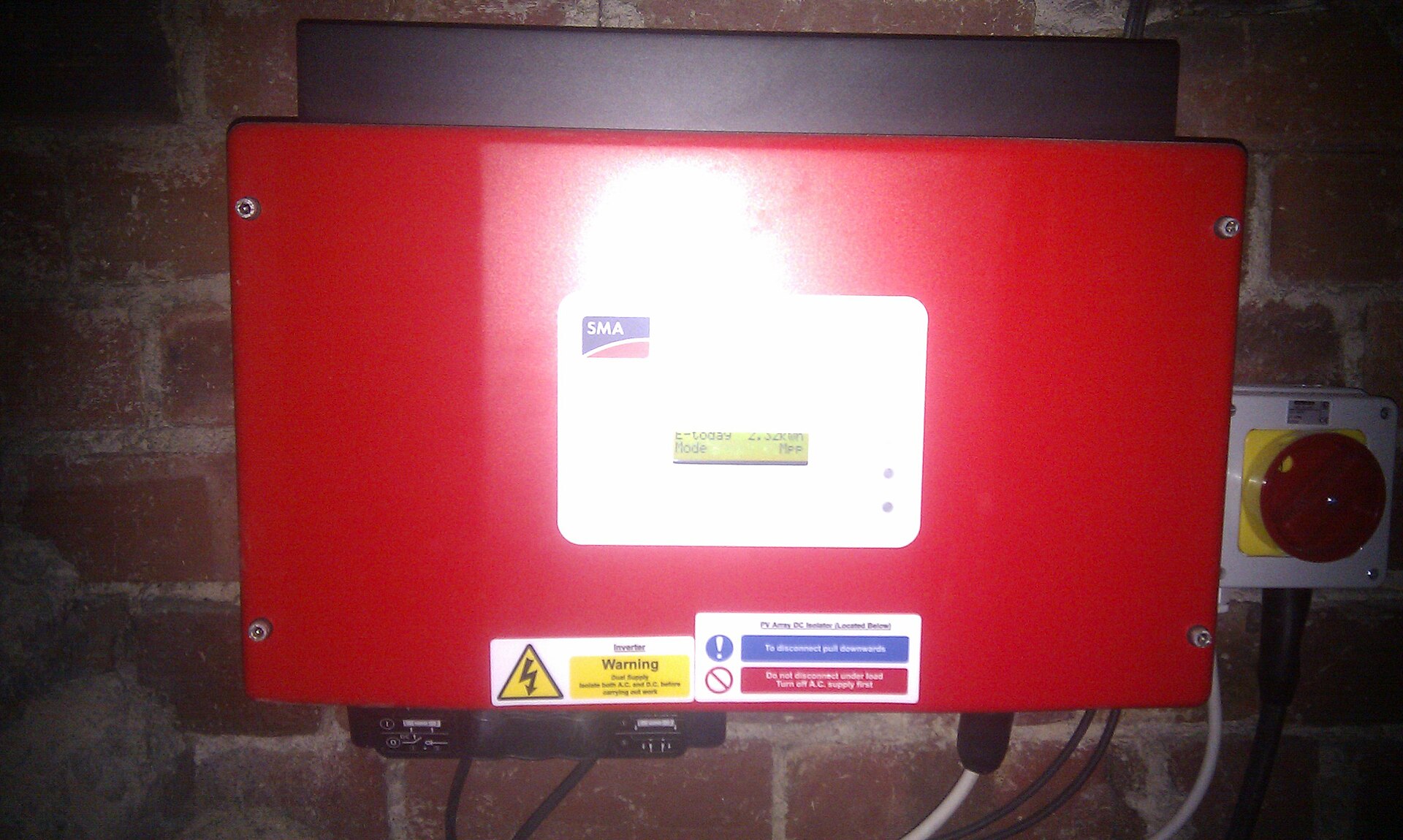
A hybrid inverter is a single inverter that converts power from your solar panels and also charges and discharges a battery, so one box manages panels, battery, home and grid. As at November 2026 a single-phase hybrid costs about A$2,000 to A$2,800 for the inverter alone, against A$900 to A$2,500 for a plain string inverter (Why Solar, April 2026). It suits you if you are fitting a battery now or soon.
Key facts
- A hybrid inverter combines a solar inverter and a battery inverter in one unit, so panels and battery share one DC (direct current) connection.
- As at November 2026, Why Solar lists a single-phase Sungrow SH5.0RS hybrid at about A$2,000 to A$2,800 and a GoodWe EH 5 kW hybrid at about A$2,000 to A$2,800, inverter only.
- The same sources list a Sungrow SG RS string inverter at about A$1,400 to A$2,500 and a GoodWe DNS string inverter at about A$900 to A$1,300 (Why Solar, April 2026).
- Solar Choice’s Battery Price Index, updated 6 November 2026, shows a 10 kWh battery costing about A$7,384 on average where a hybrid or battery-ready inverter already exists, against A$7,984 where an extra inverter is needed.
- The federal Cheaper Home Batteries Program discount is paid on the battery, not the inverter, so a hybrid inverter does not attract its own rebate.
- A hybrid inverter is also the single point of failure: if it stops, both the solar and the battery stop, which is why its warranty matters as much as the battery’s.
What is a hybrid inverter?
A hybrid inverter is one inverter that does two jobs: it turns the DC power from solar panels into the AC (alternating current) power your home uses, and it manages a battery’s charging and discharging. A normal solar inverter only does the first job.
Solar panels and batteries both work in DC, but homes and the grid run on AC. In a hybrid system, solar can charge the battery as DC without being converted to AC first, which is why the hybrid is called DC coupled. For the other route, see AC coupled vs DC coupled batteries.
Hybrid inverter vs normal inverter: what is the difference?
A normal (string) inverter handles panels only. A hybrid also has a battery port, battery management and usually a backup output for blackouts. Everything else, including the grid connection and monitoring, is much the same.
The table compares the four common set-ups as at November 2026. Prices are inverter only unless marked.
| Set-up | What it is | Battery later? | Backup in a blackout | Typical inverter price |
|---|---|---|---|---|
| String inverter | One inverter for all panels, no battery port | Needs an AC battery with its own inverter, or a swap | None | About A$900 to A$2,500 installed (Why Solar, April 2026) |
| Hybrid inverter | Panels and battery on one inverter | Yes, if the battery is on the maker’s list | Yes, on most models | About A$2,000 to A$2,800 (Why Solar, April 2026) |
| Microinverters | One small inverter under each panel | AC battery only | Limited | About A$150 to A$250 per panel (Why Solar, April 2026) |
| Battery with built-in inverter | The battery holds the hybrid inverter | Already included | Yes, with a gateway | Included in the battery price |
For the string and micro comparison, read string inverter vs microinverter. For a ranked list of models, see our best hybrid inverters in Australia.
How does a hybrid inverter work?
A hybrid inverter sends solar power to the home first, then to the battery, and exports what is left to the grid. When the sun is down, it supplies the home from the battery before buying from the grid. Most can be set to charge from the grid at cheap times too.
Inside are MPPT trackers (maximum power point trackers, which keep each string of panels at its best voltage), a DC to DC stage for the battery and an AC inverter stage.
If the grid fails, a hybrid with backup disconnects from the grid and powers a set of circuits from solar and battery. How much it can run, and how fast it switches, depends on the model. Our blackout backup guide covers the detail.
What is a battery ready inverter?
A battery ready inverter is sold as a hybrid, or as a string inverter that can be upgraded, so a battery can be added later without replacing the inverter. The label is not regulated, so ask the installer exactly what is ready and what is not.
Two cases exist. A true hybrid fitted before you have a battery already has the battery port, and Solar Choice’s “battery only” column assumes this. A Fronius Primo GEN24 starts as a string inverter and can be upgraded to the Plus version by software, as we note in our best hybrid inverters guide. Check also that the battery you want is on the inverter maker’s compatibility list, because most hybrids work with only one or a few battery brands.
How much does a hybrid inverter cost in Australia?
A single-phase hybrid inverter costs about A$2,000 to A$2,800 for a 5 kW model, and a premium Fronius GEN24 Plus about A$2,500 to A$4,500, as at November 2026 (Why Solar, 2026 guides). Three-phase hybrids and big battery models cost more. See solar inverter prices for every type.
The chart compares two common brands’ string and hybrid inverters, using Why Solar’s April 2026 ranges. Why Solar words the string inverter ranges as installed and the hybrid ranges as inverter only, so treat the gap as indicative.
- Low end
- High end
Source: Why Solar inverter price guides, April 2026, as reported in Solar Cobber's best solar inverters guide. Ranges as published; string inverters are described as installed, hybrids as inverter only.
View the data as a table
| Low end | High end | |
|---|---|---|
| GoodWe DNS (string) | A$900 | A$1,300 |
| GoodWe EH (hybrid) | A$2,000 | A$2,800 |
| Sungrow SG RS (string) | A$1,400 | A$2,500 |
| Sungrow SH5.0RS (hybrid) | A$2,000 | A$2,800 |
The hybrid inverters in this comparison cost about A$450 (Sungrow) to A$1,300 (GoodWe) more at the mid-point than the matching string inverter.
Solar Cobber calculation: is the hybrid premium worth it?
The mid-point premium is A$2,400 minus A$1,950 for Sungrow (A$450) and A$2,400 minus A$1,100 for GoodWe (A$1,300). The alternative for a household that wants a battery on an existing string inverter is an AC-coupled battery with its own inverter, which Solar Choice prices below.
- Battery only
- Battery plus inverter
Source: Solar Choice Battery Price Index, last updated 6 November 2026, checked 14 November 2026.
View the data as a table
| Battery only | Battery plus inverter | |
|---|---|---|
| 10 kWh | A$7,384 | A$7,984 |
| 20 kWh | A$14,172 | A$15,172 |
| 30 kWh | A$20,689 | A$21,889 |
| 40 kWh | A$27,911 | A$29,511 |
| 50 kWh | A$35,534 | A$38,034 |
Adding an inverter for an AC-coupled battery costs A$600 on a 10 kWh battery and A$2,500 on a 50 kWh battery in Solar Choice’s index, so the premium for a hybrid inverter is usually lower than the cost of a second inverter.
| Battery size | Battery only | Battery plus inverter | Extra cost of the added inverter |
|---|---|---|---|
| 10 kWh | A$7,384 | A$7,984 | A$600 |
| 20 kWh | A$14,172 | A$15,172 | A$1,000 |
| 30 kWh | A$20,689 | A$21,889 | A$1,200 |
| 40 kWh | A$27,911 | A$29,511 | A$1,600 |
| 50 kWh | A$35,534 | A$38,034 | A$2,500 |
The efficiency gain on its own does not repay a hybrid. Our AC vs DC guide assumes 10 kWh of surplus solar stored a day, with AC returning 9.0 kWh and DC 9.5 kWh. The 0.5 kWh gap over 365 days is 182.5 kWh a year, worth about A$55 at 30c/kWh avoided import, or about A$9 at a 5c/kWh feed-in tariff. At A$55 a year, a A$450 to A$1,300 premium takes about 8 to 24 years to recover. The case for a hybrid is therefore convenience, one fewer box and a lower total cost when you are replacing the inverter anyway, rather than the efficiency.
What are the pros and cons of a hybrid inverter?
A hybrid inverter’s main advantages are a simpler install and slightly higher efficiency; its main disadvantages are brand lock-in and a single point of failure.
Pros
- One inverter, one warranty on the power electronics and one app for solar and battery.
- Fewer conversions when charging the battery from solar than with AC coupling.
- Usually includes a backup output, so a blackout does not mean a dark house.
Cons
- Most models work with one battery brand, or a short list. Sungrow, Sigenergy and Fox ESS hybrids are effectively single-brand.
- If the inverter fails, the panels stop too, unlike an AC battery added to a working string inverter.
- A hybrid costs more than a string inverter if you never fit a battery.
- Backup differs widely: some models back up the whole home, others one circuit capped at 5 or 6 kW.
How long is the warranty on a hybrid inverter?
Most hybrids carry 10 years, but conditions differ. The chart shows the standard term and the longest term available with conditions, from the manufacturers’ Australian warranty terms as summarised in our hybrid inverter guide.
- Standard
- Longest with conditions
Source: Manufacturer Australian warranty documents as summarised in Solar Cobber's best hybrid inverters guide, checked October and November 2026. Fox ESS can extend to 20 years with a paid plan; GoodWe EH models get 5 years unless paired with a GoodWe battery. Sungrow is capped at 11 years from manufacture.
View the data as a table
| Standard | Longest with conditions | |
|---|---|---|
| SolarEdge Home Hub | 12 years | 12 years |
| Sungrow SH RS | 10 years | 10 years |
| Sigenergy controller | 10 years | 10 years |
| GoodWe ET G2 | 10 years | 10 years |
| Fox ESS | 10 years | 10 years |
| Fronius GEN24 Plus | 5 years | 10 years |
| Solis S6-EH1P | 5 years | 10 years |
SolarEdge offers the longest unconditional term (12 years, parts only), while Fronius and Solis reach 10 years only after registering or staying online.
Many warranties pay for a replacement unit but not the installer’s labour, and some cap years from manufacture. Our inverter repair and replacement cost guide puts numbers on a swap.
Which hybrid inverters are sold in Australia?
The main hybrid platforms are Sungrow, Fronius, Sigenergy, GoodWe, Solis, SolarEdge and Fox ESS. The table summarises our reviews as at November 2026; confirm the exact model and its Clean Energy Council listing on your quote. As at 14 November 2026, SolarEdge is exiting Australia, with final deliveries due by 18 December 2026 (details).
| Hybrid | Phase and sizes | Batteries it works with | Review |
|---|---|---|---|
| Sungrow SH RS and SH RT | Single phase 5 to 10 kW; three phase SH RT | Sungrow high voltage | Sungrow SH RS review |
| Fronius GEN24 Plus | Single phase 3 to 10 kW; three phase 3 to 12 kW | Fronius Reserva, BYD Battery-Box Premium, LG FLEX | Fronius GEN24 Plus review |
| Sigen Energy Controller | Single phase 3 to 12 kW; three phase 5 to 30 kW | SigenStor modules only | Sigenergy SigenStor review |
| GoodWe ET G2 and EH | Three phase 6 to 15 kW; EH single phase 3.6 to 6 kW | GoodWe Lynx; BYD on its list | GoodWe inverter review |
| Solis S6-EH1P | Single phase 3 to 16 kW | Many 48 V brands | Solis inverter review |
| SolarEdge Home Hub | Single phase 3 to 10 kW | SolarEdge Home Battery, LG RESU Prime | SolarEdge Home Hub review |
The Tesla Powerwall 3 builds a hybrid inverter into the battery, so it is a hybrid system sold as a battery. All our inverter reviews are listed under /reviews/inverters.
Do I need a hybrid inverter?
You need one only if you want a DC coupled battery. Choose by your situation.
- New solar, battery within a few years: fit a hybrid now. Replacing a working string inverter later usually costs more.
- Existing solar with a healthy inverter: an AC-coupled battery keeps the old inverter and avoids replacing it.
- Existing solar with an inverter near the end of its life: replace it with a hybrid and add a battery on it.
- No battery planned: a string inverter is cheaper. A hybrid only makes sense if your plans may change.
Phase matters too. Read single vs three phase solar before accepting a single-phase hybrid on a three-phase home.
Does a hybrid inverter change the rebates?
The hybrid inverter itself earns no extra rebate. The solar panels earn small-scale technology certificates (STCs), and the battery earns the federal discount, which Solar Choice puts at around 30% off a typical 10 kWh battery. See our battery rebate guide.
One rule to raise with your installer: STCs are paid only where panel capacity is no more than 133% of inverter capacity, per the Clean Energy Council design guidelines as explained in our STC guide. Hybrids accept large arrays, so check the ratio.
What to check on your quote
- The exact model. Within one brand, models differ in backup and warranty. A Sungrow SH8.0RS has whole-home backup but an SH5.0RS backs up one circuit.
- Battery compatibility. Is your battery on the maker’s list, and on the Clean Energy Council list on your install date?
- Backup scope. Which circuits, how many kW, how fast the switchover, and whether the gateway is in the price.
- Warranty terms. Registration, internet connection, labour cover and who claims.
- Who installs it. Use an accredited installer; compare options in our installer directory and read how to compare solar quotes.
FAQ
What is a hybrid inverter in simple terms?
A hybrid inverter is a solar inverter with a battery connection built in. It converts panel power for your home and also charges and discharges a battery, so you do not need a second inverter for the battery.
Is a hybrid inverter better than a normal inverter?
A hybrid is better if you want a battery, and a normal inverter is better if you do not. A hybrid costs about A$450 to A$1,300 more at the mid-point of Why Solar’s April 2026 ranges for Sungrow and GoodWe, and it saves buying a second inverter later.
Can I add a battery to a normal solar inverter?
Yes. An AC-coupled battery with its own inverter works with most existing solar inverters. Solar Choice’s November 2026 index shows this adds about A$600 on a 10 kWh battery compared with a system that already has a hybrid or battery-ready inverter.
How much does a hybrid inverter cost in Australia?
A single-phase 5 kW hybrid inverter costs about A$2,000 to A$2,800 for the unit, and a Fronius GEN24 Plus about A$2,500 to A$4,500 (Why Solar, 2026). Prices vary with phase, brand and backup hardware.
Does a hybrid inverter work without a battery?
Yes. A hybrid inverter works as a normal solar inverter until you connect a battery. Many buyers fit one early so a battery can be added later without replacing the inverter.
Can a hybrid inverter run my house in a blackout?
Most can, but only with a battery and backup hardware, and the scope varies. Some back up the whole home, others a single circuit capped at 5 or 6 kW, so ask which circuits and how many kW your model supports.
Can I use any battery with any hybrid inverter?
No. Most hybrid inverters work only with their maker’s batteries or a short approved list. Solis’s 48 V hybrids accept several brands, while Sungrow, Sigenergy and Fox ESS are effectively single-brand.
Sources
- Solar Choice Battery Price Index, updated 6 November 2026, checked 14 November 2026.
- Why Solar inverter price guides, 2026, as cited in Solar Cobber’s best solar inverters and best hybrid inverters guides.
- SolarQuotes, AC coupling efficiency, October 2025, as cited in our AC vs DC guide.
- Manufacturer Australian datasheets and warranty documents for Sungrow, Fronius, Sigenergy, GoodWe, Solis, SolarEdge and Fox ESS, as summarised in our best hybrid inverters guide.
- Clean Energy Regulator, small-scale renewable energy scheme and battery program pages.
About this guide
Written by the Solar Cobber editorial team. Independent desk research checked in November 2026. Solar Cobber is a free directory that may earn referral or advertising fees from installers, but commercial relationships never affect our content. This is general information, not financial advice. Spotted an error? Tell us via /contact.
Filed under Solar Products
Back to blog