
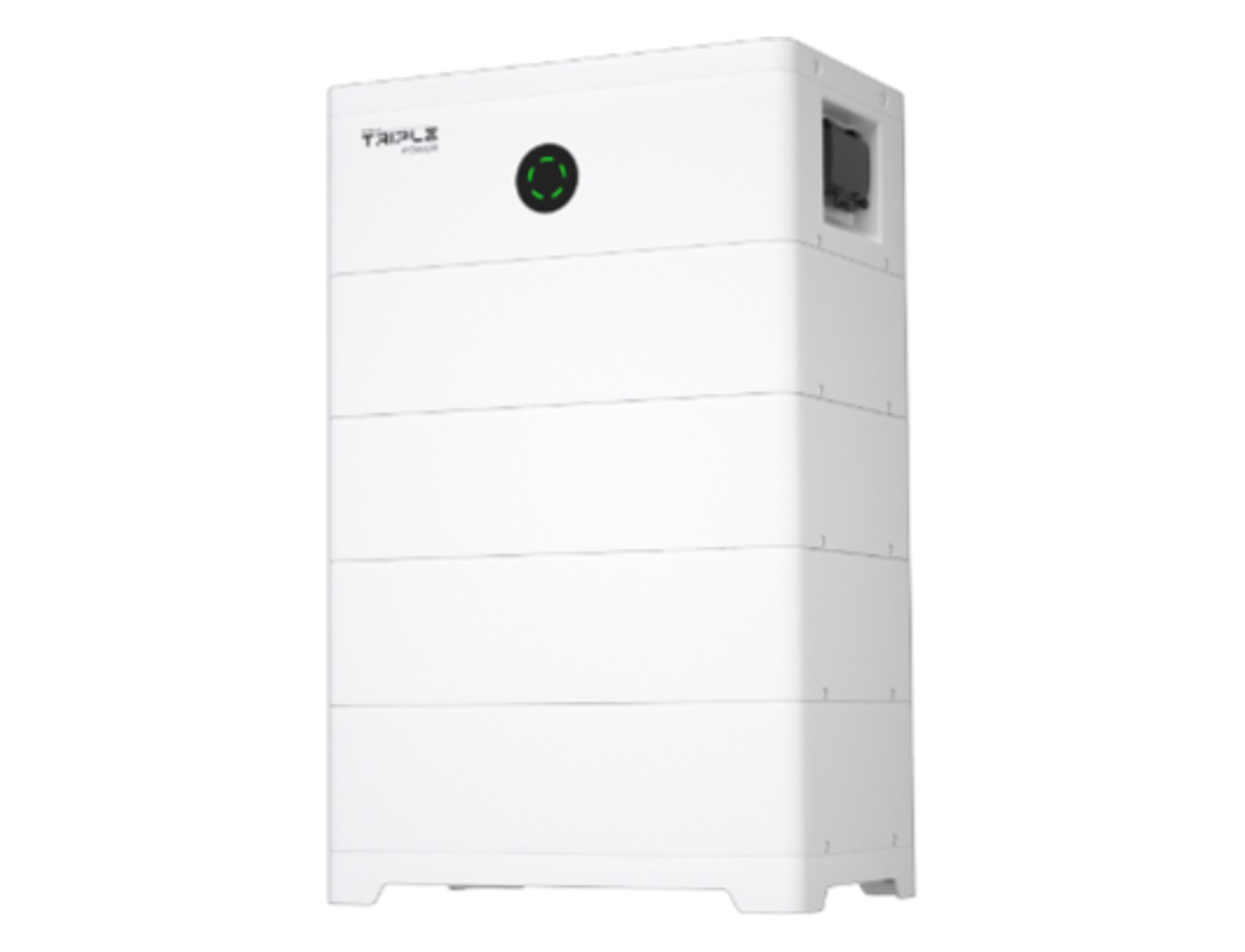
Our verdict
SolaX batteries are some of the cheapest modular high-voltage batteries in Australia once a bigger TSYS-HS51 stack is chosen, with a 10-year warranty that allows 6,000 cycles for home use and a well-regarded app. The trade-offs are that you must use a SolaX hybrid inverter, the small packages cost far more per kWh than the large ones, and several older listings on the Clean Energy Council list expire within weeks.
- Best for
- Budget-minded homes wanting a 15 kWh or larger modular battery with a SolaX hybrid inverter
- Look elsewhere if
- Homes that want to keep a non-SolaX inverter or want the cheapest 10 kWh package
- Price guide
- About A$6,800 to A$20,000 for 10.2 to 40.9 kWh TSYS-HS51 stacks after the federal discount, battery only, excluding installation (SolarQuotes, May 2026)
- Warranty
- 10 years, with at least 70% retained capacity; 6,000 cycles for daily self-consumption and backup, throughput caps (30.2 MWh for 10.2 kWh) for other uses
Pros
05- Cheapest per kWh in the larger TSYS-HS51 sizes: SolarQuotes lists 40.9 kWh at about A$489 per usable kWh after the federal discount (May 2026)
- Warranty allows 6,000 cycles for daily self-consumption and backup, including charging from the grid, which is about 16 years of one cycle a day
- IP66 enclosures and heated versions that charge down to -30 degrees C, with fire-suppression aerosol built into the HS51 modules
- Current TSYS-HS51 and the new T58 V3 are on the Clean Energy Council approved battery list to 31 December 2027
- SolarQuotes owner reviews average 5.0 from 180 ratings and the SolaXCloud app is rated well, with a caveat that many reviews were incentivised
Cons
05- Needs a SolaX hybrid inverter: the SolaX warranty excludes third-party controllers and batteries installed by third parties
- Small packages are poor value: a 9.2 kWh SolaX X1 package is about A$739 per usable kWh, about 50% more than a 40.9 kWh TSYS-HS51 stack
- Several older listings expire soon: T-BAT H V2 (5.8 to 23 kWh) on 21 November 2026 and T-BAT HS S3.6 on 22 November 2026
- Adding modules after the first year needs SolaX's written consent, and mixing in new modules needs matching voltage
- Mixed reliability reputation from the early years and a 2022 recall of LG-cell SolaX systems, though not of current LFP batteries
SolaX makes three residential batteries that Australian installers quote: the Triple Power T58 V3 (5.8 kWh modules), the larger TSYS-HS51 stack (5.1 kWh modules, up to 66.5 kWh) and the older T-BAT HS50E. All are high-voltage lithium iron phosphate (LFP) batteries that connect to a SolaX hybrid inverter. SolarQuotes listed SolaX packages at about A$6,800 to A$20,000 after the federal discount in May 2026 (battery only, excluding installation). SolaX batteries are usually offered by budget and mid-range installers as an alternative to Sungrow, BYD or Fox ESS. This review is based on manufacturer documentation, warranty terms, published pricing and owner and installer feedback; Solar Cobber did not test the product and was not paid by the manufacturer. It pairs with our SolaX inverter review and the SolaX Cloud app guide.
What it is and how it works
A SolaX battery is a DC battery with no inverter of its own. Modules stack on a floor stand or wall base and connect to a SolaX hybrid inverter that also runs the solar panels. The inverter charges the battery from solar, can charge it from the grid on a schedule, and runs chosen circuits from it in a blackout.
There are three families on sale. The TSYS-HS51 (SolaX’s HS51) is a tower of 5.1 kWh modules, 2 to 13 modules per system for 10.2 to 66.5 kWh. A Series Box and a BMS sit on top, and the datasheet says up to three towers can connect with a TCBox-70. The T58 V3 uses larger 5.76 kWh modules, one to six per stack (5.8 to 34.6 kWh), and SolaX says inverters with two battery ports can run twelve for 69.1 kWh. The T-BAT HS50E is the previous 5.1 kWh generation, listed in sizes from HS 5 to HS 30.
SolaX also sells all-in-one X1-IES and X3-IES inverters. We did not find any IES model on the Clean Energy Council approved battery list when we queried it on 14 November 2026, so we do not cover them here and a quote built around one needs the rebate eligibility confirmed in writing.
Specs that matter in Australia
Heating and cold. The HS51 datasheet gives -30 to +53 degrees C for charge and discharge on the heated version, but only 0 to +53 degrees C on the unheated version. That matters in Canberra, the Tablelands and inland frost areas. The warranty excludes damage when ambient temperature falls below -10 degrees C or exceeds 50 degrees C, so a shaded spot matters in western Sydney and Adelaide too.
Weather and fire design. Both the T58 V3 and TSYS-HS51 are rated IP66, a better rating than the IP55 of Sungrow’s SBR. SolaX says the HS51 has aerosol fire suppression built into each module. Check the battery location rules your installer is working to.
Power. The HS51 is rated for 60 A recommended and 70 A maximum. The Clean Energy Council list shows rated DC power of 6.1 kW for the 10.2 kWh system rising to 39.9 kW at 66.5 kWh. A T58 V3 module is listed at 2.9 kW per 5.76 kWh. In practice the inverter sets your backup power, so match the two (our AC and DC coupling guide covers the difference).
Usable capacity differs by package. SolaX quotes 100% depth of discharge as settable on the HS51 datasheet, but the usable figure depends on the inverter. The Clean Energy Council lists the T-BAT HS 10 at 9.2 kWh usable from 10.2 kWh nominal, while a TSYS-HS51 10.2 kWh is listed at 10.2 kWh usable. When comparing quotes, compare usable kWh, as the rebate is paid on it.
Expansion. The HS51 datasheet says new and old modules can be mixed in the optimiser version. SolarQuotes says that if the original battery is over a year old you need SolaX’s consent to expand, and the warranty says new modules must be brought to the same voltage first.
Price in Australia
SolaX does not publish retail prices. The best dated source is SolarQuotes’ price list (updated 12 May 2026), which prices every package after the federal discount and GST, battery only, excluding installation. Add a SolaX hybrid inverter and labour on top.
SolarQuotes listed these SolaX packages. The per-kWh figures are battery price divided by usable kWh.
| Package | Usable kWh | Price after discount, excl. installation | Per usable kWh |
|---|---|---|---|
| TSYS-HS51 10.2 | 10.2 | A$6,800 | A$667 |
| TSYS-HS51 15.3 | 15.3 | A$8,400 | A$549 |
| TSYS-HS51 20.4 | 20.4 | A$10,800 | A$529 |
| TSYS-HS51 25.5 | 25.5 | A$12,800 | A$502 |
| TSYS-HS51 30.7 | 30.7 | A$15,500 | A$505 |
| TSYS-HS51 35.8 | 35.8 | A$17,900 | A$500 |
| TSYS-HS51 40.9 | 40.9 | A$20,000 | A$489 |
| X1 package 10.2 | 9.2 | A$6,800 | A$739 |
| X1 package 15.3 | 13.8 | A$9,400 | A$681 |
| X1 package 20.4 | 18.4 | A$12,200 | A$663 |
| X3 package 10.2 | 9.2 | A$7,300 | A$793 |
| X3 package 15.3 | 13.8 | A$9,900 | A$717 |
| X3 package 20.4 | 18.4 | A$12,500 | A$679 |
| X3 package 25.6 | 23.0 | A$14,400 | A$626 |
| X3 package 30.7 | 27.6 | A$17,100 | A$620 |
The usable capacities of the X1 and X3 packages (9.2, 13.8, 18.4, 23.0 and 27.6 kWh) match the Clean Energy Council usable figures for the T-BAT HS50E series, so those lines are probably that older battery, but SolarQuotes does not name the module in the package label. Ask your installer which module is in the quote.
Source: SolarQuotes, solar battery prices, last updated 12 May 2026. Solar Cobber calculation: package price divided by usable kWh.
View the data as a table
| Price per usable kWh | |
|---|---|
| X3 package 10.2 kWh | A$793 |
| X1 package 10.2 kWh | A$739 |
| X3 package 15.3 kWh | A$717 |
| X1 package 15.3 kWh | A$681 |
| X3 package 20.4 kWh | A$679 |
| TSYS-HS51 10.2 kWh | A$667 |
| X1 package 20.4 kWh | A$663 |
| X3 package 25.6 kWh | A$626 |
| X3 package 30.7 kWh | A$620 |
| TSYS-HS51 15.3 kWh | A$549 |
| TSYS-HS51 20.4 kWh | A$529 |
| TSYS-HS51 30.7 kWh | A$505 |
| TSYS-HS51 25.5 kWh | A$502 |
| TSYS-HS51 35.8 kWh | A$500 |
| TSYS-HS51 40.9 kWh | A$489 |
The chart shows that the cost per kWh falls by about 27% between the 10.2 kWh TSYS-HS51 (A$667) and the 40.9 kWh stack (A$489), so a small SolaX battery is the poor-value end of the range.
Rival price context. On the same SolarQuotes page, SolaX packages span the widest per-kWh range of any brand listed, from A$489 to A$793.
- Lowest listed model
- Highest listed model
Source: SolarQuotes, solar battery prices, last updated 12 May 2026. Per-kWh ranges are SolarQuotes prices divided by usable kWh; brand ranges as calculated from the page.
View the data as a table
| Lowest listed model | Highest listed model | |
|---|---|---|
| SolaX | A$489 | A$793 |
| Tesla Powerwall 3 | A$741 | A$741 |
| Growatt APX HV | A$467 | A$722 |
| BYD Battery Box Premium HVM | A$549 | A$643 |
| Sungrow SBR and SBH | A$547 | A$633 |
| Pylontech Force H3X | A$543 | A$575 |
| AlphaESS | A$280 | A$479 |
| Sofar PowerAll | A$312 | A$368 |
| Fox ESS | A$235 | A$333 |
| Sigenergy SigenStor | A$267 | A$327 |
| GoodWe ESA | A$271 | A$313 |
At its best (a 40.9 kWh stack) SolaX at A$489 per usable kWh undercuts Sungrow, BYD and Tesla, but it does not match the lowest-cost brands (Fox ESS, Sigenergy, GoodWe and AlphaESS) in the same table, which list some models at A$235 to A$333.
How the federal battery discount applies
The Cheaper Home Batteries Program pays small-scale technology certificates (STCs) based on usable kWh. The legislation sets the factor at 6.8 STCs per kWh for batteries installed from 1 May to 31 December 2026, falling to 5.7 from 1 January 2027 (Federal Register of Legislation, F2026L00093). The first 14 kWh earns the full factor, 14 to 28 kWh earns 60% and 28 to 50 kWh earns 15%. Our federal battery rebate guide and state battery rebates guide cover the rest.
Solar Cobber calculation. Assuming an STC is worth about A$37 (the figure used in our Sungrow SBR review; the real price moves), each full-rate usable kWh is worth about A$252. For a TSYS-HS51 15.3 kWh: 14 kWh at 6.8 = 95.2 STCs, plus 1.3 kWh at 6.8 x 60% = 5.3 STCs, total 100.5 STCs or about A$3,720. Adding that to SolarQuotes’ A$8,400 gives roughly A$12,100 before the discount.
| TSYS-HS51 size | STCs (6.8 factor, tiered) | Estimated discount at A$37 | SolarQuotes price after discount | Implied price before discount |
|---|---|---|---|---|
| 10.2 kWh | 69.4 | about A$2,570 | A$6,800 | about A$9,400 |
| 15.3 kWh | 100.5 | about A$3,720 | A$8,400 | about A$12,100 |
| 25.5 kWh | 142.1 | about A$5,260 | A$12,800 | about A$18,100 |
| 40.9 kWh | 165.5 | about A$6,120 | A$20,000 | about A$26,000 |
The discount is why larger batteries get cheaper per kWh only up to a point: the tiers cut the support per kWh above 14 kWh. The factor falls on 1 January 2027, so installs after that date lose about 16% of the discount at the full-rate tier (5.7 against 6.8).
Warranty: the fine print
SolaX Australia’s Warranty Terms and Conditions (V1.6, for products sold and installed from 1 February 2025) cover the TSYS-HS51, T58 and T-BAT families for 10 years. The key terms:
- Retention: at least 70% of initial energy at 120 months after installation or 129 months after manufacture, whichever comes first.
- Operating limit: 6,000 cycles for daily self-consumption and backup (storing solar or grid energy for use in the home, or as backup power). Any other application, or a mix that includes one, is limited by a throughput cap.
- Throughput caps: 30.2 MWh for a T-HS10.2, 45.3 MWh for a T-HS15.3, 75.5 MWh for a T-HS25.6 and 120.8 MWh for a T-HS40.9. For the T58 family the table lists 17.9 MWh for a 5.8 kWh system up to 107.4 MWh for 34.6 kWh.
- Test conditions: capacity is measured at 100% depth of discharge, 25 to 30 degrees C and a 0.5C rate.
- Exclusions: operating below -10 or above 50 degrees C ambient, third-party batteries and controllers, and failing to follow the installation and maintenance instructions.
- Claims: through your installer or distributor first. Warranty terms apply with Australian Consumer Law guarantees on top.
- Expansion: SolarQuotes notes SolaX must give consent to add to a battery more than a year old.
- Replacement: the remaining warranty carries over to the replacement unit.
Solar Cobber calculation. The 6,000-cycle limit is generous: one full cycle a day for 10 years is about 3,650 cycles, so a home that cycles once a day uses roughly 61% of the allowance. The throughput table matters only for uses outside self-consumption and backup, such as some VPP or trading arrangements, so ask SolaX or your retailer how a VPP is classified before signing.
Source: SolarQuotes price list (12 May 2026); SolaX Warranty Terms and Conditions V1.6. Solar Cobber calculation: price after discount divided by throughput cap (30.2, 45.3, 60.4, 75.5, 90.6, 105.7 and 120.8 MWh). Assumes the full throughput is used, which home self-consumption use under the 6,000-cycle limit may not reach.
View the data as a table
| Cents per warranted kWh | |
|---|---|
| 10.2 kWh | 22.5c |
| 15.3 kWh | 18.5c |
| 20.4 kWh | 17.9c |
| 25.5 kWh | 17.0c |
| 30.7 kWh | 17.1c |
| 35.8 kWh | 16.9c |
| 40.9 kWh | 16.6c |
The chart shows the cost of each kWh the warranty allows falling from 22.5 cents on the smallest stack to 16.6 cents on the largest, the same pattern as the price per kWh.
What owners and installers report
On SolarQuotes, SolaX batteries show an average of 5.0 from 180 ratings (171 five-star, 9 four-star, none below four) as at November 2026. SolarQuotes’ reviewer says SolaX had a rough start in Australia from 2012 but now offers “quality, good-value hardware” with “reasonably good support”, lists modularity, low price and the app as positives, and lists the need for SolaX hybrid inverters as the con. SolarQuotes flags that many of those reviews are marked as incentivised by one installer, so treat the perfect score with caution.
Patterns in the public record:
- App. SolarQuotes calls the SolaX app one of the better options for controlling and diagnosing a battery. Our SolaX Cloud app guide covers logging in and reading it.
- Support. SolarQuotes rates support as reasonably good and lists a SolaX Australia hotline on 1300 476 529.
- Recall history. SolaX recalled LG-cell X-Cabinet, Power Station and Opal Storage systems in 2022 for fire risk. SolarQuotes notes that current Triple Power batteries use LFP cells, not LG cells. Check older systems on the Clean Energy Council recalls page.
Clean Energy Council listing and the November 2026 expiry risk
We queried the Clean Energy Council approved battery list on 14 November 2026. The listing decides whether the federal discount applies, and several SolaX entries expire within weeks.
| SolaX battery | CEC certificate | Listing expires |
|---|---|---|
| T-BAT H 5.8 to 23 V2 | BAT-374 | 21 November 2026 |
| T-BAT HS S3.6 (HS7.2 to HS46.8) | BAT-482, BAT-483 | 22 November 2026 |
| T-BAT H 3.0 to 12.0 V2 (Triple Power) | BAT-472 | 19 January 2027 |
| T-BAT HS50E (HS 5 to HS 30) | BAT-538 | 12 September 2027 |
| TSYS-HS51 (T-HS10.2 to T-HS66.5) | BAT-669, BAT-670 | 31 December 2027 |
| T-BAT H V3 (5.8 to 34.6 kWh, T58 V3) | BAT-1110 (approved 4 November 2026) | 31 December 2027 |
| AELIO-B100-AU (commercial, 100 kWh) | BAT-757 | 31 December 2027 |
The T58 V3 was approved on 4 November 2026. Our SolaX inverter review, written in October, said the V3 was not yet listed, so that is now out of date. Check the listing on your install date, and do not accept a quote for a listed-to-21-November model without the installer confirming the discount in writing.
SolaX Triple Power vs alternatives
Figures are from the sources in this review and our linked reviews; prices are SolarQuotes’ May 2026 per-kWh ranges after the discount, battery only.
| SolaX TSYS-HS51 | Sungrow SBR | BYD Battery Box Premium HVM | Fox ESS EQ4800 | |
|---|---|---|---|---|
| Usable capacity | 10.2 to 66.5 kWh | 9.6 to 25.6 kWh per stack | 8.3 to 22.1 kWh | 9.32 to 41.93 kWh (4.66 kWh modules) |
| Inverter | SolaX hybrid | Sungrow hybrid | Compatible third-party hybrid | Fox ESS hybrid |
| Warranty | 10 years, 70% | 10 years, 70% | 10 years, 70% | 10 years, 70% or throughput cap |
| Cycle or throughput limit | 6,000 cycles for self-use and backup; caps otherwise | Unlimited cycles for self-use and backup | 3 MWh per kWh, all uses | Throughput cap, 39.32 MWh for two modules |
| Ingress rating | IP66 | IP55 | IP55 | See review |
| Price per usable kWh after discount (SolarQuotes, May 2026) | A$489 to A$793 | A$547 to A$633 | A$549 to A$643 | A$235 to A$333 (Fox ESS range) |
Choose a SolaX if you are being quoted a large stack (25 kWh or more) at a low price and are happy with a SolaX hybrid. Choose the Sungrow SBR for unlimited-cycle wording and the broadest installer base. Choose BYD if you want to keep a non-SolaX inverter. The Fox ESS packages are cheaper per kWh in the SolarQuotes list, so they are worth a second quote.
Watch the installation
SolaX’s own channel shows how a typical system goes together. This video from SolaX Power shows an X3-Hybrid G4 inverter, a T58 battery and a CT meter being installed.
Questions to ask your installer
- Which SolaX battery is it (T58 V3, TSYS-HS51 or T-BAT HS50E), how many usable kWh is it, and is that exact model on the Clean Energy Council list on my install date?
- Which SolaX hybrid inverter are you quoting, how many kW of backup will I get, and which circuits are backed up?
- How many STCs are you claiming, and what is the price before and after the discount?
- Is the heated version quoted for a cold area, and where will the battery sit relative to sun and rain?
- If I join a VPP, does SolaX treat it as self-consumption under the 6,000-cycle limit or as an application under the throughput cap?
- Will you register the system in SolaXCloud and give me owner access?
- If I want to expand after a year, will you get SolaX’s written consent and what will it cost?
- How old is the stock, given the retention term ends 129 months after manufacture?
FAQ
How much does a SolaX battery cost in Australia?
SolarQuotes listed SolaX packages from A$6,800 for 10.2 kWh to A$20,000 for 40.9 kWh after the federal discount in May 2026, battery only and excluding installation. Add the inverter and labour. SolaX does not publish retail prices.
Is the SolaX battery any good?
It is a good-value, well-regarded modular LFP battery with a 10-year warranty, but it is a value brand and the installer matters. SolarQuotes shows an average of 5.0 from 180 ratings, though many reviews were marked as incentivised.
What is the SolaX T58 battery?
The T58 is the Triple Power battery built from 5.76 kWh modules, with one to six per stack for up to 34.6 kWh. The T58 V3 was added to the Clean Energy Council list on 4 November 2026, valid to 31 December 2027.
Is the SolaX battery eligible for the federal rebate?
Yes, for models on the Clean Energy Council list on the install date. The TSYS-HS51 and T58 V3 are listed to 31 December 2027, while T-BAT H V2 and T-BAT HS S3.6 expire on 21 and 22 November 2026.
Can I use a SolaX battery with a non-SolaX inverter?
Not in practice. SolaX’s warranty excludes third-party controllers and batteries installed by third parties, and SolarQuotes lists the SolaX inverter requirement as the main con.
How long is the SolaX battery warranty?
Ten years from installation (capped at 129 months from manufacture) to at least 70% of initial energy. Daily self-consumption and backup are limited to 6,000 cycles, and other uses are limited by a throughput cap such as 30.2 MWh on a 10.2 kWh stack.
What is SolaX IES?
SolaX IES is the company’s all-in-one hybrid inverter line (X1-IES and X3-IES). We did not find an IES model on the Clean Energy Council approved battery list on 14 November 2026, so confirm rebate eligibility in writing before buying one.
Find an installer
SolaX systems are only as good as the commissioning and backup wiring. Use our installer directory to compare installers near you, and check every quote against our guides on how to compare solar quotes, what size battery you need and virtual power plants.
Read next
Battery buying guides
Often quoted alongside
Sungrow
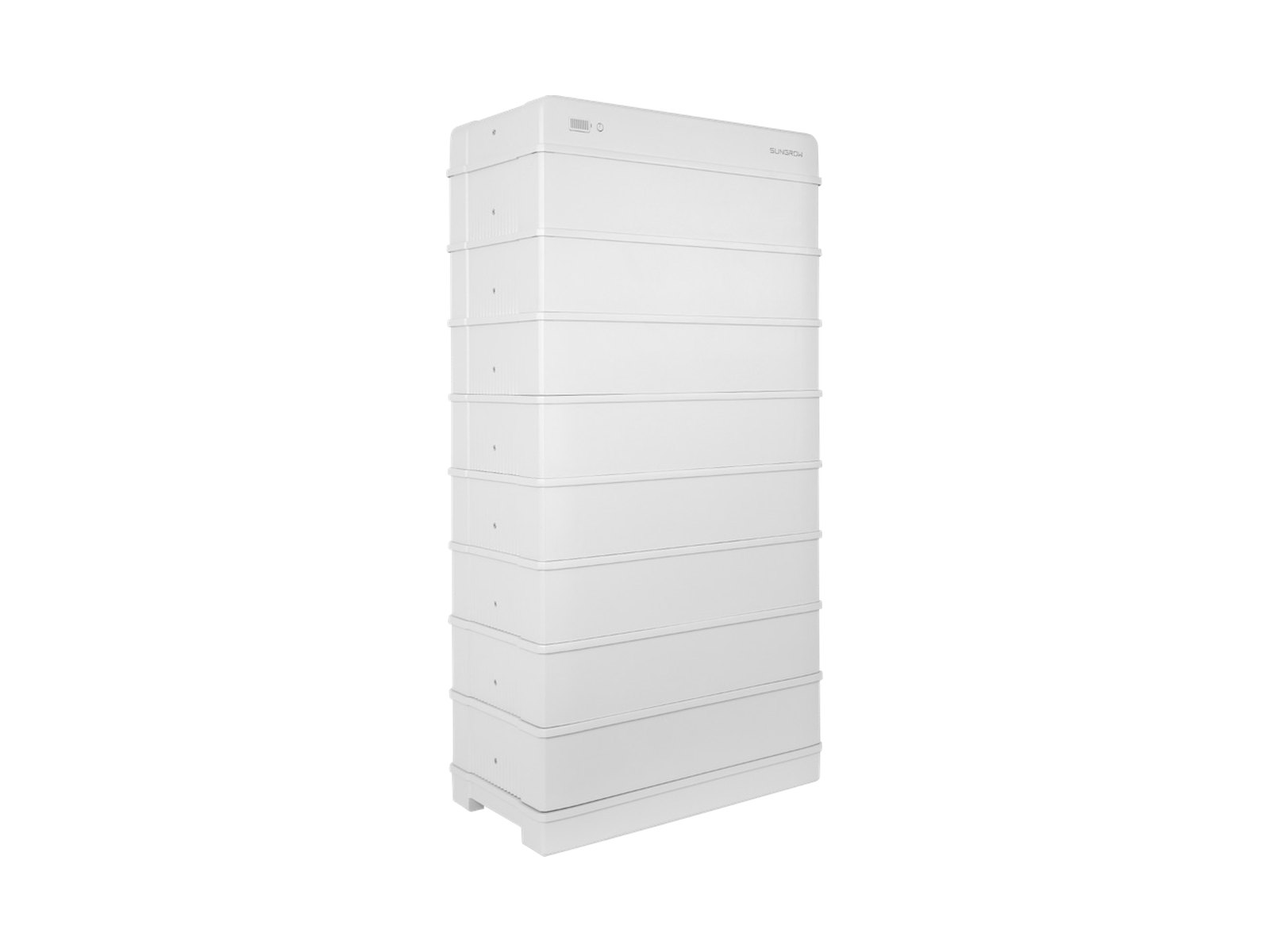
Sungrow SBR
The Sungrow SBR is one of the best-value modular batteries in Australia, with easy expansion in 3.2 kWh steps and a warranty that gives normal households unlimited cycles. The trade-off is that you must pair it with a Sungrow hybrid inverter, and Sungrow's app and phone support are weaker than the hardware.
Best for
Homes wanting a modular battery paired with a Sungrow hybrid inverter
BYD
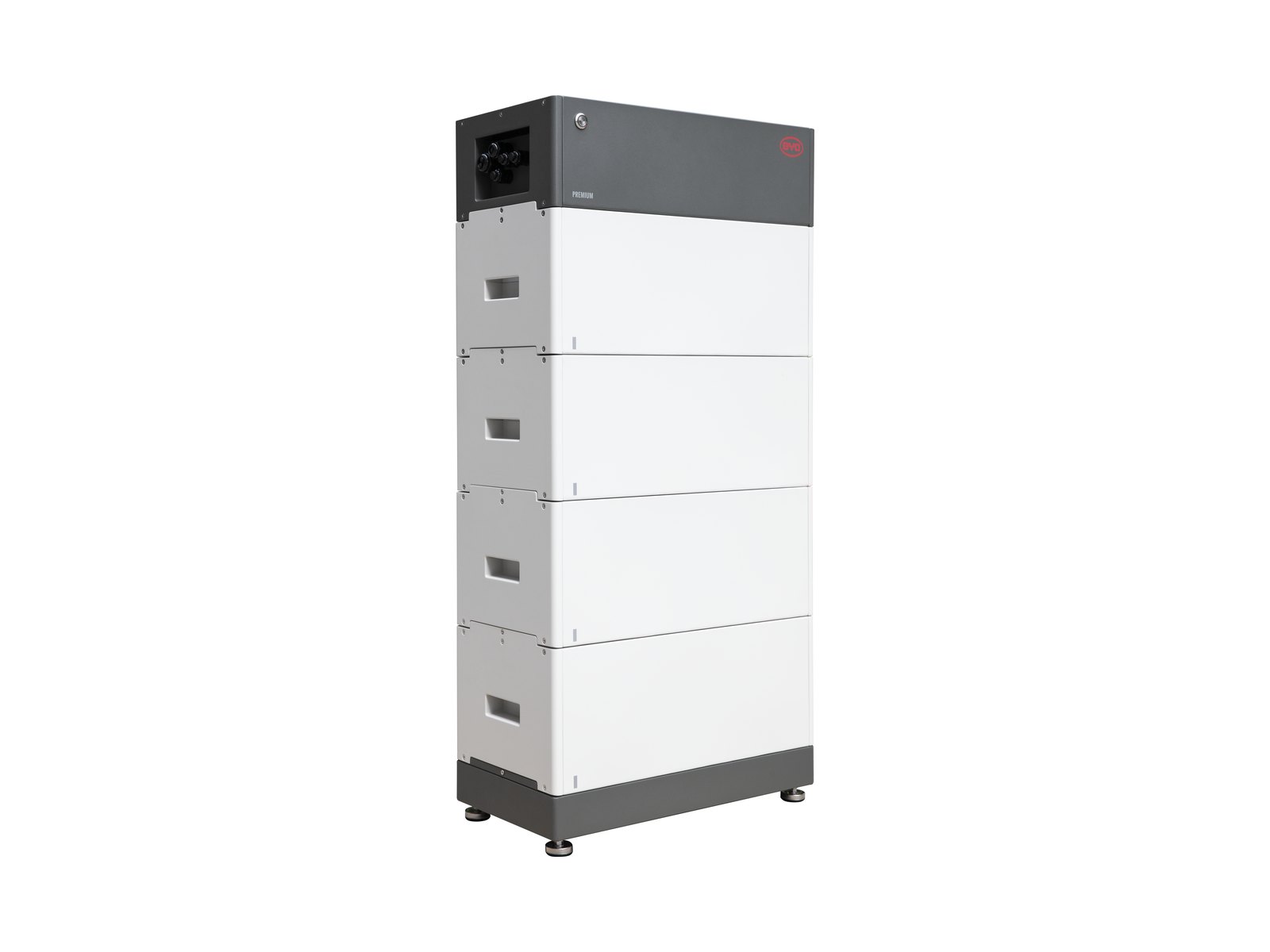
BYD Battery-Box Premium
The BYD Battery-Box Premium is a proven, stackable battery that works with more inverter brands than most, which makes it the default partner for Fronius hybrid systems. Its warranty ends at a throughput cap for every type of use, so households that cycle hard every day may run out of cover before 10 years.
Best for
Homes pairing a battery with a Fronius GEN24 Plus or another listed hybrid inverter
Fox ESS
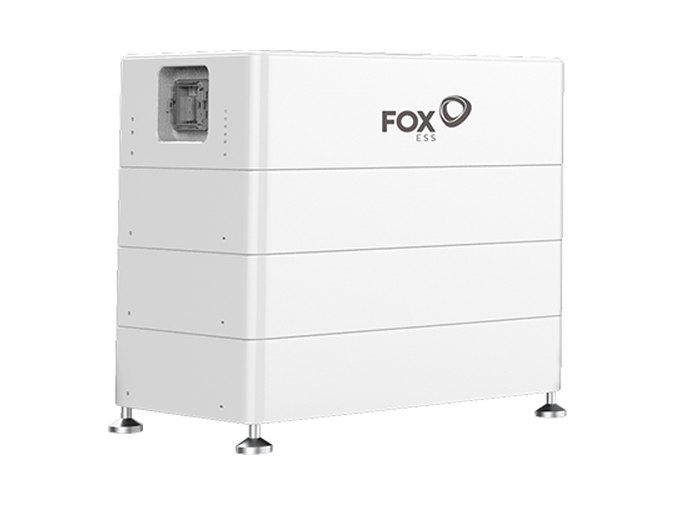
Fox ESS EQ4800
The Fox ESS EQ4800 delivers a lot of storage for the money and has become one of the most installed batteries in Australia since the federal rebate began. The trade-offs are a support track record still catching up with sales, no cell heating for cold-climate charging, and owner reports of real capacity falling short on the biggest stacks.
Best for
Budget-focused homes wanting 9 to 28 kWh of storage on a Fox ESS hybrid inverter
Sources
Independent desk research by the Solar Cobber editorial team. We did not test this product and were not paid by the manufacturer. Solar Cobber is a free directory that may earn referral or advertising fees from installers; this never affects our reviews.
- 01SolaX TSYS-HS51 battery datasheet, Australia (V1.92, PDF)
- 02SolaX Australia: T58 (T-BAT-SYS-HV-5.8) battery product page
- 03SolaX Warranty Terms and Conditions, Australia (V1.6, PDF)
- 04Clean Energy Council approved batteries list (queried 14 November 2026)
- 05SolarQuotes: Solar battery prices and system costs in Australia (12 May 2026)
- 06SolarQuotes: SolaX Power battery review and owner ratings
- 07Federal Register of Legislation: Cheaper Home Batteries STC factors (F2026L00093)
- 08SolaX Australia warranty page
- 09SolaX Power: X3-Hybrid G4 + T58 + CT installation (YouTube)
Get quotes for SolaX Triple Power
Browse rated solar installers in your area, check their Google reviews, and ask at least three for itemised quotes. Our guide to comparing solar quotes explains what to look for.