
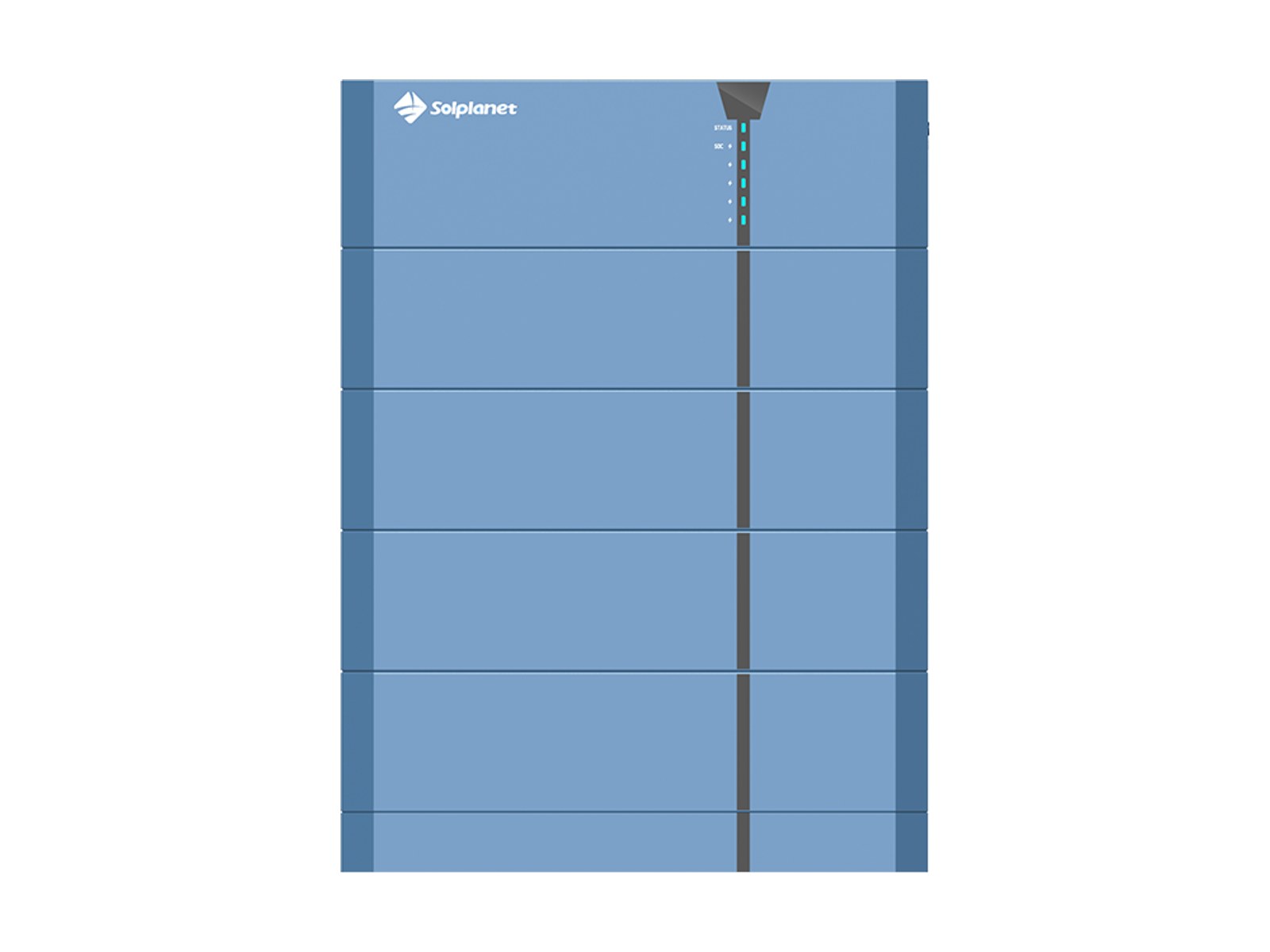
Our verdict
Solplanet batteries are low-priced, modular LFP stacks with a flat 10 year warranty and Clean Energy Council listings, backed by an Australian importer in Melbourne. The trade-offs are a short local track record, a warranty throughput of about 0.74 to 0.82 full cycles a day, and owner reports of app and firmware problems.
- Best for
- Budget-minded homes wanting a modular LFP battery paired with a Solplanet hybrid inverter, especially three phase
- Look elsewhere if
- Homes wanting a long Australian track record, heavy daily cycling or a battery that works with any inverter brand
- Price guide
- About A$390 to A$590 per usable kWh for the battery hardware alone at one Australian online retailer (PowerBay, 14 November 2026); no published installed price for Solplanet batteries
- Warranty
- 10 years, retaining 70% of usable energy or reaching a minimum throughput of about 2.7 to 3.0 MWh per usable kWh, whichever comes first
Pros
04- Modular LFP range from 5 kWh to 51 kWh per tower, with IP65 or IP66 enclosures rated for indoor or outdoor use
- One flat 10 year Australian battery warranty (version 1.8, September 2026) across the Ai-HB, AP-H, AP-L and Ai-LB lines
- Cheap hardware: online retail prices of about A$390 to A$420 per usable kWh for the low-voltage range and about A$540 to A$590 for the older Ai-HB A series
- Current Clean Energy Council listings run to 31 December 2027 for the newer lines, so they qualify for the federal discount through 2027
Cons
05- Warranted throughput is only about 2.7 MWh per usable kWh on AP-H, AP-L and Ai-LB, or 0.74 full cycles a day over 10 years, below several rivals
- Must be paired with Solplanet hybrid inverters from the compatibility list, and Solplanet's own documents tell the installer to use only inverters it names
- Warranty asks for faults to be reported within one week, uses a narrower temperature clause than the datasheet and can be changed by Solplanet publishing a new version online
- Owners in a Whirlpool thread about VoltX Energy systems describe app going offline, missing battery data and firmware changes, and slow support replies
- Short Australian track record: Solplanet-branded inverters were first approved here in 2020 and hybrid inverters in 2021, and we found no independent SolarQuotes or CHOICE battery review
Solplanet is the Australian brand of AISWEI, a Chinese inverter maker, and its home batteries are modular lithium iron phosphate (LFP) stacks: the Ai-HB G2 and AP-H high-voltage lines for three-phase hybrid inverters, and the AP-L and Ai-LB-G3 low-voltage lines for single-phase hybrids. They are usually quoted by budget-focused installers and online retailers as a cheaper alternative to Sungrow, BYD or Dyness. This review is based on manufacturer documentation, warranty terms, published pricing and owner/installer feedback; Solar Cobber did not test the product and was not paid by the manufacturer. Everything below was checked in November 2026, and it separates what the datasheets and warranty say from what owners report.
What it is and how it works
Solplanet batteries are DC batteries that sit behind a Solplanet hybrid inverter, which also runs your solar panels. They do not have a built-in inverter, so the battery and inverter must come as a matched pair from Solplanet’s compatibility list.
The company (AISWEI Technology Co., Ltd) is headquartered in Shanghai and makes its batteries at Yangzhong in Jiangsu province. In Australia the importer is AISWEI Pty Ltd, ABN 18 635 068 218, at Level 40, 140 William Street, Melbourne, with a service line on 1300 986 964, according to Solplanet’s Australian warranty document. SolarQuotes says AISWEI was previously part of the SMA group through Zeversolar, and that Solplanet-branded string inverters were first approved by the Clean Energy Council in early 2020, with hybrid inverters following in mid-2021.
The batteries come in four lines:
| Line | Voltage | Pairs with (Solplanet compatibility list, July 2026) | Size per tower or stack |
|---|---|---|---|
| Ai-HB G2 (A and B series) | High | Three-phase hybrids ASW 5 to 12 kW H-T2 and H-T3 | 5.12 to 20.48 kWh |
| AP-H | High | Three-phase hybrids ASW H-T2 and H-T3 | 10.24 to 51.2 kWh |
| AP-L | Low (48 V) | Single-phase hybrids ASW H-S2 and ASW 008K and 010K-SH | 13.92 to 16.08 kWh |
| Ai-LB-G3 | Low (51.2 V) | Single-phase hybrids ASW H-S2, ASW SH and ASW 008K and 010K-SH | 5.12 kWh per module |
The “A” and “B” Ai-HB series matter. The older A series (CEC certificate BAT-468) uses a 90% depth-of-discharge rule, so a 20.48 kWh nominal stack lists 18.43 kWh usable. The newer B series (BAT-767, approved 29 January 2026) lists usable equal to nominal, so the same eight modules list 20.48 kWh. Ask your installer which series is on the quote, because 11% more usable energy for similar hardware cost changes the price per kWh.
The video above is Solplanet’s own installation walkthrough for the Ai-HB G2 high-voltage battery. It is a manufacturer video of about four minutes, published a few years ago, so treat it as a look at how the modules stack and connect, not as independent evidence of performance.
Specs that matter in Australia
Capacity and the federal discount. The discount is calculated on usable kWh, so the CEC-listed usable number is the one to use, not the nominal label. The chart shows the range each line offers.
- Smallest listed
- Largest listed
View the data as a table
| Smallest listed | Largest listed | |
|---|---|---|
| AP-H | 10.24 kWh | 51.20 kWh |
| Ai-HB B series | 5.12 kWh | 20.48 kWh |
| Ai-HB A series | 6.91 kWh | 18.43 kWh |
| AP-L | 13.92 kWh | 16.08 kWh |
| Ai-LB-G3 | 5.12 kWh | 5.12 kWh |
The AP-H goes up to 51.2 kWh per tower, far above the other lines, while the Ai-LB-G3 is listed only as a single 5.12 kWh module that installers stack.
Power is the quiet limit. The Ai-HB B datasheet gives 2.56 kW rated power for the 5.12 kWh Ai-HB 050B and 10.24 kW for the 20.48 kWh Ai-HB 200B, with a maximum discharge of 12.29 kW at the top size. That is about 0.5 kW per kWh, which means a small stack cannot deliver much blackout power by itself. Solar Cobber calculation: at the rated 2.56 kW a 5.12 kWh Ai-HB 050B takes 2 hours to move its full capacity, but pairing a 10 kW three-phase inverter with a 7.68 kWh stack limits the battery to about 3.84 kW. Check the battery’s kW, not just the inverter’s.
Heat, cold and weather. The Ai-HB B datasheet rates charging at 0 to 50 °C and discharging at -20 to 55 °C, with IP65 protection and natural convection cooling. The AP-L and Ai-LB-G3 are IP66 with the same passive cooling. These are floor-standing batteries, so put them in shade out of the afternoon sun. Our guide to how long solar batteries last explains why heat matters for LFP.
Single and three phase. The high-voltage Ai-HB and AP-H lines pair with the three-phase H-T2 and H-T3 hybrids (5, 8, 10 and 12 kW). Solplanet’s datasheet says those inverters support 100% unbalanced three-phase output on backup. Single-phase homes use the low-voltage AP-L and Ai-LB-G3 batteries with the H-S2 (3 to 6 kW) or SH-series hybrids; see our guide to single vs three phase power.
Clean Energy Council status. The Clean Energy Council (CEC) approved batteries list on 14 November 2026 showed all five Solplanet certificates. Four expire on 31 December 2027; the older Ai-HB A series (BAT-468) expires on 7 January 2027, so confirm an A-series model is still listed on your install date. We did not check the CEC inverter list.
Price in Australia
We found no published installed price for Solplanet batteries from SolarQuotes, Solar Choice or CHOICE, so there is no independent installed range. The only dated prices we could open are hardware-only listings at PowerBay, an Australian online retailer that sells Solplanet-branded batteries, checked on 14 November 2026. PowerBay does not say whether the listed price already includes the federal discount, and the prices exclude installation, so treat them as hardware prices.
| Product (PowerBay listing) | Usable kWh | Listed price (14 Nov 2026) | Per usable kWh |
|---|---|---|---|
| 5.12 kWh low-voltage module (ASW5120-LB-G3) | 5.12 | A$1,999 | A$390 |
| 10.24 kWh low-voltage battery | 10.24 | A$4,299 | A$420 |
| 20.48 kWh low-voltage battery | 20.48 | A$8,490 | A$415 |
| 10.24 kWh high-voltage battery (Ai-HB 100A) | 9.21 | A$5,399 | A$586 |
| 20.48 kWh high-voltage battery (Ai-HB 200A) | 18.43 | A$9,959 | A$540 |
The listings name the older A-series model numbers, so the high-voltage price per usable kWh is higher than it would be for a B-series stack with the same nominal size. The same retailer lists hybrid inverters at A$1,499 (5 kW single phase), A$2,199 (10 kW single phase), A$1,999 (5 kW three phase) and A$2,399 (10 kW three phase), plus a high-voltage battery combiner box at A$489.
Source: PowerBay product listings, checked 14 November 2026; Solplanet and Clean Energy Council usable capacity. Solar Cobber calculation: listed price divided by CEC usable kWh. LV is low voltage, HV is high voltage; labels show usable kWh.
View the data as a table
| Price per usable kWh | |
|---|---|
| LV 5.12 | A$390 |
| LV 10.24 | A$420 |
| LV 20.48 | A$415 |
| HV 18.43 | A$540 |
| HV 9.21 | A$586 |
The low-voltage range costs roughly A$390 to A$420 per usable kWh and the older high-voltage stacks A$540 to A$586, so the cheapest Solplanet hardware is the low-voltage line.
How the federal discount applies
The federal Cheaper Home Batteries Program issues small-scale technology certificates (STCs) for the first 50 kWh of usable capacity, with a 6.8 STC factor for installs from 1 May to 31 December 2026 and 5.7 from 1 January 2027, as in our federal battery rebate guide and state-by-state battery rebates. The first 14 kWh earns 100%, 14 to 28 kWh earns 60% and 28 to 50 kWh earns 15%.
Solar Cobber calculation, assuming A$37 per STC (our other reviews use the same figure) and rounding certificates down:
- May to Dec 2026 (6.8 factor)
- From 1 Jan 2027 (5.7 factor)
Source: Solar Cobber calculation from the DCCEEW STC factors and size tiers as reported in our rebate guide, November 2026; usable kWh from CEC listings. STCs = factor x (first 14 kWh at 100% + next 14 kWh at 60% + next 22 kWh at 15%). STC price of A$37 is an assumption.
View the data as a table
| May to Dec 2026 (6.8 factor) | From 1 Jan 2027 (5.7 factor) | |
|---|---|---|
| 9.21 kWh | A$2,294 | A$1,924 |
| 12.8 kWh | A$3,219 | A$2,664 |
| 15.36 kWh | A$3,700 | A$3,108 |
| 18.43 kWh | A$4,181 | A$3,478 |
| 20.48 kWh | A$4,477 | A$3,737 |
| 30.72 kWh | A$5,735 | A$4,810 |
The discount on an 18.43 kWh Ai-HB 200A stack falls by about A$700 on 1 January 2027, so the step-down is worth planning around if you are choosing between a December and a January install. If PowerBay’s A$9,959 is before the discount, the 18.43 kWh stack nets to about A$5,780 for hardware at 2026 rates, before inverter, combiner box and installation. Because we could not confirm that basis, check with the seller.
Warranty: the fine print
Solplanet’s Battery Factory Quality Warranty Terms for Australia, version 1.8 dated 20 September 2026, cover the Ai-LB, Ai-HB, AP-H and AP-L lines. Version 1.8 removed the earlier 5-year standard plus 5-year extended structure and now lists a flat 10 year standard period. The main terms:
- Term: 10 years, starting from the earlier of first installation completion or 6 months after shipment from AISWEI.
- Performance: retains 70% of Usable Energy, or reaches the Minimum Throughput Energy in the model table, whichever comes first, if operated to specification.
- Throughput: 3.0 MWh per usable kWh for the Ai-HB A and B series (for example 61.44 MWh for the 20.48 kWh Ai-HB 200B) and about 2.7 MWh per usable kWh for AP-H, AP-L and Ai-LB-G3 (for example 138.24 MWh for the 51.2 kWh APH5.0-S10).
- Reporting: the warranty conditions list reporting a fault or warning within one week, and the procedure asks for a written defect notice within 14 days.
- Installer: must be a skilled person or third-party installer certified by AISWEI.
- Exclusions: include failure to follow the manuals or standards, including operating-temperature overrange (the document gives “-10 to 50”), modifications, and incompatibility with the rest of the system.
- Remedy: at Solplanet’s discretion: remote help, factory repair, on-site service or a replacement of equivalent value, including a refurbished unit. A repaired or replaced unit gets the remaining warranty, with a minimum of one year.
- Who to call: AISWEI Pty Ltd on 1300 986 964 or service.au@solplanet.net. Solplanet may change the terms by publishing them on its website.
Two points stand out. The “-10 to 50” temperature wording is narrower than the datasheet’s -20 to 55 °C discharge range, so ask which governs on a frosty or very hot site. And the throughput cap bites if you cycle hard: 2.7 MWh per kWh over 10 years is 0.74 full cycles a day, while 3.0 is 0.82.
Source: Solplanet warranty V1.8 (September 2026); throughput figures for rivals from the Solar Cobber reviews of each product. Solar Cobber calculation: throughput MWh per usable kWh x 1,000 / 3,650. Sungrow SBR is not shown because its warranty has no cap for self-consumption and backup. The BYD figure uses the roughly 3 MWh per kWh in its warranty.
View the data as a table
| Full cycles per day | |
|---|---|
| ESY Sunhome HM6 | 1.15 |
| Dyness STACK100 Pro | 1.00 |
| Solplanet Ai-HB (A and B) | 0.82 |
| BYD Battery-Box Premium | 0.82 |
| Solplanet AP-H, AP-L, Ai-LB-G3 | 0.74 |
For a typical home that cycles once a day on a time-of-use tariff, Solplanet’s AP-H, AP-L and Ai-LB-G3 allowances would run out before year 10 (a cap of 0.74 cycles a day against one cycle), while Dyness and ESY Sunhome allow a daily cycle. Homes that only partly use the battery each day, for example those with small evening usage, are less likely to hit the cap. Our what size solar battery do I need guide can help you size it so it is not cycled hard.
What owners and installers report
Praise. SolarQuotes lists 30 ratings for Solplanet inverters, averaging 4.6 out of 5 (checked 14 November 2026), with 26 five-star ratings. That is an inverter page, not a battery page, and SolarQuotes flags that VoltX Energy offered an incentive for at least one review. The same page lists the IP66 rating and affordability as pros, and no display on the unit and limited app features as cons. It says reviewers report paying A$5,000 to A$9,100 for a 6.6 kW solar system with a Solplanet inverter. We found no SolarQuotes battery rating for Solplanet.
Complaints. The recurring themes in what we could read are about software and support, not cell failures:
- App and firmware. Excerpts from a long Whirlpool Forums thread about VoltX Energy systems with Ai-HB G2 batteries describe the app going offline after a firmware update, battery stacks missing from the app, state of charge showing as 0, and an owner downgrading firmware. We could not open the thread directly, so we are relying on search-engine excerpts and the dates are unclear.
- Support speed. The same excerpts mention emailed replies from the retailer and Solplanet taking several days.
- Local integrations. A GitHub issue for the open-source evcc project reports that newer AI-Dongle firmware broke an existing integration, although the dongle’s local HTTP API itself works.
We found no ACCC product-safety recall for Solplanet batteries, but we could not query the database directly. Independent test coverage is thin: we found no Canberra battery test or CHOICE result for the brand.
Solplanet vs alternatives
Rival figures below come from our reviews of each product, using the same row headings.
| Solplanet Ai-HB B / AP-H | Sungrow SBR | BYD Battery-Box Premium | Dyness STACK100 Pro | |
|---|---|---|---|---|
| Usable capacity per tower or stack | 5.12 to 20.48 kWh (Ai-HB B); 10.24 to 51.2 kWh (AP-H) | 9.6 to 25.6 kWh | 5.1 to 22.1 kWh | 15.36 to 76.8 kWh |
| Inverter | Solplanet hybrid only | Sungrow hybrid only | Several brands | Many brands (Solplanet is on its list) |
| Ingress rating | IP65 | IP55 | IP55 | IP66 |
| Warranty | 10 years, 70%, 2.7 to 3.0 MWh per kWh | 10 years, 70%, unlimited for self-use and backup | 10 years, 70%, about 3 MWh per kWh | 10 years, 70%, about 3.65 MWh per kWh |
| Published price signal | About A$390 to A$586 per usable kWh hardware (PowerBay, Nov 2026) | About A$8,100 for 12.8 kWh after discount, before inverter (SolarQuotes, May 2026) | About A$8,100 for 13.8 kWh after discount, before inverter (SolarQuotes, May 2026) | About A$5,900 for 14.6 kWh Cygni after discount (published Perth estimate) |
These prices are on different bases (retail hardware before discount against SolarQuotes prices after the discount), so do not compare the last row directly; get like-for-like quotes. Choose a Sungrow SBR if you want a bigger local track record and a warranty with no cycle limit for normal home use. Choose a BYD Battery-Box Premium if you want a long-established modular battery that works with several inverter brands. Choose a Dyness if you want a higher throughput allowance and a battery that can run from a Solplanet or other inverter. Choose Solplanet when the quote is meaningfully cheaper and you accept the shorter record.
Questions to ask your installer
- Which Solplanet line and series is quoted (Ai-HB A, Ai-HB B, AP-H, AP-L or Ai-LB-G3), and what is its CEC usable kWh and listing expiry?
- Which exact Solplanet hybrid inverter is on the quote, and is that battery and inverter pair on the July 2026 compatibility list?
- How many kW of backup will the stack deliver at this size, not just the inverter rating?
- How many STCs have you claimed, at what factor, and what happens to my price if installation slips past 1 January 2027?
- Which warranty version applies on my installation date, and will you register the system on the Solplanet app and portal?
- How does the one-week fault reporting rule work in practice, and who do I call when the app goes offline?
- Are you certified by AISWEI to install the battery, as the warranty requires?
- If I join a virtual power plant (VPP), will it count against the throughput cap?
FAQ
Is Solplanet a good battery brand?
Solplanet is a low-cost brand with solid paper specifications and a 10 year warranty, but a short Australian track record. SolarQuotes rates its inverters 4.6 out of 5 from 30 ratings, and we found no independent battery rating or test result.
Where is Solplanet made and who owns it?
Solplanet is the brand of AISWEI, a Shanghai-headquartered company that makes its batteries in Yangzhong, Jiangsu, China. The Australian importer is AISWEI Pty Ltd in Melbourne. SolarQuotes says AISWEI was once part of the SMA group via Zeversolar.
How much does a Solplanet battery cost?
Online hardware prices on 14 November 2026 ranged from about A$390 to A$586 per usable kWh at PowerBay, before installation. We found no published installed range, so get quotes and ask whether the federal discount is included.
What is the Solplanet battery warranty?
The Australian warranty (version 1.8, September 2026) is 10 years, retaining 70% of usable energy or a minimum throughput of about 2.7 to 3.0 MWh per usable kWh, whichever comes first. Solplanet may repair, replace with a refurbished unit or provide on-site service.
Which inverters work with Solplanet batteries?
Solplanet’s own hybrid inverters: the three-phase ASW H-T2 and H-T3 for the high-voltage Ai-HB and AP-H, and single-phase H-S2 or SH models for the low-voltage AP-L and Ai-LB-G3. Solplanet says its batteries must only be used with inverters it names.
Are Solplanet batteries approved for the federal battery discount?
Yes, on 14 November 2026 the Clean Energy Council list showed Solplanet batteries under five certificates. The newer lines run to 31 December 2027, and the older Ai-HB A series (BAT-468) runs to 7 January 2027.
Does Solplanet work with a blackout backup?
Yes, the hybrid inverters offer backup output with a switchover under 10 ms according to Solplanet datasheets, but the usable power depends on battery size and the inverter, so confirm how many kW of backup your configuration supports.
Find an installer
Use our installer directory to compare local companies, and read our guides on what a solar battery costs and how to compare solar quotes before you sign. See all our battery reviews.
Read next
Battery buying guides
Often quoted alongside
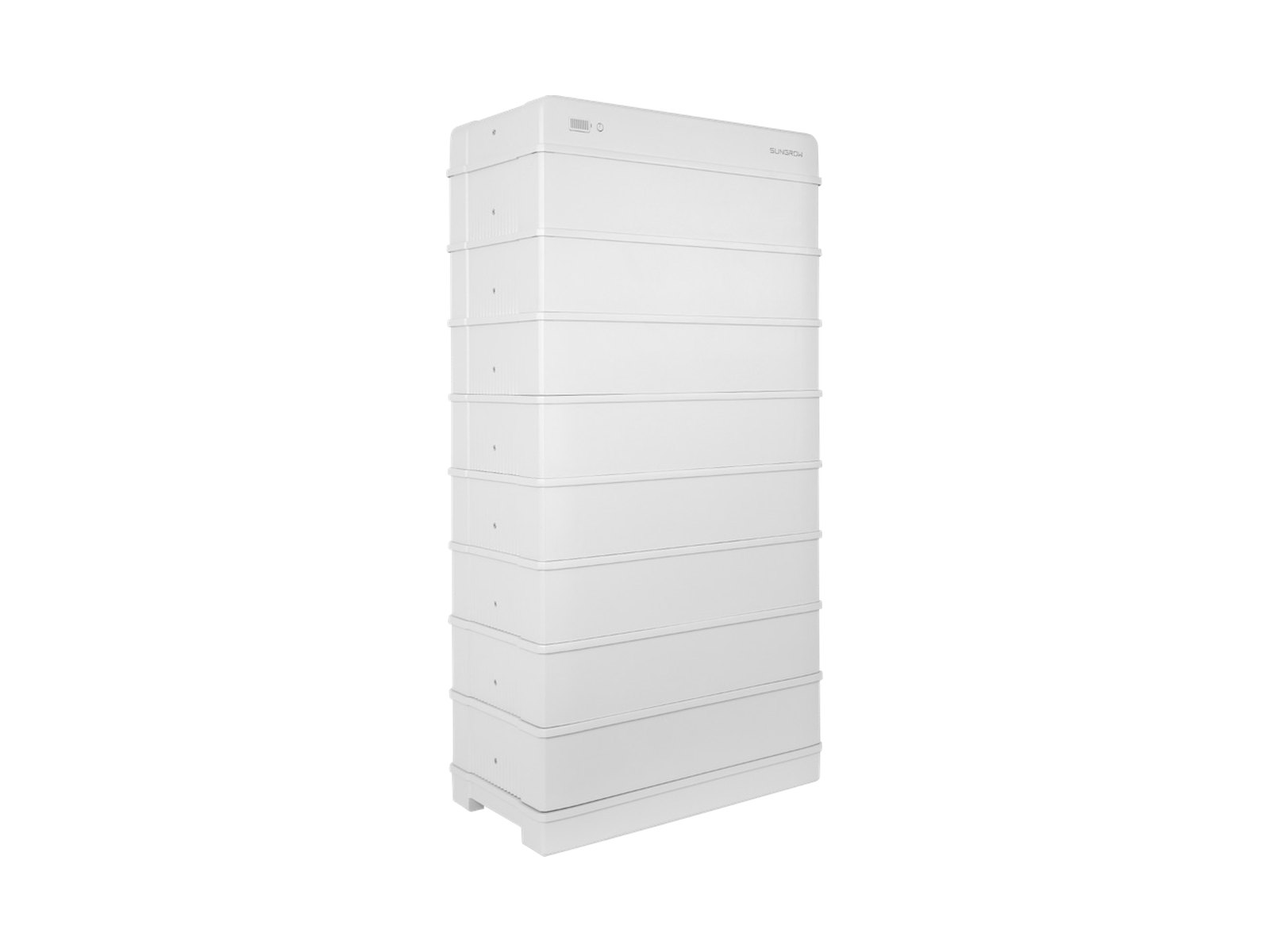
Sungrow
Sungrow SBR
The Sungrow SBR is one of the best-value modular batteries in Australia, with easy expansion in 3.2 kWh steps and a warranty that gives normal households unlimited cycles. The trade-off is that you must pair it with a Sungrow hybrid inverter, and Sungrow's app and phone support are weaker than the hardware.
Best for
Homes wanting a modular battery paired with a Sungrow hybrid inverter
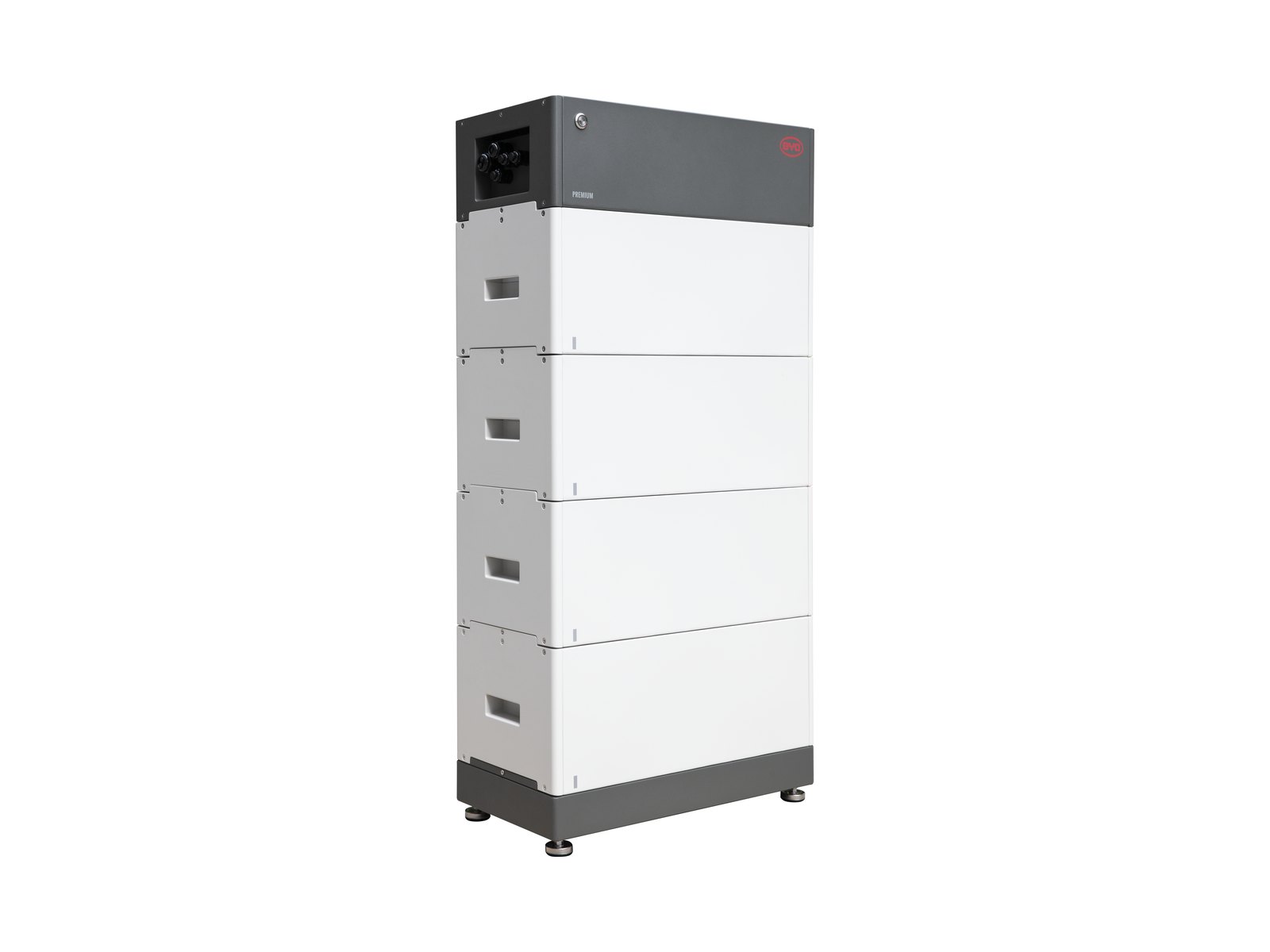
BYD
BYD Battery-Box Premium
The BYD Battery-Box Premium is a proven, stackable battery that works with more inverter brands than most, which makes it the default partner for Fronius hybrid systems. Its warranty ends at a throughput cap for every type of use, so households that cycle hard every day may run out of cover before 10 years.
Best for
Homes pairing a battery with a Fronius GEN24 Plus or another listed hybrid inverter
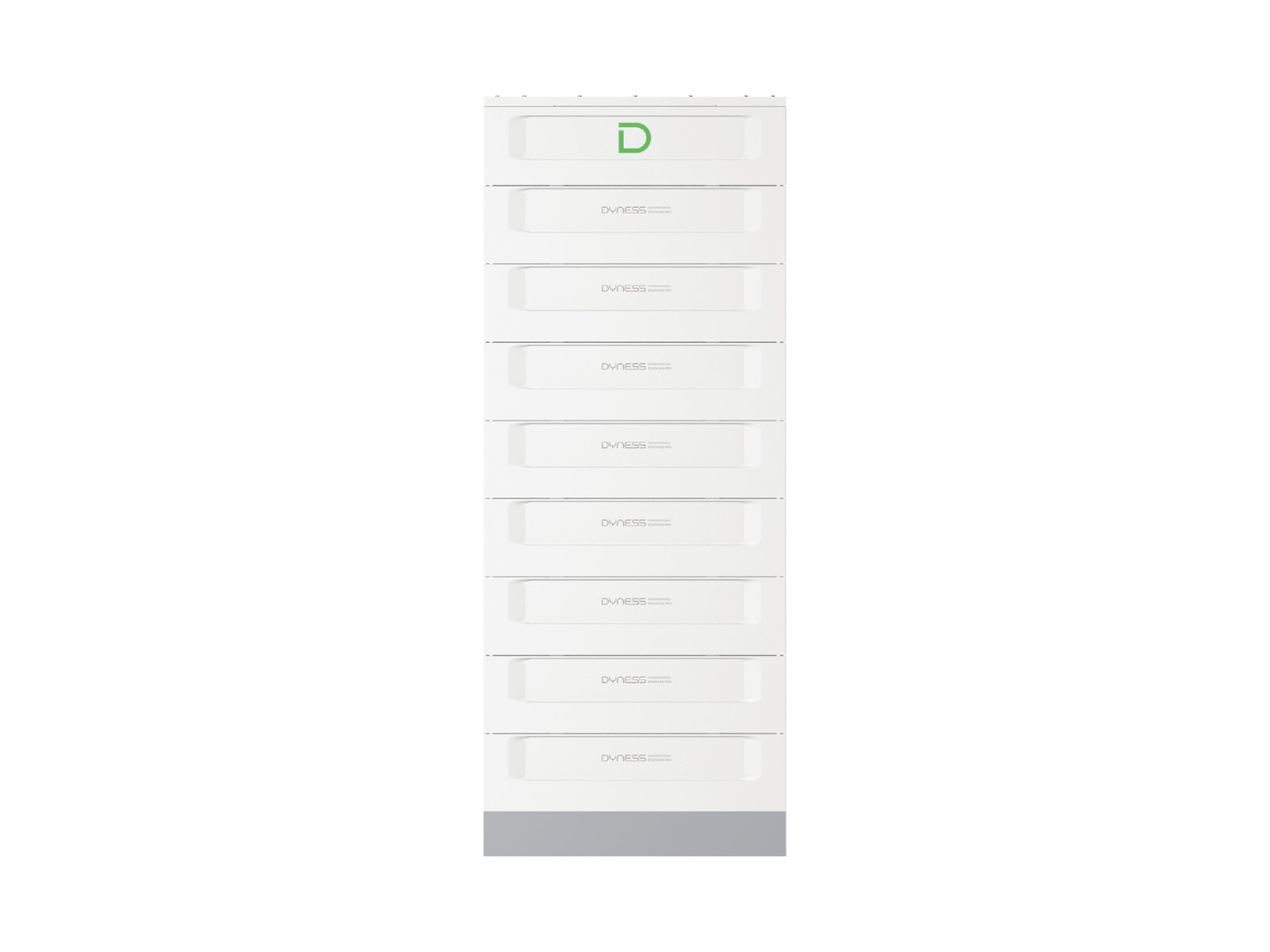
Dyness
Dyness STACK100 Pro
Dyness now has a credible Australian line-up led by the IP66 STACK100 Pro and the Cygni all-in-one, with a throughput allowance that explicitly covers VPP use and works with many hybrid inverter brands. The trade-offs are a short local track record, strict claim deadlines and coastal exclusions, and mixed-brand systems where the battery and inverter makers can blame each other.
Best for
Value-focused homes pairing a battery with a GoodWe, Solis, Deye or similar hybrid, or large homes wanting 30 kWh or more
Sources
Independent desk research by the Solar Cobber editorial team. We did not test this product and were not paid by the manufacturer. Solar Cobber is a free directory that may earn referral or advertising fees from installers; this never affects our reviews.
- 01Solplanet Australia: Ai-HB G2 B series product page
- 02Solplanet Ai-HB B series datasheet for Australia, January 2026 (PDF)
- 03Solplanet AP-H series 10 to 51 kWh datasheet (PDF)
- 04Solplanet Battery Factory Quality Warranty Terms for Australia, V1.8, 20 September 2026 (PDF)
- 05Solplanet hybrid inverter and battery compatibility list V1.9, July 2026 (PDF)
- 06Solplanet declaration of compatible inverters for Ai-HB B series (PDF)
- 07Solplanet ASW5120-LB-G3 and AP-L datasheets (PDF)
- 08Clean Energy Council approved batteries list (Solplanet, checked 14 November 2026)
- 09PowerBay: Solplanet 20.48 kWh high voltage battery listing (checked 14 November 2026)
- 10PowerBay: Solplanet 10.24 kWh high voltage battery listing (checked 14 November 2026)
- 11SolarQuotes: Solplanet inverter review and owner ratings
- 12Whirlpool Forums: SolPlanet batteries VoltxEnergy thread
Get quotes for Solplanet Ai-HB
Browse rated solar installers in your area, check their Google reviews, and ask at least three for itemised quotes. Our guide to comparing solar quotes explains what to look for.