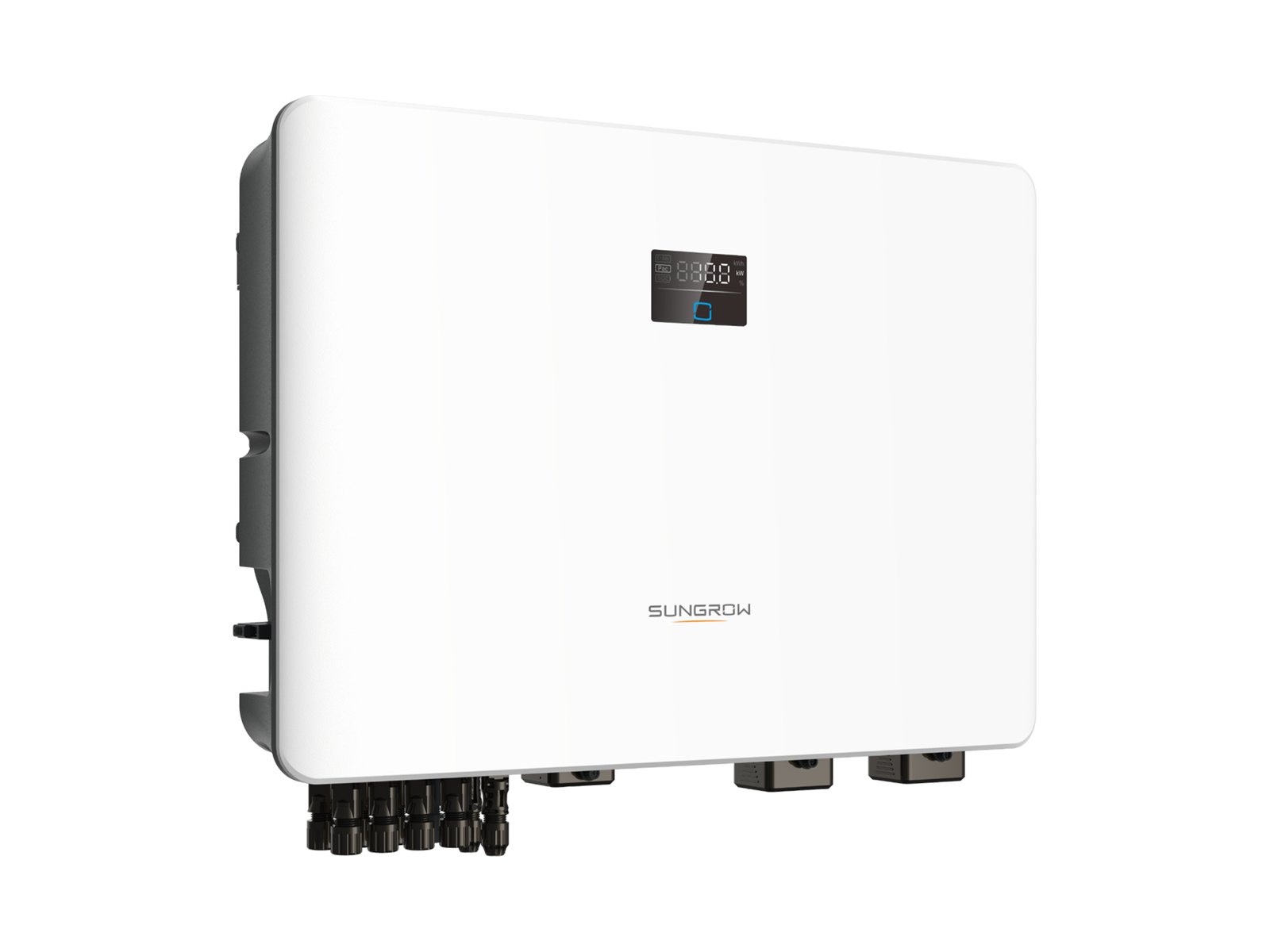

Sungrow is the better pick for most homes that want a battery they will cycle every day, whole-home backup and the widest virtual power plant (VPP) support, while GoodWe wins on published price and on retrofitting a battery to existing solar. As at November 2026, a 12.8 kWh GoodWe Lynx F G2 system is estimated at A$8,900 to A$10,300 installed after the federal discount, against A$8,800 to A$14,700 for a Sungrow SBR128. Sungrow’s warranty allows unlimited cycles for home use; GoodWe caps throughput at 46.72 MWh.
This guide compares the two brands’ home inverters and batteries, using our reviews of the GoodWe inverters, GoodWe Lynx battery, Sungrow SG RS, Sungrow SH RS and RT hybrids and Sungrow SBR battery. It is independent desk research; Solar Cobber did not test either brand, obtained no quotes and was not paid by GoodWe or Sungrow.
Key facts
- As at November 2026, the GoodWe Lynx F G2 battery scales from 6.4 to 28.8 kWh per tower, while the Sungrow SBR battery scales from 9.6 to 25.6 kWh per stack (a 6.4 kWh SBR064 is also sold).
- GoodWe’s Australian warranty for the Lynx F G2 (Rev 1.4) covers 10 years but caps throughput at 46.72 MWh on a 12.8 kWh battery, which is about one full cycle a day.
- Sungrow’s HV Battery Limited Warranty allows unlimited cycles for daily self-consumption and backup, and caps other uses at 2.8 MWh per kWh of capacity (35.84 MWh on a 12.8 kWh SBR128).
- Wattever’s VPP compatibility table, checked November 2026, lists Sungrow batteries as compatible with seven VPP programs and GoodWe with four.
- SolarQuotes rates GoodWe inverters 4.8 out of 5 from 4,087 ratings and Sungrow inverters 4.8 out of 5 from 5,483 ratings; for batteries it shows 4.9 from 768 ratings for GoodWe and 4.9 from 1,137 for Sungrow (checked November 2026).
- Both batteries need their own brand of inverter: the GoodWe Lynx F G2 needs a GoodWe inverter and the Sungrow SBR needs a Sungrow SH hybrid, so the battery choice is really an inverter choice.
GoodWe vs Sungrow at a glance
The table puts the two ranges side by side using the current Australian datasheets and warranty documents named under Sources, checked October and November 2026. Prices are Solar Cobber estimates from our price guides, not quotes.
| GoodWe | Sungrow | |
|---|---|---|
| Battery | Lynx F G2 (LX F6.4-H-20 to LX F28.8-H-20), 3.2 kWh modules | SBR HV (SBR064 to SBR256), 3.2 kWh modules |
| Usable capacity per tower or stack | 6.4 to 28.8 kWh | 6.4 and 9.6 to 25.6 kWh |
| Continuous battery power | 4.48 kW (2 modules) to 20.16 kW (9 modules), 35 A | 5.76 kW (SBR096) to 15.36 kW (SBR256), 30 A |
| Hybrid inverters | EH single phase 3.6 to 6 kW; ET G2 three phase 6 to 15 kW | SH RS single phase 5 to 10 kW; SH RT and SH T three phase |
| Coupling | DC with EH or ET; AC retrofit with BH (single phase) or BT (three phase) battery inverters | DC only, with a Sungrow SH hybrid |
| Whole-home backup | Backup output on EH and ET; limits not confirmed in the sources we used | Built-in 63 A bypass on SH8.0RS and SH10RS; switchover under 10 ms |
| Max inverter efficiency | DNS G4 98.1%; ET G2 98.2% | SG5.0RS 97.9%; SH RT 98.4% |
| Battery warranty | 10 years product and 10 years performance, 70% capacity or throughput cap | 10 years, 70% capacity, unlimited cycles for self-use and backup |
| Inverter warranty | DNS, XS, EH 5 years (10 if registered on SEMS; EH 10 only with a Lynx battery); ET G2 10 years | 10 years, no registration step |
| Installed price, 12.8 kWh with new hybrid, after discount | A$8,900 to A$10,300 (estimate) | A$8,800 to A$14,700 (SolarQuotes example to our component estimate) |
| App | SEMS Portal and SEMS+ | iSolarCloud |
| VPP programs listed | 4 | 7 |
| Made by | GoodWe, Suzhou, China | Sungrow Power Supply, Hefei, China |
Price: GoodWe is cheaper on published numbers
GoodWe has the lower published installed price at every battery size we could compare, although the gap is wider on paper than it is likely to be on a real quote. The GoodWe figures come from one comparison site’s installed estimate plus a retail hybrid inverter; the Sungrow figures add SolarQuotes’ battery list price, installation allowance and inverter price. SolarQuotes’ own installed example for a 12.8 kWh Sungrow SBR, about A$8,800, sits at the GoodWe level. See our GoodWe battery price and Sungrow battery price guides for the working.
The chart shows the mid-point of each estimated range, installed with a new hybrid inverter and after the federal discount.
- GoodWe Lynx F G2
- Sungrow SBR
Source: Solar Cobber estimates from My Home Battery (28 September 2026), SolarQuotes (12 May 2026) and retailer inverter prices, November 2026. Solar Cobber calculation: mid-point of the low and high ends of each range in our two price guides.
View the data as a table
| GoodWe Lynx F G2 | Sungrow SBR | |
|---|---|---|
| 12.8 kWh | A$9,600 | A$14,050 |
| 16 kWh | A$10,300 | A$15,250 |
| 19.2 kWh | A$11,200 | A$16,950 |
GoodWe’s mid-point is about A$4,450 to A$5,750 lower than Sungrow’s across these three sizes, on the estimates above.
| Usable capacity | GoodWe Lynx F G2, installed, after discount | Sungrow SBR, installed, after discount | GoodWe per kWh (mid-point) | Sungrow per kWh (mid-point) |
|---|---|---|---|---|
| 12.8 kWh | A$8,900 to A$10,300 | A$13,400 to A$14,700 | A$750 | A$1,098 |
| 16 kWh | A$9,600 to A$11,000 | A$14,600 to A$15,900 | A$644 | A$953 |
| 19.2 kWh | A$10,500 to A$11,900 | A$16,300 to A$17,600 | A$583 | A$883 |
| 25.6 kWh | A$12,200 to A$13,600 | From A$22,000 (three phase only) | A$504 | Not comparable |
The price per usable kWh falls as the battery gets bigger, because the inverter and labour are shared.
- GoodWe Lynx F G2
- Sungrow SBR
Source: Solar Cobber calculation from the estimates in the previous chart. Mid-point price divided by usable capacity, for example A$9,600 / 12.8 kWh = A$750.
View the data as a table
| GoodWe Lynx F G2 | Sungrow SBR | |
|---|---|---|
| 12.8 kWh | A$750 | A$1,098 |
| 16 kWh | A$644 | A$953 |
| 19.2 kWh | A$583 | A$883 |
The federal discount is the same for both on the same capacity: 12.8 kWh x 6.8 certificates is about 87, worth roughly A$3,300 to A$3,500 at A$38 to A$40 a certificate for installs to 31 December 2026, falling to about A$2,770 to A$2,920 from 1 January 2027 (factor 5.7). See our federal battery rebate guide.
Solar Cobber calculation: which pays back sooner?
A GoodWe battery pays back faster only if the price gap is real. The calculation assumes the battery delivers 8 kWh a day (2,920 kWh a year), each kWh avoids the 2026-27 Default Market Offer usage rate and gives up a 3 c/kWh feed-in credit, as in our price guides. Annual savings are about A$1,136 in Adelaide (41.9 c/kWh), A$879 in Sydney (33.1 c/kWh) and A$730 in south-east Queensland (28.0 c/kWh); payback is price divided by savings.
- GoodWe Lynx F G2 (A$9,600)
- Sungrow SBR, SolarQuotes example (A$8,800)
- Sungrow SBR, component estimate (A$14,050)
Source: Solar Cobber calculation; usage rates from the Australian Energy Regulator's 2026-27 Default Market Offer via our electricity bill guide. Annual saving = 2,920 kWh x (usage rate minus 3 c/kWh).
View the data as a table
| GoodWe Lynx F G2 (A$9,600) | Sungrow SBR, SolarQuotes example (A$8,800) | Sungrow SBR, component estimate (A$14,050) | |
|---|---|---|---|
| Adelaide | 8.5 years | 7.7 years | 12.4 years |
| Sydney | 10.9 years | 10.0 years | 16.0 years |
| South-east Qld | 13.2 years | 12.1 years | 19.2 years |
On a like-for-like price the two pay back about equally; the brand matters less than the quote. A Sydney household that cycles only 4 kWh a day roughly doubles every payback figure above.
Capacity and expansion: Sungrow for adding later, GoodWe for the biggest tower
GoodWe wins on maximum size and Sungrow wins on flexibility to expand. A GoodWe Lynx F G2 tower reaches 28.8 kWh (nine modules) against 25.6 kWh for a Sungrow SBR stack, and up to eight GoodWe towers or four Sungrow stacks can run in parallel. But GoodWe’s Australian warranty says capacity cannot be added more than one year after first installation. Sungrow allows modules to be added later, although added modules take the original warranty start date, so a module bought in year six has four years left.
Power and backup: Sungrow for whole-home backup
Sungrow wins on blackout backup, and GoodWe’s battery is rated for more power at the same size. On the datasheets, a 12.8 kWh GoodWe Lynx F G2 is rated at 8.96 kW continuous (35 A) against 7.68 kW (30 A) for a 12.8 kWh Sungrow SBR. In practice the hybrid inverter sets the limit: a Sungrow SH5.0RS or SH6.0RS caps battery power at 6.6 kW and backs up only a dedicated circuit, while the SH8.0RS and SH10RS charge and discharge at 10 kW and offer whole-home backup through a built-in 63 A bypass, with switchover under 10 ms.
- GoodWe Lynx F G2
- Sungrow SBR
Source: GoodWe Lynx F G2 datasheet (2025); Sungrow SBR datasheet (2023); checked October 2026. Solar Cobber calculation: modules x 64 V x rated current; matches the datasheet figures of 4.48 to 20.16 kW (GoodWe) and 5.76 to 15.36 kW (Sungrow).
View the data as a table
| GoodWe Lynx F G2 | Sungrow SBR | |
|---|---|---|
| 9.6 kWh | 6.72 kW | 5.76 kW |
| 12.8 kWh | 8.96 kW | 7.68 kW |
| 16 kWh | 11.20 kW | 9.60 kW |
| 19.2 kWh | 13.44 kW | 11.52 kW |
| 25.6 kWh | 17.92 kW | 15.36 kW |
Sungrow’s rated power is lower per battery but its hybrids have the clearer backup story. We could not confirm GoodWe’s backup limits from the sources we used, so ask for the backup output of the exact inverter model in writing. On three phase, one Sungrow SBR stack with a three-phase Sungrow hybrid can supply three-phase backup (see single vs three phase power).
Efficiency: a tie
Efficiency is effectively a tie. GoodWe’s DNS G4 is rated 98.1% maximum (97.4% European) at 5 kW and its ET G2 98.2%; Sungrow’s SG5.0RS is rated 97.9% maximum (97.3% European) and its SH RT hybrid 98.4%. Differences of under half a percentage point are lost in real-world heat and shading. Both are transformerless, naturally cooled string or hybrid inverters, and both have owners reporting summer derating in hot climates, which SolarQuotes flags for GoodWe in particular.
Warranty: Sungrow for daily cycling, GoodWe for the longer cap
Sungrow has the better warranty for a household that charges and empties its battery every day, because the throughput cap does not apply to self-consumption and backup. GoodWe’s cap is higher per kWh than Sungrow’s cap for other uses, but it counts every cycle.
- GoodWe Lynx F G2
- Sungrow SBR
View the data as a table
| GoodWe Lynx F G2 | Sungrow SBR | |
|---|---|---|
| 9.6 kWh | 35.04 MWh | 26.88 MWh |
| 12.8 kWh | 46.72 MWh | 35.84 MWh |
| 16 kWh | 58.40 MWh | 44.80 MWh |
| Warranty term | GoodWe | Sungrow |
|---|---|---|
| Battery term | 10 years product and 10 years performance | 10 years from installation, or 10.5 years from manufacture |
| Capacity at end | At least 70% | At least 70% |
| Throughput | 3.65 MWh per kWh, all uses (about one cycle a day) | Unlimited for self-consumption and backup; 2.8 MWh per kWh otherwise |
| Inverter required | GoodWe inverter | Sungrow SH hybrid |
| Internet monitoring | Required, or the warranty may be void | Required in iSolarCloud, with cover for at least four years if data is incomplete |
| Heat and sun | Excludes direct sunlight and above 50 degrees C | V9.0 (installs from 21 May 2026) may void cover after 90 days of 35 to 40 degrees C or 30 days above 40 degrees C |
| Transferable | Not stated in our summary | Battery: no. Inverter: yes, with proof of purchase |
On inverters the gap is bigger. Sungrow’s SG RS and SH RS carry 10 years from installation with no registration. GoodWe’s DNS, XS and EH get 5 years standard, reaching 10 only if registered on SEMS (and, for the EH hybrid, only when paired with a GoodWe Lynx battery); the ET G2 gets 10 years standard. Wi-Fi dongles and smart meters carry 1 to 2 years on both brands.
Safety, location and recalls: GoodWe has the recall history
Sungrow has the cleaner safety record on public registers, but both batteries need a shaded, sheltered spot. GoodWe has had two Australian electrical safety recalls: the MS-30 string inverters, and in September 2025 the EHB and GEH hybrid inverters (a firmware fix; the DNS G4 and ET G2 are not covered). The Clean Energy Council recall register, checked October 2026, lists no Sungrow inverter recalls, and we found no Sungrow battery recall in the Australian sources we reviewed.
Both batteries are IP55 and rated for indoor or outdoor use, but both warranties are strict about heat. Both must meet Australia’s battery location rules; we did not assess either product against AS/NZS 5139 in detail, so ask your installer to confirm the location in writing. Our AC vs DC coupled battery guide explains why the inverter choice shapes where things can go.
Software and VPP: Sungrow for VPP choice
Sungrow wins on VPP support, and neither app is loved. Wattever’s table, checked November 2026, lists Sungrow as compatible with AGL, Amber SmartShift, Diamond Energy, EnergyAustralia, GloBird, Origin Loop and ActewAGL, and GoodWe with Amber SmartShift (ESA series batteries only), EnergyAustralia, ENGIE and Origin Loop. A VPP is a program that pays you to let a retailer draw on your battery at peak times; see our VPP explainer. The federal discount requires a VPP-capable battery, and Sungrow’s warranty may treat VPP use as an application outside self-consumption, so ask how it counts.
On apps, SolarQuotes calls iSolarCloud detailed but hard to navigate and describes GoodWe’s SEMS+ as a little clunky, with improvements noted by one recent owner. See our iSolarCloud guide and SEMS Portal guide.
Support in Australia: GoodWe, narrowly
GoodWe has the edge on reported support, with caveats. SolarQuotes credits GoodWe with good local support from its Rowville, Victoria office (03 9918 3905), and describes Sungrow’s technical support from its North Sydney office (1800 786 476) as patchy and occasionally overwhelmed. ProductReview.com.au shows 41 reviews across all Sungrow products with a 1.9 out of 5 average, mostly about unanswered phones and slow warranty claims; that sample is small and self-selected. SolarQuotes ratings are near-identical (4.8 to 4.9 for both), so neither brand has a clear satisfaction lead among owners.
| Rating source (checked November 2026) | GoodWe | Sungrow |
|---|---|---|
| SolarQuotes inverters | 4.8 from 4,087 ratings | 4.8 from 5,483 ratings |
| SolarQuotes batteries | 4.9 from 768 ratings | 4.9 from 1,137 ratings |
Which should you buy?
Choose by what you need the system to do, not by brand loyalty.
- Small home, tight budget: GoodWe. A DNS string inverter or EH hybrid plus a 9.6 kWh Lynx stack has the lowest published prices.
- Big home with an EV: Sungrow, for unlimited cycling and a 20 to 25.6 kWh stack on a 10 kW SH10RS. Choose GoodWe only if you will buy all the capacity now (the one-year expansion limit) and want the 28.8 kWh tower.
- Blackout-prone area: Sungrow SH8.0RS or SH10RS for whole-home backup and fast switchover.
- Three phase: Sungrow SH RT or SH T with an SBR stack for three-phase backup, or GoodWe ET G2 if the quote is cheaper and you confirm its backup in writing.
- Existing solar you want to keep: GoodWe, because a BH or BT battery inverter can retrofit a Lynx battery beside any inverter brand. Sungrow’s SBR needs a Sungrow hybrid.
- Joining a VPP: Sungrow, for the longer compatibility list.
What to check on your quote
Ask for the exact model numbers (for example LX F12.8-H-20 or SBR128, and the inverter) and confirm each is on the current Clean Energy Council lists on install day; we recorded the Sungrow SBR listing expiring 30 November 2026 and could not re-open the list, so ask for written confirmation. Check whether the price is before or after the discount and how many certificates are claimed, which backup circuits you get, and which warranty version applies to your install date. Compare at least three quotes (how to compare solar quotes) and find local installers in our directory; check each installer yourself on the Clean Energy Council approved retailer list and the Solar Accreditation Australia register.
FAQ
Is GoodWe or Sungrow better?
Sungrow is better for daily battery cycling, whole-home backup and VPP choice, and GoodWe is better on published price and retrofitting to existing solar. Owner ratings on SolarQuotes are the same for both (4.8 for inverters, 4.9 for batteries), so the quote and installer matter more than the logo.
Is GoodWe cheaper than Sungrow?
Yes on published numbers, but the real gap is smaller. Our estimate for a 12.8 kWh battery with a new hybrid inverter, after the federal discount, is A$8,900 to A$10,300 for GoodWe and A$8,800 to A$14,700 for Sungrow, as at November 2026.
GoodWe Lynx vs Sungrow SBR: which battery is better?
The Sungrow SBR is better for people who cycle daily because its warranty has no cycle cap for home use; the GoodWe Lynx F G2 is cheaper and reaches 28.8 kWh. Both are LFP batteries with 3.2 kWh modules, 10-year warranties and 70% end-of-warranty capacity.
Can I use a GoodWe battery with a Sungrow inverter?
No. The GoodWe Lynx F G2 needs a GoodWe inverter, and the Sungrow SBR needs a Sungrow SH hybrid; using an incompatible inverter voids the warranty on both.
Which has the longer inverter warranty, GoodWe or Sungrow?
Sungrow, with 10 years standard on its SG RS and SH RS inverters. GoodWe’s DNS, XS and EH inverters are 5 years standard and 10 years with SEMS registration (EH hybrids only with a Lynx battery), and its ET G2 is 10 years standard.
Does GoodWe or Sungrow work in a blackout?
Both hybrids can provide backup with a battery. Sungrow’s SH8.0RS and SH10RS back up the whole house through a 63 A bypass with switchover under 10 ms, while the SH5.0RS and SH6.0RS back up one circuit; we could not confirm GoodWe’s backup limits.
Has GoodWe or Sungrow had recalls in Australia?
GoodWe has had two: MS-30 string inverters, and EHB and GEH hybrids in September 2025. The Clean Energy Council register listed no Sungrow inverter recalls when we checked in October 2026.
Which is better for a VPP?
Sungrow is listed as compatible with seven VPP programs and GoodWe with four, according to Wattever in November 2026. Check your exact battery and inverter combination with the VPP provider before buying.
Sources
- GoodWe Lynx F G2 Series datasheet (2025)
- GoodWe Limited Warranty for Lynx LX F G2, Australia and New Zealand (Rev 1.4)
- GoodWe DNS G4 series datasheet
- Sungrow SBR064 to SBR256 datasheet
- Sungrow HV Battery Limited Warranty, Australia, V9.0 (May 2026)
- Sungrow Australia inverter warranty V4.2 (April 2024)
- Wattever: VPP compatibility by battery
- SolarQuotes: GoodWe battery reviews and Sungrow battery reviews
- SolarQuotes: GoodWe inverter reviews and Sungrow inverter reviews
- SolarQuotes: solar battery prices and system costs (12 May 2026)
- My Home Battery: GoodWe Lynx battery review (28 September 2026)
- Australian Energy Regulator: final Default Market Offer 2026-27
- Clean Energy Council: product recalls
- DCCEEW: Cheaper Home Batteries Program
Also see our Sungrow guide, GoodWe guide and the head-to-head Sigenergy vs Sungrow.
About this guide
This guide was written by the Solar Cobber editorial team from independent desk research, checked in November 2026. We did not test products or obtain quotes. Solar Cobber is a free directory that may earn referral or advertising fees from installers; commercial relationships never affect our content. Prices change quickly and this is general information, not financial advice. To report an error, contact us.
Filed under Solar Products
Back to blog