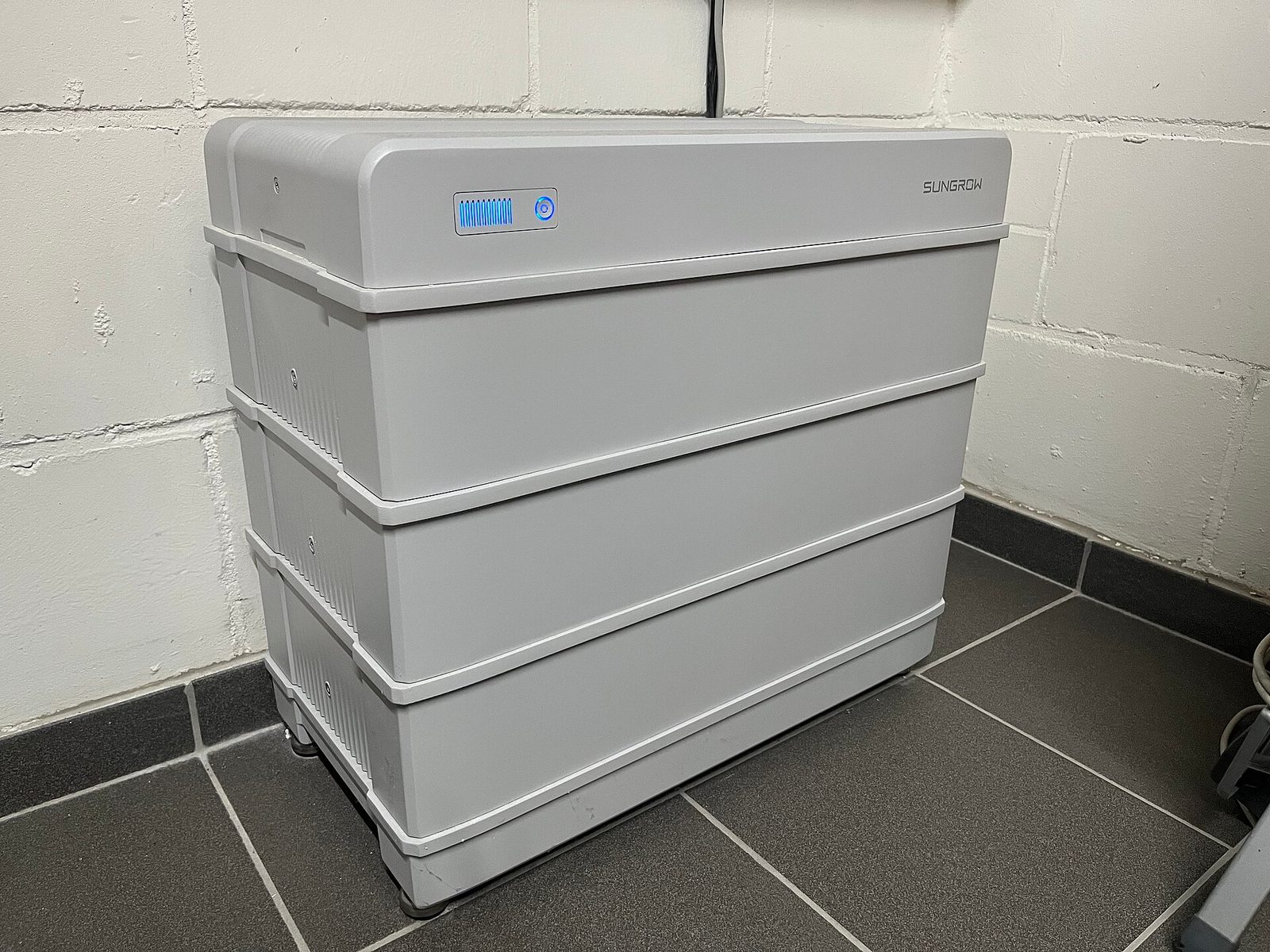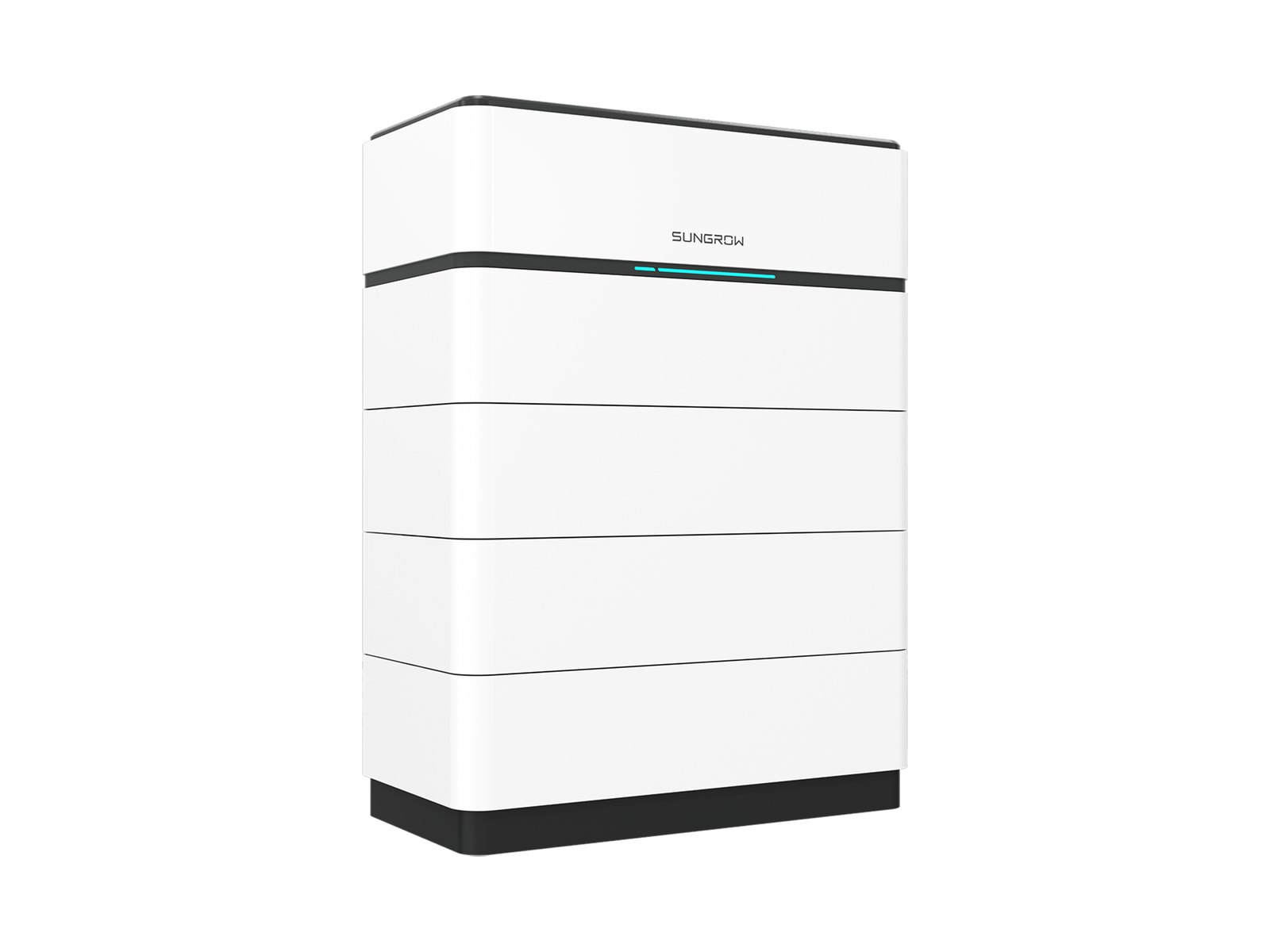

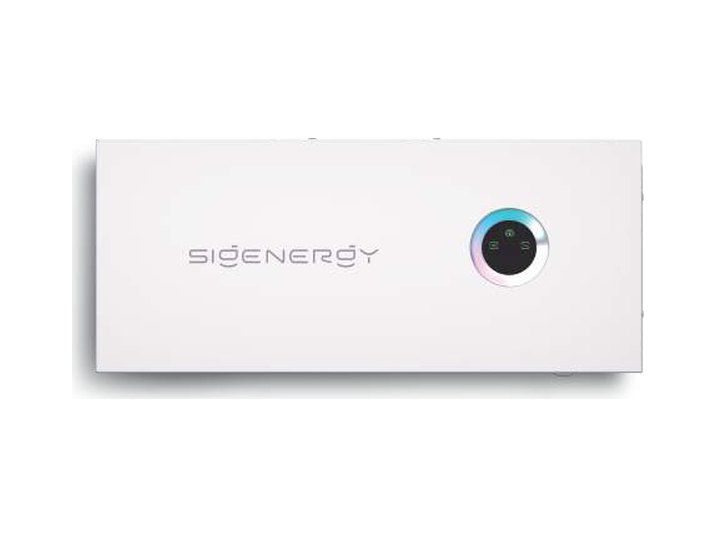
Sigenergy vs Sungrow comes down to two numbers. The Sigenergy SigenStor warranty caps throughput at about 3 MWh per usable kWh for all uses, while the Sungrow SBR and SBH warranty has no cycle cap for daily self-consumption and backup. In price per usable kWh the two are within about 4% to 19% of each other, and the winner depends on how you count the inverter. Prices and terms are as at November 2026.
This is independent desk research from datasheets, warranty documents and published prices. Solar Cobber did not test either product and was not paid by either company. Read our full reviews of the Sigenergy SigenStor, Sungrow SBR and Sungrow SBH.
Key facts
- The Sigenergy SigenStor is an all-in-one stack, with the hybrid inverter and battery modules from one company, while the Sungrow SBR and SBH batteries must be paired with a Sungrow hybrid inverter such as the SH10RS (checked November 2026).
- Sigenergy’s Australian warranty is 10 years with 70% retained capacity or about 3 MWh of throughput per usable kWh, whichever comes first, and it applies to all uses including self-consumption.
- Sungrow’s Australian HV battery warranty is 10 years with 70% retained capacity and allows unlimited cycles for daily self-consumption and backup, with a 2.8 MWh per usable kWh cap on other uses.
- SunWiz, as reported by RenewEconomy on 21 January 2026, ranked Sigenergy the top home battery brand in Australia in 2025 with about 25% of sales.
- Sigenergy recalled SigenStor EC 8.0, 10.0 and 12.0 kW single-phase energy controllers through the ACCC in November 2025 over AC plugs that could overheat; our sources found no equivalent recall of Sungrow SBR batteries.
- Sigenergy offers three-phase controllers from 5 to 30 kW with three-phase backup, and Sungrow offers three-phase backup through its SH-T hybrid inverters paired with an SBR or SBH.
Sigenergy vs Sungrow at a glance
The table compares the SigenStor with the Sungrow SBR and SBH batteries paired with a Sungrow SH RS hybrid inverter. Specs come from the Australian datasheets and warranty documents named in the sources, checked November 2026.
| Sigenergy SigenStor | Sungrow SBR and SBH with SH RS hybrid | |
|---|---|---|
| Usable capacity options | 5.2 or 7.8 kWh per module, 1 to 6 modules, up to 46.8 kWh (8.76 kWh modules also listed) | SBR 9.6 to 25.6 kWh per stack (3.2 kWh modules); SBH 15 to 40 kWh per stack (5 kWh modules) |
| Battery power | 2.5 kW (5.2 kWh module) or 4 kW (7.8 kWh module) per module | SBR 5.76 to 15.36 kW (30 A); SBH 10.56 to 28.16 kW (50 A) |
| Inverter | Built-in controller, 3 to 12 kW single phase, 5 to 30 kW three phase | Separate Sungrow hybrid: SH5.0RS to SH10RS single phase, SH-RT and SH-T three phase |
| Coupling | DC coupled, all-in-one | DC coupled, battery plus separate hybrid inverter |
| Backup | 0 ms load-side disruption with the Sigen Energy Gateway; 10 kW single-phase controller rated 15 kW peak backup | Under 10 ms; SH8.0RS and SH10RS whole-home via 63 A bypass, SH5.0RS and SH6.0RS a dedicated circuit only |
| Inverter efficiency (10 kW single phase) | 97.6% maximum, 97.0% European | 97.5% maximum, 97.1% European (SH10RS) |
| Warranty | 10 years, 70% capacity or about 3 MWh per kWh, all uses; drops to 5 years if offline for over a year | 10 years, 70% capacity; unlimited self-consumption and backup cycles; 2.8 MWh per kWh on other uses |
| Installed price after federal discount, 13 kWh class | About A$9,300 to A$11,000 | About A$8,800 to A$14,700 (SBR128, 12.8 kWh) |
| Ingress rating | IP66 | IP55 |
| App | mySigen | iSolarCloud |
| VPP programs listed by Wattever (October to November 2026) | 7 | 7 |
| Maker | Sigenergy Technology, China, founded 2022, Hong Kong listed | Sungrow Power Supply, China, founded 1997, Shenzhen listed |
Price: Sungrow is cheaper per kWh on a quote, Sigenergy on a parts list
Price depends on whether the inverter is counted, so neither brand wins outright. A Sigenergy 13 kWh system is about A$9,300 to A$11,000 installed after the federal discount, and a 12.8 kWh Sungrow SBR128 with a hybrid inverter is about A$8,800 to A$14,700, on the ranges in our Sigenergy battery price guide and Sungrow battery price guide.
Solar Cobber calculation. Using SolarQuotes’ May 2026 numbers, we divided each installed price by usable kWh on two bases. On SolarQuotes’ own worked examples, Sigenergy is A$9,300 for 13 kWh and Sungrow is A$8,800 for 12.8 kWh. On a component build (hardware after discount, plus a 5 kW hybrid at A$2,300 for Sungrow only, plus A$3,000 installation), Sigenergy is A$8,000 + A$3,000 = A$11,000 and Sungrow is A$8,100 + A$2,300 + A$3,000 = A$13,400.
- Sigenergy SigenStor
- Sungrow SBR128
Source: SolarQuotes battery price list, May 2026; Solar Cobber calculation. Solar Cobber calculation: Sigenergy A$9,300 and A$11,000 divided by 13 kWh; Sungrow A$8,800 and A$13,400 divided by 12.8 kWh.
View the data as a table
| Sigenergy SigenStor | Sungrow SBR128 | |
|---|---|---|
| SolarQuotes worked example | A$715 | A$688 |
| Component build | A$846 | A$1,047 |
Sungrow is about 4% cheaper per kWh on SolarQuotes’ worked examples, while Sigenergy is about 19% cheaper once the Sungrow hybrid inverter is added as a separate item. If you already own a compatible Sungrow hybrid, the Sungrow battery alone is A$11,100 installed for 12.8 kWh, per our price guide. A discount worth about A$3,300 on 13 kWh is already included in all these figures, and its factor falls from 6.8 to 5.7 certificates per kWh on 1 January 2027 (see the federal battery rebate guide).
Capacity and expansion: Sigenergy goes wider, Sungrow has the finer steps
Sigenergy reaches the largest stack, with up to six modules and 46.8 kWh behind one controller. Sungrow tops out at 25.6 kWh per SBR stack and 40 kWh per SBH stack, but both can be paralleled (up to four stacks, about 100 kWh for SBR and 160 kWh for SBH).
- Smallest
- Largest
Source: Sigenergy and Sungrow Australian datasheets, checked November 2026. SBR064 (6.4 kWh) is also sold; the chart uses the 3-module SBR096 as the smallest common stack.
View the data as a table
| Smallest | Largest | |
|---|---|---|
| Sigenergy SigenStor | 5.2 kWh | 46.8 kWh |
| Sungrow SBR | 9.6 kWh | 25.6 kWh |
| Sungrow SBH | 15.0 kWh | 40.0 kWh |
Sigenergy has the widest capacity range, from one 5.2 kWh module to 46.8 kWh, while Sungrow SBR starts at 9.6 kWh in common installs. The Sungrow SBR adds capacity in 3.2 kWh steps, which suits buyers who want to fine-tune size. Modules added later to a Sungrow stack take the original warranty start date, so a module added in year six has four years of cover. Our guide to what size battery you need helps choose a starting point.
Power and backup: Sungrow SBH has more power per kWh, Sigenergy switches faster
The Sungrow SBH delivers the most continuous battery power per kWh of the products compared here. A Sigenergy module charges and discharges at about 0.48 to 0.51 kW per kWh, the Sungrow SBR at 0.60 kW per kWh and the SBH at 0.70 kW per kWh.
Source: Sigenergy and Sungrow Australian datasheets, checked November 2026; Solar Cobber calculation. Solar Cobber calculation: SBH 10.56 kW / 15 kWh; SBR 5.76 kW / 9.6 kWh; Sigenergy 4 kW / 7.8 kWh and 2.5 kW / 5.2 kWh.
View the data as a table
| kW per kWh | |
|---|---|
| Sungrow SBH (50 A) | 0.70 kW |
| Sungrow SBR (30 A) | 0.60 kW |
| Sigenergy BAT 8.0 module | 0.51 kW |
| Sigenergy BAT 5.0 module | 0.48 kW |
For short, cheap tariff windows or heavy loads, power per kWh matters more than headline capacity. The inverter also limits output: Sungrow’s SH5.0RS and SH6.0RS cap battery power at 6.6 kW (30 A) and back up a dedicated circuit only. Sigenergy backup switches in 0 ms on the load side with the Gateway, against under 10 ms for Sungrow, though both are fast enough for most appliances. Sungrow’s SH8.0RS and SH10RS include a 63 A bypass for whole-home backup.
Efficiency: a tie at the inverter
Neither brand wins on inverter efficiency. The Sigenergy 8 to 10 kW single-phase controllers list 97.6% maximum and 97.0% European efficiency, and the Sungrow SH8.0RS and SH10RS list 97.4% to 97.5% maximum and 96.8% to 97.1% European.
- Sigenergy SigenStor EC SP
- Sungrow SH RS
Source: Sigenergy Energy Controller single phase datasheet; Sungrow SH8.0/10RS datasheet V2 EN(AU).
View the data as a table
| Sigenergy SigenStor EC SP | Sungrow SH RS | |
|---|---|---|
| 8 kW max | 97.6% | 97.4% |
| 8 kW Euro | 97.0% | 96.8% |
| 10 kW max | 97.6% | 97.5% |
| 10 kW Euro | 97.0% | 97.1% |
The gap is at most 0.2 percentage points, which on 5,000 kWh of yearly solar throughput is about 10 kWh. We could not find a round-trip battery efficiency figure for either battery in the datasheets we read, so we do not rank them on it.
Warranty: Sungrow wins for heavy daily cycling
Sungrow’s warranty is better for households that cycle the battery every day or join a virtual power plant (VPP). Sigenergy caps warranted throughput at 15.84 MWh for the 5.2 kWh module and 23.77 MWh for the 7.8 kWh module, about 3.05 MWh per usable kWh, and counts all uses against it.
Solar Cobber calculation. 3,050 kWh of throughput per usable kWh is 3,050 full cycles. At one full cycle a day that is about 8.4 years (3,050 divided by 365), so heavy daily cycling can end the throughput cover before year 10. At 0.7 cycles a day it lasts about 11.9 years, so the cap never bites. Sungrow has no cap for daily self-consumption and backup, including charging from the grid on a time-of-use tariff.
| Warranty term | Sigenergy SigenStor | Sungrow SBR and SBH |
|---|---|---|
| Term | 10 years | 10 years from installation, or 10.5 years from manufacture |
| Retained capacity | 70% | 70% |
| Throughput cap | About 3 MWh per usable kWh, all uses | None for self-consumption and backup; 2.8 MWh per kWh for other uses |
| Offline or monitoring condition | Over a year offline cuts cover to 5 years | Battery must be monitored in iSolarCloud; incomplete data can cut cover to 4 years |
| Heat condition | Operate within -20 to 55 °C | From 21 May 2026 (V9.0), cover may not apply after 90 or more days a year at 35 to 40 °C, or 30 or more days above 40 °C |
| Transfer | Only if equipment stays at its original location | Not transferable beyond the original end user |
Sungrow’s V9.0 heat clause is a real catch in hot parts of Australia, so shade and ventilation matter. Both warranties have conditions worth reading before you sign.
Safety and where it can be installed
Sigenergy’s SigenStor is rated IP66 and operates from -20 to 55 °C, against IP55 and charging only from 0 °C for the Sungrow SBR and SBH. Sigenergy is the better weather-sealed unit, while the Sungrow needs a sheltered, shaded spot.
In November 2025 Sigenergy recalled SigenStor EC 8.0, 10.0 and 12.0 kW single-phase AU controllers sold from March to November 2025 through the ACCC. Sigenergy pointed to installation practice, and pv magazine Australia reported the Clean Energy Regulator counted about 100 affected units. None of the Australian sources we reviewed reported a recall of Sungrow SBR batteries, although we could not query the ACCC database ourselves. Installation location rules apply to both; see are solar batteries safe and ask your installer which rules they are following. Modules weigh more on the Sigenergy side (55 to 70 kg a module against 33 to 45 kg), which affects wall mounting.
Software and VPPs: a draw on compatibility
Both brands work with seven Australian VPP programs on Wattever’s table updated 10 November 2026. Sigenergy is listed for AGL, Amber SmartShift, EnergyAustralia BatteryEase, ENGIE, GloBird, Origin Loop and ActewAGL, and Sungrow for AGL, Amber SmartShift, Diamond Energy WATTBANK, EnergyAustralia, GloBird, Origin Loop and ActewAGL. Eligibility varies by model, so check the retailer’s own list, and read what a VPP is first, because VPP use counts toward the Sigenergy throughput cap.
The Sigenergy app is mySigen (see our mySigen app guide), which shows detail down to cell voltages. Sungrow uses iSolarCloud (see our iSolarCloud guide), which SolarQuotes describes as detailed but hard to navigate.
Support in Australia
Sungrow has had an Australian office in North Sydney since 2012 and lists a support line of 1800 786 476 (via SolarQuotes). Sigenergy has a Sydney office, but we could not confirm a support number from its own pages. Ratings differ by platform: SolarQuotes shows Sigenergy at 4.9 out of 5 from 1,998 ratings and Sungrow batteries at 4.9 from 1,094 (November 2026), while ProductReview.com.au shows Sigenergy SigenStor at 2.7 from 19 reviews, mostly about slow warranty and support responses. SolarQuotes reports Sungrow tech support is sometimes overwhelmed. Brand histories are in our Sigenergy Australia and Sungrow Australia guides.
Which should you buy?
Choose by home type. This is our reading of the published specs and prices, not a test result.
| Household | Better fit | Why |
|---|---|---|
| Small home, single phase, 10 to 13 kWh | Sungrow SBR with an SH RS inverter, or SigenStor | Prices overlap; Sungrow offers unlimited cycles, Sigenergy offers one box |
| Big home with an EV and 20 kWh or more | Sigenergy for DC charger expansion, Sungrow SBH for power per kWh | SigenStor has an optional DC EV charger module; SBH has the most power |
| Blackout-prone area | Sigenergy, or a Sungrow SH8.0RS or SH10RS | 0 ms switching, or a 63 A whole-home bypass |
| Three phase | Sigenergy three-phase controller, or Sungrow SH-T with SBR or SBH | Both back up three phases; compare quoted kW |
| Tight budget | Sungrow SBR if you keep the inverter, otherwise compare both | Component prices flip the result |
| Heavy daily cycling or VPP | Sungrow | No throughput cap for self-consumption |
If you want a Tesla in the mix, see Powerwall 3 vs Sigenergy and Powerwall 3 vs Sungrow. Compare Sungrow with GoodWe in GoodWe vs Sungrow. Our AC vs DC coupled guide explains the coupling difference.
What to check on your quote
- The exact model: controller kW and module sizes for Sigenergy, or inverter model and SBR or SBH size for Sungrow.
- Whether the Sigen Energy Gateway or the Sungrow backup wiring is included, and which circuits are backed up.
- Whether a Sigenergy 8, 10 or 12 kW single-phase controller is the redesigned version after the recall.
- The number of certificates and the discount applied, and the 1 January 2027 step-down.
- Which warranty version applies (Sungrow V9.0 for installs from 21 May 2026) and where the battery will sit in summer.
- Whether the quote lists the Sungrow hybrid inverter as a separate line.
- Which VPP you plan to join, and who handles warranty claims.
Use our guide to comparing solar quotes and find installers through our installer directory.
FAQ
Is Sigenergy better than Sungrow?
Neither is better overall. Sigenergy suits three-phase homes and buyers who want an all-in-one unit, while Sungrow suits heavy cyclers and buyers who value modular steps and a no-cap warranty for daily use.
Is Sigenergy cheaper than Sungrow?
It depends on the basis. On SolarQuotes’ worked examples Sungrow is about 4% cheaper per usable kWh, and on a component build including a Sungrow hybrid inverter Sigenergy is about 19% cheaper.
Can I use a Sungrow battery with another inverter?
No. The Sungrow SBR and SBH need a compatible Sungrow hybrid, and using an incompatible inverter voids the battery warranty. Sigenergy modules are designed for the Sigen Energy Controller.
Which has the better warranty?
Sungrow, for most daily-use owners, because it has no throughput cap for self-consumption and backup. Sigenergy caps throughput at about 3 MWh per usable kWh for all uses.
Was the Sigenergy recall a problem for all SigenStor owners?
No. The recall covered SigenStor EC 8.0, 10.0 and 12.0 kW single-phase AU energy controllers with quick-connect AC plugs. Other models were not part of that notice.
Does Sigenergy or Sungrow work off-grid and for blackouts?
Both provide blackout backup. Sigenergy uses the Gateway for 0 ms load-side switching, and Sungrow SH8.0RS and SH10RS offer whole-home backup through a 63 A bypass.
Which is better for three-phase homes?
Both can back up three phases with the right inverter. Sigenergy has three-phase controllers from 5 to 30 kW, and Sungrow uses SH-RT or SH-T hybrids with SBR or SBH batteries.
Sources
- Sigenergy Energy Controller single phase datasheet (PDF, hosted by SolarQuotes)
- Sigenergy product brochure, Australia (PDF)
- Sigenergy Factory Limited Warranty for SigenStor, Australia and New Zealand (PDF)
- Sungrow SBR064 to SBR256 datasheet (PDF)
- Sungrow SBH100 to SBH400 datasheet V4 (PDF)
- Sungrow SH8.0/10RS datasheet V2 EN(AU) (PDF)
- Sungrow HV Battery Limited Warranty, Australia, V9.0, May 2026 (PDF)
- SolarQuotes: solar battery prices and system costs in Australia (May 2026)
- SolarQuotes: Sigenergy battery review
- SolarQuotes: Sungrow battery review
- pv magazine Australia: Sigenergy points to installation practices for product recall (24 November 2025)
- RenewEconomy: Sigenergy crowned top home battery supplier in Australia (SunWiz, 21 January 2026)
- Wattever: VPP compatibility by battery (updated 10 November 2026)
- Clean Energy Council approved batteries list
About this guide
This guide was written by the Solar Cobber editorial team from independent desk research, checked in November 2026. Solar Cobber is a free directory that may earn referral or advertising fees from installers; commercial relationships never affect content. This is general information, not financial advice. To report an error, use /contact.
Filed under Solar Products
Back to blog