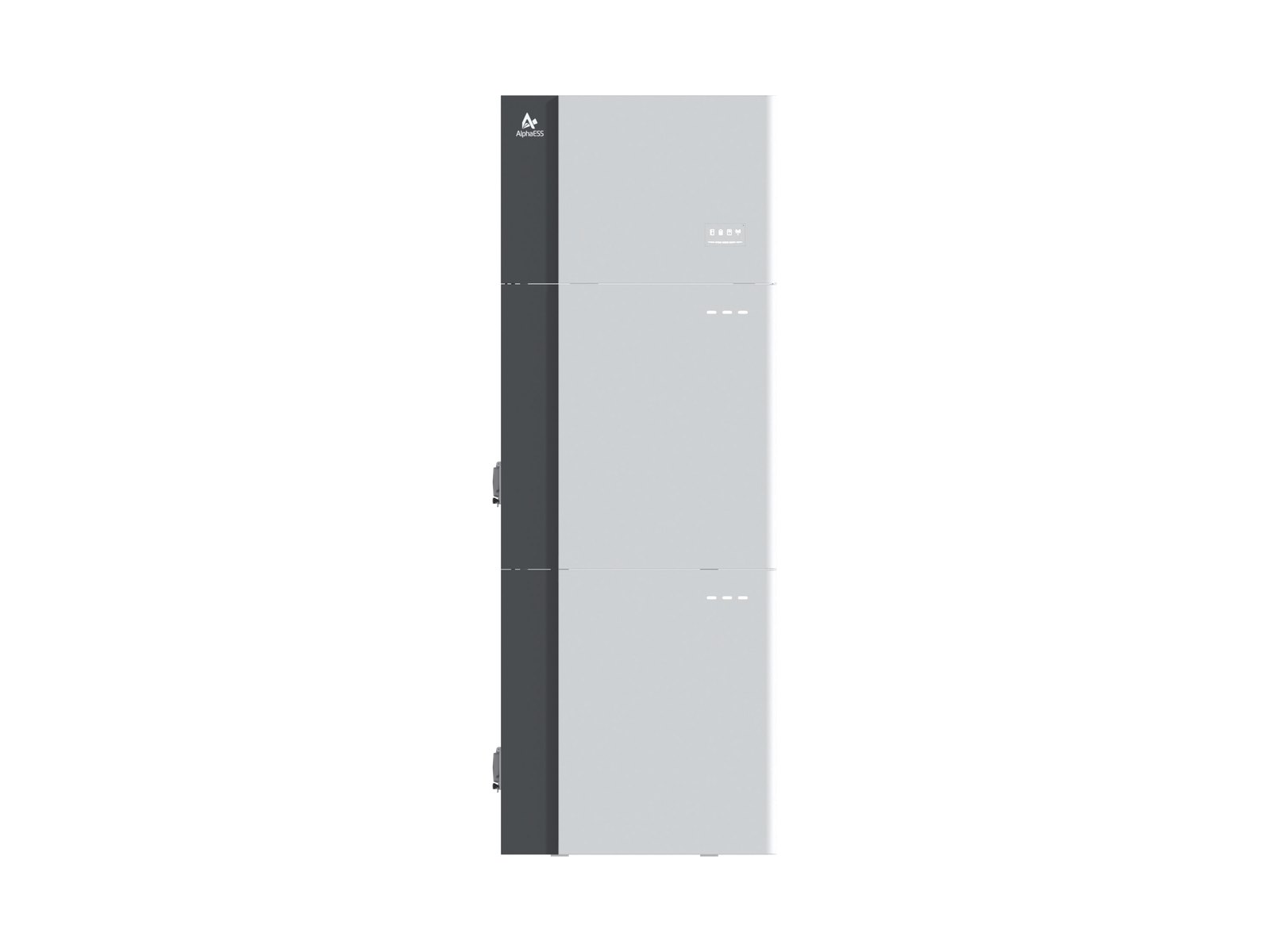

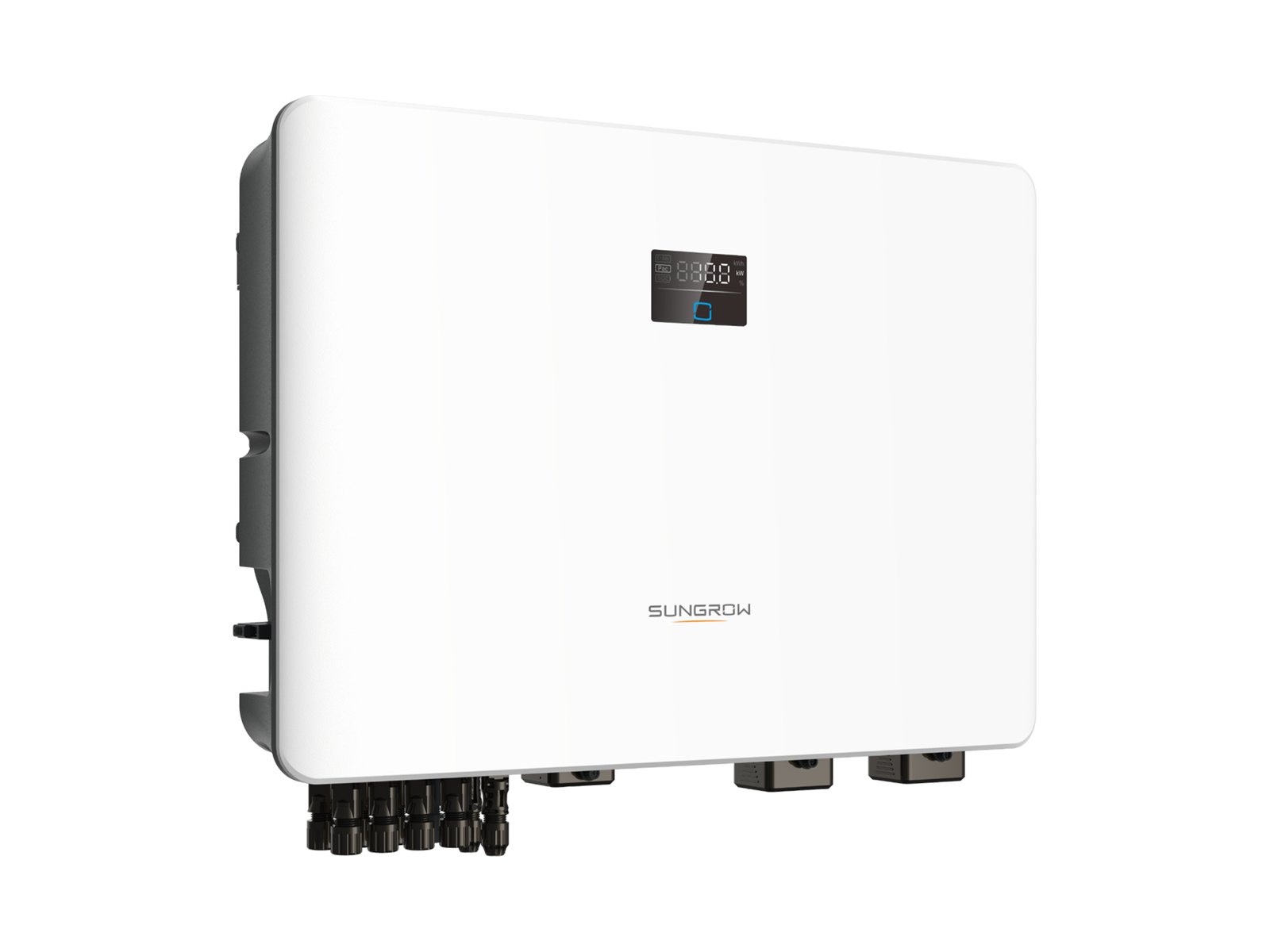
Sungrow Power Supply Co Ltd is a Chinese inverter and energy storage maker, founded in 1997 and listed on the Shenzhen Stock Exchange, that has had an Australian office in North Sydney since 2012. As at November 2026 its main home products here are the SG RS string inverter, the SH RS and SH RT hybrid inverters and the SBR and SBH batteries, and installers rate it as one of the best-value brands. The catch is that its batteries only work with its own hybrid inverters.
This guide is the hub for everything we have on Sungrow: specs, prices, warranty, safety questions and rivals. It is independent desk research. Solar Cobber did not test any Sungrow product, was not paid by Sungrow and obtained no quotes.
Key facts
- Sungrow Power Supply Co Ltd was founded in 1997 by Cao Renxian, is headquartered in Hefei, Anhui, China, and has been listed on the Shenzhen Stock Exchange (ticker 300274) since November 2011.
- Sungrow has operated in Australia since 2012 from North Sydney, and in May 2026 said it employs more than 100 people here, including over 60 engineers and technicians.
- SolarQuotes shows Sungrow inverters at 4.8 out of 5 from 5,483 ratings and Sungrow batteries at 4.9 out of 5 from 1,094 ratings, as checked in 2026.
- A 12.8 kWh Sungrow SBR128 battery costs about A$8,100 after the federal Cheaper Home Batteries Program discount, before the inverter and installation, on the SolarQuotes price list dated 12 May 2026.
- Sungrow’s Australian battery warranty is 10 years with 70% retained capacity, and allows unlimited cycles for daily self-consumption and backup; its inverter warranty is 10 years from installation.
- SunWiz named Sungrow Australia’s number one residential inverter brand for 2025 installations, but Sigenergy led residential battery share in 2025, according to RenewEconomy in January 2026.
Sungrow at a glance
The table below summarises the company and its Australian range, checked November 2026.
| Item | Detail | Source |
|---|---|---|
| Legal name | Sungrow Power Supply Co Ltd | Wikipedia |
| Founded | 1997, by Cao Renxian | Wikipedia |
| Headquarters | Hefei, Anhui, China | Wikipedia |
| Ownership | Public company, Shenzhen Stock Exchange (300274), listed November 2011 | Wikipedia |
| Australian office | North Sydney, NSW, operating since 2012 | SolarQuotes |
| Australian support line | 1800 786 476 | SolarQuotes |
| Home products sold in Australia | SG RS string inverters, SH RS and SH RT hybrid inverters, SBR and SBH batteries | Our reviews, linked below |
| Inverter warranty | 10 years from installation, capped at 11 years from manufacture | Sungrow Australia inverter warranty V4.2, April 2024 |
| Battery warranty | 10 years from installation (or 10.5 years from manufacture), 70% retained capacity | Sungrow HV Battery Limited Warranty V9.0, May 2026 |
| Clean Energy Council (CEC) listing | SBR battery listed as BAT-474 to 30 November 2026; SBH battery BAT-505 to 4 January 2027; SG RS inverter to July 2028 | Our October 2026 reviews, from the CEC lists |
| Monitoring app | iSolarCloud (see our iSolarCloud guide) | Sungrow |
We could not re-open the CEC lists in November 2026, so confirm each listing is current on your installation date. Solar Cobber does not verify any product or installer listing; check the Clean Energy Council lists yourself.
Sungrow products in Australia
Sungrow sells three families of home equipment in Australia: solar-only string inverters, hybrid inverters that also run a battery, and high-voltage batteries. A hybrid inverter is one box that converts solar power and also charges and discharges a battery.
| Product | What it is | Key numbers | Our review |
|---|---|---|---|
| SG RS | Single-phase solar-only inverter | 2.0 to 10 kW, 3 trackers on larger models, 97.9% maximum efficiency (SG5.0RS), 10-year warranty | Sungrow SG RS review |
| SH RS and SH RT | Single-phase and three-phase hybrid inverters | SH5.0RS to SH10RS, SH5.0RT and SH10RT; backup switchover under 10 ms; whole-home backup on SH8.0RS and SH10RS | Sungrow SH RS and RT review |
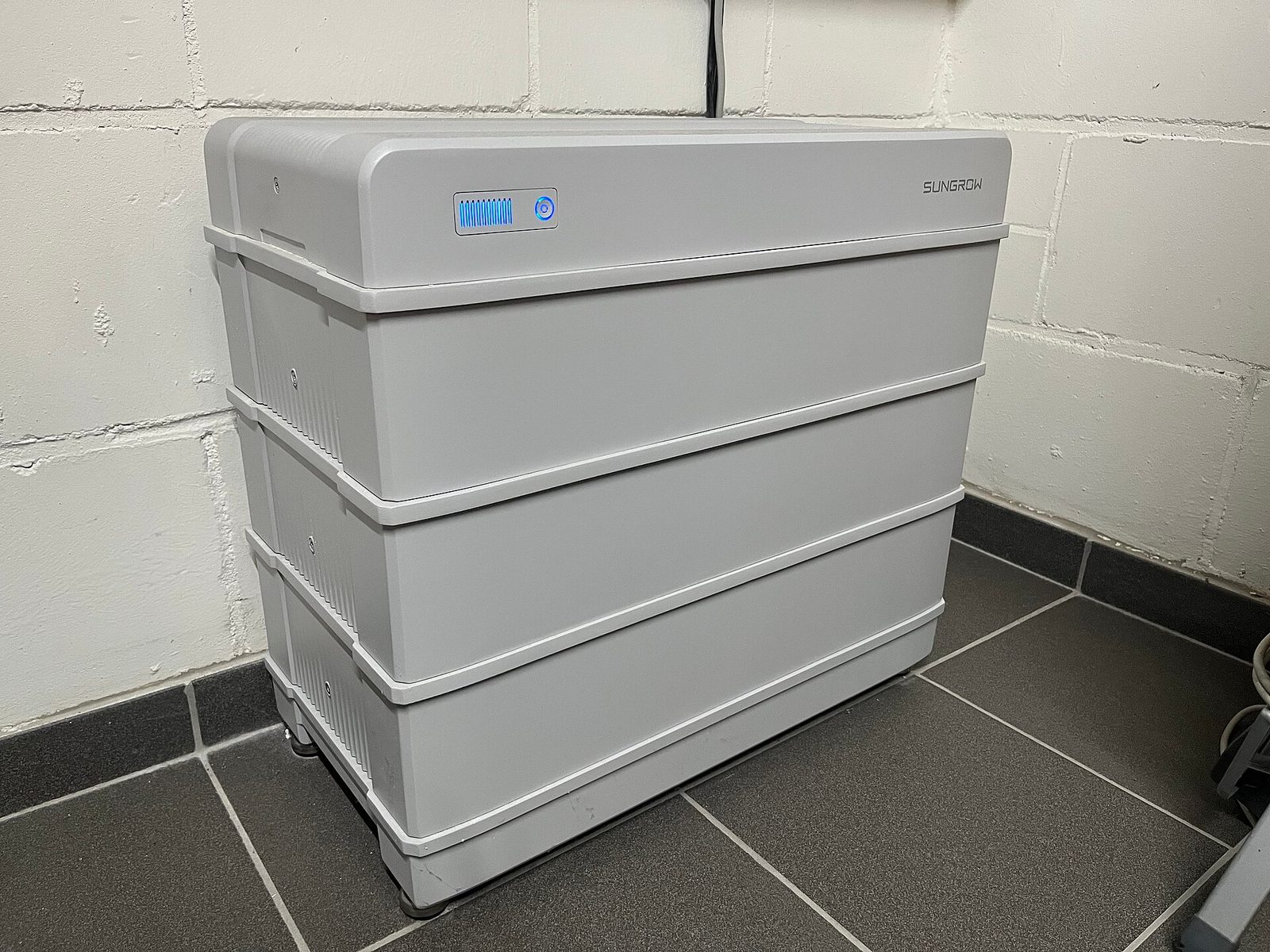
| SBR | Modular battery, 3.2 kWh modules | 9.6 to 25.6 kWh per stack, 30 A, up to 4 stacks | Sungrow SBR review |
| SBH | Larger modular battery, 5 kWh modules | 15 to 40 kWh per stack, 50 A, up to 4 stacks | Sungrow SBH review |
The batteries are high-voltage and have no inverter of their own. According to Sungrow’s cross-reference chart (version 2.4, October 2025), the biggest stacks (SBR256, SBH350 and SBH400) are not supported on single-phase SH RS inverters, so very large batteries mean a three-phase hybrid.
Batteries come in steps, so the model number is the size. The chart shows how much continuous power each model can deliver.
Source: Solar Cobber calculation from Sungrow datasheet voltages: nominal voltage x 30 A (SBR) or 50 A (SBH). SBR096, SBR128, SBR256, SBH150, SBH200 and SBH400 match powers published in our reviews; the other models apply the same method.
View the data as a table
| Continuous power | |
|---|---|
| SBH400 | 28.16 kW |
| SBH350 | 24.64 kW |
| SBH300 | 21.12 kW |
| SBH250 | 17.60 kW |
| SBH200 | 14.08 kW |
| SBH150 | 10.56 kW |
| SBR256 | 15.36 kW |
| SBR224 | 13.44 kW |
| SBR192 | 11.52 kW |
| SBR160 | 9.60 kW |
| SBR128 | 7.68 kW |
| SBR096 | 5.76 kW |
The SBH is roughly twice as powerful per stack as the SBR, but a 5 kW or 6 kW single-phase hybrid cannot use it (Sungrow caps the SH5.0RS and SH6.0RS at 6.6 kW of battery power).
Sungrow prices in Australia
Sungrow does not publish Australian retail prices, so every price here comes from a dated third-party source. Our full breakdown is in the Sungrow battery price guide.
| Item | Price | Source and date |
|---|---|---|
| SBR128 battery (12.8 kWh), after federal discount, not installed | A$8,100 | SolarQuotes, 12 May 2026 |
| SBR256 battery (25.6 kWh), after federal discount, not installed | A$14,000 | SolarQuotes, 12 May 2026 |
| SBH200 battery (20 kWh), after federal discount, not installed | A$11,700 | SolarQuotes, 12 May 2026 |
| Sungrow hybrid inverter, 5 kW to 10 kW single phase | A$2,300 to A$3,600 | SolarQuotes, May 2026 |
| 12.8 kWh SBR with hybrid inverter, installed, after discount | About A$8,800 to A$14,700 | SolarQuotes example to Solar Cobber estimate, November 2026 |
| SG RS string inverter, installed | About A$1,400 to A$2,500 | Market range, April 2026 (our SG RS review) |
Because the federal discount steps down from 6.8 to 5.7 certificates per usable kWh on 1 January 2027, the same battery costs more after that date; see our federal battery rebate guide.
Sungrow price per kWh against rivals
The most useful single number for comparing batteries is the price per usable kWh. Solar Cobber calculation: each price after the federal discount and before installation (SolarQuotes, 12 May 2026) divided by usable capacity, for example A$8,100 divided by 12.8 kWh is A$633.
Source: Solar Cobber calculation from SolarQuotes battery price list, 12 May 2026. Price after the federal discount divided by usable kWh, rounded to the nearest dollar.
View the data as a table
| Price per usable kWh | |
|---|---|
| Tesla Powerwall 3 (13.5 kWh) | A$741 |
| Sungrow SBR128 (12.8 kWh) | A$633 |
| Sungrow SBH350 (35 kWh) | A$600 |
| Sungrow SBH400 (40 kWh) | A$593 |
| BYD HVM 13.8 (13.8 kWh) | A$587 |
| Sungrow SBH200 (20 kWh) | A$585 |
| Sungrow SBR160 (16 kWh) | A$581 |
| Sungrow SBR192 (19.2 kWh) | A$573 |
| Sungrow SBH300 (30 kWh) | A$567 |
| Sungrow SBH250 (25 kWh) | A$560 |
| Sungrow SBR224 (22.4 kWh) | A$549 |
| Sungrow SBR256 (25.6 kWh) | A$547 |
The mid-sized and large Sungrow stacks cost about A$550 to A$585 per usable kWh after the discount, below the Powerwall 3 at about A$741, but the Powerwall price includes its inverter and the Sungrow price does not. Adding a A$2,300 to A$3,600 Sungrow hybrid inverter to the SBR128 lifts it to about A$810 to A$915 per kWh.
Warranty and Australian support
Sungrow’s warranty is strong on paper for ordinary homes and weaker in the detail.
- Inverters: 10 years from installation, capped at 11 years from manufacture. Sungrow pays up to A$200 of transport and a fixed labour rebate to the installer. Wi-Fi dongles and smart meters carry one year only (Sungrow Australia warranty V4.2, April 2024).
- Batteries: 10 years (10.5 from manufacture), at least 70% of initial capacity, and unlimited cycles for self-consumption and backup. Other uses are capped at 2.8 MWh per usable kWh, for example 35.84 MWh on an SBR128.
- Heat condition: for installs from 21 May 2026 (warranty V9.0), performance cover may not apply if the battery spends 90 or more days a year at 35 to 40 degrees Celsius, or 30 or more days above 40 degrees.
- Transfer and expansion: the warranty is not transferable beyond the original end user, and modules added later inherit the original start date.
- If your installer closes: claims normally go through the installer first, then Sungrow’s online claim portal. See our tracker of Australian solar company failures.
Sungrow’s support is the most common complaint. SolarQuotes describes it as occasionally overwhelmed, though better than patchy, and its battery page calls onshore technical support good but not perfect. Sungrow’s own homeowner support page lists online chat and email.
Is Sungrow any good?
On published evidence Sungrow is a mainstream, well-regarded brand with a track record here, and its main risks are lock-in, uneven support and the wider debate about Chinese-made inverters.
Installer and owner ratings. SolarQuotes shows 4.8 from 5,483 ratings for inverters and 4.9 from 1,094 for batteries. In the SolarQuotes Installers’ Choice Awards, Sungrow ranked first for best value inverter for the fourth year in 2024 and second for after-sales support, and in 2025 second on the brand installers would put on their own home. SolarQuotes is a quote broker, so treat its ratings as one input.
Market position. The 2026 SunWiz awards, based on 2025 installations, named Sungrow number one for residential inverters, commercial inverters and commercial energy storage, according to a Sungrow press release carried by pv magazine Australia on 20 May 2026. Sungrow’s residential battery lead did not hold: RenewEconomy reported in January 2026, citing SunWiz, that Sigenergy took 25% of the Australian home battery market in 2025, with Sungrow second in March 2025. Sungrow had been named number one residential battery brand for 2024.
Safety and recalls. We found no recall of a Sungrow home inverter or battery in the Australian sources we read, but we could not query the ACCC Product Safety Australia database directly, so check it before you buy. The Canberra Battery Test Centre was a federally funded independent test program; we found no published result for a Sungrow SBR in the material we could open.
Cyber security. In January 2020 a Brisbane engineer disclosed security flaws in the SH5K-20 hybrid inverter, and Sungrow shipped a firmware fix in March 2020 (SolarQuotes). More broadly, the federal government is developing cyber security standards for inverters, batteries and EV chargers, and opposition senators have named Chinese makers including Sungrow in debate. No ruling against Sungrow has been reported in the sources we read. For a household the practical points are to keep the inverter on updated firmware through your installer and to use a strong iSolarCloud password.
Sungrow vs alternatives
| Sungrow SBR | Sigenergy SigenStor | Tesla Powerwall 3 | GoodWe Lynx | |
|---|---|---|---|---|
| Size per unit or stack | 9.6 to 25.6 kWh | 5.2 to 46.8 kWh | 13.5 kWh | See review |
| Inverter | Separate Sungrow hybrid | Built-in controller | Built-in 10 kW | Separate GoodWe hybrid |
| Throughput cap, non-home use | 2.8 MWh per kWh | About 3 MWh per kWh, all uses | 37.8 MWh per unit, non-home use | See review |
| Price after discount, May 2026 | About A$8,100 (12.8 kWh), plus inverter | About A$8,000 (13 kWh) | About A$10,000 with Gateway | See review |
| Our review | SBR | SigenStor | Powerwall 3 | Lynx |
Head-to-head pages: Sigenergy vs Sungrow, GoodWe vs Sungrow and Tesla Powerwall 3 vs Sungrow. The other brand hubs are Sigenergy, GoodWe and Fronius.
How big is Sungrow?
Sungrow says its installed capacity worldwide is more than 1,000 GW of power electronics as at December 2025, up from 154 GW at the end of 2020, which makes it one of the largest inverter makers by volume.
View the data as a table
| Installed capacity | |
|---|---|
| End 2020 | 154 GW |
| Jun 2025 | 870 GW |
| Dec 2025 | 1,000 GW |
These are company figures and cover all products, including large solar farms, not just homes.
Where Sungrow products are made
Sungrow’s headquarters are in Hefei, China, and it opened a factory in Bangalore, India, in August 2018 that was described as its largest overseas inverter plant (Wikipedia). The Australian datasheets and warranty documents we read do not state which factory builds the SBR, SBH or SH RS, so we could not confirm the country of manufacture of each product. If origin matters to you, ask your installer to confirm it in writing. See Australian-made solar panels for locally made alternatives.
Who installs Sungrow?
Sungrow is among the most widely quoted brands, so many installers carry it. Browse solar installers in our directory, or by state: New South Wales, Victoria, Queensland and Western Australia. Solar Cobber does not verify accreditation: check the Clean Energy Council approved retailer list and the Solar Accreditation Australia register, and compare quotes using our guide to comparing solar quotes.
FAQ
Is Sungrow a good brand?
Yes, on published evidence Sungrow is a well-regarded brand, with 4.8 out of 5 from 5,483 SolarQuotes inverter ratings and a 10-year warranty. Its drawbacks are that its batteries only work with Sungrow hybrid inverters and that support can be slow at busy times.
Who owns Sungrow?
Sungrow Power Supply Co Ltd is a public company listed on the Shenzhen Stock Exchange under ticker 300274. It was founded in 1997 by Cao Renxian and is headquartered in Hefei, China.
Is Sungrow Chinese?
Yes. Sungrow is a Chinese company headquartered in Hefei, Anhui. It has had an Australian office in North Sydney since 2012.
Is Sungrow CEC approved?
According to our October 2026 reviews, Sungrow’s SBR battery was listed on the Clean Energy Council approved battery list until 30 November 2026, the SBH until 4 January 2027 and the SG RS inverter until July 2028. Check the live list on your installation date, because the federal battery discount requires a listed battery.
How much does a Sungrow battery cost?
A 12.8 kWh Sungrow SBR128 costs about A$8,100 after the federal discount, before installation and inverter, on the SolarQuotes list of 12 May 2026. Installed with a hybrid inverter, published figures run from about A$8,800 to A$14,700.
What is the Sungrow warranty in Australia?
Sungrow offers 10 years on its inverters and 10 years with 70% retained capacity on its batteries. Battery cover is unlimited cycles for home self-consumption and backup, and it is not transferable to a new owner.
Can I use a Sungrow battery with another brand of inverter?
No. Sungrow’s batteries need a compatible Sungrow hybrid inverter, and using an incompatible inverter voids the battery warranty. If you want to keep another inverter, look at a battery that supports it.
Does Sungrow have an app?
Yes, Sungrow’s monitoring platform is iSolarCloud, available as a phone app and web portal. Our iSolarCloud guide covers login, set-up and common fixes.
Sources
- SolarQuotes: Sungrow inverter review
- SolarQuotes: Solar battery prices and system costs in Australia (12 May 2026)
- Wikipedia: Sungrow
- pv magazine Australia: Sungrow achieves three No.1 rankings in the 2026 SunWiz Awards (20 May 2026)
- RenewEconomy: Sigenergy crowned top home battery supplier in Australia (January 2026)
- Sungrow Australia: SBR and SBH cross-reference chart V2.4 (PDF)
- Sungrow HV Battery Limited Warranty V9.0, May 2026 (PDF)
- Sungrow Australia statement on cyber security, January 2020 (PDF)
- Clean Energy Council: approved batteries list
About this guide
This guide was written by the Solar Cobber editorial team from independent desk research, checked in November 2026. We did not test products or obtain quotes. Solar Cobber is a free directory that may earn referral or advertising fees from installers; commercial relationships never affect our content. This is general information, not financial advice. To report an error, contact us.
Filed under Solar Products
Back to blog