
Our verdict
Sofar's PowerAll is one of the cheapest ways to buy 10 to 30 kWh of battery in Australia, at about A$316 per usable kWh before installation, and the current warranty finally covers a full daily cycle for ten years. The trade-offs are a 5 kW power ceiling, a Sofar-inverter-only warranty, patchy VPP support and a smaller installer and app ecosystem than the big brands.
- Best for
- Single-phase homes wanting a large battery at the lowest price per kWh and happy with 5 kW of power
- Look elsewhere if
- Homes that need more than 5 kW of backup, a mainstream VPP, or the widest installer support
- Price guide
- About A$3,500 (10 kWh) to A$9,000 (30 kWh) for a PowerAll after the federal discount, GST included, excluding installation (SolarQuotes, May 2026)
- Warranty
- 10 years, retaining 70% of usable energy, or a throughput limit of 18.25 MWh per BTS 5K module (about 3.7 MWh per kWh), whichever comes first
Pros
04- About A$316 per usable kWh for a PowerAll 15 to 30 kWh before installation, including the hybrid inverter (SolarQuotes, May 2026)
- Modular 5.12 kWh LFP modules in a cable-free stack, IP65, listed on the Clean Energy Council approved batteries list to 31 December 2027
- Current Australian warranty (v1.2, December 2025) allows 18.25 MWh per BTS 5K module, enough for one full cycle a day for ten years
- Single-phase PowerAll and three-phase HYD hybrids are both Clean Energy Council listed, with newer ESI and HYD T1 inverters approved in 2026
Cons
05- Each module delivers only 2.5 kW, so a typical PowerAll tops out at 5 kW and a full stack empties in about two hours at full power
- The warranty needs a Sofar inverter (or written Sofar approval of another brand before installation) and covers use as a daily cycling storage system only
- Owner reviews on SolarQuotes say the PowerAll was not accepted by some VPP providers, and one calls the app limited for trading modes
- Warranty disputes are governed by Chinese law with arbitration in Shenzhen, and the Australian service office is a small Queensland address
- SolarQuotes' reviewer is openly not a fan and says better-supported alternatives exist, and its owner rating is 4.3 from only 24 ratings
Sofar’s home battery range in Australia is the BTS 5K module (sold in 5, 10, 15 and 20 kWh stacks) and the PowerAll, an all-in-one system that pairs a Sofar ESI 3-6K-S1 hybrid inverter with those modules, from 5 to 30 kWh. In May 2026 SolarQuotes listed PowerAll at about A$3,500 for 10 kWh up to A$9,000 for 30 kWh after the federal discount, excluding installation. It is usually quoted to single-phase homes as a budget alternative to ESY Sunhome, Sungrow and Alpha ESS. This review is based on manufacturer documentation, warranty terms, published pricing and owner and installer feedback; Solar Cobber did not test the product and was not paid by the manufacturer. Everything below was checked in November 2026.
What it is and how it works
Sofar is the trading name of SOFARSOLAR, a Shenzhen company that SolarQuotes says was founded in 2013, started with inverters and moved into storage. SolarQuotes lists its Australian presence from 2016 and a Sydney office at Suite 1903, 109 Pitt Street. The warranty document names Sofarsolar Ausco Pty Ltd of Meadowbrook, Queensland as the Australian contact.
The BTS 5K is a high-voltage lithium iron phosphate (LFP) module. A stack needs one battery distribution unit on the bottom and one to four modules on top, giving the BTS E5, E10, E15 and E20-DS5 configurations. On its own it does nothing: it is DC coupled, so it needs a Sofar hybrid inverter. The datasheet names the three-phase HYD 5K to 20KTL-3PH range, and the PowerAll uses the single-phase ESI 3-6K-S1. Our guide to AC-coupled vs DC-coupled batteries explains why that matters if you already have solar.
The video above is from Sofar Australia’s own channel and, going by its title, shows how a PowerAll is installed. It is a manufacturer video for installers, not an independent test.
Sofar also announced newer products at the Smart Energy Conference in Sydney on 6 and 7 May 2026: the ESI 8-12K-S1 inverter with the CBS5000 modular battery (20 kWh up to 240 kWh in parallel). Sofar’s own news page gave a Q3 2026 release. As at 14 November 2026 we found the ESI 8-12K-S1 inverter on the Clean Energy Council inverter list (approved 13 October 2026) but no CBS5000 on the battery list under the Sofar name, so this review covers the BTS and PowerAll that are sold and approved now.
Specs that matter in Australia
Power is the limit, not capacity. The datasheet rates each BTS 5K module at 2.5 kW, and the Clean Energy Council list shows the same: 2.5 kW for one module, 5 kW for two, 7.5 kW for three and 10 kW for four. Solar Cobber calculation: dividing usable energy by rated power gives about two hours (4.992 kWh at 2.5 kW) for every configuration. A PowerAll uses a 3 to 6 kW inverter, and an owner on SolarQuotes with a 14 kWh PowerAll noted backup was limited to about 5 kW. That suits a fridge, lights and a few appliances, but not an oven and air conditioner together, and a stack suits evening self-consumption more than long heavy-load blackouts.
Capacity figures differ by source. Sofar’s datasheet and SolarQuotes use 4.75 kWh usable per module (9.5 kWh for two), while the Clean Energy Council list shows 4.992 kWh. The federal discount uses the CEC figure, and SolarQuotes’ prices per kWh use its own, so the numbers below say which is which.
Heat, cold and weather. The datasheet gives IP65 and an ambient range of -10 to 50 C, and the warranty requires ventilation, no direct sunlight or other heat source, and says recommended working temperature is 15 to 30 C, with throughput values that may vary with ambient temperature. A single-module BTS E5 weighs 59 kg and is 170 mm deep, so it suits garages and sheltered walls. See our LFP battery guide for what that chemistry tolerates.
Single or three phase. The PowerAll’s ESI 3-6K-S1 is single phase. Three-phase homes need the HYD hybrids (5 to 20 kW, Clean Energy Council listed to 24 March 2027), and the new HYD T1 series (approved 11 November 2026) goes to 30 kW. Check single vs three phase power to see which you have.
Clean Energy Council status. As at 14 November 2026 the BTS series is listed as certificate BAT-758, approved 9 January 2026 and expiring 31 December 2027, covering BTS 5K, E5, E10, E15 and E20-DS5. The ESI single-phase inverters (certificate EESS-220609-1) are listed to 20 September 2027. We could not find a separate battery listing named “PowerAll”, and Sofar’s own Sydney announcement describes the PowerAll as ESI 3-6K-S1 plus BTS 5K, so ask your installer which listing the exact quoted model number is certified under before you rely on the federal discount.
Price in Australia
SolarQuotes’ battery price list, updated 12 May 2026, shows these PowerAll prices after the federal discount, including GST and excluding installation. The PowerAll includes the 5 kW hybrid inverter in the price.
| PowerAll size | Usable capacity (SolarQuotes) | Price after federal discount | Price per usable kWh (Solar Cobber calculation) |
|---|---|---|---|
| 10 kWh | 9.5 kWh | A$3,500 | A$368 |
| 15 kWh | 14.25 kWh | A$4,500 | A$316 |
| 20 kWh | 19 kWh | A$6,000 | A$316 |
| 25 kWh | 23.75 kWh | A$7,400 | A$312 |
| 30 kWh | 28.5 kWh | A$9,000 | A$316 |
An installer, Aussie Solar Tech, lists a 30 kWh PowerAll at about A$5,999, but does not say whether that includes installation or the rebate, so we have not used it. Add installation: SolarQuotes’ worked examples for other brands assume about A$3,000, which would put a 30 kWh PowerAll near A$12,000 installed, though that is our assumption for Sofar, not a published price.
How the federal discount applies
The discount is paid as small-scale technology certificates (STCs) on usable capacity. Using the rules in our federal battery rebate guide and state-by-state rebate guide, installs from 1 May to 31 December 2026 earn 6.8 STCs per usable kWh, falling to 5.7 from 1 January 2027, at the full rate for the first 14 kWh, 60% for the next 14 kWh and 15% from 28 to 50 kWh. At an assumed A$38 per STC and whole certificates, the CEC-listed BTS configurations earn:
- Install by 31 Dec 2026 (6.8)
- Install from 1 Jan 2027 (5.7)
Source: Solar Cobber calculation from Clean Energy Council usable capacities (BAT-758) and the federal STC factors in our battery rebate guides. The STC price is an assumption of A$38; actual certificate prices vary and this assumes the quoted model is certified under BAT-758.
View the data as a table
| Install by 31 Dec 2026 (6.8) | Install from 1 Jan 2027 (5.7) | |
|---|---|---|
| BTS E5 | A$1,254 | A$1,064 |
| BTS E10 | A$2,546 | A$2,128 |
| BTS E15 | A$3,762 | A$3,154 |
| BTS E20 | A$4,522 | A$3,800 |
A 15 kWh BTS E15 earns about A$3,760 if installed by 31 December 2026 and about A$3,150 afterwards, so waiting until January 2027 costs roughly A$600 to A$720 on the 15 to 20 kWh sizes.
Solar Cobber calculation: price per usable kWh at about 30 kWh
Using SolarQuotes’ May 2026 prices after the federal discount, excluding installation, and each product’s own listed usable capacity:
Source: SolarQuotes battery price list, updated 12 May 2026; Solar Cobber calculation (price divided by listed usable kWh). Battery-only products still need an inverter, so Fox and Sungrow are not like for like with the all-in-one products.
View the data as a table
| A$ per usable kWh | |
|---|---|
| Sungrow SBR 25.6 kWh | A$547 |
| Growatt APX HV 30.0 (27 kWh) | A$481 |
| ESY Sunhome HM6-30 | A$353 |
| Sofar PowerAll 30 | A$316 |
| Fox EQ4800 (27.96 kWh) | A$290 |
Among the all-in-one systems SolarQuotes lists, the 30 kWh Sofar PowerAll is about A$316 per usable kWh, about 10% below the ESY Sunhome HM6-30 at A$353. Fox ESS looks cheaper because it excludes an inverter. See our ESY Sunhome review and Sungrow SBR review for those rivals, and how much a solar battery costs for the wider picture.
Warranty: the fine print
The SOFAR PowerAll Solar Battery System Warranty Document for Australia (SF-WI-GS-014, version 1.2, updated 15 December 2025) is a limited warranty from Shenzhen SofarSolar Co. Ltd supplied through an authorised reseller. Its main terms:
- Term: 10 years of product warranty from the warranty start date, which is the purchase date (invoice needed) or three months after production if you have no invoice.
- Performance: 70% of usable energy for 10 years or a Minimum Through Output Energy, whichever happens first. For the BTS 5K, usable energy is listed as 4.992 kWh and throughput as 18.25 MWh per module.
- Added modules: the same terms apply to modules bought later.
- Inverter: the battery must be installed with a Sofar inverter. For another brand, the owner must first send the model and parameters to Sofar or a reseller and get written confirmation, otherwise the warranty is not effective.
- Use: the product must be used on a daily cycle basis and only for energy storage. Not being operated for six months or more is an exclusion.
- Location: ambient temperature must stay between -10 and 50 C, out of direct sunlight, and removal and reinstallation elsewhere is excluded without Sofar’s written confirmation.
- Remedy: Sofar may change settings or software, repair, or replace with new or refurbished equal or better product, at its discretion.
- Disputes: claims go through the reseller or service@sofarsolar.com.au, log data decides whether throughput was reached, and the document says disputes are subject to Chinese law with arbitration in Shenzhen. Australian Consumer Law rights apply in addition.
Solar Cobber calculation: 18.25 MWh divided by 4.992 kWh is 3.66 MWh per usable kWh, which is about 3,656 full cycles, or 10.0 years of one full cycle a day. SolarQuotes’ review quotes an earlier term of 13,100 kWh per module, which at 4.75 kWh a day lasts about 7.6 years. The current v1.2 table looks like an improvement, but the PowerAll itself is not named in its product list (it names BTS 5K and other models), so confirm in writing that your system falls under the 18.25 MWh figure.
View the data as a table
| MWh per usable kWh | |
|---|---|
| ESY Sunhome HM6 | 4.42 MWh |
| Sofar BTS 5K (v1.2) | 3.66 MWh |
| Alpha ESS SMILE-G3 | 3.12 MWh |
| Sigenergy SigenStor | 3.00 MWh |
| Sofar earlier figure (SolarQuotes) | 2.76 MWh |
On the current terms Sofar sits in the middle of the budget batteries: more throughput than Alpha ESS or Sigenergy, less than ESY Sunhome.
What owners and installers report
SolarQuotes shows Sofar batteries at 4.3 out of 5 from 24 owner ratings as at 14 November 2026, with the most recent review dated 10 November 2026.
Source: SolarQuotes Sofar review page, ratings as shown on 14 November 2026.
View the data as a table
| Ratings | |
|---|---|
| 5 stars | 14 |
| 4 stars | 8 |
| 3 stars | 0 |
| 2 stars | 0 |
| 1 star | 2 |
Twenty-two of the 24 ratings are 4 or 5 stars; the two 1-star reviews are one with no details and one saying a battery stopped working a day after installation.
Praise. Owners cite price (one reports a 25 kWh retrofit for under A$9,000), easy installs, helpful Sofar technical staff with app setup and, in one case, a support engineer visiting in person.
Complaints. The patterns in the SolarQuotes owner reviews are:
- VPP and trading modes. Several owners say the battery was not compatible with major VPP providers and that Amber no longer offered it, and one criticises the software for trading modes. Check any retailer’s current compatibility list; see our VPP guide and Amber Electric review.
- Backup. One owner reported the battery did not switch over in a blackout despite paying for automatic switching, and another noted backup was limited to about 5 kW.
- Apps and noise. The Solarman app is described as good but limited, and one owner found the inverter noisy.
SolarQuotes’ reviewer, Michael Bloch, says he is not a fan of Sofar batteries and that better support, apps and installer availability exist elsewhere, while crediting the low price. We found no safety recall of Sofar batteries in the sources we read, but we could not query the ACCC recall database directly.
Sofar vs alternatives
| Sofar PowerAll / BTS | ESY Sunhome HM6 | Sungrow SBR | Alpha ESS SMILE-G3 | |
|---|---|---|---|---|
| Format | All-in-one (PowerAll) or DC module (BTS) | All-in-one | DC battery, separate hybrid | DC battery with hybrid |
| Usable capacity | 5 to 30 kWh (PowerAll); 5 to 20 kWh (BTS) | Up to 29.18 kWh | 9.6 to 25.6 kWh | See our review |
| Power | 2.5 kW per module; 5 kW typical PowerAll | 6 kW inverter | 5.76 to 15.36 kW | See our review |
| Warranty throughput | 18.25 MWh per module (about 3.7 MWh per kWh) | About 4.4 MWh per kWh | Unlimited for self-consumption and backup | About 3.1 MWh per kWh |
| About A$ per usable kWh at 25 to 30 kWh (May 2026) | A$316 | A$353 | A$547 | Not compared |
Choose the Sofar if the lowest price per kWh matters most and 5 kW is enough. Choose the ESY Sunhome if you want a bit more power and a larger warranty allowance, the Sungrow SBR for the strongest warranty and installer support, and the Alpha ESS Smile G3 if you want an established Australian-supported brand.
Questions to ask your installer
- Which exact model is quoted (PowerAll, BTS E10, E15 or E20), and which Clean Energy Council certificate covers it on the day of installation?
- Which Sofar inverter is quoted, and how many kW of backup will I really get?
- Is the 18.25 MWh per module throughput figure in warranty version 1.2 the one that applies to my model and install date?
- Will you register the warranty and keep the purchase invoice and serial numbers on file?
- Does my electricity retailer’s current VPP or smart-battery plan accept this exact battery?
- How many STCs have you claimed, at what factor, and what STC price is assumed in the quoted “after rebate” price?
- Does the quote include installation, switchboard work and a backup circuit, or only the equipment?
- Who services it if you stop trading, and does Sofar’s Australian team deal with owners directly?
FAQ
Is the Sofar battery any good?
It is good value but not the best supported. SolarQuotes owners rate Sofar batteries 4.3 out of 5 from 24 ratings, while its reviewer says better apps, support and installer choice exist elsewhere.
How much does a Sofar battery cost in Australia?
SolarQuotes listed the Sofar PowerAll at about A$3,500 for 10 kWh to A$9,000 for 30 kWh in May 2026, after the federal discount and excluding installation. Expect installation on top, which SolarQuotes puts at about A$3,000 in its other worked examples.
What is the Sofar BTS 5K?
The Sofar BTS 5K is a 5.12 kWh nominal LFP battery module with 4.992 kWh usable on the Clean Energy Council list. It stacks up to four high per battery distribution unit and needs a Sofar hybrid inverter.
What is the Sofar PowerAll?
The Sofar PowerAll is an all-in-one single-phase system that combines a Sofar ESI 3-6K-S1 hybrid inverter with BTS battery modules. SolarQuotes lists it from 5 to 30 kWh.
What is the Sofar battery warranty?
The Australian warranty version 1.2 gives 10 years, with 70% of usable energy retained or an 18.25 MWh throughput limit per BTS 5K module, whichever comes first. It requires a Sofar inverter unless Sofar confirms another in writing.
Can a Sofar battery work with a VPP or Amber?
Not reliably. Several SolarQuotes owner reviews say the PowerAll was not accepted by major VPP providers, so check your retailer’s current compatibility list before buying.
Is the Sofar battery eligible for the federal battery discount?
The BTS series is on the Clean Energy Council approved batteries list as BAT-758 to 31 December 2027, so it is eligible if installed under that listing. A 15 kWh BTS E15 earns about A$3,760 at the 2026 rate and about A$3,150 from 1 January 2027, at our assumed A$38 per certificate.
Can I use a Sofar battery with a different inverter?
Only with Sofar’s written approval. The warranty says the owner must submit the other inverter’s model and parameters before installation, otherwise the warranty is not effective.
Find an installer
Few installers specialise in Sofar, so the installer matters as much as the product. Use our installer directory to find local companies with recent battery jobs, and compare quotes using our guide on how to compare solar quotes, including the exact model, inverter, discount factor and warranty version. See also what size battery you need and how long solar batteries last.
Read next
Battery buying guides
Often quoted alongside
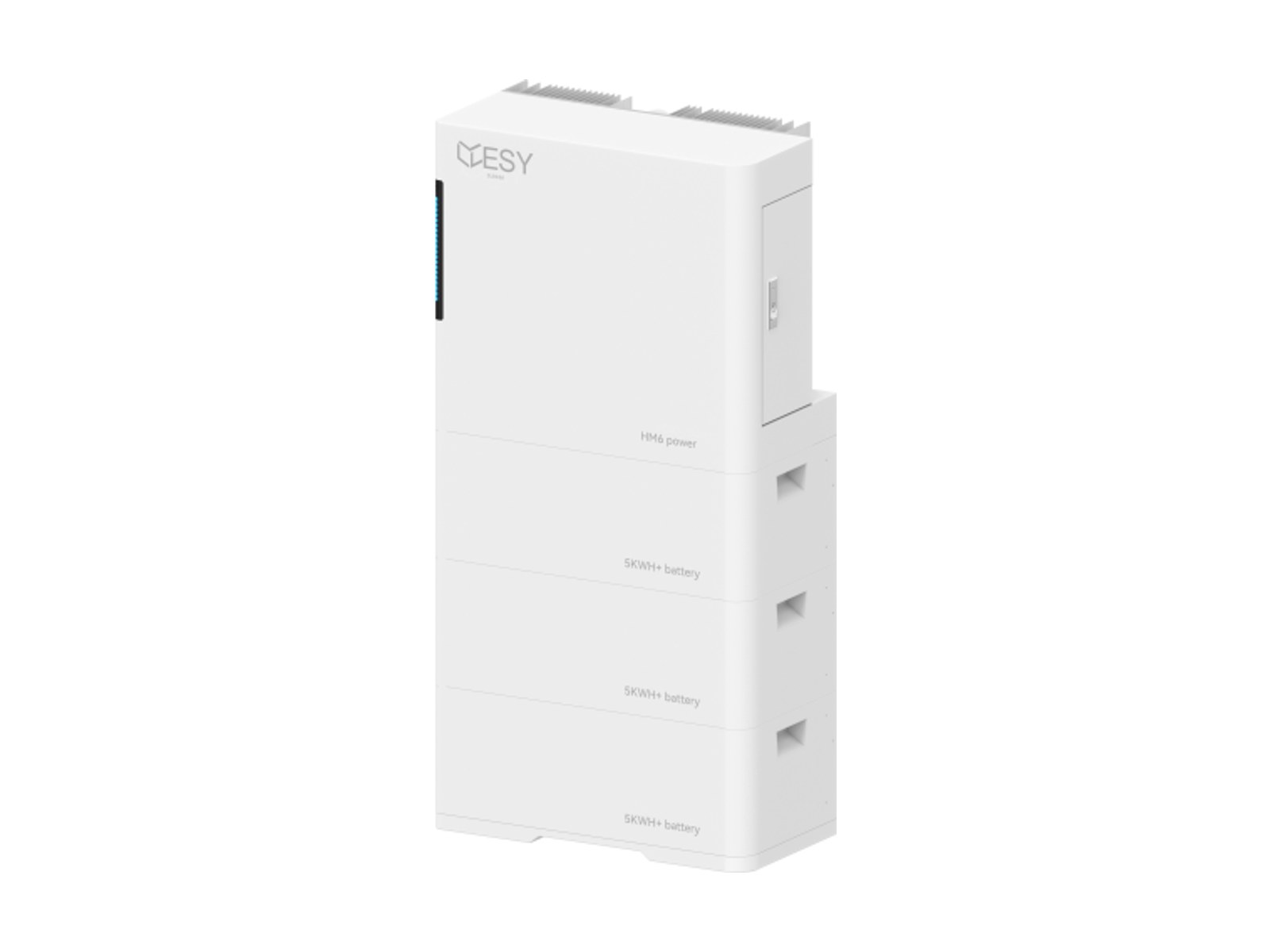
ESY Sunhome
ESY Sunhome HM6
The ESY Sunhome HM6 is one of the cheapest all-in-one batteries per usable kWh in Australia, with a generous throughput allowance and a built-in 6 kW inverter. The trade-offs are a 6 kW ceiling on solar charging and backup, a short track record, and a warranty with strict conditions: it needs a constant internet connection and expansion only within the first year.
Best for
Single-phase homes wanting a large, low-cost all-in-one battery of 10 to 30 kWh
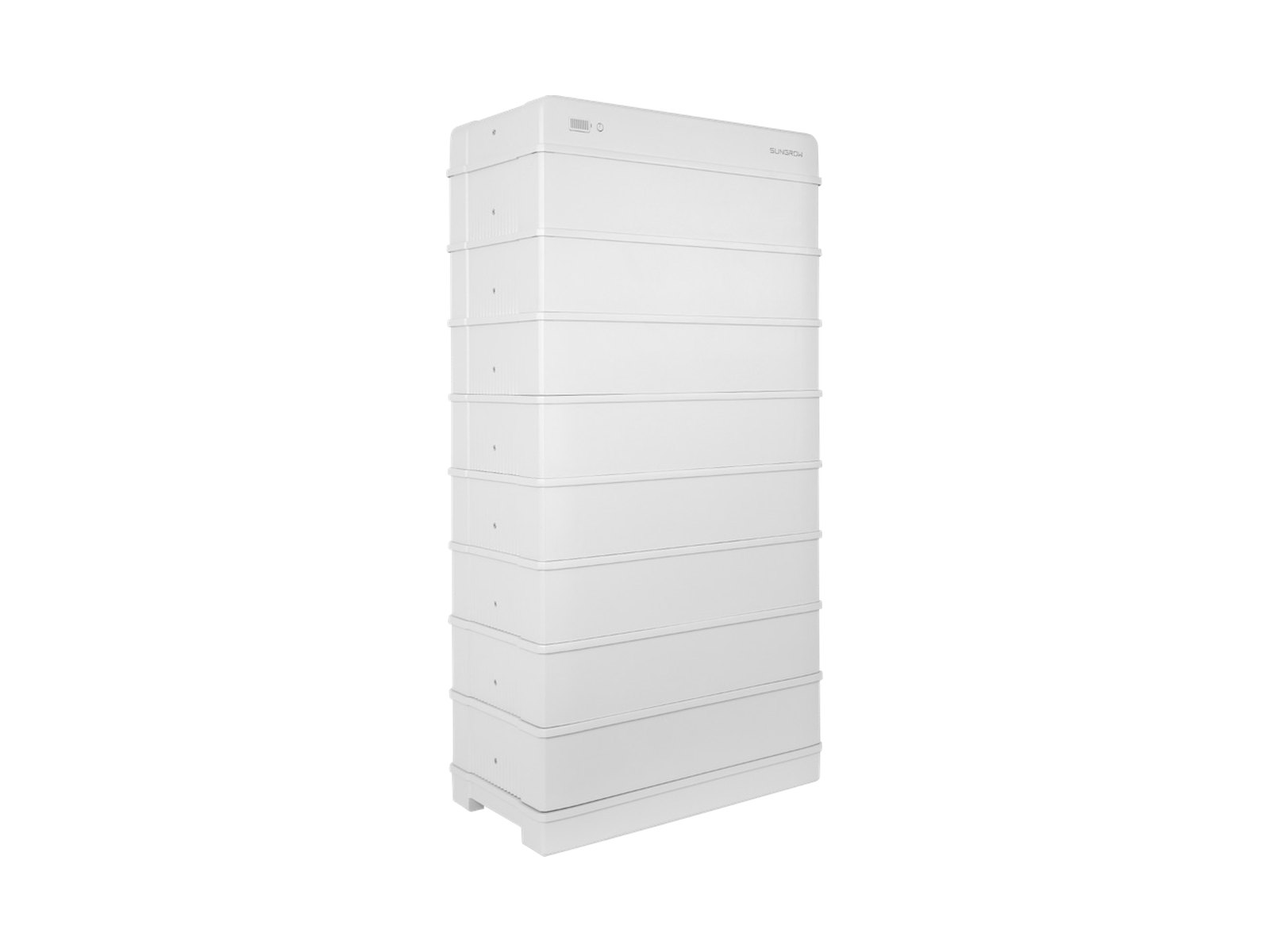
Sungrow
Sungrow SBR
The Sungrow SBR is one of the best-value modular batteries in Australia, with easy expansion in 3.2 kWh steps and a warranty that gives normal households unlimited cycles. The trade-off is that you must pair it with a Sungrow hybrid inverter, and Sungrow's app and phone support are weaker than the hardware.
Best for
Homes wanting a modular battery paired with a Sungrow hybrid inverter
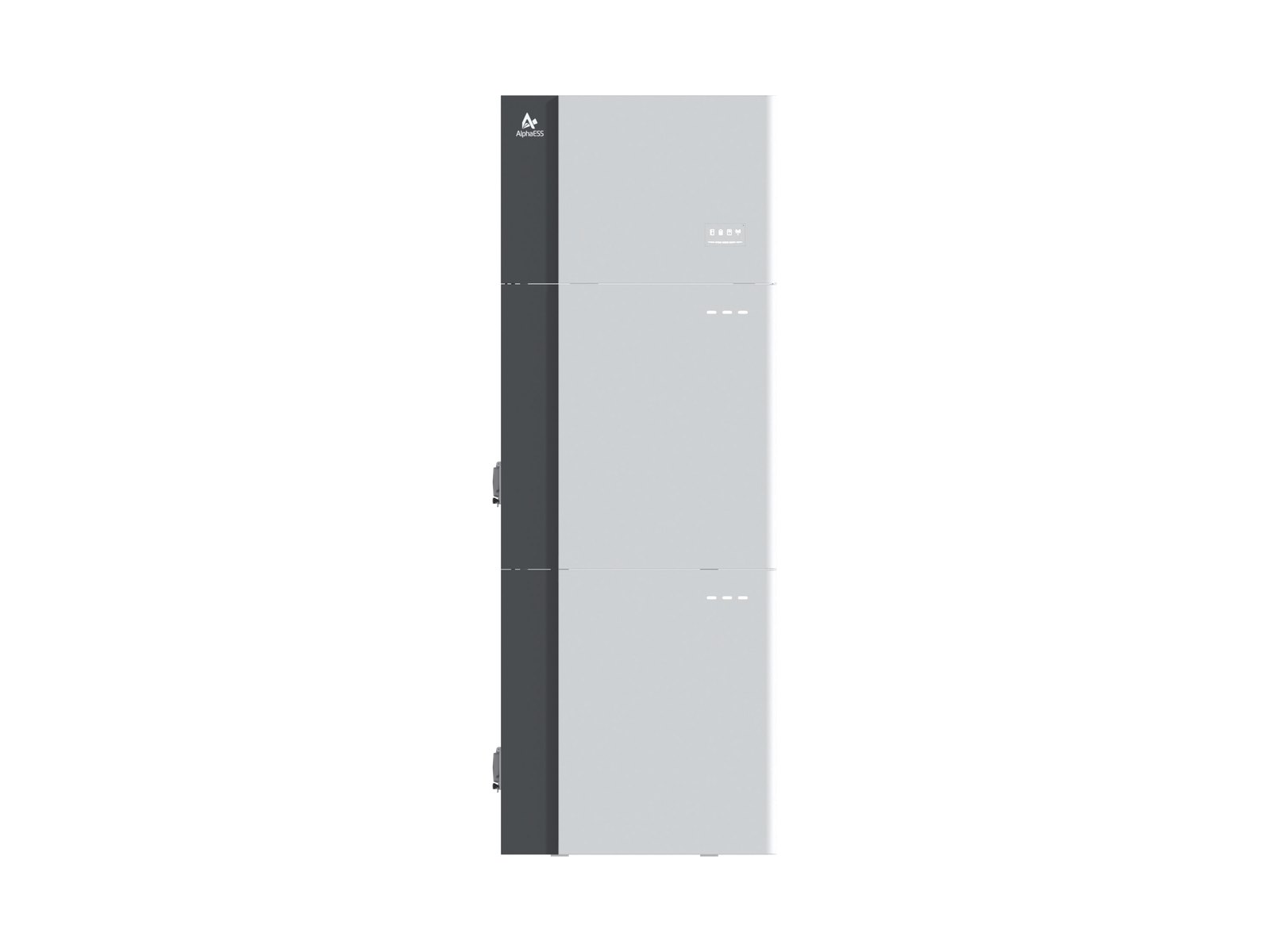
AlphaESS
AlphaESS SMILE-G3
The AlphaESS SMILE-G3 is one of the cheapest ways to get a CEC-listed all-in-one battery and hybrid inverter, with single-phase and three-phase versions and 9.3 kWh modules. The catch is AlphaESS's patchy support record, so the installer you choose matters as much as the hardware.
Best for
Budget-focused homes with a well-reviewed installer who has AlphaESS experience
Sources
Independent desk research by the Solar Cobber editorial team. We did not test this product and were not paid by the manufacturer. Solar Cobber is a free directory that may earn referral or advertising fees from installers; this never affects our reviews.
- 01Sofar BTS E5 to E20-DS5 datasheet (PDF, September 2022 revision)
- 02SOFAR PowerAll Solar Battery System Warranty Document, Australia, SF-WI-GS-014 Rev 1.2, 15 December 2025 (PDF)
- 03Clean Energy Council approved batteries list (Sofar BTS, BAT-758, checked 14 November 2026)
- 04Clean Energy Council approved inverters list (SOFARSOLAR ESI and HYD, checked 14 November 2026)
- 05SolarQuotes: Sofar battery review and owner ratings
- 06SolarQuotes: Solar battery prices and system costs in Australia (updated 12 May 2026)
- 07SOFAR Solar Australia: High-capacity Sydney debut (15 April 2026)
- 08pv magazine: SOFAR's new ESS launches in Australia (12 May 2026)
- 09SOFAR Solar Australia: Beyond incentives (10 June 2026)
Get quotes for Sofar BTS and PowerAll
Browse rated solar installers in your area, check their Google reviews, and ask at least three for itemised quotes. Our guide to comparing solar quotes explains what to look for.