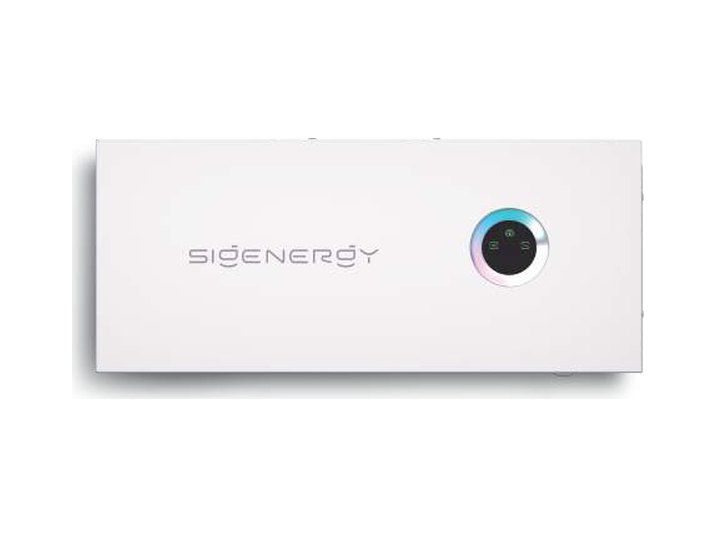


Sigenergy is a Chinese energy storage company, founded in 2022 and listed on the Hong Kong Stock Exchange in April 2026, whose SigenStor all-in-one battery and hybrid inverter was Australia’s top-selling home battery brand in 2025 with about 25% of the market, according to the industry analyst SunWiz. A SigenStor costs about A$6,300 to A$22,000 installed after the federal discount, depending on size.
The short verdict: installers rate the hardware highly and the price per kWh is among the lowest for an all-in-one system, but the company is young, had a November 2025 recall of some single-phase controllers, and owners report mixed support. This is independent desk research; Solar Cobber was not paid by Sigenergy and did not contact the company.
Key facts
- Sigenergy Technology Co., Ltd. was founded in 2022 by Tony Xu, a former Huawei solar executive, and listed on the Hong Kong Stock Exchange on 16 April 2026 under stock code 06656.
- SunWiz, as reported by RenewEconomy on 21 January 2026, ranked Sigenergy the top home battery brand in Australia for the full year 2025 with a 25% share, up from outside its top five in 2024.
- A Sigenergy SigenStor costs about A$7,900 to A$12,000 installed for 18 kWh after the federal Cheaper Home Batteries Program discount, on prices published in November 2026 (see our Sigenergy battery price guide).
- Sigenergy gives a 10 year warranty on the SigenStor battery and energy controller, guaranteeing 70% of usable capacity or about 3 MWh of throughput per usable kWh, whichever comes first.
- On 19 November 2025 the ACCC published a recall of Sigenergy SigenStor EC 8.0, 10.0 and 12.0 kW single-phase energy controllers sold from 4 March to 18 November 2025 because their AC plugs could overheat.
- SolarQuotes shows Sigenergy at 4.9 out of 5 from 1,998 ratings, while ProductReview.com.au shows 2.7 out of 5 from 19 reviews (both read in November 2026).
Source: SunWiz via RenewEconomy, 21 January 2026; SolarQuotes, 12 November 2026; Sigenergy warranty.
Sigenergy at a glance
The table summarises the company and its Australian presence as at November 2026. Where a fact comes from the company, we say so.
| Item | Detail |
|---|---|
| Company | Sigenergy Technology Co., Ltd. |
| Founded | 2022, by Tony Xu (SolarQuotes) |
| Headquarters | China; battery factory in the Lin-gang area of Shanghai, 6 GWh a year (SolarQuotes) |
| Ownership | Listed on the Hong Kong Stock Exchange, 16 April 2026, code 06656 |
| Australian entity | Sigenergy Australia Pty Ltd (named as the recalling business on the ACCC recall notice) |
| Australian office | Suite 02, Level 7, 191 Clarence Street, Sydney (SolarQuotes) |
| Residential product | SigenStor: Sigen Energy Controller (hybrid inverter), BAT battery modules, Sigen Energy Gateway, optional EV chargers |
| Commercial product | SigenStack C&I storage; Sigenergy announced Clean Energy Council listing of its C&I inverters in February 2026 |
| Warranty | 10 years on battery and controller; 5 years on gateway; 2 years on power sensor and communication modules (SolarQuotes) |
| Clean Energy Council approved batteries | Many SigenStor configurations are listed (see our review); check your quote’s model against the list |
| Monitoring app | mySigen (see our mySigen app guide) |
Sigenergy’s Australian site could not be read by our research tools, so company facts come from SolarQuotes, the ACCC, RenewEconomy and Sigenergy’s published warranty and datasheets. We could not confirm a support phone number from a Sigenergy page; the ACCC recall notice gives sigenservice.au@sigenergy.com for recall matters.
Who owns Sigenergy?
Sigenergy is a publicly listed company. Its H shares began trading in Hong Kong on 16 April 2026, and press coverage of the listing names Hillhouse, Goldman Sachs Asset Management and UBS Asset Management among the cornerstone investors (as reported at the time; we did not read the prospectus). Tony Xu, the founder, remains the best-known figure; Forbes has estimated his net worth from his stake. Sigenergy Australia Pty Ltd is the local entity that carries out recalls and warranty service.
Sigenergy products in Australia
Sigenergy’s Australian range is built around the SigenStor stack. The tables list the residential models in our reviews and the Australian warranty document; confirm exact model codes against the Clean Energy Council list and your quote.
| SigenStor battery module | Usable capacity | Continuous power per module | Minimum warranted throughput |
|---|---|---|---|
| BAT 5.0 | 5.2 kWh | 2.5 kW | 15.84 MWh |
| BAT 6.0 | 5.84 kWh | not confirmed | not confirmed |
| BAT 8.0 | 7.8 kWh | 4 kW | 23.77 MWh |
| BAT 10.0 | 8.76 kWh in the warranty, 9.0 kWh on the datasheet | not confirmed | 26.68 MWh (SolarQuotes, December 2025) |
| Sigen Energy Controller | Range sold in Australia | Notes |
|---|---|---|
| Single phase (SP) | 5, 6, 8, 10 and 12 kW in the Australian warranty | Up to 4 solar inputs; 8, 10 and 12 kW models were part of the 2025 recall |
| Three phase (TP) | 5 to 30 kW in the Australian warranty | Three-phase backup with the gateway |
| Sigen Energy Gateway | Single and three phase | Isolates the home in a blackout; about A$900 (single phase) and A$1,100 to A$1,200 (three phase) |
| EV DC charging module | 12.5 kW and 25 kW | About A$3,700 to A$4,900 before installation |
A controller takes up to six modules, so a stack reaches 46.8 kWh with BAT 8.0 modules. Our Sigenergy SigenStor review covers the specs in detail, and the AC-coupled vs DC-coupled guide explains why an all-in-one hybrid design matters when you are choosing between systems.
Sigenergy prices in Australia
An 18 kWh SigenStor is about A$7,900 to A$12,000 installed after the federal discount as at November 2026. Prices come from Grow Energy, SolarQuotes and LiFePO4 Australia, as set out in our price guide.
The chart below shows the mid-point of the published installed range after the discount for each stack size, divided by usable kWh. The pattern is the useful part: the first module is expensive per kWh because it carries the controller, and extra modules are cheap.
Source: Grow Energy, SolarQuotes, LiFePO4 Australia, read 12 November 2026. Solar Cobber calculation: mid-point of each range in our price guide divided by usable kWh (for example A$9,950 / 18 kWh).
View the data as a table
| Price per usable kWh | |
|---|---|
| 9 kWh | A$700 |
| 18 kWh | A$553 |
| 27 kWh | A$441 |
| 36 kWh | A$412 |
| 45 kWh | A$393 |
| 54 kWh | A$394 |
Price per kWh falls from about A$700 for a single 9 kWh module to about A$393 for a 45 kWh stack, and flattens beyond that.
| Stack | Installed price after discount | Mid-point | Per usable kWh |
|---|---|---|---|
| 9 kWh | A$6,300 | A$6,300 | A$700 |
| 18 kWh | A$7,900 to A$12,000 | A$9,950 | A$553 |
| 27 kWh | A$9,800 to A$13,990 | A$11,895 | A$441 |
| 36 kWh | A$12,700 to A$16,990 | A$14,845 | A$412 |
| 45 kWh | A$15,400 to A$19,990 | A$17,695 | A$393 |
| 54 kWh | A$20,600 to A$21,990 | A$21,295 | A$394 |
Two cautions. The federal discount shrinks for capacity above 14 kWh and sharply above 28 kWh, and its factor drops from 6.8 to 5.7 certificates per usable kWh on 1 January 2027, so quotes valued before that date will rise. See the federal battery rebate guide and battery rebates by state.
Warranty and Australian support
Sigenergy’s Australian warranty is 10 years, but it ends early if the battery reaches its minimum throughput. As at November 2026, the Sigenergy Factory Limited Warranty for SigenStor in Australia and New Zealand says:
- Capacity: at least 70% of usable energy at 10 years, or until the battery reaches its minimum throughput, whichever comes first.
- Throughput: 15.84 MWh for a BAT 5.0 and 23.77 MWh for a BAT 8.0, about 3 MWh per usable kWh, for all uses including VPPs.
- Internet: if the system is offline for more than a year, cover drops to five years.
- Claims: lodge within 30 days of failure through the mySigen app, or the claim may be treated as abandoned.
- Transfer: to a new owner only if the equipment stays at its original location.
Source: AlphaESS and Sigenergy warranties via SolarQuotes; Sungrow HV Battery warranty V8.0; Tesla warranty, as summarised in our reviews. Solar Cobber calculation: Sigenergy 23.77 MWh / 7.8 kWh; Tesla 37.8 MWh / 13.5 kWh; Sungrow 2.8 MWh per kWh as published.
View the data as a table
| Throughput cap per usable kWh | |
|---|---|
| AlphaESS SMILE-G3 | 3.12 MWh |
| Sigenergy SigenStor | 3.05 MWh |
| Sungrow SBR | 2.80 MWh |
| Tesla Powerwall 3 | 2.80 MWh |
On paper Sigenergy’s cap is the same as its rivals, but it bites sooner in practice because Sungrow and Tesla do not count ordinary solar and tariff cycling against theirs, while Sigenergy counts everything. If you join a VPP, ask how it affects your throughput. Our VPP guide explains the trade-off.
If your installer closes, the warranty is still with Sigenergy, but you may need another Sigenergy service partner to do the work. Check our Australian solar company failures tracker.
Is Sigenergy any good?
Sigenergy hardware is well regarded by installers, but owners’ experience of support and the 2025 recall are real weaknesses. Both sides below are public evidence, not Solar Cobber measurements.
In its favour. SolarQuotes placed Sigenergy second in its 2025 Installers’ Choice Awards for batteries and shows 4.9 out of 5 from 1,998 ratings as at November 2026. The Clean Energy Council lists many SigenStor configurations, the hardware is IP66 rated, and three-phase backup is available.
Against it. ProductReview.com.au shows 2.7 out of 5 from 19 reviews as at November 2026, with complaints about slow warranty and support responses. The 2025 recall is documented below. A small sample on ProductReview and a large installer-driven sample on SolarQuotes are different populations, so neither is a fair average.
The 2025 Sigenergy recall
On 19 November 2025 the ACCC published recall notice 2025/20703 for SigenStor EC 8.0, 10.0 and 12.0 kW single-phase AU energy controllers with quick-connect AC plugs, sold between 4 March and 18 November 2025. The notice says the plugs may overheat and become damaged, posing a fire risk, and that no property damage, injury or death had been reported. The remedy is a firmware update that reduces output under sustained full load, a free replacement with an updated plug, and a two-year warranty extension. The Clean Energy Regulator put the number of affected inverters at about 100, and Sigenergy attributed the problem to installation practices, a view SolarQuotes disputed. If you own an 8, 10 or 12 kW unit installed in 2025, check the mySigen app, which flags affected units. Our are solar batteries safe guide puts battery risks in context.
The video above is Sigenergy’s own explainer of the SigenStor energy controller status lights, useful once you own one; it is manufacturer material, not independent.
Sigenergy market share in Australia
SunWiz measured Sigenergy at 17.4% of battery capacity in March 2025, 31.4% in May 2025 and 25% across the full year 2025. The chart shows the three published points; they cover different periods and are not a monthly series.
Source: SunWiz, reported by RenewEconomy, 21 January 2026.
View the data as a table
| Sigenergy share | |
|---|---|
| March 2025 | 17.4% |
| May 2025 | 31.4% |
| Full year 2025 | 25.0% |
Sigenergy went from outside SunWiz’s top five in 2024 to first in 2025; in March 2025 Sungrow was second, AlphaESS third and Tesla fourth. We found no full-year 2026 ranking as at November 2026.
Sigenergy vs alternatives
Sigenergy is cheapest per kWh after GoodWe among the all-in-one systems below, and has the widest range of sizes. The table shows SolarQuotes prices after the federal discount, including GST and excluding installation, read 12 November 2026.
| Sigenergy SigenStor | GoodWe ESA | AlphaESS SMILE-G3 | Sungrow SBR | Tesla Powerwall 3 | |
|---|---|---|---|---|---|
| Compared size | 18 kWh | 16 kWh | 19.2 kWh | 16 kWh | 13.5 kWh |
| Price after discount | A$4,900 | A$4,600 | A$7,800 | A$9,300 | A$10,000 |
| Inverter | Built in | Built in | Built in | Separate hybrid needed | Built in |
| Warranty cap | About 3 MWh per kWh, all uses | See GoodWe | 3.12 MWh per kWh | Unlimited for self-use | Unlimited for self-use |
Source: SolarQuotes battery price list, read 12 November 2026. Solar Cobber calculation: A$4,900/18, 4,600/16, 7,800/19.2, 9,300/16 and 10,000/13.5 kWh.
View the data as a table
| Price per usable kWh | |
|---|---|
| Sigenergy SigenStor | A$272 |
| GoodWe ESA | A$288 |
| AlphaESS SMILE-G3 | A$406 |
| Sungrow SBR | A$581 |
| Tesla Powerwall 3 | A$741 |
On this basis Sigenergy costs A$272 per usable kWh against A$741 for Tesla. Compare like with like: sizes differ, and installation and inverter costs are not equal. Head-to-head pages: Sigenergy vs Sungrow and Tesla Powerwall 3 vs Sigenergy. Product reviews: Sungrow SBR, Tesla Powerwall 3 and AlphaESS SMILE-G3.
Where Sigenergy products are made
Sigenergy says its battery factory is in the Lin-gang area of Shanghai, with 6 GWh of annual capacity (SolarQuotes), and the ACCC recall notice lists China as the country of manufacture. Sigenergy is headquartered in China and the company is listed in Hong Kong. For Australian-made panel options, see our Australian-made solar panels guide.
Who installs Sigenergy?
Sigenergy is installed by many Australian solar retailers, and it is sold through distributors, so there is no single installer to call. The installer matters because it registers your system in the mySigen app and escalates warranty claims. Browse our installer directory, the top 10 installers, or our battery installer lists for Sydney, Melbourne, Brisbane and Perth. Compare quotes using our guide. Solar Cobber does not verify accreditation; check the Clean Energy Council approved retailer list and the Solar Accreditation Australia register yourself.
FAQ
Who owns Sigenergy?
Sigenergy Technology Co., Ltd. is publicly listed on the Hong Kong Stock Exchange (code 06656) since 16 April 2026 and was founded in 2022 by Tony Xu, a former Huawei executive. Sigenergy Australia Pty Ltd is its local entity.
Is Sigenergy a good brand?
Sigenergy is well rated by installers (4.9 from 1,998 SolarQuotes ratings) but has mixed owner feedback on support (2.7 from 19 ProductReview reviews) and had a 2025 recall. It suits buyers with a good installer, especially on three phase.
Is Sigenergy a Chinese company?
Yes. Sigenergy was founded in China in 2022, has its main battery factory in Shanghai, and is listed in Hong Kong. The ACCC recall notice gives China as the country of manufacture.
Is Sigenergy the best-selling battery in Australia?
Yes for 2025: SunWiz ranked Sigenergy first with about 25% of the market, according to RenewEconomy in January 2026. We found no published full-year 2026 ranking in November 2026.
How long is the Sigenergy warranty?
Ten years on the SigenStor battery and controller, or until the minimum throughput of about 3 MWh per usable kWh is reached, whichever comes first. It drops to five years if the system is offline for over a year.
Does Sigenergy work in a blackout?
Yes, with the Sigen Energy Gateway fitted. Three-phase backup needs a three-phase controller, and backup power depends on the number of battery modules.
Is the Sigenergy battery eligible for the federal rebate?
Yes if the configuration is on the Clean Energy Council approved batteries list. An 18 kWh system installed by 31 December 2026 earns about 111 certificates, and the factor falls from 6.8 to 5.7 on 1 January 2027.
Where can I find the Sigenergy app?
The app is called mySigen on the Apple App Store and Google Play. See our mySigen app guide for login and setup.
Sources
- RenewEconomy: Sigenergy crowned top home battery supplier in Australia (21 January 2026)
- AAP release: Sigenergy listed on HKEX (16 April 2026)
- ACCC Product Safety Australia: SigenStor EC 8.0/10.0/12.0kW SP AU Energy Controllers recall
- SolarQuotes: Sigenergy review
- SolarQuotes: Solar battery cost
- Sigenergy Factory Limited Warranty for SigenStor, Australia and New Zealand
- Clean Energy Council: approved batteries
- ProductReview.com.au: Sigenergy SigenStor
- DCCEEW: Cheaper Home Batteries Program
About this guide
Written by the Solar Cobber editorial team as independent desk research, checked in November 2026. Solar Cobber is a free directory that may earn referral or advertising fees from installers; commercial relationships never affect content. This is not financial advice. Send corrections via our contact page.
Filed under Solar Products
Back to blog