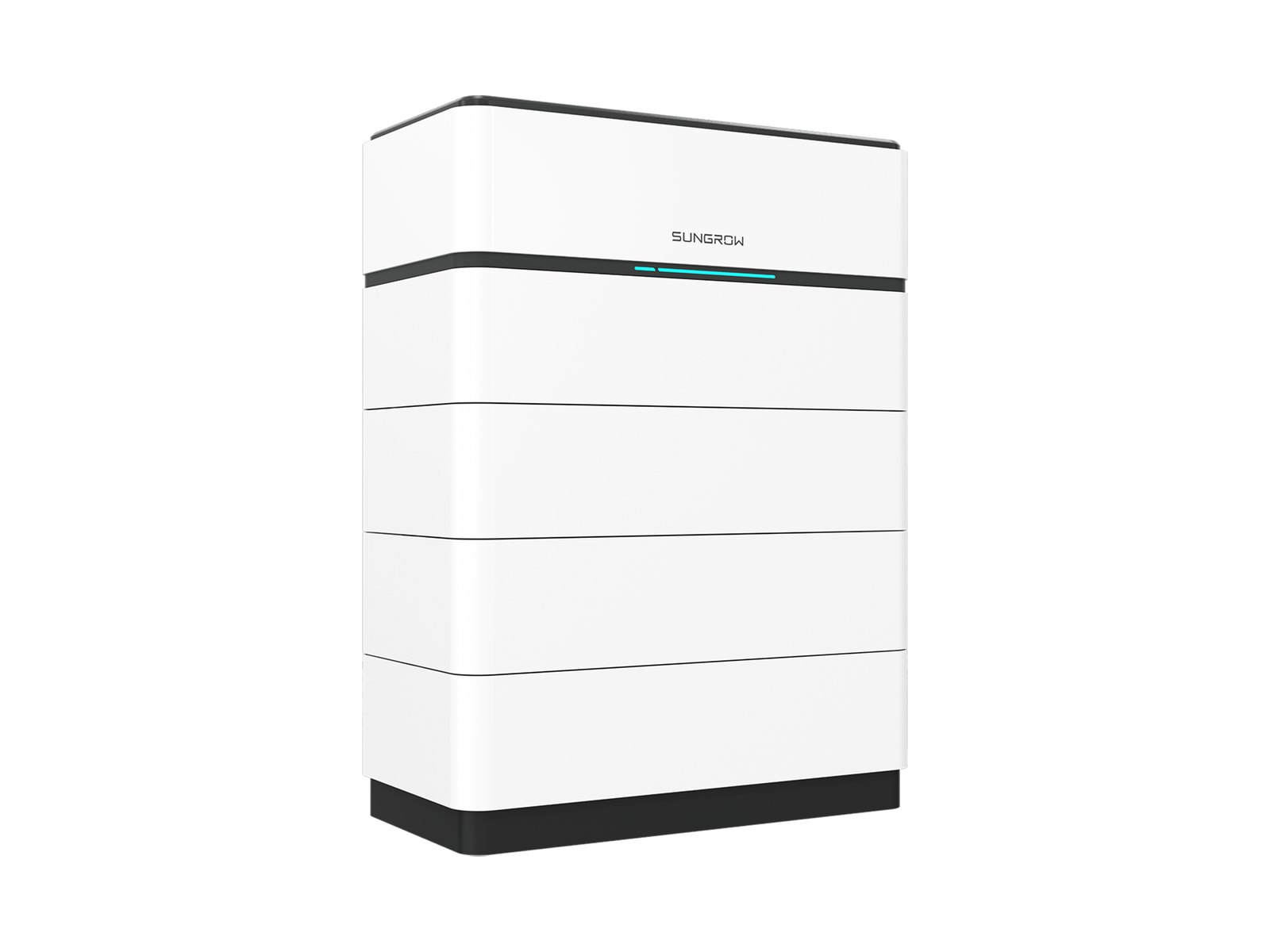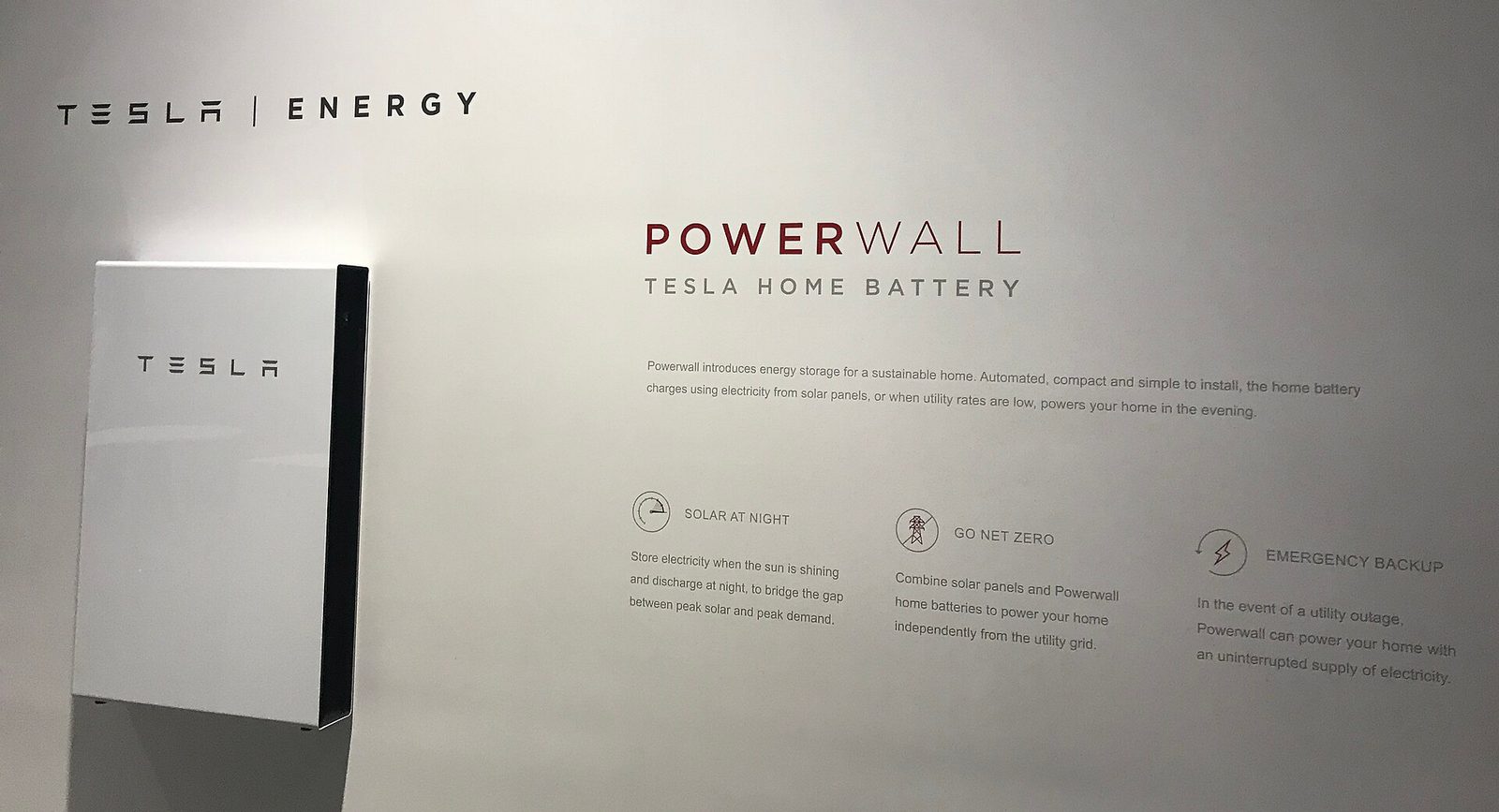

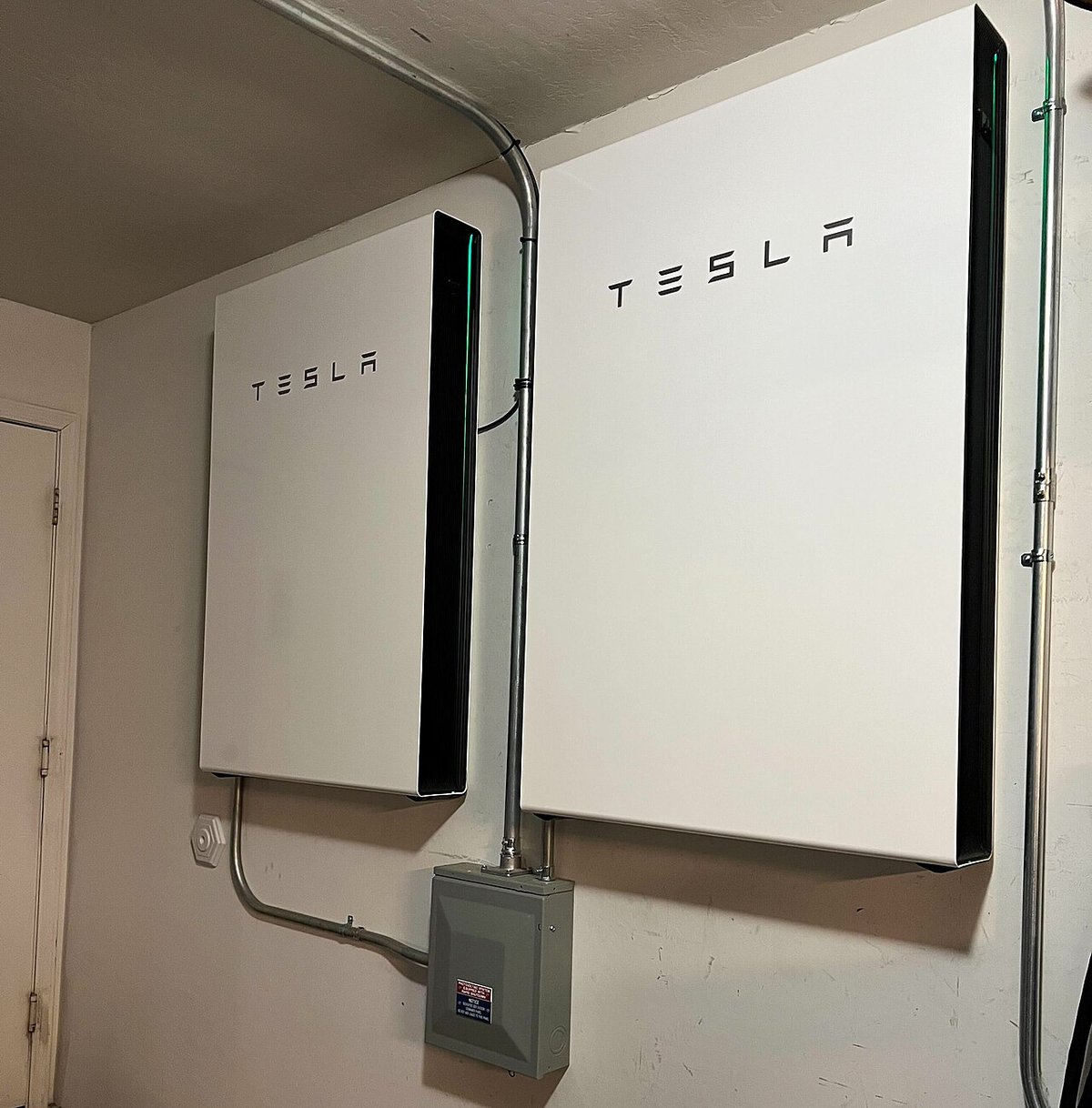
In the Tesla Powerwall vs Sigenergy contest, the Sigenergy SigenStor wins on price and three-phase homes, while the Tesla Powerwall 3 wins on single-phase backup power and warranty terms, as at November 2026. At 27 kWh a SigenStor is published at A$9,800 installed after the federal discount (Grow Energy), against A$16,974 for a Powerwall 3 with one Expansion unit. A Powerwall 3 delivers 10 kW from one box and has no cycle cap on everyday use.
This is independent desk research: Solar Cobber did not test either battery, request quotes or accept payment. Specs come from the current Australian datasheets and warranties; prices carry their source and date. For full detail see our Tesla Powerwall 3 review and Sigenergy SigenStor review.
Key facts
- As at 12 November 2026, Grow Energy lists a Tesla Powerwall 3 with Gateway (13.5 kWh) at A$11,159 installed after the federal discount, and a 27 kWh Powerwall 3 plus one Expansion at A$16,974.
- As at 12 November 2026, Grow Energy lists a 27 kWh Sigenergy SigenStor (three battery modules, 5 kW single-phase controller, no Gateway) at A$9,800 installed after the federal discount, about A$6,300 less than the Powerwall 3 at the same capacity once a A$900 Sigen Energy Gateway is added.
- The Tesla Powerwall 3 delivers up to 10 kW continuous output from one unit but charges at only 5 kW, according to Tesla’s Australian datasheet.
- A Sigenergy SigenStor battery module adds 2.5 kW (5.2 kWh BAT 5.0) or 4 kW (7.8 kWh BAT 8.0) of charge and discharge power, so its power grows with capacity, and three-phase controllers up to 30 kW back up all three phases.
- Sigenergy’s warranty caps throughput at about 3.05 MWh per usable kWh for all uses, while Tesla’s Australian warranty has unlimited cycles for solar self-consumption, time-of-use shifting and backup.
Tesla Powerwall 3 vs Sigenergy SigenStor at a glance
The table puts the two batteries side by side using each maker’s Australian documents and published prices, as at November 2026.
| Tesla Powerwall 3 | Sigenergy SigenStor | |
|---|---|---|
| Usable capacity options | 13.5 kWh per unit, up to 4 units plus 3 Expansions (7 units) | 5.2 or 7.8 kWh modules (the Australian warranty also lists 5.84, 8.76 and about 9 kWh modules), 1 to 6 per controller, up to 46.8 kWh with BAT 8.0 |
| Continuous and peak power | 5, 10 or 11.04 kW continuous per unit; 185 A locked-rotor start | Single phase 3 to 12 kW, three phase 5 to 30 kW; for example the 10 kW single-phase controller has 15 kW peak backup for 10 seconds |
| Battery charge and discharge power | Charge 5 kW (8 kW with Expansions promised on a future firmware); discharge up to the inverter rating | 2.5 kW (BAT 5.0) or 4 kW (BAT 8.0) per module, added together |
| Backup phases | Single phase only; backs up one phase on a three-phase home | Three-phase controllers back up all three phases |
| Coupling | DC-coupled all-in-one with a 10 kW hybrid inverter; Backup Gateway 2 required | DC-coupled all-in-one with a Sigen Energy Controller; Sigen Energy Gateway for backup |
| Solar input | Up to 20 kW DC, 3 MPPTs | DC/AC ratio up to 2, up to 4 MPPTs (24 kW DC on the 12 kW single-phase model) |
| Efficiency | 97.5% solar to home; 89% solar to battery to home | Controller peak 97.6% to 98.0%; no battery round-trip figure in the datasheets we read |
| Warranty | 10 years, 70% retained; unlimited cycles for self-use, time-of-use and backup; 37.8 MWh cap for other uses | 10 years, 70% retained or about 3.05 MWh per usable kWh for all uses, whichever comes first |
| Ingress rating and temperature | IP67 battery and electronics, IP55 wiring; -20 to 50 C | IP66; battery -20 to 55 C |
| Installed price after federal discount | A$11,159 to A$12,490 for 13.5 kWh (Grow Energy; Perth Solar Warehouse, November 2026) | A$9,300 to A$11,000 for 13 kWh (SolarQuotes, 2026); A$7,900 to A$12,000 for 18 kWh (November 2026) |
| App | Tesla app | mySigen app |
| Made in | Not stated in the Australian documents we read | Sigenergy is a China-founded company (see our Sigenergy brand guide) |
Price: SigenStor wins, and the gap widens with size
SigenStor wins on price at every size we could compare, and the gap grows as capacity rises. The chart divides Grow Energy’s published installed prices (after the federal discount, 12 November 2026) by usable kWh, for the only installer we found publishing both brands at several sizes.
Source: Grow Energy price pages for Tesla Powerwall 3 and Sigenergy, read 12 November 2026. Solar Cobber calculation: A$11,159/13.5, 6,300/9, 16,974/27, 24,274/40.5, 7,900/18, 9,800/27, 12,700/36, 15,400/45.
View the data as a table
| Installed price per usable kWh | |
|---|---|
| Powerwall 3, 13.5 kWh | A$827 |
| SigenStor, 9 kWh | A$700 |
| Powerwall 3 + 1 Expansion, 27 kWh | A$629 |
| Powerwall 3 + 2 Expansions, 40.5 kWh | A$599 |
| SigenStor, 18 kWh | A$439 |
| SigenStor, 27 kWh | A$363 |
| SigenStor, 36 kWh | A$353 |
| SigenStor, 45 kWh | A$342 |
The cheapest Sigenergy size is under half the per-kWh price of a single Powerwall 3, and even adding the Gateway keeps the 27 kWh SigenStor at about A$396 per kWh against A$629 for the Powerwall 3 pair.
| Configuration | Usable capacity | Installed price after federal discount | Per usable kWh | Source |
|---|---|---|---|---|
| Tesla Powerwall 3 with Gateway | 13.5 kWh | A$11,159 (Grow Energy, VIC) to A$12,490 (Perth Solar Warehouse, WA, 10 kW) | A$827 to A$925 | Installer pages, November 2026 |
| Powerwall 3 plus one Expansion | 27 kWh | A$16,974 | A$629 | Grow Energy, November 2026 |
| Powerwall 3 plus two Expansions | 40.5 kWh | A$24,274 | A$599 | Grow Energy, November 2026 |
| SigenStor, single phase | 13 kWh | A$9,300 to A$11,000 | A$715 to A$846 | SolarQuotes, 2026 |
| SigenStor, two 9 kWh modules | 18 kWh | A$7,900 (Grow Energy) to A$12,000 | A$439 to A$667 | Our Sigenergy battery price guide, November 2026 |
| SigenStor, three 9 kWh modules | 27 kWh | A$9,800 to A$13,990 | A$363 to A$518 | Our Sigenergy battery price guide, November 2026 |
Solar Cobber calculation, 27 kWh like for like: Sigenergy A$9,800 plus a A$900 Gateway is A$10,700. The Powerwall 3 pair is A$16,974, which is A$6,274 more, or about A$627 a year across the 10-year warranty. That buys the built-in 10 kW inverter, Tesla’s cycle-free warranty on everyday use and a bigger brand.
Treat the Powerwall 3 price with care. Tesla Australia’s order page was blocked to our tools on 14 November 2026, so the A$11,220 hardware price (including the Gateway) comes from our Powerwall 3 price guide, which read it on 12 November. Older pages still show A$11,200 for the battery plus A$1,950 for the Gateway, and one installer page still carries an “A$14,500 after rebate” example that its own price list contradicts. Sigenergy’s A$9,800 excludes the Gateway and uses a 5 kW controller, so ask each installer for a full, itemised quote. The federal discount for batteries installed up to 31 December 2026 uses 6.8 STCs per usable kWh and drops to 5.7 on 1 January 2027; see our battery rebate guide and state-by-state battery rebates.
Capacity and expansion: Sigenergy is more flexible
Sigenergy wins on flexibility because capacity is added in small modules, from 5.2 kWh up to 46.8 kWh behind one controller. A Powerwall 3 only comes in 13.5 kWh steps, and an Expansion unit adds capacity but no inverter or charge power.
The Expansion also earns less federal discount, because capacity between 14 and 28 kWh counts at 60% and 28 to 50 kWh at 15%, and the discount is once per household. Tesla’s Expansion hardware is A$8,600 (A$19,820 for a Powerwall 3 plus one, per Tesla Australia’s order page as recorded on 12 November 2026). For a small home, the smallest SigenStor stack (one 5.2 or 7.8 kWh module) fits better than a 13.5 kWh Powerwall 3 that the household may never fill.
Power and backup: Powerwall 3 wins on a single-phase home
The Powerwall 3 wins on raw power for a single-phase home: it discharges up to 10 kW from the first unit, whereas a SigenStor’s battery output depends on how many modules it has. The chart shows the maximum battery power for several configurations.
- Max discharge power
- Max charge power
Source: Tesla Powerwall 3 Australian datasheet; Sigenergy product brochure and single-phase controller datasheet, Australia. Solar Cobber calculation: Sigenergy module power added together (BAT 5.0 2.5 kW, BAT 8.0 4 kW); 13 kWh is one BAT 5.0 plus one BAT 8.0; 23.4 kWh is three BAT 8.0 on a 12 kW controller.
View the data as a table
| Max discharge power | Max charge power | |
|---|---|---|
| PW3 13.5 kWh | 10.0 kW | 5.0 kW |
| PW3 27 kWh | 10.0 kW | 5.0 kW |
| Sigen 13 kWh | 6.5 kW | 6.5 kW |
| Sigen 15.6 kWh | 8.0 kW | 8.0 kW |
| Sigen 23.4 kWh | 12.0 kW | 12.0 kW |
A Powerwall 3 outputs more at night than a small SigenStor, but a larger SigenStor charges faster: three BAT 8.0 modules charge at 12 kW against the Powerwall 3’s 5 kW, which matters on short winter days or in a cheap overnight tariff window.
Three phase is the decisive difference. The Powerwall 3 is single phase, so on a three-phase home it backs up one phase and cannot run three-phase appliances in a blackout, even with a unit on each phase. SigenStor has three-phase controllers from 5 to 30 kW that back up all three phases. See single vs three phase power for solar if you are unsure of your supply. Sigenergy says its Gateway gives 0 ms load-side disruption when the grid drops, a claim we have not seen independently tested.
Efficiency: not directly comparable
Neither maker publishes a figure that can be set directly against the other’s. Tesla quotes 97.5% from solar straight to the home and 89% for solar stored in the battery and used later. Sigenergy’s controller datasheet quotes a peak of 98.0% (5 and 6 kW single phase) or 97.6% (8 to 12 kW) and a European-weighted 97.0% to 97.4%, with no battery round-trip figure in the datasheets we read. Treat efficiency as a tie until an independent test reports both.
Warranty: Tesla’s terms are friendlier to heavy use
Tesla wins on warranty because ordinary solar self-consumption, time-of-use shifting and backup never count against a cap, while Sigenergy counts every kWh. Both give 10 years and 70% retained capacity. Sigenergy’s cap is 15.84 MWh for a BAT 5.0 and 23.77 MWh for a BAT 8.0, about 3.05 MWh per usable kWh. Tesla’s 37.8 MWh cap per 13.5 kWh unit (2.8 MWh per kWh) applies only to uses other than self-consumption, time-of-use and backup, such as exporting to the grid in a VPP.
Solar Cobber calculation: at one full cycle a day, a SigenStor uses 365 kWh of throughput per usable kWh a year, so it reaches its 3.05 MWh cap in about 8.3 years. The chart shows the years to the cap at other cycling rates.
Source: Sigenergy Factory Limited Warranty for SigenStor, Australia and New Zealand: 15.84 MWh per 5.2 kWh and 23.77 MWh per 7.8 kWh. Solar Cobber calculation: 3,046 kWh per usable kWh divided by (365 x cycles a day).
View the data as a table
| Years to the cap | |
|---|---|
| 0.5 a day | 16.7 years |
| 0.75 a day | 11.1 years |
| 1 a day | 8.3 years |
| 1.25 a day | 6.7 years |
| 1.5 a day | 5.6 years |
A SigenStor used at 0.83 full cycles a day or less lasts the full 10 years inside the cap, and a household cycling harder, or joining a VPP, can exhaust it earlier. Most homes use less than a full cycle a day in winter and more in summer, so check your own pattern. For both brands the warranty needs an internet connection: Tesla says it may honour only four years if the battery is offline for long periods or unregistered, and Sigenergy drops cover to five years after a year offline. See how long solar batteries last.
Safety and installation location
Both are lithium iron phosphate (LFP) batteries. SigenStor has the higher weather rating and heat ceiling (IP66, battery to 55 C against IP67 and 50 C for the Powerwall 3), though Tesla’s electronics rating is higher; the Powerwall 3 weighs 130 kg in one piece, while SigenStor modules weigh 55 or 70 kg and can be floor standing or wall mounted.
Neither maker’s rating replaces Australian installation rules. We did not verify AS/NZS 5139 location requirements for these products, so ask the installer where each unit may go and what clearances apply. Fan noise on the Powerwall 3 can reach 62 dB(A) at 1 m, so avoid walls shared with bedrooms.
Recall history differs. In November 2025 Sigenergy recalled SigenStor EC 8.0, 10.0 and 12.0 kW single-phase controllers sold from 4 March to 18 November 2025 because quick-connect AC plugs could overheat, with replacements offered. Tesla’s September 2025 Australian recall covered some Powerwall 2 units, not the Powerwall 3. If you are buying an 8, 10 or 12 kW SigenStor, ask for the redesigned plug. See are solar batteries safe for general safety questions.
Software and VPP: both qualify, Tesla’s app is simpler
Both batteries appear on the Clean Energy Council approved batteries list, which is needed for the federal discount, as our reviews record. Tesla’s app is widely praised for its polish, while the mySigen app shows detail down to cell voltages and temperatures (see our mySigen app guide). SolarQuotes reports that SigenStor has been integrated with several Australian VPP platforms, and Tesla runs its own VPP offers in some states. Read what a VPP is first, because VPP cycling counts against Sigenergy’s cap and Tesla’s non-self-use cap.
Support in Australia and owner ratings
Tesla’s warranty lists a postal address in Alexandria, Sydney, while Sigenergy has a Sydney office and Sigenergy Australia Pty Ltd handles recalls and warranty service. Ratings point in opposite directions, so treat the counts with care.
| Platform | Tesla Powerwall 3 | Sigenergy SigenStor |
|---|---|---|
| SolarQuotes owner ratings | 4.9 out of 5 from 390 ratings | 4.9 out of 5 from 1,998 ratings |
| ProductReview.com.au | 1.9 out of 5 from 6 reviews | 2.7 out of 5 from 19 reviews |
| SolarQuotes 2025 Installers’ Choice (battery brand installers would put on their own home) | Tied first with Sungrow | Second |
The ratings come from our reviews, read in October and November 2026, and may have moved since. Installers rate both brands highly, while the few ProductReview owners describe slow support responses. Market share favours SigenStor: SunWiz, reported by RenewEconomy on 21 January 2026, ranked Sigenergy first in 2025 with about 25% of the market, with Tesla fourth in March 2025.
Which should you buy?
The right choice depends on phase, budget and how hard you will cycle the battery.
- Small single-phase home: a small SigenStor (one or two modules) is cheaper per kWh and does not oblige you to buy 13.5 kWh.
- Big home with an EV: SigenStor, because charge power rises with modules (12 kW with three BAT 8.0) and Sigenergy sells a DC EV charging module. Check the throughput cap if you will also use a VPP.
- Blackout-prone single-phase home: Powerwall 3 for 10 kW from one unit and 185 A motor start, or a SigenStor with enough modules and the Gateway.
- Three-phase home: SigenStor, because the Powerwall 3 cannot back up all three phases.
- Tight budget: SigenStor, by about A$6,300 at 27 kWh on Grow Energy’s prices.
- Heavy daily cycling or VPP income with an unlimited-cycle warranty priority: Powerwall 3. For a three-way view see Tesla Powerwall 3 vs Sungrow and Sigenergy vs Sungrow.
What to check on your quote
An itemised quote should show the hardware, Gateway, the number of STCs and installation separately.
- The Gateway (Backup Gateway 2 for Tesla, Sigen Energy Gateway for Sigenergy) is listed and included.
- The controller size or configured output (5, 10 or 11.04 kW for Tesla; 3 to 12 kW single phase for Sigenergy) and the module count.
- The usable kWh used for the STC line, because Sigenergy module capacities are quoted differently across sources.
- For Sigenergy 8, 10 or 12 kW single phase, the redesigned plug.
- Which phase and circuits are backed up, if you have three-phase power.
- Whether the installer is a Tesla Certified Installer, or experienced with Sigenergy claims. Check the Clean Energy Council approved retailer list and the Solar Accreditation Australia register yourself.
Use our guide to comparing solar quotes and browse our installer directory, or see Tesla specialists in Sydney.
FAQ
Is Sigenergy better than Tesla Powerwall?
Neither is better for everyone: Sigenergy SigenStor is cheaper and suits three-phase homes, while the Tesla Powerwall 3 has stronger single-phase power and a warranty that does not count everyday cycles. On Grow Energy’s prices a 27 kWh SigenStor costs about A$6,300 less than a Powerwall 3 with one Expansion.
How much cheaper is Sigenergy than Powerwall 3?
About A$6,300 at 27 kWh, or A$10,700 against A$16,974 installed after the federal discount, on Grow Energy’s prices read on 12 November 2026. At around 13 kWh the gap is smaller: A$9,300 to A$11,000 for a SigenStor against A$11,159 to A$12,490 for a Powerwall 3.
Does Sigenergy or Tesla have the better warranty?
Tesla has the better warranty terms for typical solar use, because cycles for self-consumption, time-of-use and backup are unlimited, while Sigenergy caps all use at about 3.05 MWh per usable kWh. Both promise 10 years and 70% retained capacity.
Can the Tesla Powerwall 3 run a three-phase home?
Only partly. It backs up one phase and cannot run three-phase appliances in a blackout, even with a unit on each phase. A Sigenergy three-phase controller backs up all three.
Was the Sigenergy recall serious?
It involved a fire risk: in November 2025 Sigenergy recalled SigenStor 8, 10 and 12 kW single-phase controllers whose AC plugs could overheat. Affected owners are offered a replacement, and newer units use a redesigned plug.
Which is more popular in Australia?
Sigenergy. SunWiz ranked it first in 2025 with about 25% of home battery sales, as reported by RenewEconomy in January 2026, with Tesla fourth in March 2025. We found no full-year 2026 ranking as at November 2026.
Which battery is quieter and better for a hot climate?
SigenStor has the higher heat rating, with battery operation to 55 C against 50 C for the Powerwall 3. The Powerwall 3’s fans can reach 62 dB(A) at 1 m, so placement matters for both.
Sources
- Tesla Powerwall 3 Datasheet, Australia (PDF)
- Tesla Powerwall Warranty, Australia and New Zealand (PDF)
- Sigen Energy Controller single phase datasheet (PDF)
- Sigenergy product brochure, Australia (PDF)
- Sigenergy Factory Limited Warranty for SigenStor, Australia and New Zealand (PDF)
- Grow Energy: Tesla Powerwall 3 prices, read 12 November 2026
- Grow Energy: Sigenergy SigenStor prices, read 12 November 2026
- Perth Solar Warehouse: Tesla Powerwall 3 package prices
- SolarQuotes: Solar battery prices and system costs (May 2026)
- SolarQuotes: Sigenergy battery review
- SolarQuotes: Tesla Powerwall 3 review
- pv magazine Australia: Sigenergy recall (24 November 2025)
- RenewEconomy: Sigenergy crowned top home battery supplier (21 January 2026)
- DCCEEW: Cheaper Home Batteries Program
- Clean Energy Council approved batteries list
About this guide
This guide was written by the Solar Cobber editorial team from independent desk research, with every price and specification checked in November 2026. Solar Cobber is a free directory that may earn referral or advertising fees from installers, and commercial relationships never affect our content. This is general information and not financial advice. If you spot an error, send a correction through our contact page.
Filed under Solar Products
Back to blog