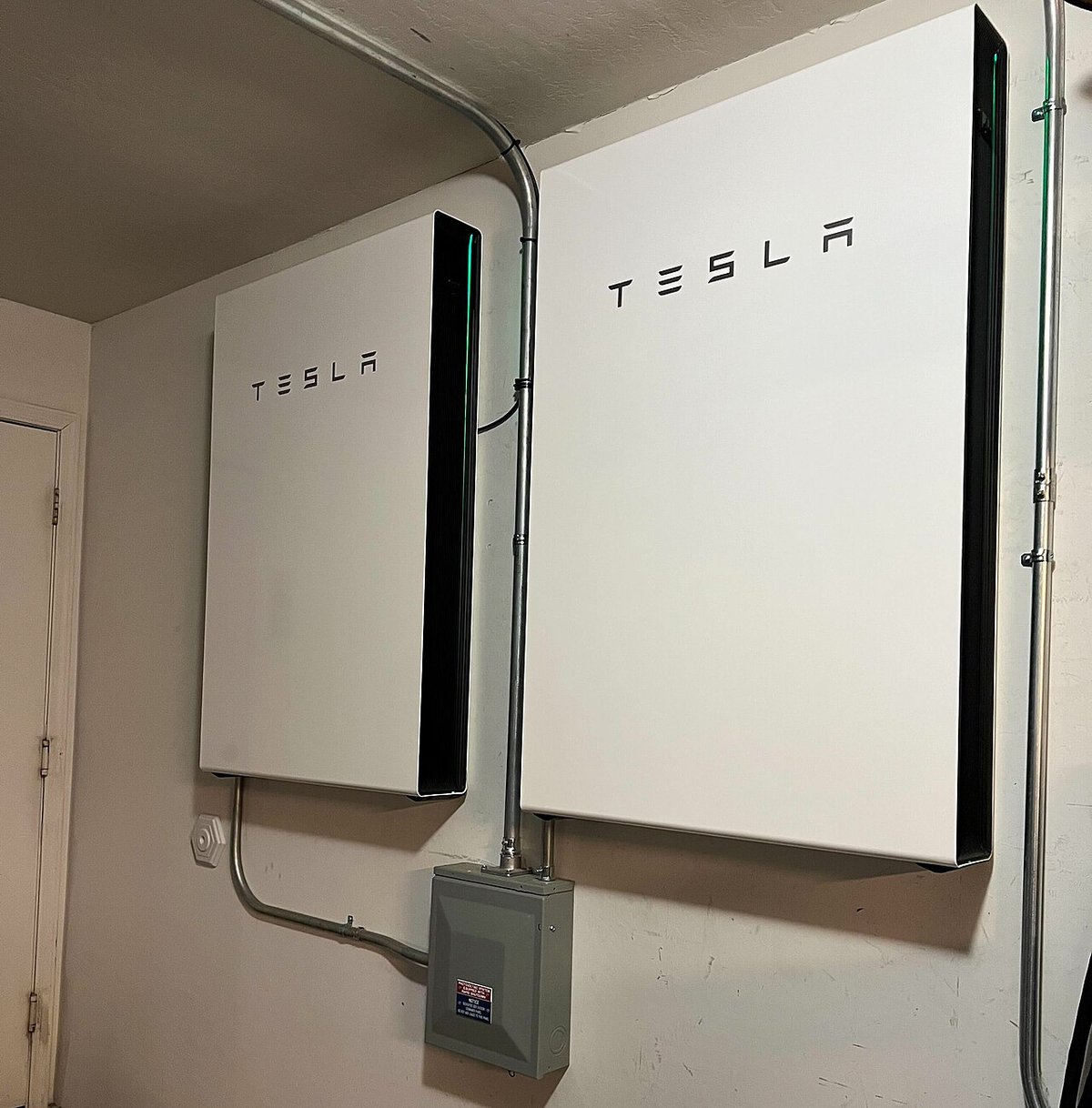

Tesla Powerwall 3 vs Sungrow comes down to one trade. As at November 2026, a Tesla Powerwall 3 costs about A$741 per usable kWh with its 10 kW inverter included, against A$914 for a 12.8 kWh Sungrow SBR128 plus a 10 kW Sungrow hybrid (Solar Cobber calculation from SolarQuotes prices). Sungrow wins on size: up to 160 kWh and full three-phase backup. Tesla is single phase only.
This is independent desk research. Solar Cobber did not test either product, obtain quotes or accept payment. Read first: our Tesla Powerwall 3 review, Sungrow SBR review and Sungrow SBH review.
Key facts
- As at November 2026, one Tesla Powerwall 3 stores 13.5 kWh, includes a 10 kW hybrid solar inverter and is single phase only (Tesla Australia datasheet).
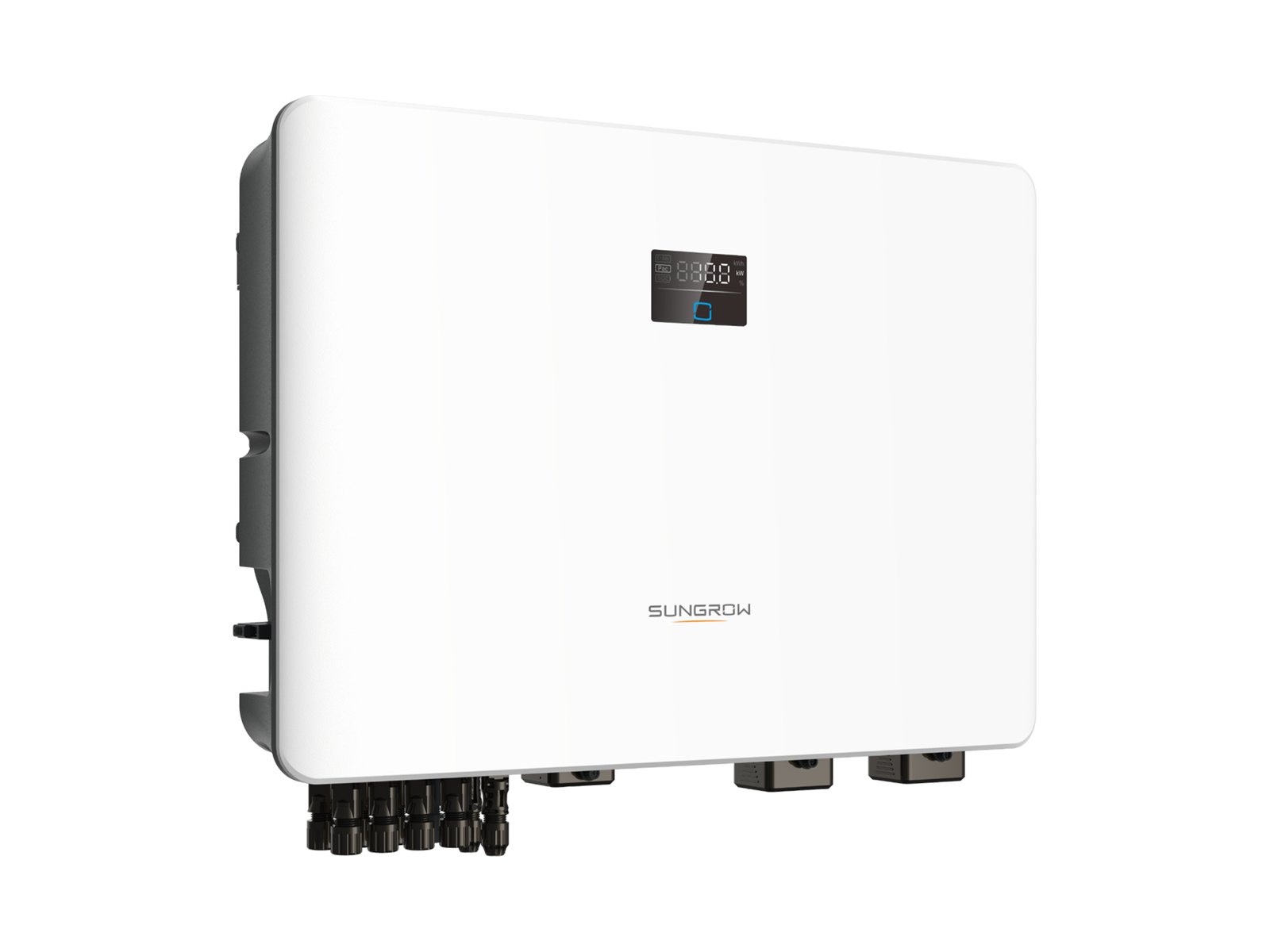
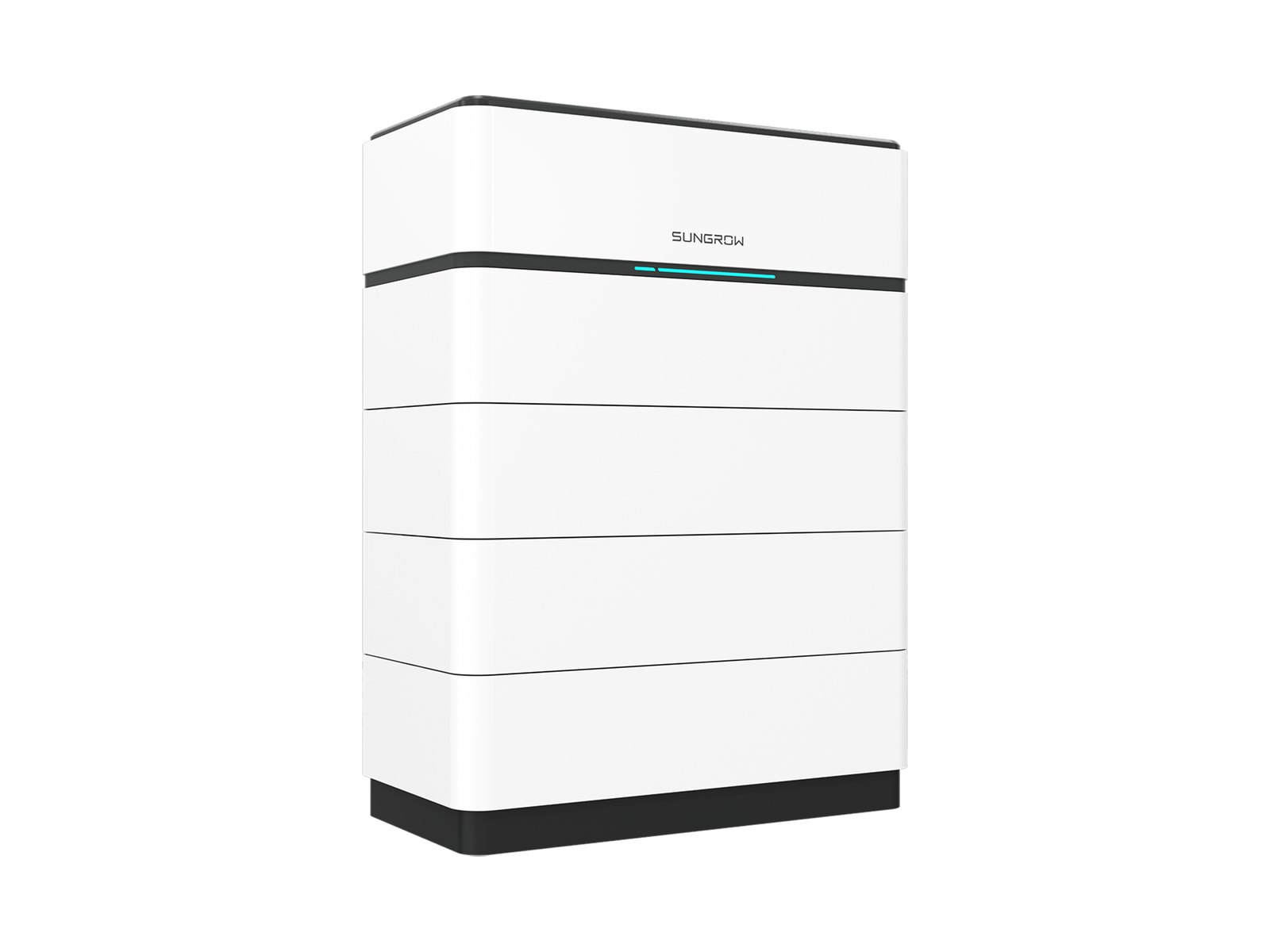
- A Sungrow SBR stack stores 9.6 to 25.6 kWh and a Sungrow SBH stack stores 15 to 40 kWh, and both need a separate Sungrow hybrid inverter that costs about A$2,300 to A$3,600 (SolarQuotes, May 2026).
- Tesla and Sungrow give the same warranty shape: 10 years, 70% retained capacity, unlimited cycles for self-consumption and backup, and a cap of 2.8 MWh per usable kWh for other uses.
- A 13.5 kWh Tesla Powerwall 3 earns about 91 small-scale technology certificates (STCs) under the Cheaper Home Batteries Program for installs from 1 May to 31 December 2026, and about 76 from 1 January 2027.
- A Tesla Powerwall 3 charges at only 5 kW, while a Sungrow SBH stack is rated for 50 A of charge and discharge, or 10.56 to 28.16 kW (Tesla and Sungrow datasheets).
Tesla Powerwall 3 vs Sungrow at a glance
The table compares the Tesla Powerwall 3 with the Sungrow SBR and SBH batteries, using Australian datasheets and warranty documents and prices checked in November 2026. Sungrow batteries are DC batteries, so every Sungrow row assumes a Sungrow hybrid inverter such as the Sungrow SH RS.
| Tesla Powerwall 3 | Sungrow SBR | Sungrow SBH | |
|---|---|---|---|
| Usable capacity per unit or stack | 13.5 kWh (Expansion adds 13.5 kWh each) | 6.4 to 25.6 kWh in 3.2 kWh modules | 15 to 40 kWh in 5 kWh modules |
| Largest system | 4 Powerwall 3 plus 3 Expansions, 94.5 kWh | 4 stacks, 102.4 kWh | 4 stacks, 160 kWh |
| Battery power | 10 kW typical (5, 10 or 11.04 kW configured); charging capped at 5 kW | 3.84 to 15.36 kW (30 A) | 10.56 to 28.16 kW (50 A) |
| Inverter | Built in, 10 kW, up to 20 kW of panels | Separate Sungrow hybrid | Separate Sungrow hybrid |
| Coupling | DC, or AC coupled to an existing solar system | DC | DC |
| Phase | Single phase only | Single or three phase | Single or three phase |
| Round-trip efficiency | 89% solar to battery to home (97.5% solar to home) | Not published on the 2023 datasheet | Not published on the datasheets we read |
| Warranty | 10 years, 70% retained, unlimited cycles for self-use; 37.8 MWh cap for other uses | 10 years, 70% retained, unlimited cycles for self-use; 2.8 MWh per kWh for other uses | Same terms as SBR, from 42 MWh (SBH150) to 112 MWh (SBH400) |
| Ingress rating | IP67 (wiring compartment IP55) | IP55 | IP55 |
| Installed price after the federal discount | A$11,159 to A$12,490 | A$13,400 to A$14,700 with new hybrid (estimate); A$8,800 SolarQuotes example | A$17,000 to A$19,700 for 20 kWh with new hybrid (estimate) |
| App | Tesla app | iSolarCloud | iSolarCloud |
| Country of manufacture | Not stated in the Australian documents we read | Not stated in the Australian documents we read | Not stated in the Australian documents we read |
Sources: Tesla Powerwall 3 datasheet, Sungrow SBR datasheet, Sungrow SBH datasheet V3 and our Sungrow battery price guide.
Which is cheaper, Tesla Powerwall 3 or Sungrow?
The Tesla Powerwall 3 is cheaper per usable kWh once the inverter is counted, because the Sungrow battery price excludes a hybrid inverter. On SolarQuotes’ May 2026 prices, a Powerwall 3 with its Gateway is about A$10,000 after the federal discount, before installation, for 13.5 kWh and a built-in 10 kW inverter.
The Sungrow equivalent adds A$3,600 for a 10 kW single-phase hybrid inverter (SolarQuotes, May 2026). The chart divides each total by usable capacity.
Source: SolarQuotes battery price list, 12 May 2026, and Sungrow hybrid inverter price (A$3,600 for 10 kW); Solar Cobber calculation. Solar Cobber calculation: (battery price + A$3,600 inverter) divided by usable kWh. The Powerwall 3 price includes its built-in 10 kW inverter and Gateway.
View the data as a table
| Price per usable kWh | |
|---|---|
| Sungrow SBR128 12.8 kWh | A$914 |
| Sungrow SBR160 16 kWh | A$806 |
| Sungrow SBH200 20 kWh | A$765 |
| Tesla Powerwall 3 13.5 kWh | A$741 |
| Sungrow SBR192 19.2 kWh | A$760 |
| Sungrow SBH250 25 kWh | A$704 |
The Powerwall 3 beats Sungrow’s smaller stacks (SBR128 at A$914 per kWh) but loses to the largest ones (SBH250 at A$704), because Sungrow’s inverter cost is spread over more kWh.
That is a battery-and-inverter comparison before installation. Published installed prices tell a similar story, with wider spread. The table shows installed prices after the federal discount, checked November 2026.
| System | Usable capacity | Installed price after federal discount | Price per usable kWh | Source |
|---|---|---|---|---|
| Tesla Powerwall 3 with Gateway | 13.5 kWh | A$11,159 (Grow Energy, VIC) to A$12,490 (Perth Solar Warehouse, WA) | A$827 to A$925 | Installer price pages, November 2026 |
| Sungrow SBR128 with new hybrid | 12.8 kWh | A$13,400 to A$14,700 | A$1,047 to A$1,148 | Solar Cobber estimate from SolarQuotes components |
| Sungrow SBR128, SolarQuotes example | 12.8 kWh | About A$8,800 | About A$688 | SolarQuotes, May 2026 |
| Sungrow SBH200 with new hybrid | 20 kWh | A$17,000 to A$19,700 | A$850 to A$985 | Solar Cobber estimate from SolarQuotes components |
- Low
- High
Source: Grow Energy and Perth Solar Warehouse installer pages (Tesla); SolarQuotes component prices, May 2026 (Sungrow); Solar Cobber calculation. Sungrow figures are Solar Cobber estimates (battery, hybrid inverter and A$3,000 installation, less the discount), not quotes.
View the data as a table
| Low | High | |
|---|---|---|
| Powerwall 3 | A$827 | A$925 |
| Sungrow SBR128 | A$1,047 | A$1,148 |
| Sungrow SBH200 | A$850 | A$985 |
On installed cost, the Powerwall 3 sits between a 12.8 kWh and a 20 kWh Sungrow system, and SolarQuotes’ A$8,800 example shows quotes can land well below any estimate. Our Sungrow battery price guide and Powerwall 3 price guide hold the full lists. Their gap between the two brands (Tesla A$1,900 to A$3,700 higher) compares the battery with a Sungrow system whose inverter may sit outside the quote, which is why the basis matters.
Solar Cobber calculation: payback by city
A Powerwall 3 pays back faster than a Sungrow SBR128 on a like-for-like estimate, but the lowest Sungrow quotes win. Assumptions: the battery supplies 10 kWh a day to the home, each kWh avoids the 2026-27 usage rate in the network area and gives up a 3 c/kWh feed-in credit, with losses, degradation, VPP income and price rises ignored. Usage rates are from our average electricity bill guide: 33.1 c/kWh Ausgrid (Sydney), 41.9 c/kWh SA Power Networks (Adelaide), 28.0 c/kWh Energex (south-east Queensland). Saving a year is 10 x 365 x (rate less 0.03): A$1,099, A$1,420 and A$913. Cost is the middle of each range: A$11,825 for the Powerwall 3 and A$14,050 for an SBR128 with a new hybrid inverter.
- Tesla Powerwall 3 (A$11,825)
- Sungrow SBR128 with new hybrid (A$14,050)
- Sungrow SBR128, SolarQuotes example (A$8,800)
Source: Installer prices and SolarQuotes, November 2026; usage rates from Solar Cobber's average electricity bill guide (2026-27). Assumes 10 kWh a day delivered from the battery and a 3 c/kWh feed-in credit forgone; no losses, VPP income or price rises.
View the data as a table
| Tesla Powerwall 3 (A$11,825) | Sungrow SBR128 with new hybrid (A$14,050) | Sungrow SBR128, SolarQuotes example (A$8,800) | |
|---|---|---|---|
| Adelaide | 8.3 yrs | 9.9 yrs | 6.2 yrs |
| Sydney | 10.8 yrs | 12.8 yrs | 8.0 yrs |
| Brisbane | 13.0 yrs | 15.4 yrs | 9.6 yrs |
In Adelaide the Powerwall 3 pays back in about 8.3 years and a typical Sungrow system in about 9.9 years; in Brisbane both take 13 years or more. A household that uses only half that energy from the battery doubles every figure.
Which has more capacity and room to expand?
Sungrow wins on capacity: a single SBH400 stack holds 40 kWh and four SBH stacks reach 160 kWh, against 94.5 kWh for a maximum Tesla system. The Powerwall 3 comes only in 13.5 kWh steps, so a 20 kWh need means buying 27 kWh. The Sungrow SBR adds 3.2 kWh at a time, which suits a staged purchase.
Source: Tesla Powerwall 3 datasheet (Australia, 2025); Sungrow SBR and SBH datasheets and extension manual. Solar Cobber calculation: units multiplied by usable kWh per unit.
View the data as a table
| Maximum usable capacity | |
|---|---|
| Sungrow SBH, 4 stacks of 40 kWh | 160.0 kWh |
| Sungrow SBR, 4 stacks of 25.6 kWh | 102.4 kWh |
| Tesla Powerwall 3, 4 units plus 3 Expansions | 94.5 kWh |
Few homes need more than 40 kWh. The expansion price matters more: a Powerwall 3 Expansion earns a smaller federal discount (60% of the rate above 14 kWh), and the discount is available once per household, so buying it with the main unit is usually cheaper.
Which is better for power and backup?
For a single-phase home the two are close, but Sungrow wins on three phase. A Powerwall 3 delivers 10 kW (typically) and starts motors rated to 185 A locked rotor, and a Sungrow SH10RS hybrid backs up 10 kW of the whole home through a 63 A bypass with a switchover under 10 ms (Sungrow datasheet). The Sungrow SH5.0RS and SH6.0RS back up only a dedicated circuit.
The Powerwall 3 is a single-phase product. On a three-phase home it can back up one phase and cannot run three-phase appliances in a blackout. Sungrow’s three-phase SH-T hybrids with an SBR or SBH can back up all three phases. Sungrow’s engineers say the three-phase models do not share power between phases, so a 15 kW model supplies at most 5 kW per phase (a SolarQuotes commenter quoting Sungrow staff). Read single vs three phase power for solar before choosing.
Charging speed favours Sungrow on paper. The Powerwall 3 charges at 5 kW, and Tesla’s datasheet says 8 kW will arrive with Expansion units on a future firmware version. A Sungrow SBH is rated at 50 A, but the inverter limits it: the SH5.0RS and SH6.0RS cap battery current at 30 A (6.6 kW). The best batteries for blackout backup guide covers what a backed-up home can run.
Which is more efficient?
Tesla wins by default, because it is the only one that publishes a round-trip figure we could read. The Powerwall 3 datasheet lists 89% for solar stored in the battery and used later and 97.5% for solar straight to the home. The 2023 Sungrow SBR datasheet gives no round-trip efficiency, and we found none on the SBH datasheets, so we cannot rank them on this measure. Ask your installer for Sungrow’s figure for your inverter and battery pairing in writing.
Which warranty is better?
The two are close to identical on paper, and both are among the stronger terms in Australia. Both offer 10 years, at least 70% of capacity at the end, and unlimited cycles for self-consumption and backup. Both cap other uses, such as VPP export or trading, at 2.8 MWh per usable kWh: 37.8 MWh for one Powerwall 3 and 35.84 MWh for an SBR128. The table shows what the differences are.
| Term | Tesla Powerwall 3 | Sungrow SBR and SBH |
|---|---|---|
| Document | Tesla AU/NZ warranty, effective 3 September 2026 | Sungrow HV Battery Limited Warranty V9.0, installs from 21 May 2026 |
| Term and retention | 10 years, 70% | 10 years (10.5 from manufacture), 70% |
| Internet or monitoring | If offline for long periods or not registered, Tesla may honour only 4 years | Must be monitored in iSolarCloud; incomplete data means at least 4 years |
| Heat condition | None found in the document we read | Cover may not apply with 90 or more days a year at 35 to 40 C, or 30 or more days above 40 C |
| Transferable | Yes, with proof of ownership | No, original end user only |
| Added modules | Expansion covered as its own unit | Added modules inherit the original start date |
| Installer rule | Tesla certified installer required | Compatible Sungrow inverter required |
Sungrow’s heat condition and non-transferable cover are the two terms to weigh in hot inland areas or when you may sell. Tesla’s transferable warranty adds resale value, but it needs an internet connection.
Source: Tesla AU/NZ Powerwall warranty, September 2026; Sungrow HV Battery Limited Warranty V9.0, May 2026.
View the data as a table
| Throughput cap | |
|---|---|
| Sungrow SBH200 (20 kWh) | 56.00 MWh |
| Tesla Powerwall 3 (13.5 kWh) | 37.80 MWh |
| Sungrow SBR128 (12.8 kWh) | 35.84 MWh |
Per usable kWh the cap is the same at 2.8 MWh, so the larger Sungrow stack simply has more total throughput.
Which is safer, and where can it go?
The Powerwall 3 has the tougher enclosure; Sungrow has the quieter, passively cooled design. Tesla rates the battery and power electronics IP67, and its fan noise reaches 62 dB(A) at 1 m, so avoid a wall shared with a bedroom. Sungrow’s SBR and SBH are IP55 with natural convection and no fan, so they need shelter from rain and shade. A Powerwall 3 weighs 130 kg and a Sungrow SBR is 114 kg to 279 kg, with garage installs often needing bollards.
Both must meet Australian battery location rules, which an accredited installer applies, and both must be on the Clean Energy Council (CEC) approved list on installation day to earn the federal discount. The Powerwall 3 is listed (certificates BAT-553 and BAT-659). Our October 2026 reviews recorded the SBR listing (BAT-474) expiring on 30 November 2026 and the SBH (BAT-505) on 4 January 2027, and we could not re-check the live list, so ask for written confirmation. Neither product has a safety recall in Australia in the sources we read; Tesla’s September 2025 recall covered some Powerwall 2 units only. See are solar batteries safe.
Which has better software and VPP support?
Tesla has the better-rated app; Sungrow works with more third-party VPPs. SolarQuotes describes the Tesla app as excellent and the Sungrow iSolarCloud as detailed but hard to navigate. Wattever’s October 2026 compatibility table lists Sungrow as compatible with AGL, Amber SmartShift, Diamond Energy, EnergyAustralia, GloBird, Origin Loop and ActewAGL. Tesla runs its own VPP offers in some states, and we did not verify its list of third-party programs. A federal-discount battery must be VPP-capable. Our VPP explainer covers how the throughput caps interact with them.
Which has better support in Australia?
Neither has a clear edge. Claims for both go to your installer first. Tesla’s warranty lists a Sydney postal address and an Australian 1800 number. Sungrow Australia has been in North Sydney since 2012 and takes claims through an online portal. SolarQuotes’ Sungrow battery page averages 4.9 out of 5 from 1,094 ratings and its Powerwall 3 page 4.9 from 390 (2026), and both tied for first in SolarQuotes’ 2025 Installers’ Choice Awards. On ProductReview.com.au, Powerwall 3 has six reviews averaging 1.9 out of 5 and Sungrow products 41 reviews averaging 1.9 out of 5. Both samples are small and self-selected, and the complaints centre on support responsiveness, not battery failures. Sungrow’s owner complaints also include phone lines that are sometimes overwhelmed.
Which should you buy?
Choose by home, not by brand. The table gives our desk-research view as at November 2026.
| Household | Better fit | Why |
|---|---|---|
| Small single-phase home, new solar | Tesla Powerwall 3 | Built-in 10 kW inverter, lower cost per kWh than a small Sungrow stack plus inverter |
| Large home or EV, 20 kWh or more | Sungrow SBH on SH-T or SH10RS | Capacity to 40 kWh a stack, lowest price per kWh at 25 kWh |
| Blackout-prone, single phase | Either | Tesla 10 kW with 185 A start; Sungrow SH8.0RS or SH10RS whole-home bypass |
| Three-phase home wanting full backup | Sungrow | Powerwall 3 backs up one phase only |
| Tight budget | Sungrow, if a quote is near A$8,800 | The cheapest published Sungrow figure beats Tesla, but check inverter inclusion |
| Existing Sungrow hybrid | Sungrow SBR or SBH | Skips A$2,300 to A$3,600 inverter cost |
| Existing solar inverter you want to keep | Tesla Powerwall 3 | Can be AC coupled if the inverter is 5 kW or less per unit |
Compare also our Sigenergy vs Sungrow, Powerwall 3 vs Sigenergy and GoodWe vs Sungrow guides, and AC vs DC coupled batteries.
What to check on your quote
A fair Tesla or Sungrow quote lets you rebuild the price line by line.
- The exact model: Powerwall 3 with Backup Gateway 2, or the Sungrow battery (SBR128, SBH200 and so on) and the named hybrid inverter, plus Sungrow’s cross-reference chart confirming the pairing.
- The federal discount as its own line with the STC count: about 91 for a 13.5 kWh Powerwall 3 and about 87 for an SBR128 until 31 December 2026, with the factor falling from 6.8 to 5.7 on 1 January 2027.
- Configured output (5 kW, 10 kW) and, on a three-phase home, which circuits are backed up.
- Switchboard work, cable runs and bollards itemised.
- The warranty version and, for Sungrow, shade or ventilation for the heat condition.
- Written CEC listing status on installation day.
- A Tesla certified installer for a Powerwall 3, and your own check of the CEC approved retailer list and Solar Accreditation Australia register.
Use how to compare solar quotes, our battery installer guides and the installer directory to get at least three quotes. For the discount, see our federal battery rebate guide.
FAQ
Is Tesla Powerwall 3 better than Sungrow?
Neither is better for every home. The Powerwall 3 is cheaper per kWh for 13.5 kWh single-phase systems with a 10 kW inverter included, while Sungrow is better for three-phase homes and for 20 kWh or more. As at November 2026 their warranty terms are nearly identical.
Is Sungrow cheaper than Tesla Powerwall?
It depends on the quote. A Sungrow battery alone is cheaper, but with a Sungrow hybrid inverter a 12.8 kWh SBR costs about A$914 per kWh against A$741 for a Powerwall 3 on SolarQuotes’ May 2026 prices. A low quote such as SolarQuotes’ A$8,800 example can still beat Tesla.
Can I use a Sungrow battery with a Tesla inverter, or the reverse?
No. A Sungrow SBR or SBH works only with a compatible Sungrow hybrid inverter, and using another inverter voids its warranty. The Powerwall 3 has its own inverter and cannot be paired with Sungrow batteries.
Does Powerwall 3 work on three-phase power?
Only partly. It connects to one phase, backs up only that phase and cannot run three-phase appliances in a blackout. Sungrow’s three-phase hybrids with an SBR or SBH can back up all three phases.
Which has the longer warranty, Tesla or Sungrow?
Both give 10 years with 70% capacity retained and unlimited cycles for self-consumption and backup. Tesla’s warranty is transferable to a new owner and Sungrow’s is not, while Sungrow’s V9.0 adds a heat condition.
How much federal rebate do I get on each?
A 13.5 kWh Powerwall 3 earns about 91 STCs, roughly A$3,400 to A$3,600, and a 12.8 kWh Sungrow SBR128 about 87 STCs, roughly A$3,300 to A$3,500, for installs to 31 December 2026. Both fall by about 16% on 1 January 2027 when the factor drops to 5.7.
Can I add more capacity later?
Yes for both, with caveats. A Sungrow SBR takes extra 3.2 kWh modules, though they inherit the original warranty start date. A Powerwall 3 Expansion adds 13.5 kWh but earns less federal discount if bought later.
Which battery is more reliable?
We could not find independent failure-rate data for either. Both rate 4.9 out of 5 on SolarQuotes, and neither has a recall of the models covered here in the sources we read.
Sources
- Tesla Powerwall 3 Datasheet, Australia (PDF)
- Tesla Powerwall Warranty, Australia and New Zealand (PDF)
- Sungrow SBR064 to SBR256 datasheet (PDF)
- Sungrow SBH200 to SBH400 datasheet V3 (PDF)
- Sungrow HV Battery Limited Warranty, Australia, V9.0 (PDF)
- Sungrow SBR and SBH cross-reference chart V2.4 (PDF)
- SolarQuotes: Solar battery prices and system costs (May 2026)
- SolarQuotes: Sungrow battery review
- SolarQuotes: Tesla Powerwall 3 review
- DCCEEW: Cheaper Home Batteries Program
- Clean Energy Council approved batteries list
- Wattever: VPP compatibility by battery (October 2026)
- ProductReview.com.au: Tesla Powerwall 3
About this guide
Written by the Solar Cobber editorial team from independent desk research checked in November 2026. Solar Cobber is a free directory that may earn referral or advertising fees from installers; commercial relationships never affect our content. This is general information, not financial advice. Spotted an error? Tell us at /contact.
Filed under Solar Products
Back to blog