
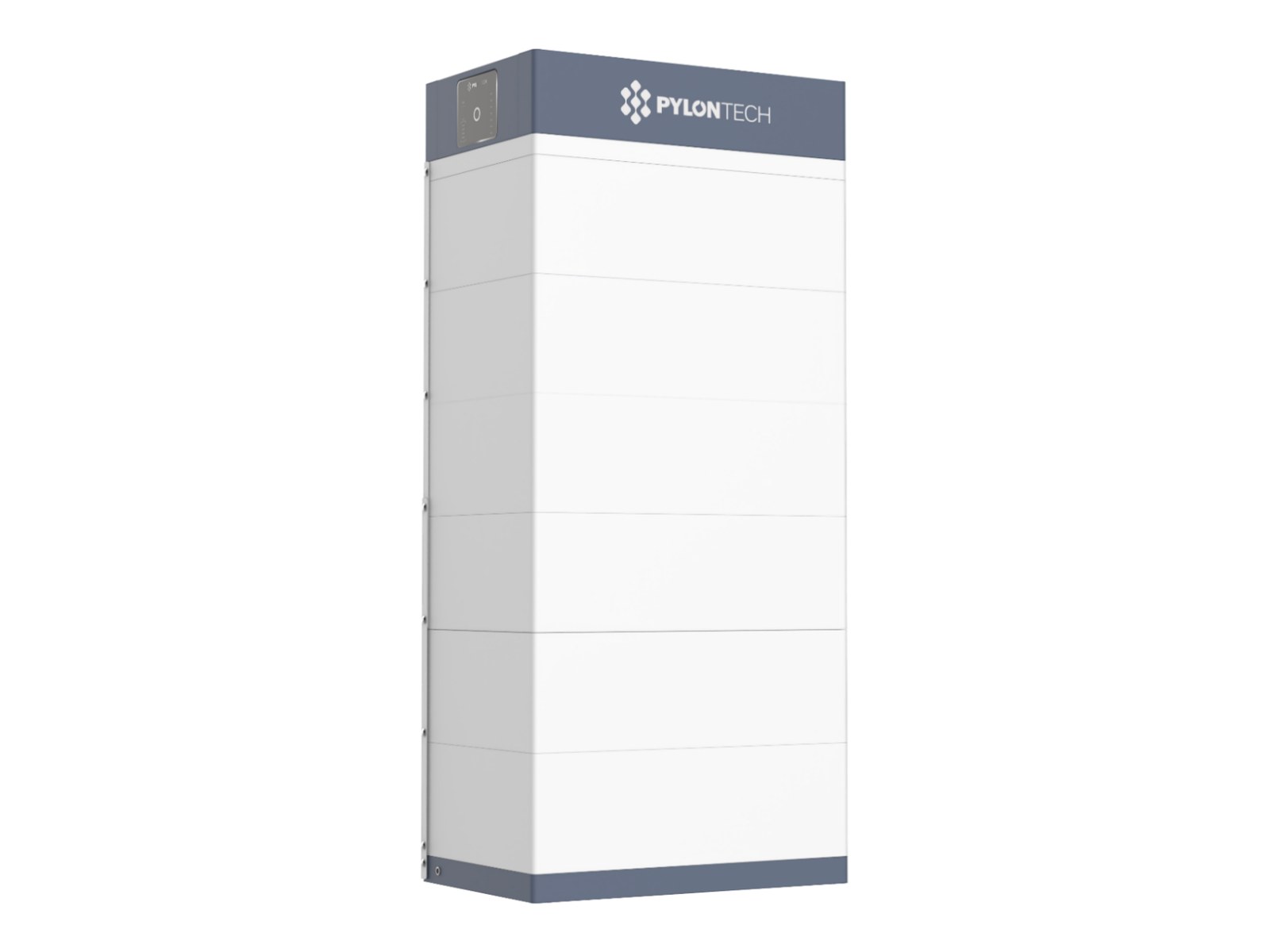
Our verdict
The Pylontech Force H3 and H3X are mid-priced, outdoor-rated LFP batteries with a good record from the Canberra test of the older US2000B and a wide inverter compatibility list. The trade-offs are a warranty with a throughput cap and shifting terms, and local support that runs through your installer and a distributor rather than an Australian Pylontech office.
- Best for
- Homes wanting a 10 to 35 kWh outdoor-rated battery on an inverter from Pylontech's compatibility list, or an all-in-one H3X
- Look elsewhere if
- Homes wanting the cheapest price per kWh, a strong local support office or a warranty with no throughput cap
- Price guide
- About A$5,600 (9.7 kWh) to A$18,500 (34 kWh) for the Force H3X all-in-one after the federal discount, excluding installation (SolarQuotes, 12 May 2026)
- Warranty
- 10 years; throughput cap of 3.0 MWh per kWh at 0.5C or less (Solar Choice, December 2025); retention term differs between document versions (60% in V1.2, 70% reported later)
Pros
04- Outdoor-rated IP65 stack that grows in 5.12 kWh modules from 5.12 to 35.84 kWh, with up to six stacks in parallel
- The older US2000B was one of only two batteries to finish the Canberra Battery Test Centre without a fault (ITP Renewables, March 2022)
- Wide inverter compatibility list, and an all-in-one Force H3X (5 to 15 kW) that avoids matching a separate inverter
- Owner rating of 4.7 out of 5 from 40 SolarQuotes ratings as at November 2026
Cons
05- Warranty is capped by throughput (3.0 MWh per kWh at up to 0.5C, 2.8 at up to 1C on the H3) and the document versions we could read disagree on retained capacity
- No formal Pylontech office in Australia according to Solar Choice, so claims go through the reseller and a distributor, and the warranty document lists a Shanghai contact
- Force H2 and Force L2 are not on the current Clean Energy Council list, so they do not qualify for the federal battery discount
- About A$545 per usable kWh for a 20 kWh H3X is no bargain: SolarQuotes lists several rivals at A$270 to A$410 per kWh
- Owner reports of app and firmware friction on the H3X, including an October 2026 dongle update that closed local Modbus access for some Home Assistant users
Pylontech is a Chinese lithium iron phosphate (LFP) battery maker whose rack-mounted US-series modules became a staple of off-grid and DIY systems, and whose newer Force H3 and Force H3X lines are now sold for ordinary homes. Installers usually quote the Force H3 stack with a separate hybrid inverter, or the Force H3X all-in-one, against the Sungrow SBR, BYD Battery-Box and Sigenergy SigenStor. As at November 2026 SolarQuotes lists the 20 kWh Force H3X at A$10,600 after the federal discount, excluding installation. This review is based on manufacturer documentation, warranty terms, published pricing and owner/installer feedback; Solar Cobber did not test the product and was not paid by the manufacturer.
Source: SolarQuotes and Solar Choice, checked November 2026.
What it is and how it works
Pylontech sells four residential families in Australia. The Force H3 is a high-voltage battery-only stack that needs a compatible hybrid inverter. The Force H3X is Pylontech’s own hybrid inverter and battery in one system. The older US3000C and US5000 are low-voltage 48 V rack modules, mostly used off grid. Pylontech also has Pelio-L and Fidus units on the approved list.
A Force H3 stack is a controller on top of one to seven 5.12 kWh modules, giving 5.12 to 35.84 kWh, and up to six stacks can run in parallel. The controller is fed by a hybrid inverter over CAN or Modbus, so the inverter brand and firmware matter. SolarQuotes notes the H3X is an all-in-one with 3.6 to 15 kW of power, in single and three phase, which removes the matching problem. The H2 and L2 are older lines, covered below.
Pylontech’s official channel publishes a short product video for the H3X. It is a manufacturer promotional video, so read its claims as the company’s.
In market terms, SolarQuotes calls Pylontech “at the budget end” of home battery pricing and a SolarQuotes approved brand, but Solar Choice’s December 2025 scorecard gives it 2.5 out of 5, marking down local backing and warranty. Both agree the product is a safe LFP design with a long record. They differ on local support, covered later.
Specs that matter in Australia
Outdoor use and heat. The Force H3 is IP65 and listed by the Clean Energy Council (CEC) as suitable for outdoor use, with a -10 to 55 °C operating range and power derating above 45 °C. The US series is indoor only. The Australian warranty excludes damage from outdoor installs that are not shielded from direct sun and frost, so choose a shaded wall in hot inland areas.
Power per module. The Force H3 rates 50 A, which is 5.12 kW for a one-module stack, and adds voltage as modules are added. The US series delivers far less per module, which is why it is stacked in parallel.
Source: Clean Energy Council approved batteries list, queried 14 November 2026.
View the data as a table
| Rated DC power | |
|---|---|
| Force H3, 1 module (BAT-693) | 5.12 kW |
| Pelio-L-5.12 (BAT-470) | 4.10 kW |
| US5000 (BAT-759) | 3.80 kW |
| Fidus FB-L-5.12-B (BAT-1058) | 2.56 kW |
| US3000C (BAT-686) | 1.80 kW |
One Force H3 module is listed at 5.12 kW, nearly three times a single US3000C at 1.8 kW, so the older rack modules are poor for blackout backup unless you stack several.
Capacity and the usable kWh question. The CEC lists the Force H3 battery as fully usable (5.12 kWh from one module), while the Force H3X single-phase listing shows 95%, for example 9.73 kWh usable from 10.24 kWh. The Solis datasheet for the same module also states a 95% depth of discharge. SolarQuotes prices the H3X on the 95% figures. Because the federal discount is paid per usable kWh, ask which figure your quote uses.
Phases and backup. SolarQuotes lists the H3X as capable of off-grid switching in 10 ms or less and handling fully unbalanced three-phase loads. Single-phase H3X models run 5, 6 and 8 kW and three-phase models 8 to 15 kW on the CEC listing. See our guides to single vs three phase power and batteries for blackout backup.
Inverter compatibility. The Pylontech high-voltage compatibility list (Ver 2.40, updated 15 August 2025) includes GoodWe, Solis, SMA, Deye, SAJ, Sunsynk and Solplanet hybrids, among others, and a newer version may differ. The low-voltage list (Ver 2.44, updated 1 May 2026) includes Victron, SMA, GoodWe, Selectronic, Solis, Deye, Growatt and Sofar. SolarQuotes adds that the US5000B has backup support with a SolaX hybrid. Match model and firmware to the list; see our reviews of the GoodWe, Solis and SAJ inverters.
Which Pylontech models are on the Clean Energy Council list?
As at 14 November 2026 the CEC list (queried through its public data feed) shows the following Pylontech entries. The federal discount needs a listed battery on the day of installation.
| Line | CEC listing | Usable capacity listed | Outdoor | Listing expires |
|---|---|---|---|---|
| Force H3 | BAT-693 | 5.12 to 35.84 kWh (1 to 7 modules) | Yes | 31 Dec 2027 |
| Force H3 (older listing) | BAT-532 | 4.97 to 34.76 kWh | Yes | 7 Aug 2027 |
| Force H3X single phase (5, 6, 8 kW) | BAT-684 | 4.86 to 19.46 kWh | Yes | 31 Dec 2027 |
| Force H3X three phase (8 to 15 kW) | BAT-723 | 10.24 to 35.84 kWh | Yes | 31 Dec 2027 |
| US3000C | BAT-686 | 3.37 kWh per module | No | 31 Dec 2027 |
| US5000 and US5000-B | BAT-759 | 4.56 kWh per module | No | 31 Dec 2027 |
| Pelio-L-5.12 | BAT-470 | 4.86 kWh | Yes | 25 Nov 2026 |
| Fidus FB-L-5.12-B | BAT-1058 | 4.97 kWh | Yes | 31 Dec 2027 |
| RM series (RM-15-AU to RM-52-AU) | BAT-1053 | 15 to 52.5 kWh | Yes | 31 Dec 2027 |
We found no Force H2 or Force L2 entries on the list, so those lines do not currently qualify for the discount. We could not find a Pylontech announcement of when the H2 stopped being sold. We could not find a datasheet for the RM series, so we do not describe it.
Price in Australia
SolarQuotes’ price list (updated 12 May 2026) gives the Force H3X prices below after the federal battery discount and GST, excluding installation. The H3X includes the inverter. The “before discount” column is a Solar Cobber calculation, using about A$37 per certificate as in our Sungrow SBR review.
| Force H3X size | Usable kWh (SolarQuotes) | Price after discount, excl. installation | Per usable kWh | Estimated discount | Estimated before discount |
|---|---|---|---|---|---|
| 10 kWh | 9.73 | A$5,600 | A$576 | about A$2,450 | about A$8,050 |
| 20 kWh | 19.46 | A$10,600 | A$545 | about A$4,350 | about A$14,950 |
| 35 kWh | 34.05 | A$18,500 | A$543 | about A$5,850 | about A$24,350 |
Solar Cobber calculation (20 kWh): the first 14 kWh earns 6.8 certificates per kWh (95.2). The next 5.46 kWh earns 60% of that rate (22.3). The total is 117.5 certificates, or about A$4,350 at A$37. The factor falls to 5.7 on 1 January 2027, which would cut the same discount to about 98.5 certificates (about A$3,650), roughly A$700 less. See our federal battery rebate guide and state-by-state rebates.
The chart compares price per usable kWh at about 20 kWh, using SolarQuotes’ listings for the same date.
Source: SolarQuotes, Solar battery prices and system costs in Australia, updated 12 May 2026. Solar Cobber calculation: listed price divided by listed usable kWh.
View the data as a table
| Price per usable kWh | |
|---|---|
| Sungrow SBR HV 19.2 kWh | A$573 |
| BYD Battery-Box HVM 19.3 kWh | A$549 |
| Pylontech Force H3X 20 kWh | A$545 |
| SolaX TSYS-HS51 20.4 kWh | A$529 |
| Growatt APX HV 20 kWh | A$500 |
| AlphaESS Smile-G3-S5 20.2 kWh | A$406 |
| ESY Sunhome HM6-20 | A$375 |
| SOFAR PowerAll 20 kWh | A$316 |
| Fox ESS EQ4800 18.64 kWh | A$274 |
| Sigenergy SigenStor 18 kWh | A$272 |
At about 20 kWh the Pylontech H3X costs about A$545 per usable kWh, close to Sungrow and BYD and well above Sigenergy, Fox ESS and SOFAR (A$272 to A$316). Adding a hybrid inverter changes that. SolarQuotes prices a Sungrow hybrid at about A$2,300 (5 kW) to A$3,600 (10 kW), so a Sungrow SBR at 19.2 kWh is A$11,000 plus A$2,300 to A$3,600, or A$13,300 to A$14,600 (A$693 to A$760 per usable kWh). Pylontech’s H3X at A$10,600 is cheaper like for like, before installation.
Low-voltage modules are priced very differently. Solar Choice (December 2025) quoted wholesale ranges of A$1,500 to A$1,600 for one US3000C and A$12,000 to A$12,800 for eight, including a backup box. Solar Batteries Online listed a 3.55 kWh US3000C at A$2,186 and a 4.8 kWh US5000B at A$1,850 on sale on 14 November 2026, and a 3.55 kWh Force H2 module at A$2,459. These retail prices exclude installation and the discount does not apply to unlisted H2 or L2 modules. For wider context see our 20 kWh battery price and battery cost guides.
Warranty: the fine print
Pylontech’s Australian warranty document for the Force H1, H2 and H3 (V1.2, November 2024) gives 10 years from the earlier of installation or 12 months after manufacture. Solar Choice (12 December 2025) reports that the Force H-series now guarantees at least 70% of nominal energy plus a minimum throughput. That is a later version (V1.3, reference AU25WFHS100804) which we could not open, so check the version that applies to your install date.
- Retention: V1.2 defines “Minimum Capacity” as at least 60% of nominal energy. Solar Choice reports 70% for the later terms. V1.2 also describes a time-value replacement calculated by straight-line depreciation over 10 years.
- Throughput: Solar Choice lists 3.0 MWh per kWh for the Force H2 at 0.5C or less, 3.0 MWh for the Force H3 at 0.5C or less and 2.8 MWh for the H3 at up to 1C.
- US series: Solar Choice says the US series carries a 60% minimum after 10 years and no throughput guarantee.
- Conditions: the battery must be bought from Pylontech or an authorised reseller in Australia, installed per the manual, and used on a daily-cycle basis. Damage from inverters not certified by Pylontech, direct sun or frost outdoors, or work by someone other than a Pylontech-certified installer is excluded.
- Claims: go to your reseller. You must notify Pylontech within 48 hours of discovering a defect, supply the invoice and system log data, and in a dispute you pay for an independent test unless the claim is valid. The V1.2 document lists a Shanghai address and phone number.
Solar Cobber calculation: a 3.0 MWh per kWh cap equals 3,000 full cycles, which is 8.2 years at one full cycle a day (2.8 MWh gives 7.7 years). The datasheet figure of over 8,000 cycles is a design claim, not a warranty.
View the data as a table
| Equivalent full cycles | |
|---|---|
| Datasheet cycle life (0.25C, to 70%) | 8,000 |
| Warranty cap, Force H2 and H3 up to 0.5C | 3,000 |
| US2000B tested at Canberra, still 77% | 2,830 |
| Warranty cap, Force H3 up to 1C | 2,800 |
The warranty caps energy at roughly a third of what the datasheet claims the cells can do, which matters most if you use a battery harder than the typical household.
Does your inverter push the cap down? Solar Choice explains that an inverter rated above half the battery’s capacity can affect throughput claims. Using nominal kWh, the C-rate is inverter kW divided by battery kWh. This is a Solar Cobber calculation; confirm how Pylontech measures it.
| Force H3 nominal size | Inverter or system power | C-rate | Warranty throughput band |
|---|---|---|---|
| 5.12 kWh | 5 kW | 0.98C | Above 0.5C (2.8 MWh per kWh on the H3) |
| 10.24 kWh | 5 kW | 0.49C | Up to 0.5C (3.0 MWh per kWh) |
| 10.24 kWh | 8 kW | 0.78C | Above 0.5C |
| 15.36 kWh | 8 kW | 0.52C | Above 0.5C |
| 20.48 kWh | 10 kW | 0.49C | Up to 0.5C |
| 35.84 kWh | 15 kW | 0.42C | Up to 0.5C |
What owners and installers report
Independent testing. The Canberra Battery Test Centre (ITP Renewables, funded by ARENA) tested the older US2000B for four years. ITP’s final report (March 2022) found no operational issues and about 77% state of health after about 2,830 cycles. SolarQuotes later corrected its own write-up to say the US2000B was one of only two of 26 batteries that finished fault-free. That is the US2000B from 2017, not today’s Force H3, so it supports Pylontech’s cells and design approach rather than the new product.
Source: ITP Renewables, Lithium-ion Battery Testing Public Report 12 (final), March 2022.
View the data as a table
| Cycles to 60% state of health | |
|---|---|
| Pylontech US2000B | 4,995 |
| Tesla Powerwall 2 | 4,885 |
| LG Chem RESU HV | 3,360 |
Praise. SolarQuotes shows 4.7 out of 5 from 40 ratings as at November 2026, and its reviewer calls Pylontech solid, reliable and comparatively affordable. Two of the reviews disclose an installer incentive. Owners cite tidy installs, stackable capacity and blackout backup.
Source: SolarQuotes Pylontech battery reviews page, checked November 2026.
View the data as a table
| Ratings | |
|---|---|
| 5 stars | 32 |
| 4 stars | 6 |
| 3 stars | 1 |
| 2 stars | 0 |
| 1 star | 1 |
Complaints. Recurring themes, all from thin evidence:
- Support and warranty. Solar Choice marks down the lack of a formal Australian office and the warranty terms. SolarQuotes lists an Alexandria, NSW address and a 1300 number, so check what support is available. It says Pylontech’s website offers little technical support information. Solar Choice’s own reviewers rate Pylontech 4.0 out of 5 from 8 reviews.
- App and firmware. One SolarQuotes reviewer (August 2026) calls the H3X slow to switch and the app “not amazing”. A GitHub issue opened on 10 October 2026 reports that an automatic dongle update to V1.3.1 stopped local Modbus TCP access for a Home Assistant integration. The issue is closed. The Pylontech app still worked through the cloud.
- Capacity drift. One 2024 SolarQuotes owner reported 99% dropping to 95% after 16 months.
We found no ACCC Product Safety Australia recall notice naming Pylontech, although we could not query the database directly. Check productsafety.gov.au before buying.
Pylontech Force H3X vs alternatives
Prices are SolarQuotes’ 12 May 2026 list, after the federal discount, GST included, excluding installation. Specs for the Sungrow, BYD and Sigenergy columns are as in our own reviews.
| Pylontech Force H3X | Sungrow SBR | BYD Battery-Box Premium HVM | Sigenergy SigenStor | |
|---|---|---|---|---|
| Usable capacity | 4.86 to 35.84 kWh | 9.6 to 25.6 kWh per stack | 8.3 to 22.1 kWh | 5.2 to 46.8 kWh |
| Inverter | Built in, 3.6 to 15 kW (H3 battery needs a separate one) | Separate Sungrow hybrid | Separate compatible hybrid | Built-in controller |
| Retention and throughput | 10 years; 3.0 MWh per kWh at 0.5C or less; 60% to 70% retention depending on version | 70% at 10 years; unlimited cycles for self-use and backup | 70% at 10 years or about 3 MWh per kWh | 70% at 10 years or about 3 MWh per kWh |
| Ingress rating | IP65 | IP55 | IP55 | IP66 |
| Price at about 20 kWh | A$10,600 (19.46 kWh) | A$11,000 (19.2 kWh) plus inverter | A$10,600 (19.3 kWh) plus inverter | A$4,900 (18 kWh) |
| Per usable kWh | A$545 | A$573 plus inverter | A$549 plus inverter | A$272 |
Choose the Pylontech H3X when you want an outdoor-rated all-in-one at a mid price and are comfortable with a distributor-backed warranty. Choose the Sungrow SBR for its unlimited-cycle warranty on self-use, the BYD if you want to keep a non-Sungrow inverter, and the SigenStor if the price per kWh is the priority.
Questions to ask your installer
- Is this the Force H3 with a separate inverter or the H3X all-in-one, and is the exact inverter on Pylontech’s current compatibility list with the firmware version you will install?
- Which usable kWh figure is on the quote (CEC listing or 95%), and how many certificates are being claimed?
- Which warranty document version applies to my install date, and does it include a throughput cap?
- What is the C-rate of this inverter and battery combination, and does it stay at or below 0.5C?
- Who handles a warranty claim, how long does it take, and what happens if your company stops trading?
- Where will it be installed, and is it shaded from direct sun and frost as the warranty requires?
- Is the system VPP-ready, and does the VPP count as an application that uses up the throughput cap? See what a VPP is.
- Is the CEC listing current on installation day?
FAQ
Is Pylontech a good battery?
It is a sound LFP battery with a good independent test record on the older US2000B and a reasonable price, but local support and warranty terms are weaker than some rivals. SolarQuotes rates Pylontech 4.7 out of 5 from 40 ratings, while Solar Choice’s scorecard gives 2.5 out of 5.
Where is Pylontech made?
The Force H3 datasheet lists China as the country of manufacture. Pylon Technologies Co., Ltd was founded in China in 2009.
Is the Pylontech Force H2 still sold in Australia?
It is not on the current Clean Energy Council list, so it does not qualify for the federal discount. We found a few retailers listing H2 modules in November 2026, but no Pylontech statement on whether the line has ended.
How much does a Pylontech battery cost?
SolarQuotes lists the Force H3X at A$5,600 for about 10 kWh, A$10,600 for about 20 kWh and A$18,500 for about 35 kWh, after the discount and excluding installation. That is about A$545 to A$576 per usable kWh.
Does a Pylontech battery qualify for the battery rebate?
Yes, for models on the CEC list, including the Force H3, Force H3X, US3000C and US5000 as at 14 November 2026. The discount steps down from 6.8 to 5.7 certificates per kWh on 1 January 2027.
Which inverters work with Pylontech batteries?
Pylontech’s compatibility lists include GoodWe, Solis, SMA, Deye and others for high voltage, and Victron, Selectronic, SMA and others for low voltage. Always check the current list for your model and firmware.
How long is the Pylontech warranty?
10 years, with a throughput cap of 3.0 MWh per kWh at up to 0.5C according to Solar Choice. The retained-capacity figure differs between versions (60% in V1.2, 70% reported later).
Is the Pylontech US5000 suitable for home backup?
It is mostly used off grid. The US5000 is listed at 3.8 kW and 4.56 kWh usable per module, is indoor only, and SolarQuotes notes backup works with a SolaX hybrid.
Find an installer
The installer matters more than the brand with Pylontech because claims run through them. Use our installer directory to find companies with recent battery work, and check each quote with our guide on how to compare solar quotes. Our hybrid inverter guide and AC vs DC coupled battery guide explain the pairing options.
Read next
Battery buying guides
Often quoted alongside
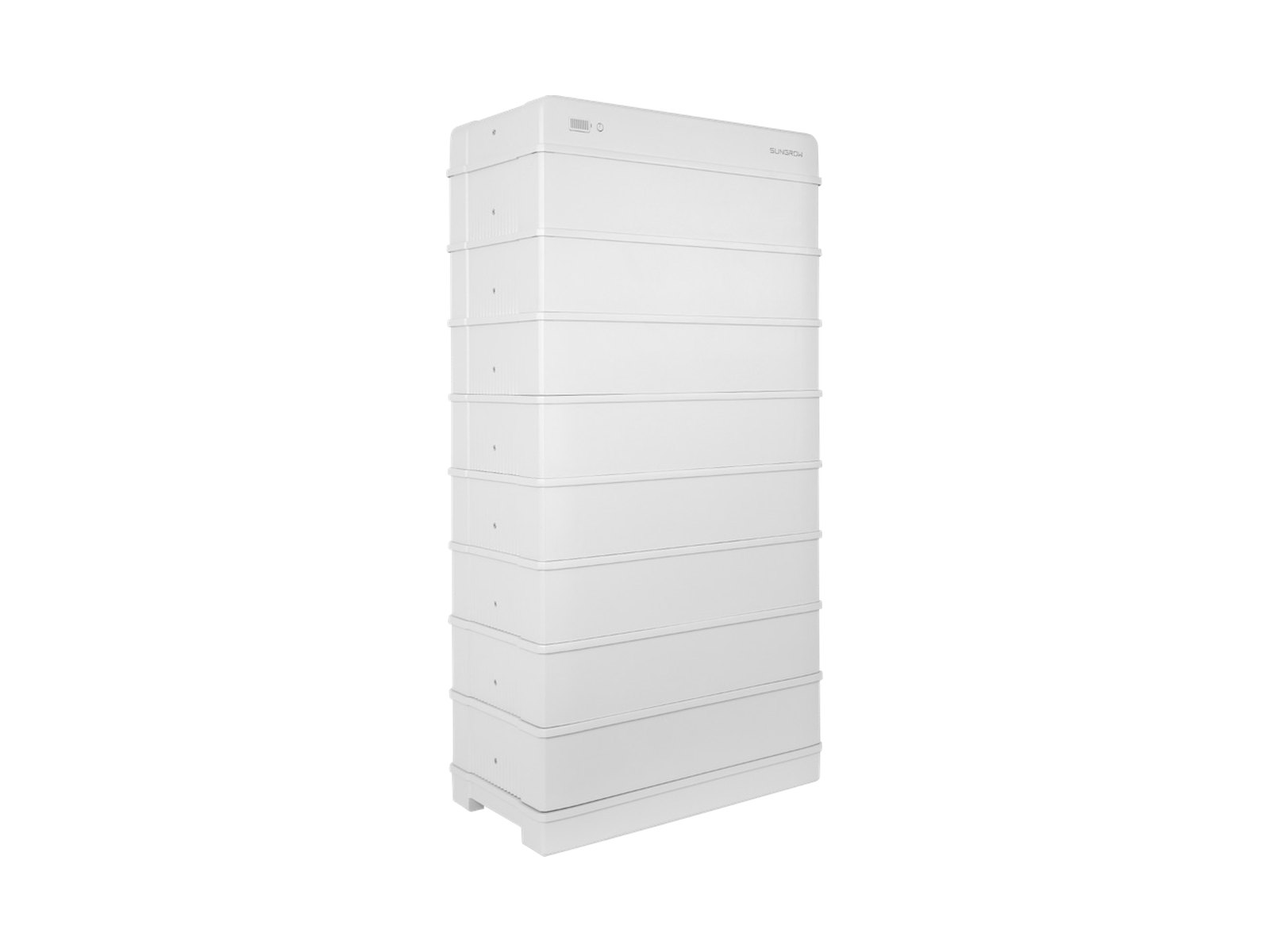
Sungrow
Sungrow SBR
The Sungrow SBR is one of the best-value modular batteries in Australia, with easy expansion in 3.2 kWh steps and a warranty that gives normal households unlimited cycles. The trade-off is that you must pair it with a Sungrow hybrid inverter, and Sungrow's app and phone support are weaker than the hardware.
Best for
Homes wanting a modular battery paired with a Sungrow hybrid inverter
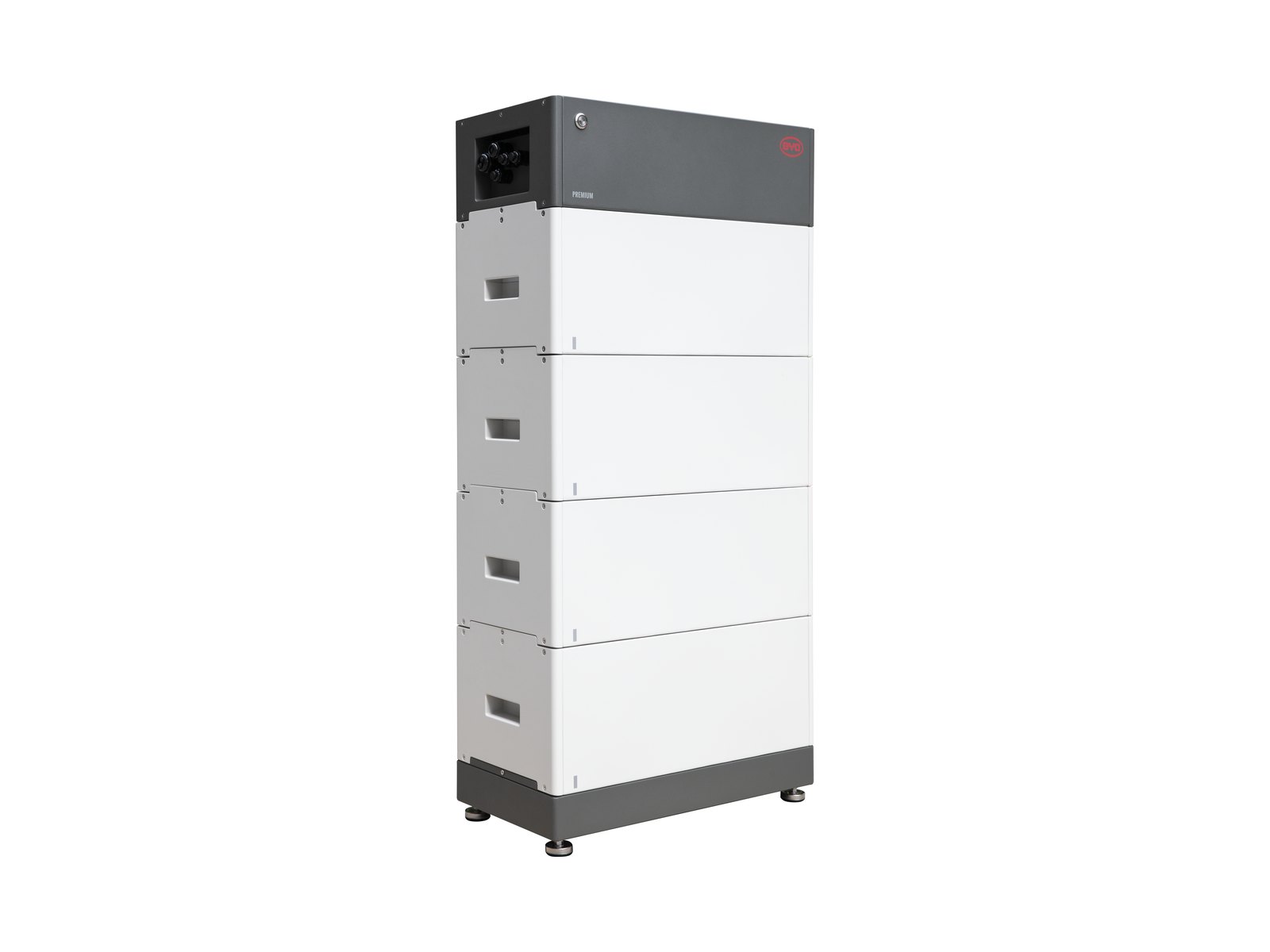
BYD
BYD Battery-Box Premium
The BYD Battery-Box Premium is a proven, stackable battery that works with more inverter brands than most, which makes it the default partner for Fronius hybrid systems. Its warranty ends at a throughput cap for every type of use, so households that cycle hard every day may run out of cover before 10 years.
Best for
Homes pairing a battery with a Fronius GEN24 Plus or another listed hybrid inverter
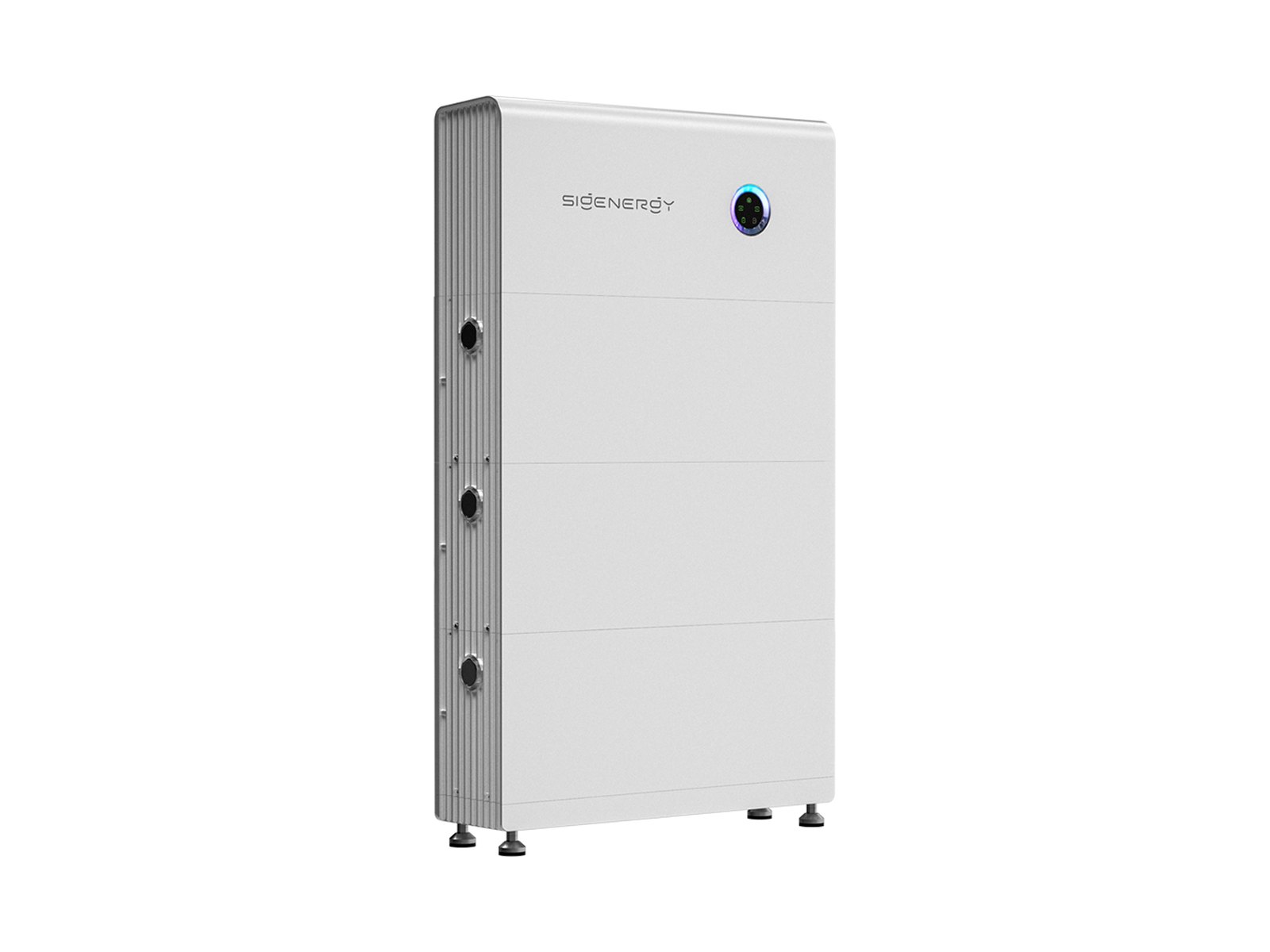
Sigenergy
Sigenergy SigenStor
SigenStor packs a hybrid inverter, battery and energy manager into one stack, with genuine three-phase options, IP66 weatherproofing and a very detailed app at a competitive price. The trade-offs are a young company with a 2025 recall on some single-phase controllers, mixed owner experiences with support, and a warranty that caps throughput for all uses.
Best for
Three-phase homes, or anyone wanting an all-in-one battery with room to add EV charging
Sources
Independent desk research by the Solar Cobber editorial team. We did not test this product and were not paid by the manufacturer. Solar Cobber is a free directory that may earn referral or advertising fees from installers; this never affects our reviews.
- 01Pylontech Force-H3 datasheet v0.2 (Pylontech Australia, October 2025, PDF)
- 02Solis-Pylontech Force-H3 datasheet (Australia, V1.3, August 2025, PDF)
- 03Pylontech Consumer Warranty, Force-H1 / H2 / H3, Australia, V1.2 (November 2024, PDF)
- 04Clean Energy Council approved batteries list (queried 14 November 2026)
- 05Solar Choice: Pylontech battery review (updated 12 December 2025)
- 06SolarQuotes: Pylontech battery review and ratings
- 07SolarQuotes: Solar battery prices and system costs in Australia (12 May 2026)
- 08ITP Renewables: Lithium-ion Battery Testing, Public Report 12 (final), March 2022 (PDF)
- 09SolarQuotes: Canberra Battery Test Centre final report
- 10Pylontech Compatibility List, High Voltage ESS and Inverters, Ver 2.40 (updated 15 August 2025, PDF)
- 11Pylontech Compatibility List, Low Voltage ESS and Inverters, Ver 2.44 (updated 1 May 2026, PDF)
- 12GitHub: HA-pylontech-force-H3X issue 42, Modbus TCP refused after dongle firmware V1.3.1 (opened 10 October 2026)
Get quotes for Pylontech Force H3
Browse rated solar installers in your area, check their Google reviews, and ask at least three for itemised quotes. Our guide to comparing solar quotes explains what to look for.